
Assessment Assessment the systematic process of gathering information
- Slides: 33
Assessment
Assessment: the systematic process of gathering information about student learning literacy 44
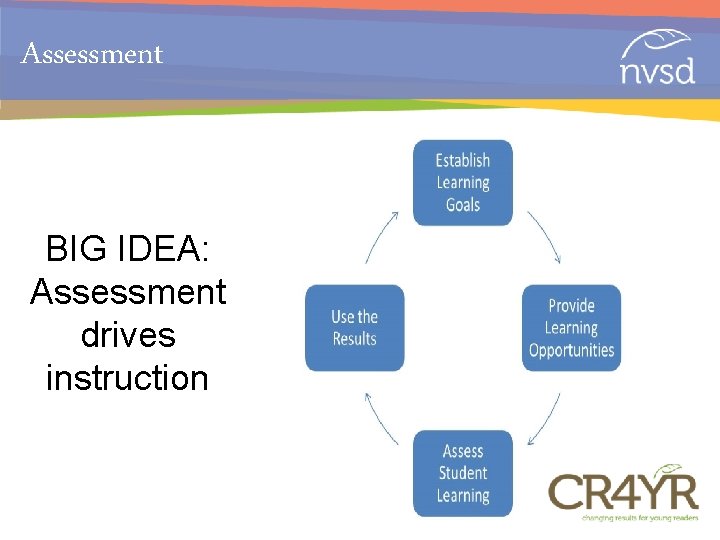
Assessment BIG IDEA: Assessment drives instruction
First Peoples Connections • Learning involves patience and time. • Learning is holistic, reflexive, reflective, experiential, and relational (focused on connectedness, on reciprocal relationships, and a sense of place). • Learning ultimately supports the well-being of the self, the family, the community, the land, the spirits, and the ancestors.
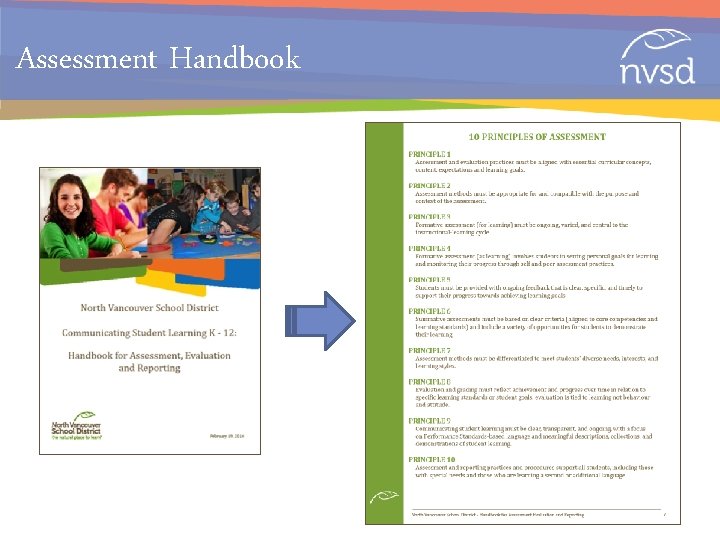
Assessment Handbook
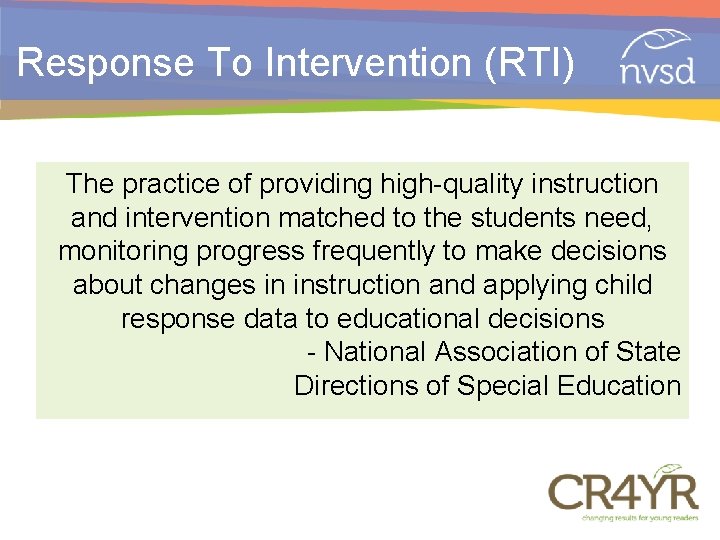
Response To Intervention (RTI) The practice of providing high-quality instruction and intervention matched to the students need, monitoring progress frequently to make decisions about changes in instruction and applying child response data to educational decisions - National Association of State Directions of Special Education
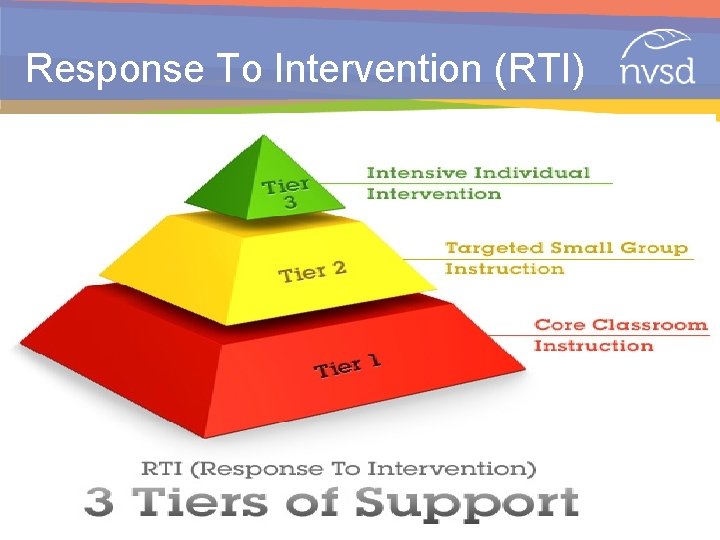
Response To Intervention (RTI)
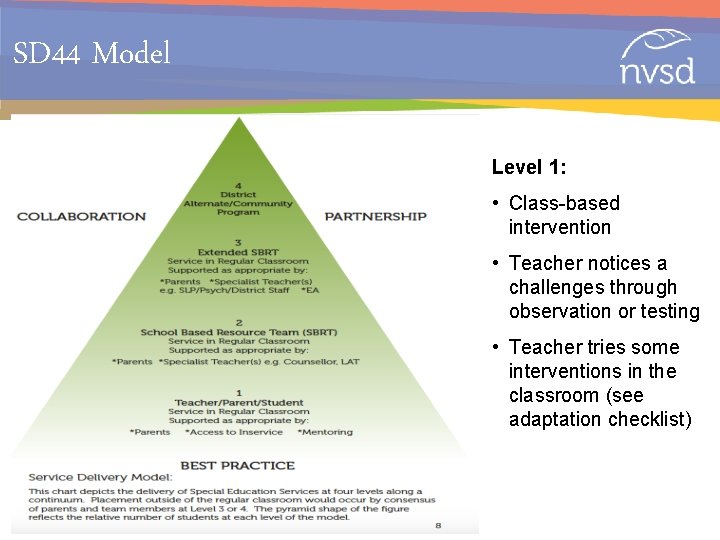
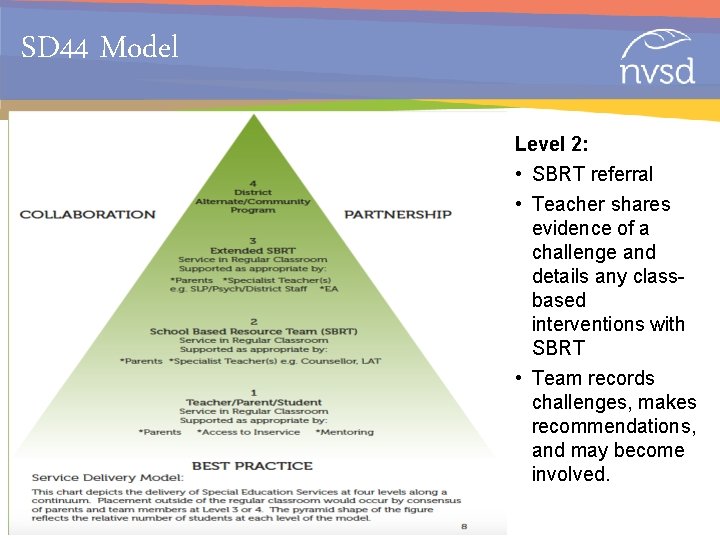
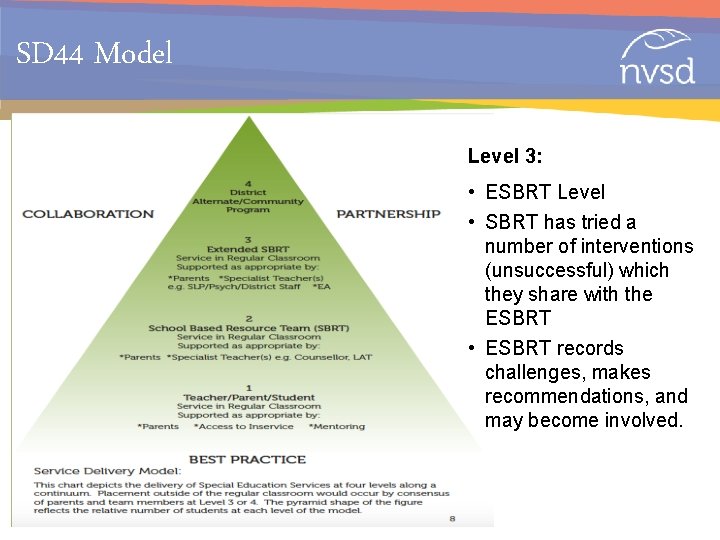
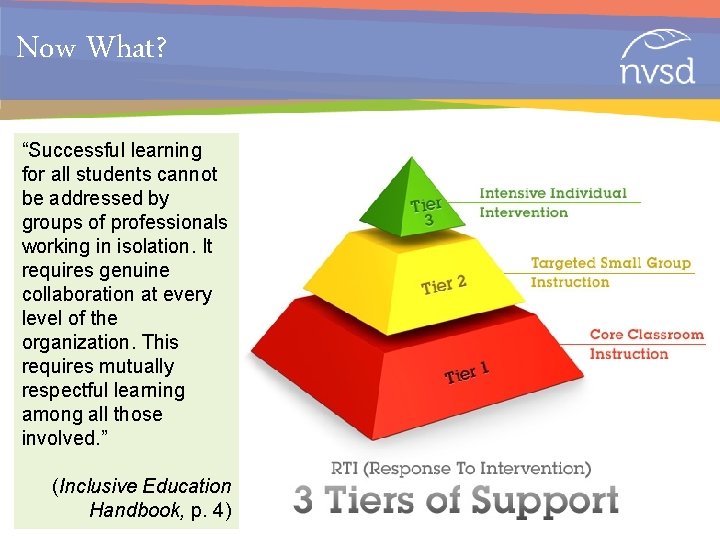
SD 44 Model Level 1: • Class-based intervention • Teacher notices a challenges through observation or testing • Teacher tries some interventions in the classroom (see adaptation checklist)
SD 44 Model Level 2: • SBRT referral • Teacher shares evidence of a challenge and details any classbased interventions with SBRT • Team records challenges, makes recommendations, and may become involved.
SD 44 Model Level 3: • ESBRT Level • SBRT has tried a number of interventions (unsuccessful) which they share with the ESBRT • ESBRT records challenges, makes recommendations, and may become involved.
Progress Monitoring • This is key • Need an initial assessment to establish a baseline and where to go • Use the baseline to set a goal • re-assess to see if progress is being made; track this progress and adjust goals if needed
Tier One Assessments UNIVERSAL – In the Classroom • • • Teacher Observations Student – Teacher Conferences Classroom Reading Assessments Running Records – one-on-one reading with students RAD (comprehension)/ RELI DRA (Diagnostic Reading Assessment) PM Benchmark/ GB + TOPA Student self assessments
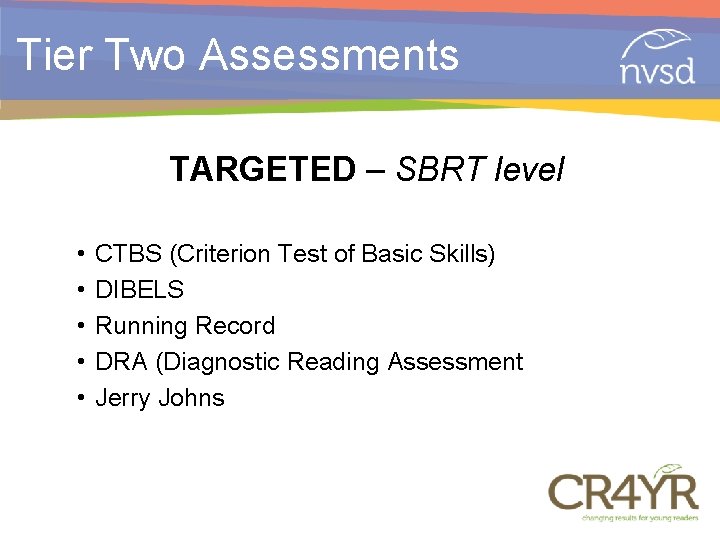
Tier Two Assessments TARGETED – SBRT level • • • CTBS (Criterion Test of Basic Skills) DIBELS Running Record DRA (Diagnostic Reading Assessment Jerry Johns
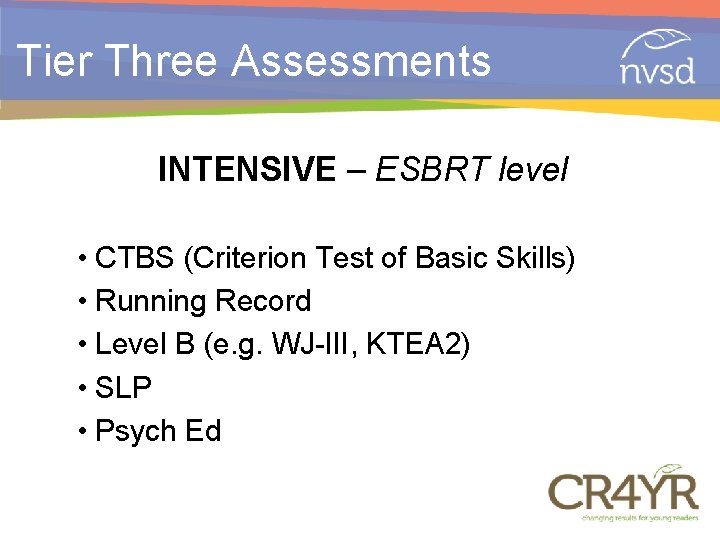
Tier Three Assessments INTENSIVE – ESBRT level • CTBS (Criterion Test of Basic Skills) • Running Record • Level B (e. g. WJ-III, KTEA 2) • SLP • Psych Ed
Student Self Assessment • What students say about reading is extremely important • See literacy 44. ca for frames to use • Have conversations with your students about reading
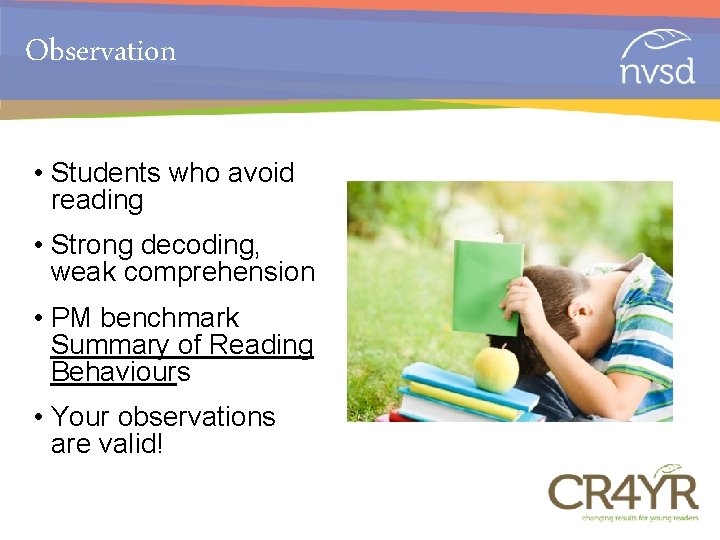
Observation • Students who avoid reading • Strong decoding, weak comprehension • PM benchmark Summary of Reading Behaviours • Your observations are valid!
Running Records Why use a Running Record?
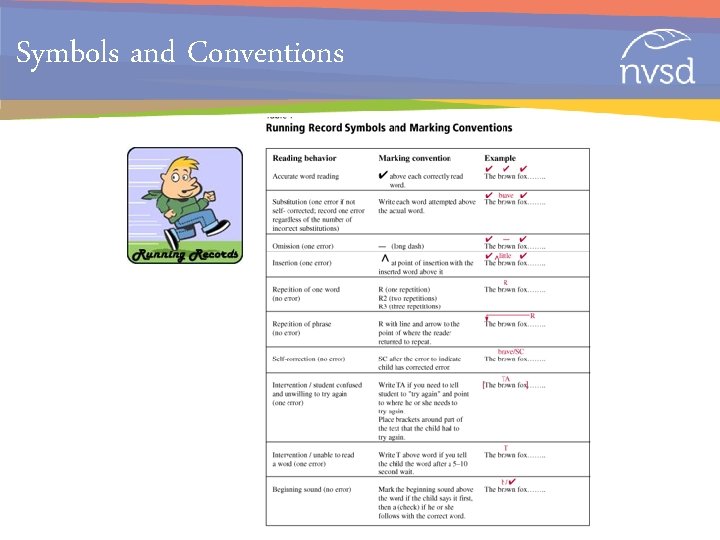
Symbols and Conventions
Running Record Demonstration • How does the teacher introduce the assessment? • What kind of positive feedback does she give the student? • What support or instruction will he need next? • https: //www. youtube. com/watch? v=ZO 4 OYi. Ji. UA
Process Time to practice: Using the recording symbols – listen + code the running record.
Process Use technology! One. Note One student per day
Now What? “Successful learning for all students cannot be addressed by groups of professionals working in isolation. It requires genuine collaboration at every level of the organization. This requires mutually respectful learning among all those involved. ” (Inclusive Education Handbook, p. 4)
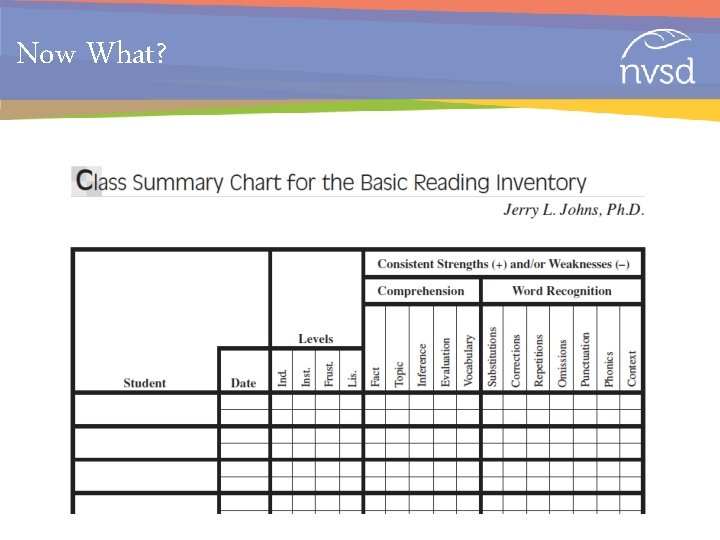
My Assessment is Done, Now What? Once you have finished your reading assessments, what do you do with the information you collected? • Think: What do you know about this topic? • Puzzle: What questions do you have? • Explore: How can you explore the topic?
Now What? Reading Level: • Frustration (> 90% word recognition, many repetitions, not fluent) • Instructional (95% word recognition, few repetitions, fluent) • Independent(99 %+ word recognition, few or no repetitions, very fluent)
Now What?
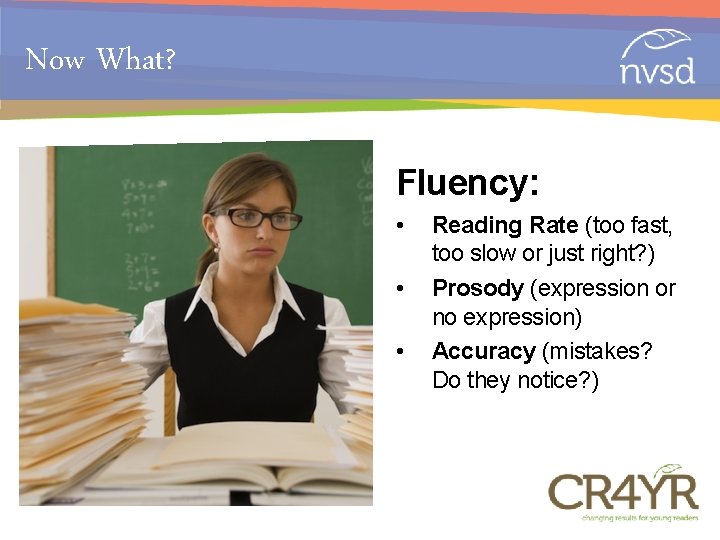
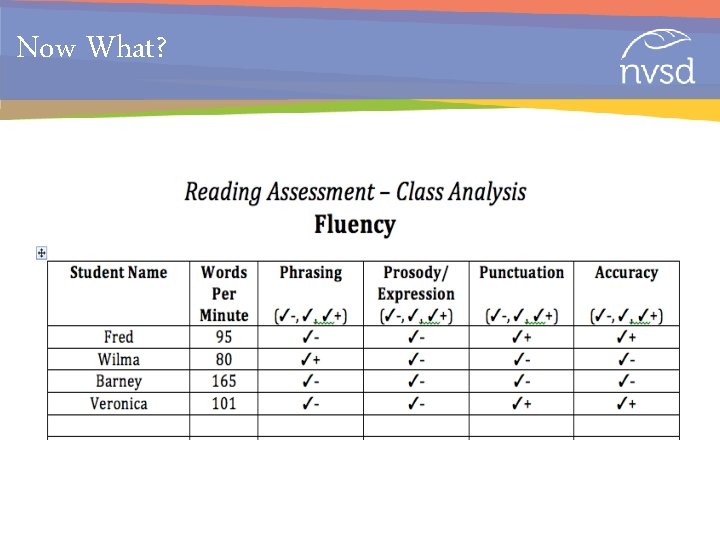
Now What? Fluency: • • • Reading Rate (too fast, too slow or just right? ) Prosody (expression or no expression) Accuracy (mistakes? Do they notice? )
Now What?
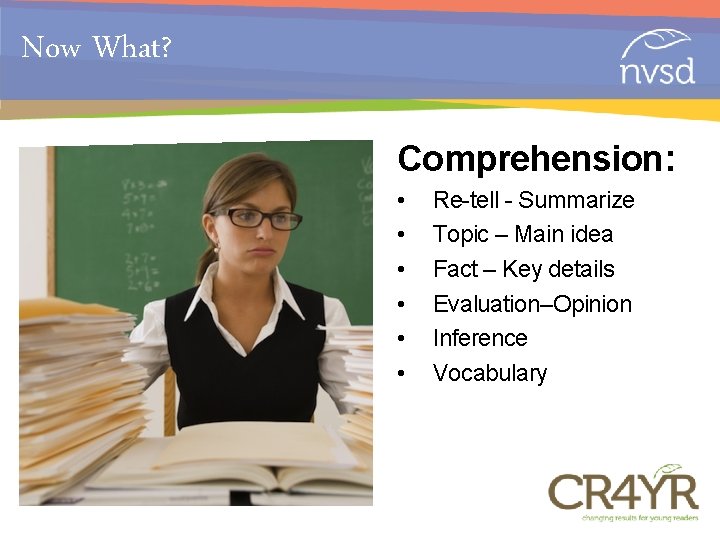
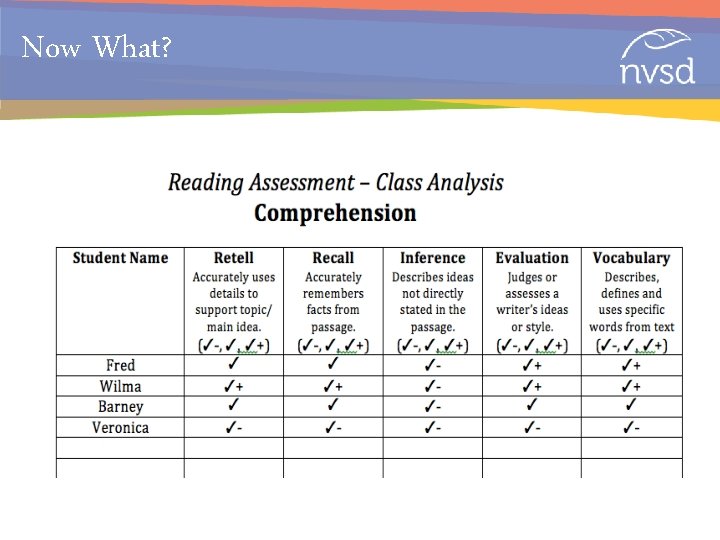
Now What? Comprehension: • • • Re-tell - Summarize Topic – Main idea Fact – Key details Evaluation–Opinion Inference Vocabulary
Now What?
School sharing NOW How do you plan to take this information back to your school to help shape your school’s reading assessment program?
Literacy Resources http: //cr 4 yr. ca/ http: //literacy 44. ca
Putting The Pieces Together Jigsaw Part 2 = School groups
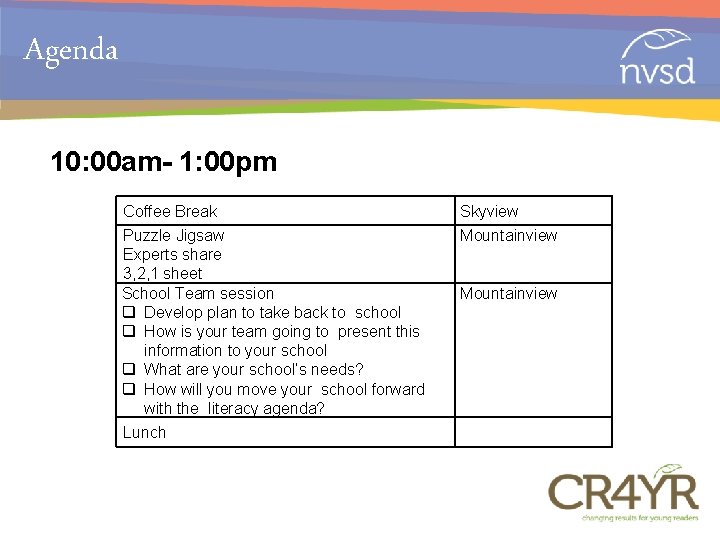
Agenda 10: 00 am- 1: 00 pm Coffee Break Skyview Puzzle Jigsaw Experts share 3, 2, 1 sheet School Team session q Develop plan to take back to school q How is your team going to present this information to your school q What are your school’s needs? q How will you move your school forward with the literacy agenda? Mountainview Lunch Mountainview