
Assessment and Program Review whats new the point
- Slides: 18
Assessment and Program Review what’s new
the point of assessment ● To clarify the knowledge, skills and/or abilities students should expect to take away with them (from a course, degree, transfer pattern or interaction) ● To look, from a fresh perspective, at what students really are taking away with them ● To look for ways to improve student learning (close achievement gaps, strengthen curriculum, address weaknesses, innovate pedagogy, share out successful strategies) ● To promote collaboration and a community of practice
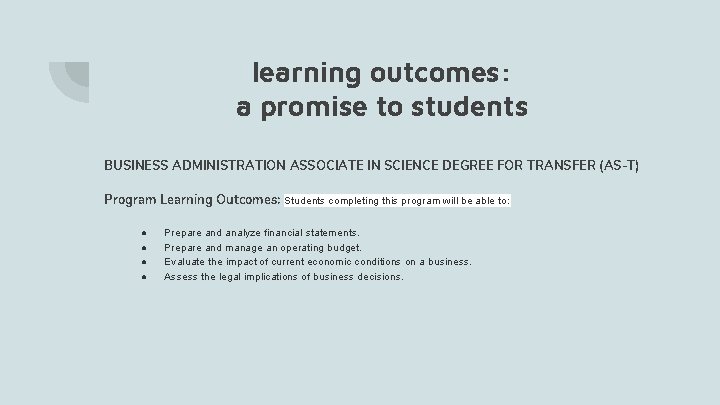
learning outcomes: a promise to students BUSINESS ADMINISTRATION ASSOCIATE IN SCIENCE DEGREE FOR TRANSFER (AS-T) Program Learning Outcomes: Students completing this program will be able to: ● ● Prepare and analyze financial statements. Prepare and manage an operating budget. Evaluate the impact of current economic conditions on a business. Assess the legal implications of business decisions.
learning outcomes: a framework for self-assessment Which students aren’t achieving those outcomes? Why or why not? Which skills need most shoring up? Do we still like these learning goals? Are they fair and equitable? ● Where can we make improvements? ● ●
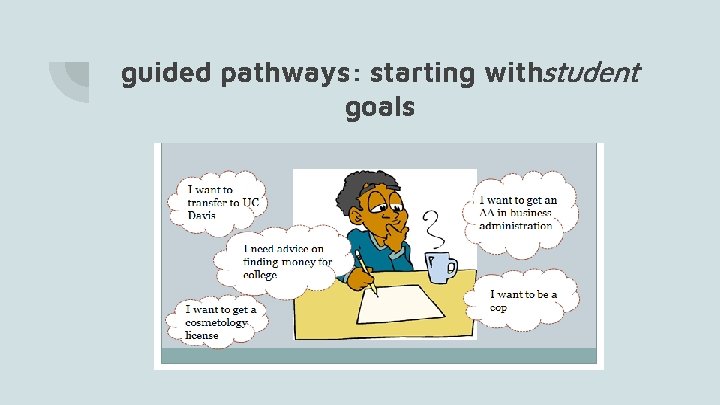
guided pathways: starting withstudent goals
we assess students’ progress
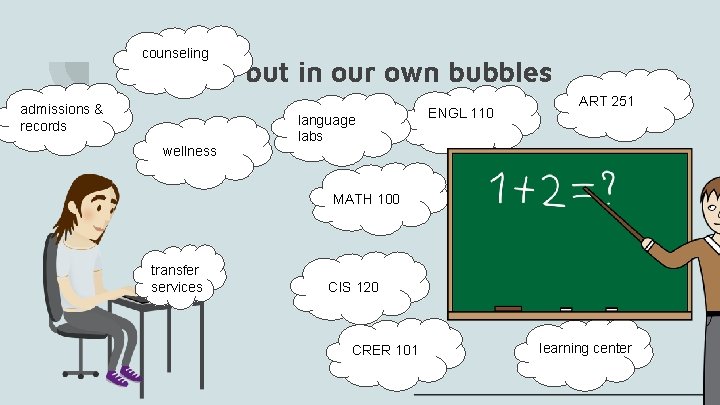
counseling … but in our own bubbles admissions & records wellness language labs ENGL 110 ART 251 MATH 100 transfer services CIS 120 CRER 101 learning center
we need another perspective ● does our AS-T in Business Admin deliver as promised? ● does it deliver to all students in an equitable way? ● do our collective efforts help students to (for instance) think critically?
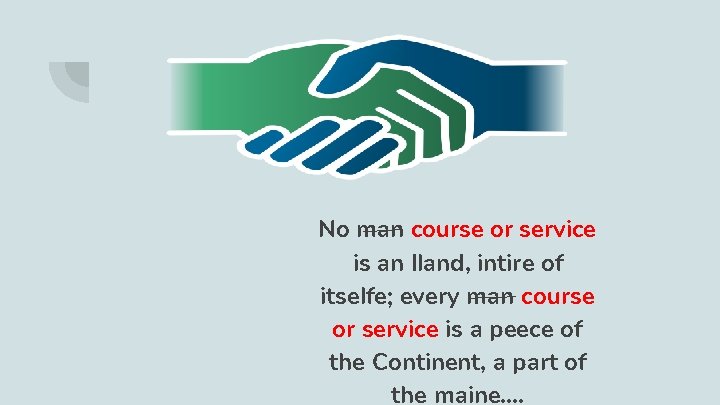
No man course or service is an Iland, intire of itselfe; every man course or service is a peece of the Continent, a part of the maine….
revised program review
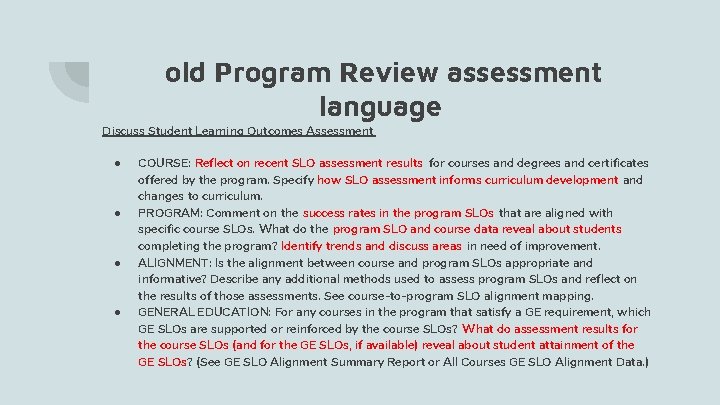
old Program Review assessment language Discuss Student Learning Outcomes Assessment ● ● COURSE: Reflect on recent SLO assessment results for courses and degrees and certificates offered by the program. Specify how SLO assessment informs curriculum development and changes to curriculum. PROGRAM: Comment on the success rates in the program SLOs that are aligned with specific course SLOs. What do the program SLO and course data reveal about students completing the program? Identify trends and discuss areas in need of improvement. ALIGNMENT: Is the alignment between course and program SLOs appropriate and informative? Describe any additional methods used to assess program SLOs and reflect on the results of those assessments. See course-to-program SLO alignment mapping. GENERAL EDUCATION: For any courses in the program that satisfy a GE requirement, which GE SLOs are supported or reinforced by the course SLOs? What do assessment results for the course SLOs (and for the GE SLOs, if available) reveal about student attainment of the GE SLOs? (See GE SLO Alignment Summary Report or All Courses GE SLO Alignment Data. )
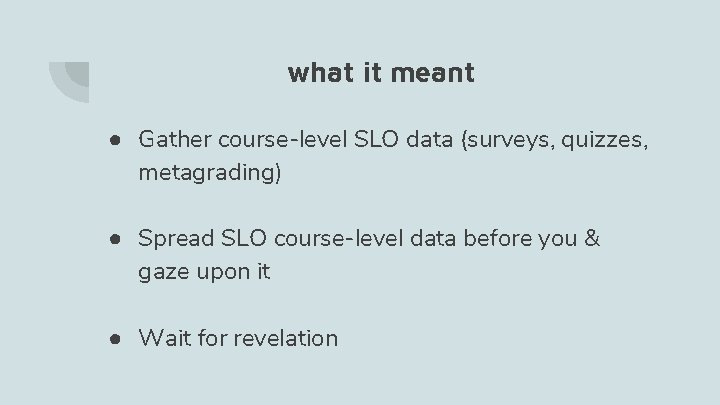
what it meant ● Gather course-level SLO data (surveys, quizzes, metagrading) ● Spread SLO course-level data before you & gaze upon it ● Wait for revelation
which did not. . . ● Tell us anything we didn’t know from grades, transfer rates, withdrawal, etc. ● Give us an opening to discuss what we were trying to do to improve things ● Give us an opening to prioritize research questions ● Promote collaboration
new Program Review assessment language Course and program assessment. a. Discuss the results of your program assessment. Explain any strategies, research, initiatives, curriculum development or other activities intended to improve student learning and promote educational equity in your discipline, either at the course or program level. b. General Education / Institutional assessment. Discuss participation in any General Education, Core Competencies, institutional or interdisciplinary assessment activities.
starts with a question Overall program assessment: “How’s the program doing? Is it still relevant? Are students learning what they’re supposed to? ” Experimentation: “Which areas are students weakest in? What strategies might help them improve? Equity lens: “Which student populations need help? What’s getting in their way? How can we help? ” Interdisciplinary collaboration: “Do students retain what we teach them about quantitative reasoning, and apply in to their other classes? ”
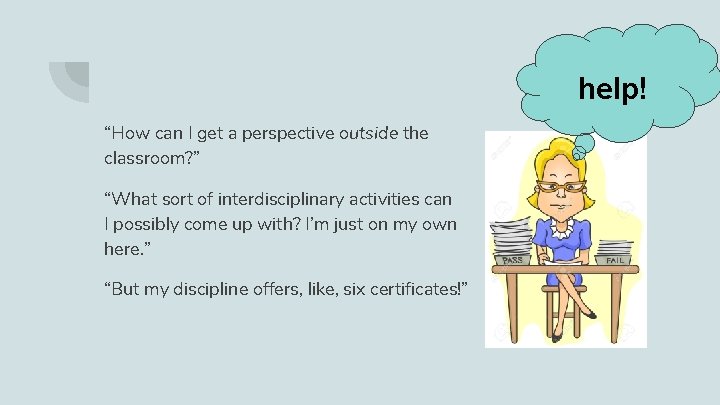
help! “How can I get a perspective outside the classroom? ” “What sort of interdisciplinary activities can I possibly come up with? I’m just on my own here. ” “But my discipline offers, like, six certificates!”
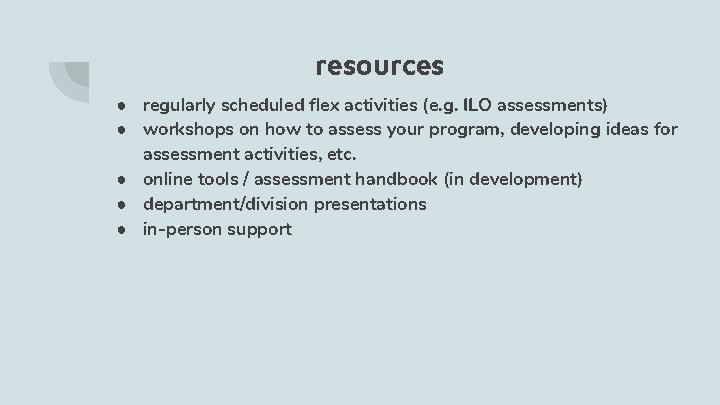
resources ● regularly scheduled flex activities (e. g. ILO assessments) ● workshops on how to assess your program, developing ideas for assessment activities, etc. ● online tools / assessment handbook (in development) ● department/division presentations ● in-person support
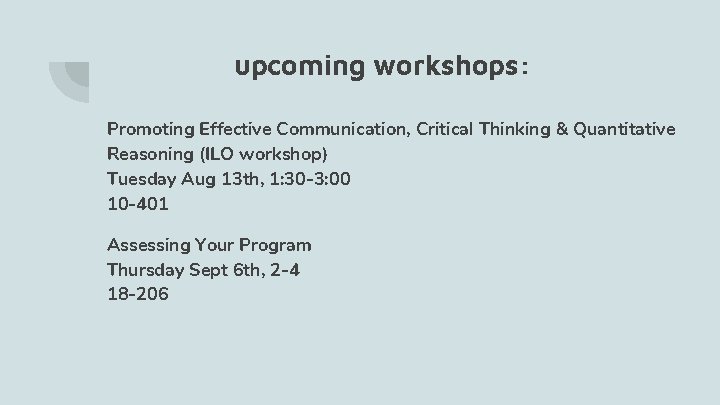
upcoming workshops: Promoting Effective Communication, Critical Thinking & Quantitative Reasoning (ILO workshop) Tuesday Aug 13 th, 1: 30 -3: 00 10 -401 Assessing Your Program Thursday Sept 6 th, 2 -4 18 -206