
Assessment and Management of Suicidal and Aggressive Patients
- Slides: 52
Assessment and Management of Suicidal and Aggressive Patients Presented by Dr. Hatem Al. Shahwan Prepared by Dr. Ali Bahathig, FRCPC, Assistant Professor and Consultant of Psychiatry & Psychosomatic Medicine Psychosomatic Unit, Psychiatry Department King Saud University Medical City (KSUMC) 1440/1441 2019/2020
Objectives: Ø Assessment and Management of Aggressive patients. Ø Assessment and Management of Suicidal patients.
Assessment and Management of Aggressive patients
Introduction: Ø Aggression should not automatically be assumed to be psychiatric in origin. Ø The idea that people with mental disorders are more likely to be violent is a myth. Ø Individuals with a mental disorder are much more often are victims of violence. Ø Nevertheless, in some cases, certain mental disorders can result in violence. Ø Mental health provider must be ready to evaluate violence and respond to the situation.
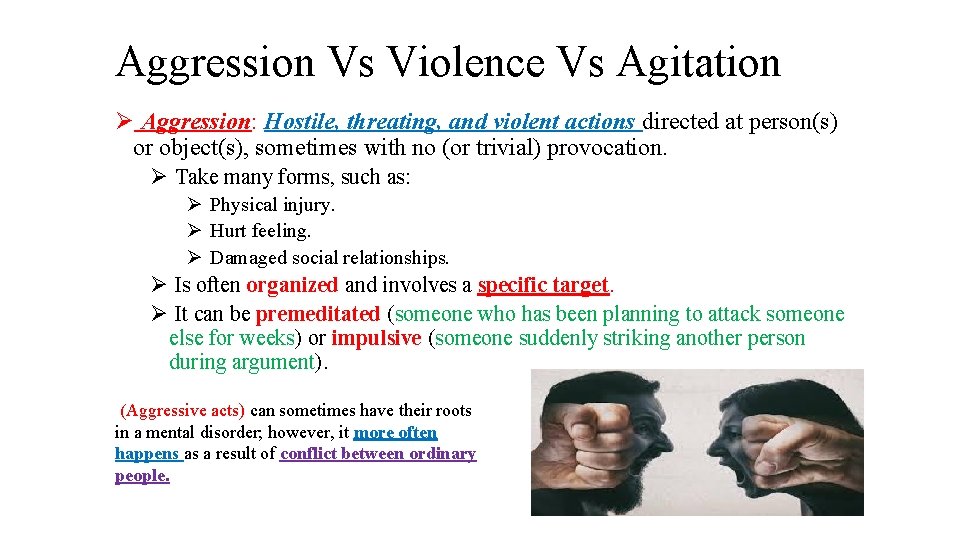
Aggression Vs Violence Vs Agitation Ø Aggression: Hostile, threating, and violent actions directed at person(s) or object(s), sometimes with no (or trivial) provocation. Ø Take many forms, such as: Ø Physical injury. Ø Hurt feeling. Ø Damaged social relationships. Ø Is often organized and involves a specific target. Ø It can be premeditated (someone who has been planning to attack someone else for weeks) or impulsive (someone suddenly striking another person during argument). (Aggressive acts) can sometimes have their roots in a mental disorder; however, it more often happens as a result of conflict between ordinary people.
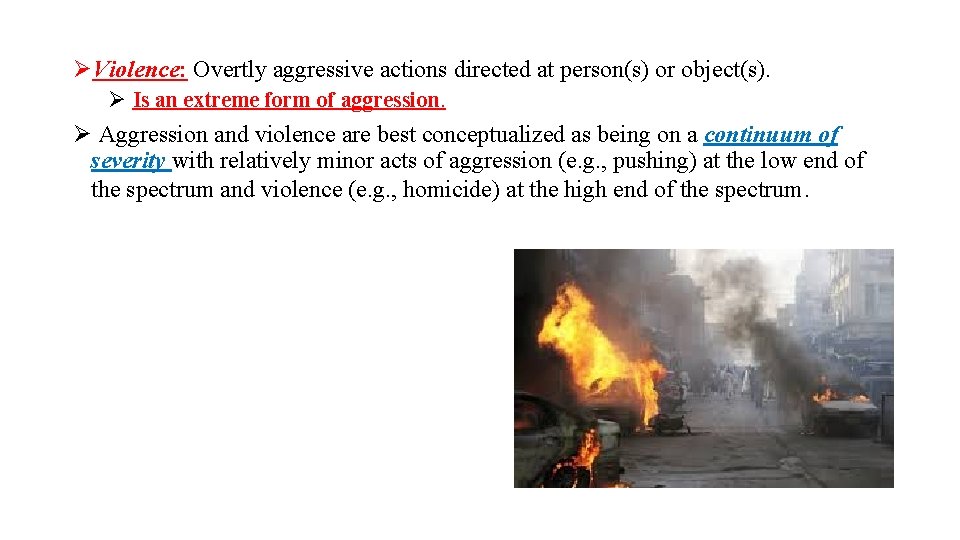
ØViolence: Overtly aggressive actions directed at person(s) or object(s). Ø Is an extreme form of aggression. Ø Aggression and violence are best conceptualized as being on a continuum of severity with relatively minor acts of aggression (e. g. , pushing) at the low end of the spectrum and violence (e. g. , homicide) at the high end of the spectrum.
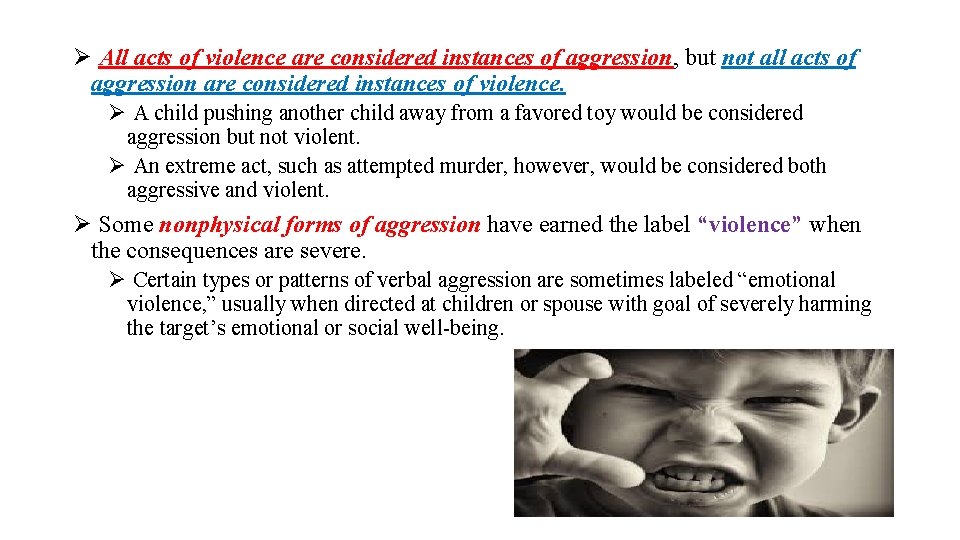
Ø All acts of violence are considered instances of aggression, but not all acts of aggression are considered instances of violence. Ø A child pushing another child away from a favored toy would be considered aggression but not violent. Ø An extreme act, such as attempted murder, however, would be considered both aggressive and violent. Ø Some nonphysical forms of aggression have earned the label “violence” when the consequences are severe. Ø Certain types or patterns of verbal aggression are sometimes labeled “emotional violence, ” usually when directed at children or spouse with goal of severely harming the target’s emotional or social well-being.
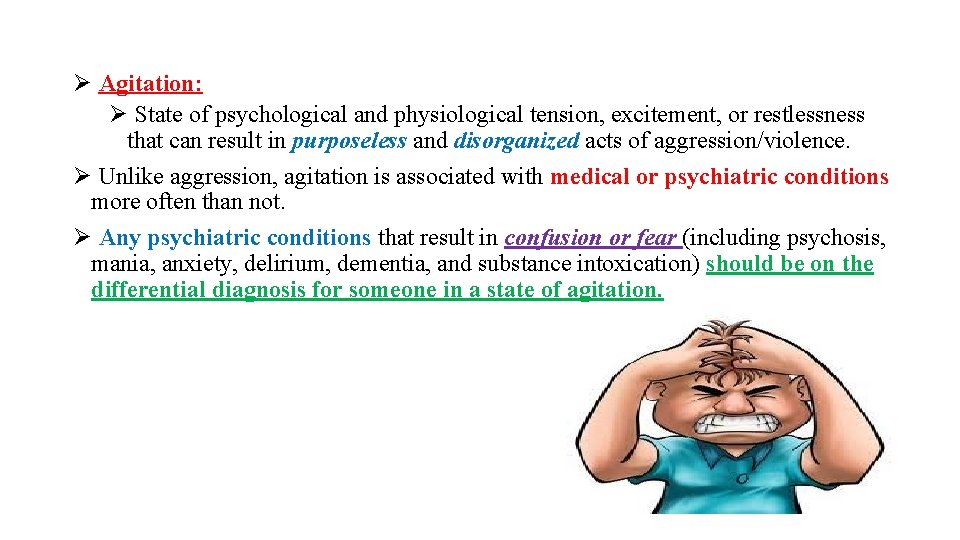
Ø Agitation: Ø State of psychological and physiological tension, excitement, or restlessness that can result in purposeless and disorganized acts of aggression/violence. Ø Unlike aggression, agitation is associated with medical or psychiatric conditions more often than not. Ø Any psychiatric conditions that result in confusion or fear (including psychosis, mania, anxiety, delirium, dementia, and substance intoxication) should be on the differential diagnosis for someone in a state of agitation.
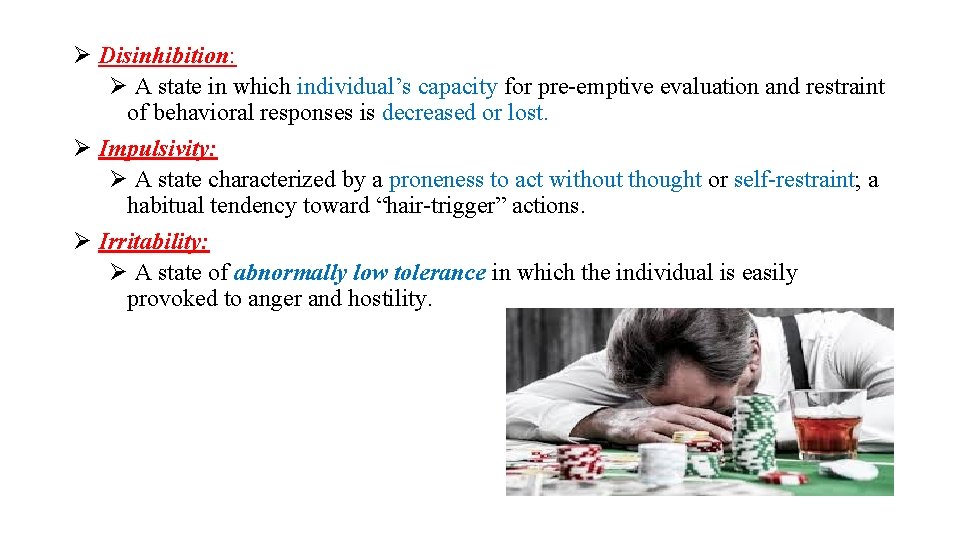
Ø Disinhibition: Ø A state in which individual’s capacity for pre-emptive evaluation and restraint of behavioral responses is decreased or lost. Ø Impulsivity: Ø A state characterized by a proneness to act without thought or self-restraint; a habitual tendency toward “hair-trigger” actions. Ø Irritability: Ø A state of abnormally low tolerance in which the individual is easily provoked to anger and hostility.
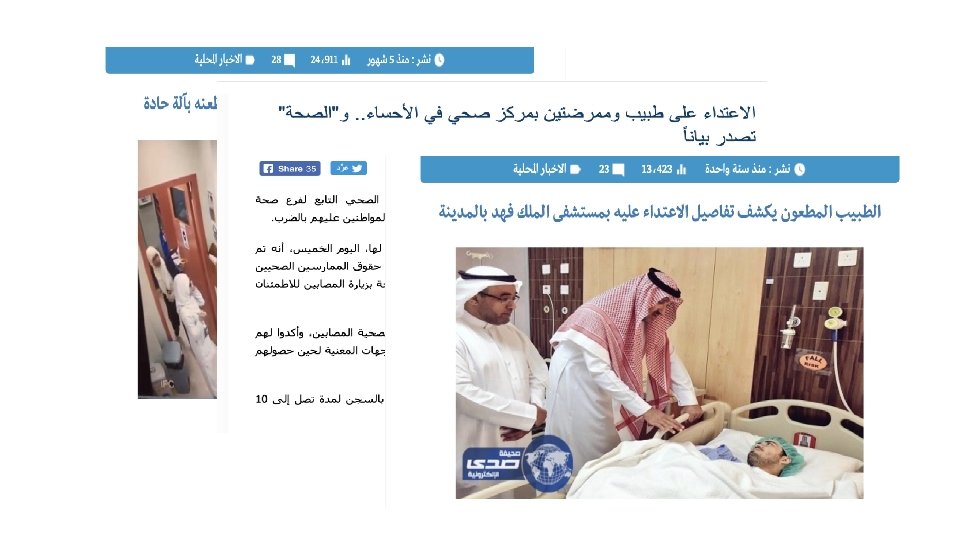
Why we should study aggression/violence? Ø Physicians/Psychiatrists might encounter aggression when patients present for treatment in acutely ill states. Ø Aggression may present as a complication of medical/ psychiatric condition such as delusional psychosis, dementia, delirium, etc. Ø It may be a complication of non-psychiatric illness because it can develop when patients feel disregarded, dissatisfied, frustrated, confused, frightened, or angered by perceived mistreatment. Ø Aggression can be perpetrated by men or women and by individuals of any age (except early infancy). Ø It is seen in all patients care settings such as outpatients clinics, inpatients units, rehabilitation programs, and emergency departments (EDs).
Disorders are associated with Aggressive Behavior Ø Psychosis (mania, depression, schizophrenia, delusional disorder) Ø Personality disorders (antisocial, borderline, paranoid, narcissistic) Ø Substance use disorder (alcohol, phencyclidine, stimulants, cocaine). Ø Epilepsy. Ø Delirium. Ø Dementia. Ø Neurodevelopmental disorders (intellectual disability).
Assessment of Dangerousness (Predictors & Risk Factors) Ø Ø Ø Ø Ø Past history of violence or aggression Male sex, young age , poor impulse control Family history of aggression Recent stressors , poor social support Available means (e. g. , Weapons ) Verbal or physical threats ( statement of intent ) Alcohol or drug intoxication. Paranoid features in psychotic patient. Brain disease ( e. g. , Dementia ).
PREVENTION POLICY Ø Never attempt to evaluate an armed patient. Ø Carefully search for any kind of offensive weapon (by the security). Ø Anticipate possible violence from hostile, threatening behavior, & from restless, agitated abusive patients
How to Interview an Aggressive Patient Ø Do not be in closed room. Ø Sit near the door. Ø Have security guard nearby or in the room. Ø Sit limits (Look, I want to hear what’s wrong and help fix it. Could you lower your voice please so I can think better? ” Ø De-escalate angry behavior Ø Build an therapeutic alliance. Ø Solve problems Ø If patient seems too agitated terminate interview
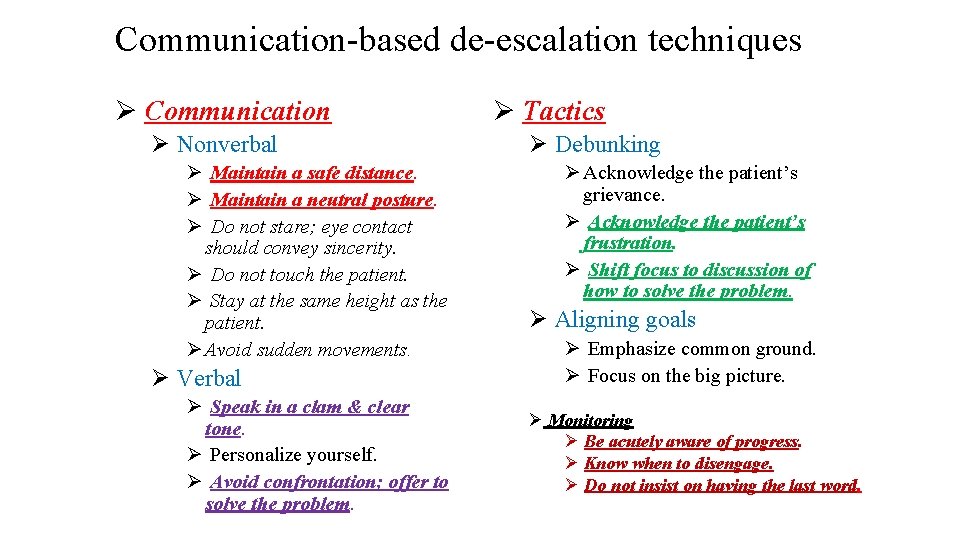
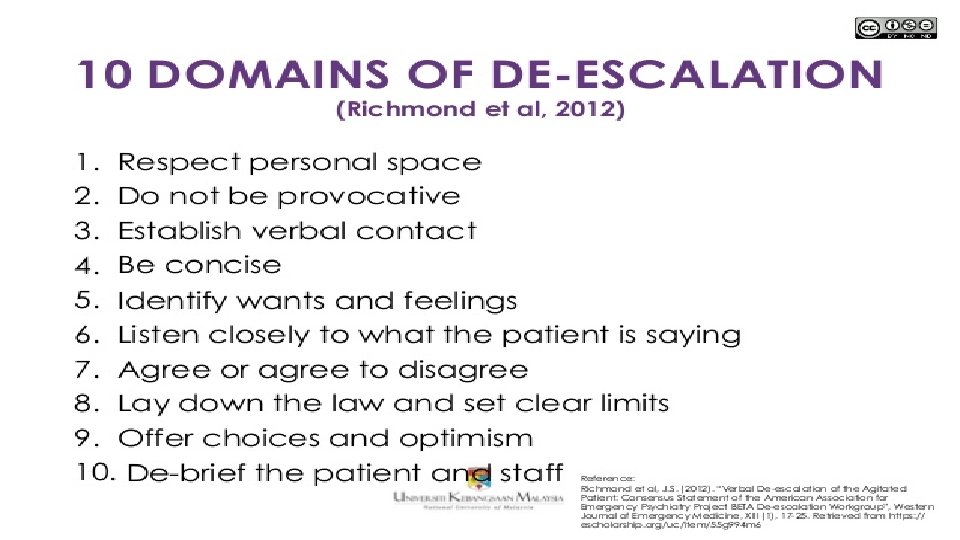
Communication-based de-escalation techniques Ø Communication Ø Nonverbal Ø Maintain a safe distance. Ø Maintain a neutral posture. Ø Do not stare; eye contact should convey sincerity. Ø Do not touch the patient. Ø Stay at the same height as the patient. Ø Avoid sudden movements. Ø Verbal Ø Speak in a clam & clear tone. Ø Personalize yourself. Ø Avoid confrontation; offer to solve the problem. Ø Tactics Ø Debunking Ø Acknowledge the patient’s grievance. Ø Acknowledge the patient’s frustration. Ø Shift focus to discussion of how to solve the problem. Ø Aligning goals Ø Emphasize common ground. Ø Focus on the big picture. Ø Monitoring Ø Be acutely aware of progress. Ø Know when to disengage. Ø Do not insist on having the last word.
Management of Aggressive Patients Ø Doctors, Nurses, security should treat such patient with understanding & gentleness as possible. Ø Adequate security. Ø Availability of more staff. Ø Clear prevention policy to all. Ø Remain calm & non-critical.
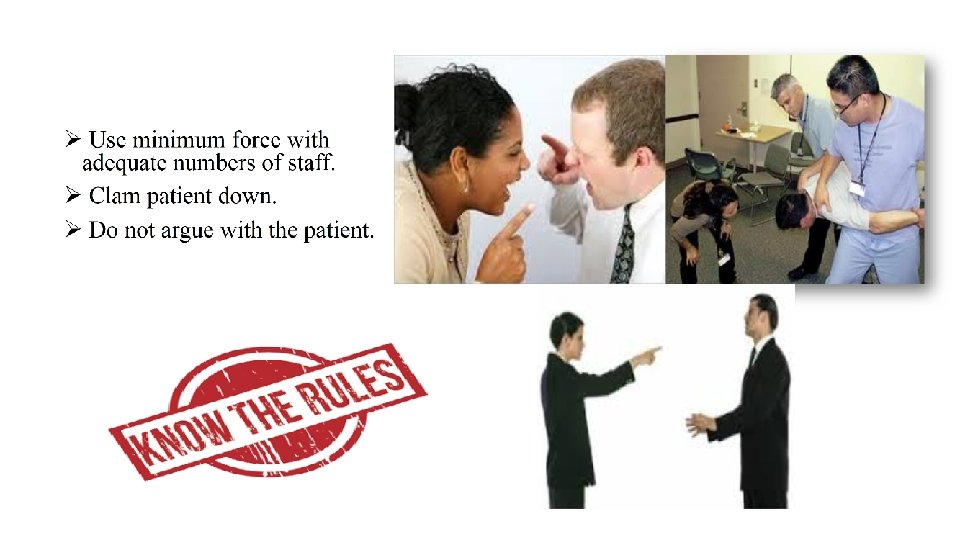
Ø Use minimum force with adequate numbers of staff. Ø Clam patient down. Ø Do not argue with the patient.
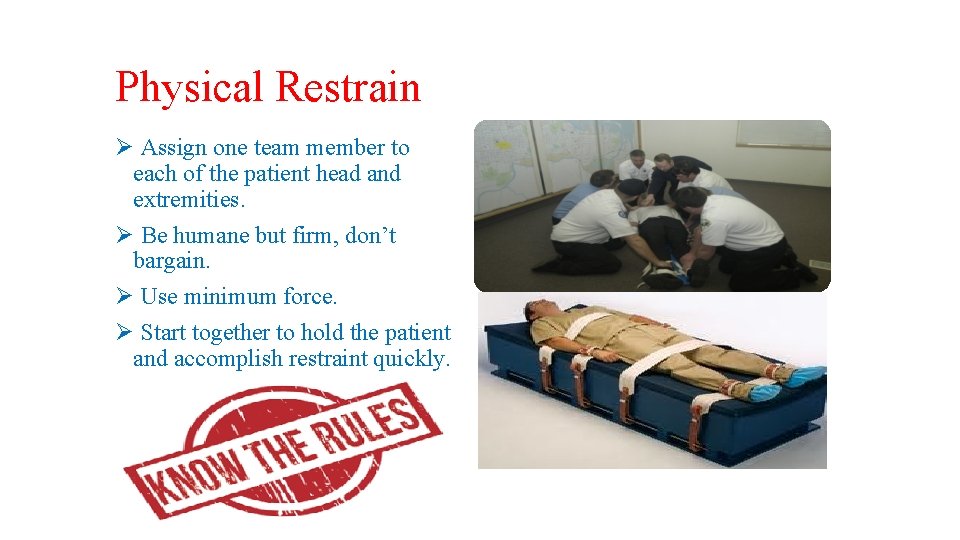
Physical Restrain Ø Assign one team member to each of the patient head and extremities. Ø Be humane but firm, don’t bargain. Ø Use minimum force. Ø Start together to hold the patient and accomplish restraint quickly.
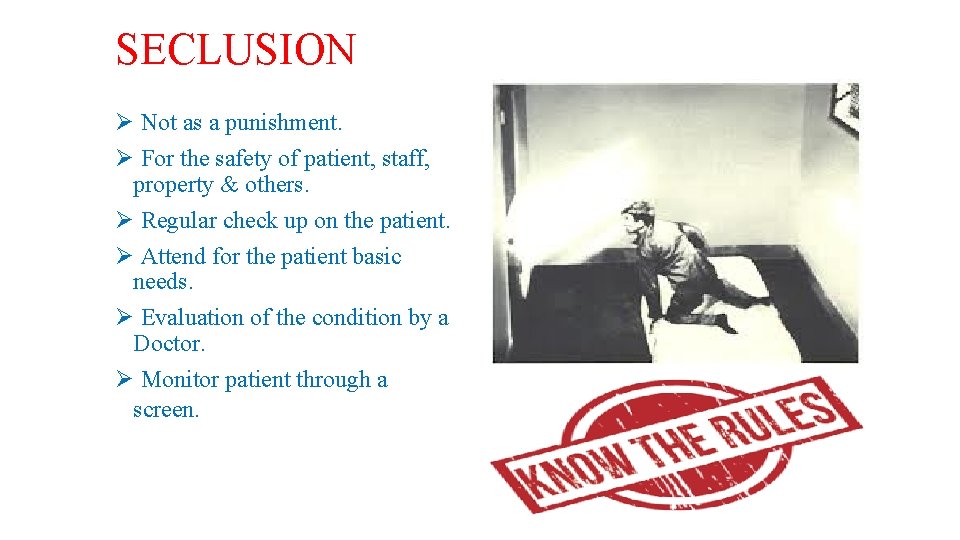
SECLUSION Ø Not as a punishment. Ø For the safety of patient, staff, property & others. Ø Regular check up on the patient. Ø Attend for the patient basic needs. Ø Evaluation of the condition by a Doctor. Ø Monitor patient through a screen.
Medication Ø Typical antipsychotics : Ø Chlorpromazine 50 -100 mg IM Ø Haloperidol 5 -10 mg IM or IV Ø Clopixol Aquaphase 50 -100 mg IM Ø Atypical antipsychotics : Ø Risperidone 4 mg Ø Olanzapine 10 mg IM Ø Benzodiazepine : Ø Diazepam 5 -10 mg IV. Ø Lorazepam 1 -2 mg PO/IM Ø In epilepsy, withdrawal of alcohol or barbiturates.
Hospitalization Ø Admission may be needed to a secured psychiatric ward for further assessment and treatment
Assessment and Management of Suicidal Patients.
Suicide and Psychiatrists “ It is a clinical axiom that there are two kinds of psychiatrists - those who have had patients complete suicide and those who will” (Preventing Patient Suicide: Clinical Assessment and Management )
Introduction: Ø Suicide risk assessment is a core competency that psychiatrists are expected to acquire. Ø Most common psychiatric emergency. Ø 50 % of all urgent psychiatric consults being related to suicidal thoughts or attempts. Ø All mental disorder increase the lifetime risk of suicide. Ø Screening for suicidal ideations should be done on every patient presenting with a mental health concern. Ø Suicide are among the most traumatic events in a psychiatrist’s professional life.
Suicide - definitions Ø Suicide: Self inflicted death with evidence (either explicit or implicit) that the person intended to die. Ø Suicidal ideation: Thoughts of engaging in behavior intended to end one’s life. Ø Suicidal plan: Formulation of a specific method through which one intends to die. Ø Suicidal attempt: Engagement in potentially self-injurious behavior in which there is at least some intent to die. Ø Suicidal intent: Subjective expectation and desire for a self destructive act to end in death. Ø Deliberate self harm: Willful self-inflicting of painful, destructive or injurious acts without intent to die.
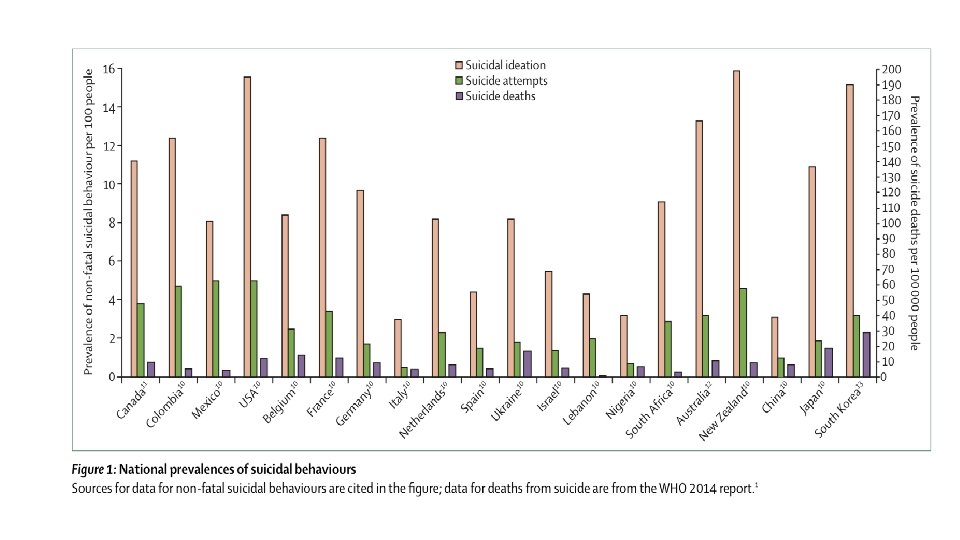
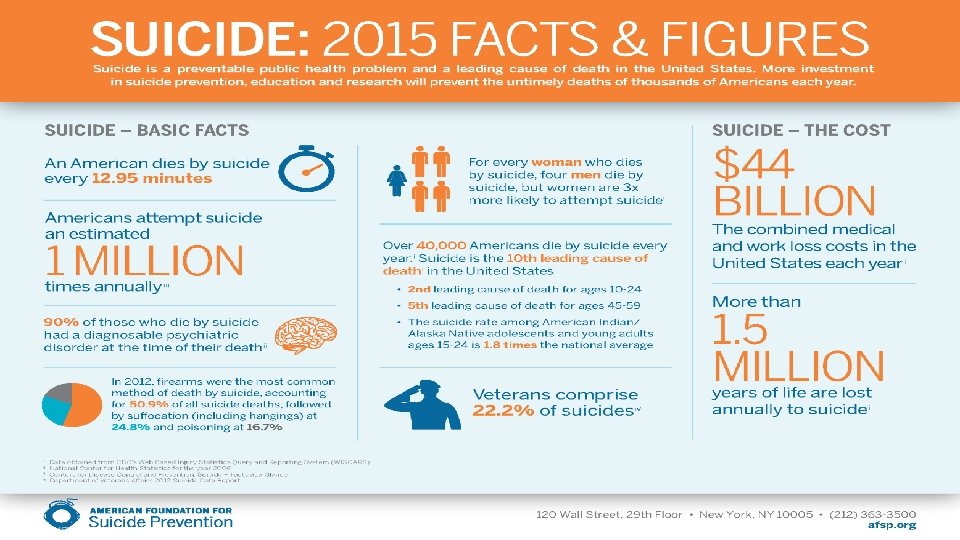
Epidemiology Ø Globally, an estimated 11. 4/100, 000 people commit suicides every year, resulting in 804, 000 deaths. Ø Individuals who reports suicide ideation with pervious 12 months have significantly higher 12 - months prevalence rates of suicide attempts (15. 1% in high-income countries and 20. 2% in low-income countries) Ø Suicide is the second leading cause of death in individuals age 15 -29 years. Ø Suicide rates very within and between countries, with as much as a tentimes difference between regions; this variation is partly correlated with economic status and cultural differences. Ø Cultural influences might TRUMP geographic location, because the suicide rates of immigrants are more closely correlated with their country of origin than with their adoptive country.
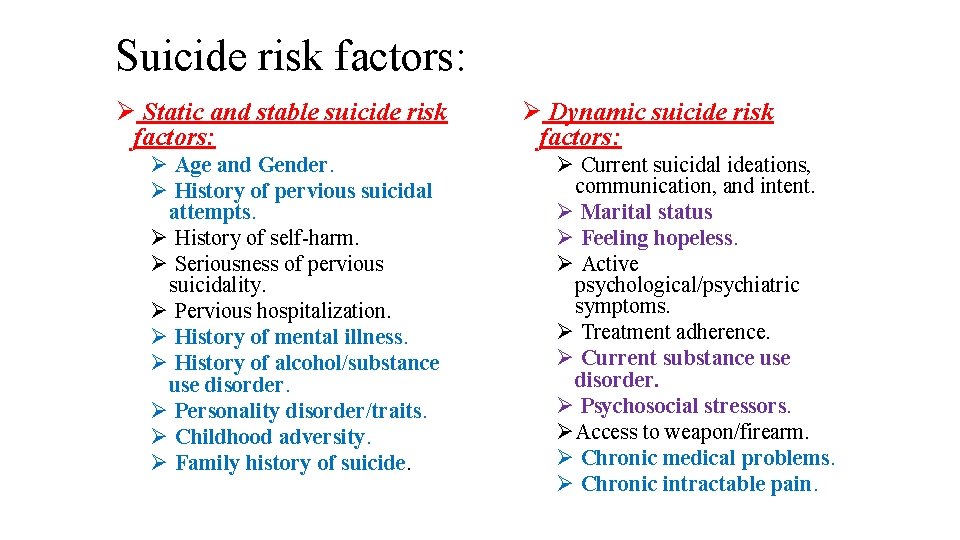
Suicide risk factors: Ø Static and stable suicide risk factors: Ø Age and Gender. Ø History of pervious suicidal attempts. Ø History of self-harm. Ø Seriousness of pervious suicidality. Ø Pervious hospitalization. Ø History of mental illness. Ø History of alcohol/substance use disorder. Ø Personality disorder/traits. Ø Childhood adversity. Ø Family history of suicide. Ø Dynamic suicide risk factors: Ø Current suicidal ideations, communication, and intent. Ø Marital status Ø Feeling hopeless. Ø Active psychological/psychiatric symptoms. Ø Treatment adherence. Ø Current substance use disorder. Ø Psychosocial stressors. ØAccess to weapon/firearm. Ø Chronic medical problems. Ø Chronic intractable pain.
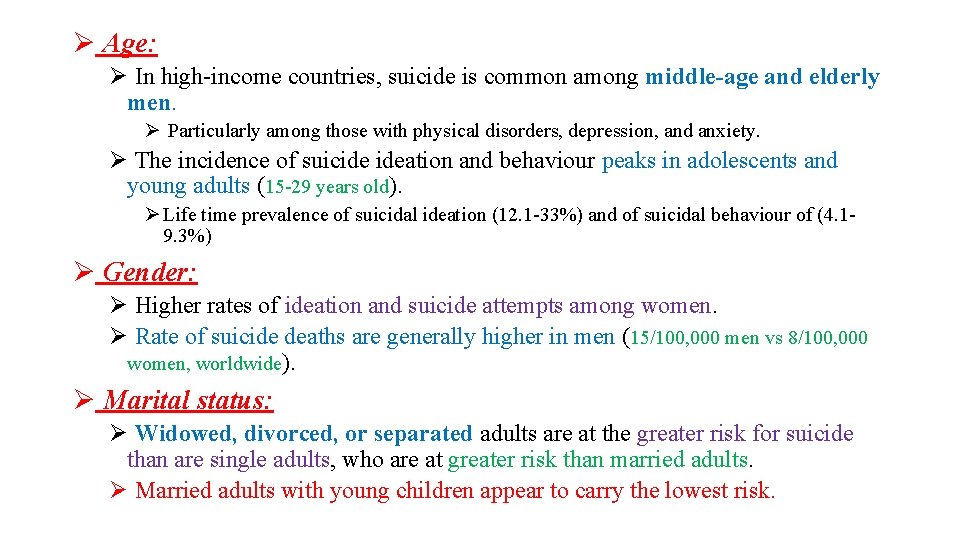
Ø Age: Ø In high-income countries, suicide is common among middle-age and elderly men. Ø Particularly among those with physical disorders, depression, and anxiety. Ø The incidence of suicide ideation and behaviour peaks in adolescents and young adults (15 -29 years old). Ø Life time prevalence of suicidal ideation (12. 1 -33%) and of suicidal behaviour of (4. 19. 3%) Ø Gender: Ø Higher rates of ideation and suicide attempts among women. Ø Rate of suicide deaths are generally higher in men (15/100, 000 men vs 8/100, 000 women, worldwide). Ø Marital status: Ø Widowed, divorced, or separated adults are at the greater risk for suicide than are single adults, who are at greater risk than married adults. Ø Married adults with young children appear to carry the lowest risk.
Ø History of pervious suicidal attempts: Ø Is one of the most powerful risk factors for completed and attempted suicide. Ø 10 -20 % of people with prior suicide attempts, complete suicide. Ø The risk for completed suicide following an attempted suicide is almost 100 times that of the general population in the year following the attempt. It then declines but remains elevated throughout the next 8 years. Ø People with prior suicide attempts are also at greater risk for subsequent attempts and have been found to account for approximately 50 % of serious overdose.
Ø History of alcohol/ substance use disorder: Ø 15 -25 % of patients with alcohol or drug dependence complete suicide. Ø 84 % suffer from both alcohol and drug dependence. Ø 20 % of people who complete suicide are legally intoxicated at the time of their death. Ø Associated with more pervasive suicidal ideation, more serious suicidal intent, more lethal suicide attempts, and a greater number of suicide attempts. Ø Use of alcohol and drugs may impair judgment and foster impulsivity.
Ø Personality disorder/Traits: Ø 4 -10 % of patients with borderline personality disorder commit suicide. Ø 5 % of patients with antisocial personality disorder commit suicide. Ø Risk appears to be greater for those with co-morbid depression or alcohol abuse. Ø Often make impulsive suicidal gestures or attempts. Ø Attempts may become progressively more lethal if they are not taken seriously. Ø Even manipulative gestures can turn be fatal. Ø Family history of suicide: Ø 7 -14 % of persons who attempts suicide have a family history of suicide. Ø This increased suicide risk may be mediated through: Ø Shared genetic predisposition for suicide, psychiatric disorders, or impulsive behaviour or shared family environment in which modeling and imitation are prominent.
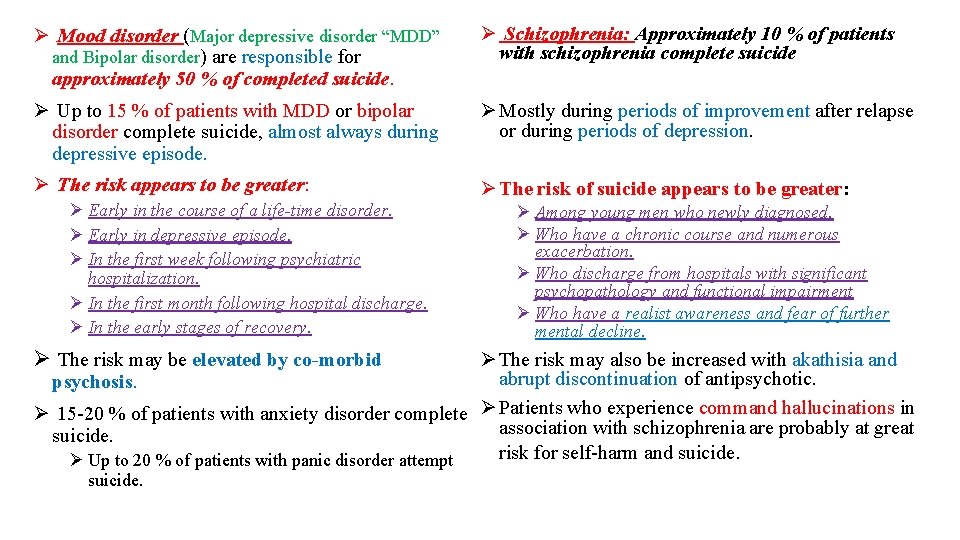
Ø History of mental illness: Ø Most consistently reported risk factor. Ø It is the most powerful risk factors for completed and attempted suicide. Ø All psychiatric disorders, except for intellectual disability, associated with increased risk. Ø 90% of individuals who die by suicide had an identifiable psychiatric disorder before death. Ø Severity of psychiatric illness is associated with increase risk of suicide. Ø Increased risk with multiple psychiatric comorbidities. Ø Most individuals with a psychiatric illness do not die by suicide, but some psychiatric illnesses are more strongly linked to suicidal behaviours than others.
Ø Mood disorder (Major depressive disorder “MDD” and Bipolar disorder) are responsible for approximately 50 % of completed suicide. Ø Schizophrenia: Approximately 10 % of patients with schizophrenia complete suicide Ø Up to 15 % of patients with MDD or bipolar disorder complete suicide, almost always during depressive episode. Ø Mostly during periods of improvement after relapse or during periods of depression. Ø The risk appears to be greater: Ø The risk of suicide appears to be greater: Ø Early in the course of a life-time disorder. Ø Early in depressive episode. Ø In the first week following psychiatric hospitalization. Ø In the first month following hospital discharge. Ø In the early stages of recovery. Ø The risk may be elevated by co-morbid Ø Among young men who newly diagnosed. Ø Who have a chronic course and numerous exacerbation. Ø Who discharge from hospitals with significant psychopathology and functional impairment Ø Who have a realist awareness and fear of further mental decline. Ø The risk may also be increased with akathisia and abrupt discontinuation of antipsychotic. psychosis. Ø 15 -20 % of patients with anxiety disorder complete Ø Patients who experience command hallucinations in association with schizophrenia are probably at great suicide. risk for self-harm and suicide. Ø Up to 20 % of patients with panic disorder attempt suicide.
Ø Chronic medical problems: Ø Medical illness, especially of a severe or chronic nature, is generally associated with an increased risk of suicide & considered a risk factor for completed suicide. Ø Medical disorders associated with 35 -40 % of suicides and up to 70 % of suicide in those older than 60. Ø AIDS/HIV, cancer, head trauma, epilepsy, multiple sclerosis, Huntington’s disease, Rheumatoid arthritis, …etc Ø Suicide risk might be increased due to: Ø Ø Ø Ø Poor diagnosis & poor pain control. Fatigue. Associated depression. Feeling hopeless. Recent loss or functional impairment. Delirium No social/family support
Ø Feeling hopeless: Ø Hopeless, or negative expectations about the future, is a stronger predictor of suicide than depression or suicidal ideation, and may be both a short-term and long-term predictor of completed suicide in patients with major depression. Ø Almost, all individuals who intentionally end their lives, irrespective of whether or not they meet structured criteria for a psychiatric disorder, show evidence of hopelessness, depressed mood, and suicidal ideation. Ø Association with lethality of attempt. Ø Interventions to reduce hopelessness may decrease suicide potential.
Ø Psychosocial stressors: Ø Personal losses (including diminution of self-esteem or status) and conflicts also place individuals, particularly young adults and adolescents at greater risk for suicide. Ø Grief / Bereavement following the death of a love one increases the risk for suicide over the next 4 -5 years. Ø People have psychiatric history and receive little family support. Ø Unemployment accounts for as many as one-third to one-half of completed suicide. Ø Particularly elevated among men. Ø Financial & legal difficulties also increase the risk for suicide.
Social suicidal risk factors: Ø Cultural and religious beliefs (e. g. , belief that suicide is noble resolution of a personal dilemma). Ø Local epidemics of suicide. Ø Barriers to accessing mental health treatment. Ø Easy access to lethal methods. Ø Unwillingness to seek help because of the stigma attached to mental health and substance abuse disorders or to suicidal thoughts.
Suicide- protective factors Ø Children in the home. Ø Sense of responsibility to the family. Ø Pregnancy. Ø Religiosity. Ø Life satisfaction. Ø Reality testing ability. Ø Positive coping skills. Ø Positive problem solving skills. Ø Positive social support. Ø Positive therapeutic relationships. (APA Practice Guidelines for Assessment and Treatment of Patients with Suicidal Behaviors)
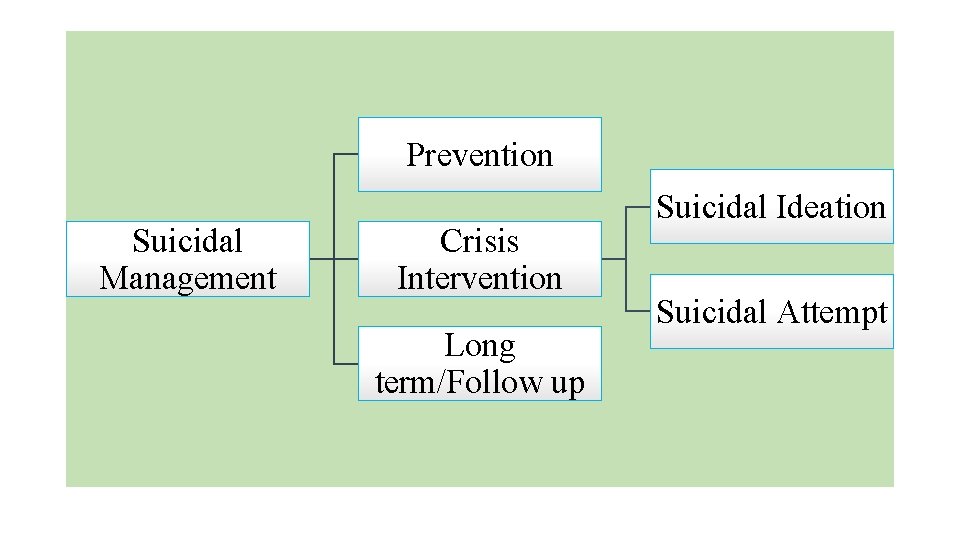
Prevention Suicidal Management Crisis Intervention Long term/Follow up Suicidal Ideation Suicidal Attempt
Prevention Ø To build a therapeutic alliance with patient. Ø Diagnose and manage different psychiatric illnesses. Ø Psychotropic medications Ø Psychotherapy Ø Identify high risk patients from the beginning. Ø Identify and detect suicidal ideations from the beginning. Ø Treat/manage modified/dynamic suicide risk factors from the beginning. Ø Substance/alcohol abuse. Ø Medical problems. Ø Chronic pain.
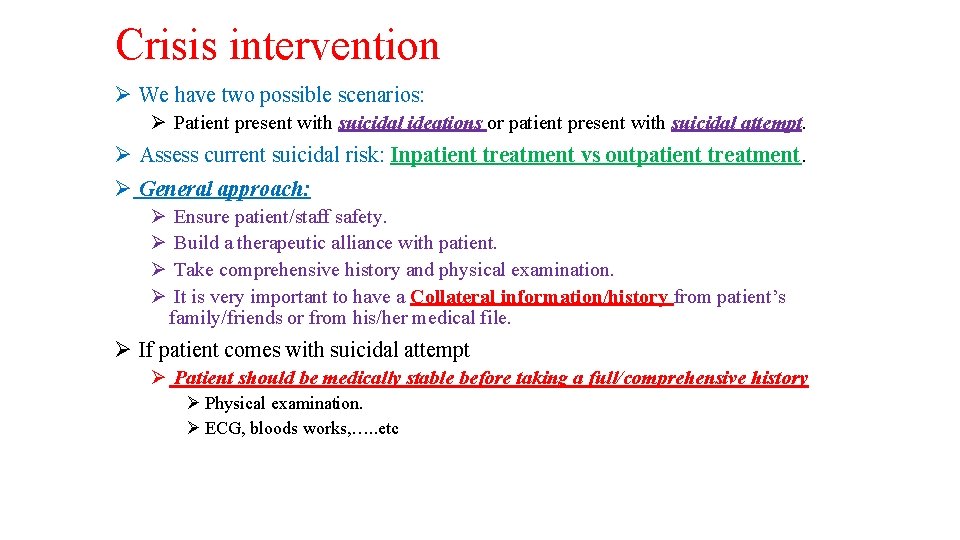
Crisis intervention Ø We have two possible scenarios: Ø Patient present with suicidal ideations or patient present with suicidal attempt. Ø Assess current suicidal risk: Inpatient treatment vs outpatient treatment. Ø General approach: Ø Ø Ensure patient/staff safety. Build a therapeutic alliance with patient. Take comprehensive history and physical examination. It is very important to have a Collateral information/history from patient’s family/friends or from his/her medical file. Ø If patient comes with suicidal attempt Ø Patient should be medically stable before taking a full/comprehensive history Ø Physical examination. Ø ECG, bloods works, …. . etc
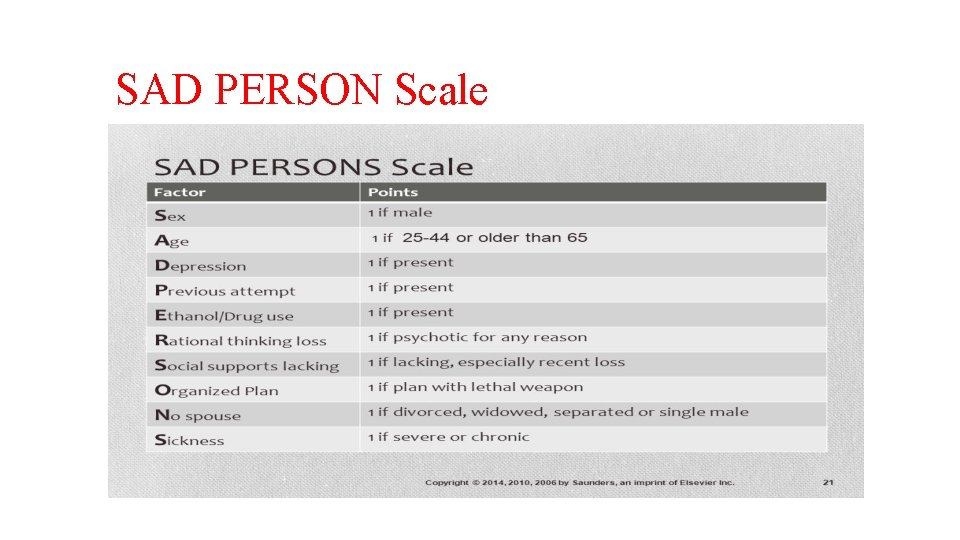
SAD PERSON Scale
Ø First scenario if patient present with suicidal ideation: Ø Use SAD PERSON Scale to identify current suicide risk factors Ø Assess suicidal ideations: Ø Passive suicidal ideation Ø Active suicidal ideation Ø Is there any organized plan? ? Ø Methods is accessible or not ? ? Weapon/drugs/rope Ø Rehearsal Ø Is there any intention to carry out this plan? Ø Any current protective factors. Ø Looking for possible triggers: Ø New onset/Worsen psychiatric symptoms: Ø Depression/anxiety/mania/psychosis Ø Current substance/alcohol abuse Ø Uncontrolled pain/medical problems Ø Psychosocial stressors ( loss, financial difficulty)
Ø Second scenario if patient present with suicidal attempt: Ø Use SAD PERSON Scale to identify current suicide risk factors Ø Assess suicidal attempt: Ø Impulsive vs planned Ø Assess if it was an organized plan Ø For how long he/she was thinking about this plan ? Ø Is there was any preparation ? Ø Any step/steps was taken to avoid discovery ? Ø Assess suicide methods: lethal (in patient mind) or not ? Ø Was patient intoxicated or not during this attempt ? Ø Assess what was the real goal from this attempt ? Ø Assess what patient did after this suicidal attempt ? Ø Looking for possible triggers (see the pervious slides)
Warning Sign: Ø The person making a will. Ø Getting his or her affairs in order. Ø Suddenly visiting friends or family members. Ø Buying instruments of suicide like a gun, hose, rope, medications. Ø Sudden and significant decline or improvement in mood. Ø Writing a suicide note.
Follow up Ø Family involvement is very crucial in this process. Ø Immediate/ short term plan: Ø Gun/weapon removal Ø Designate a willing responsible person to remove guns Ø Direct contact with designated person confirming removal Ø Do not discharge suicidal patient till confirmation. Ø Arrange follow up. Ø Long term plan: Frequent follow up (depend on patient’s need) Ø In each visit monitor: Ø Suicidal ideation/plan Ø Psychiatric symptoms. Ø Trigger / Precipitating factors: Ø Substance/alcohol Ø Medication adherence. Ø Pain/medical problems Ø psychosocial stressors
Suicide risk documentation Ø Risk assessment including documentation of risk/protective factors. Ø Record of decision making process. Ø Record of communication with other clinicians and family members. Ø Medical records of previous treatment. Ø Address firearms. Ø Consultation in difficult cases.
Myths about suicide: Ø Discussing suicide will provoke it. Ø Suicide strikes only the rich. Ø Showing generosity and sharing personal possessions is showing sign of recovery. Ø Suicide is always impulsive. Ø It is a painless way to die. Ø Once suicidal, always suicidal. Ø Those who threaten it, don’t do it. Dr. A. Marshall, 2008