
Assessment and Management of Patients With Hepatic Disorders
- Slides: 34
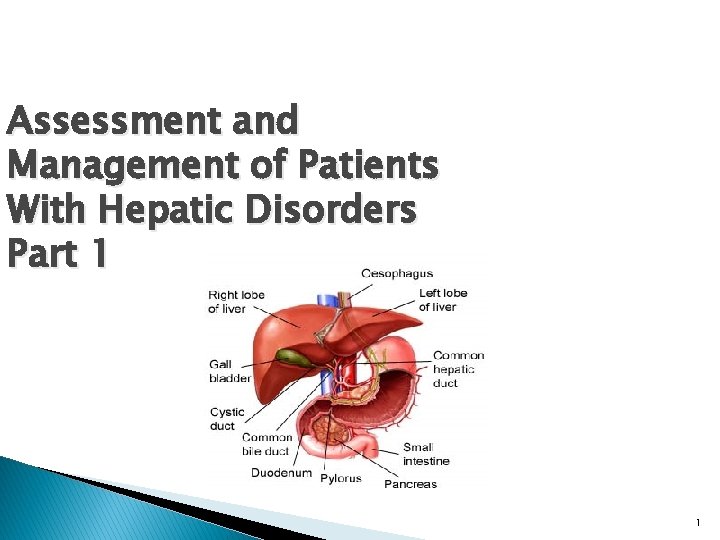
Assessment and Management of Patients With Hepatic Disorders Part 1 1
Anatomic and Physiologic Overview � The liver, the largest gland of the body (1. 4 -1. 8 kg), can be considered a chemical factory that manufactures, stores, alters, and excretes a large number of substances involved in metabolism. � The location of the liver is essential in this function, because it receives nutrient-rich blood directly from the gastrointestinal (GI) tract and then either stores or transforms these nutrients into chemicals that are used elsewhere in the body for metabolic needs. 2
� The liver is especially important in the regulation of glucose and protein metabolism. � The liver manufactures and secretes bile, which has a major role in the digestion and absorption of fats in the GI tract. It removes waste products from the bloodstream and secretes them into the bile. � The bile produced by the liver is stored temporarily in the gallbladder until it is needed for digestion, at which time the gallbladder empties and bile enters the intestine 3
4
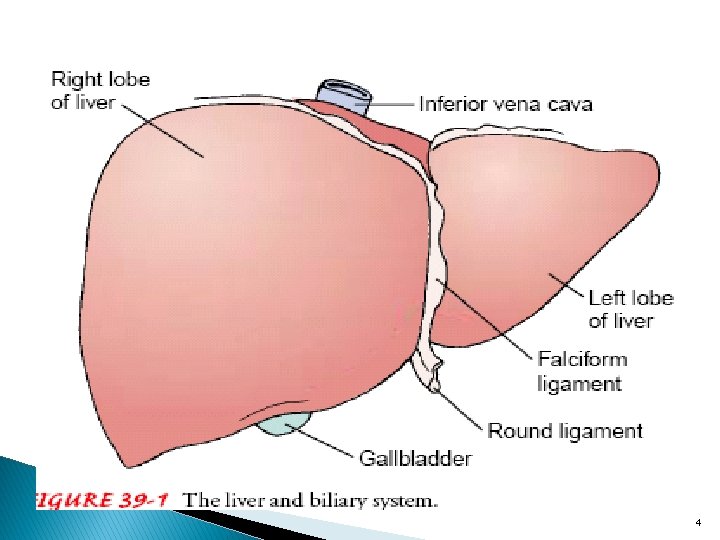
ANATOMY OF THE LIVER � The liver is located behind the ribs in the upper right portion of the abdominal cavity. It weighs about 1, 500 g and is divided into four lobes. �A thin layer of connective tissue surrounds each lobe, extending into the lobe itself and dividing the liver mass into small units called lobules 5
6
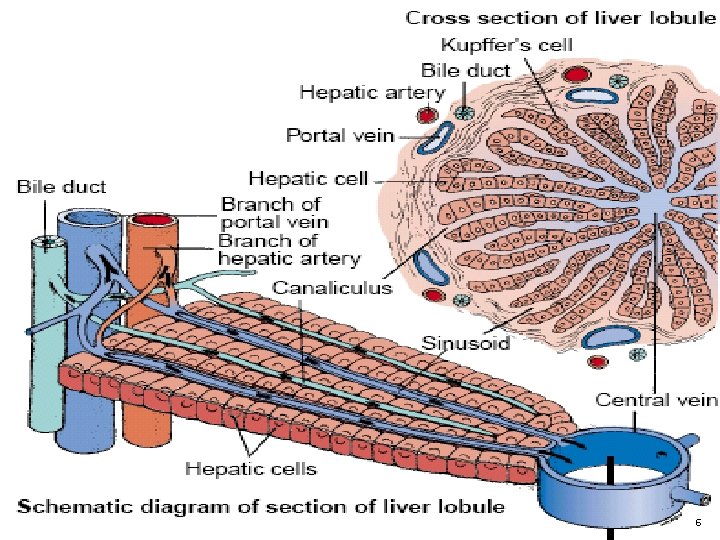
� The circulation of the blood into and out of the liver is of major importance in its function. The blood that perfuse the liver comes from two sources. ◦ Approximately 75% of the blood supply comes from the portal vein, which drains the GI tract and is rich in nutrients. ◦ The remainder of the blood supply enters by way of the hepatic artery and is rich in oxygen. ◦ Terminal branches of these two blood supplies join to form common capillary beds, which constitute the sinusoids of the liver 7
� The sinusoids empty into a venule that occupies the center of each liver lobule and is called the central vein. � The central veins join to form the hepatic vein, which constitutes the venous drainage from the liver and empties into the inferior vena cava, close to the diaphragm. Thus, there are two sources of blood flowing into the liver and only one exit pathway 8
� In addition to hepatocytes, phagocytic cells belonging to reticuloendothelial system are present in the liver. Other organs that contain reticuloendothelial cells are the spleen, bone marrow, lymph nodes, and lungs. � In the liver, these cells are called Kupffer cells. Their main function is to engulf particulate matter (such as bacteria) that enters the liver through the portal blood. 9
Canaliculi � The smallest bile ducts, called canaliculi, are located between the lobules of the liver. � The canaliculi receive secretions from the hepatocytes and carry them to larger bile ducts, which eventually form the hepatic duct. � The hepatic duct from the liver and the cystic duct from the gallbladder join to form the common bile duct, which empties into the small intestine. � The sphincter of Oddi, located at the junction where the common bile duct enters the duodenum, controls the flow of bile into the intestine. 10
FUNCTIONS OF THE LIVER 1 -Glucose Metabolism � After a meal, glucose is taken up from the portal venous blood by the liver and converted into glycogen, which is stored in the hepatocytes. � Subsequently, the glycogen is converted back to glucose and released as needed into the bloodstream to maintain normal levels of blood glucose. � Additional glucose can be synthesized by the liver through a process called gluconeogenesis. For this process, the liver uses amino acids from protein breakdown or lactate produced by exercising muscles. 11
2 -Ammonia Conversion � Use of amino acids from protein for gluconeogenesis results in the formation of ammonia as a byproduct. The liver converts this metabolically generated ammonia into urea. � Ammonia produced by bacteria in the intestines is also removed from portal blood for urea synthesis. In this way, the liver converts ammonia, a potential toxin, into urea, a compound that can be excreted in the urine. 12
3 -Protein Metabolism The liver synthesizes almost all of the � plasma proteins (except gamma globulin), including albumin, alpha and beta globulins, blood clotting factors, specific transport proteins, and most of the plasma lipoproteins. Amino acids serve as the building blocks for protein synthesis. Vitamin K is required by the liver for � synthesis of prothrombin and some of the other clotting factors. � 13
4 - Fat Metabolism � Fatty acids can be broken down for the production of energy and the production of ketone bodies. � Ketone bodies are small compounds that can enter the bloodstream and provide a source of energy for muscles and other tissues. � Breakdown of fatty acids into ketone bodies occurs primarily when the availability of glucose for metabolism is limited, as during starvation or in uncontrolled diabetes. � Fatty acids and their metabolic products are also used for the synthesis of cholesterol, lecithin, lipoproteins, and other complex lipids. 14
5 - Vitamin and Iron Storage � Vitamins A, B, and D and several of the Bcomplex vitamins are stored in large amounts in the liver. � Iron and copper, are also stored in the liver. � Because the liver is rich in these substances, liver extracts have been used for therapy for a wide range of nutritional disorders. 15
7 -Drug Metabolism � The liver metabolizes many medications � Metabolism generally results in loss of activity of the medication, although in some cases activation of the medication may occur. � One of the important pathways for medication metabolism involves conjugation (binding) of the medication with a variety of compounds, such as glucuronic or acetic acid, to form more soluble substances. � The conjugated products may be excreted in the feces or urine, similar to bilirubin excretion. 16
8 -Bile Formation � Bile is continuously formed by the hepatocytes and collected in the canaliculi and bile ducts. � It is composed mainly of water and electrolytes such as sodium, potassium, calcium, chloride, and bicarbonate, and significant amounts of lecithin, fatty acids, cholesterol, bilirubin, and bile salts. � Bile is collected and stored in the gallbladder and is emptied into the intestine when needed for digestion. � Bile also serves as an aid to digestion through the emulsification of fats by bile salts. 17
� Bile salts are synthesized by the hepatocytes from cholesterol. After conjugation or binding with amino acids, they are excreted into the bile. � The bile salts, together with cholesterol and lecithin, are required for emulsification of fats in the intestine, which is necessary for efficient digestion and absorption. � Bile salts are then reabsorbed, primarily in the distal ileum, into portal blood for return to the liver and are again excreted into the bile. 18
9 - Bilirubin Excretion � Bilirubin is a pigment derived from the breakdown of hemoglobin by cells of the reticuloendothelial system. � Hepatocytes remove bilirubin from the blood and modify it to be more soluble in aqueous solutions. � The conjugated bilirubin is secreted by the hepatocytes into the adjacent bile canaliculi and is eventually carried in the bile into the duodenum. � In the small intestine, bilirubin is converted into urobilinogen, which is in part excreted in the feces and in part absorbed through the intestinal mucosa into the portal blood. � Some of the urobilinogen enters the systemic circulation and is excreted by the kidneys in the urine. 19
Gerontologic Considerations � The most common change in the liver in the elderly is a decrease in its size and weight, accompanied by a decrease in total hepatic blood flow. � Results of liver function tests do not normally change in the elderly; abnormal results in an elderly patient indicate abnormal liver function and are not the result of the aging process itself. � The immune system is altered in the aged, and a less responsive immune system may be responsible for the increased incidence and severity of hepatitis B in the elderly and the increased incidence of liver abscesses secondary to decreased phagocytosis by the Kupffer cells. 20
Age-Related Changes of the Hepatobiliary System � Steady decrease in size and weight of the liver, particularly in women. � Decrease in blood flow. � Decrease in replacement/repair of liver cells after injury. � Reduced drug metabolism. � Rapid progression of hepatitis C infection and lower response rate to therapy. � Decline in drug clearance capability. � Increased prevalence of gallstones. � Decreased gallbladder contraction after a meal. � More severe complications of biliary tract disease. 21
Assessment HEALTH HISTORY � If liver function test results are abnormal, the patient may need to be evaluated for liver disease. So look if the client: ◦ Was exposed to hepatotoxic substances or infectious agents. ◦ Patient’s occupational, recreational, and travel history may assist in identifying exposure to hepatotoxins ◦ Patient’s history of alcohol and drug use ◦ Lifestyle behaviors (Injectable drug use, sexual practices) ◦ Current and past medical conditions, previous blood transfusion. 22
PHYSICAL EXAMINATION � Assess the patient for pallor, jaundice (skin, mucosa, and sclerae), and the extremities are assessed for muscle atrophy, edema, and skin excoriation secondary to scratching. � Observe the skin for petechiae or ecchymotic areas (bruises), spider angiomas, and palmar erythema. � Assess male patient for unilateral or bilateral gynecomastia and testicular atrophy due to endocrine changes. � Asses patient’s cognitive status (recall, memory, abstract thinking) and neurologic status are assessed. 23
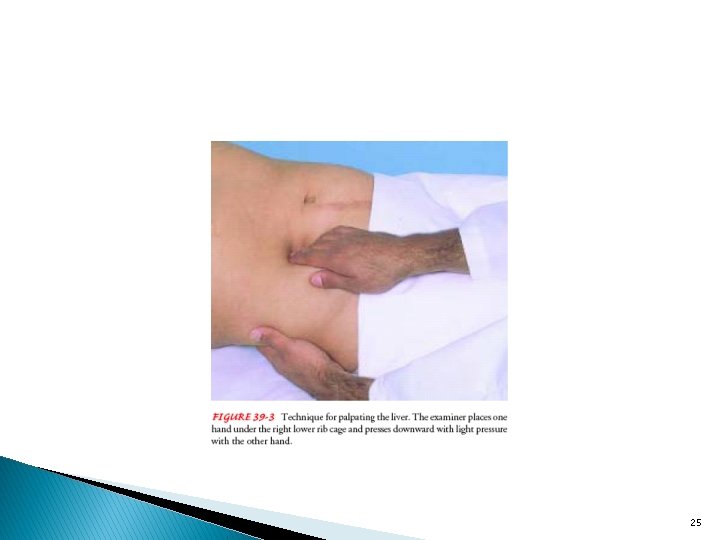
� Palpate abdomen to assess liver size and to detect any tenderness over the liver. A palpable liver presents as a firm, sharp edge with a smooth surface � Tenderness of the liver implies recent acute enlargement with consequent stretching of the liver capsule. � Enlargement of the liver is an abnormal finding requiring evaluation. 24
25
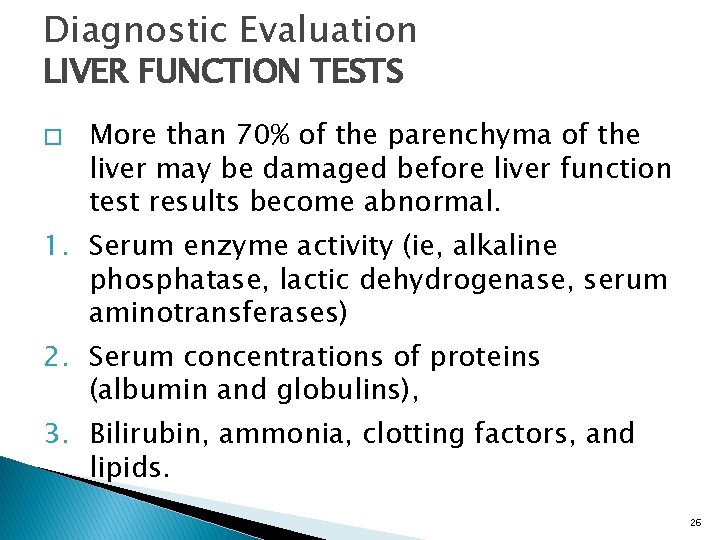
Diagnostic Evaluation LIVER FUNCTION TESTS � More than 70% of the parenchyma of the liver may be damaged before liver function test results become abnormal. 1. Serum enzyme activity (ie, alkaline phosphatase, lactic dehydrogenase, serum aminotransferases) 2. Serum concentrations of proteins (albumin and globulins), 3. Bilirubin, ammonia, clotting factors, and lipids. 26
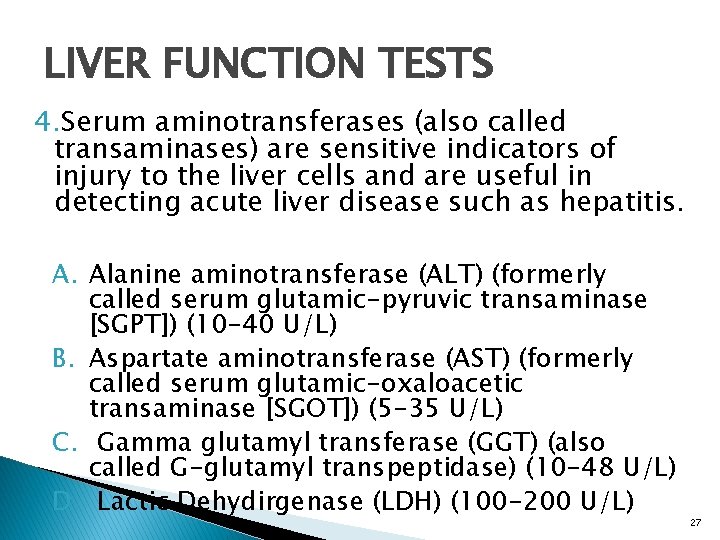
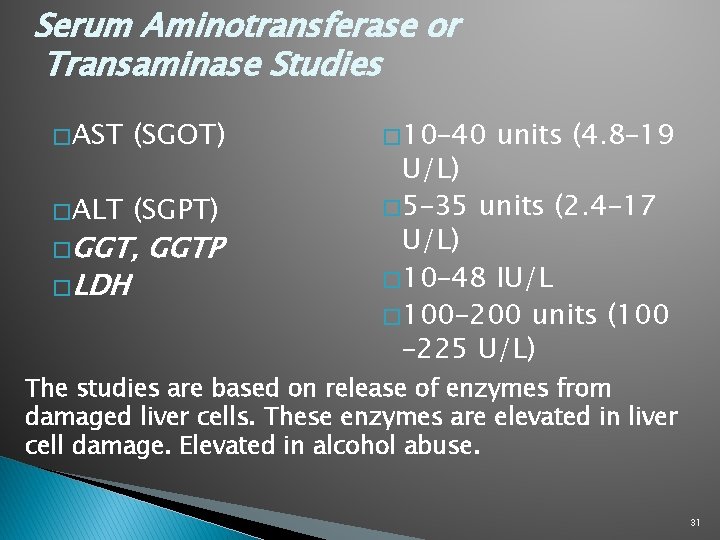
LIVER FUNCTION TESTS 4. Serum aminotransferases (also called transaminases) are sensitive indicators of injury to the liver cells and are useful in detecting acute liver disease such as hepatitis. A. Alanine aminotransferase (ALT) (formerly called serum glutamic-pyruvic transaminase [SGPT]) (10 -40 U/L) B. Aspartate aminotransferase (AST) (formerly called serum glutamic-oxaloacetic transaminase [SGOT]) (5 -35 U/L) C. Gamma glutamyl transferase (GGT) (also called G-glutamyl transpeptidase) (10 -48 U/L) D. Lactic Dehydirgenase (LDH) (100 -200 U/L) 27
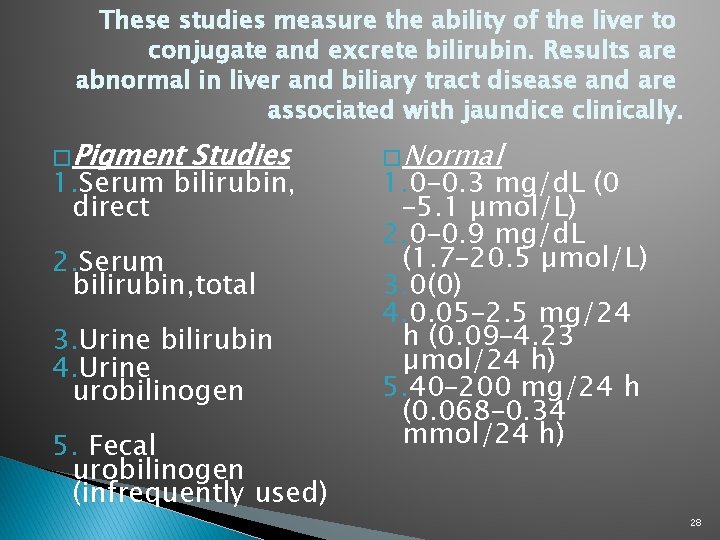
These studies measure the ability of the liver to conjugate and excrete bilirubin. Results are abnormal in liver and biliary tract disease and are associated with jaundice clinically. � Pigment Studies 1. Serum bilirubin, direct 2. Serum bilirubin, total 3. Urine bilirubin 4. Urine urobilinogen 5. Fecal urobilinogen (infrequently used) � Normal 1. 0– 0. 3 mg/d. L (0 – 5. 1 µmol/L) 2. 0– 0. 9 mg/d. L (1. 7– 20. 5 µmol/L) 3. 0(0) 4. 0. 05– 2. 5 mg/24 h (0. 09– 4. 23 µmol/24 h) 5. 40– 200 mg/24 h (0. 068– 0. 34 mmol/24 h) 28
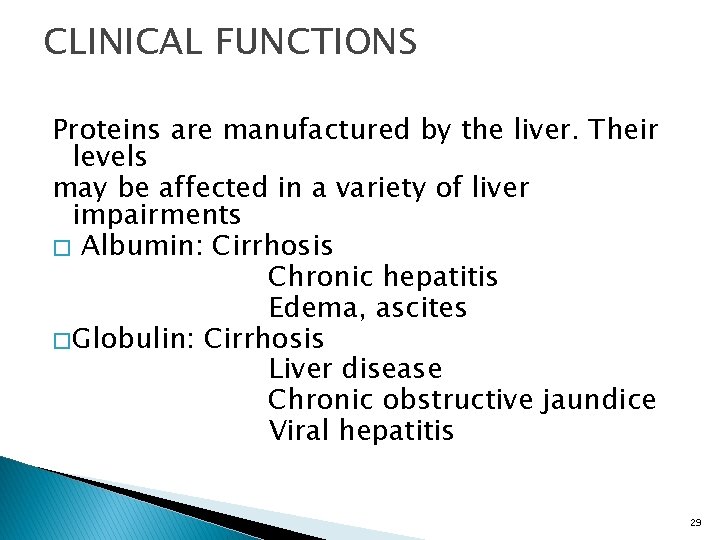
CLINICAL FUNCTIONS Proteins are manufactured by the liver. Their levels may be affected in a variety of liver impairments � Albumin: Cirrhosis Chronic hepatitis Edema, ascites � Globulin: Cirrhosis Liver disease Chronic obstructive jaundice Viral hepatitis 29
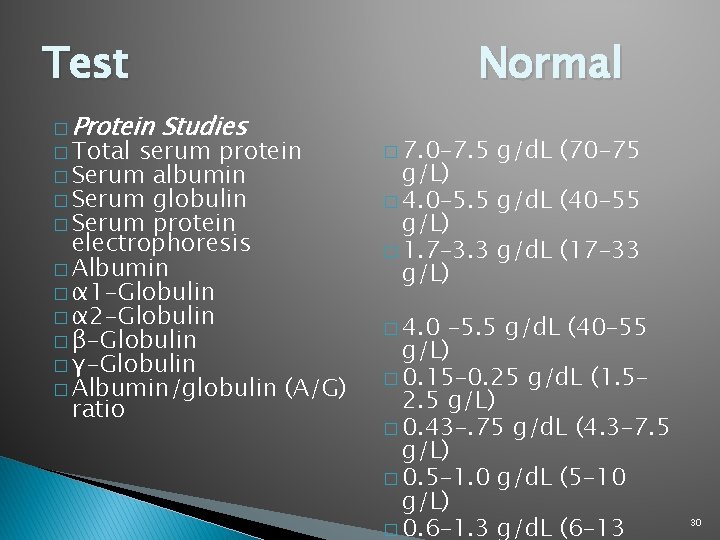
Test � Protein Studies � Total serum protein � Serum albumin � Serum globulin � Serum protein electrophoresis � Albumin � α 1 -Globulin � α 2 -Globulin � β-Globulin � γ-Globulin � Albumin/globulin (A/G) ratio Normal � 7. 0– 7. 5 g/d. L (70– 75 g/L) � 4. 0– 5. 5 g/d. L (40– 55 g/L) � 1. 7– 3. 3 g/d. L (17– 33 g/L) � 4. 0 – 5. 5 g/d. L (40– 55 g/L) � 0. 15– 0. 25 g/d. L (1. 5– 2. 5 g/L) � 0. 43–. 75 g/d. L (4. 3– 7. 5 g/L) � 0. 5– 1. 0 g/d. L (5– 10 g/L) � 0. 6– 1. 3 g/d. L (6– 13 30
Serum Aminotransferase or Transaminase Studies � AST (SGOT) � ALT (SGPT) � GGT, � LDH GGTP � 10– 40 units (4. 8– 19 U/L) � 5– 35 units (2. 4– 17 U/L) � 10– 48 IU/L � 100– 200 units (100 – 225 U/L) The studies are based on release of enzymes from damaged liver cells. These enzymes are elevated in liver cell damage. Elevated in alcohol abuse. 31
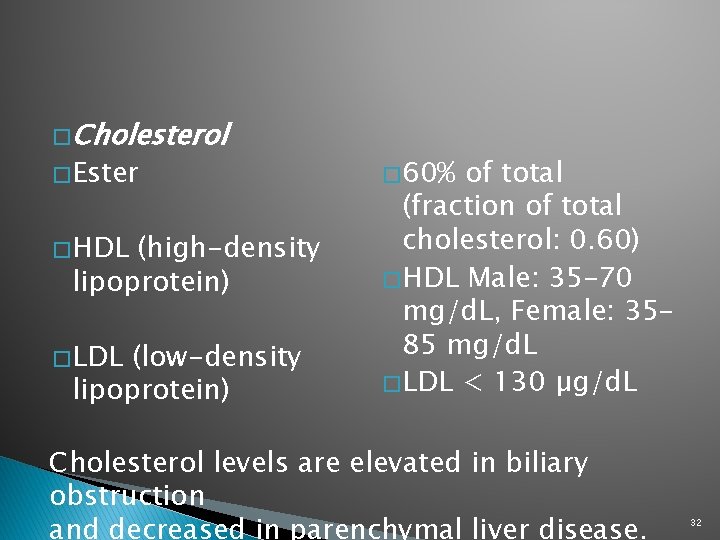
� Cholesterol � Ester � HDL (high-density lipoprotein) � LDL (low-density lipoprotein) � 60% of total (fraction of total cholesterol: 0. 60) � HDL Male: 35– 70 mg/d. L, Female: 35– 85 mg/d. L � LDL < 130 µg/d. L Cholesterol levels are elevated in biliary obstruction and decreased in parenchymal liver disease. 32
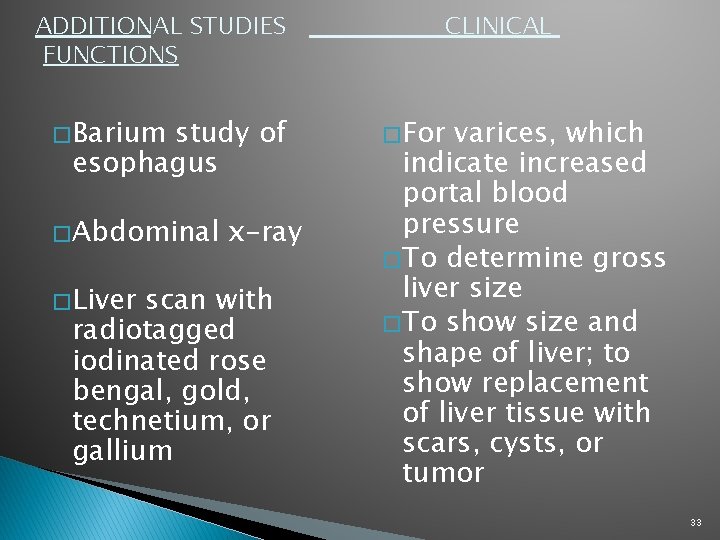
ADDITIONAL STUDIES FUNCTIONS � Barium study of esophagus � Abdominal � Liver x-ray scan with radiotagged iodinated rose bengal, gold, technetium, or gallium CLINICAL � For varices, which indicate increased portal blood pressure � To determine gross liver size � To show size and shape of liver; to show replacement of liver tissue with scars, cysts, or tumor 33
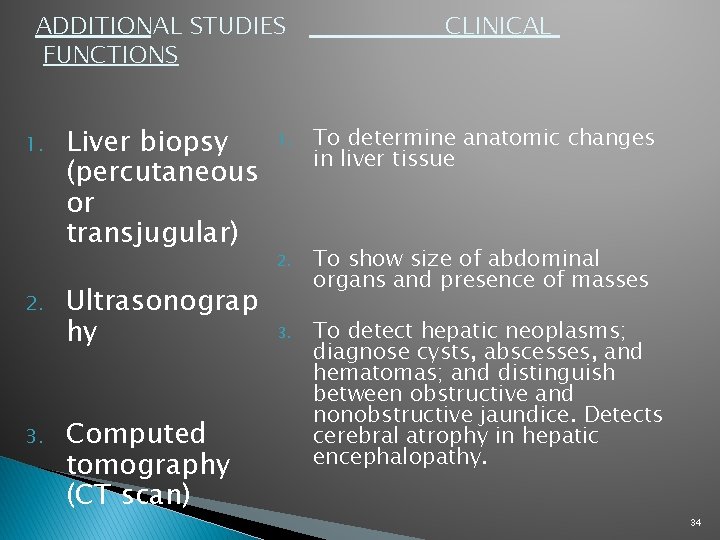
ADDITIONAL STUDIES FUNCTIONS 1. 2. 3. Liver biopsy (percutaneous or transjugular) Ultrasonograp hy Computed tomography (CT scan) CLINICAL 1. To determine anatomic changes in liver tissue 2. To show size of abdominal organs and presence of masses 3. To detect hepatic neoplasms; diagnose cysts, abscesses, and hematomas; and distinguish between obstructive and nonobstructive jaundice. Detects cerebral atrophy in hepatic encephalopathy. 34