
Assessment and feedback John Canning Centre for Learning
Assessment and feedback John Canning Centre for Learning and Teaching University of Brighton j. canning@brighton. ac. uk
Why do we have assessment? (5 minutes) Discuss with a partner: What is assessment? Why do we have assessment?

What is assessment? the action or an instance of making a judgment about something : the act of assessing something : https: //www. merriam-webster. com/dictionary/assessment

What do we assess? Written: Exams, essays, reports, lab reports, annotated bibliographies Oral: presentation, speaking exams Production: computer programs, artefacts, drawings Visual: Drawings, paintings, plans, posters Practical: simulations, experiments, workplacement See Victoria Burns (2015 ed. )
Who assesses? Lecturers/ teachers at university Workplace supervisors Service users Students assessing each othter Visiting/ guest lecturer
Assessment in HE: Terminology Formative: assessment and feedback on work which does not ‘count’ towards a final mark Summative: assessment and feedback on work which ‘counts’ towards a final mark
Evaluating assessment (from Phil Race) 1 Validity. Is it assessing what we think we are assessing? Reliability: Is there inter-marker reliability in your assessment? Transparency: Is the assessment fair? Do the learners know what they need to do to be successful?
Evaluating assessment (from Phil Race) 2 Authenticity: How does this relate to what students will actually do in their profession? Inclusivity: Does it unfairly exclude some students? e. g. on grounds of disability. Whodunnit? How do we know this is the student’s actual work? Is assessment driving learning? Not all of these can be done perfectly
Assessment and Learning outcomes Constructive alignment (John Biggs) 1. Students construct meaning from what they learn. a) Link new material/ concepts/ knowledge to existing experiences b) Build on existing and new knowledge and concepts to extrapolate to future scenarios.
Constructive alignment (2) 2. Alignment of a) Learning outcomes b) Teaching and Learning activities c) Assessment activities Critical for design of modules and degree programmes.
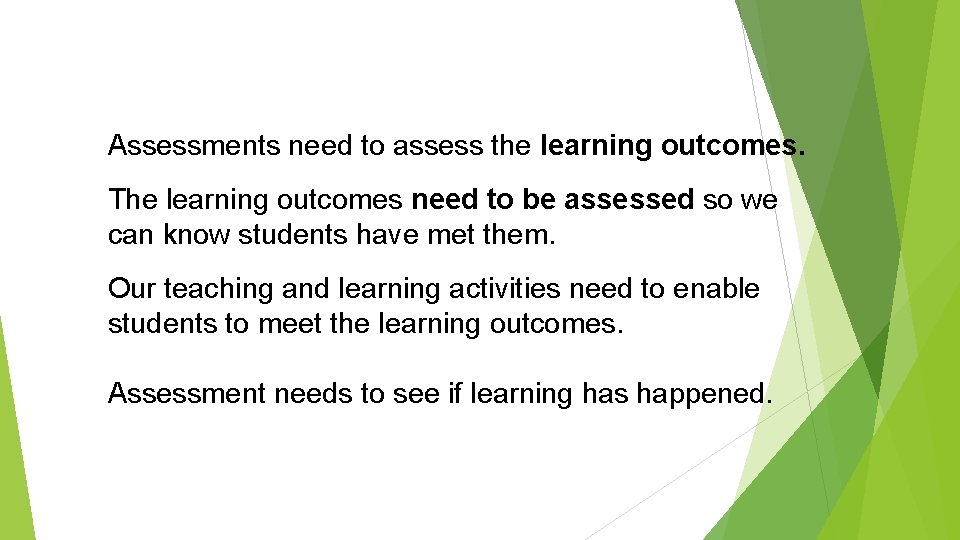
To confirm Assessments need to assess the learning outcomes. The learning outcomes need to be assessed so we can know students have met them. Our teaching and learning activities need to enable students to meet the learning outcomes. Assessment needs to see if learning has happened.
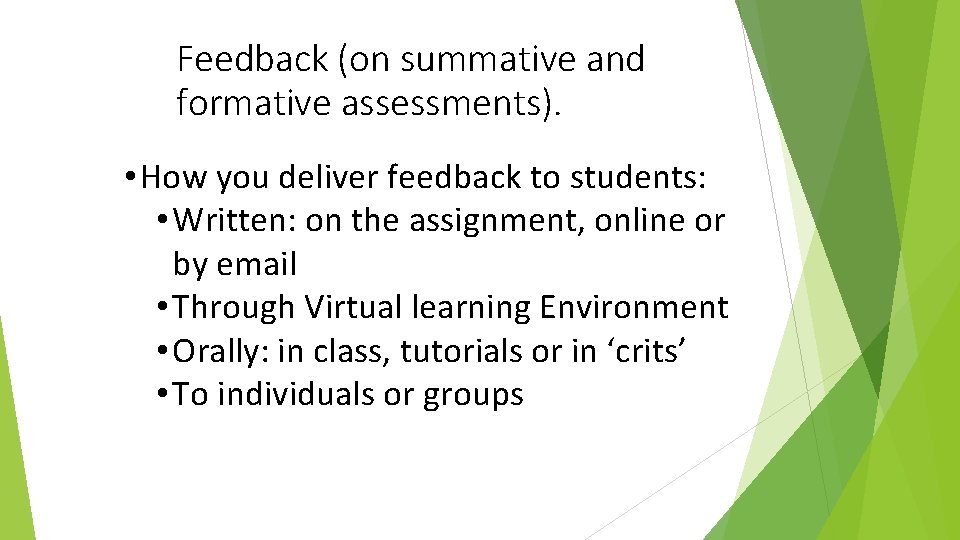
Feedback (on summative and formative assessments). • How you deliver feedback to students: • Written: on the assignment, online or by email • Through Virtual learning Environment • Orally: in class, tutorials or in ‘crits’ • To individuals or groups
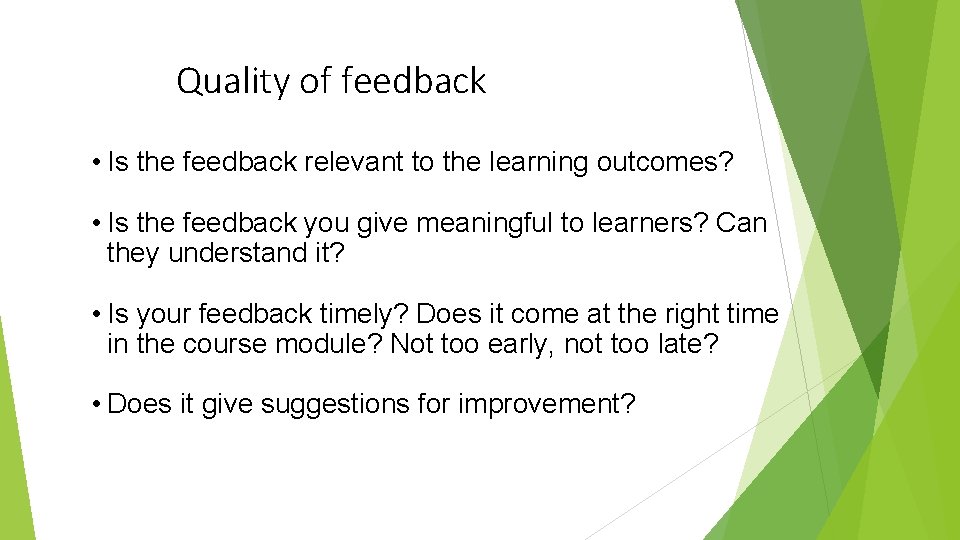
Quality of feedback • Is the feedback relevant to the learning outcomes? • Is the feedback you give meaningful to learners? Can they understand it? • Is your feedback timely? Does it come at the right time in the course module? Not too early, not too late? • Does it give suggestions for improvement?

Contact Dr John Canning, Centre for Learning and Teaching, University of Brighton j. canning@brighton. ac. uk
- Slides: 14