
Assessing the Global Water System a Holistic View
Assessing the Global Water System: a Holistic View of Key Elements and Datasets Using the Unified Modelling Language Marcel Endejan Global Water System Project (GWSP) International Project Office Bonn, Germany CODATA Conference, 23 -25 October 2006, Beijing
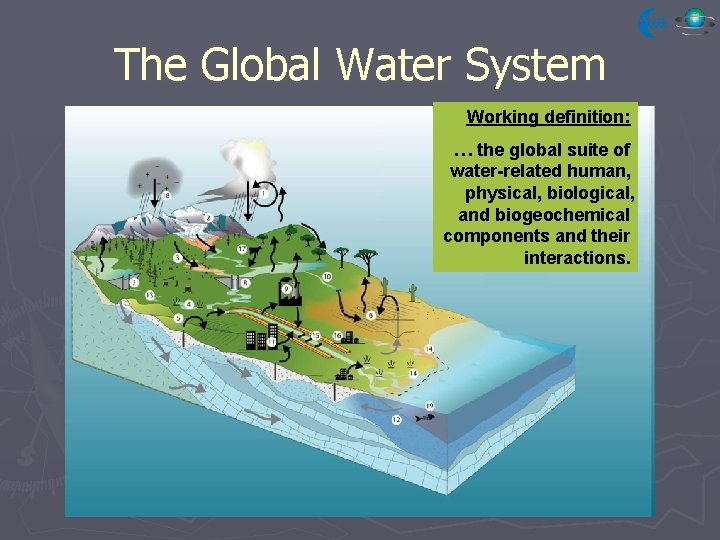
The Global Water System Working definition: … the global suite of water-related human, physical, biological, and biogeochemical components and their interactions.
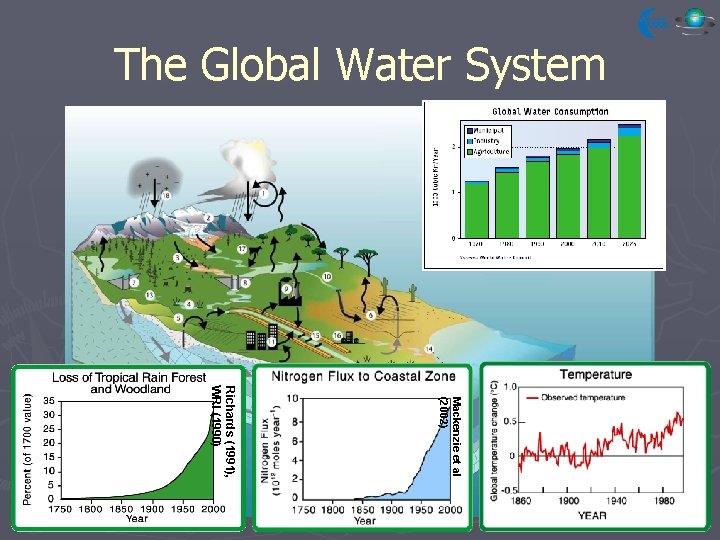
The Global Water System Mackenzie et al (2002) Richards (1991), WRI (1990)
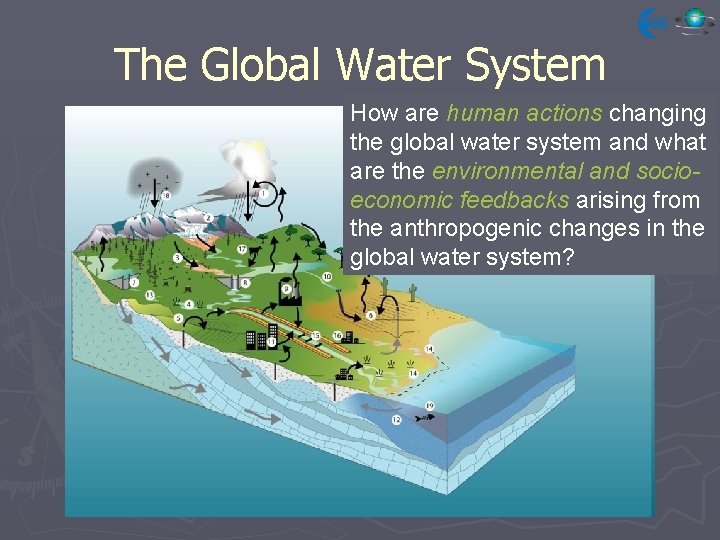
The Global Water System How are human actions changing Working definition: the global…water system the global suiteand of what water-related human, are the environmental and sociophysical, biological, economic feedbacks arising from and biogeochemical the anthropogenic componentschanges and their in the interactions. global water system?
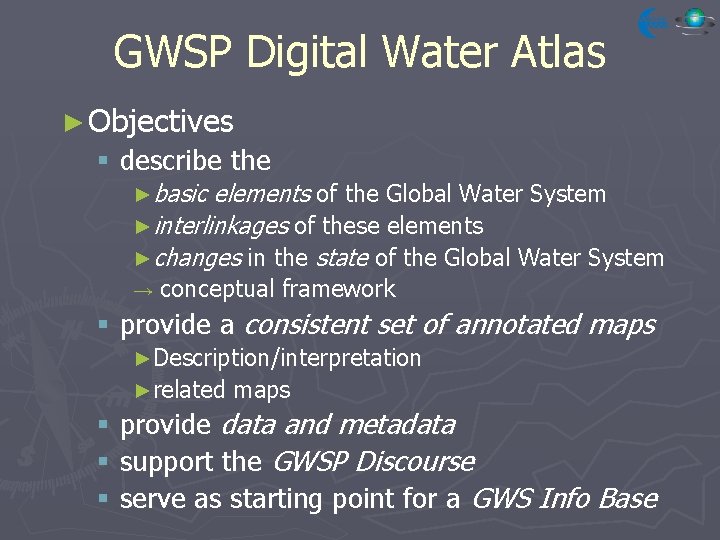
GWSP Digital Water Atlas ► Objectives § describe the ►basic elements of the Global Water System ►interlinkages of these elements ►changes in the state of the Global Water System → conceptual framework § provide a consistent set of annotated maps ►Description/interpretation ►related maps § provide data and metadata § support the GWSP Discourse § serve as starting point for a GWS Info Base
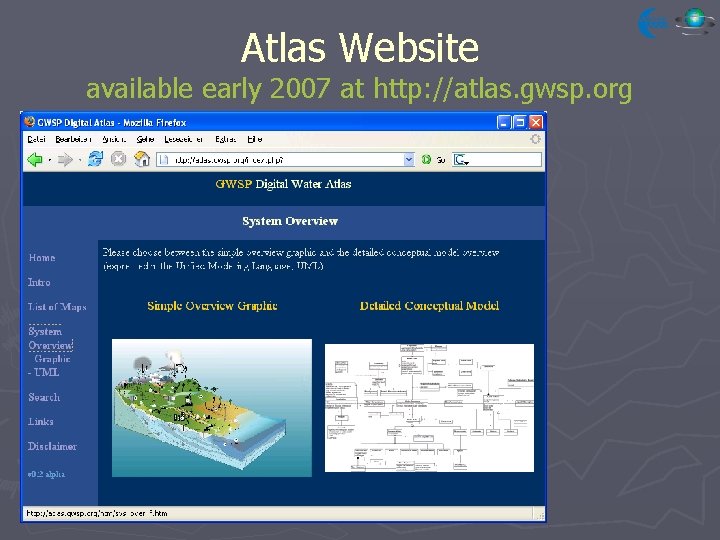
Atlas Website available early 2007 at http: //atlas. gwsp. org
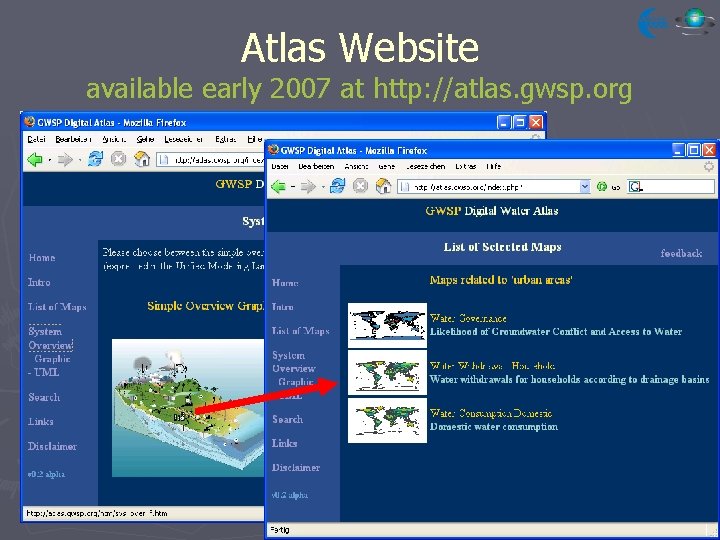
Atlas Website available early 2007 at http: //atlas. gwsp. org
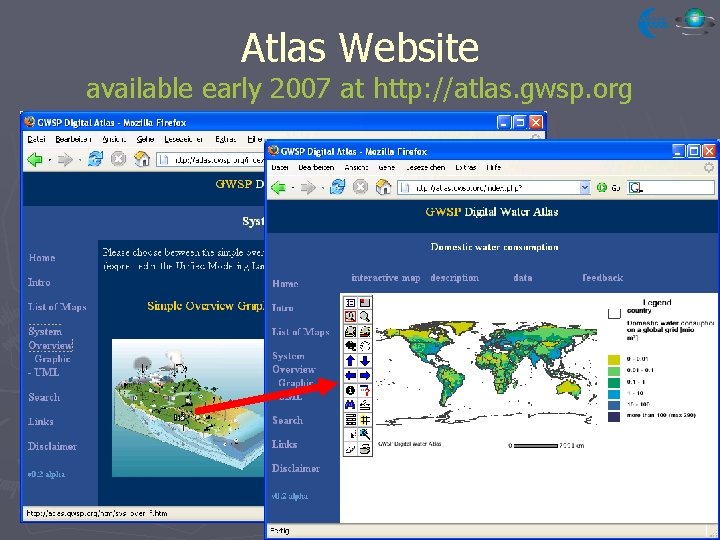
Atlas Website available early 2007 at http: //atlas. gwsp. org
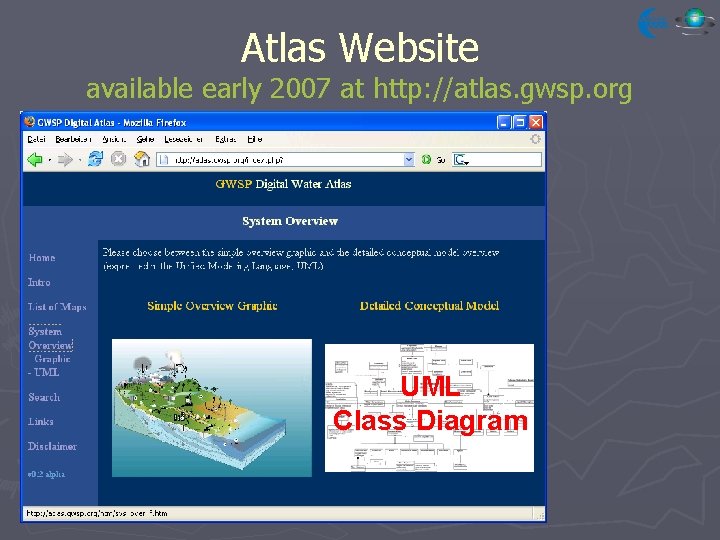
Atlas Website available early 2007 at http: //atlas. gwsp. org UML Class Diagram
Unified Modelling Language ► UML a visual language for specifying, constructing and documenting the artefacts of systems [OMG] ► Different diagrams to represent structure, behaviour, interaction using classes, objects, data types, system states, … ► Class A class describes a set of objects that share the same specifications of features, constraints, and semantic (OMG, 2005) ► Class diagram to represent thinks in a situation of the real world or domain of interest → Domain Model that ‘illustrates noteworthy concepts in a domain’ (Larman, 2004)
List of Important Maps/Datasets ► About 70 topics, including: ► Physical components § Precipitation § River discharge § Dams and reservoirs ► Biological and bio-geochemical components § Biodiversity § Environmental flows § Nutrient loads ► Human component § Gross National Product § Ratification of UN conventions § People’s awareness of biodiversity
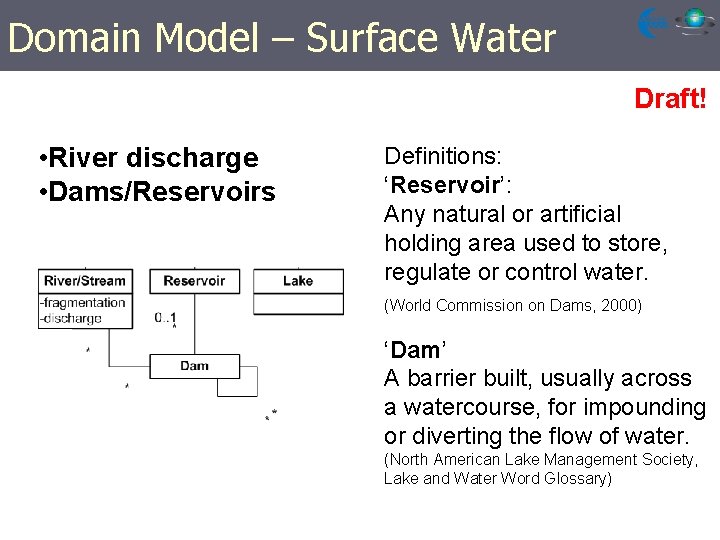
Domain Model – Surface Water Draft! • River discharge • Dams/Reservoirs Definitions: ‘Reservoir’: Any natural or artificial holding area used to store, regulate or control water. (World Commission on Dams, 2000) ‘Dam’ A barrier built, usually across a watercourse, for impounding or diverting the flow of water. (North American Lake Management Society, Lake and Water Word Glossary)
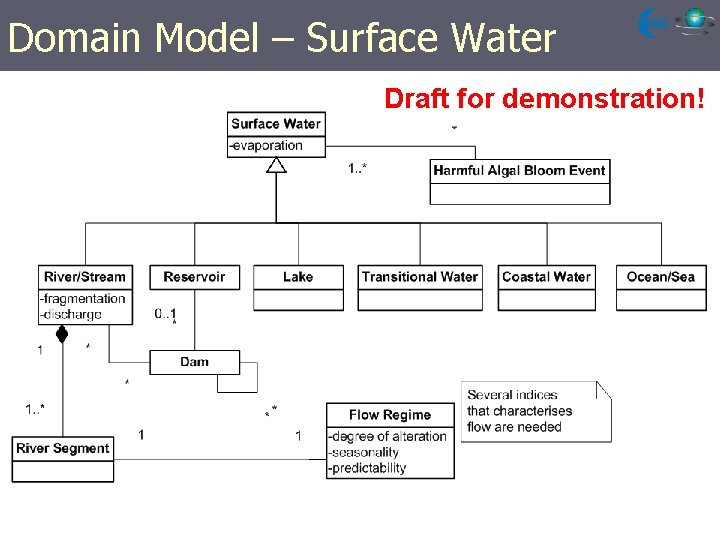
Domain Model – Surface Water Draft for demonstration!
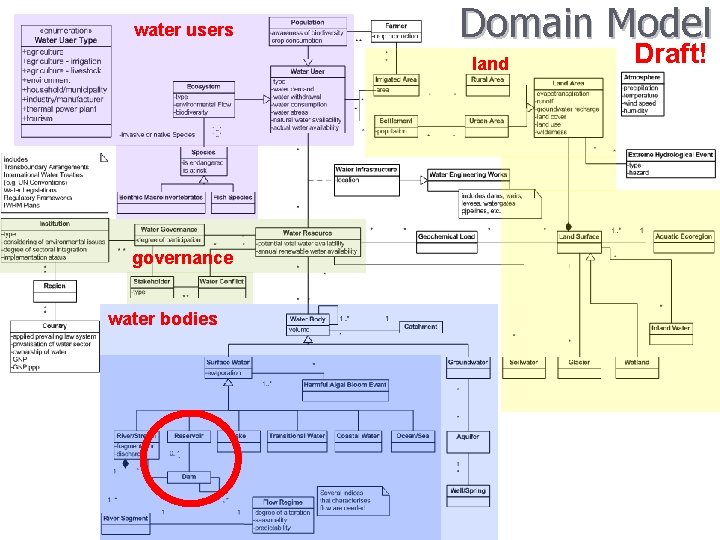
water users Domain Model land governance water bodies Draft!
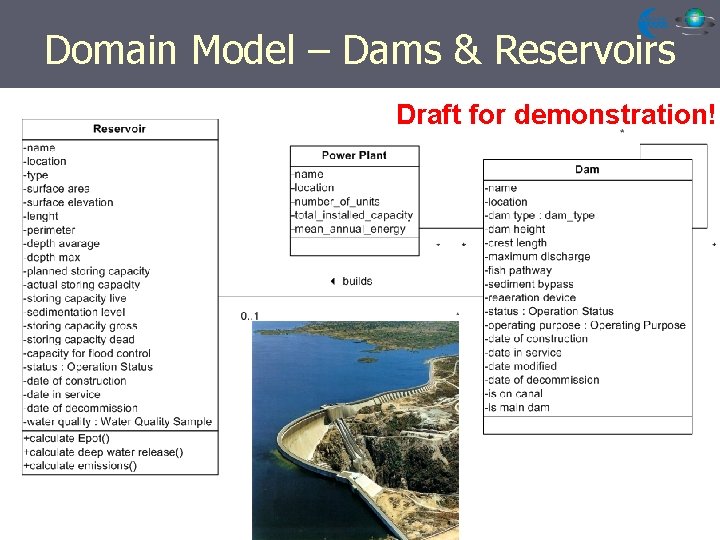
Domain Model – Dams & Reservoirs Draft for demonstration!
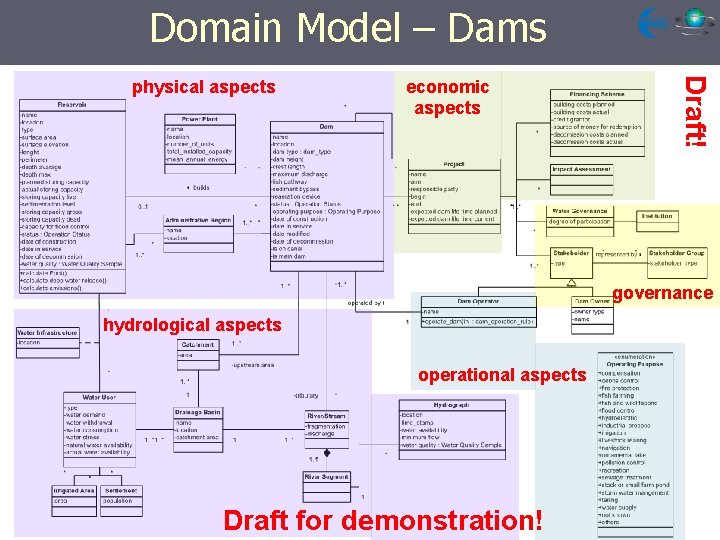
Domain Model – Dams economic aspects Draft! physical aspects governance hydrological aspects operational aspects Draft for demonstration!
Conclusion ► GWSP § Human impacts on the GWS § Identification/overview of important elements ► Atlas § system’s view + Maps + description + metadata + data ► Using UML for Domain Modeling UML is no magic bullet / OO knowledge is needed Class diagrams easy to understand Useful to draft, discuss, refine basic elements, linkages, term definitions § Supports the integration of disciplines/datasets § § §
- Slides: 17