
Assessing Students Training Session 3 Power Point Created

- Slides: 26
Assessing Students Training Session 3 Power. Point Created by Suzanne Fitzgerald & Candice Styer info@sdesworks. com www. styer-fitzgerald. com
Training Objectives § Be able to identify & assess functional academics § Learn effective assessment strategies § Create a plan for getting started
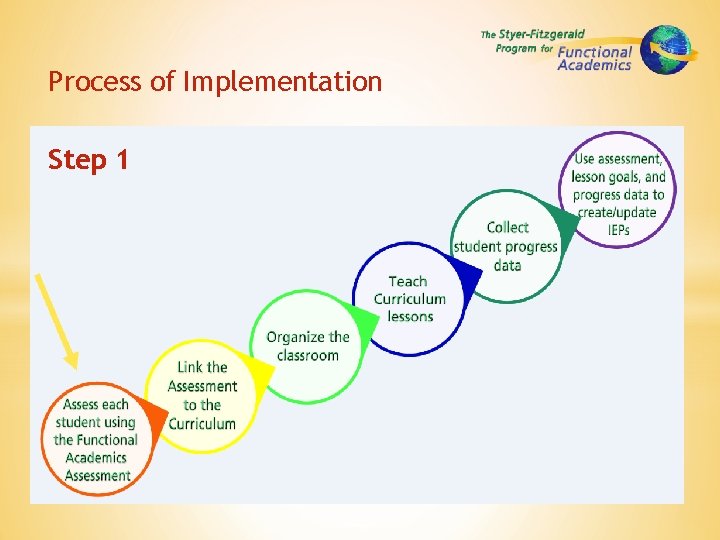
Process of Implementation Step 1
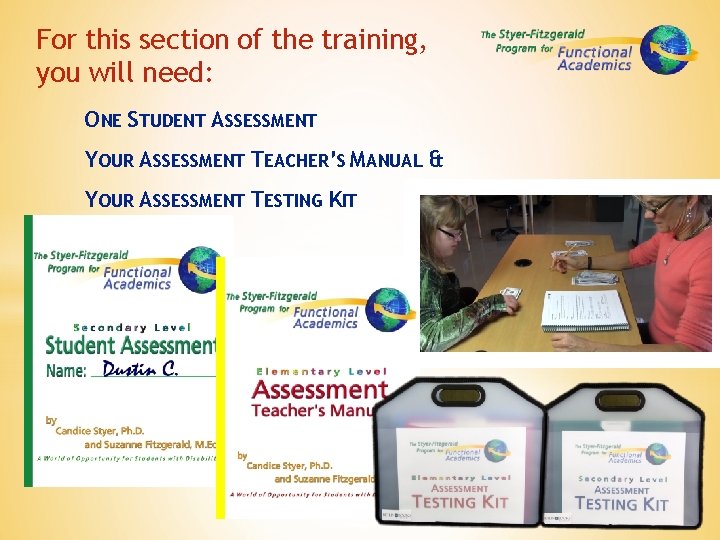
For this section of the training, you will need: ONE STUDENT ASSESSMENT YOUR ASSESSMENT TEACHER’S MANUAL & YOUR ASSESSMENT TESTING KIT
What is the purpose of the Functional Academics Assessment? The Assessment is designed to do two things: 1) Determine skill level 2) Develop individual functional academic programs NOTE: The assessment does not provide a standardized score.
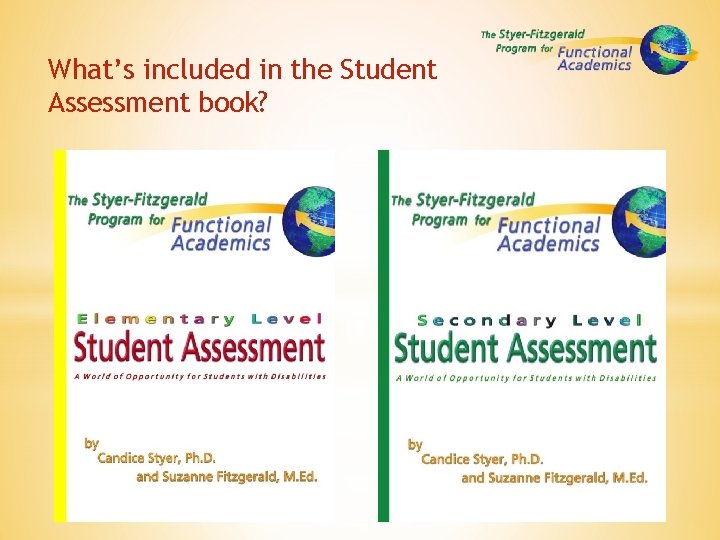
What’s included in the Student Assessment book?
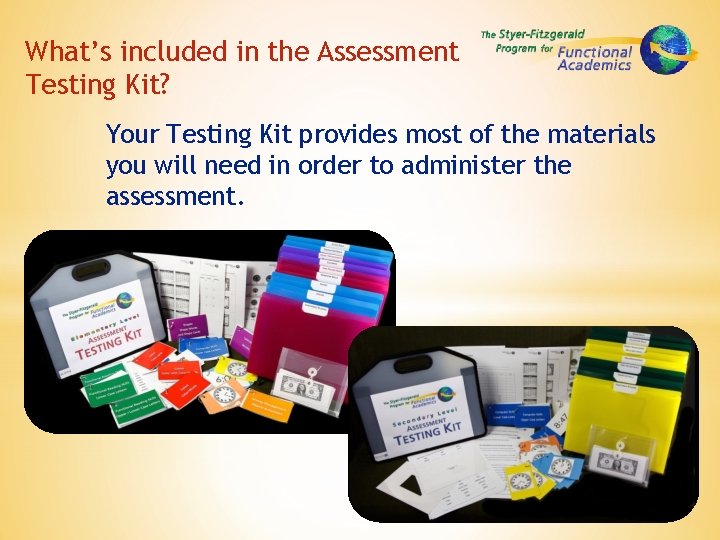
What’s included in the Assessment Testing Kit? Your Testing Kit provides most of the materials you will need in order to administer the assessment.
Activity 1 – Assemble Your Assessment Testing Kit Take a minute to put together each section of the Testing Kit following the provided assembly instructions.
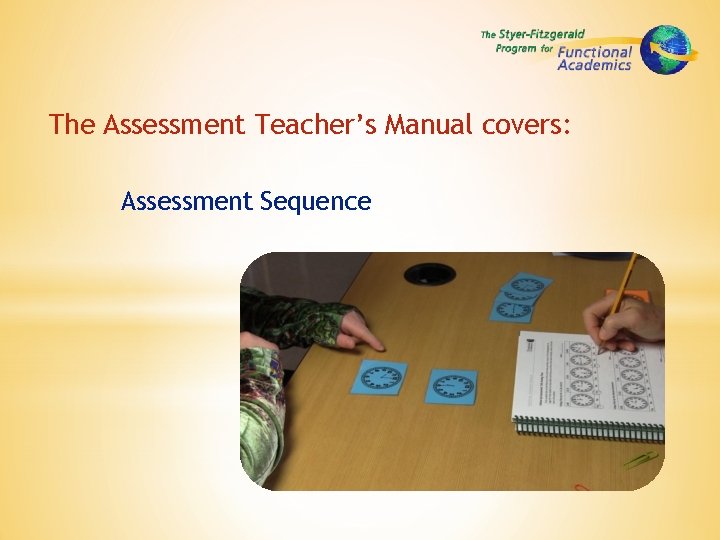
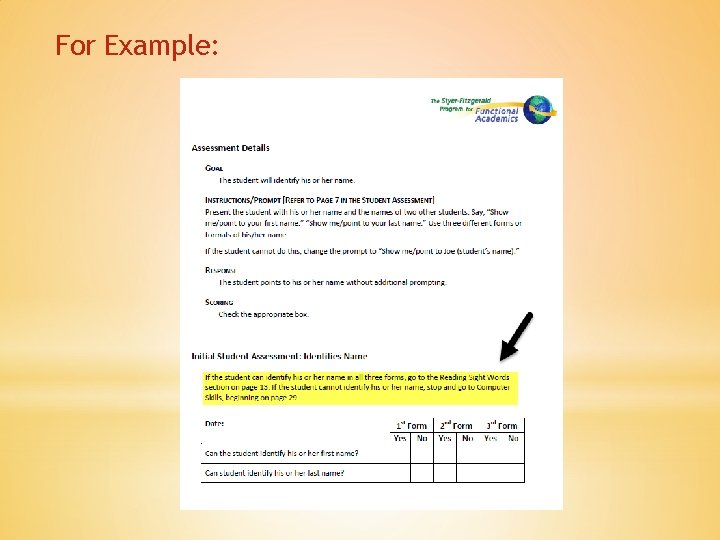
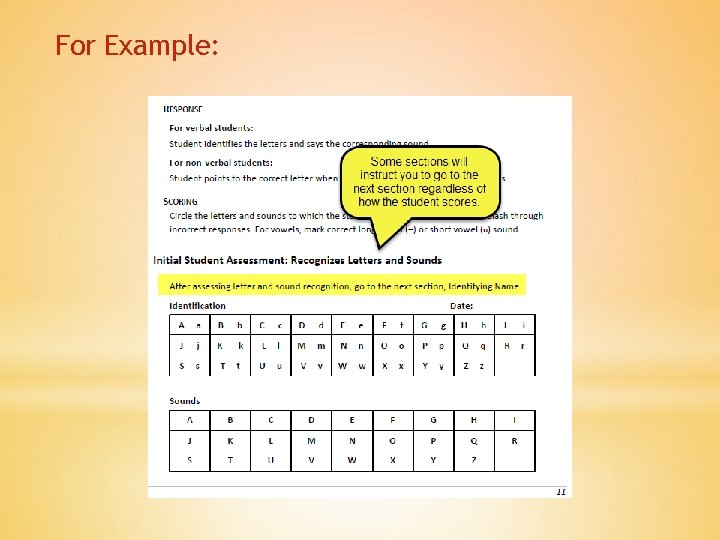
The Assessment Teacher’s Manual covers: Assessment Sequence
For Example:
For Example:
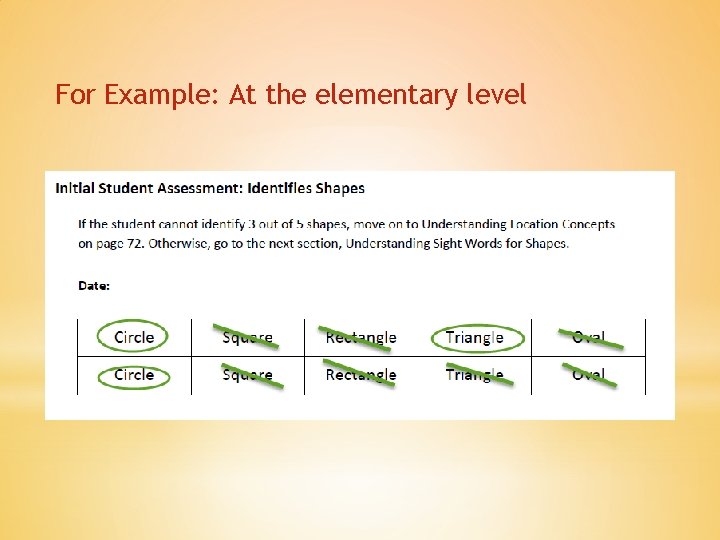
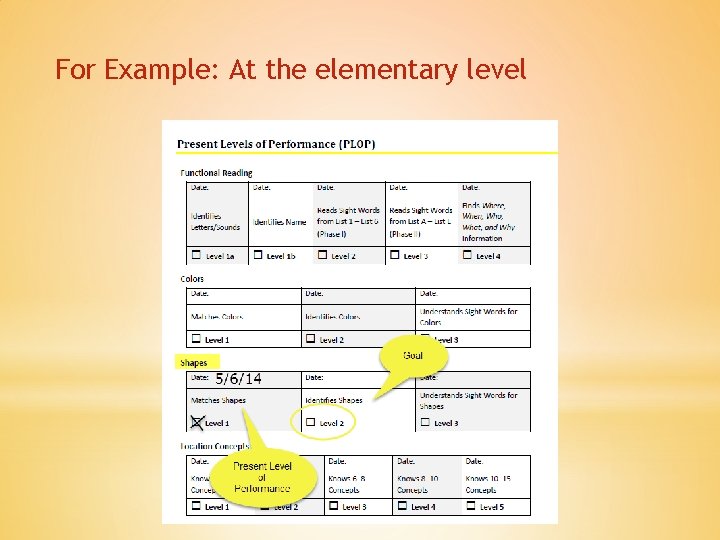
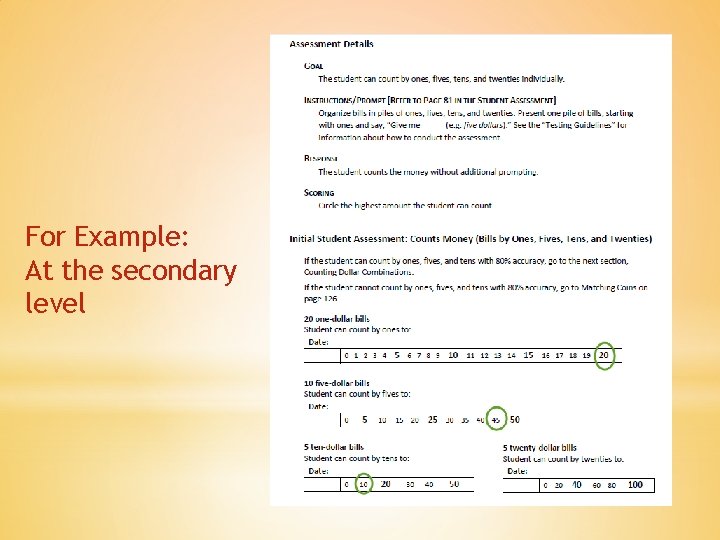
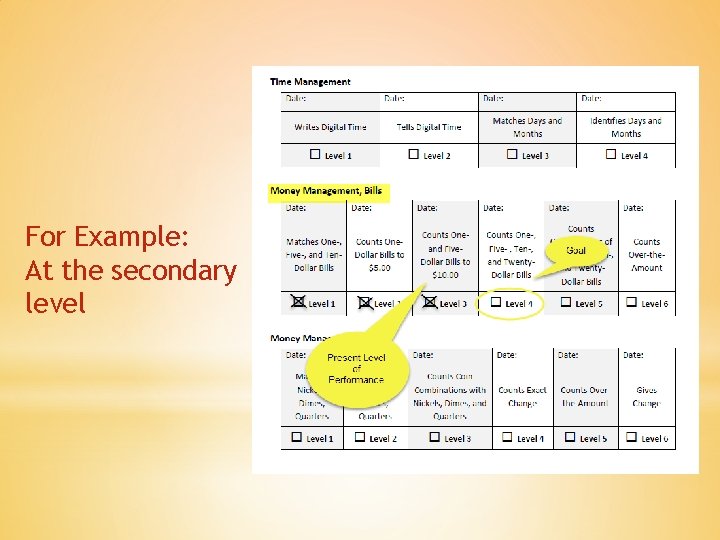
The Assessment Teacher’s Manual covers: Scoring
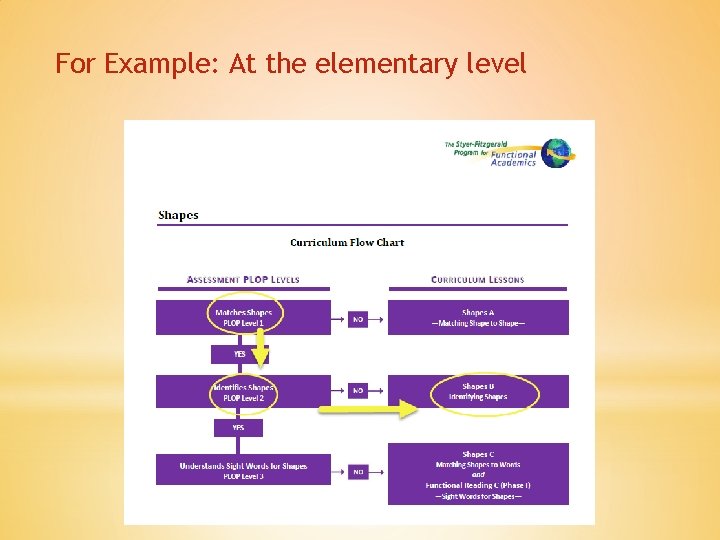
For Example: At the elementary level
For Example: At the elementary level
For Example: At the elementary level
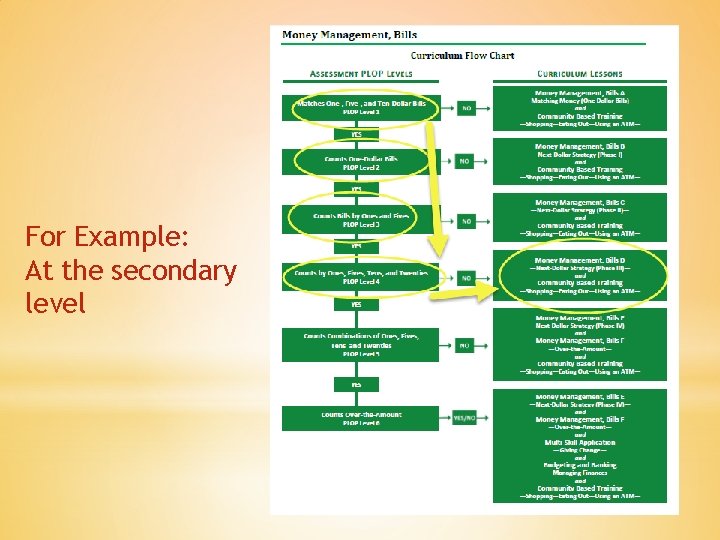
For Example: At the secondary level
For Example: At the secondary level
For Example: At the secondary level
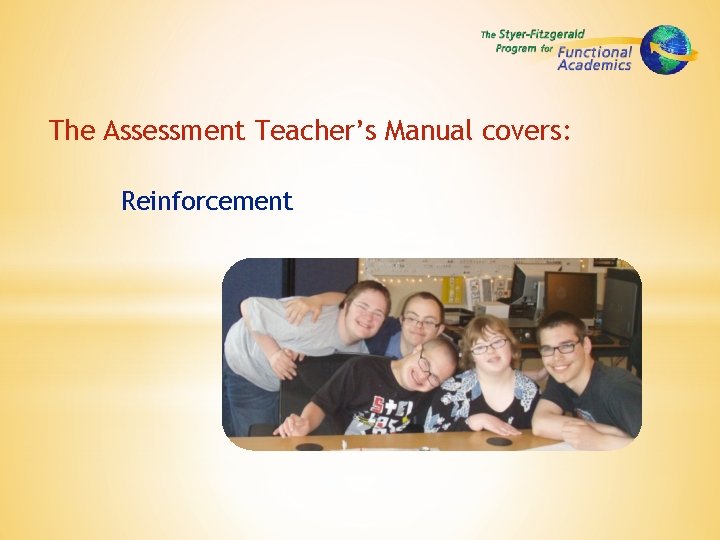
The Assessment Teacher’s Manual covers: Reinforcement
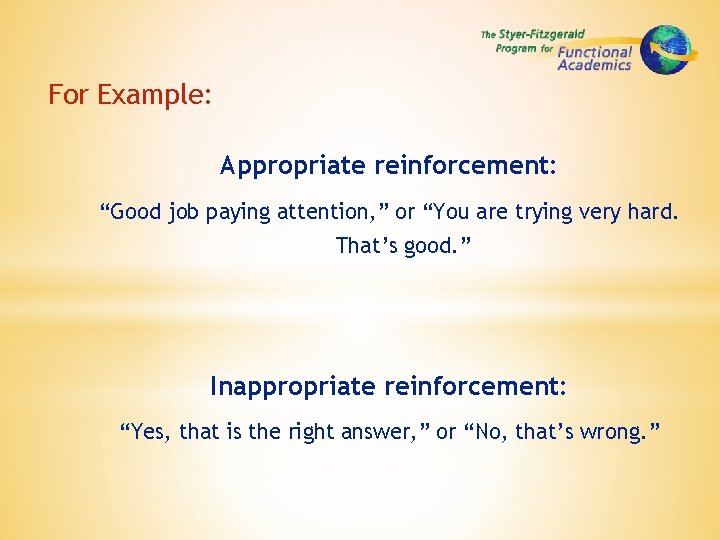
For Example: Appropriate reinforcement: “Good job paying attention, ” or “You are trying very hard. That’s good. ” Inappropriate reinforcement: “Yes, that is the right answer, ” or “No, that’s wrong. ”
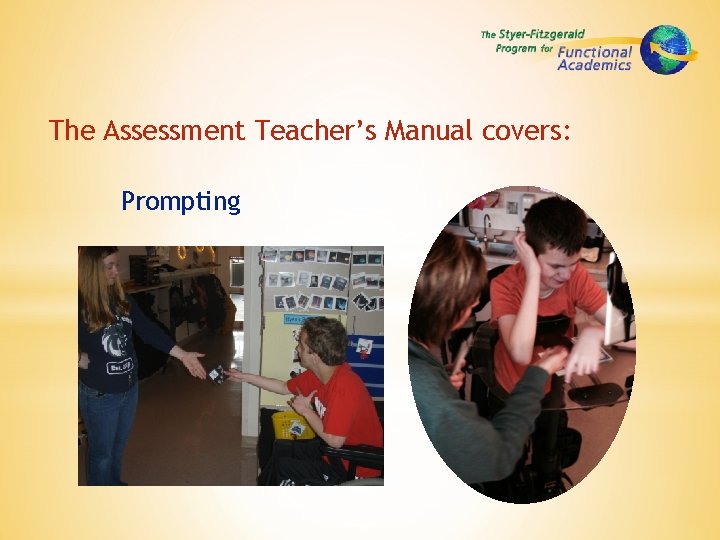
The Assessment Teacher’s Manual covers: Prompting
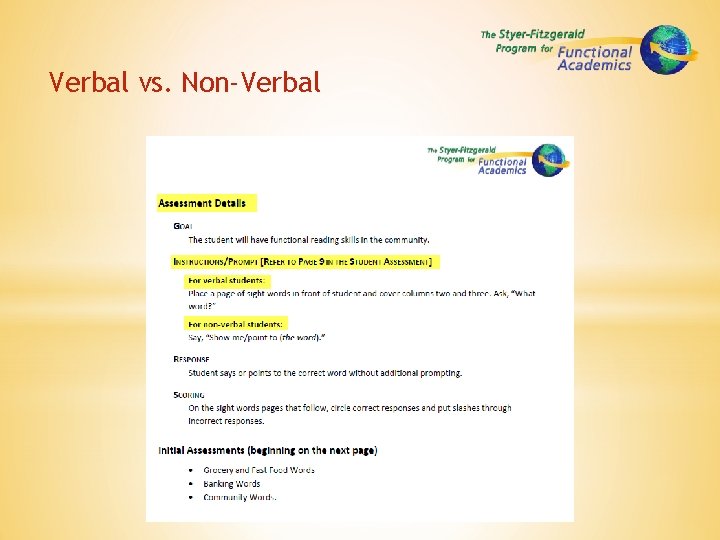
Verbal vs. Non-Verbal
Additional Prompting § Answers should be recorded as incorrect if you need to prompt beyond the given prompt. § Make sure you are testing whether the student possesses the skill, not whether the student understands the question.
Activity 2 – Let’s Practice § Find a partner. § Decide who is going to give the assessment first. § You will use the materials from your Assessment Testing Kit to administer the assessment. § You will have the opportunity to practice several sections of the assessment. § Be sure that each person has the opportunity to administer the assessment.
Getting Started with Students § Review each section of the assessment. § Determine whether you are going to give the entire assessment to each student or break it down into parts. § Determine which areas you are going to assess first. § Who will administer the assessment sections/students? § Determine an assessment schedule and timelines.
Continue to: Linking Assessment to Curriculum Training Session 4