
Assessing soil quality soil testing procedures soil test
- Slides: 61
Assessing soil quality, soil testing procedures, soil test interpretation Weston Miller, OSU Extension Service
Preview of presentation • Safety precautions • General soil quality assessment • How to take a soil test • What to test for • Interpreting results
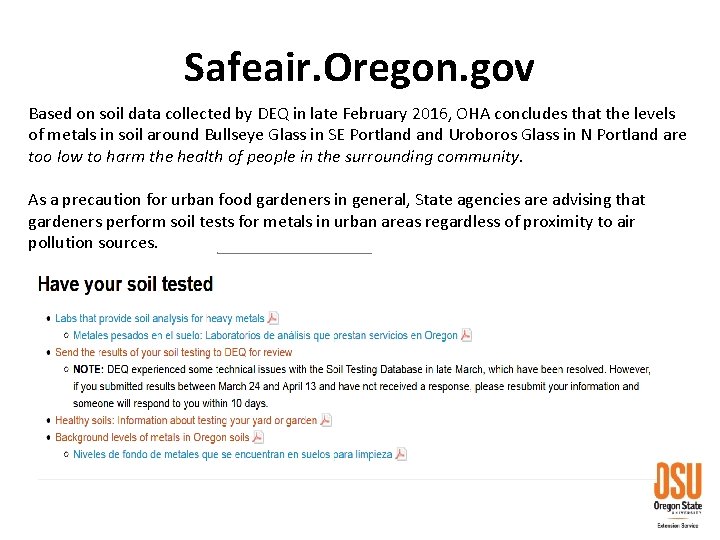
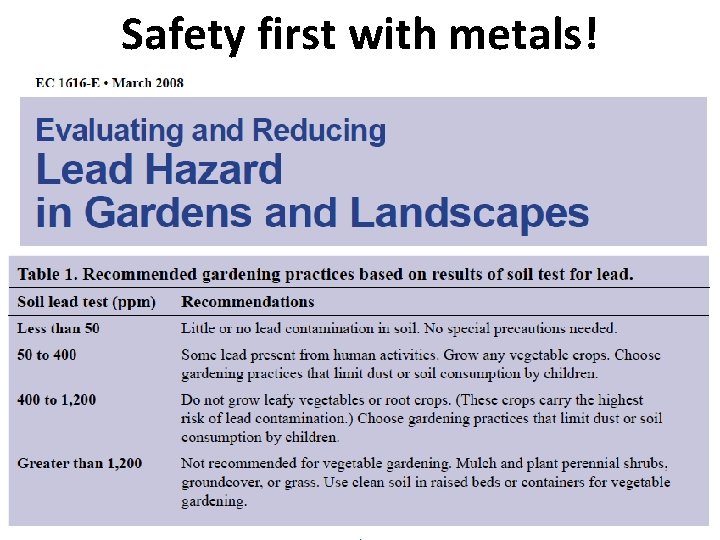
Safeair. Oregon. gov Based on soil data collected by DEQ in late February 2016, OHA concludes that the levels of metals in soil around Bullseye Glass in SE Portland Uroboros Glass in N Portland are too low to harm the health of people in the surrounding community. As a precaution for urban food gardeners in general, State agencies are advising that gardeners perform soil tests for metals in urban areas regardless of proximity to air pollution sources.
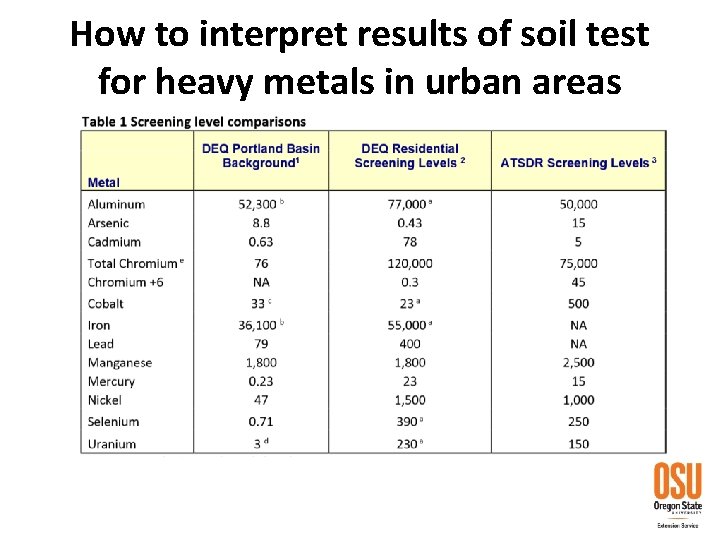
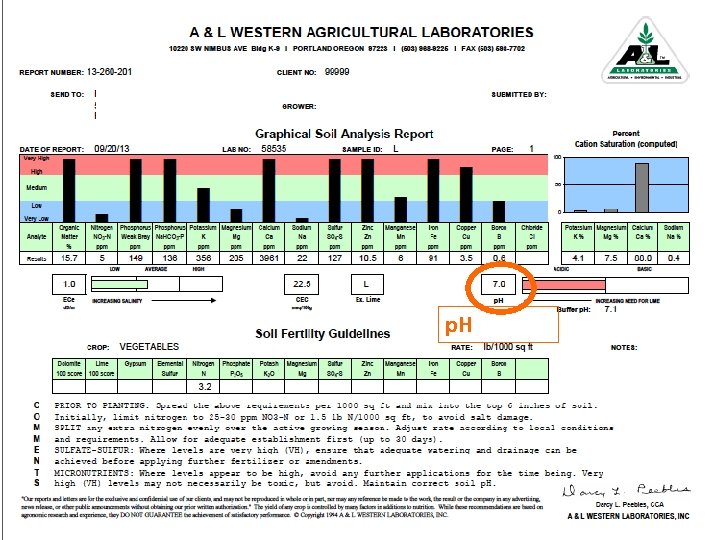
How to interpret results of soil test for heavy metals in urban areas
Safety first with metals!
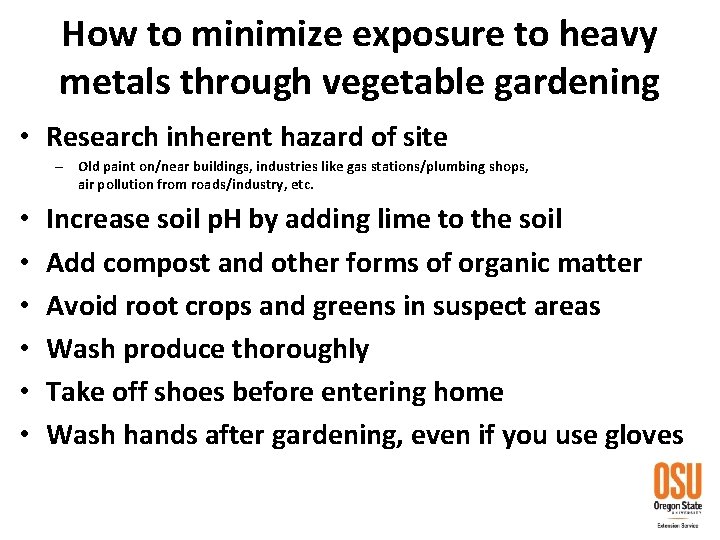
How to minimize exposure to heavy metals through vegetable gardening • Research inherent hazard of site – Old paint on/near buildings, industries like gas stations/plumbing shops, air pollution from roads/industry, etc. • • • Increase soil p. H by adding lime to the soil Add compost and other forms of organic matter Avoid root crops and greens in suspect areas Wash produce thoroughly Take off shoes before entering home Wash hands after gardening, even if you use gloves
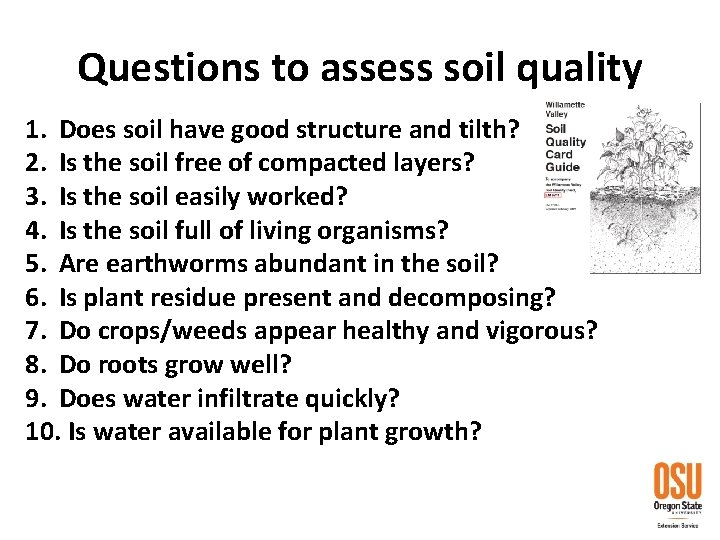
Questions to assess soil quality 1. Does soil have good structure and tilth? 2. Is the soil free of compacted layers? 3. Is the soil easily worked? 4. Is the soil full of living organisms? 5. Are earthworms abundant in the soil? 6. Is plant residue present and decomposing? 7. Do crops/weeds appear healthy and vigorous? 8. Do roots grow well? 9. Does water infiltrate quickly? 10. Is water available for plant growth?
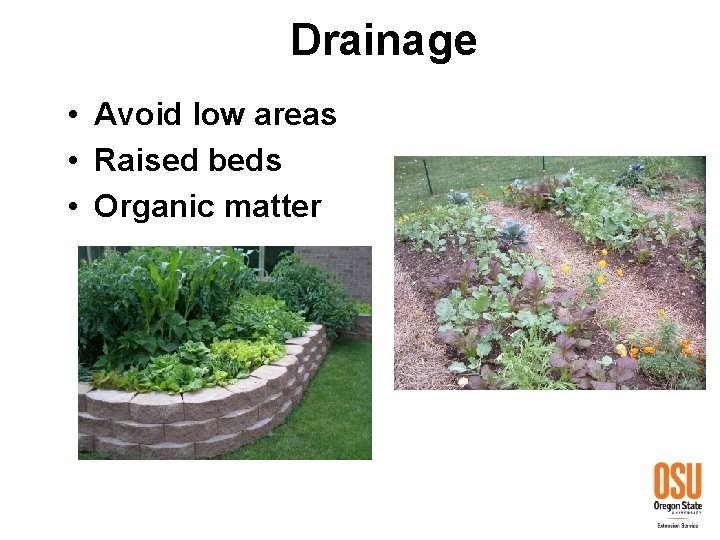
Drainage • Avoid low areas • Raised beds • Organic matter
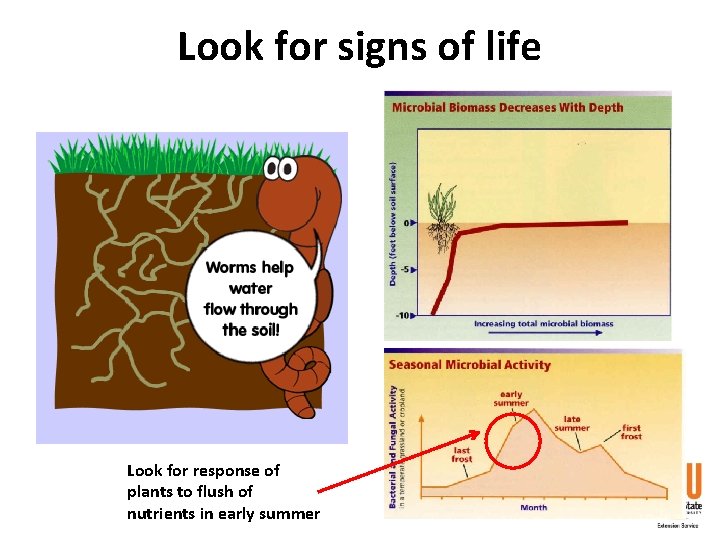
Look for signs of life Look for response of plants to flush of nutrients in early summer
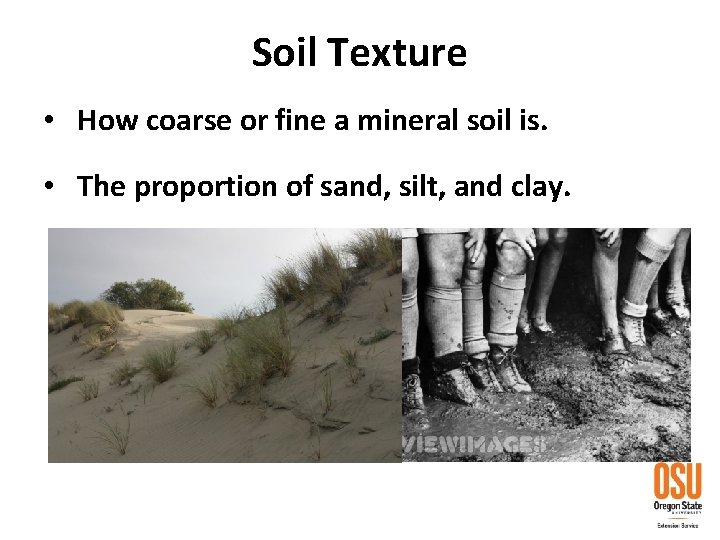
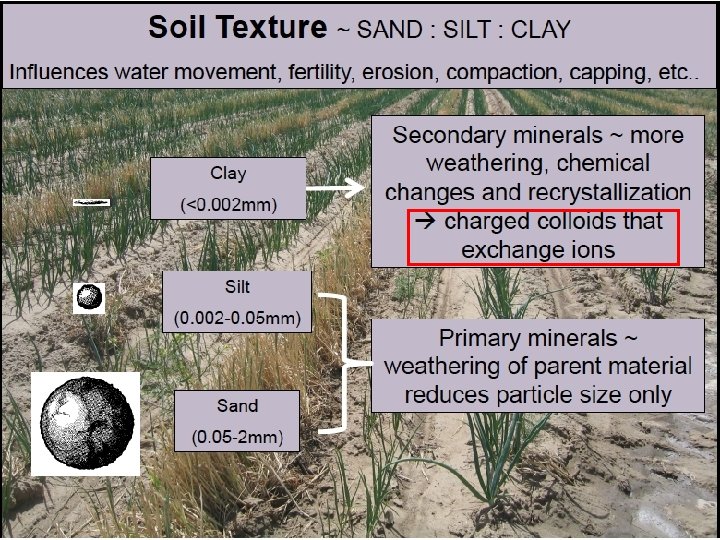
Soil Texture • How coarse or fine a mineral soil is. • The proportion of sand, silt, and clay.
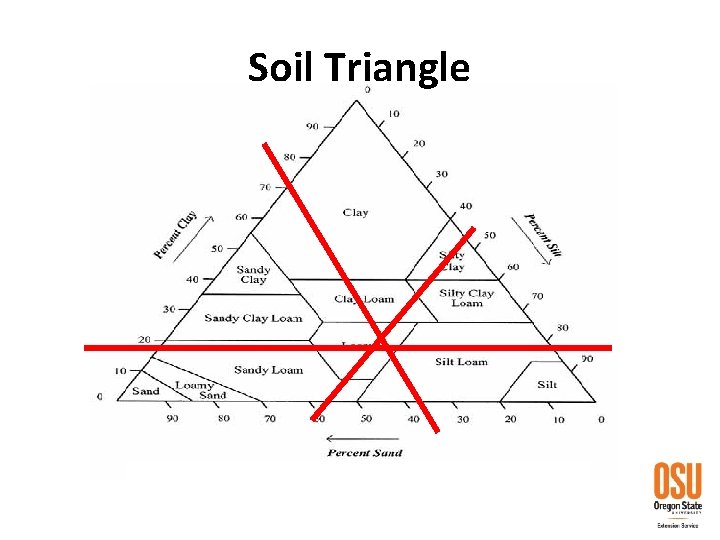
Soil Triangle
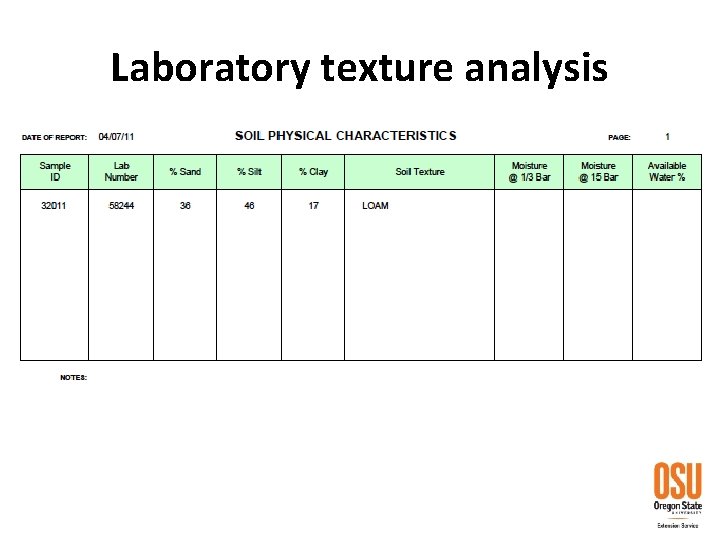
Laboratory texture analysis
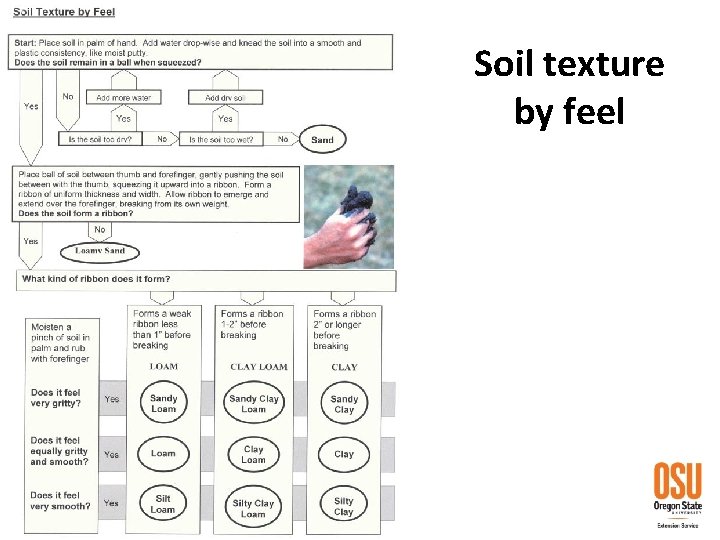
Soil texture by feel
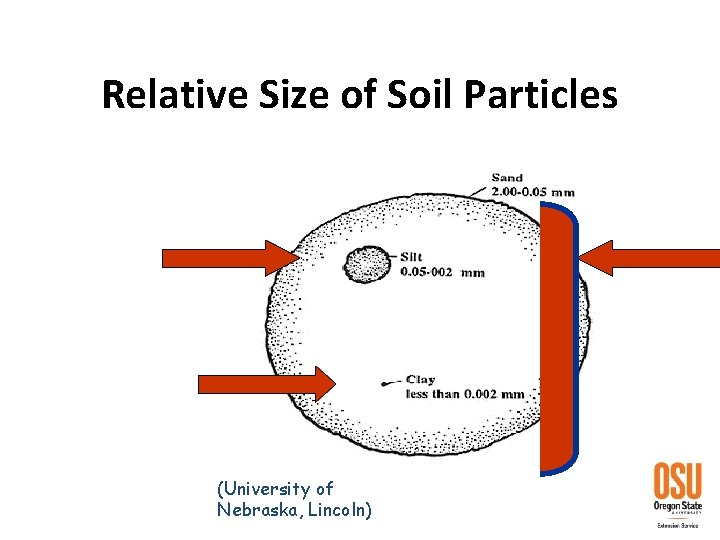
Relative Size of Soil Particles (University of Nebraska, Lincoln)
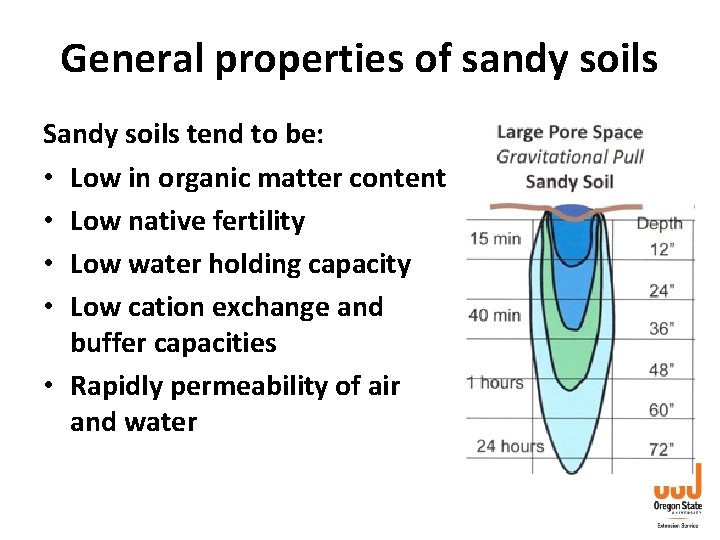
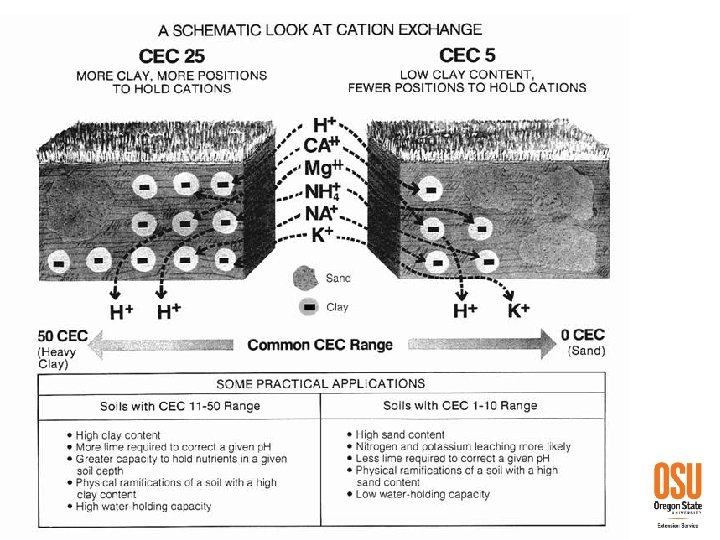
General properties of sandy soils Sandy soils tend to be: • Low in organic matter content • Low native fertility • Low water holding capacity • Low cation exchange and buffer capacities • Rapidly permeability of air and water
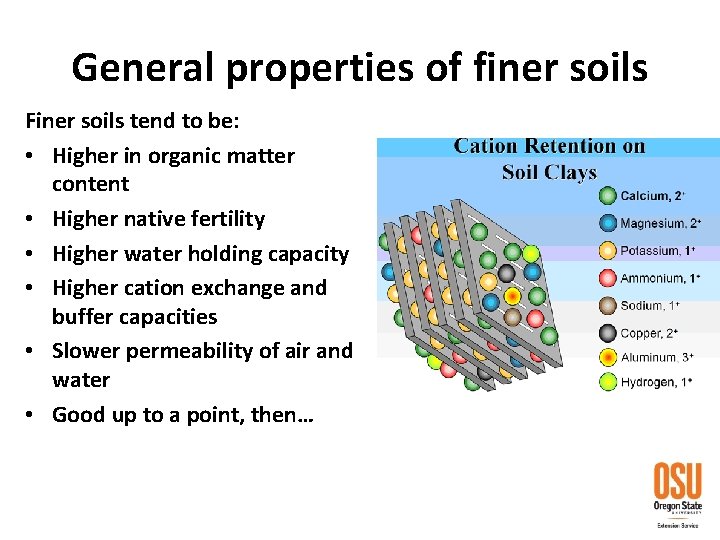
General properties of finer soils Finer soils tend to be: • Higher in organic matter content • Higher native fertility • Higher water holding capacity • Higher cation exchange and buffer capacities • Slower permeability of air and water • Good up to a point, then…
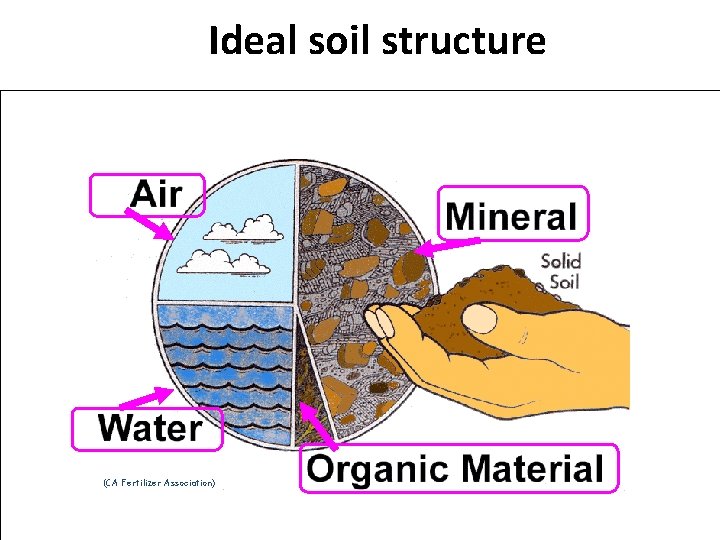
Ideal soil structure (CA Fertilizer Association)
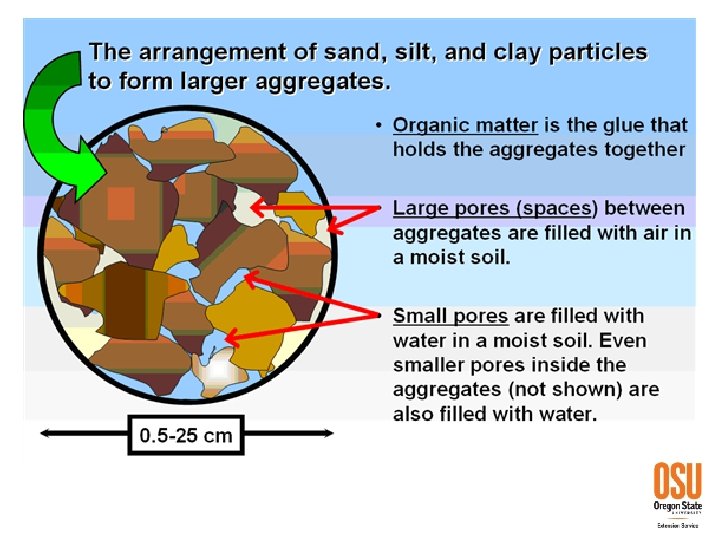
OM helps to aggregate particles, creating pore spaces
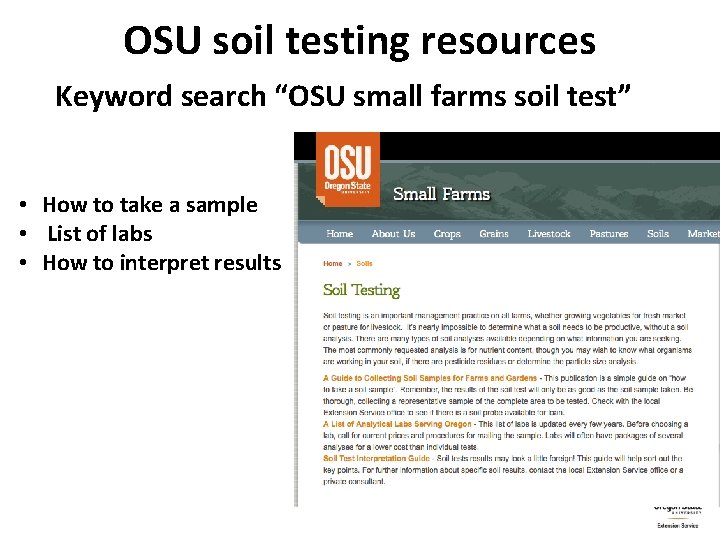
OSU soil testing resources Keyword search “OSU small farms soil test” • How to take a sample • List of labs • How to interpret results
Why do chemcial analysis of soils? • • • Establish baseline nutrient status Determine application rates Assess p. H and need for liming Measure changes over time Avoid excess nutrient application or build up of salt
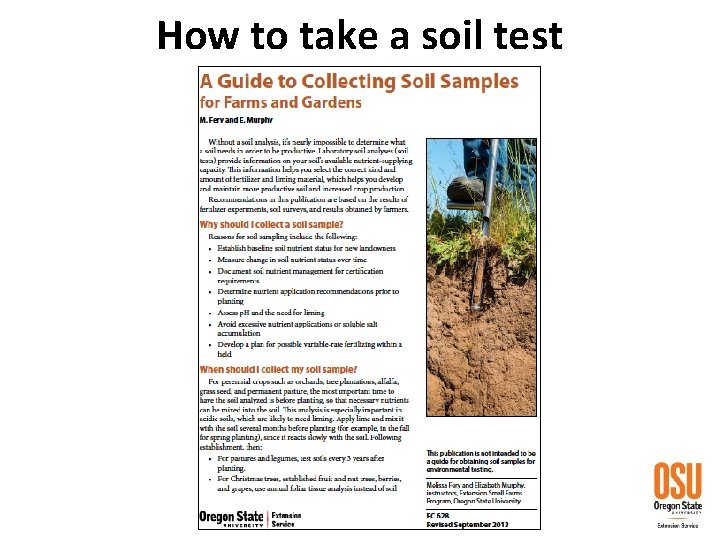
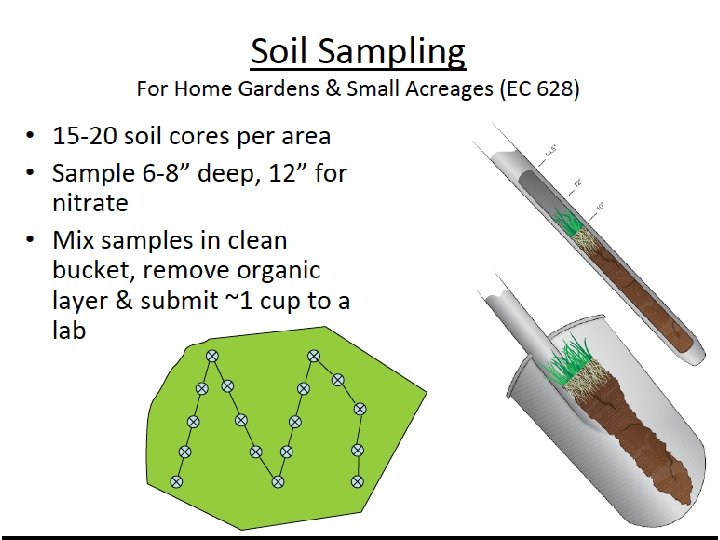
How to take a soil test
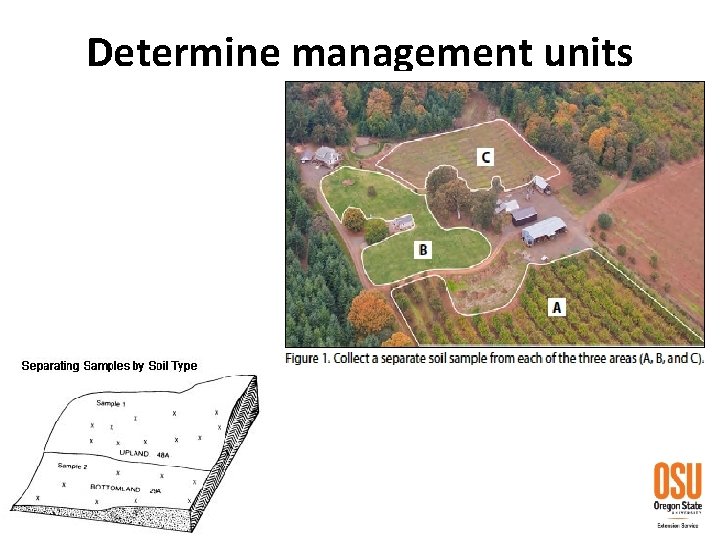
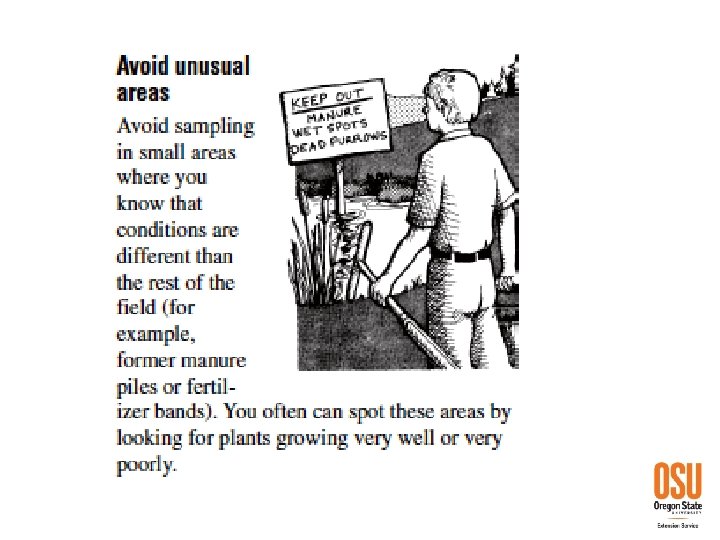
Determine management units
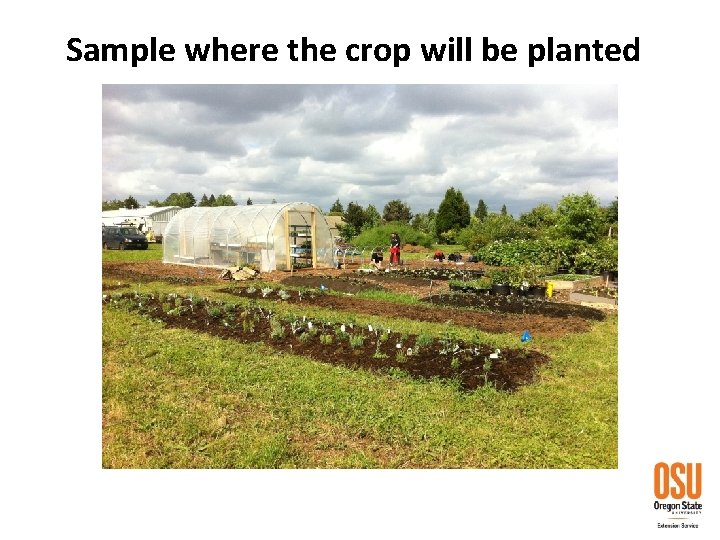
Sample where the crop will be planted
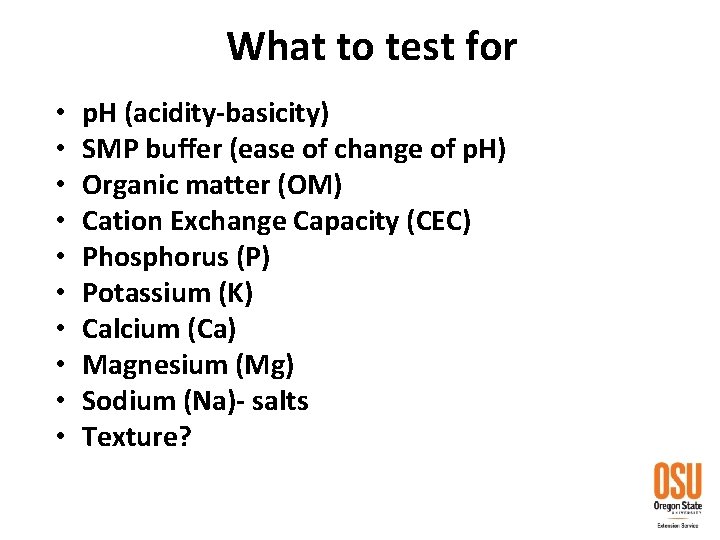
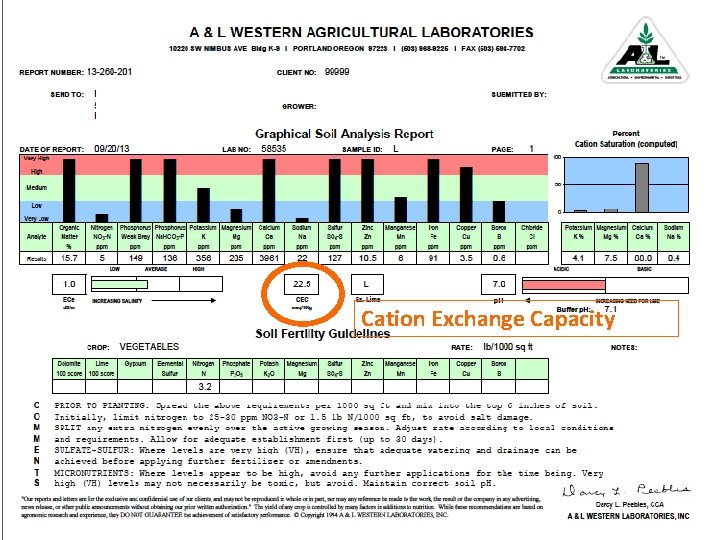
What to test for • • • p. H (acidity-basicity) SMP buffer (ease of change of p. H) Organic matter (OM) Cation Exchange Capacity (CEC) Phosphorus (P) Potassium (K) Calcium (Ca) Magnesium (Mg) Sodium (Na)- salts Texture?
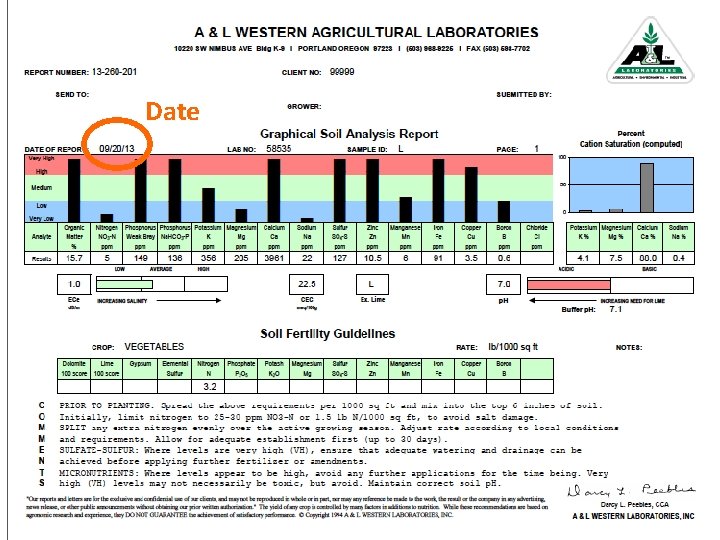
Date
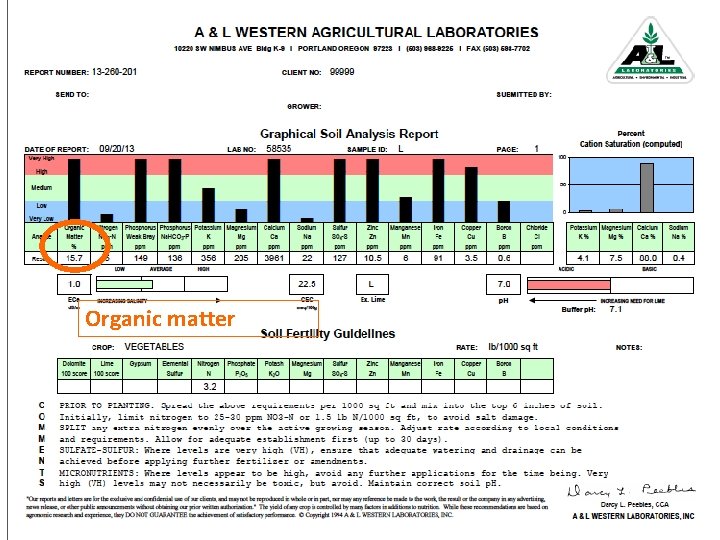
Organic matter
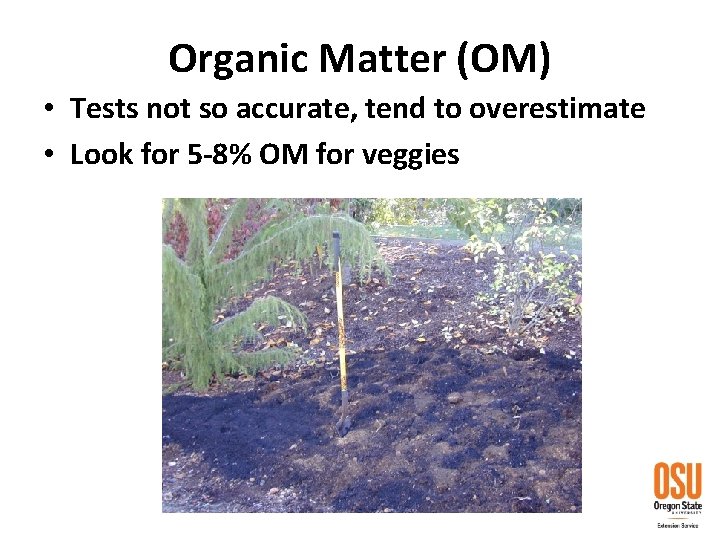
Organic Matter (OM) • Tests not so accurate, tend to overestimate • Look for 5 -8% OM for veggies
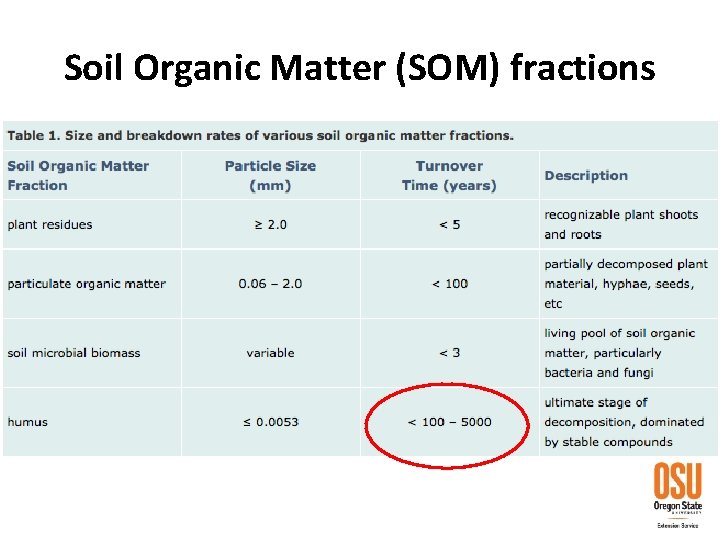
Soil Organic Matter (SOM) fractions
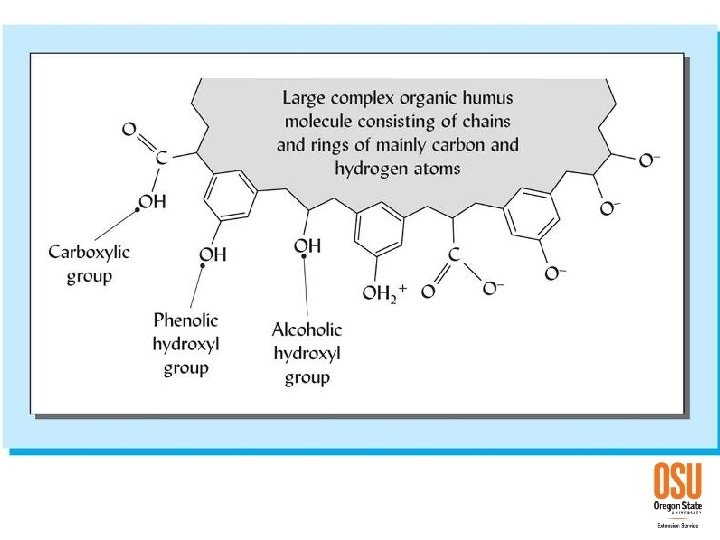
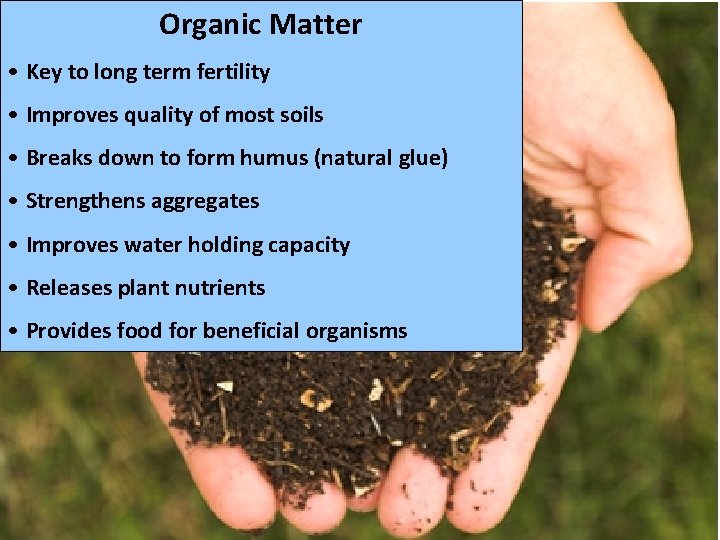
Organic Matter • Key to long term fertility • Improves quality of most soils • Breaks down to form humus (natural glue) • Strengthens aggregates • Improves water holding capacity • Releases plant nutrients • Provides food for beneficial organisms
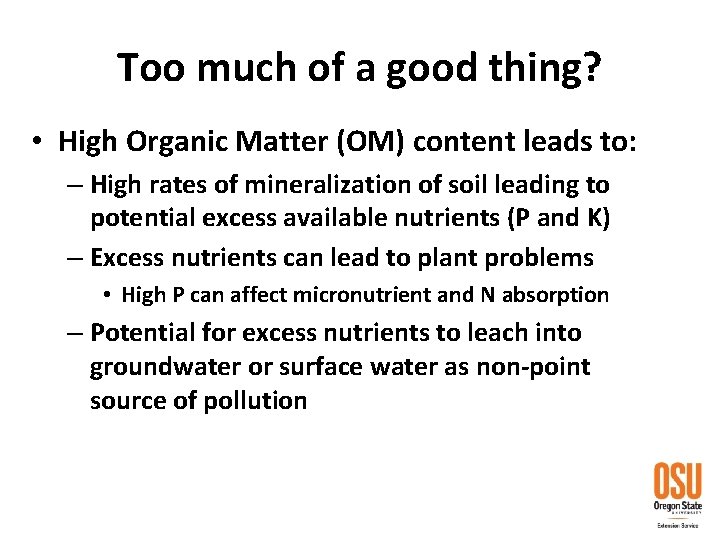
Too much of a good thing? • High Organic Matter (OM) content leads to: – High rates of mineralization of soil leading to potential excess available nutrients (P and K) – Excess nutrients can lead to plant problems • High P can affect micronutrient and N absorption – Potential for excess nutrients to leach into groundwater or surface water as non-point source of pollution
Cation Exchange Capacity
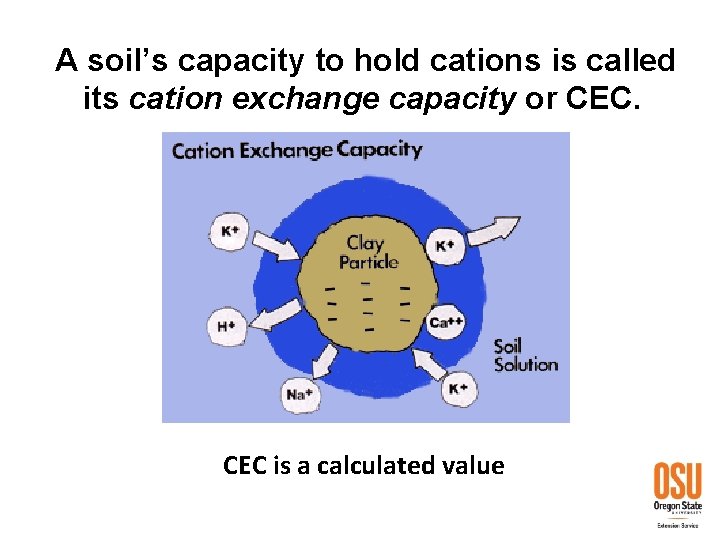
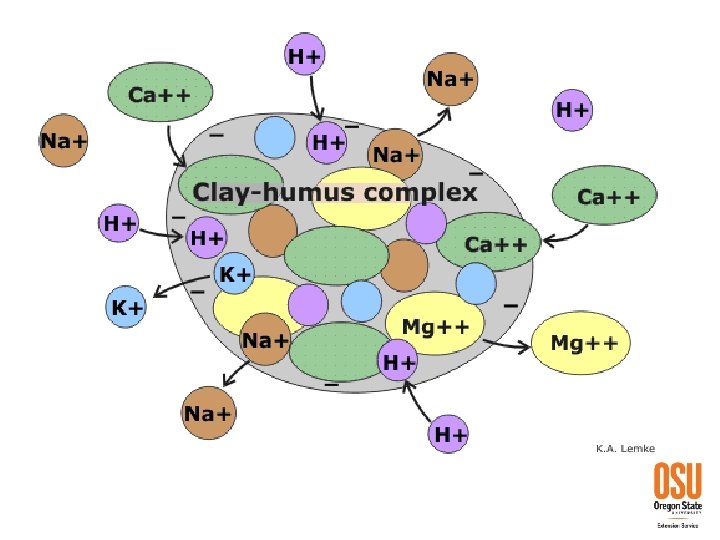
A soil’s capacity to hold cations is called its cation exchange capacity or CEC is a calculated value
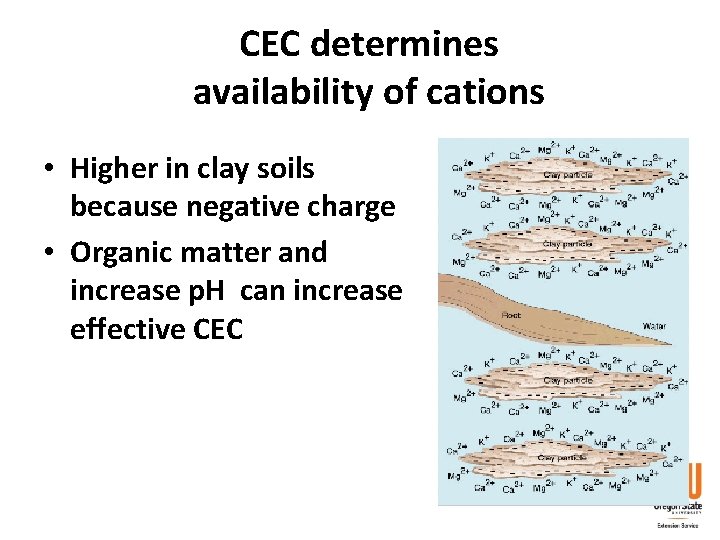
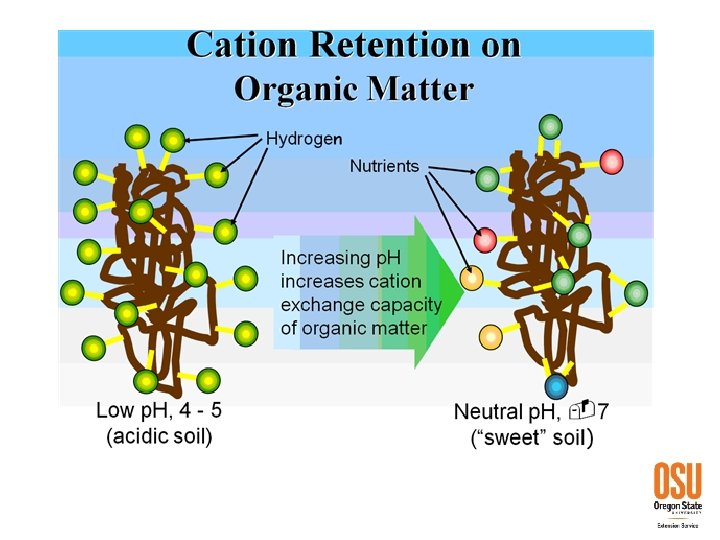
CEC determines availability of cations • Higher in clay soils because negative charge • Organic matter and increase p. H can increase effective CEC
p. H
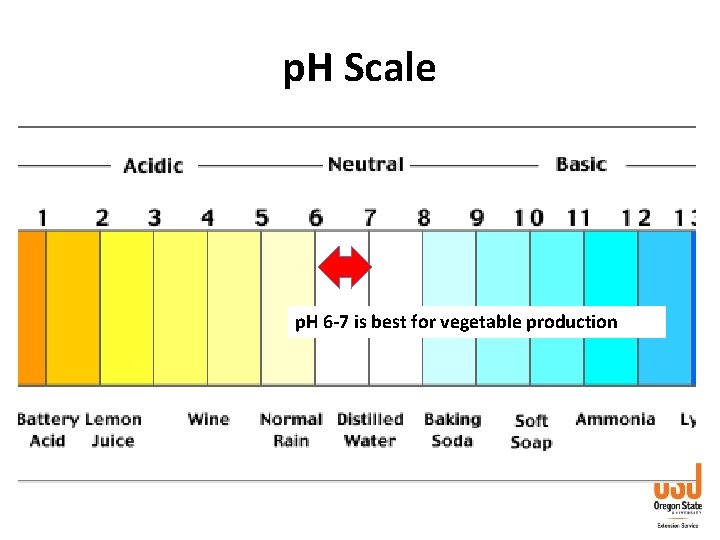
p. H Scale p. H 6 -7 is best for vegetable production
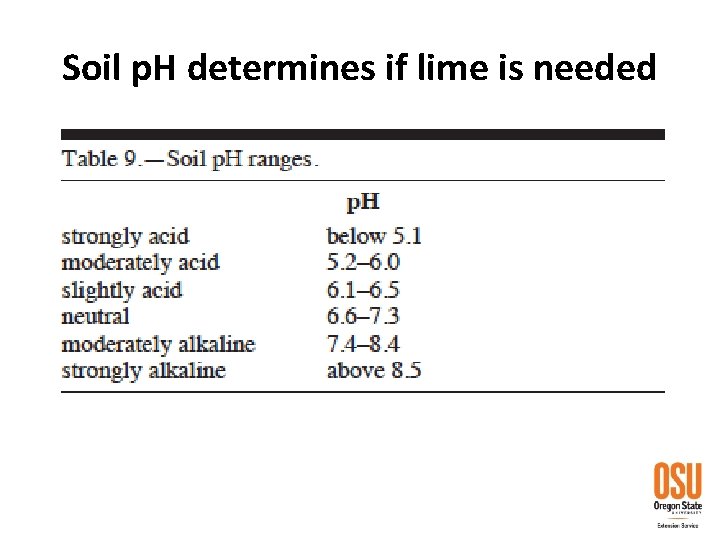
Soil p. H determines if lime is needed
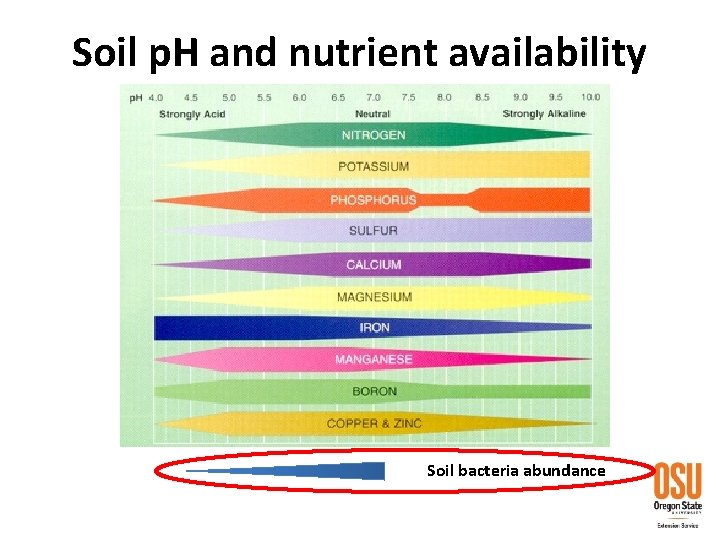
Soil p. H and nutrient availability Soil bacteria abundance
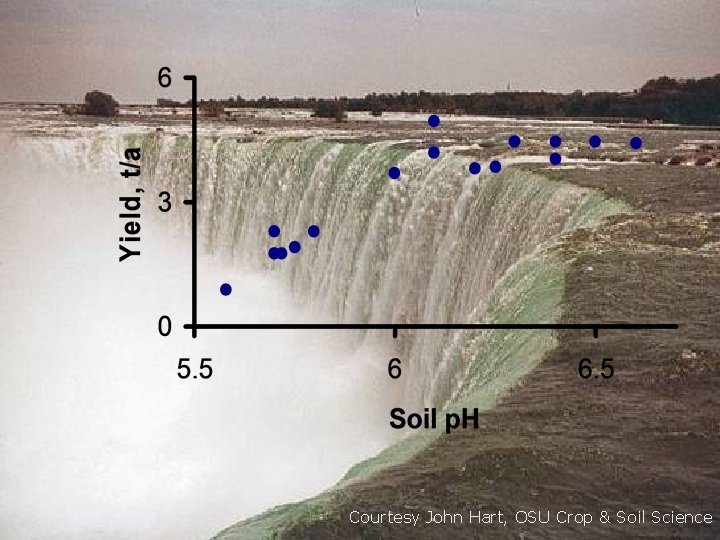
Soil p. H is Key Courtesy John Hart, OSU Crop & Soil Science
Courtesy John Hart, OSU Crop & Soil Science
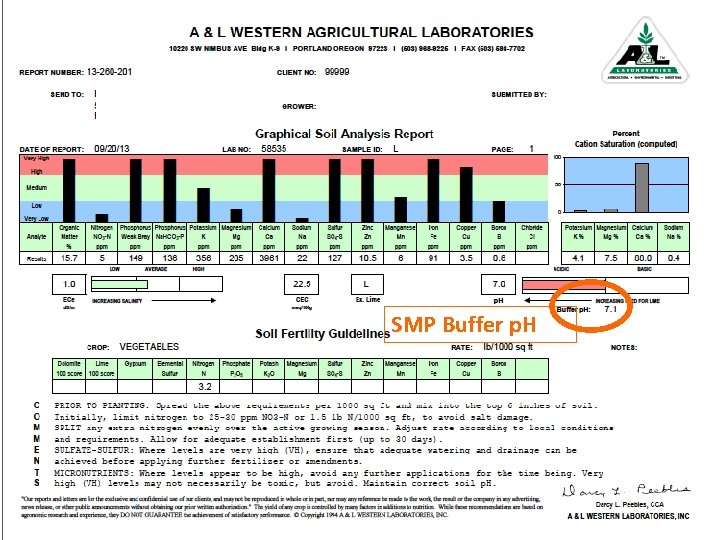
SMP Buffer p. H
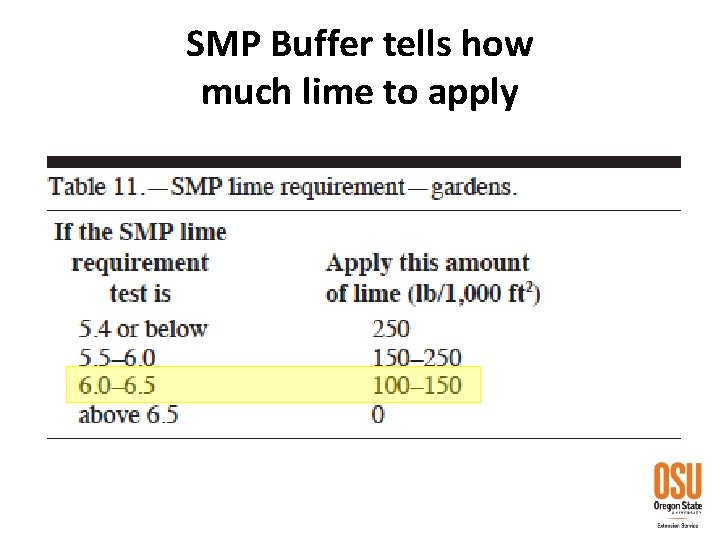
SMP Buffer tells how much lime to apply
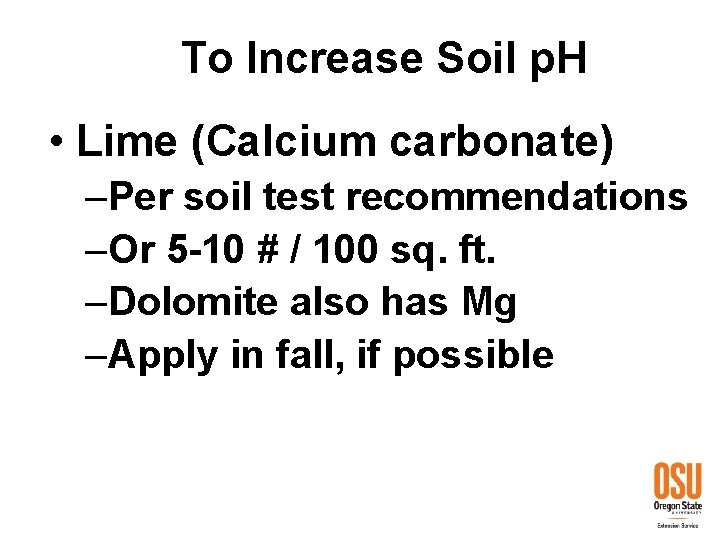
To Increase Soil p. H • Lime (Calcium carbonate) –Per soil test recommendations –Or 5 -10 # / 100 sq. ft. –Dolomite also has Mg –Apply in fall, if possible
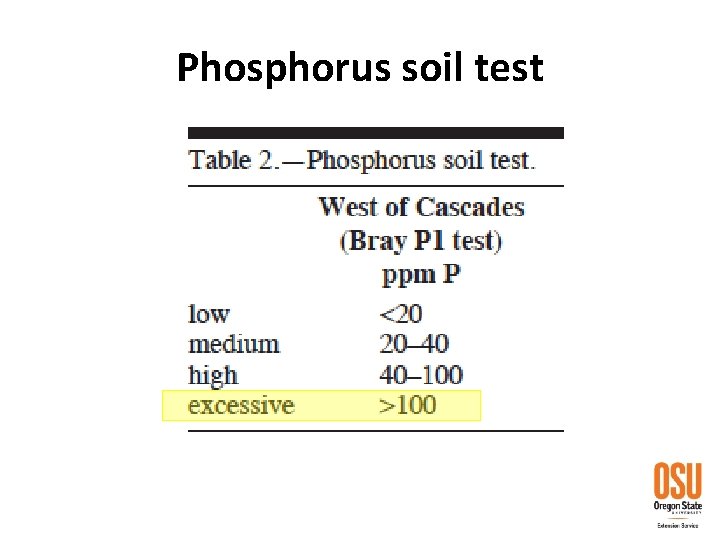
Phosphorus soil test
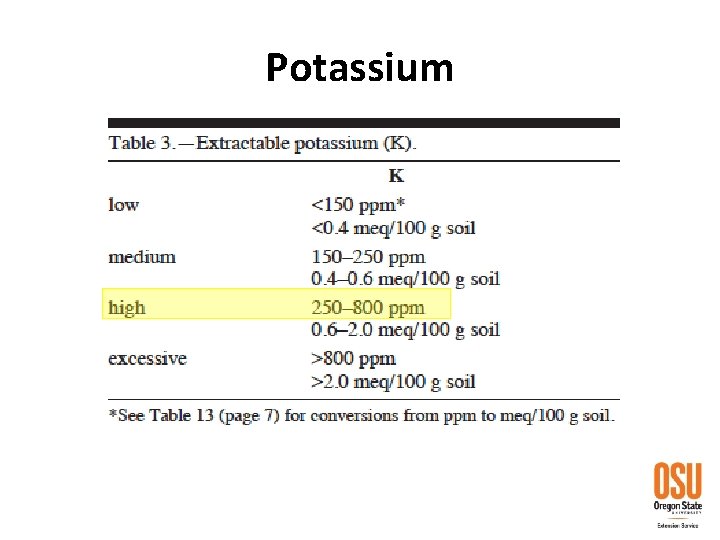
Potassium
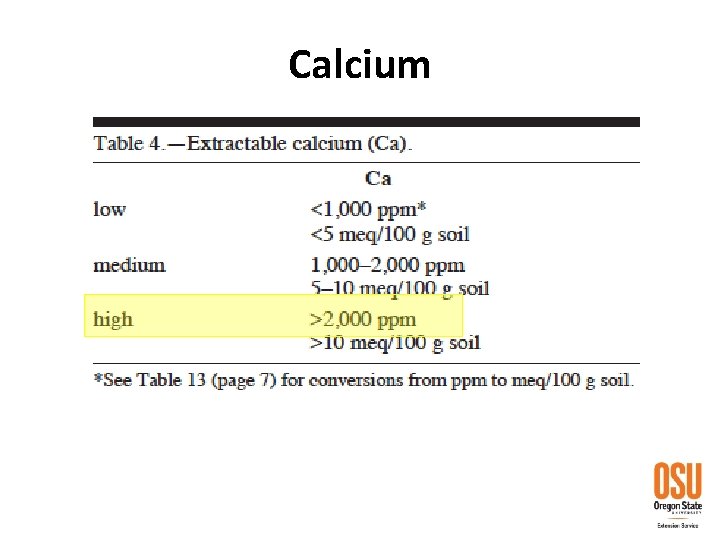
Calcium
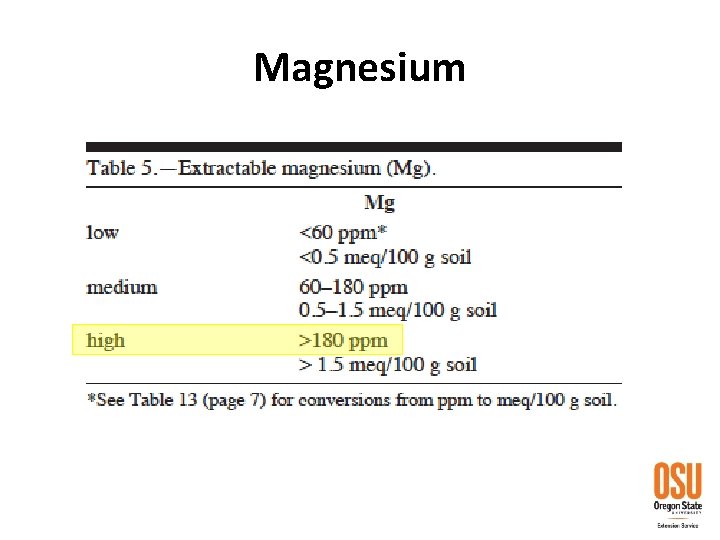
Magnesium
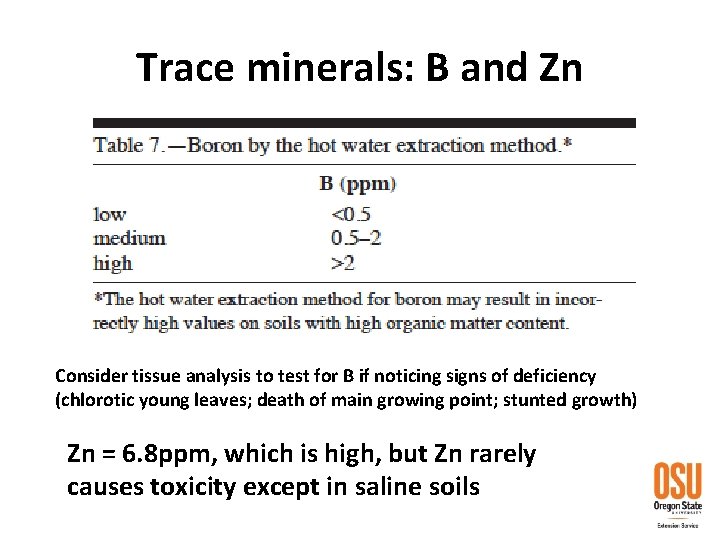
Trace minerals: B and Zn Consider tissue analysis to test for B if noticing signs of deficiency (chlorotic young leaves; death of main growing point; stunted growth) Zn = 6. 8 ppm, which is high, but Zn rarely causes toxicity except in saline soils
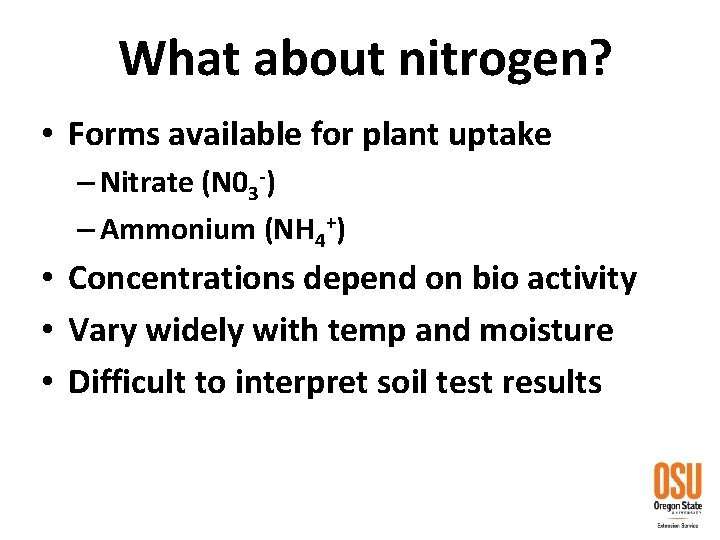
What about nitrogen? • Forms available for plant uptake – Nitrate (N 03 -) – Ammonium (NH 4+) • Concentrations depend on bio activity • Vary widely with temp and moisture • Difficult to interpret soil test results
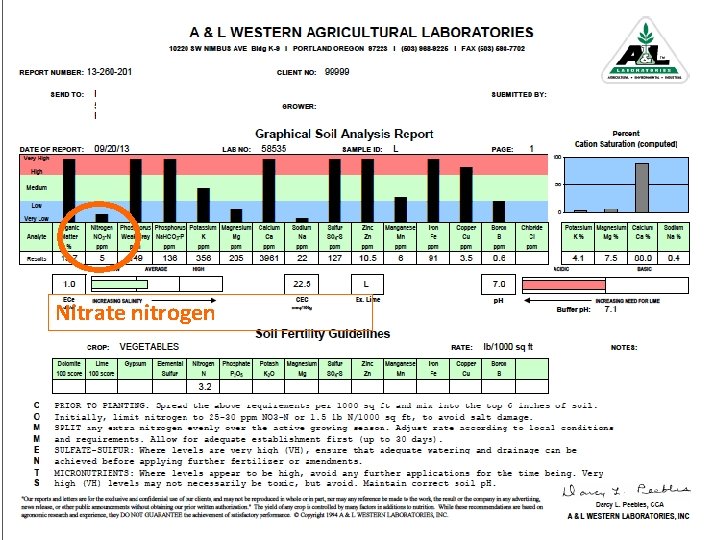
Nitrate nitrogen
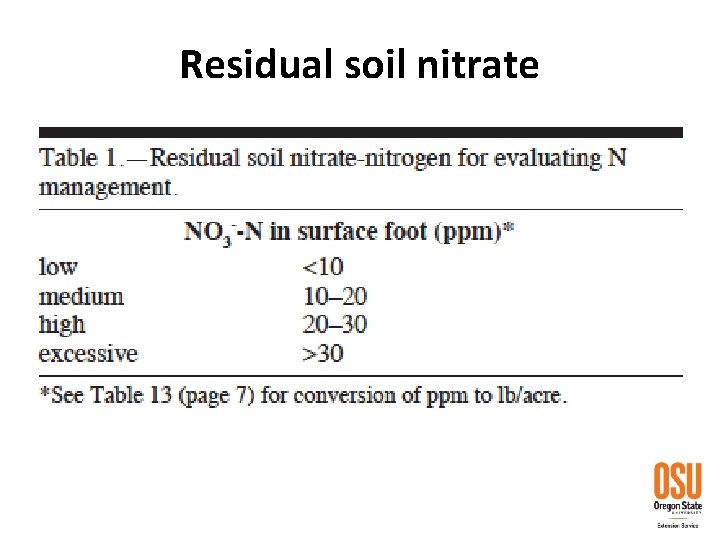
Residual soil nitrate
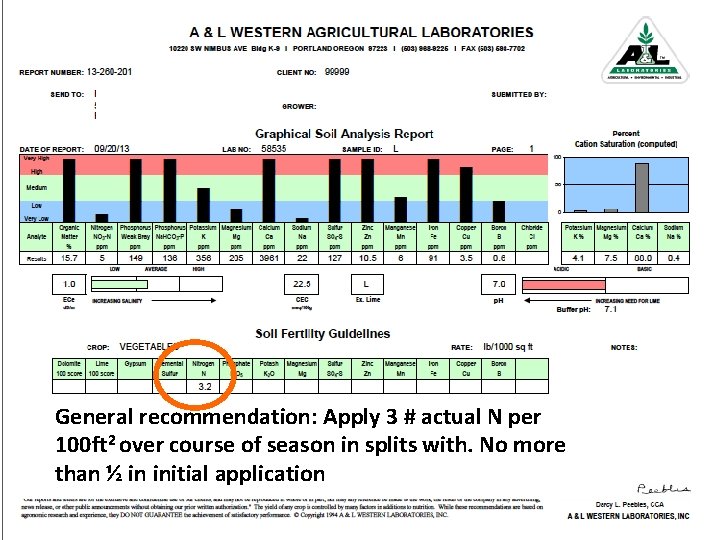
General recommendation: Apply 3 # actual N per 100 ft 2 over course of season in splits with. No more than ½ in initial application
Review of presentation • • • Safety precautions General soil assessment How to take a soil test Safety first! What to test for Interpreting results