
Assessing Science Learning in 3 Part Harmony Richard

- Slides: 32
Assessing Science Learning in 3 Part Harmony Richard Duschl GSE-Rutgers University rduschl@rci. rutgers. edu
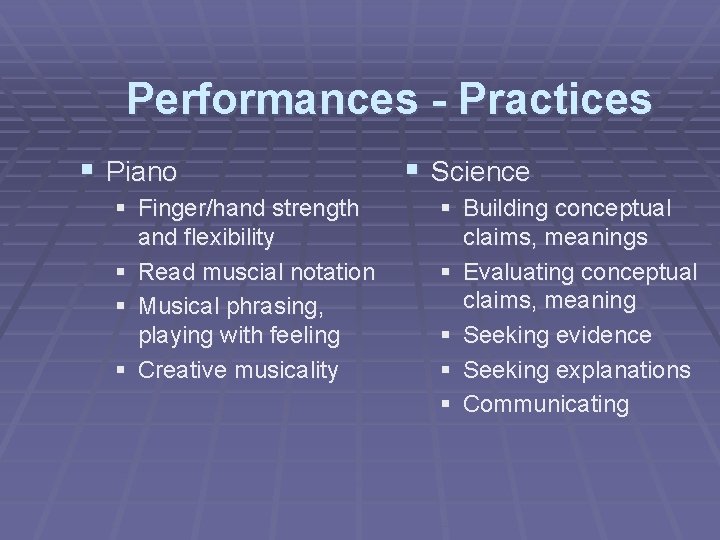
Performances - Practices § Piano § Finger/hand strength and flexibility § Read muscial notation § Musical phrasing, playing with feeling § Creative musicality § Science § Building conceptual claims, meanings § Evaluating conceptual claims, meaning § Seeking evidence § Seeking explanations § Communicating
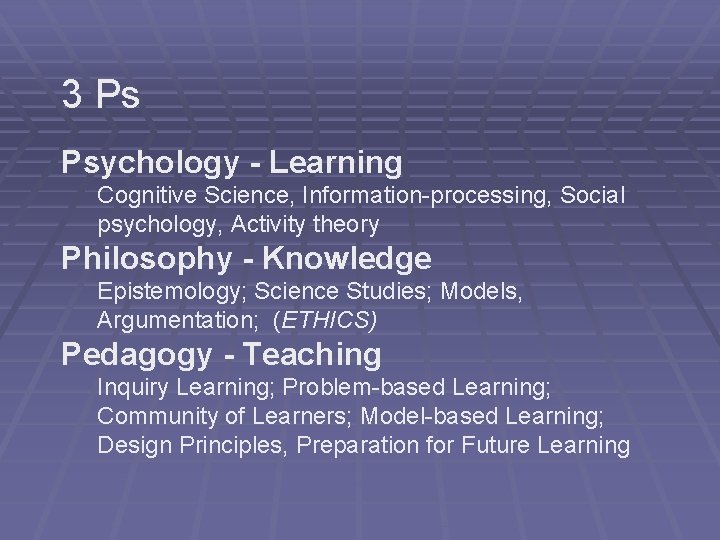
3 Ps Psychology - Learning Cognitive Science, Information-processing, Social psychology, Activity theory Philosophy - Knowledge Epistemology; Science Studies; Models, Argumentation; (ETHICS) Pedagogy - Teaching Inquiry Learning; Problem-based Learning; Community of Learners; Model-based Learning; Design Principles, Preparation for Future Learning
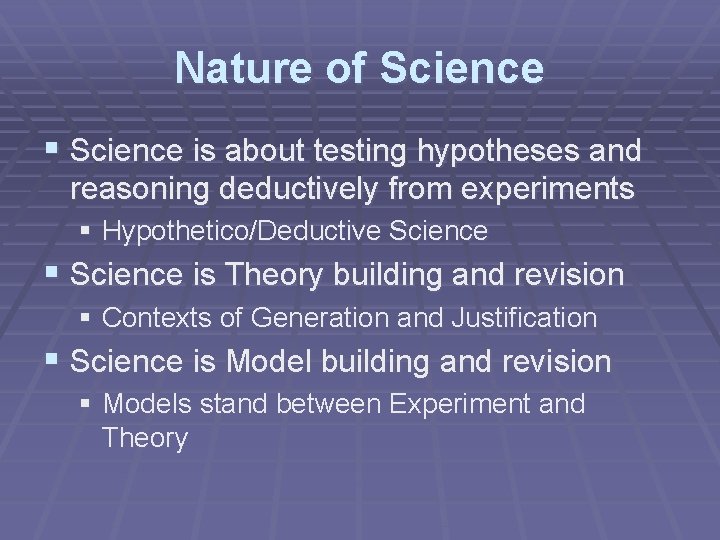
Nature of Science § Science is about testing hypotheses and reasoning deductively from experiments § Hypothetico/Deductive Science § Science is Theory building and revision § Contexts of Generation and Justification § Science is Model building and revision § Models stand between Experiment and Theory
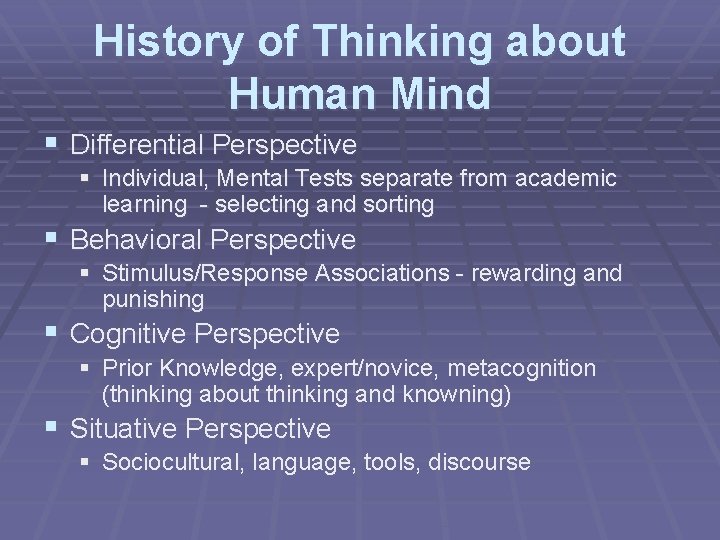
History of Thinking about Human Mind § Differential Perspective § Individual, Mental Tests separate from academic learning - selecting and sorting § Behavioral Perspective § Stimulus/Response Associations - rewarding and punishing § Cognitive Perspective § Prior Knowledge, expert/novice, metacognition (thinking about thinking and knowning) § Situative Perspective § Sociocultural, language, tools, discourse
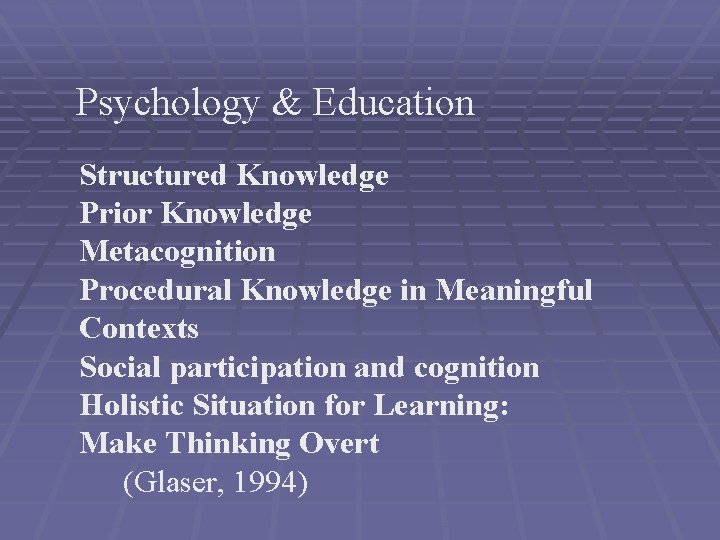
Psychology & Education Structured Knowledge Prior Knowledge Metacognition Procedural Knowledge in Meaningful Contexts Social participation and cognition Holistic Situation for Learning: Make Thinking Overt (Glaser, 1994)
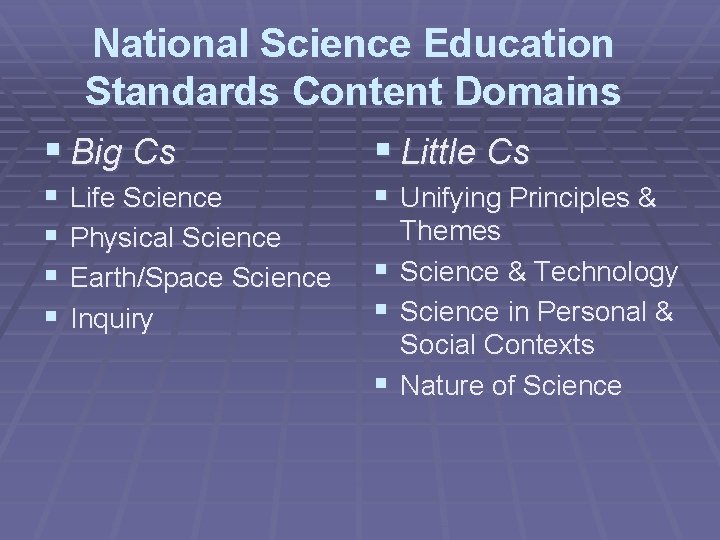
National Science Education Standards Content Domains § Big Cs § Little Cs § § Life Science Physical Science Earth/Space Science Inquiry § Unifying Principles & § § § Themes Science & Technology Science in Personal & Social Contexts Nature of Science
Standards & Benchmarks §Too Much Stuff
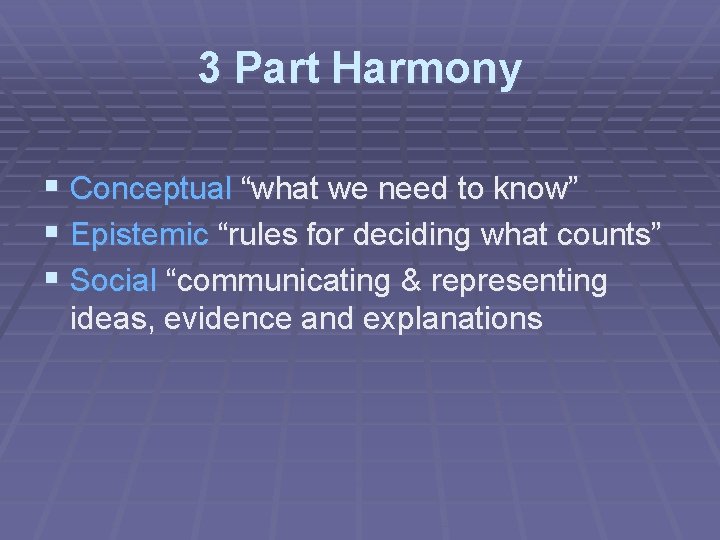
3 Part Harmony § Conceptual “what we need to know” § Epistemic “rules for deciding what counts” § Social “communicating & representing ideas, evidence and explanations
Learning Progressions & Learning Performances
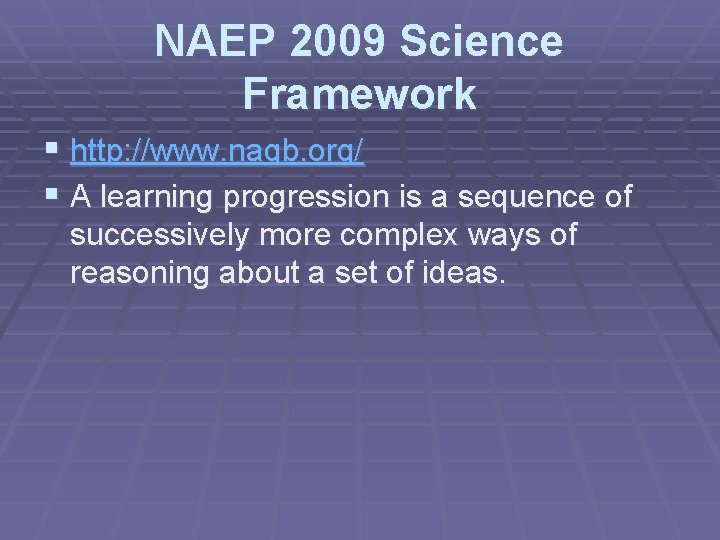
NAEP 2009 Science Framework § http: //www. nagb. org/ § A learning progression is a sequence of successively more complex ways of reasoning about a set of ideas.
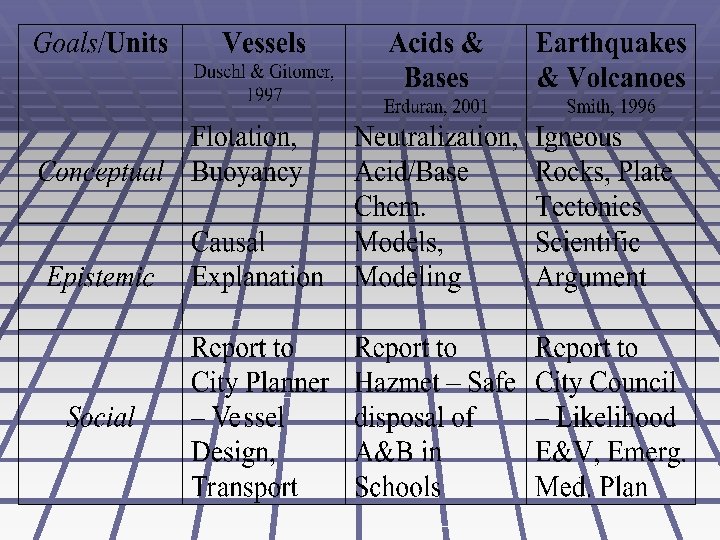
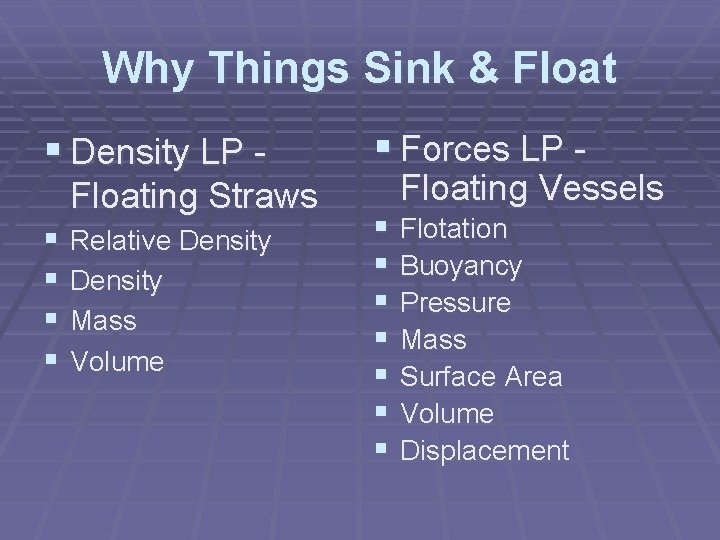
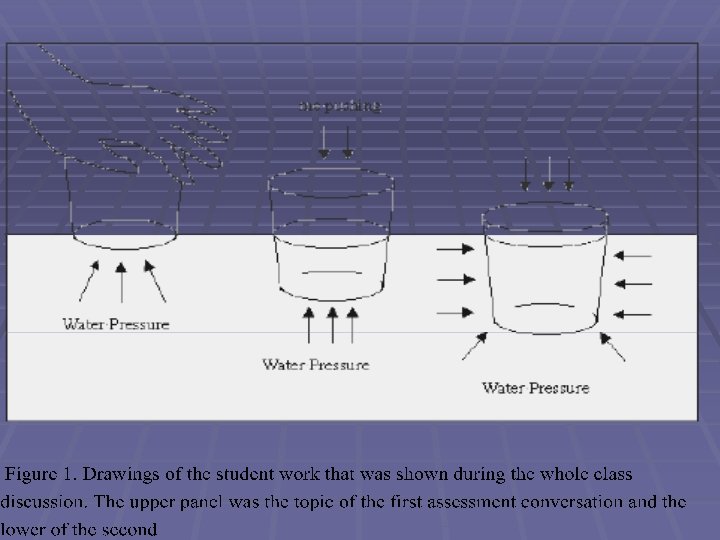
Why Things Sink & Float § Density LP Floating Straws § § Relative Density Mass Volume § Forces LP - Floating Vessels § § § § Flotation Buoyancy Pressure Mass Surface Area Volume Displacement
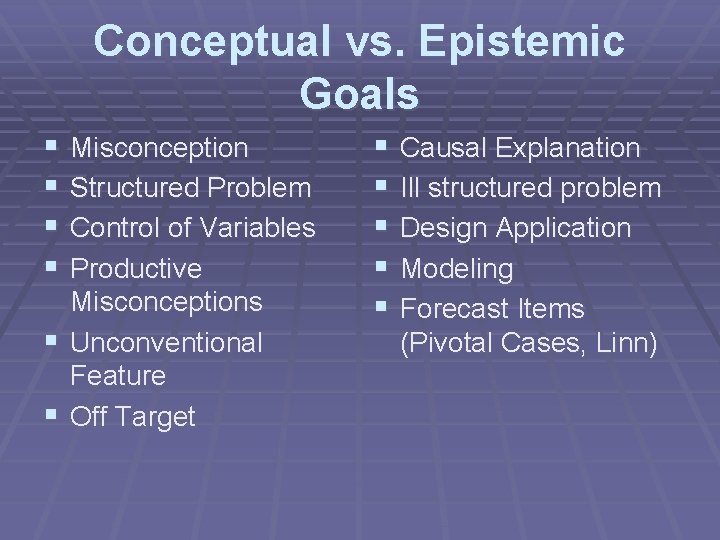
Conceptual vs. Epistemic Goals § § Misconception Structured Problem Control of Variables Productive Misconceptions § Unconventional Feature § Off Target § § § Causal Explanation Ill structured problem Design Application Modeling Forecast Items (Pivotal Cases, Linn)
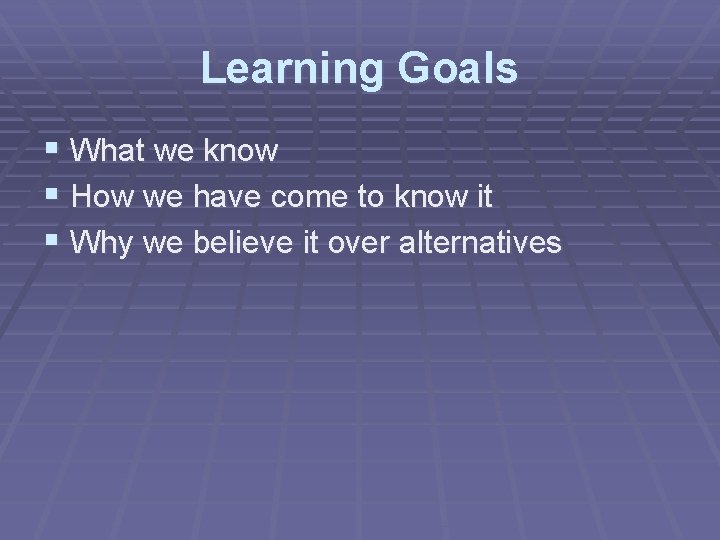
Learning Goals § What we know § How we have come to know it § Why we believe it over alternatives
Affordances for Future Learning § Knowledge in Use § Density - continental drift, ocean currents § Forces - water pressure and neutral buoyancy § Using Scientific Inquiry § Density - separation of liquids § Forces - carrying capacity/displacement § Using Technological Design § Density - test of “Crown Jewels” - Eureka! § Forces - retrieval of sunken ships
Nature of Explanations Language of Science § § § Principled Relational Unclear Relational Experiential Inadequate Explanation § Off Target § § Evidence-Explanation Patterns in Evidence Explanatory Theory Balance of Forces § Stronger Hands § More Hands
Affordances § Making Thinking visible § Teacher Assessments of Conceptual, Epistemic, Social Goals § Identification of Productive Misconceptions § Dialogic Discourse § Measures/Observations-Data-Evidence-Models. Theory § Data-Warrant-Backing-Rebuttal-Qualifier-Conclusion § Images for Nature of Science § Science as Experiments; as Theory-building; as Model-building § Preparation for Future Learning
Scaffolding and Assessing Argumentation Processes in Science King’s College London/American School in London Collaborator Kirsten Ellenbogen NSF via a seed grant from CILT (Center for Innovations in Learning Technology).
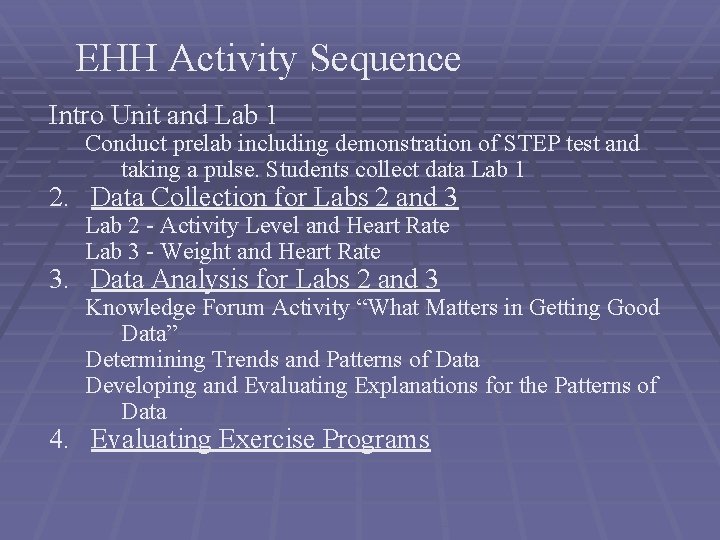
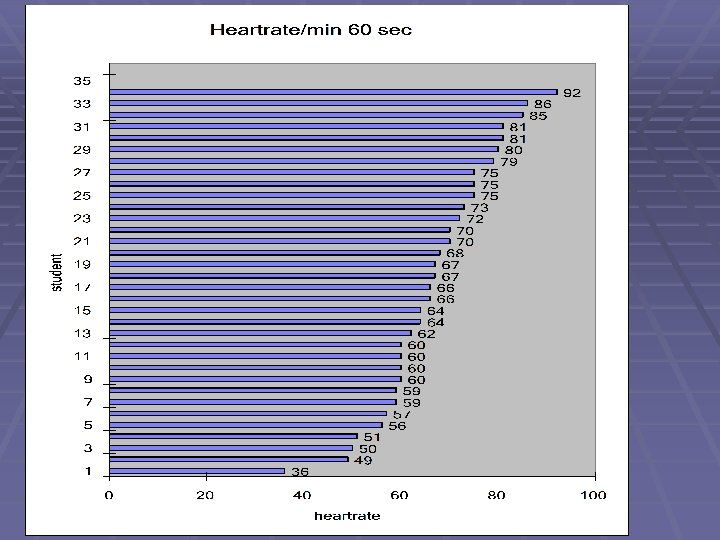
EHH Activity Sequence Intro Unit and Lab 1 Conduct prelab including demonstration of STEP test and taking a pulse. Students collect data Lab 1 2. Data Collection for Labs 2 and 3 Lab 2 - Activity Level and Heart Rate Lab 3 - Weight and Heart Rate 3. Data Analysis for Labs 2 and 3 Knowledge Forum Activity “What Matters in Getting Good Data” Determining Trends and Patterns of Data Developing and Evaluating Explanations for the Patterns of Data 4. Evaluating Exercise Programs
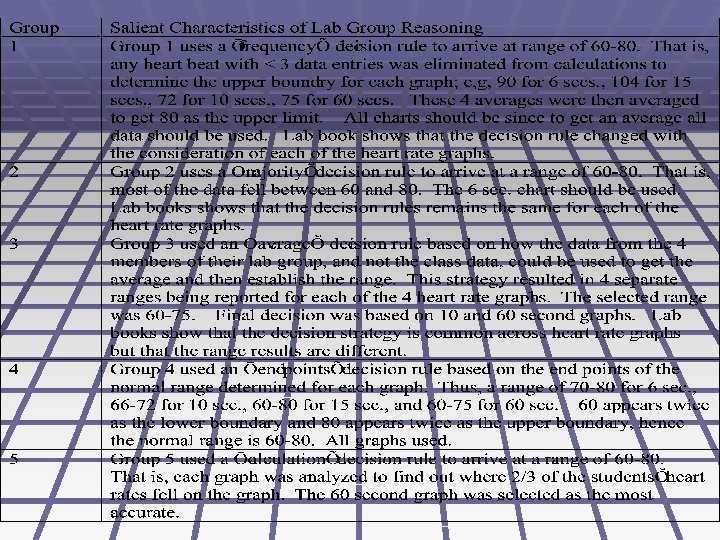
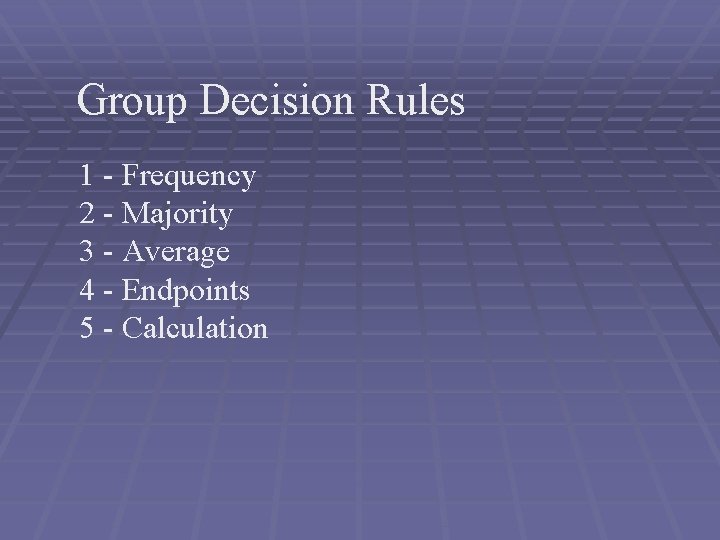
Group Decision Rules 1 - Frequency 2 - Majority 3 - Average 4 - Endpoints 5 - Calculation
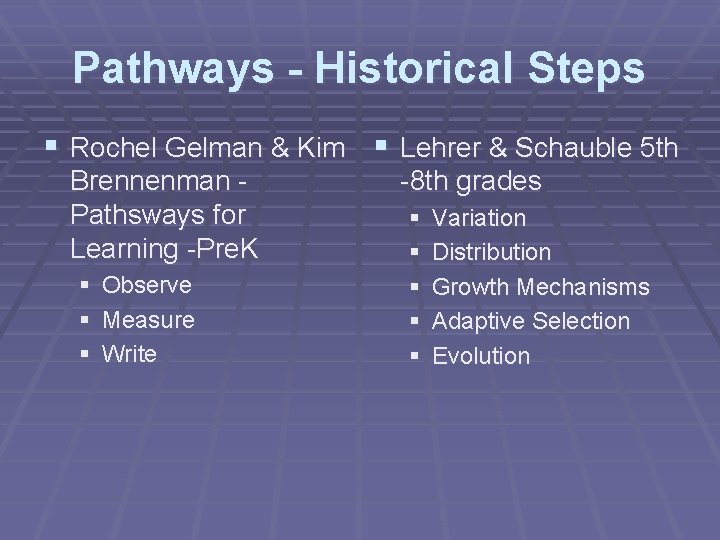
Pathways - Historical Steps § Rochel Gelman & Kim § Lehrer & Schauble 5 th Brennenman Pathsways for Learning -Pre. K § § § Observe Measure Write -8 th grades § § § Variation Distribution Growth Mechanisms Adaptive Selection Evolution
Observation-Evidence § There exists a continuum of what counts as scientific data, and subsequently what counts as scientific evidence. From initial sense-based descriptive observations, to tool assisted measurement observations, and to theory-driven instrument based observations. The latter most sophisticated level underscores the revision-based and theory-laden nature of science.
Evidence-based Argumentation § There exists a continuum regarding the use of evidence to support and refute scientific claims, and the structure and practice of argumentation (language of argumentation and role of consensus). Initial arguments feature a simple single claim-evidence structure, with learning arguments develop to include counter claims and counterevidence with attention to resolving alternative explanation and informing theory.
Theory-building § There exists a continuum of sophistication regarding the use of evidence and explanations to develop, refine and modify scientific theories. Initially students may not discriminate between evidence and theory. With engagement and learning opportunities students can refine and deepen their understanding and practices of the relationships between evidence and explanations. Sophisticated images of the nature of science conceptualize theories as robust explanatory schemes comprised of multiple models, models that stand between evidence and explanation.
Inquiry Based Learning § Deciding the Content § Aims & Goals § Conceptual § Facts, Principles, Laws & Theories § Epistemic § Explanations, Models, Arguments § Social § Representations, Communications § Deciding the Context § School Science § “Real World” Science § Environment § Social Issues § Museum/Science Centre Science
3 Part Harmony § Conceptual Goals § Epistemic Goals § Social Goals
Thank You