
Assessing and Scaling Caregiver Protective Capacities Case Management





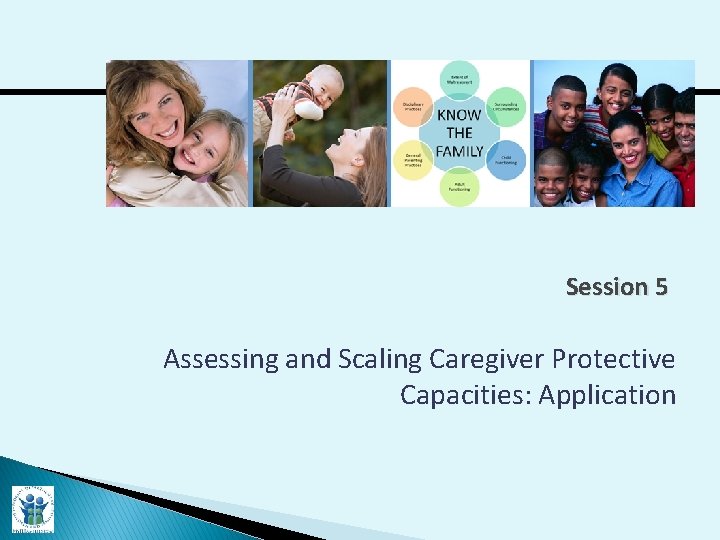





- Slides: 77
Assessing and Scaling Caregiver Protective Capacities Case Management
Workshop Introduction Context for the Training Related to Implementation of Safety Decision Making Methodology Fidelity of the Ongoing Family Functioning Assessment ◦ Philosophy of practice ◦ Intervention purpose and framework ◦ Conceptual and criteria basis for practice and decision-making ◦ Process, practice and outcomes 2
Participant Introductions 3
Workshop Training Objectives As a result of this training, participants will be able to: Identify the ongoing family functioning intervention stages; Define caregiver protective capacities; Recall the purpose of caregiver protective capacity scaling; Identify and demonstrate assessment skills utilized in assessing caregiver protective capacities; Demonstrate critical thinking through case application. 4
Workshop Agenda 5
Baseline Knowledge Assessment Inform training and development; Provide feedback to trainer; Measure change. 6
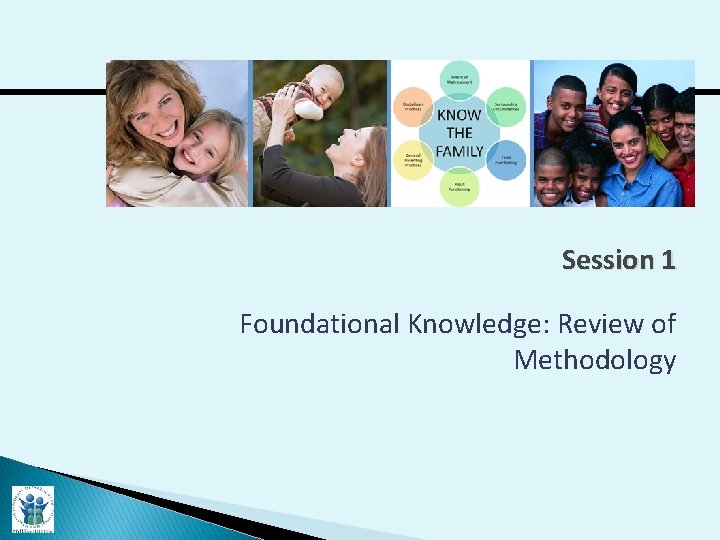
Session 1 Foundational Knowledge: Review of Methodology
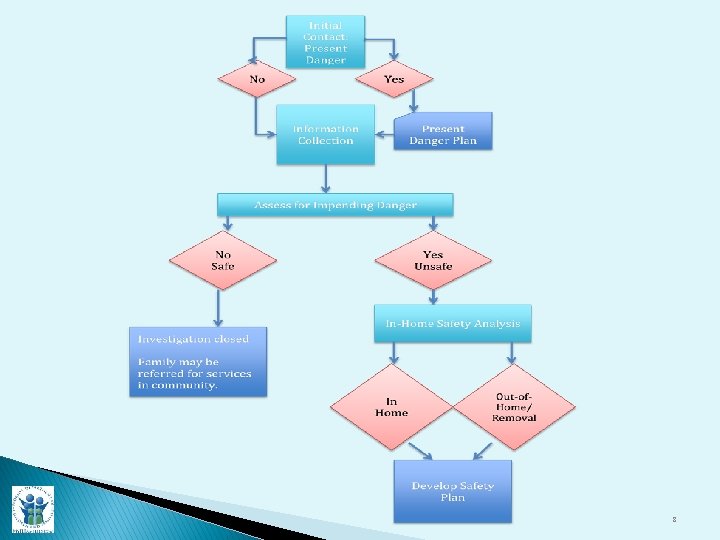
8
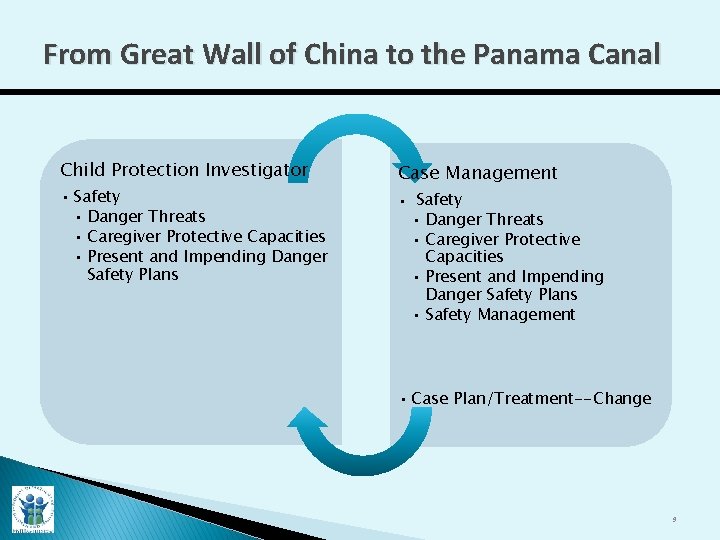
From Great Wall of China to the Panama Canal Child Protection Investigator • Safety • Danger Threats • Caregiver Protective Capacities • Present and Impending Danger Safety Plans Case Management • Safety • Danger Threats • Caregiver Protective Capacities • Present and Impending Danger Safety Plans • Safety Management • Case Plan/Treatment--Change 9
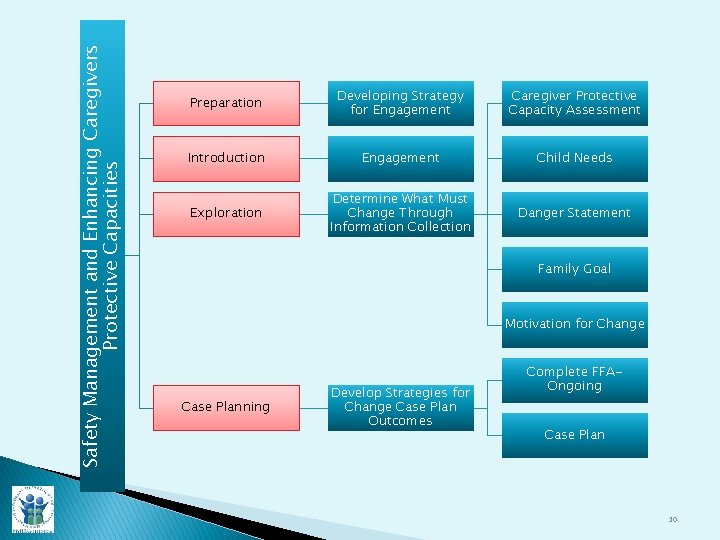
Safety Management and Enhancing Caregivers Protective Capacities Preparation Developing Strategy for Engagement Caregiver Protective Capacity Assessment Introduction Engagement Child Needs Exploration Determine What Must Change Through Information Collection Danger Statement Family Goal Motivation for Change Case Planning Develop Strategies for Change Case Plan Outcomes Complete FFAOngoing Case Plan 10
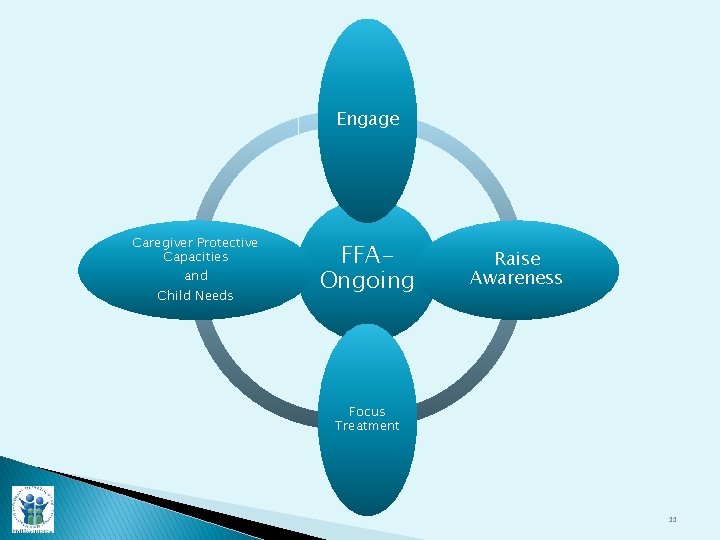
Engage Caregiver Protective Capacities and Child Needs FFAOngoing Raise Awareness Focus Treatment 11
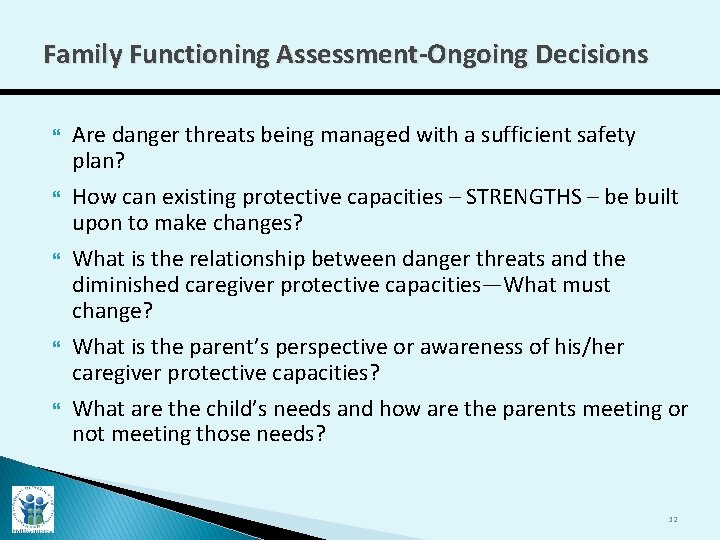
Family Functioning Assessment-Ongoing Decisions Are danger threats being managed with a sufficient safety plan? How can existing protective capacities – STRENGTHS – be built upon to make changes? What is the relationship between danger threats and the diminished caregiver protective capacities—What must change? What is the parent’s perspective or awareness of his/her caregiver protective capacities? What are the child’s needs and how are the parents meeting or not meeting those needs? 12
Family Functioning Assessment-Ongoing Decisions What are the parent(s) ready and willing to work on in the case plan to change their behavior? What are the areas of disagreement with the parent(s) as to what needs to change? What change strategy will be used to address the diminished protective capacities? 13
Philosophy: Family Functioning Assessment-Ongoing Safety is paramount and the basis for intervention! Case planning process and interventions can be more clearly defined around the use of safety concepts and behavior change Case planning process can be structured in a way to encourage and direct parents’ involvement and establish consistent intervention decisions and objectives 14
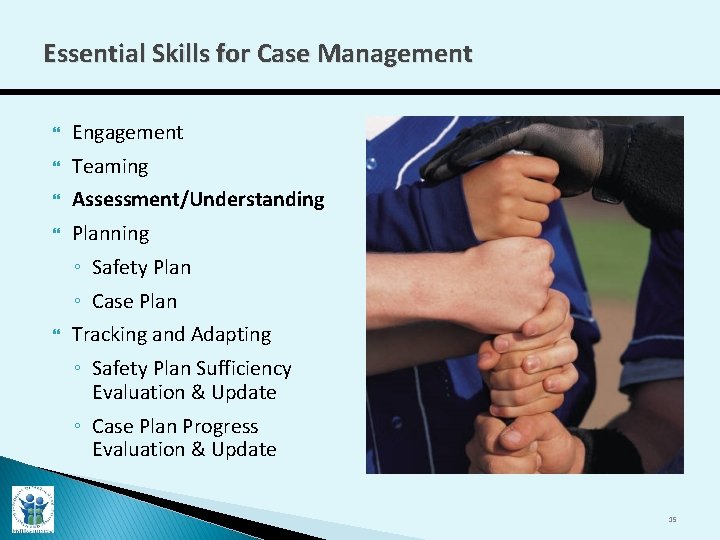
Essential Skills for Case Management Engagement Teaming Assessment/Understanding Planning ◦ Safety Plan ◦ Case Plan Tracking and Adapting ◦ Safety Plan Sufficiency Evaluation & Update ◦ Case Plan Progress Evaluation & Update 15
Questions? 16
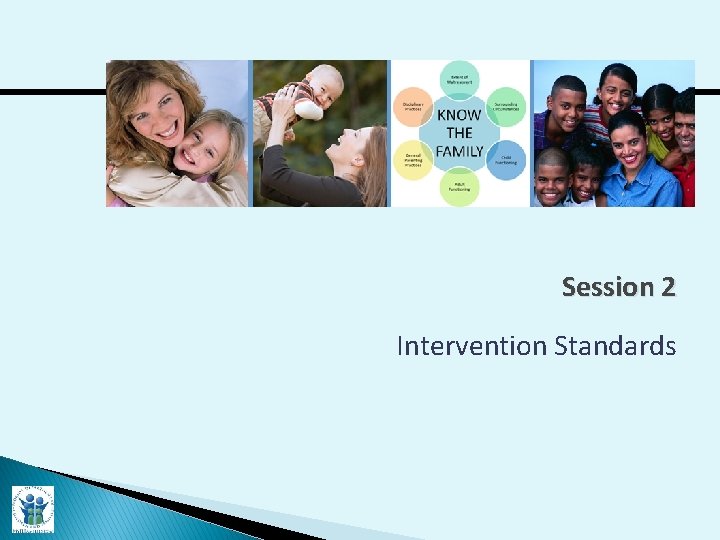
Session 2 Intervention Standards
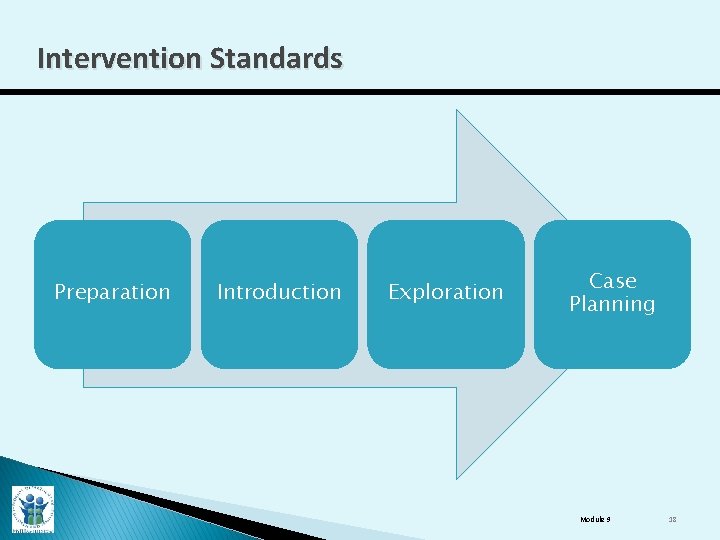
Intervention Standards Preparation Introduction Exploration Case Planning Module 9 18
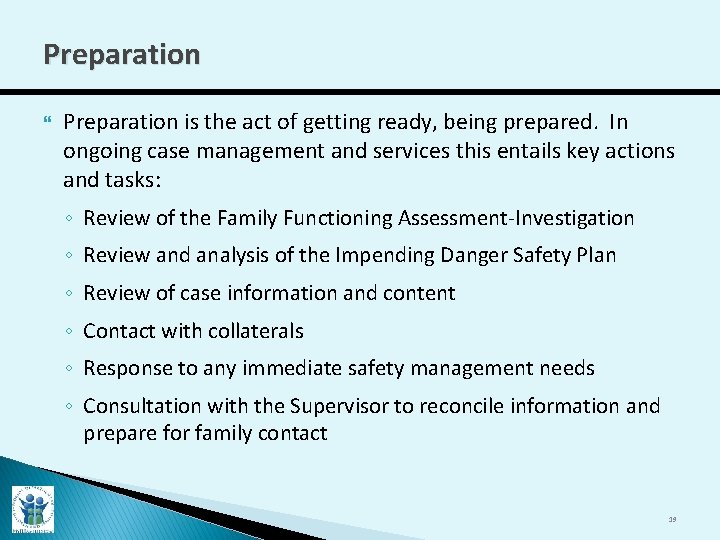
Preparation is the act of getting ready, being prepared. In ongoing case management and services this entails key actions and tasks: ◦ Review of the Family Functioning Assessment-Investigation ◦ Review and analysis of the Impending Danger Safety Plan ◦ Review of case information and content ◦ Contact with collaterals ◦ Response to any immediate safety management needs ◦ Consultation with the Supervisor to reconcile information and prepare for family contact 19
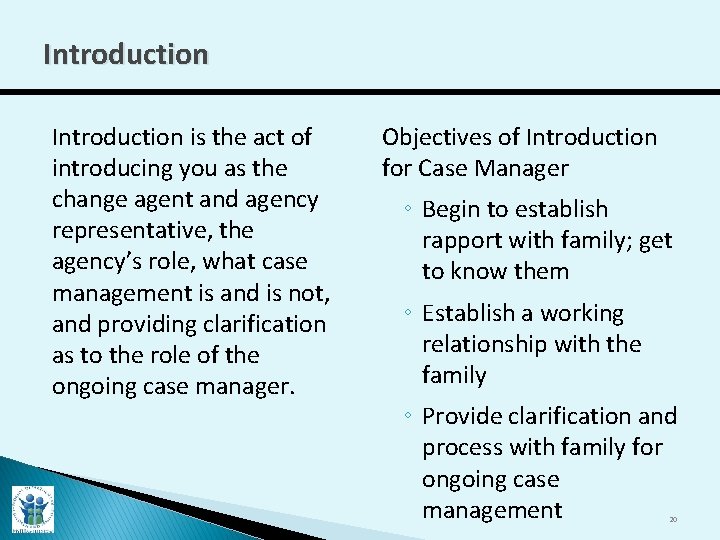
Introduction is the act of introducing you as the change agent and agency representative, the agency’s role, what case management is and is not, and providing clarification as to the role of the ongoing case manager. Objectives of Introduction for Case Manager ◦ Begin to establish rapport with family; get to know them ◦ Establish a working relationship with the family ◦ Provide clarification and process with family for ongoing case management 20
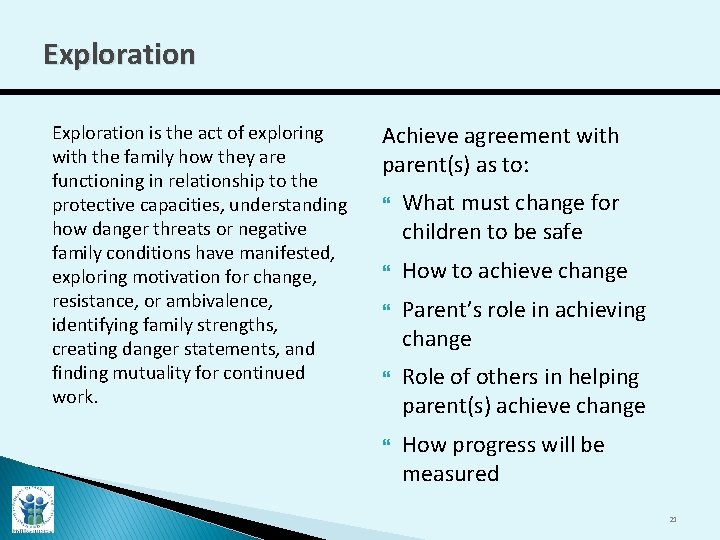
Exploration is the act of exploring with the family how they are functioning in relationship to the protective capacities, understanding how danger threats or negative family conditions have manifested, exploring motivation for change, resistance, or ambivalence, identifying family strengths, creating danger statements, and finding mutuality for continued work. Achieve agreement with parent(s) as to: What must change for children to be safe How to achieve change Parent’s role in achieving change Role of others in helping parent(s) achieve change How progress will be measured 21
Case Planning Case planning with the family is the act of establishing outcomes and motivation for change. 22
Questions? 23
Session 3 Caregiver Protective Capacities
Why Do We Assess Caregiver Protective Capacities?
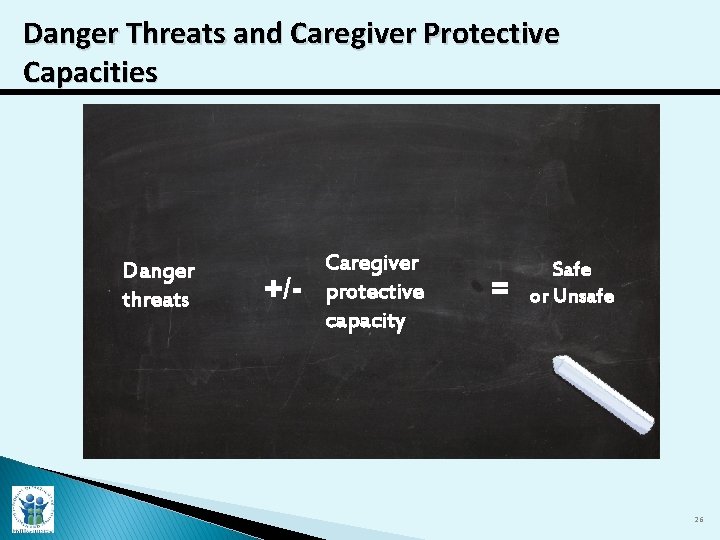
Danger Threats and Caregiver Protective Capacities Danger threats +/- Caregiver protective capacity = Safe or Unsafe 26
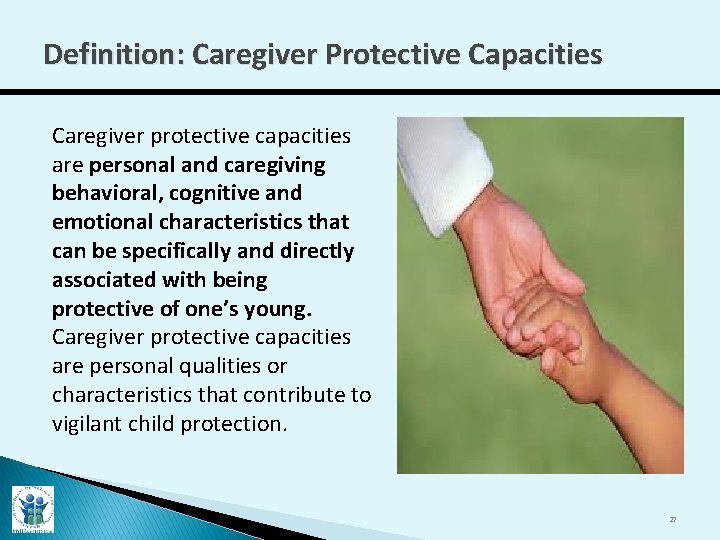
Definition: Caregiver Protective Capacities Caregiver protective capacities are personal and caregiving behavioral, cognitive and emotional characteristics that can be specifically and directly associated with being protective of one’s young. Caregiver protective capacities are personal qualities or characteristics that contribute to vigilant child protection. 27
Behavioral Protective Capacity Specific action, activity, or performance that is consistent with, and results in, protective parenting and protective vigilance. 28
Cognitive Protective Capacity Specific intellect, knowledge, understanding and perception that results in protective parenting and protective vigilance. 29
Emotional Protective Capacity Specific feelings, attitudes, identification with child and motivation that results in protective parenting and protective vigilance. 30
Assessing: Caregiver Protective Capacities CPI-Family Functioning Assessment ◦ Based on six domains of information; ◦ Limited information known at the time in relation to what can be known; ◦ Determination of Yes or No; ◦ Indicators of being “enhanced” or “diminished”. CM-Ongoing Family Functioning Assessment and Evaluation ◦ Based on four domains of information; ◦ Extensive information to be known; ◦ Determination of degree of functioning from a limited to extensive perspective. 31
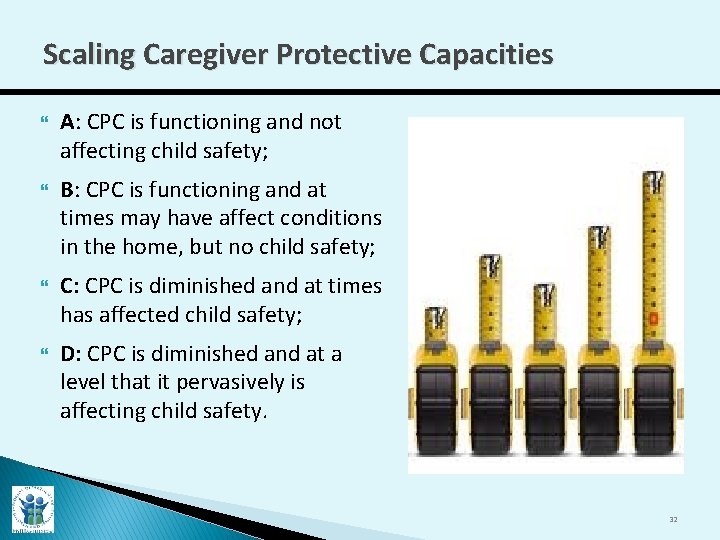
Scaling Caregiver Protective Capacities A: CPC is functioning and not affecting child safety; B: CPC is functioning and at times may have affect conditions in the home, but no child safety; C: CPC is diminished and at times has affected child safety; D: CPC is diminished and at a level that it pervasively is affecting child safety. 32
Questions? 33
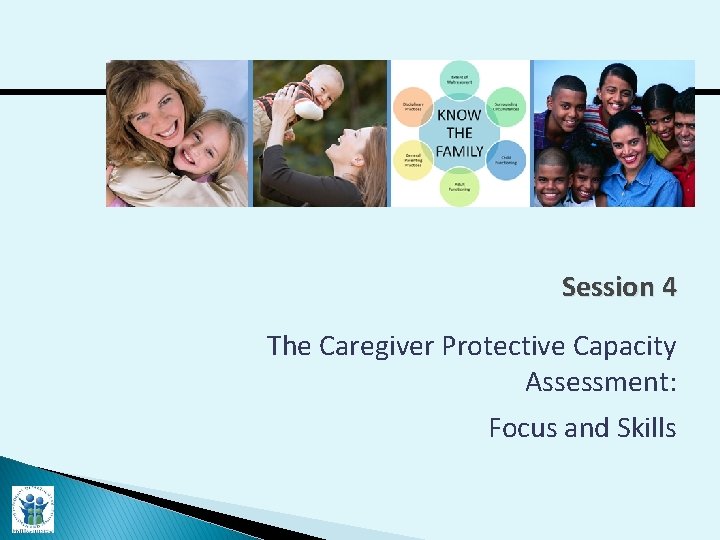
Session 4 The Caregiver Protective Capacity Assessment: Focus and Skills
An Assessment: Is NOT: Is: ◦ A one time occurrence; ◦ Process, not a destination; ◦ Myopic; ◦ Multi-dimensional; ◦ Deficit driven; ◦ Strength and child focused; ◦ Legally driven; ◦ Drives decision-making for child safety and change. ◦ One dimensional. 35
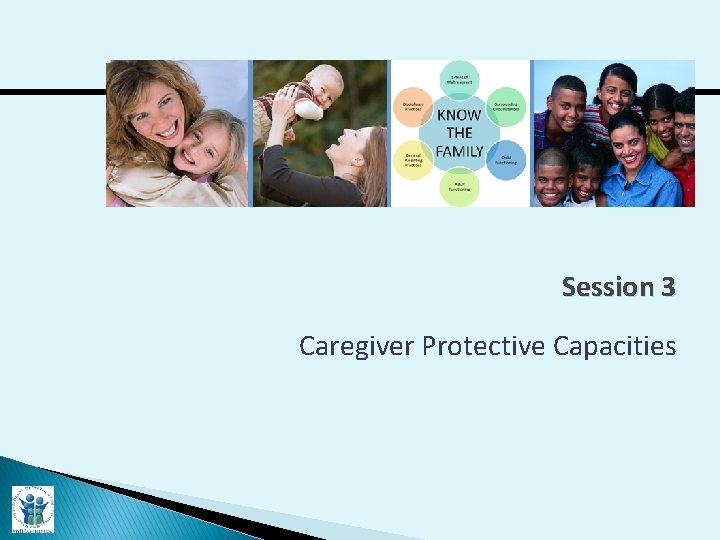
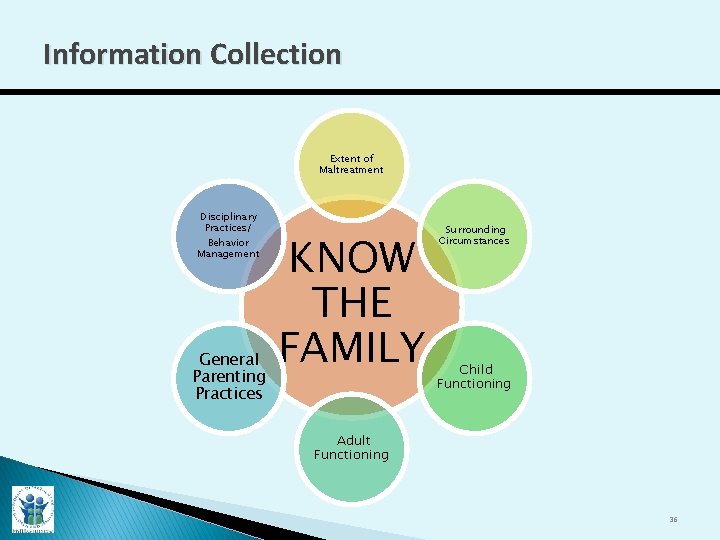
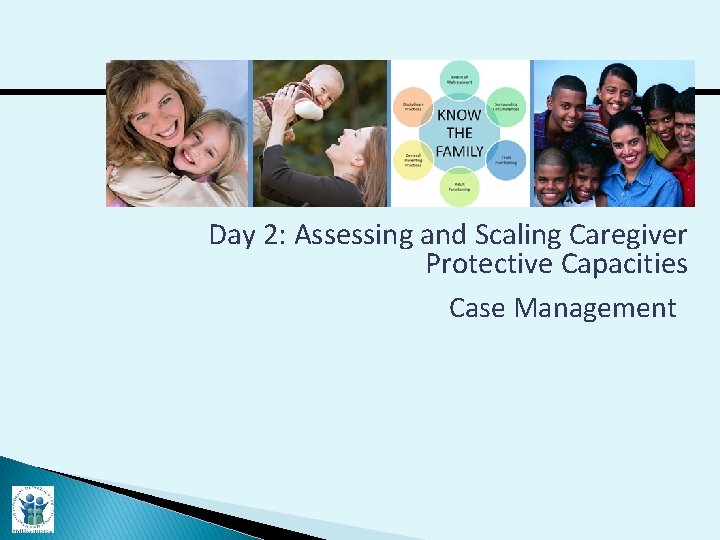
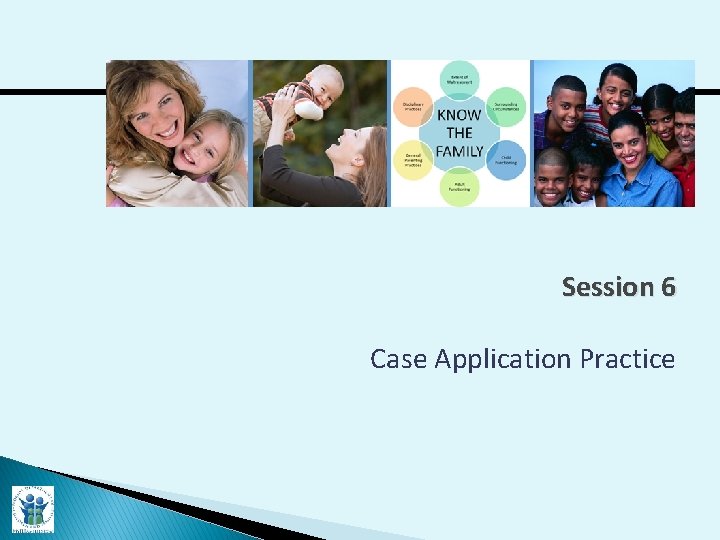
Information Collection Extent of Maltreatment Disciplinary Practices/ Behavior Management General Parenting Practices KNOW THE FAMILY Surrounding Circumstances Child Functioning Adult Functioning 36
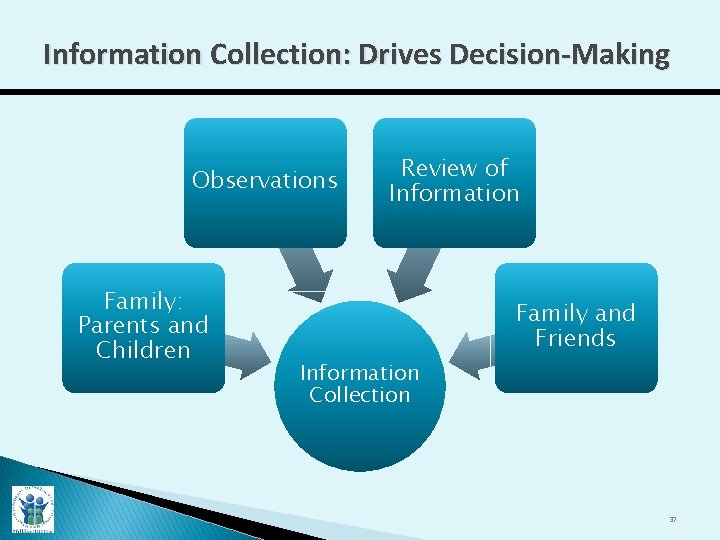
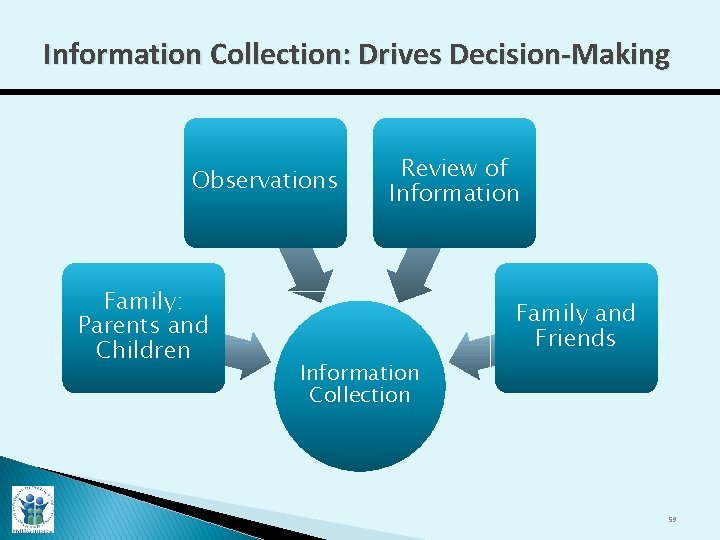
Information Collection: Drives Decision-Making Observations Family: Parents and Children Review of Information Family and Friends Information Collection 37
Case Manager Strategies and Skills The strategies and skills we use during exploration directly influence information collection and the family partnership that began with our initial contacts. 38
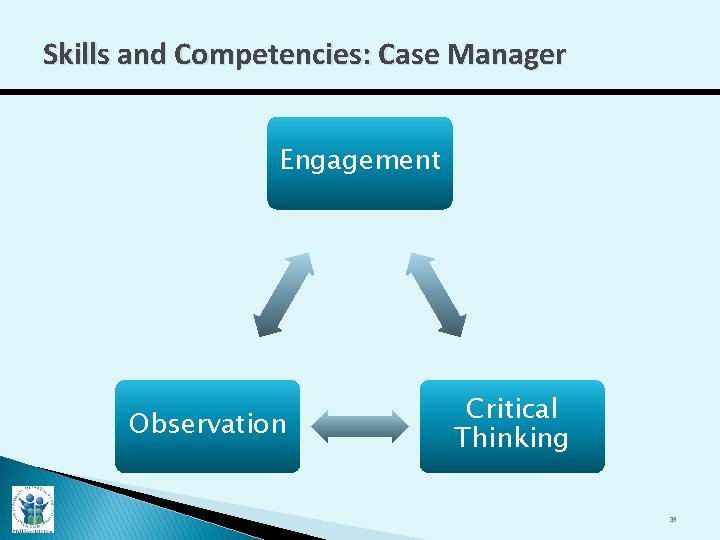
Skills and Competencies: Case Manager Engagement Observation Critical Thinking 39
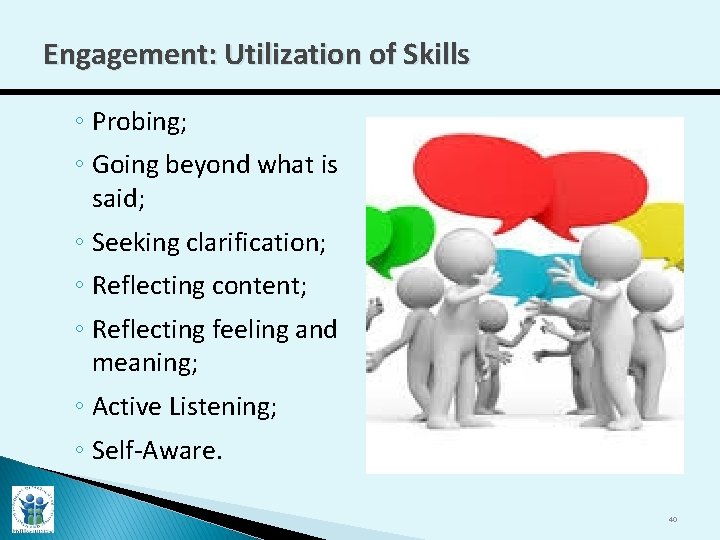
Engagement: Utilization of Skills ◦ Probing; ◦ Going beyond what is said; ◦ Seeking clarification; ◦ Reflecting content; ◦ Reflecting feeling and meaning; ◦ Active Listening; ◦ Self-Aware. 40
Practice: Engagement Skills Large Group Activity; Trainer on the Spot: ◦ What do you know about me? How will you find out? ◦ Round the room interview utilizing your engagement skills.
Activity Report Out
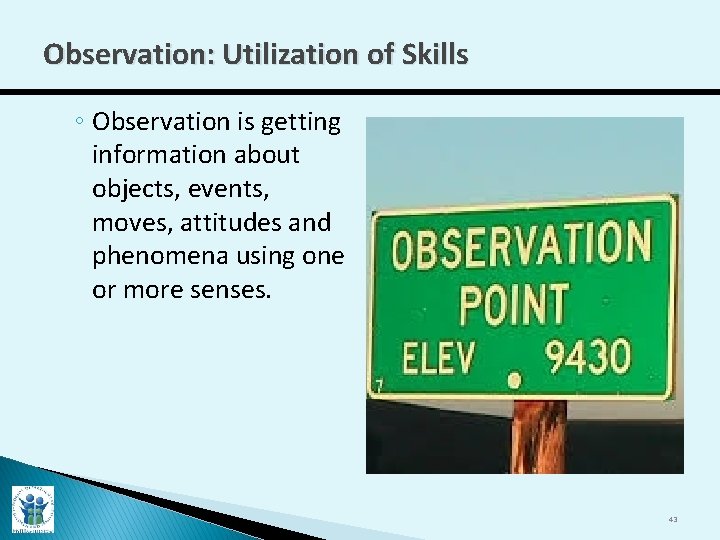
Observation: Utilization of Skills ◦ Observation is getting information about objects, events, moves, attitudes and phenomena using one or more senses. 43
Practice: Observational Skills Large Group Activity; Video of parents and children reunited after a tornado; Record your observations: ◦ What do you hear going on? ◦ What are the parents doing?
Activity Report Out
Observation: Advantages Disadvantages ◦ Most direct measure of behavior; ◦ Observer’s presence may create artificial situation; ◦ Provides direct information; ◦ Potential for bias; ◦ Can be used in natural or experimental settings (such as family time). ◦ Potential to overlook meaningful aspects; ◦ Potential for misinterpretation.
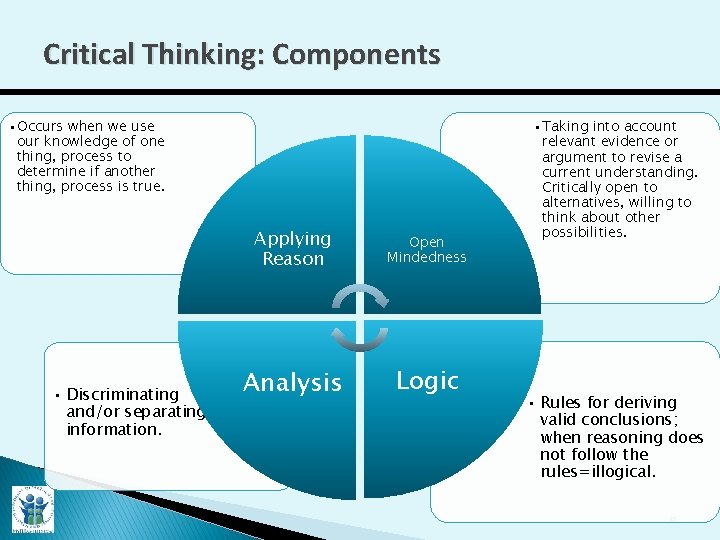
Critical Thinking: Utilization of Skills Critical thinking is the intellectually disciplined process of actively and skillfully conceptualizing, applying, analyzing, synthesizing, and/or evaluating information gathered from, or generated by, observation, experience, reflection, reasoning, or communication. A statement by Michael Scriven & Richard Paul presented at the 8 th Annual International Conference on Critical 47 Thinking and Education Reform, Summer 1987
Critical Thinking: Components • Occurs when we use our knowledge of one thing, process to determine if another thing, process is true. • Discriminating and/or separating information. Applying Reason Open Mindedness Analysis Logic • Taking into account relevant evidence or argument to revise a current understanding. Critically open to alternatives, willing to think about other possibilities. • Rules for deriving valid conclusions; when reasoning does not follow the rules=illogical. 48
Practice: Critical Thinking The Definition Game ◦ Group One Identify an object in the room (e. g. chair, mobile phone) Ask Group Two to provide a definition ◦ Group One is responsible for criticizing the definition ◦ Group Two continues to modify the definition to address objections from Group One
Activity Report Out According to the definitions of critical thinking and the components of critical thinking, what makes this activity reflective of a Critical Thinking Activity?
Questions? 51
Practice: Critical Thinking, Engagement and Observation Small Groups of 4; Croft Family: ◦ Review FFA; ◦ Identify areas for further exploration; ◦ Engage family in conversations; ◦ Observation by others.
Activity Report Out
Day 1: Take Away from the Day Take Away from today: ◦ What did you find helpful? ◦ Questions still needing to be answered? ◦ More time on…. 54
Day 2: Assessing and Scaling Caregiver Protective Capacities Case Management
Day 2: Welcome Back Overnight Thoughts? ◦ Questions from yesterday? ◦ Feedback from yesterday? ◦ Reflections from yesterday? 56
Agenda: Day 2 Practice Case Application: ◦ Assessing for information collection ◦ Utilizing information for scaling CPC’s Small Group Exercise: ◦ Own Case Practice Analysis and Critical Thinking Practice Scaling Practice 57
Session 5 Assessing and Scaling Caregiver Protective Capacities: Application
Information Collection: Drives Decision-Making Observations Family: Parents and Children Review of Information Family and Friends Information Collection 59
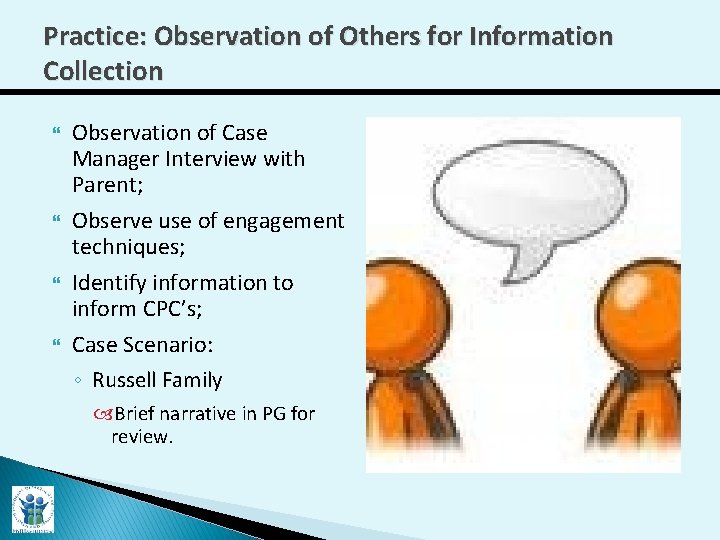
Practice: Observation of Others for Information Collection Observation of Case Manager Interview with Parent; Observe use of engagement techniques; Identify information to inform CPC’s; Case Scenario: ◦ Russell Family Brief narrative in PG for review.
Activity Report Out
Practice! 62
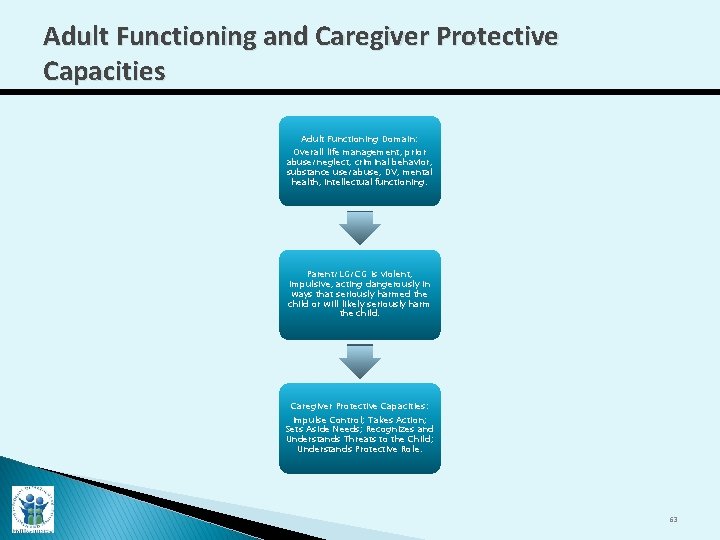
Adult Functioning and Caregiver Protective Capacities Adult Functioning Domain: Overall life management, prior abuse/neglect, criminal behavior, substance use/abuse, DV, mental health, intellectual functioning. Parent/LG/CG is violent, impulsive, acting dangerously in ways that seriously harmed the child or will likely seriously harm the child. Caregiver Protective Capacities: Impulse Control; Takes Action; Sets Aside Needs; Recognizes and Understands Threats to the Child; Understands Protective Role. 63
Practice: Assessment and Scaling of CPC’s Small Groups of 4; Case Scenario: ◦ Practice engaging “parent” in assessment regarding adult functioning; ◦ Analyze information to determine CPC’s and Scaling of CPC.
Activity Report Out
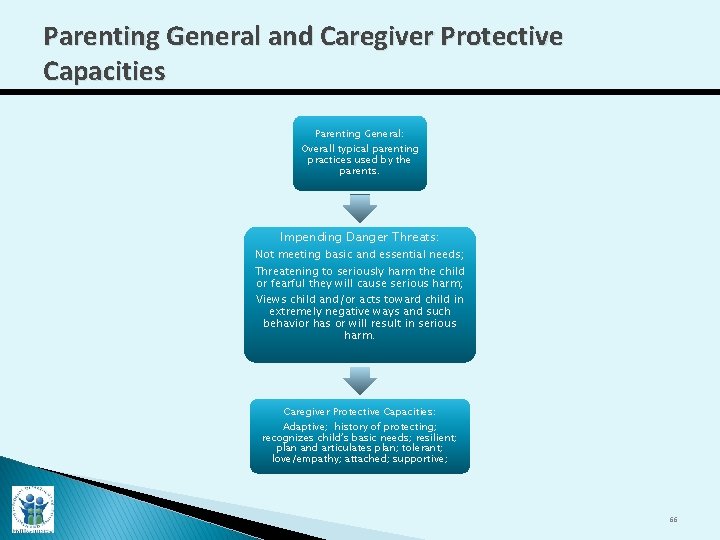
Parenting General and Caregiver Protective Capacities Parenting General: Overall typical parenting practices used by the parents. Impending Danger Threats: Not meeting basic and essential needs; Threatening to seriously harm the child or fearful they will cause serious harm; Views child and/or acts toward child in extremely negative ways and such behavior has or will result in serious harm. Caregiver Protective Capacities: Adaptive; history of protecting; recognizes child’s basic needs; resilient; plan and articulates plan; tolerant; love/empathy; attached; supportive; 66
Practice: Assessment and Scaling of CPC’s Small Groups of 4; Case Scenario: ◦ Practice engaging “parent” in assessment regarding parenting general; ◦ Analyze information to determine CPC’s and Scaling of CPC.
Activity Report Out
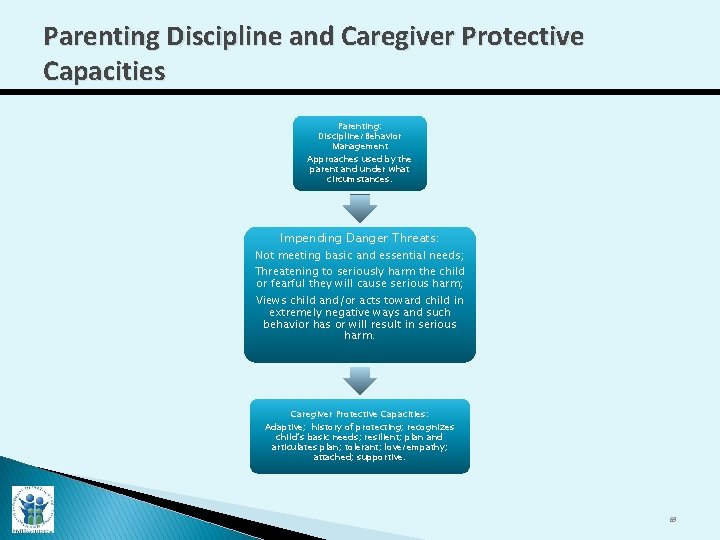
Parenting Discipline and Caregiver Protective Capacities Parenting: Discipline/Behavior Management Approaches used by the parent and under what circumstances. Impending Danger Threats: Not meeting basic and essential needs; Threatening to seriously harm the child or fearful they will cause serious harm; Views child and/or acts toward child in extremely negative ways and such behavior has or will result in serious harm. Caregiver Protective Capacities: Adaptive; history of protecting; recognizes child’s basic needs; resilient; plan and articulates plan; tolerant; love/empathy; attached; supportive. 69
Practice: Assessment and Scaling of CPC’s Small Groups of 4; Case Scenario: ◦ Practice engaging “parent” in assessment regarding parenting: discipline/behavior management; ◦ Analyze information to determine CPC’s and Scaling of CPC.
Activity Report Out
Session 6 Case Application Practice
Practice: Applying Concepts to Our Practice Using the OFFA brought to training: ◦ Identify danger threats and related CPC’s; ◦ Consider information known about the Family; Review and revise if necessary and/or complete the CPC scaling based upon information known; Identify what information is missing and strategies for obtaining the information (interview with collateral, observation, etc. )
Activity Report Out
Post Training Knowledge Assessment Inform training and development; Provide feedback to trainer; Measure change. 75
Training Evaluation Used for professional growth and development; Updating/refining training material content and exercises; Measure change 76
Thank you for your time and attention! 77