
Assert Yourself Assertiveness Emotional Intelligence LAP 18 Objectives
Assert Yourself Assertiveness Emotional Intelligence LAP 18
Objectives Explain the nature of assertive behavior. Demonstrate assertive behavior.
Explain the nature of assertive behavior.
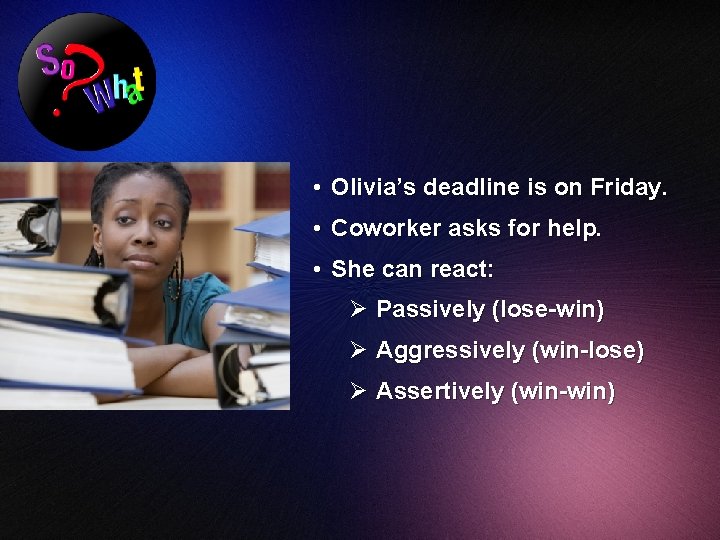
• Olivia’s deadline is on Friday. • Coworker asks for help. • She can react: Ø Passively (lose-win) Ø Aggressively (win-lose) Ø Assertively (win-win)
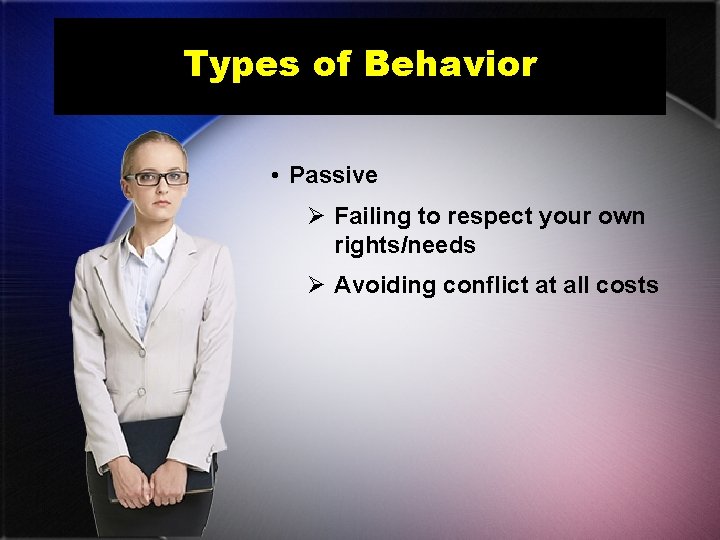
Types of Behavior • Passive Ø Failing to respect your own rights/needs Ø Avoiding conflict at all costs
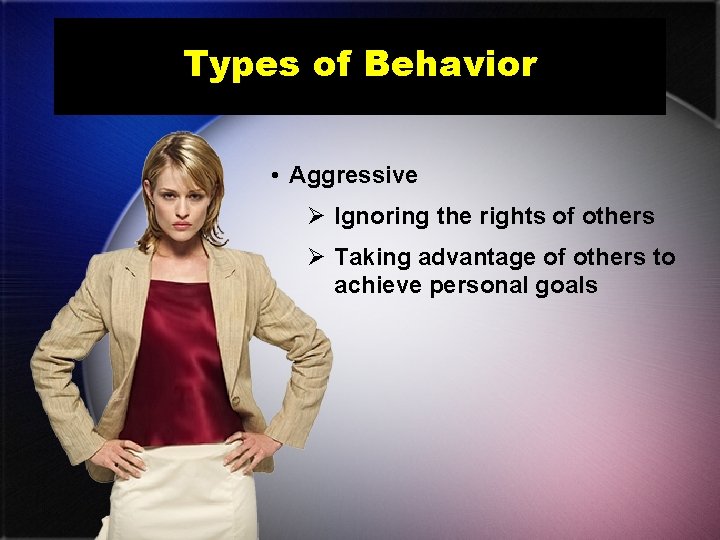
Types of Behavior • Aggressive Ø Ignoring the rights of others Ø Taking advantage of others to achieve personal goals
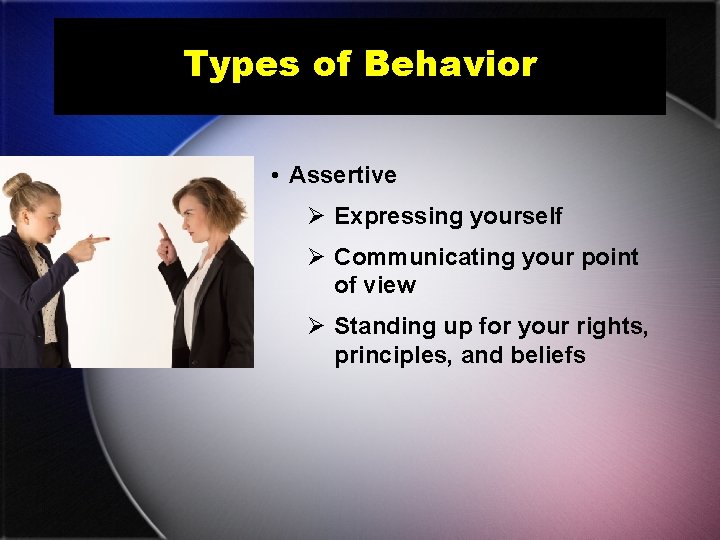
Types of Behavior • Assertive Ø Expressing yourself Ø Communicating your point of view Ø Standing up for your rights, principles, and beliefs
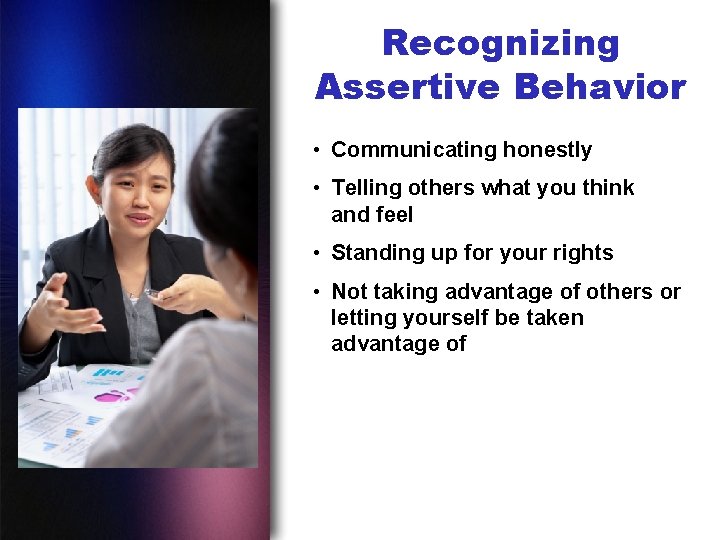
Recognizing Assertive Behavior • Communicating honestly • Telling others what you think and feel • Standing up for your rights • Not taking advantage of others or letting yourself be taken advantage of
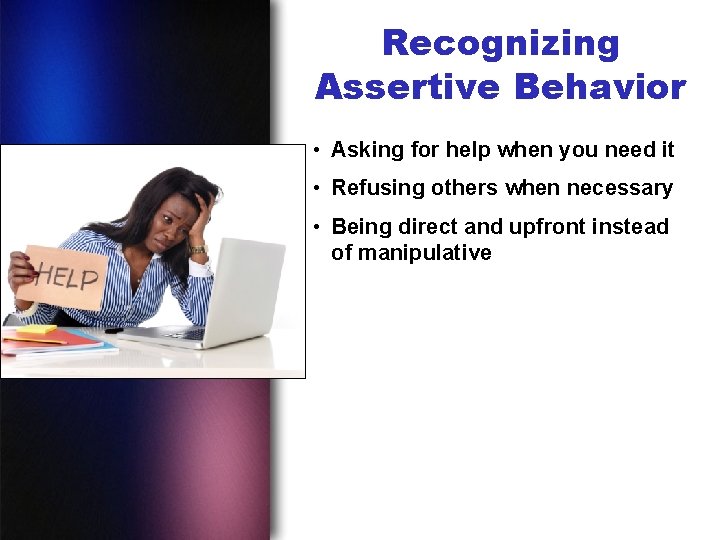
Recognizing Assertive Behavior • Asking for help when you need it • Refusing others when necessary • Being direct and upfront instead of manipulative
Benefits of Assertiveness • Increased self-esteem and selfconfidence • Increased control over career • Equalized relationships with peers • Decreased stress • Increased self-awareness
Barriers to Assertiveness • Avoiding conflict or disagreement • Not wanting to hurt a relationship • Being afraid to be seen as aggressive • Fearing embarrassment • Believing you have no control over your behavior
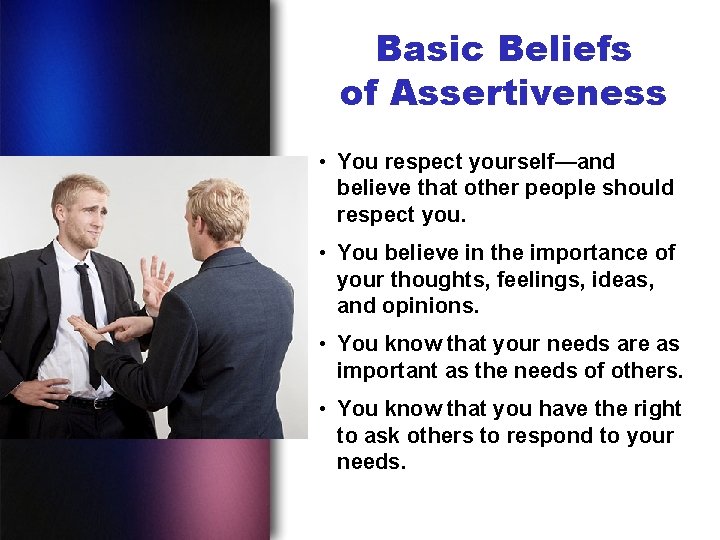
Basic Beliefs of Assertiveness • You respect yourself—and believe that other people should respect you. • You believe in the importance of your thoughts, feelings, ideas, and opinions. • You know that your needs are as important as the needs of others. • You know that you have the right to ask others to respond to your needs.

Demonstrate assertive behavior.
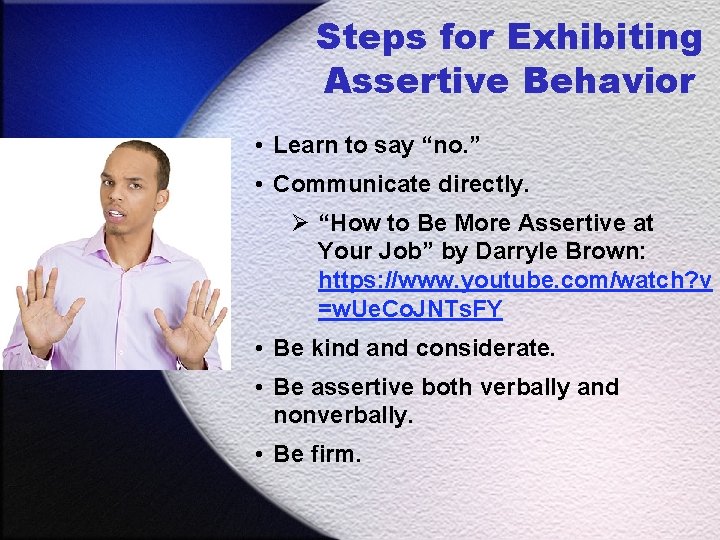
Steps for Exhibiting Assertive Behavior • Learn to say “no. ” • Communicate directly. Ø “How to Be More Assertive at Your Job” by Darryle Brown: https: //www. youtube. com/watch? v =w. Ue. Co. JNTs. FY • Be kind and considerate. • Be assertive both verbally and nonverbally. • Be firm.
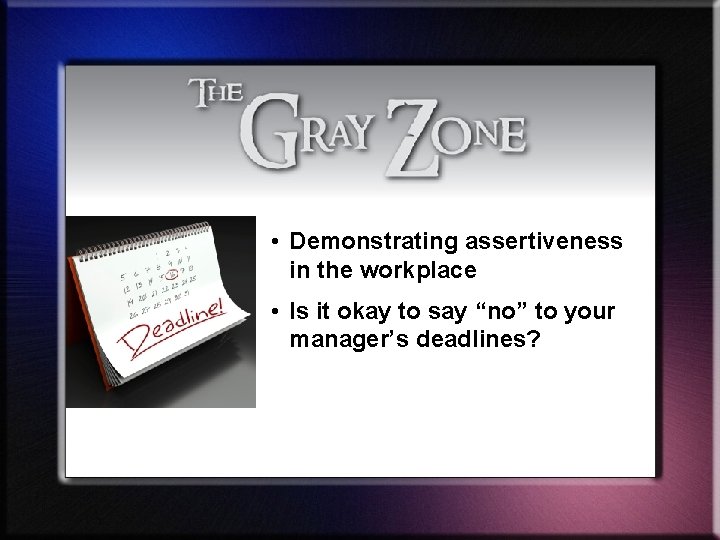
• Demonstrating assertiveness in the workplace • Is it okay to say “no” to your manager’s deadlines?
Acknowledgments Original Developers: Christopher C. Burke, Kerry Winfrey, MBAResearch Version 2. 0 Copyright © 2016 MBA Research and Curriculum Center

Digital-based photography sources: Think. Stock Photos Various images used in this presentation are © 2015 Think. Stock Photos. All rights reserved www. thinkstockphotos. com

Copyright: All photographic digital images on this CD are owned by the aforementioned photographic resources or their licensors and are protected by the United States copyright laws, international treaty provisions, and applicable laws. No title to or intellectual property rights to the images on this CD are transferred to you. These sources retain all rights and are not to be used, digitally copied, transferred, or manipulated in any way. To do so is a violation of federal copyright laws.

- Slides: 19