
Assembly Machines Eric Bowersox Jim Long James Nollinger
Assembly Machines Eric Bowersox Jim Long James Nollinger
Objective Establish Knowledge of Assembly Machines – Types of Machines – Applications in Plastics
Presentation Outline Introduction Theory and Background Types of Machines Examples Conclusion
Introduction Why are they used? – Assembly – Packaging – Part Inspection When are they needed? – High Manual Labor – High Scrap – High Quantities
Theory and Background Advantages – Faster than Manual Assembly – Performs Secondary Operations Laser Welding Glue/Resin Dispensing Stamping and Bending Insert Placement Die Punching Automatic Material Handling (medical)

Background and Theory Disadvantages – High Initial Cost – Operator Training – High Maintenance Cost – Floor Space
Types of Machines Synchronous – Can operate without Human Intervention – Lack Flexibility – Very Fast Cycle Times – Used for High Volume Applications – Can be In-Line, Rotary, or U-Shaped
Types of Machines In-Line – Pallets Carry Parts – Walking Beams Move Pallets – Cycle Up To 100 parts/minute Rotary – Up To 16 Stations on Turntable – Central Shaft Turns Table – Indexes 200 times per minute
Types of Machines Asynchronous – Needs Human Intervention – Very Flexible – Slower Cycle Times – Pallet Based Systems Power and Free Systems
Types of Machines Multiple Machine Systems – Optimum Productivity – Ease of Access – Efficiency – Material Flow
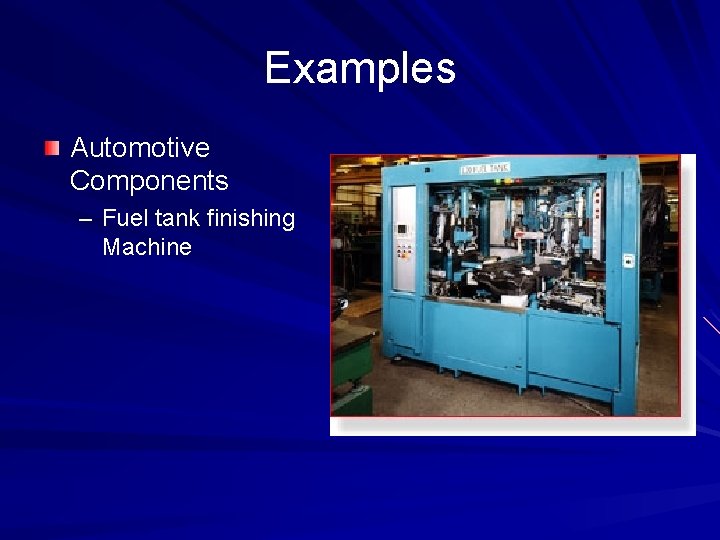
Examples Automotive Components – Fuel tank finishing Machine
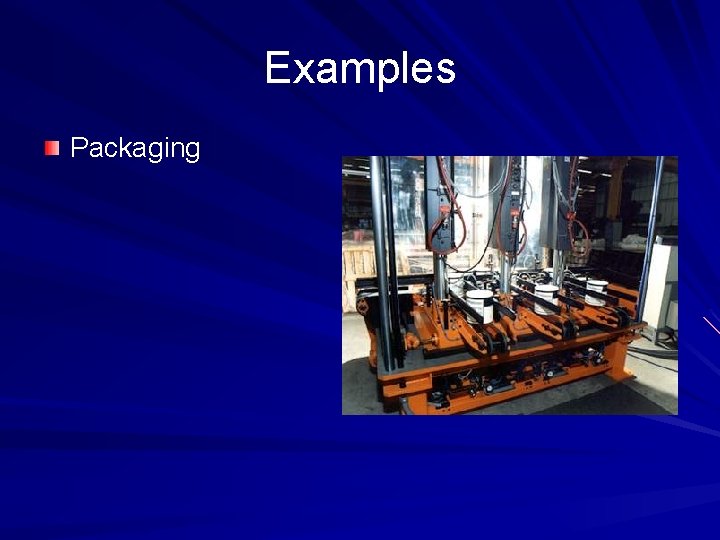
Examples Packaging
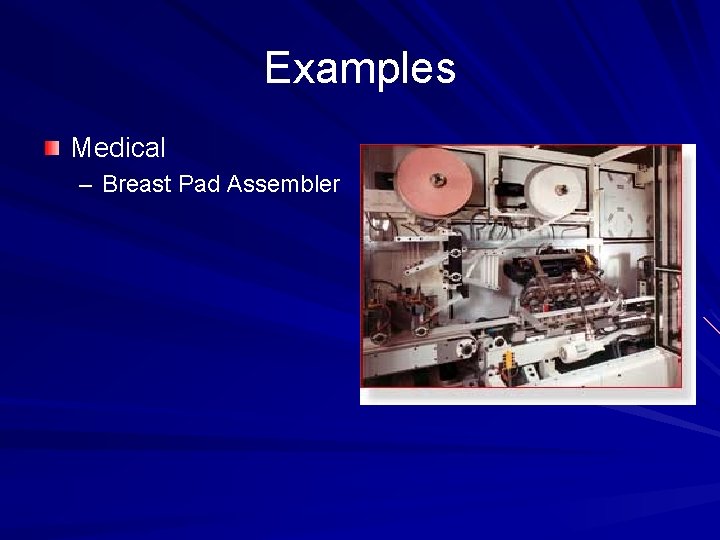
Examples Medical – Breast Pad Assembler
Conclusion Fast Inexpensive Method of Assembly Many Secondary Options Available Fits Individual Needs
- Slides: 14