
Asplenism in the Emergency Department Jim P Getzinger


- Slides: 32
Asplenism in the Emergency Department Jim P. Getzinger, MD William Beaumont Hospital Royal Oak, MI
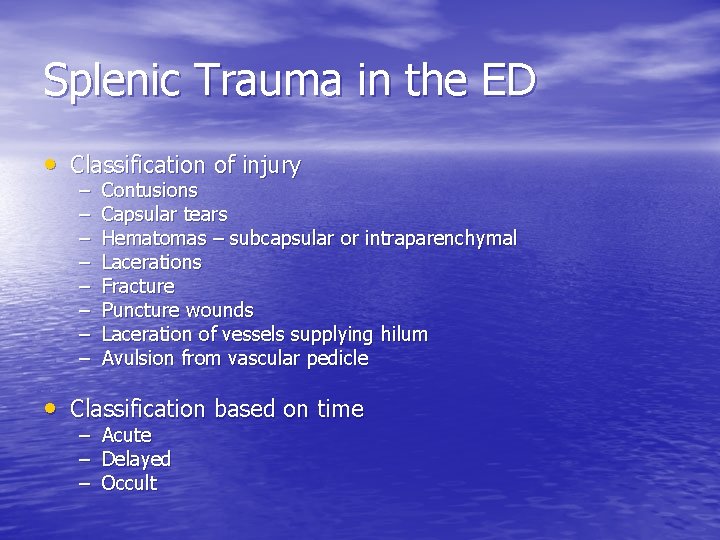
Splenic Trauma in the ED • Classification of injury – – – – Contusions Capsular tears Hematomas – subcapsular or intraparenchymal Lacerations Fracture Puncture wounds Laceration of vessels supplying hilum Avulsion from vascular pedicle • Classification based on time – Acute – Delayed – Occult
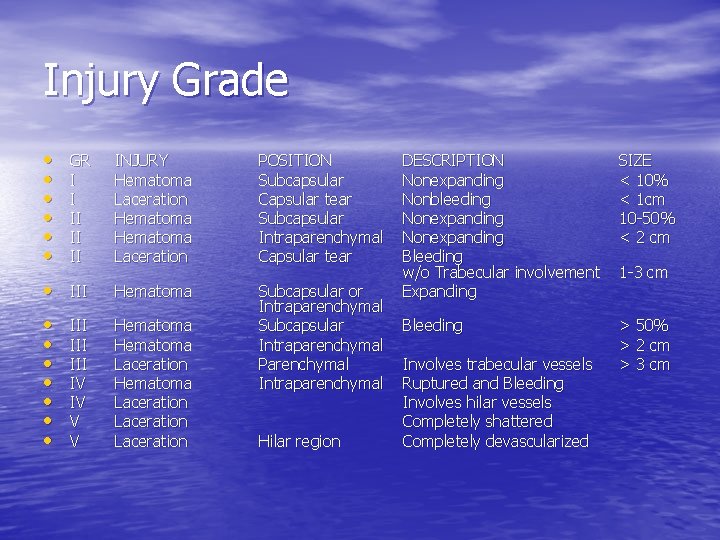
Injury Grade • • • GR I I II INJURY Hematoma Laceration POSITION Subcapsular Capsular tear Subcapsular Intraparenchymal Capsular tear • III Hematoma • • Hematoma Laceration Laceration Subcapsular or Intraparenchymal Subcapsular Intraparenchymal Parenchymal Intraparenchymal III III IV IV V V Hilar region DESCRIPTION Nonexpanding Nonbleeding Nonexpanding Bleeding w/o Trabecular involvement Expanding SIZE < 10% < 1 cm 10 -50% < 2 cm Bleeding > 50% > 2 cm > 3 cm Involves trabecular vessels Ruptured and Bleeding Involves hilar vessels Completely shattered Completely devascularized 1 -3 cm
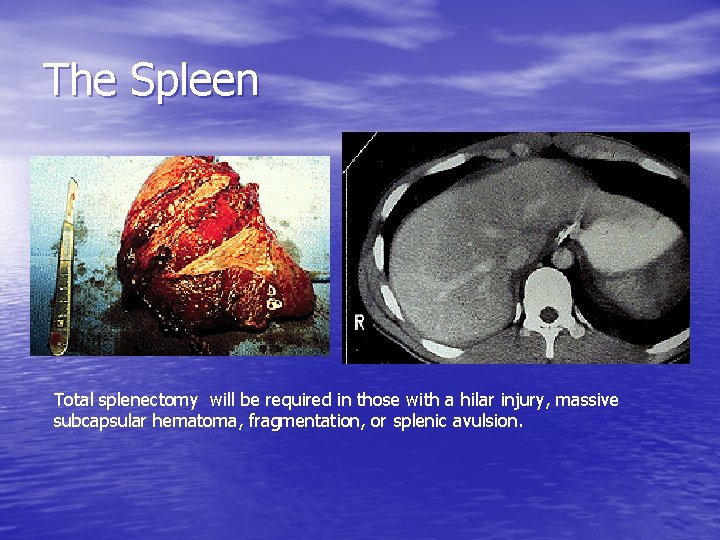
The Spleen Total splenectomy will be required in those with a hilar injury, massive subcapsular hematoma, fragmentation, or splenic avulsion.
Asplenism • Asplenic patients are at lifelong risk for serious infections, especially with encapsulated organisms such as Strep. pneumoniae, H. influenzae and N. meningitidis. • With the growing concern about antibiotic-resistant pneumococci, the appropriate detection and treatment of asplenic and hyposplenic patients has become increasingly important.
Post-Splenectomy Sepsis • 1930’s – Early post-surgical studies showed no increase in sepsis after splenectomy • 1952 – King & Schumacker describe 5 infants post-splenectomy for congenital spherocytosis that die of fulminant sepsis.
Clinical Features • Initial symptoms of overwhelming post-splenectomy • infection are often mild, with an influenza-like presentation that includes fever, malaise, myalgias, headache, vomiting, diarrhea and abdominal pain. Overwhelming Postsplenectomy infection (OPSI) first coined by Diamond in 1969 – – Fulminant course Freq. Lack of septic focus Bacteremia, pneumonia or meningitis Consumptive coagulopathy, adrenal hemorrhage (Waterhouse. Friderichsen syndrome) leading to shock and coma. – Large numbers of organisms in blood (>1 M/ml)
Incidence • Problems – Rare event – Need large patient populations – Infection can be years later – long f/ups req. – Incidence varies with age, underlying disease • S/P Trauma – infection 3. 3 / 100 pt-yrs • S/P Cancer – infection 16. 6 / 100 pt-yrs
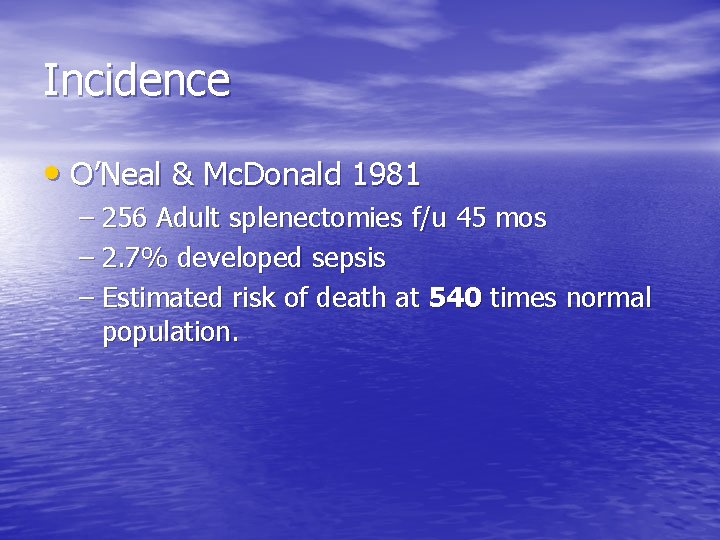
Incidence • O’Neal & Mc. Donald 1981 – 256 Adult splenectomies f/u 45 mos – 2. 7% developed sepsis – Estimated risk of death at 540 times normal population.
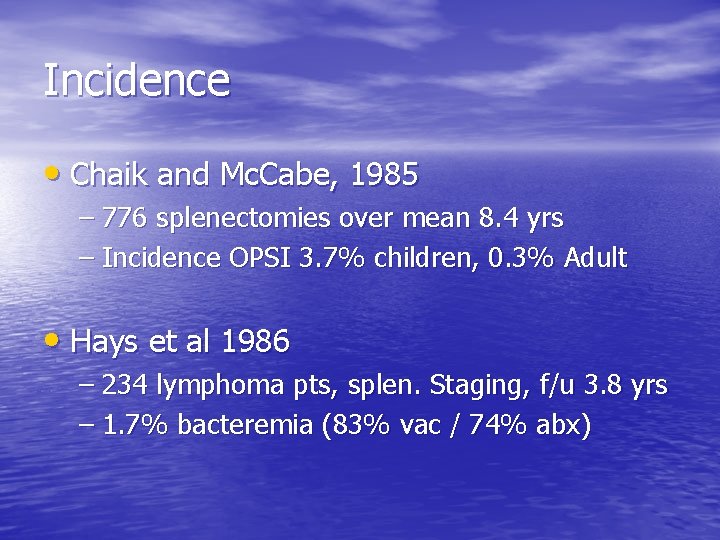
Incidence • Chaik and Mc. Cabe, 1985 – 776 splenectomies over mean 8. 4 yrs – Incidence OPSI 3. 7% children, 0. 3% Adult • Hays et al 1986 – 234 lymphoma pts, splen. Staging, f/u 3. 8 yrs – 1. 7% bacteremia (83% vac / 74% abx)
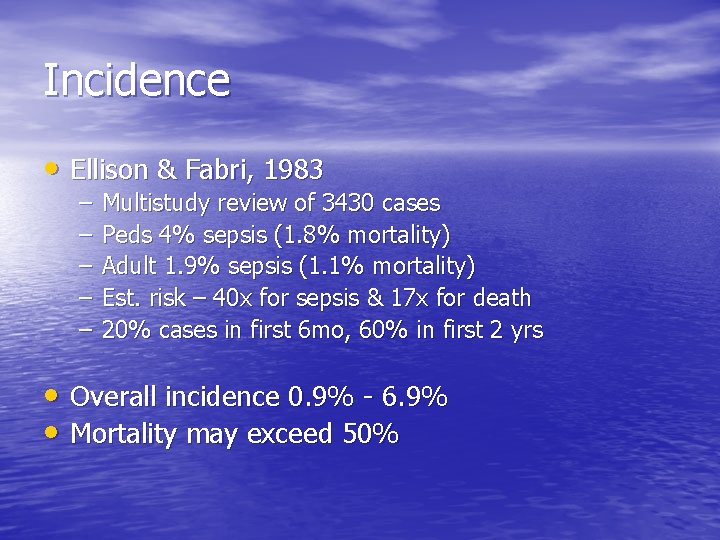
Incidence • Ellison & Fabri, 1983 – – – Multistudy review of 3430 cases Peds 4% sepsis (1. 8% mortality) Adult 1. 9% sepsis (1. 1% mortality) Est. risk – 40 x for sepsis & 17 x for death 20% cases in first 6 mo, 60% in first 2 yrs • Overall incidence 0. 9% - 6. 9% • Mortality may exceed 50%
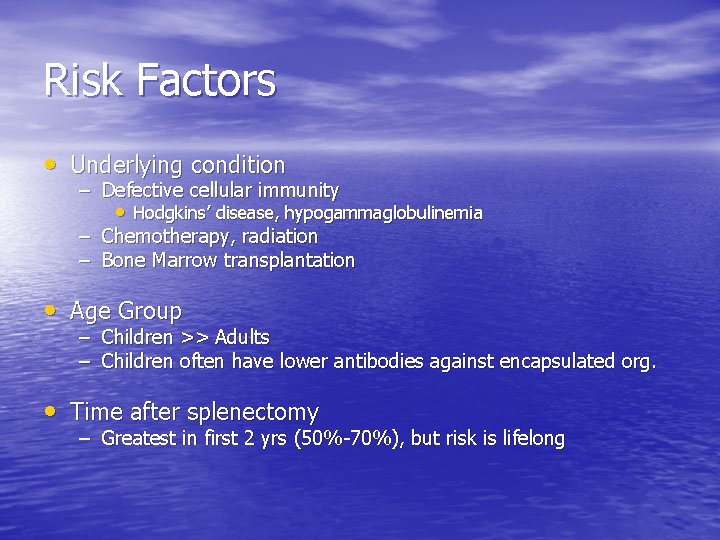
Risk Factors • Underlying condition – Defective cellular immunity • Hodgkins’ disease, hypogammaglobulinemia – Chemotherapy, radiation – Bone Marrow transplantation • Age Group – – Children >> Adults Children often have lower antibodies against encapsulated org. • Time after splenectomy – Greatest in first 2 yrs (50%-70%), but risk is lifelong
Causative Organisms • Pneumococcus - > 50% • H. influenza, Meningococcus, Strep Pyog. • Less common – Pseudomonas – Capnocytophaga canimorsus (animal bites) – Malaria – Babesiosis – Viruses – CMV, herpes, influenza
Mechanisms • Phagocytosis and clearance of bacteria/protozoa is impaired. • Spleen is site of production of specific antibodies • Impaired immune response – Encapsulated orgs must be opsonised before they can be phagocytosed. Production of opsonins is impaired. • Spleen controls circulating B cells capable of differentiating into antipneumococcal capsular polysaccharide antibody-secreting B cells.
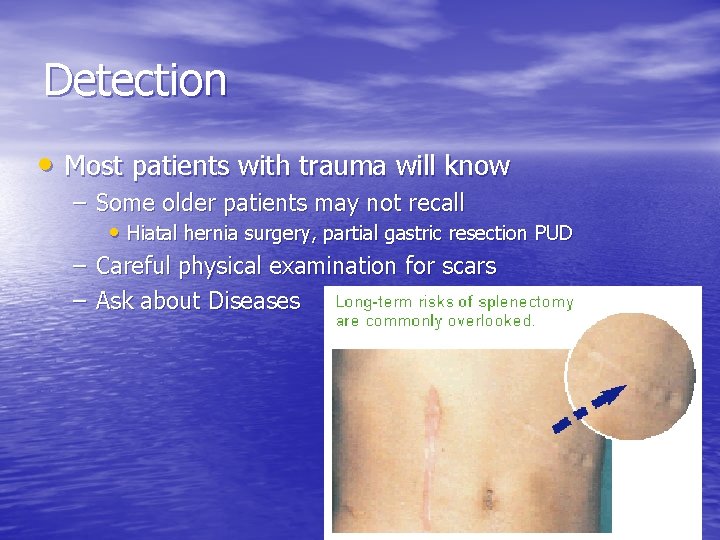
Detection • Most patients with trauma will know – Some older patients may not recall • Hiatal hernia surgery, partial gastric resection PUD – Careful physical examination for scars – Ask about Diseases
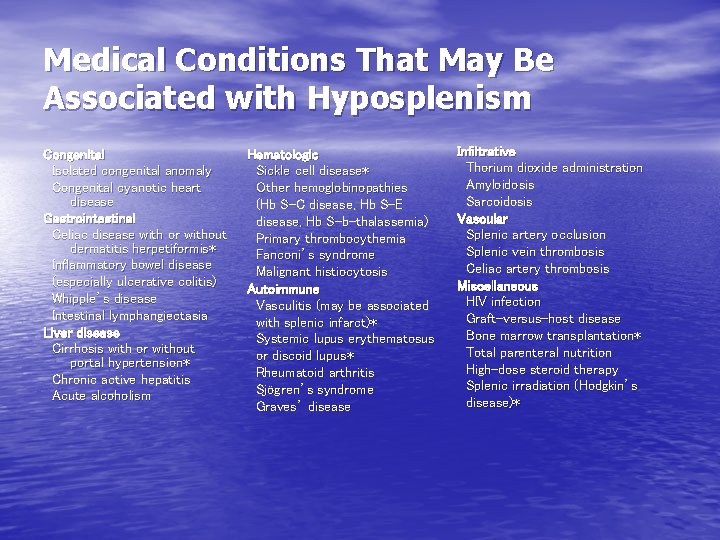
Medical Conditions That May Be Associated with Hyposplenism Congenital Isolated congenital anomaly Congenital cyanotic heart disease Gastrointestinal Celiac disease with or without dermatitis herpetiformis* Inflammatory bowel disease (especially ulcerative colitis) Whipple’s disease Intestinal lymphangiectasia Liver disease Cirrhosis with or without portal hypertension* Chronic active hepatitis Acute alcoholism Hematologic Sickle cell disease* Other hemoglobinopathies (Hb S-C disease, Hb S-E disease, Hb S–b-thalassemia)) Primary thrombocythemia Fanconi’s syndrome Malignant histiocytosis Autoimmune Vasculitis (may be associated with splenic infarct)* Systemic lupus erythematosus or discoid lupus* Rheumatoid arthritis Sjögren’s syndrome Graves’ disease Infiltrative Thorium dioxide administration Amyloidosis Sarcoidosis Vascular Splenic artery occlusion Splenic vein thrombosis Celiac artery thrombosis Miscellaneous HIV infection Graft-versus-host disease Bone marrow transplantation* Total parenteral nutrition High-dose steroid therapy Splenic irradiation (Hodgkin’s disease)*
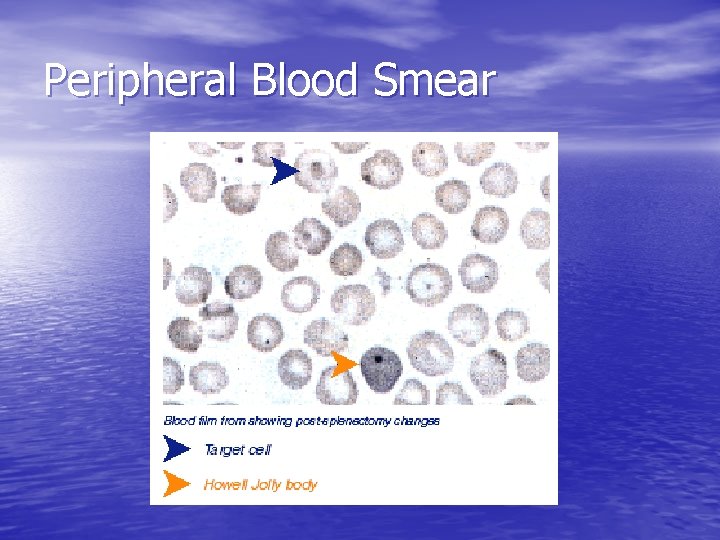
Peripheral Blood Smear
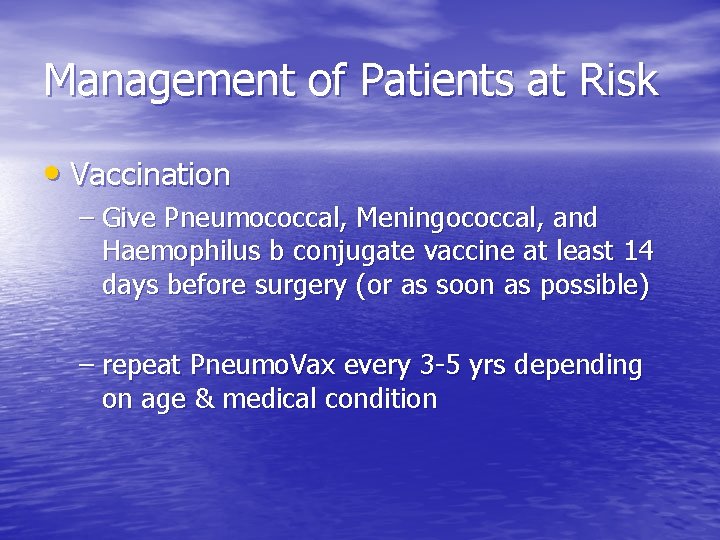
Management of Patients at Risk • Vaccination – Give Pneumococcal, Meningococcal, and Haemophilus b conjugate vaccine at least 14 days before surgery (or as soon as possible) – repeat Pneumo. Vax every 3 -5 yrs depending on age & medical condition
Pneumococcal Vaccine • Developed 1983 – 23 serotypes (approx 90%) – Ideal conditions – fails 20 -30% of recipients – Give before splenectomy if possible • Immunogenicity reduced after splenectomy or during chemo. – Age > 10 – revaccinate every 5 yrs – Age < 10 – revaccinate every 3 yrs
Antibiotics - Prophylaxis • Recommended for children, especially for first 2 yrs after splenectomy. – Augmentin, Bactrim, Cefuroxime • At least 5 yrs of prophylaxis • Adults – recommended standby antibiotics – Taken at first sign of infection – Still should seek medical attention • Endemic Malaria areas – Mefloquine, Doxycycline or chloroquine+proguanil
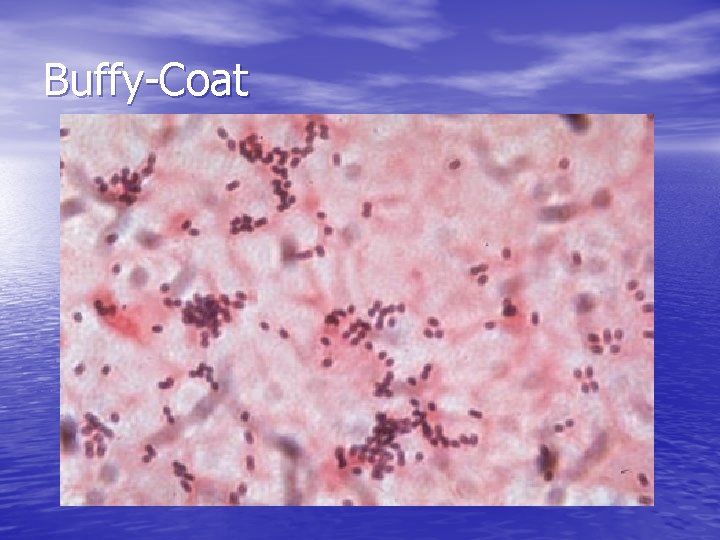
Studies • Do NOT delay ABX therapy for labs • Labs – Hematologic profile, lytes, creatinine, glucose – Peripheral blood smear, buffy-coat prep – Blood cultures, consider CSF cx • Chest Xray
Buffy-Coat
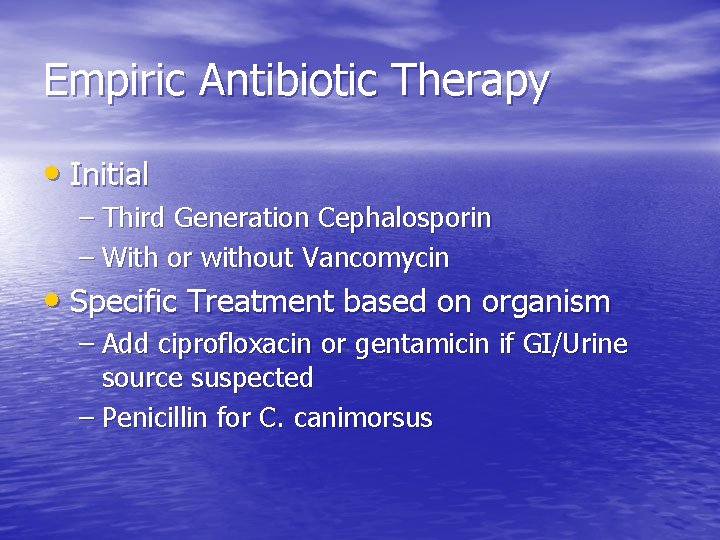
Empiric Antibiotic Therapy • Initial – Third Generation Cephalosporin – With or without Vancomycin • Specific Treatment based on organism – Add ciprofloxacin or gentamicin if GI/Urine source suspected – Penicillin for C. canimorsus
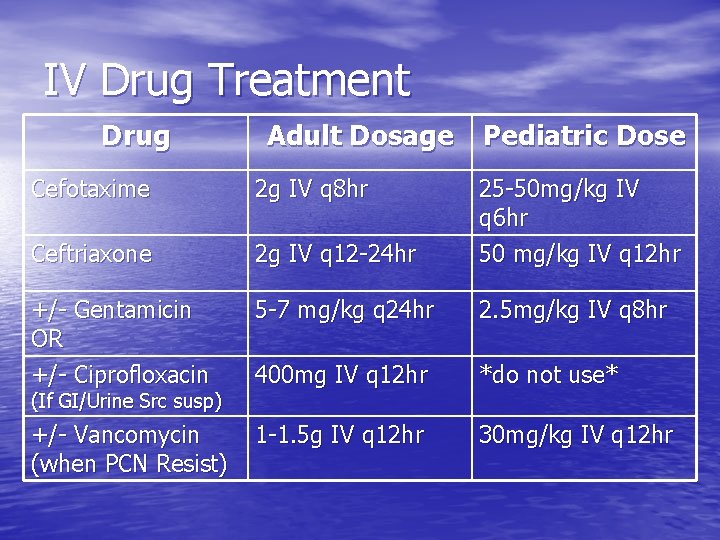
IV Drug Treatment Drug Adult Dosage Pediatric Dose Cefotaxime 2 g IV q 8 hr Ceftriaxone 2 g IV q 12 -24 hr 25 -50 mg/kg IV q 6 hr 50 mg/kg IV q 12 hr +/- Gentamicin OR +/- Ciprofloxacin 5 -7 mg/kg q 24 hr 2. 5 mg/kg IV q 8 hr 400 mg IV q 12 hr *do not use* +/- Vancomycin (when PCN Resist) 1 -1. 5 g IV q 12 hr 30 mg/kg IV q 12 hr (If GI/Urine Src susp)
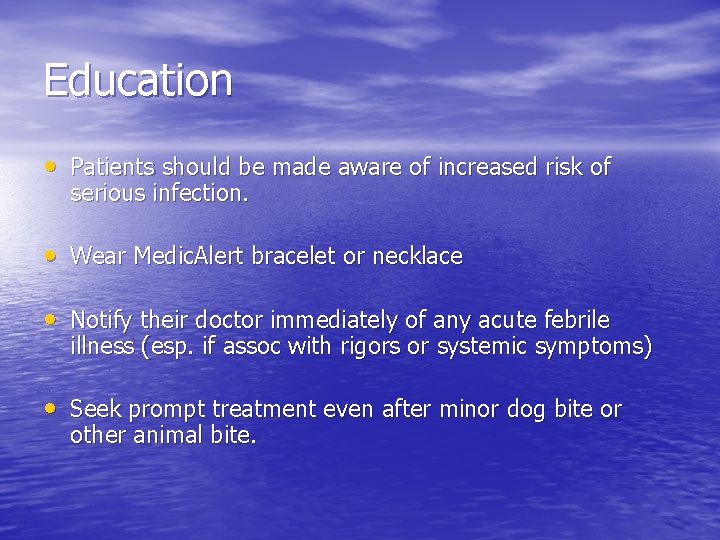
Education • Patients should be made aware of increased risk of serious infection. • Wear Medic. Alert bracelet or necklace • Notify their doctor immediately of any acute febrile illness (esp. if assoc with rigors or systemic symptoms) • Seek prompt treatment even after minor dog bite or other animal bite.
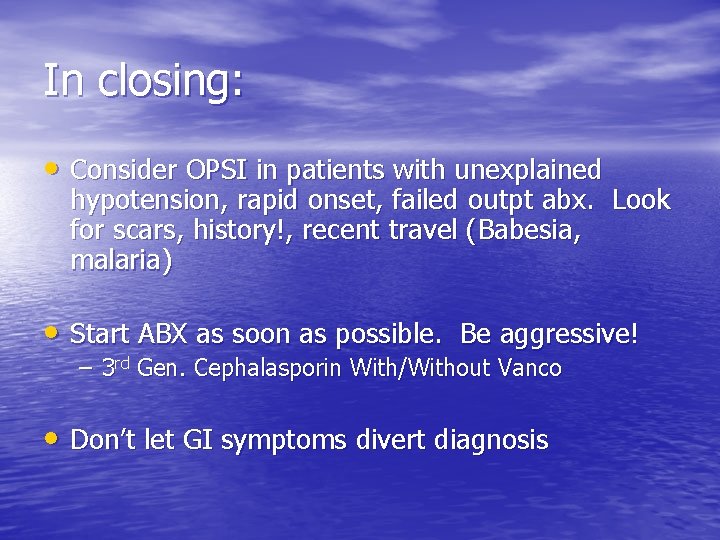
In closing: • Consider OPSI in patients with unexplained hypotension, rapid onset, failed outpt abx. Look for scars, history!, recent travel (Babesia, malaria) • Start ABX as soon as possible. Be aggressive! – 3 rd Gen. Cephalasporin With/Without Vanco • Don’t let GI symptoms divert diagnosis
Final Thoughts • Always check your footing/ladder carefully • Make sure someone knows you’re on the roof • If they hear a yell, and a thud, call 911. • When all else fails, hire someone to put up your holiday lights!