
Aspirin treatment failure in diabetes Ramzi Ajjan The
Aspirin treatment failure in diabetes Ramzi Ajjan The Division of Cardiovascular and Diabetes Research University of Leeds
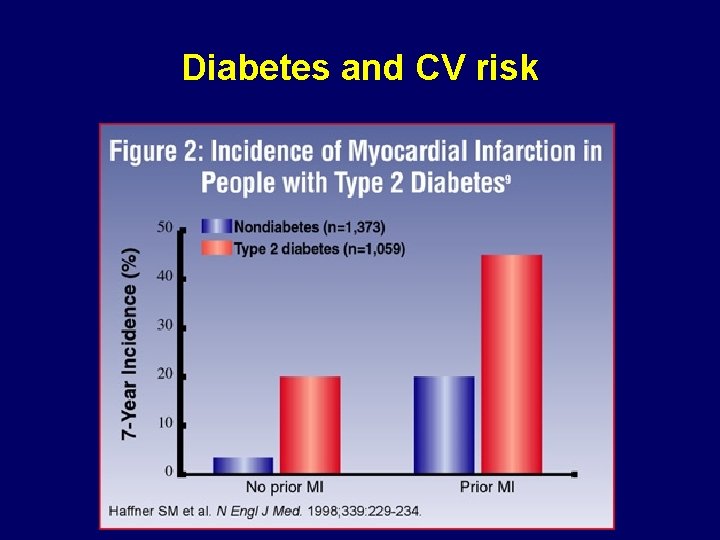
Diabetes and CV risk
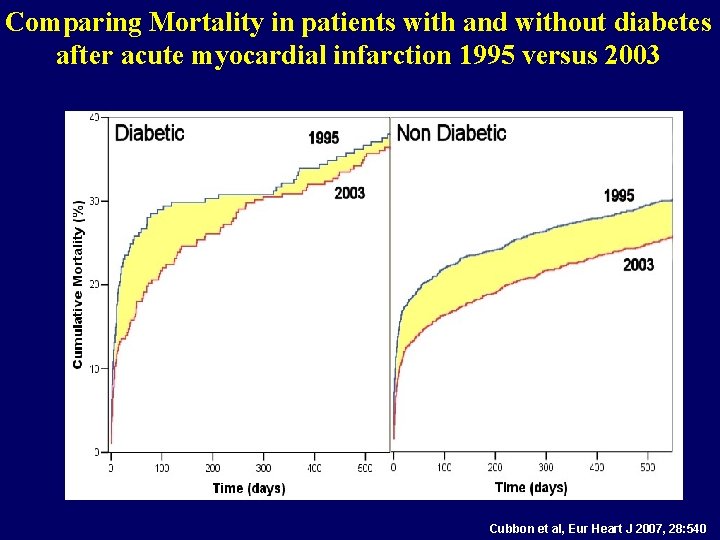
Comparing Mortality in patients with and without diabetes after acute myocardial infarction 1995 versus 2003 Cubbon et al, Eur Heart J 2007, 28: 540
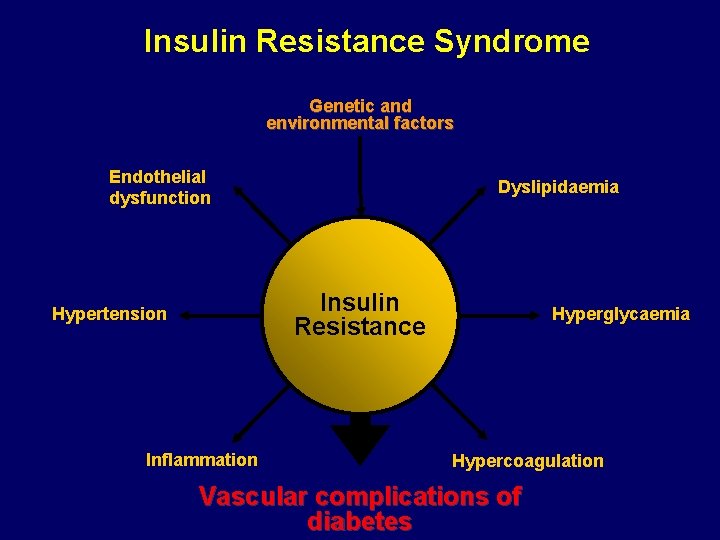
Insulin Resistance Syndrome Genetic and environmental factors Endothelial dysfunction Dyslipidaemia Insulin Resistance Hypertension Inflammation Hyperglycaemia Hypercoagulation Vascular complications of diabetes
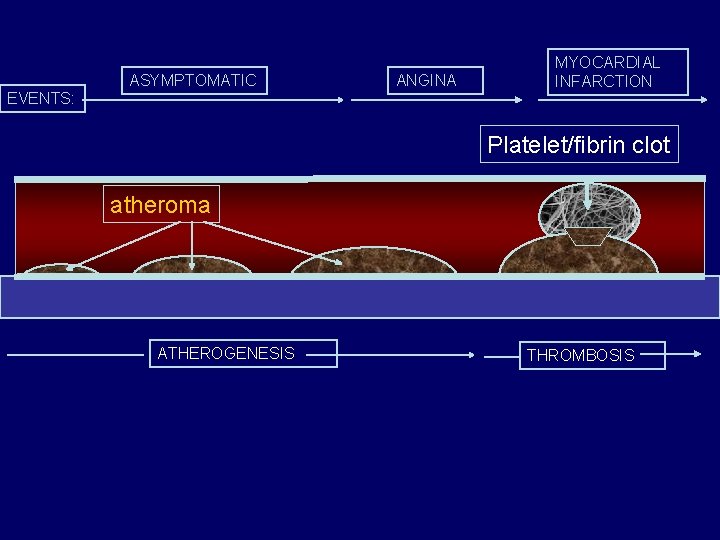
ASYMPTOMATIC EVENTS: ANGINA MYOCARDIAL INFARCTION Platelet/fibrin clot atheroma ATHEROGENESIS THROMBOSIS
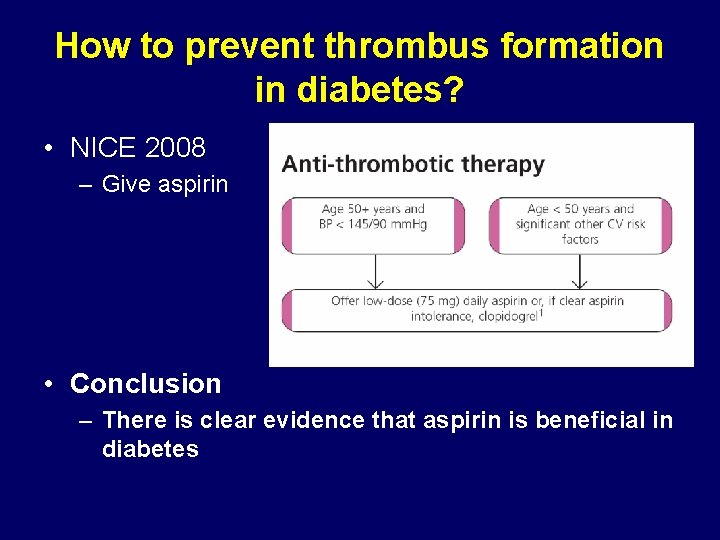
How to prevent thrombus formation in diabetes? • NICE 2008 – Give aspirin • Conclusion – There is clear evidence that aspirin is beneficial in diabetes
Evidence for cardiovascular protection by aspirin in diabetes
A protective role for aspirin in diabetes Where is the evidence? • The US Physicians’ Health Study: – aspirin at 325 mg every other day, FU 5 yrs – N=~22000 but only 2. 3% with diabetes! – MI RRR 61% in men • Early Treatment Diabetic Retinopathy Study (ETDRS) – aspirin 650 mg, n=3700, ~50% with CVD, FU 5 yrs – MI RRR 17%. USPHT, NEJM 1989 321: 129 ETDRS, JAMA 1992, 68: 1292
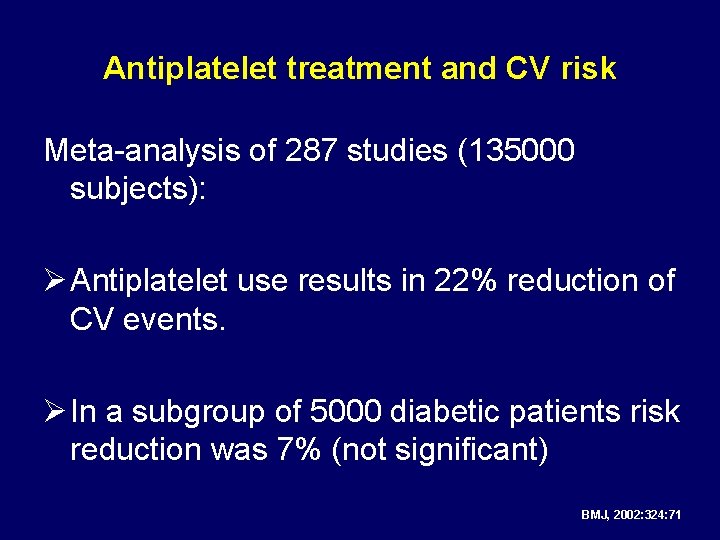
Antiplatelet treatment and CV risk Meta-analysis of 287 studies (135000 subjects): Ø Antiplatelet use results in 22% reduction of CV events. Ø In a subgroup of 5000 diabetic patients risk reduction was 7% (not significant) BMJ, 2002: 324: 71
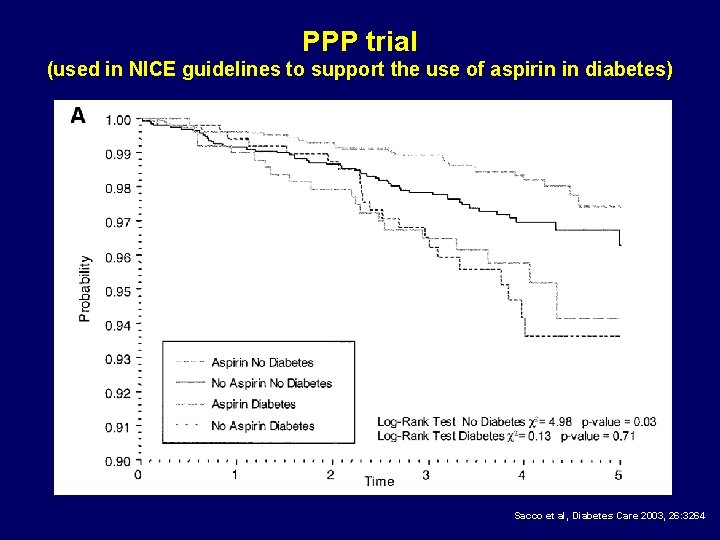
PPP trial (used in NICE guidelines to support the use of aspirin in diabetes) Sacco et al, Diabetes Care 2003, 26: 3264
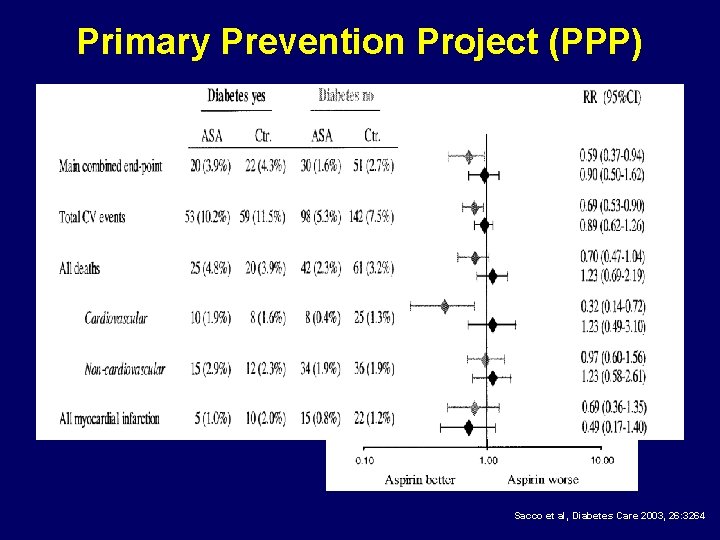
Primary Prevention Project (PPP) Sacco et al, Diabetes Care 2003, 26: 3264
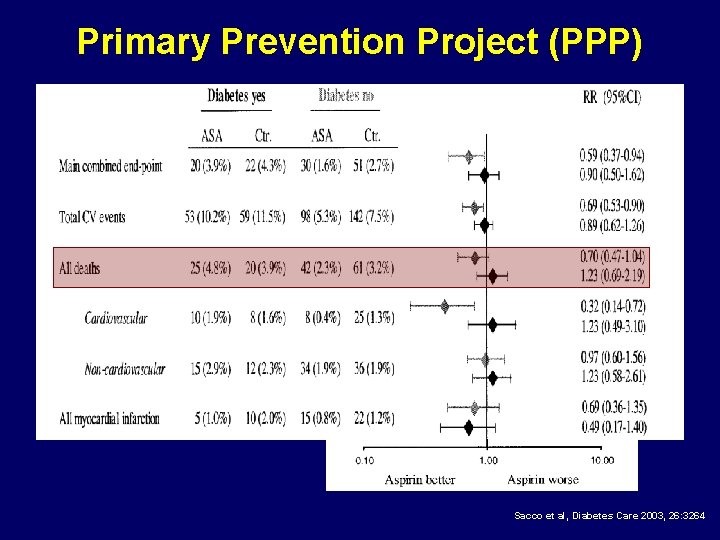
Primary Prevention Project (PPP) Sacco et al, Diabetes Care 2003, 26: 3264
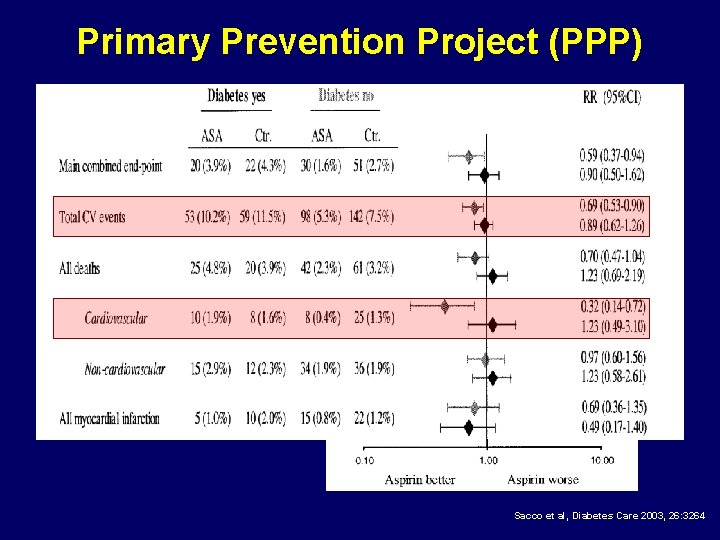
Primary Prevention Project (PPP) Sacco et al, Diabetes Care 2003, 26: 3264
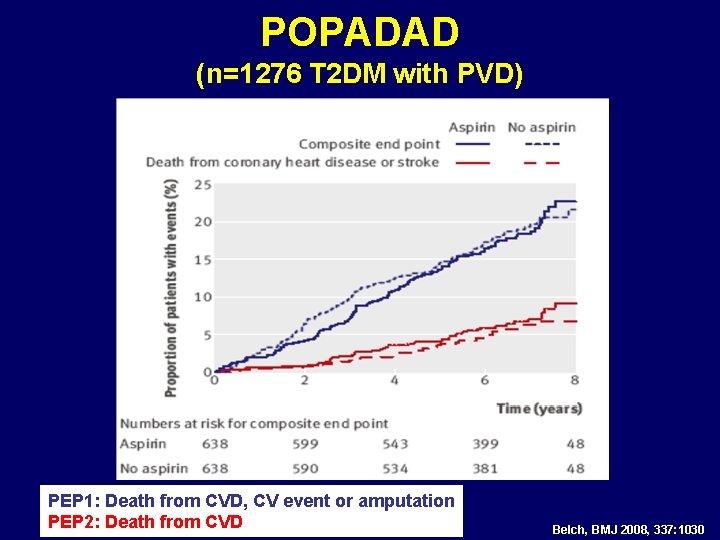
POPADAD (n=1276 T 2 DM with PVD) PEP 1: Death from CVD, CV event or amputation PEP 2: Death from CVD Belch, BMJ 2008, 337: 1030
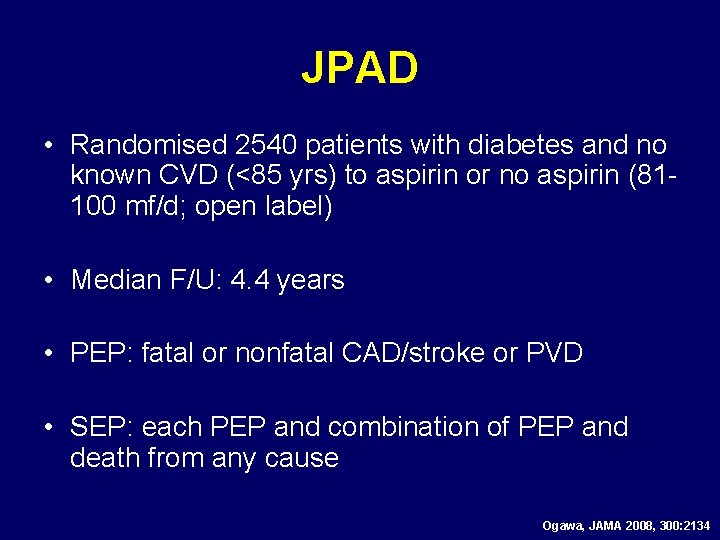
JPAD • Randomised 2540 patients with diabetes and no known CVD (<85 yrs) to aspirin or no aspirin (81100 mf/d; open label) • Median F/U: 4. 4 years • PEP: fatal or nonfatal CAD/stroke or PVD • SEP: each PEP and combination of PEP and death from any cause Ogawa, JAMA 2008, 300: 2134
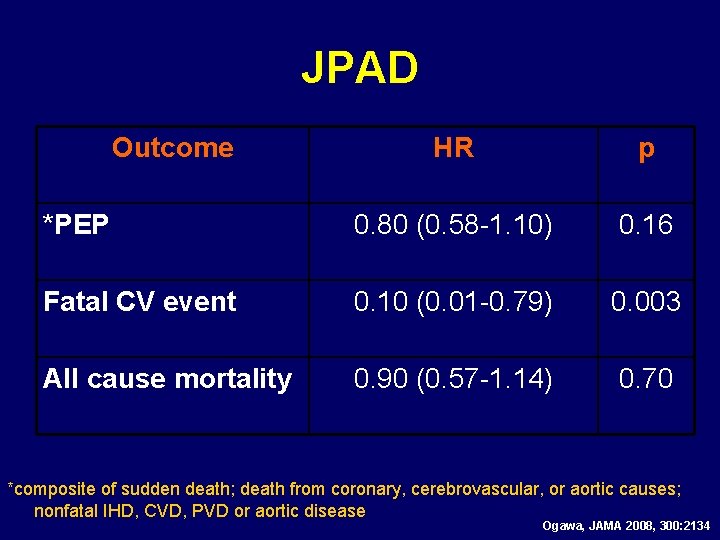
JPAD Outcome HR p *PEP 0. 80 (0. 58 -1. 10) 0. 16 Fatal CV event 0. 10 (0. 01 -0. 79) 0. 003 All cause mortality 0. 90 (0. 57 -1. 14) 0. 70 *composite of sudden death; death from coronary, cerebrovascular, or aortic causes; nonfatal IHD, CVD, PVD or aortic disease Ogawa, JAMA 2008, 300: 2134
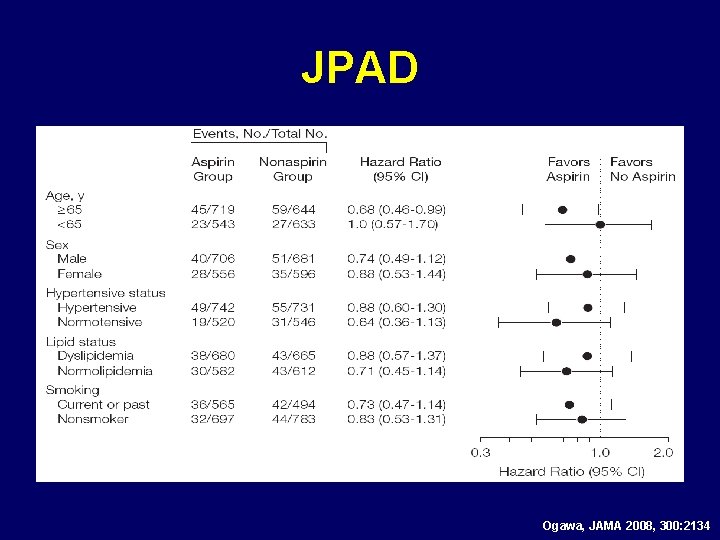
JPAD Ogawa, JAMA 2008, 300: 2134
Aspirin and secondary prevention
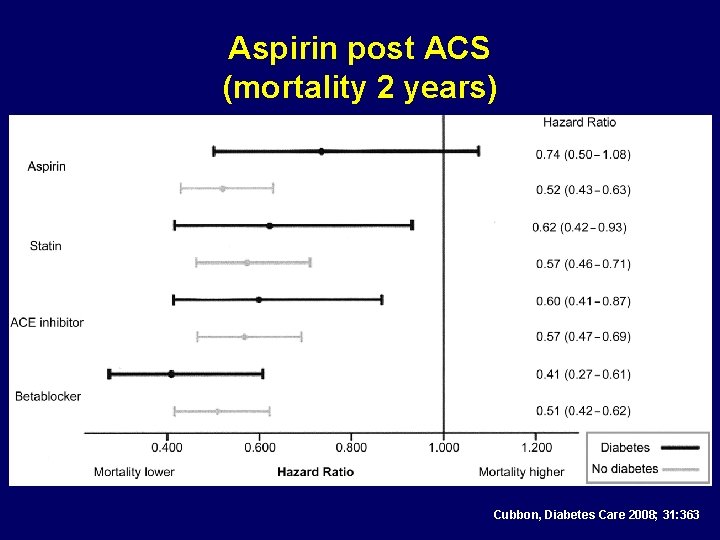
Aspirin post ACS (mortality 2 years) Cubbon, Diabetes Care 2008; 31: 363
Aspirin is not without side effects!
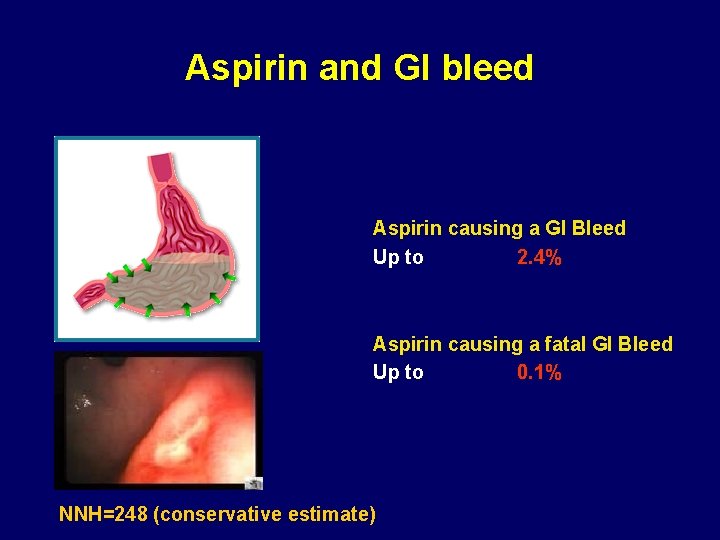
Aspirin and GI bleed Aspirin causing a GI Bleed Up to 2. 4% Aspirin causing a fatal GI Bleed Up to 0. 1% NNH=248 (conservative estimate)
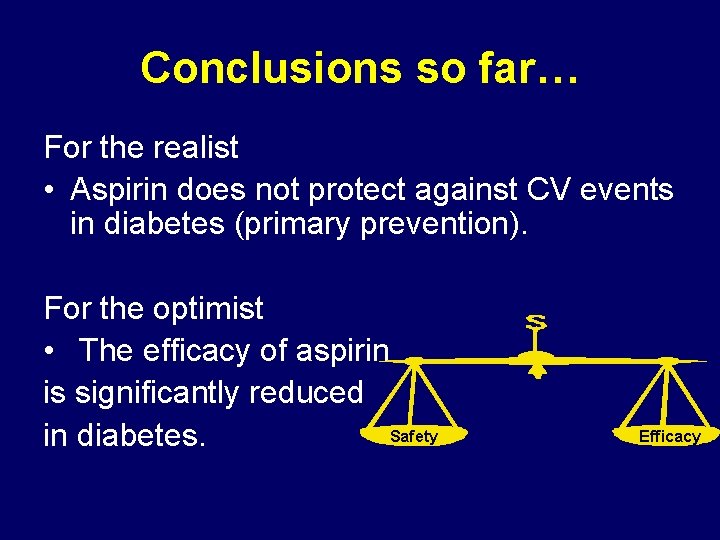
Conclusions so far… For the realist • Aspirin does not protect against CV events in diabetes (primary prevention). For the optimist • The efficacy of aspirin is significantly reduced Safety in diabetes. Efficacy
What are the mechanisms for aspirin treatment failure in diabetes?
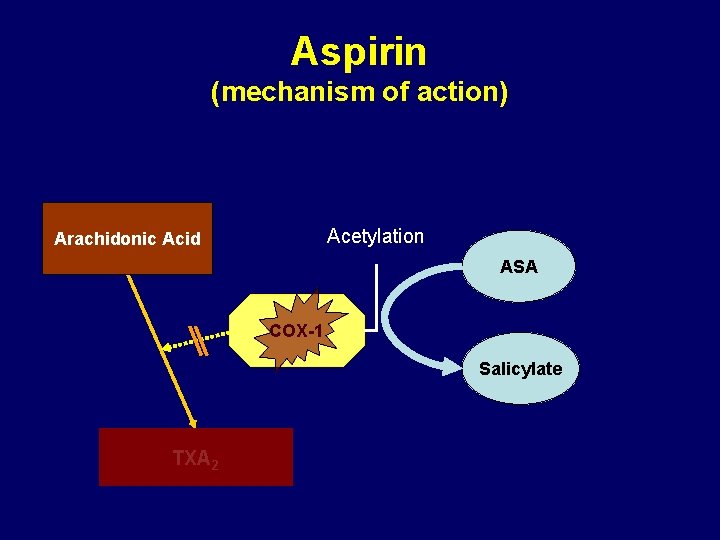
Aspirin (mechanism of action) Acetylation Arachidonic Acid ASA COX-1 Salicylate TXA 2
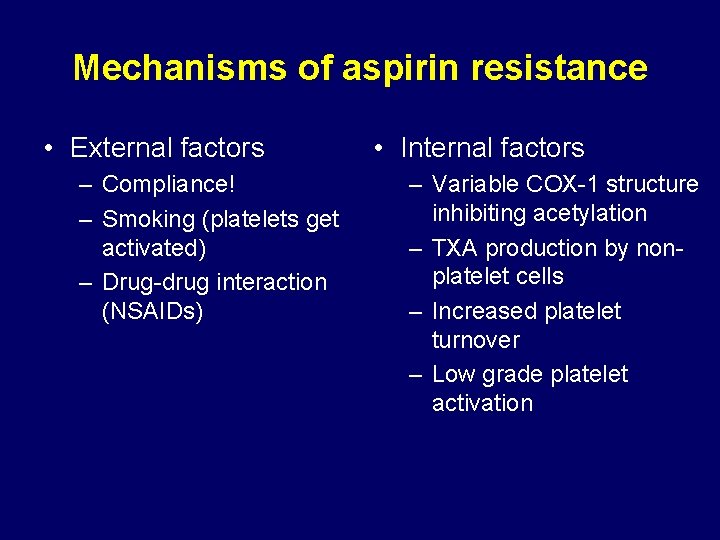
Mechanisms of aspirin resistance • External factors – Compliance! – Smoking (platelets get activated) – Drug-drug interaction (NSAIDs) • Internal factors – Variable COX-1 structure inhibiting acetylation – TXA production by nonplatelet cells – Increased platelet turnover – Low grade platelet activation
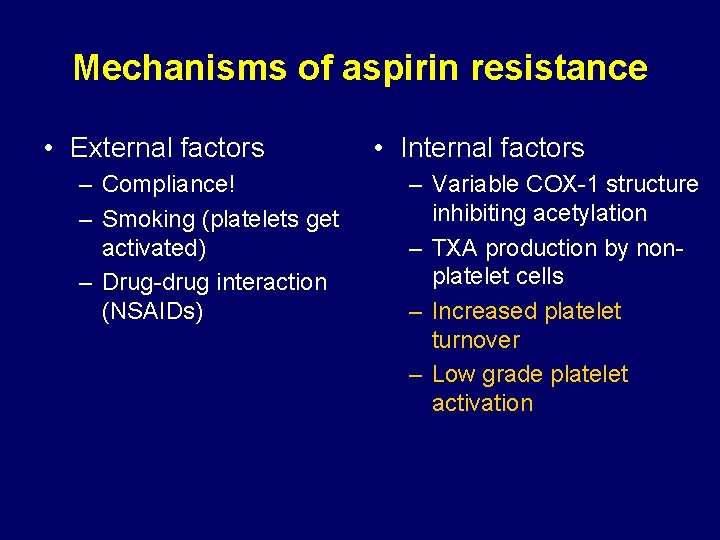
Mechanisms of aspirin resistance • External factors – Compliance! – Smoking (platelets get activated) – Drug-drug interaction (NSAIDs) • Internal factors – Variable COX-1 structure inhibiting acetylation – TXA production by nonplatelet cells – Increased platelet turnover – Low grade platelet activation
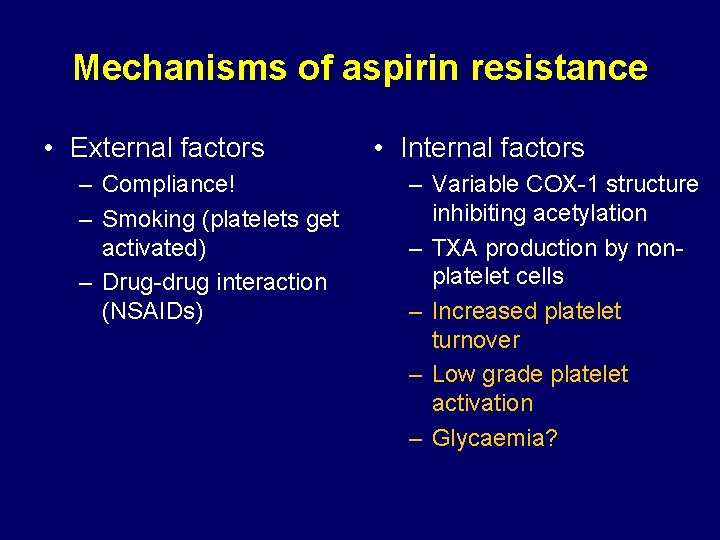
Mechanisms of aspirin resistance • External factors – Compliance! – Smoking (platelets get activated) – Drug-drug interaction (NSAIDs) • Internal factors – Variable COX-1 structure inhibiting acetylation – TXA production by nonplatelet cells – Increased platelet turnover – Low grade platelet activation – Glycaemia?
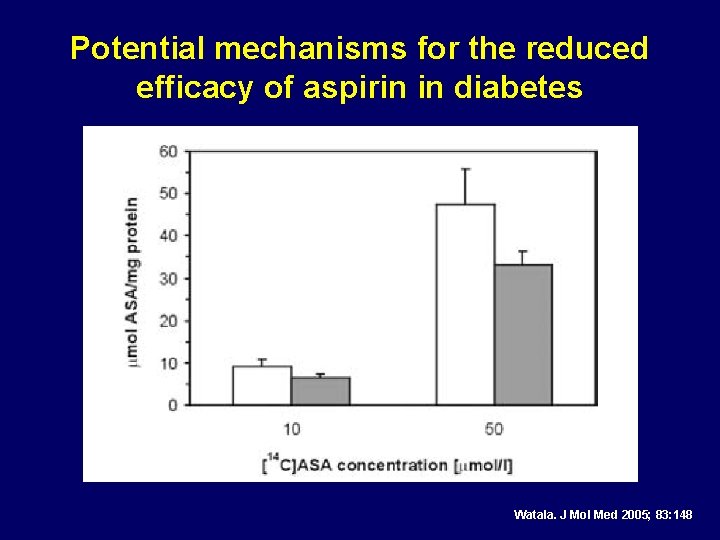
Potential mechanisms for the reduced efficacy of aspirin in diabetes Watala. J Mol Med 2005; 83: 148
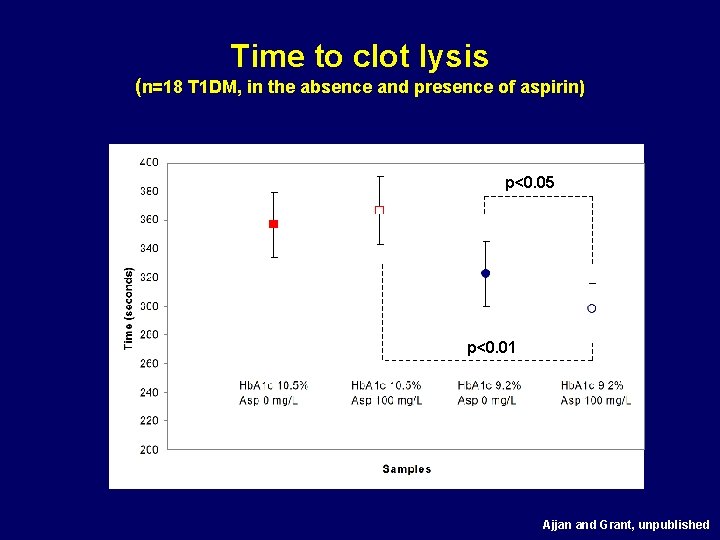
Time to clot lysis (n=18 T 1 DM, in the absence and presence of aspirin) p<0. 05 p<0. 01 Ajjan and Grant, unpublished
The problem • In diabetes, we treat a cluster of risk factors and can assess response to treatment: – – Hb. A 1 c Lipids Blood pressure Microalbuminuria • However: – We are currently unable to assess response to antiplatelet treatment
General conclusions • Current evidence indicate that aspirin is ineffective in primary CVD protection in individuals with diabetes • We should avoid “carpet treatment” with aspirin in individuals with diabetes • Further work is required to clarify the mechanisms for aspirin treatment failure in diabetes • Alternative anti-platelet agents should be considered in selected patients Ajjan, Storey and Grant, Diabetologia 2008, 51: 385

Thank you…
- Slides: 32