
Aspirin or Rivaroxaban for VTE Prophylaxis after Hip
Aspirin or Rivaroxaban for VTE Prophylaxis after Hip or Knee Arthroplasty: EPCAT II Trial CYNTHIA NEDIYAKALAYIL PHARMD/MBA CANDIDATE 2018
Case Report 78 year old male presents with osteoarthritis secondary to left hip arthroplasty ◦ Patient reports he hates taking medications, especially those that cause GI upset ◦ Patient admits he has trouble remembering doctor’s appointments & routine check-ups ◦ Patient also reports fear of injections Patient began Xarelto 10 mg PO daily for VTE prophylaxis ◦ Patient refuses to pay for the Xarelto prescription Would you allow the patient to be discharged with Xarelto knowing he would not be compliant?

Background
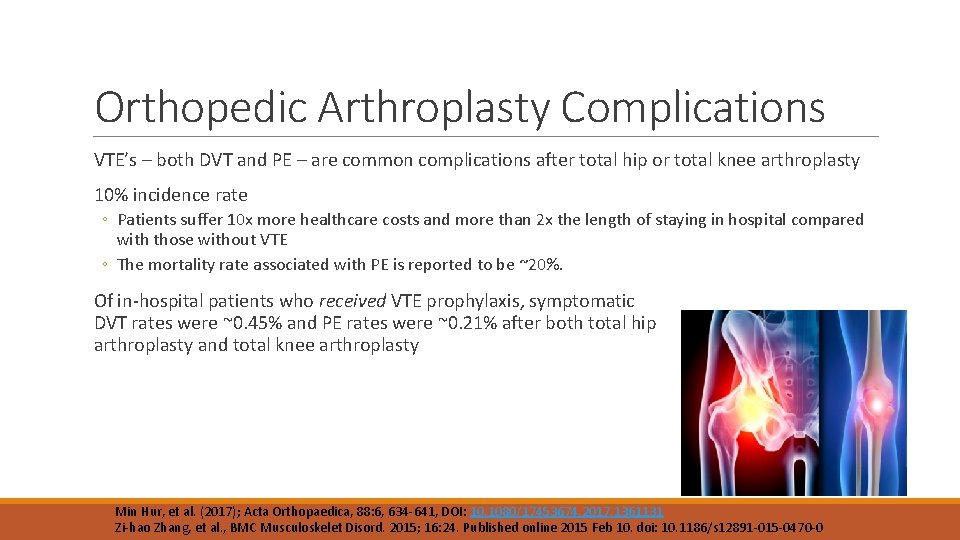
Orthopedic Arthroplasty Complications VTE’s – both DVT and PE – are common complications after total hip or total knee arthroplasty 10% incidence rate ◦ Patients suffer 10 x more healthcare costs and more than 2 x the length of staying in hospital compared with those without VTE ◦ The mortality rate associated with PE is reported to be ~20%. Of in-hospital patients who received VTE prophylaxis, symptomatic DVT rates were ~0. 45% and PE rates were ~0. 21% after both total hip arthroplasty and total knee arthroplasty Min Hur, et al. (2017); Acta Orthopaedica, 88: 6, 634 -641, DOI: 10. 1080/17453674. 2017. 1361131 Zi-hao Zhang, et al. , BMC Musculoskelet Disord. 2015; 16: 24. Published online 2015 Feb 10. doi: 10. 1186/s 12891 -015 -0470 -0

VTE Prophylaxis Anticoagulant prophylaxis reduces rates of death and complications associated with VTE after these procedures ◦ LMWH preferred to other agents ◦ DOACs are commonly prescribed for extended prophylaxis due to their effectiveness, safety, and convenient use ACCP recommends patients undergoing total hip or total knee arthroplasty receive anticoagulant prophylaxis for a minimum of 10 -14 days and continue for up to 35 days after surgery ◦ Added benefit is seen by extending prophylaxis particularly with total hip replacement Falck-Ytter, Yngve et al. Prevention of VTE in Orthopedic Surgery Patients. CHEST , Volume 141 , Issue 2 , e 278 S - e 325 S
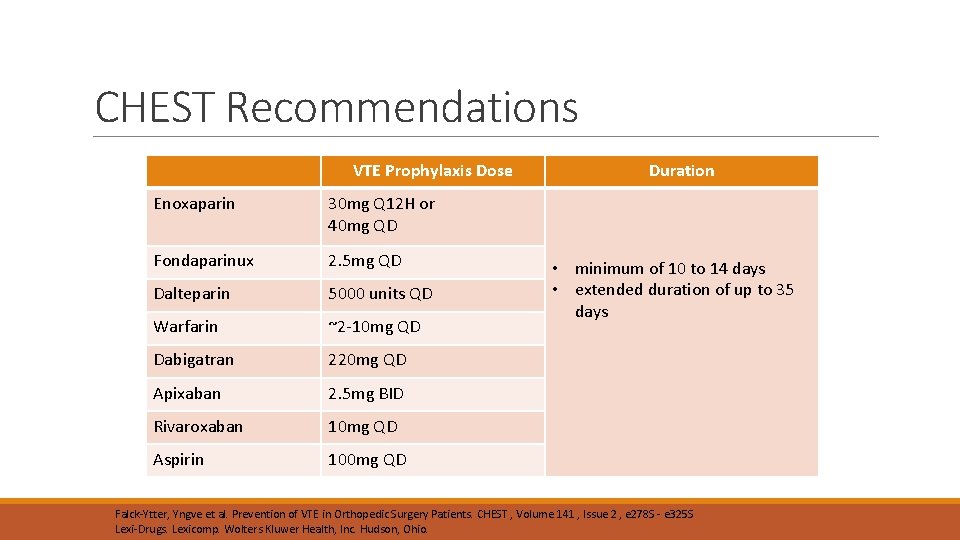
CHEST Recommendations VTE Prophylaxis Dose Enoxaparin 30 mg Q 12 H or 40 mg QD Fondaparinux 2. 5 mg QD Dalteparin 5000 units QD Warfarin ~2 -10 mg QD Dabigatran 220 mg QD Apixaban 2. 5 mg BID Rivaroxaban 10 mg QD Aspirin 100 mg QD Duration • minimum of 10 to 14 days • extended duration of up to 35 days Falck-Ytter, Yngve et al. Prevention of VTE in Orthopedic Surgery Patients. CHEST , Volume 141 , Issue 2 , e 278 S - e 325 S Lexi-Drugs. Lexicomp. Wolters Kluwer Health, Inc. Hudson, Ohio.

Comparing Trial Medications RIVAROXABAN ASPIRIN MOA: inhibits Factor Xa MOA: inhibits platelet aggregation Use: Use (off-label): ◦ Postoperative DVT thromboprophylaxsis: 10 mg QD ◦ Knee replacement: 12 days duration ◦ Hip replacement: 35 days duration ◦ VTE, extending therapy prophylaxis: 100 mg QD ◦ No limited duration Risk of bleeding: 5 -28% Risk of bleeding: dose-related BBW: Contraindications: Price: 10 mg $17/tab Price: 81 mg (Bayer) $0. 07/tab ◦ Premature discontinuation increases thrombotic event risk ◦ Spinal/epidural hematomas Rivaroxaban. Lexi-Drugs. Lexicomp. Wolters Kluwer Health, Inc. Hudson, Ohio. Aspirin. Lexi-Drugs. Lexicomp. Wolters Kluwer Health, Inc. Hudson, Ohio. ◦ Hypersensitivity to NSAIDs ◦ Pts with asthma, rhinitis, & nasal polyps

Methods
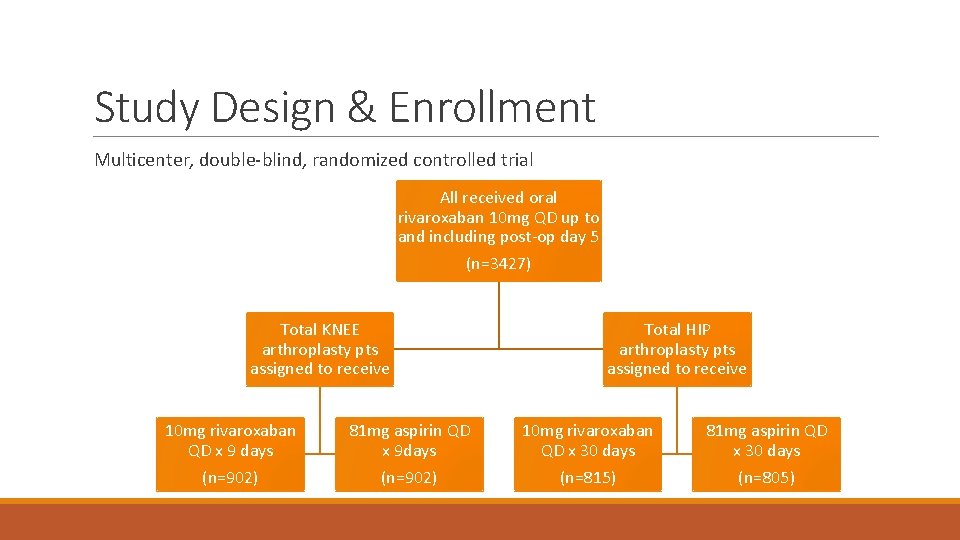
Study Design & Enrollment Multicenter, double-blind, randomized controlled trial All received oral rivaroxaban 10 mg QD up to and including post-op day 5 (n=3427) Total KNEE arthroplasty pts assigned to receive 10 mg rivaroxaban QD x 9 days (n=902) 81 mg aspirin QD x 9 days (n=902) Total HIP arthroplasty pts assigned to receive 10 mg rivaroxaban QD x 30 days (n=815) 81 mg aspirin QD x 30 days (n=805)
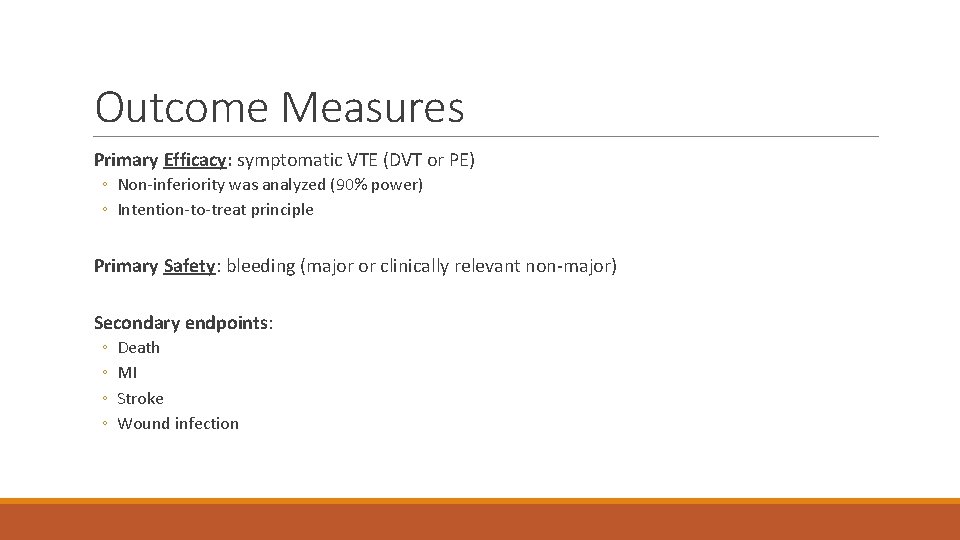
Outcome Measures Primary Efficacy: symptomatic VTE (DVT or PE) ◦ Non-inferiority was analyzed (90% power) ◦ Intention-to-treat principle Primary Safety: bleeding (major or clinically relevant non-major) Secondary endpoints: ◦ ◦ Death MI Stroke Wound infection
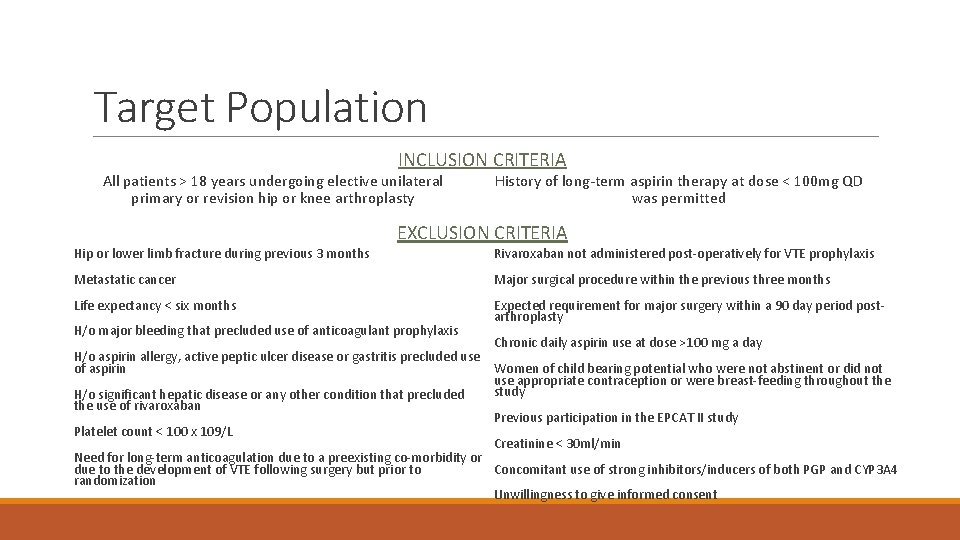
Target Population INCLUSION CRITERIA All patients > 18 years undergoing elective unilateral primary or revision hip or knee arthroplasty Hip or lower limb fracture during previous 3 months History of long-term aspirin therapy at dose < 100 mg QD was permitted EXCLUSION CRITERIA Rivaroxaban not administered post-operatively for VTE prophylaxis Metastatic cancer Major surgical procedure within the previous three months Life expectancy < six months Expected requirement for major surgery within a 90 day period postarthroplasty H/o major bleeding that precluded use of anticoagulant prophylaxis Chronic daily aspirin use at dose >100 mg a day H/o aspirin allergy, active peptic ulcer disease or gastritis precluded use Women of child bearing potential who were not abstinent or did not of aspirin use appropriate contraception or were breast-feeding throughout the study H/o significant hepatic disease or any other condition that precluded the use of rivaroxaban Previous participation in the EPCAT II study Platelet count < 100 x 109/L Creatinine < 30 ml/min Need for long-term anticoagulation due to a preexisting co-morbidity or Concomitant use of strong inhibitors/inducers of both PGP and CYP 3 A 4 due to the development of VTE following surgery but prior to randomization Unwillingness to give informed consent

Results
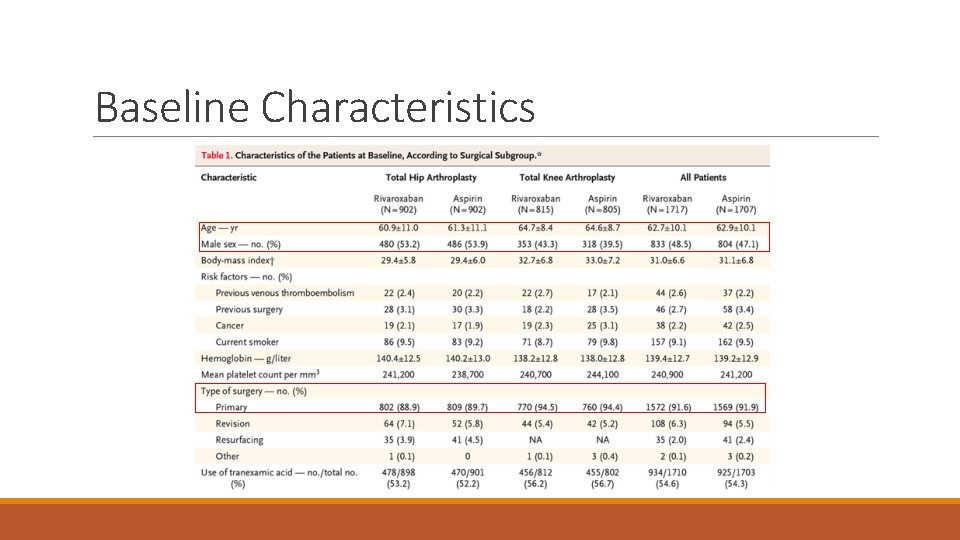
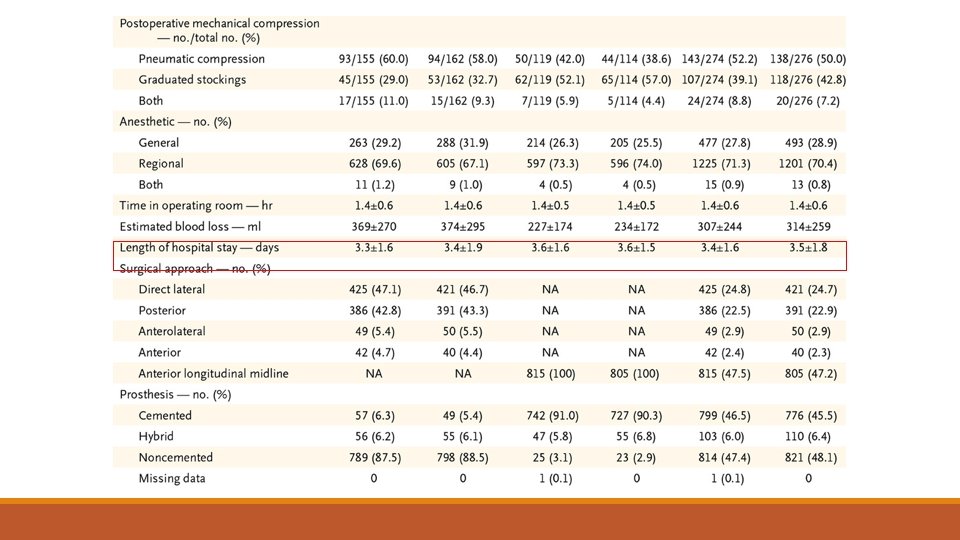
Baseline Characteristics
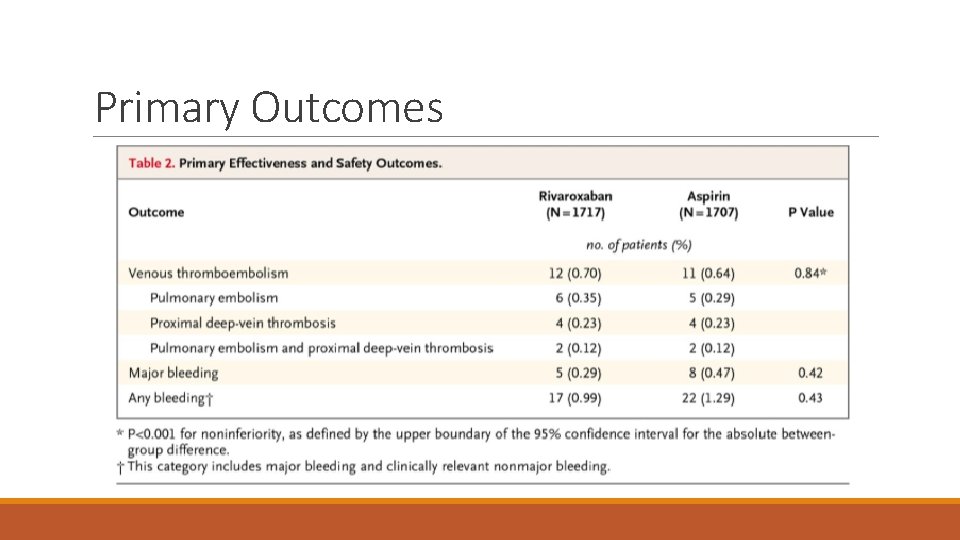
Primary Outcomes
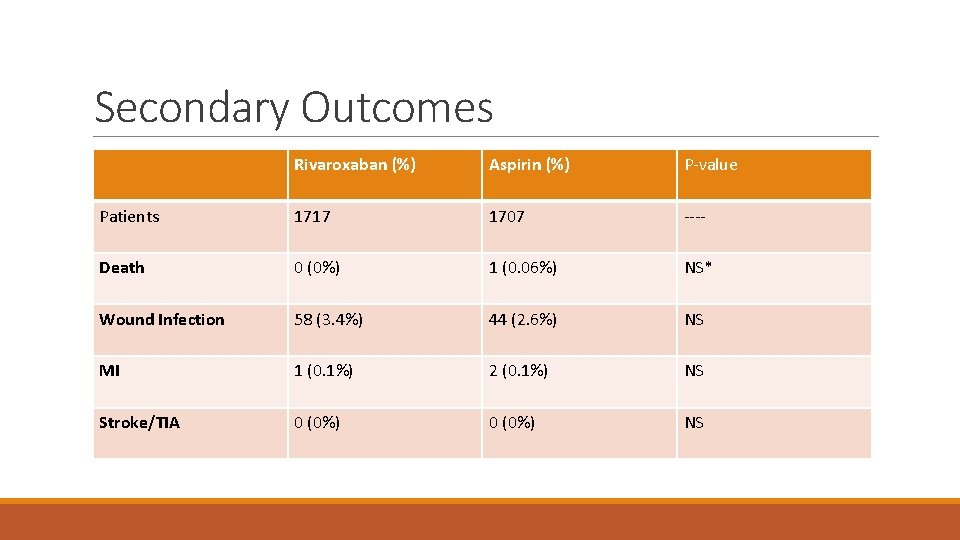
Secondary Outcomes Rivaroxaban (%) Aspirin (%) P-value Patients 1717 1707 ---- Death 0 (0%) 1 (0. 06%) NS* Wound Infection 58 (3. 4%) 44 (2. 6%) NS MI 1 (0. 1%) 2 (0. 1%) NS Stroke/TIA 0 (0%) NS

Discussion
Main Points In comparison with rivaroxaban, aspirin was found to be noninferior (P<0. 001) but not superior (P=0. 84) ◦ Patients in the 2 trial groups had low and very similar rates of VTE complications during the 90 -day F/U (0. 06% difference) No significant between-group differences in rates of VTE events or bleeding complications ◦ Between total hip and total knee arthroplasties ◦ Between patients receiving long-term aspirin therapy and those not receiving it ◦ No benefit of adding ASA < 100 mg to either aspirin or rivaroxaban prophylaxis ◦ Could potentially worsen bleeding in the long-term aspirin subgroup patients
Study Limitations Unable to determine if long-term aspirin medication worsened bleeding ◦ Overestimating rate of aspirin bleeding No standardized protocol cohort to calculate absolute event rates of both prophylactic trial medications ◦ Need head-to-head study done immediately after arthroplasty Unable to determine if cause of bleeding is from initial rivaroxaban, trial medications, or both ◦ Overestimating rate of aspirin bleeding Because of intention-to-treat analysis, trial events occurring before day 6 were included Technical aspects of surgeries were left to surgeons’ discretion
Study Strengths EPCAT II trial was large enough to have power > 90% Clinically relevant endpoints measured Objective testing protocols for VTE confirmations 90 day F/U ensured all clinically significant events were reported No between-group differences Lack of bias
Clinical Significance EPCAT II found that aspirin was not significantly different from rivaroxaban for prevention of symptomatic, clinically relevant VTE after total hip or total knee arthroplasty among patients who received an initial 5 -day postoperative course of rivaroxaban o Supports aspirin effectiveness in preventing VTE’s (like EPCAT I) Aspirin is financially beneficial and widely available increased compliance and decreased burden More head-to-head studies are warranted Recommendation: Use of aspirin 81 mg QD postoperatively after total knee or total hip arthroplasty after 5 days of rivaroxaban is a not just a valid option due to similar efficacy and safety compared to rivaroxaban but it can eventually become the preferred option due to its decreased contraindications and burdens for patients.

Questions? THANK YOU.
- Slides: 22