
Asphalt Rubber Asphalt Concrete Friction Course Overlay as
Asphalt Rubber Asphalt Concrete Friction Course Overlay as a Pavement Preservation Strategy SIXTH MEXICAN ASPHALT CONGRESS Cancun, Mexico, August 24 th to 28 th, 2009 K. Kaloush, K. Biligiri, M. Rodezno, M. Belshe Arizona State University, G. Way and D. Carlson, Rubber Pavement Association, Arizona, USA. J. Sousa, Consulpav International, Inc. USA - Portugal
Presentation Outline • Objectives of Study • Background on Asphalt Rubber • AR Pavement Preservation Strategy - Performance / Durability - Highway Noise - Thermal Gradient / Urban Climate Interaction - Friction / Safety and Ride Quality / Comfort - Tire Wear Emissions / Air Quality - Cost and Energy Consideration • Summary and Conclusions
Objective Evaluation of AR-ACFC benefits as a pavement preservation strategy in terms of laboratory material characterization tests and field performance evaluation including: highway noise reduction, mitigation of daily thermal variances in PCC pavements, improved skid resistance, reduced roughness, and reduction of emission rates of tire wear.
ASTM D 8 Standard Definitions of Terms Relating to Materials for Roads and Pavements Asphalt Rubber– a blend of asphalt cement, reclaimed tire rubber and certain additives in which the rubber component is at least 15% by weight of the total blend and has reacted in the hot asphalt cement sufficiently to cause swelling of the rubber particles.
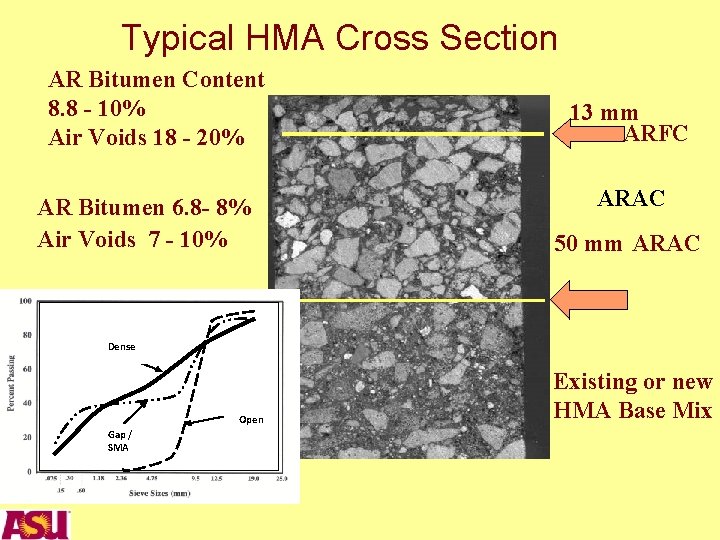
Typical HMA Cross Section AR Bitumen Content 8. 8 - 10% Air Voids 18 - 20% AR Bitumen 6. 8 - 8% Air Voids 7 - 10% 13 mm ARFC ARAC 50 mm ARAC Dense Open Gap / SMA Existing or new HMA Base Mix
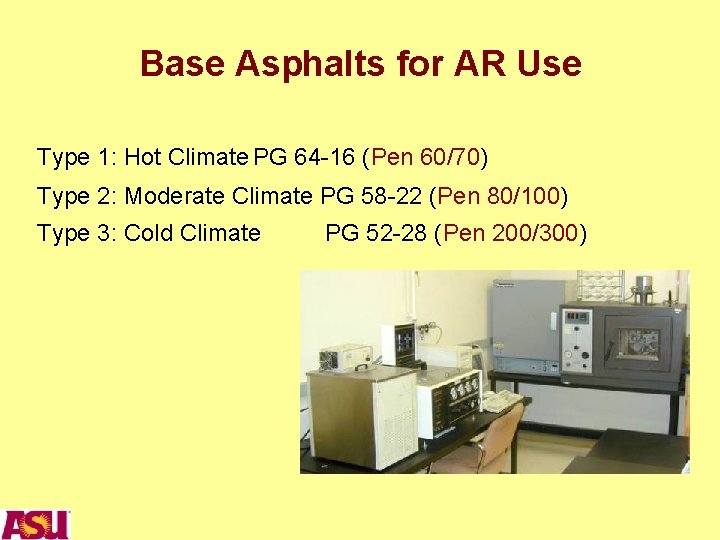
Base Asphalts for AR Use Type 1: Hot Climate PG 64 -16 (Pen 60/70) Type 2: Moderate Climate PG 58 -22 (Pen 80/100) Type 3: Cold Climate PG 52 -28 (Pen 200/300)
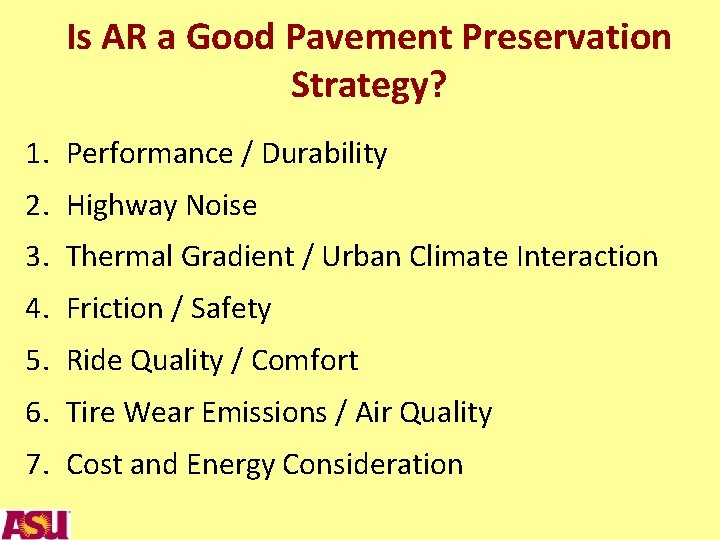
Is AR a Good Pavement Preservation Strategy? 1. Performance / Durability 2. Highway Noise 3. Thermal Gradient / Urban Climate Interaction 4. Friction / Safety 5. Ride Quality / Comfort 6. Tire Wear Emissions / Air Quality 7. Cost and Energy Consideration
1 - Performance / Durability • • • Binder Tests Triaxial Shear Strength Dynamic Modulus E* Permanent Deformation FN / FT Fatigue IDT Creep and Strength
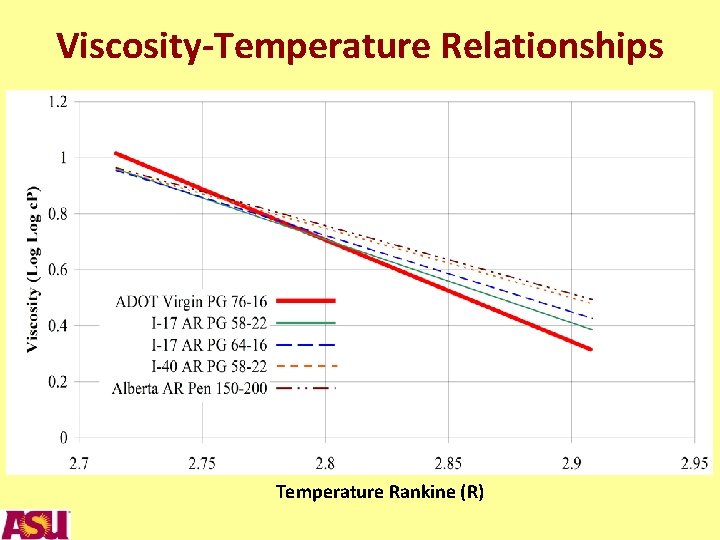
Viscosity-Temperature Relationships Temperature Rankine (R)
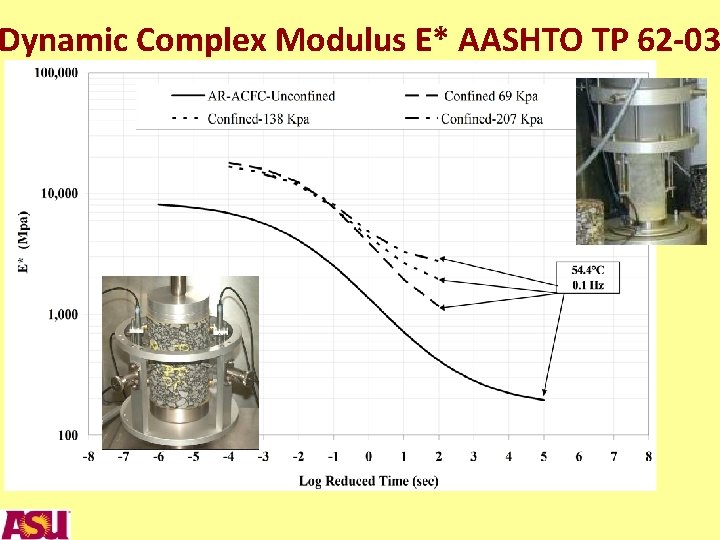
Dynamic Complex Modulus E* AASHTO TP 62 -03
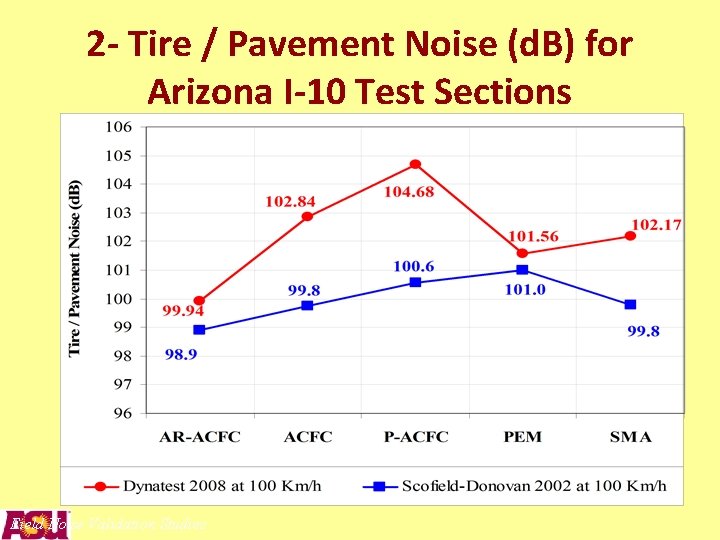
2 - Tire / Pavement Noise (d. B) for Arizona I-10 Test Sections Field Noise Validation Studies
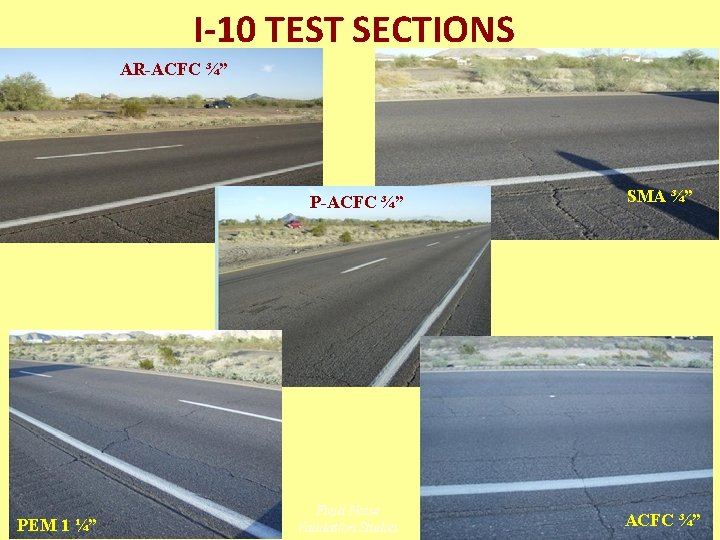
I-10 TEST SECTIONS AR-ACFC ¾” PEM 1 ¼” Field Noise Validation Studies SMA ¾” ACFC ¾”
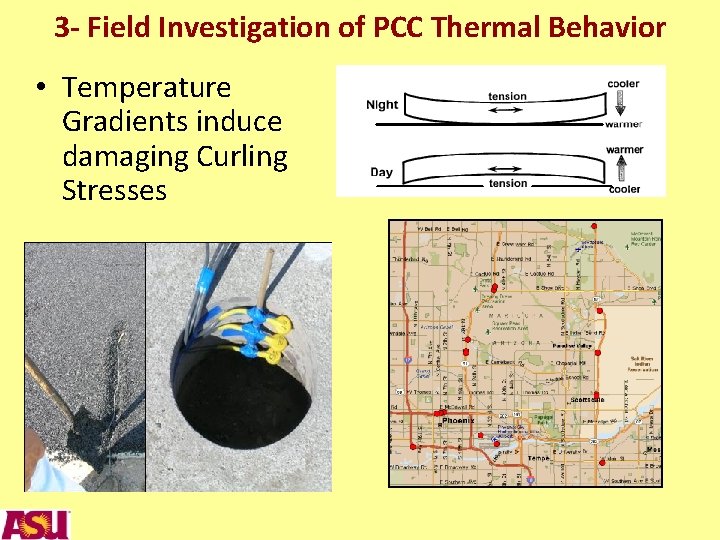
3 - Field Investigation of PCC Thermal Behavior • Temperature Gradients induce damaging Curling Stresses
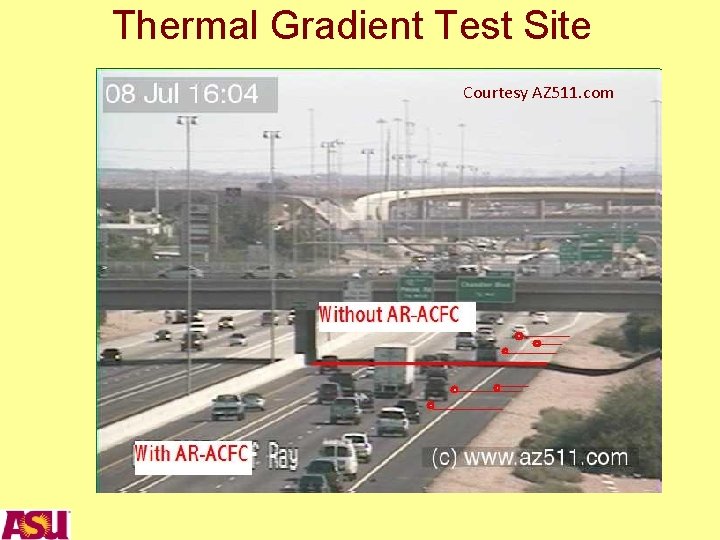
Thermal Gradient Test Site Courtesy AZ 511. com
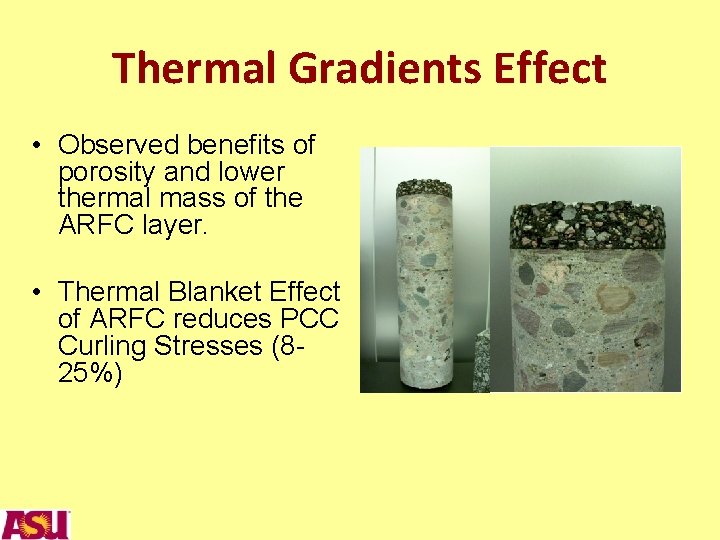
Thermal Gradients Effect • Observed benefits of porosity and lower thermal mass of the ARFC layer. • Thermal Blanket Effect of ARFC reduces PCC Curling Stresses (825%)
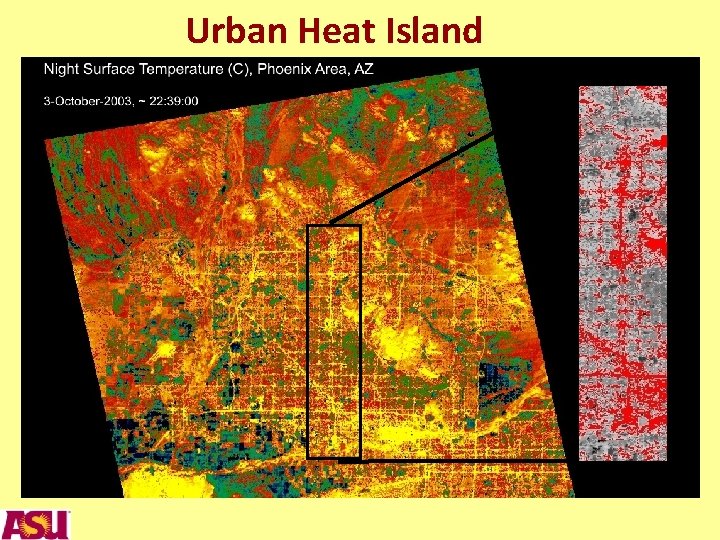
Urban Heat Island
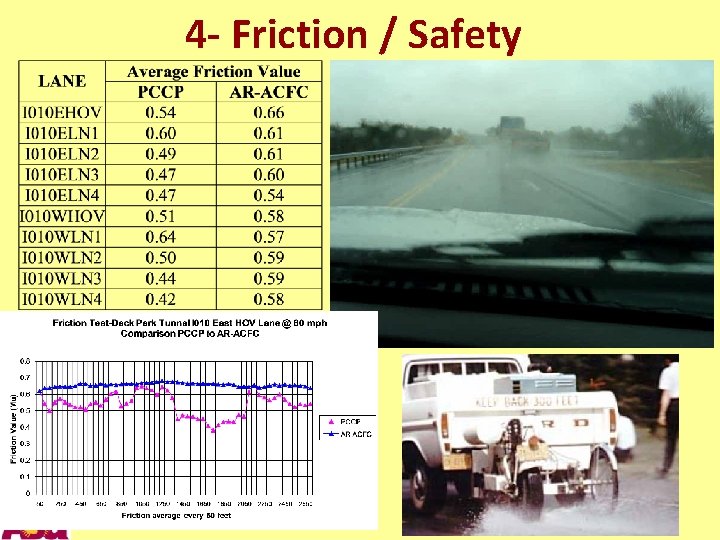
4 - Friction / Safety
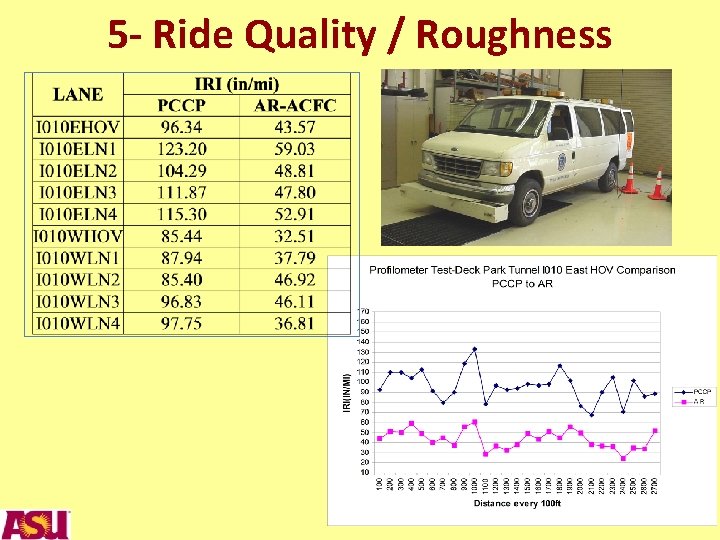
5 - Ride Quality / Roughness
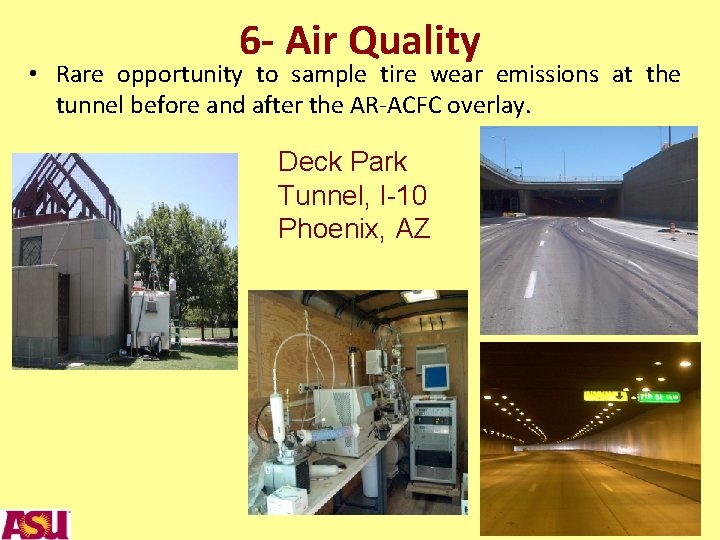
6 - Air Quality • Rare opportunity to sample tire wear emissions at the tunnel before and after the AR-ACFC overlay. Deck Park Tunnel, I-10 Phoenix, AZ
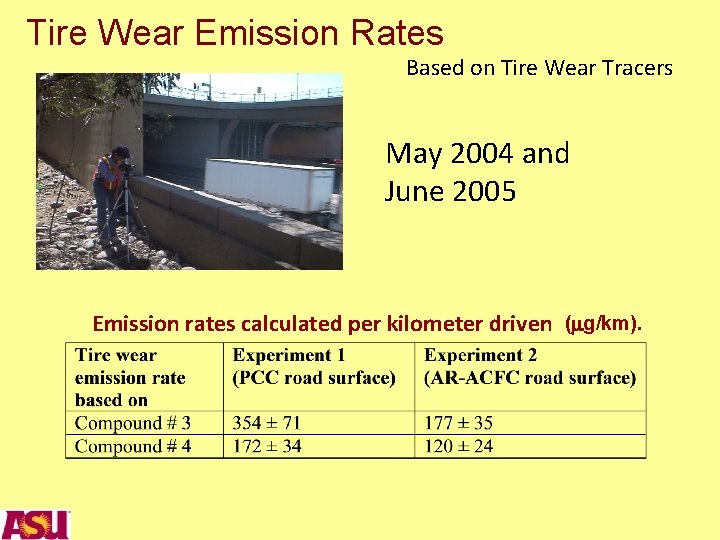
Tire Wear Emission Rates Based on Tire Wear Tracers May 2004 and June 2005 Emission rates calculated per kilometer driven (mg/km).
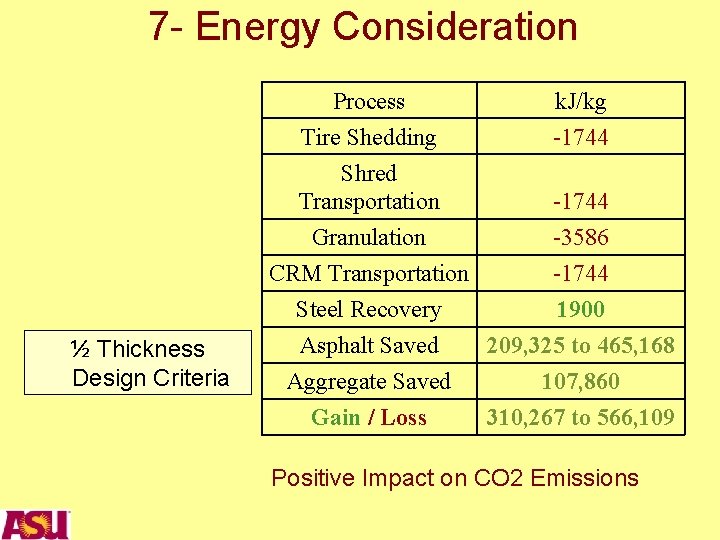
7 - Energy Consideration Process Tire Shedding Shred Transportation ½ Thickness Design Criteria k. J/kg -1744 Granulation -3586 CRM Transportation -1744 Steel Recovery 1900 Asphalt Saved 209, 325 to 465, 168 Aggregate Saved 107, 860 Gain / Loss 310, 267 to 566, 109 Positive Impact on CO 2 Emissions
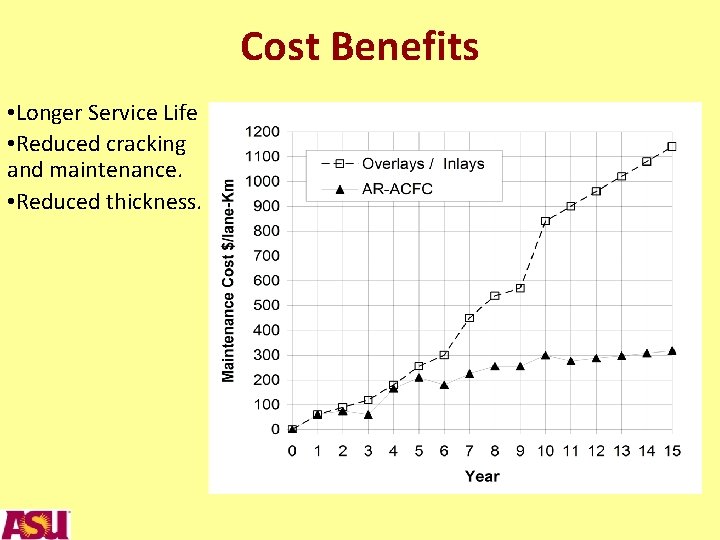
Cost Benefits • Longer Service Life • Reduced cracking and maintenance. • Reduced thickness.
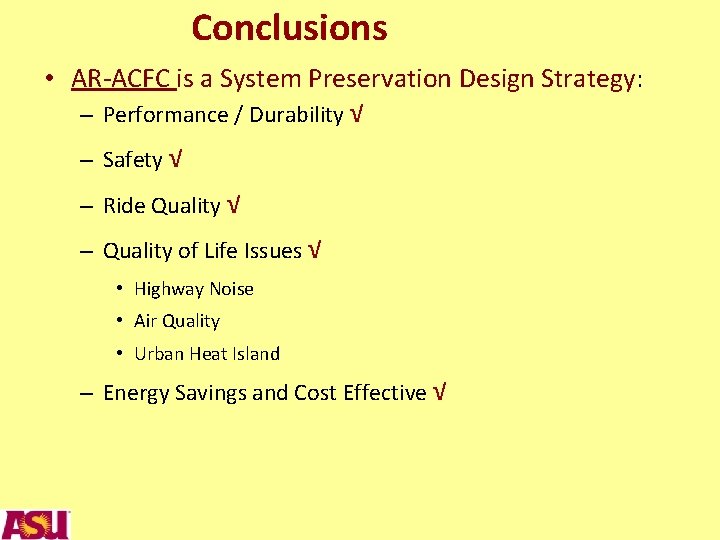
Conclusions • AR-ACFC is a System Preservation Design Strategy: – Performance / Durability √ – Safety √ – Ride Quality √ – Quality of Life Issues √ • Highway Noise • Air Quality • Urban Heat Island – Energy Savings and Cost Effective √
Arizona - USA Thank You
- Slides: 24