
Aspergers Disorder Mental Health in Schools Professor Dr
- Slides: 22
Asperger’s Disorder Mental Health in Schools Professor Dr. Hughey Created by: Julia Garten
“Children with autism are challenged by the most essential human behaviors. They have difficulty interacting with other people-often failing to see people as people rather than simply objects in their environment. They cannot easily communicate ideas and feelings, have great trouble imagining what others think or feel, and in some cases spend their lives speechless. They frequently find it hard to make friends or even bond with family members. Their behavior can seem bizarre. ” (Committee on Educational Interventions for Children with Autism, National Research Council, 2001)
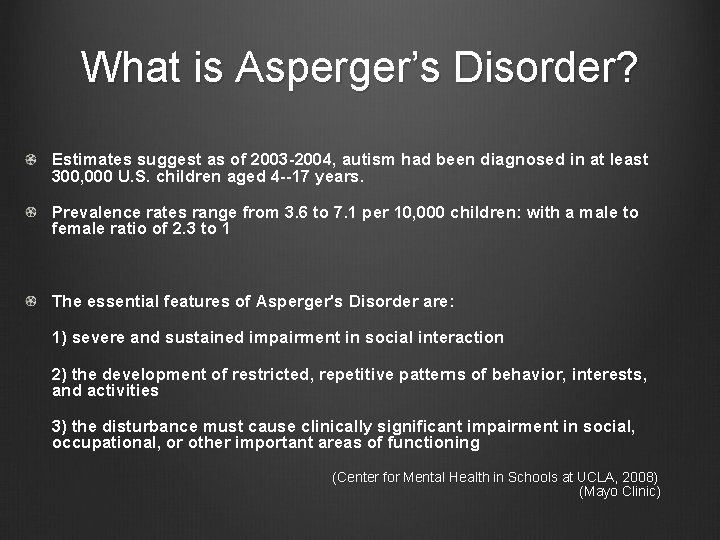
What is Asperger’s Disorder? Estimates suggest as of 2003 -2004, autism had been diagnosed in at least 300, 000 U. S. children aged 4 --17 years. Prevalence rates range from 3. 6 to 7. 1 per 10, 000 children: with a male to female ratio of 2. 3 to 1 The essential features of Asperger's Disorder are: 1) severe and sustained impairment in social interaction 2) the development of restricted, repetitive patterns of behavior, interests, and activities 3) the disturbance must cause clinically significant impairment in social, occupational, or other important areas of functioning (Center for Mental Health in Schools at UCLA, 2008) (Mayo Clinic)
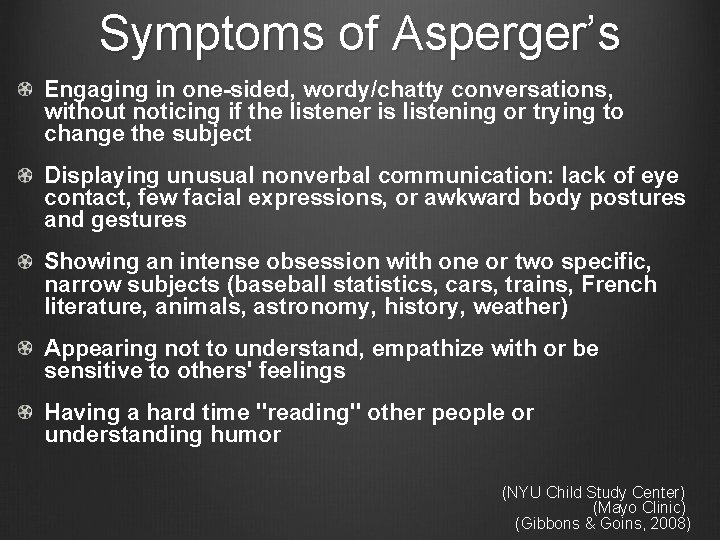
Symptoms of Asperger’s Engaging in one-sided, wordy/chatty conversations, without noticing if the listener is listening or trying to change the subject Displaying unusual nonverbal communication: lack of eye contact, few facial expressions, or awkward body postures and gestures Showing an intense obsession with one or two specific, narrow subjects (baseball statistics, cars, trains, French literature, animals, astronomy, history, weather) Appearing not to understand, empathize with or be sensitive to others' feelings Having a hard time "reading" other people or understanding humor (NYU Child Study Center) (Mayo Clinic) (Gibbons & Goins, 2008)
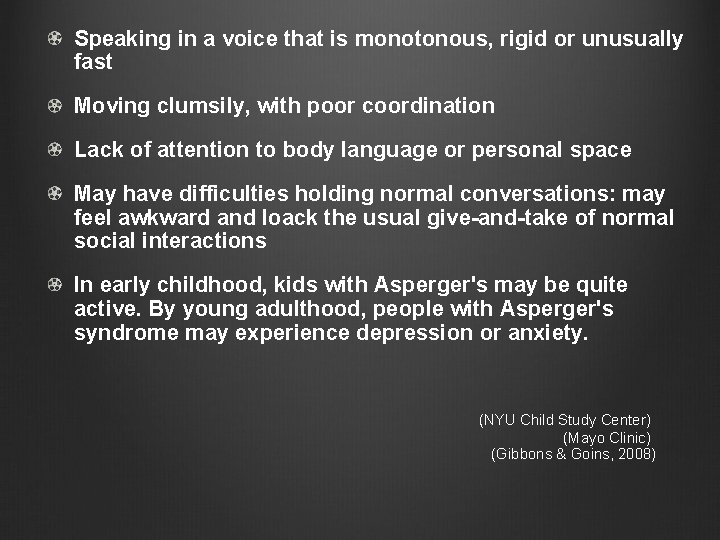
Speaking in a voice that is monotonous, rigid or unusually fast Moving clumsily, with poor coordination Lack of attention to body language or personal space May have difficulties holding normal conversations: may feel awkward and loack the usual give-and-take of normal social interactions In early childhood, kids with Asperger's may be quite active. By young adulthood, people with Asperger's syndrome may experience depression or anxiety. (NYU Child Study Center) (Mayo Clinic) (Gibbons & Goins, 2008)
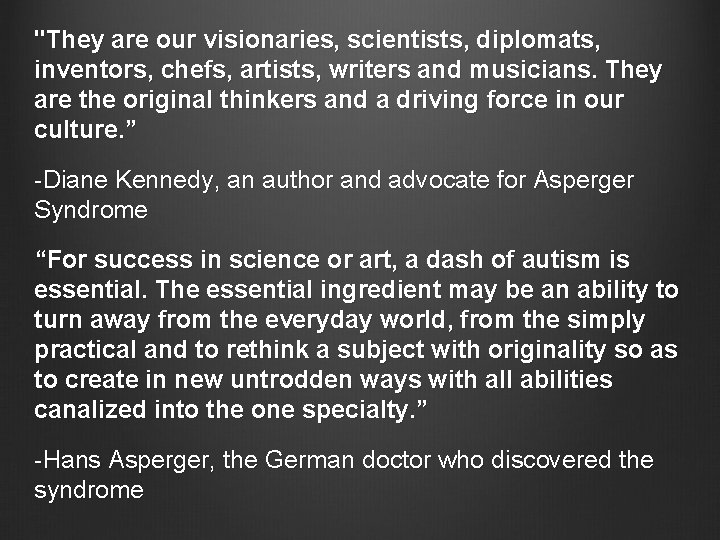
"They are our visionaries, scientists, diplomats, inventors, chefs, artists, writers and musicians. They are the original thinkers and a driving force in our culture. ” -Diane Kennedy, an author and advocate for Asperger Syndrome “For success in science or art, a dash of autism is essential. The essential ingredient may be an ability to turn away from the everyday world, from the simply practical and to rethink a subject with originality so as to create in new untrodden ways with all abilities canalized into the one specialty. ” -Hans Asperger, the German doctor who discovered the syndrome
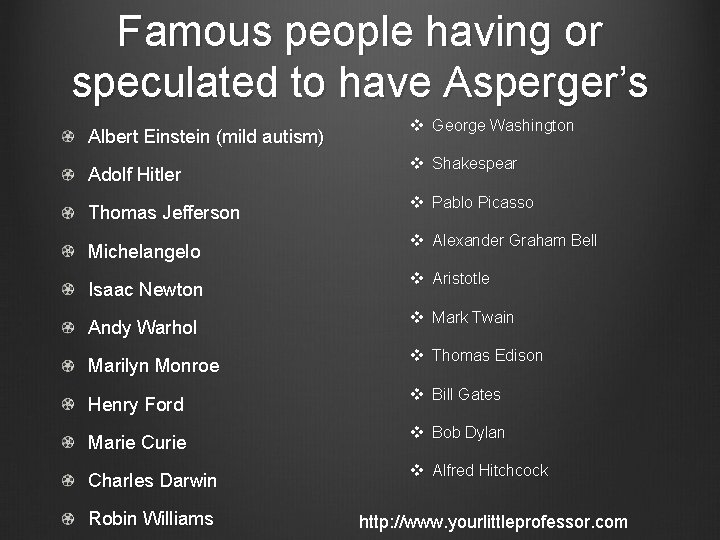
Famous people having or speculated to have Asperger’s Albert Einstein (mild autism) Adolf Hitler Thomas Jefferson Michelangelo Isaac Newton Andy Warhol Marilyn Monroe Henry Ford Marie Curie Charles Darwin Robin Williams v George Washington v Shakespear v Pablo Picasso v Alexander Graham Bell v Aristotle v Mark Twain v Thomas Edison v Bill Gates v Bob Dylan v Alfred Hitchcock http: //www. yourlittleprofessor. com
What causes Asperger’s? It's not clear what causes Asperger's syndrome, although changes in certain genes may be involved. These disorders are congenital, which means that something happened to the child before birth to cause the problem. Evidence points to genetic factors playing a prominent role in the causes for ASD. The brain structure and chemicals in these children are abnormal, and therefore they do not process information in the usual way, especially in terms of sounds and language. Parent’s behavior and vaccinations are not causes of this disorder (NYU Child Study Center) (Mayo Clinic) (Center for Mental Health in Schools at UCLA, 2008)
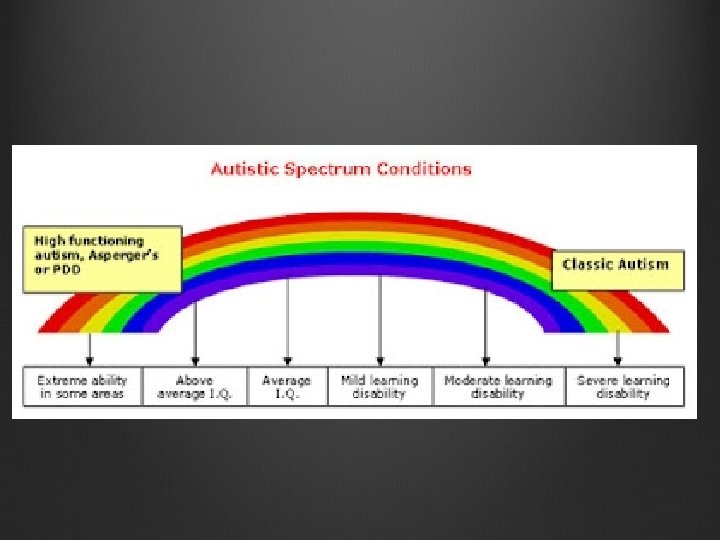
How is it different than highfunctioning austim? Although it has some common features with autism, it does not include impaired cognitive ability or problems with language development (Gibbons & Goins, 2008) The onset (or diagnosis) is usually later The outcome is usually more positive Social and communication deficits are less severe Limited interests are more prominent Verbal IQ is usually higher than performance IQ (in autism, the case is usually the reverse) Clumsiness is more frequently seen The family history is more frequently positive for autistic spectrum disorders Neurological disorders are less common (Mayo Clinic)
Why “Asperger’s? ” "Asperger" comes from Hans Asperger, an Austrian physician who first described the syndrome in 1944: although it’s relatively new diagnosis, having only been included in the APA’s Diagnostic and Statistical Manual of Mental Disorders (DSM) in its most recent editions (1994) He was speculated to have had Asperger's disorder: -He had difficulty finding friends -He was considered a lonely, remote child -He was talented in language; in particular he was interested in an Austrian poet -He liked to quote himself -Referred to himself in third-person (Aspergers. com)(Gibbons &Goins, 2008)(
Other psychological problems likely to coexist with Asperger’s Disorder: Attention Deficit Hyperactivity Disorder (ADHD) Oppositional Defiant Disorder (ODD) Depression (Major Depressive Disorder or Adjustment Disorder with Depressed Mood) Bipolar Disorder Generalized Anxiety Disorder Obsessive Compulsive Disorder Some children with Asperger's syndrome may initially be misdiagnosed with another problem possibly because the symptoms of some conditions are similar to those of Asperger's. Additionally, these other conditions may coexist with Asperger's, which can delay the diagnosis. (Gibbons & Goins, 2008) (Mayo Clinic)
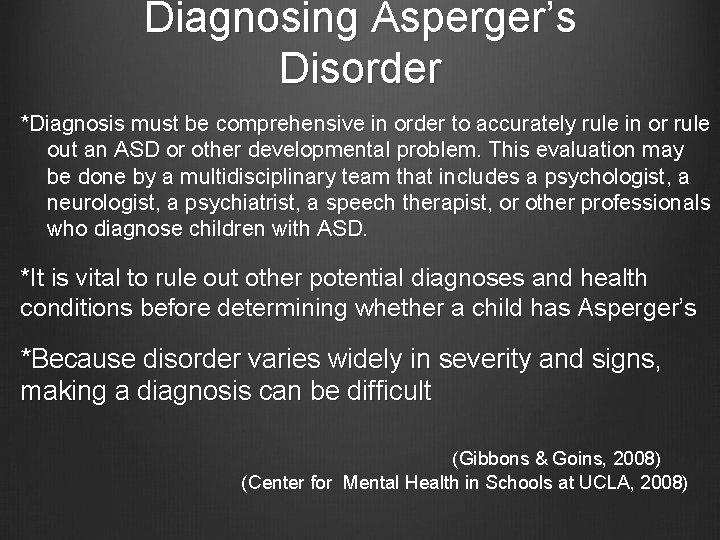
Diagnosing Asperger’s Disorder *Diagnosis must be comprehensive in order to accurately rule in or rule out an ASD or other developmental problem. This evaluation may be done by a multidisciplinary team that includes a psychologist, a neurologist, a psychiatrist, a speech therapist, or other professionals who diagnose children with ASD. *It is vital to rule out other potential diagnoses and health conditions before determining whether a child has Asperger’s *Because disorder varies widely in severity and signs, making a diagnosis can be difficult (Gibbons & Goins, 2008) (Center for Mental Health in Schools at UCLA, 2008)
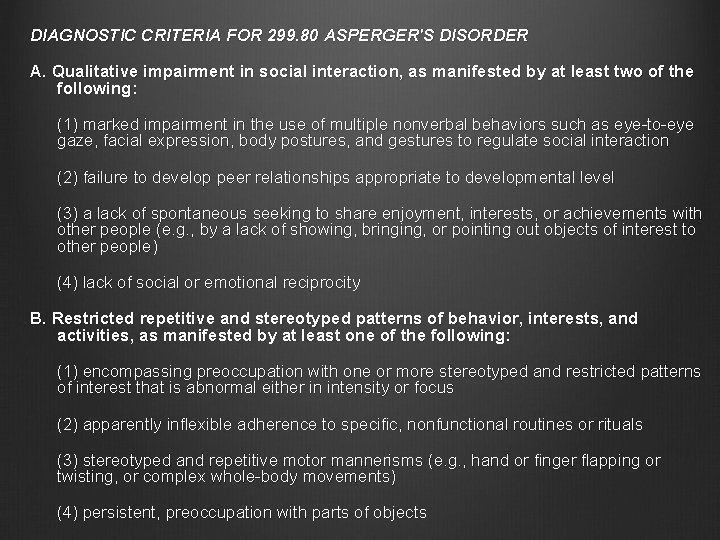
DIAGNOSTIC CRITERIA FOR 299. 80 ASPERGER'S DISORDER A. Qualitative impairment in social interaction, as manifested by at least two of the following: (1) marked impairment in the use of multiple nonverbal behaviors such as eye-to-eye gaze, facial expression, body postures, and gestures to regulate social interaction (2) failure to develop peer relationships appropriate to developmental level (3) a lack of spontaneous seeking to share enjoyment, interests, or achievements with other people (e. g. , by a lack of showing, bringing, or pointing out objects of interest to other people) (4) lack of social or emotional reciprocity B. Restricted repetitive and stereotyped patterns of behavior, interests, and activities, as manifested by at least one of the following: (1) encompassing preoccupation with one or more stereotyped and restricted patterns of interest that is abnormal either in intensity or focus (2) apparently inflexible adherence to specific, nonfunctional routines or rituals (3) stereotyped and repetitive motor mannerisms (e. g. , hand or finger flapping or twisting, or complex whole-body movements) (4) persistent, preoccupation with parts of objects
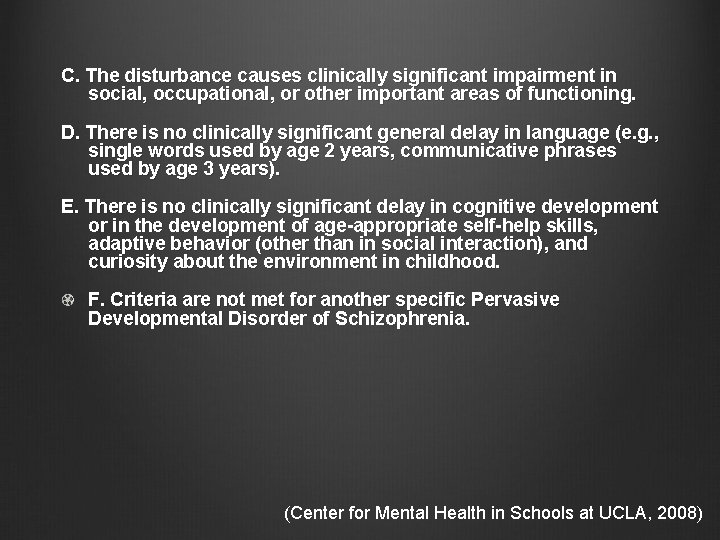
C. The disturbance causes clinically significant impairment in social, occupational, or other important areas of functioning. D. There is no clinically significant general delay in language (e. g. , single words used by age 2 years, communicative phrases used by age 3 years). E. There is no clinically significant delay in cognitive development or in the development of age-appropriate self-help skills, adaptive behavior (other than in social interaction), and curiosity about the environment in childhood. F. Criteria are not met for another specific Pervasive Developmental Disorder of Schizophrenia. (Center for Mental Health in Schools at UCLA, 2008)
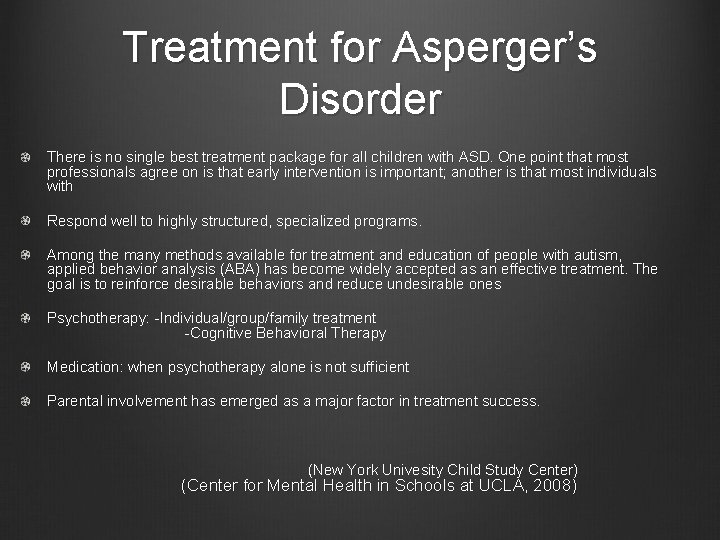
Treatment for Asperger’s Disorder There is no single best treatment package for all children with ASD. One point that most professionals agree on is that early intervention is important; another is that most individuals with Respond well to highly structured, specialized programs. Among the many methods available for treatment and education of people with autism, applied behavior analysis (ABA) has become widely accepted as an effective treatment. The goal is to reinforce desirable behaviors and reduce undesirable ones Psychotherapy: -Individual/group/family treatment -Cognitive Behavioral Therapy Medication: when psychotherapy alone is not sufficient Parental involvement has emerged as a major factor in treatment success. (New York Univesity Child Study Center) (Center for Mental Health in Schools at UCLA, 2008)
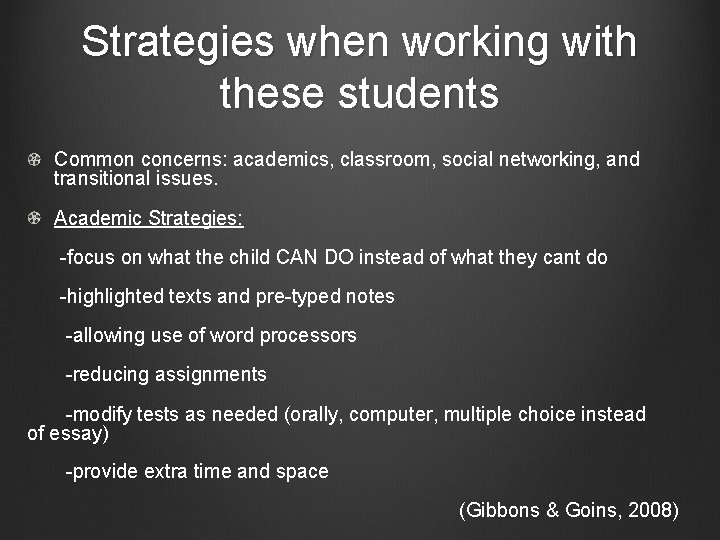
Strategies when working with these students Common concerns: academics, classroom, social networking, and transitional issues. Academic Strategies: -focus on what the child CAN DO instead of what they cant do -highlighted texts and pre-typed notes -allowing use of word processors -reducing assignments -modify tests as needed (orally, computer, multiple choice instead of essay) -provide extra time and space (Gibbons & Goins, 2008)
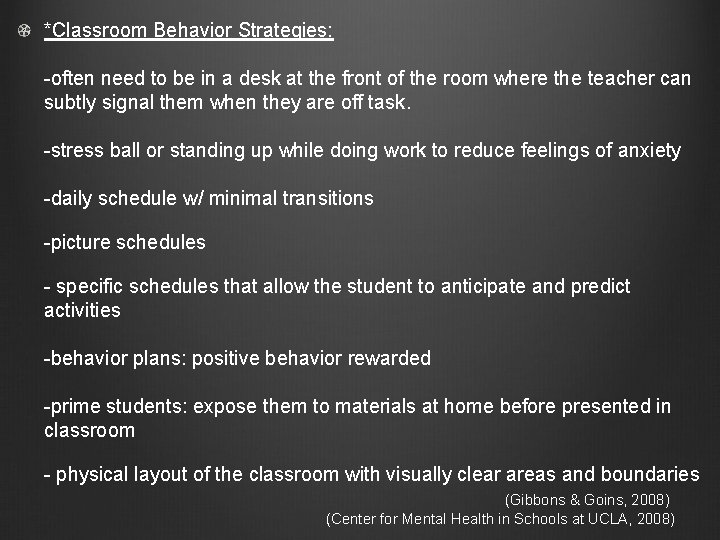
*Classroom Behavior Strategies: -often need to be in a desk at the front of the room where the teacher can subtly signal them when they are off task. -stress ball or standing up while doing work to reduce feelings of anxiety -daily schedule w/ minimal transitions -picture schedules - specific schedules that allow the student to anticipate and predict activities -behavior plans: positive behavior rewarded -prime students: expose them to materials at home before presented in classroom - physical layout of the classroom with visually clear areas and boundaries (Gibbons & Goins, 2008) (Center for Mental Health in Schools at UCLA, 2008)
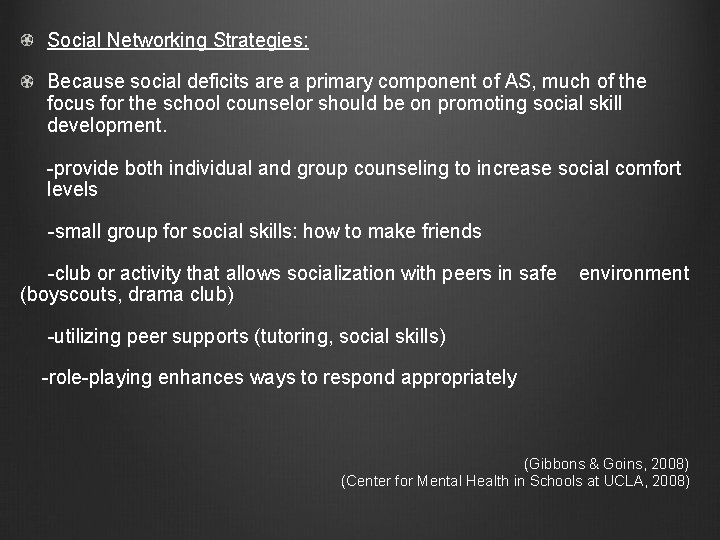
Social Networking Strategies: Because social deficits are a primary component of AS, much of the focus for the school counselor should be on promoting social skill development. -provide both individual and group counseling to increase social comfort levels -small group for social skills: how to make friends -club or activity that allows socialization with peers in safe (boyscouts, drama club) environment -utilizing peer supports (tutoring, social skills) -role-playing enhances ways to respond appropriately (Gibbons & Goins, 2008) (Center for Mental Health in Schools at UCLA, 2008)
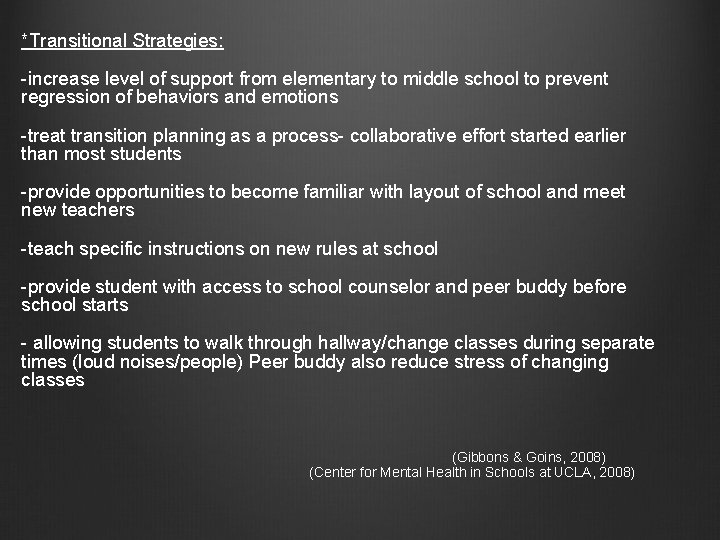
*Transitional Strategies: -increase level of support from elementary to middle school to prevent regression of behaviors and emotions -treat transition planning as a process- collaborative effort started earlier than most students -provide opportunities to become familiar with layout of school and meet new teachers -teach specific instructions on new rules at school -provide student with access to school counselor and peer buddy before school starts - allowing students to walk through hallway/change classes during separate times (loud noises/people) Peer buddy also reduce stress of changing classes (Gibbons & Goins, 2008) (Center for Mental Health in Schools at UCLA, 2008)
Peer-mediated Social Interactions Peer-mediated social interaction procedures have been used for a number of years, initially withdrawn preschool children, but also with more severely involved children with autism and mental disabilities. Socially competent peers are taught to initiate social interactions with children with autism. They are subsequently paired in natural settings for social activities. The most direct outcome of these procedures has been an increase in positive social responses by children with autism. This outcome is important because of the strong, positive association between social responses and peer acceptance. (Center for Mental Health in Schools at UCLA, 2008)
References Center for Mental Health in Schools at UCLA. (2008). Autism spectrum disorders and schools: a technical aid packet. Los Angeles, CA: Author. Gibbons, M. M. , & Goins, S. (2008). Getting to know the child with asperger's syndrome. Professional School Counseling, 11, 347352. Mayo clinic. (n. d. ). Retrieved from www. mayoclinic. com New York University Child Study Center. (n. d. ). Retrieved from www. aboutourkids. org Ozbayrak, R. K. (n. d. ). Asperger's disorder homepage. Retrieved from www. aspergers. com