
Aspects of Language Change Prepared by Mariam Bedraoui
Aspects of Language Change Prepared by Mariam Bedraoui
Outline 1. Lexical Change �Borrowing �Coining new words 2. Semantic Change �Broadening �Narrowing �Shifts of meaning 3. Sound change �Loss of phonemes �Addition of phonemes �Metathesis 4. Syntactic Change �Word order �Re-analysis �Grammaticalization
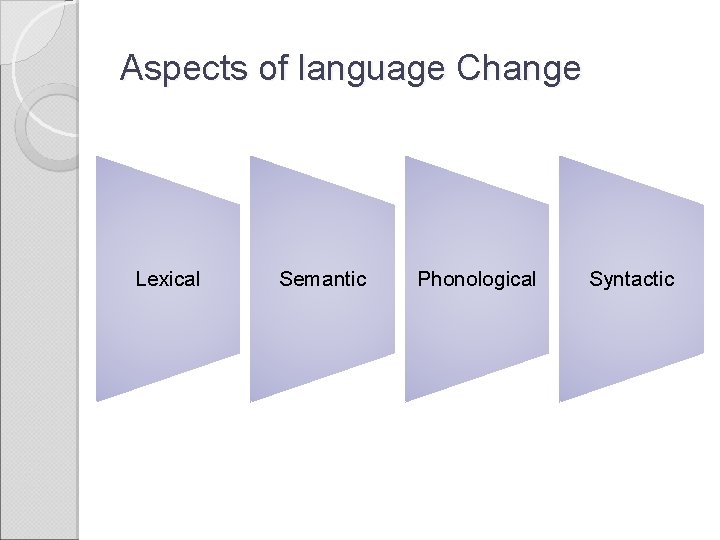
Aspects of language Change Lexical Semantic Phonological Syntactic
Lexical Change: Borrowing � Languages are avid borrowers �Two-fifths of common words in English are loan words �Direct/indirect borrowing �Phonological and morphological treatment of loans �Rarely borrowed words
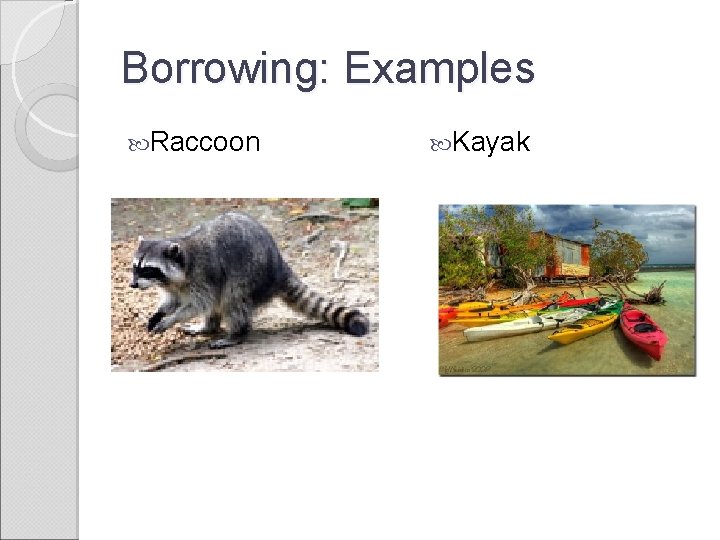
Borrowing: Examples Raccoon Kayak
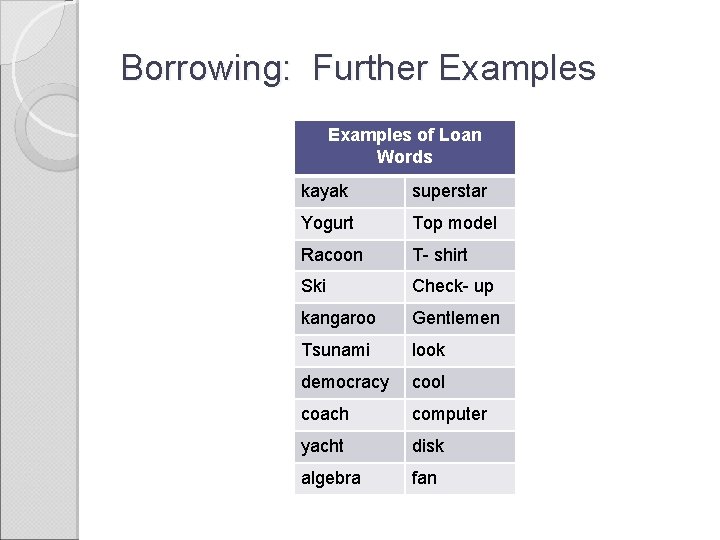
Borrowing: Further Examples of Loan Words kayak superstar Yogurt Top model Racoon T- shirt Ski Check- up kangaroo Gentlemen Tsunami look democracy cool coach computer yacht disk algebra fan
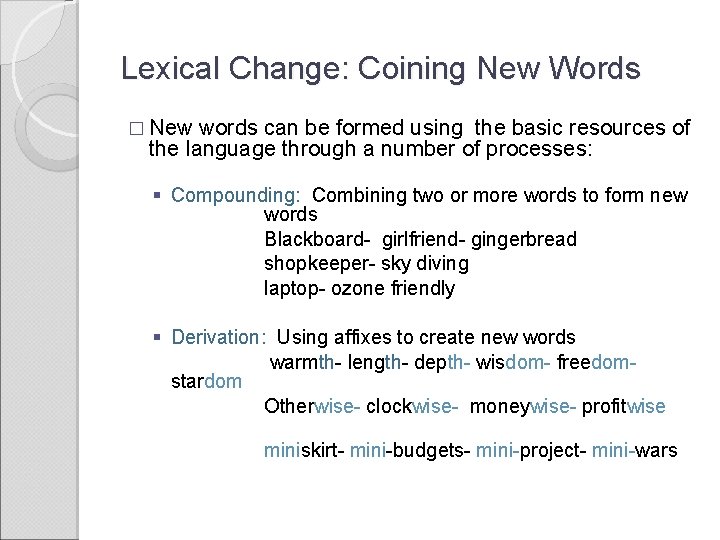
Lexical Change: Coining New Words � New words can be formed using the basic resources of the language through a number of processes: § Compounding: Combining two or more words to form new words Blackboard- girlfriend- gingerbread shopkeeper- sky diving laptop- ozone friendly § Derivation: Using affixes to create new words warmth- length- depth- wisdom- freedomstardom Otherwise- clockwise- moneywise- profitwise miniskirt- mini-budgets- mini-project- mini-wars
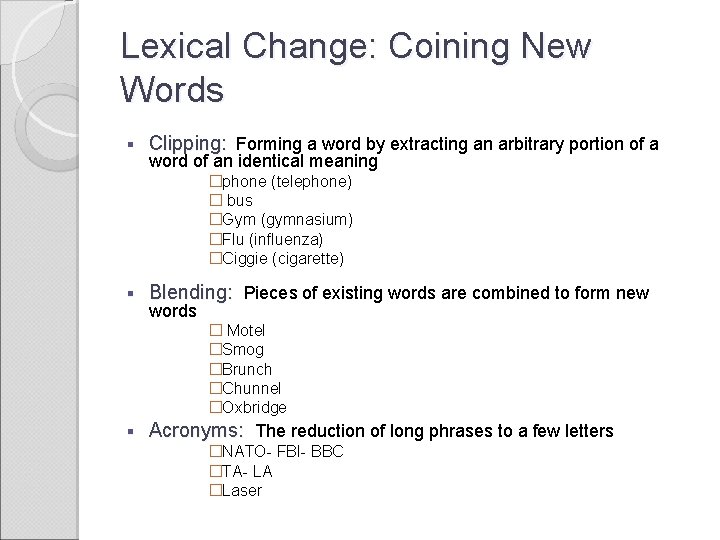
Lexical Change: Coining New Words § Clipping: Forming a word by extracting an arbitrary portion of a word of an identical meaning �phone (telephone) � bus �Gym (gymnasium) �Flu (influenza) �Ciggie (cigarette) § Blending: Pieces of existing words are combined to form new words � Motel �Smog �Brunch �Chunnel �Oxbridge § Acronyms: The reduction of long phrases to a few letters �NATO- FBI- BBC �TA- LA �Laser
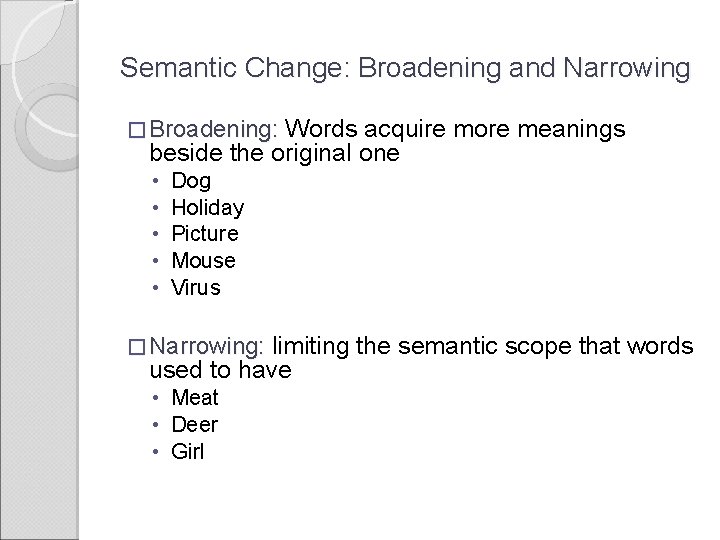
Semantic Change: Broadening and Narrowing � Broadening: Words acquire more meanings beside the original one • • • Dog Holiday Picture Mouse Virus � Narrowing: limiting used to have • Meat • Deer • Girl the semantic scope that words
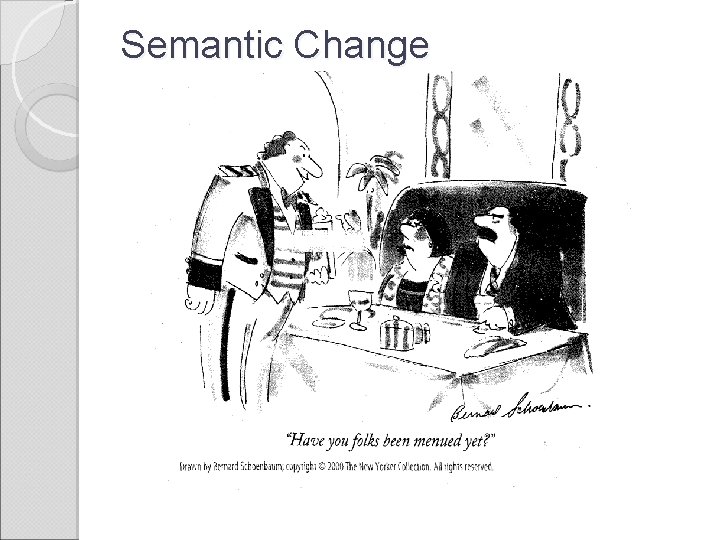
Semantic Change

Semantic Change: Shift of Meaning �Shift of Meaning: Words cease to mean what they used to, and take on new semantic representations • • • Silly Nice Immoral With cheer
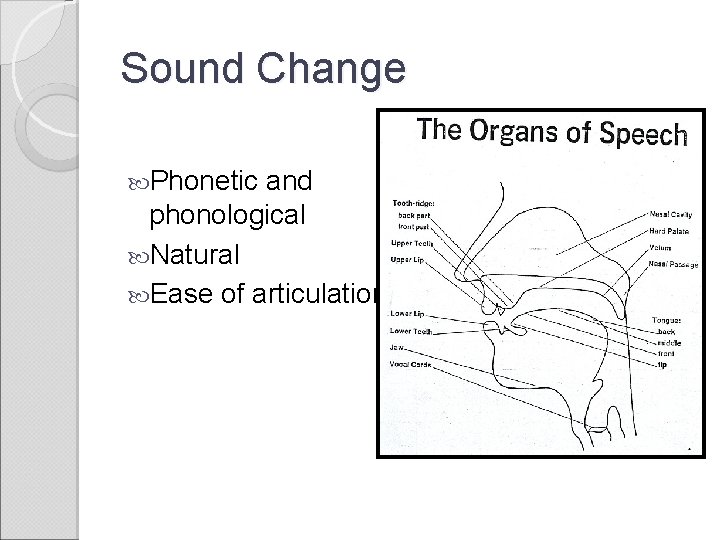
Sound Change Phonetic and phonological Natural Ease of articulation
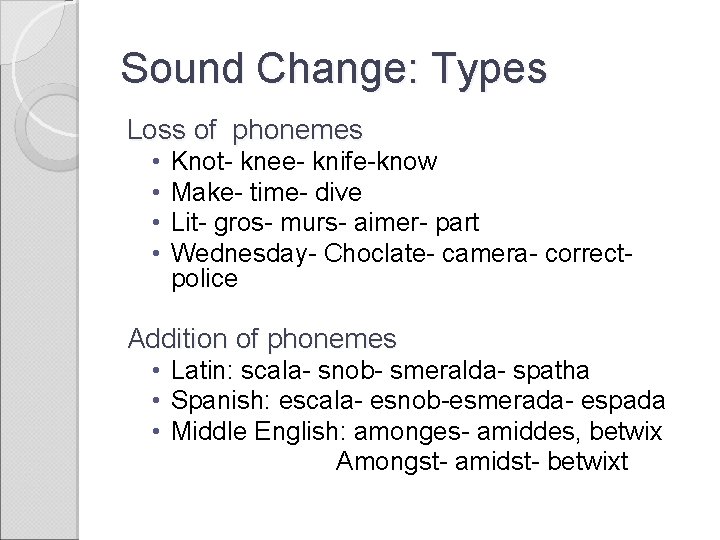
Sound Change: Types Loss of phonemes • • Knot- knee- knife-know Make- time- dive Lit- gros- murs- aimer- part Wednesday- Choclate- camera- correctpolice Addition of phonemes • Latin: scala- snob- smeralda- spatha • Spanish: escala- esnob-esmerada- espada • Middle English: amonges- amiddes, betwix Amongst- amidst- betwixt
Sound Change: Types �Metathesis: It occurs when two sounds switch places • Old English: Ask- aks • Latin: crepare- parabola- miraculu- pericula • Spanish: quebrar- palabra- milagro- peligru
Syntactic Change: Types It occurs in the grammatical notions that govern languages � Slow and in need for further investigation � �Word order • Old English: SOV and SVO language • Modern English: An SVO language �Reanalysis: a process whereby grammatical notions which has one particular function comes to be perceived by the speakers of a language as having a second. Ø Ø Ø Ø The perfect tense in English I have finished my dinner I have a copy of her new book She have my hair cut She has her daughter trapped in war Old English: Your faith has you healed Your faith healed you
Syntactic Change: Types � Grammaticalization: The process whereby lexical items are reduced to grammatical items without entirely losing their function as words. • Verbs meaning ‘go’, ‘come, ’ want very often develop into grammatical markers of futurity • Going to • Will
Thanks for your attention
- Slides: 17