
ASPECT ORIENTATED PROGRAMMING RESEARCH COMP 319 University of

- Slides: 7
ASPECT ORIENTATED PROGRAMMING RESEARCH COMP 319 © University of Liverpool slide 1
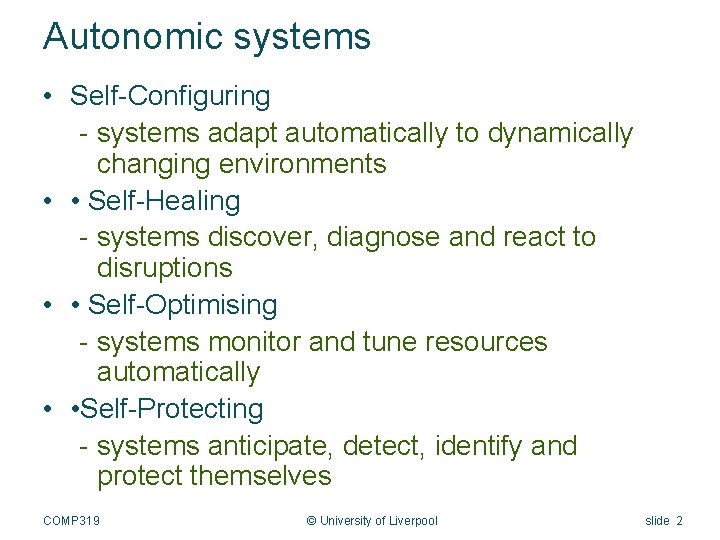
Autonomic systems • Self-Configuring - systems adapt automatically to dynamically changing environments • • Self-Healing - systems discover, diagnose and react to disruptions • • Self-Optimising - systems monitor and tune resources automatically • • Self-Protecting - systems anticipate, detect, identify and protect themselves COMP 319 © University of Liverpool slide 2
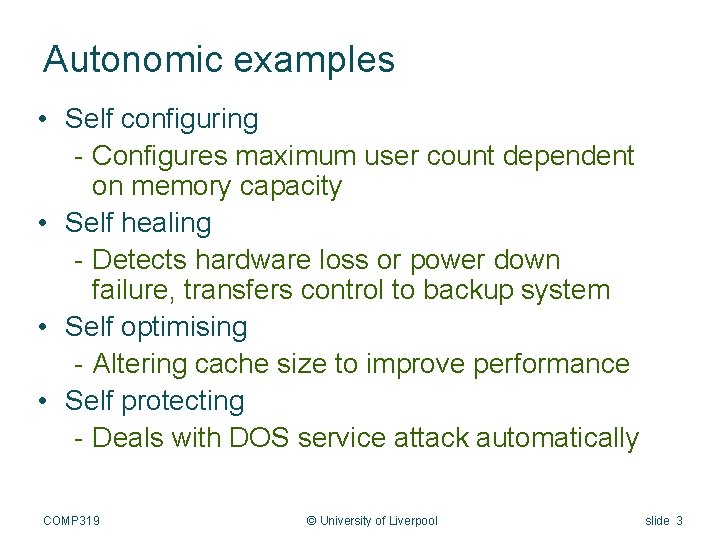
Autonomic examples • Self configuring - Configures maximum user count dependent on memory capacity • Self healing - Detects hardware loss or power down failure, transfers control to backup system • Self optimising - Altering cache size to improve performance • Self protecting - Deals with DOS service attack automatically COMP 319 © University of Liverpool slide 3
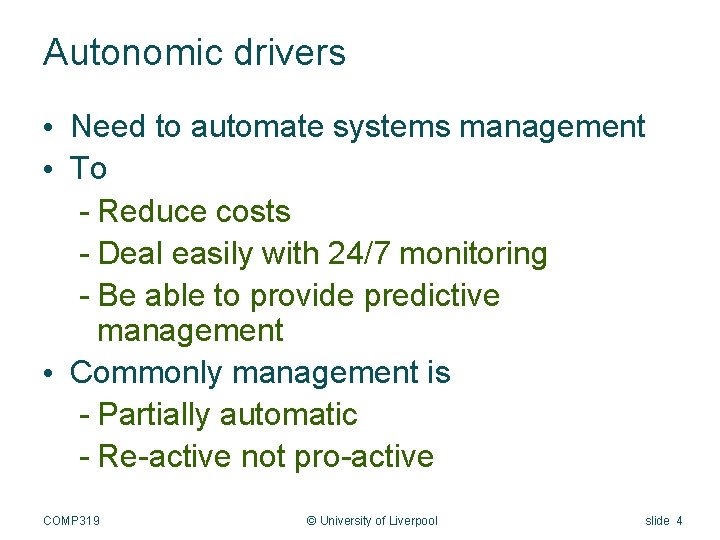
Autonomic drivers • Need to automate systems management • To - Reduce costs - Deal easily with 24/7 monitoring - Be able to provide predictive management • Commonly management is - Partially automatic - Re-active not pro-active COMP 319 © University of Liverpool slide 4
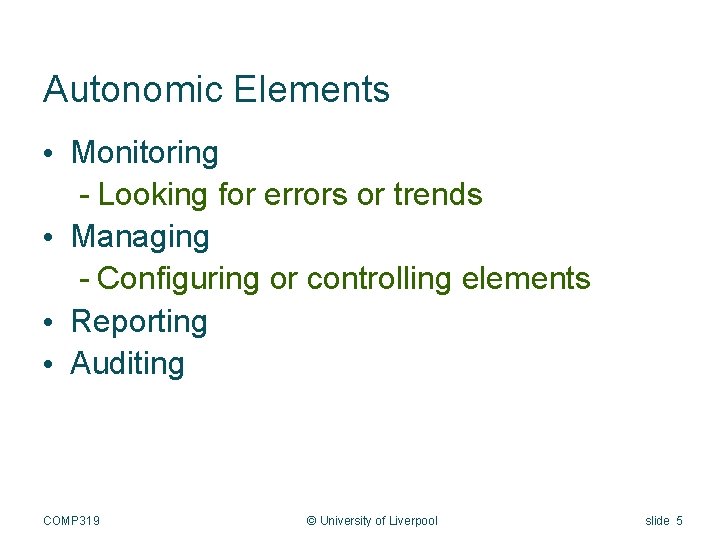
Autonomic Elements • Monitoring - Looking for errors or trends • Managing - Configuring or controlling elements • Reporting • Auditing COMP 319 © University of Liverpool slide 5
Feedback under error COMP 319 © University of Liverpool slide 6
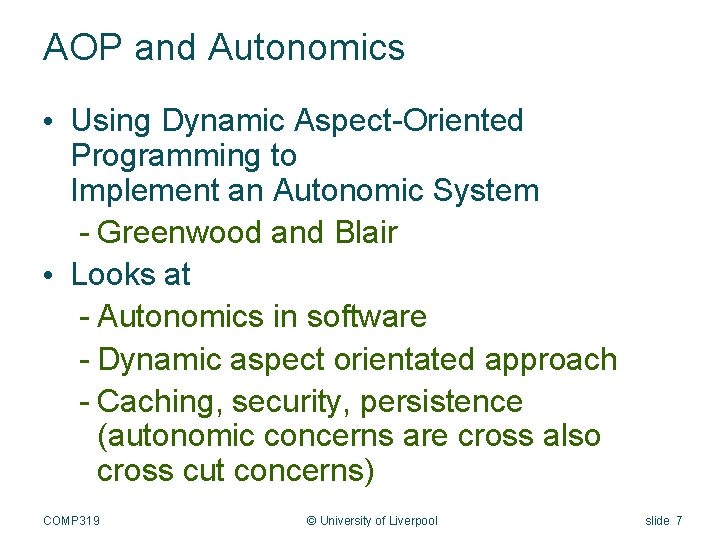
AOP and Autonomics • Using Dynamic Aspect-Oriented Programming to Implement an Autonomic System - Greenwood and Blair • Looks at - Autonomics in software - Dynamic aspect orientated approach - Caching, security, persistence (autonomic concerns are cross also cross cut concerns) COMP 319 © University of Liverpool slide 7