
ASOS Automated Surface Observing System All models start
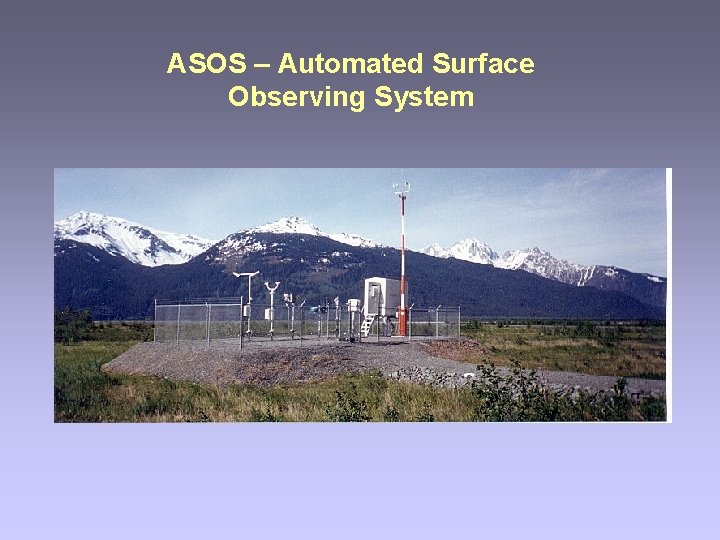
ASOS – Automated Surface Observing System
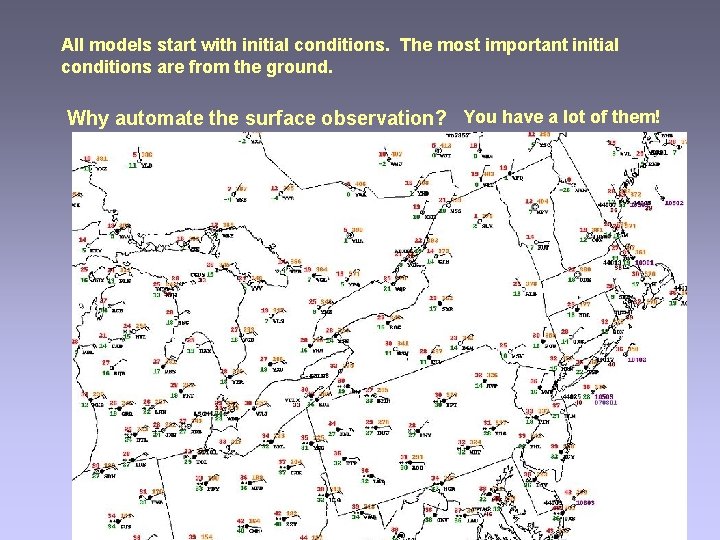
All models start with initial conditions. The most important initial conditions are from the ground. Why automate the surface observation? You have a lot of them!
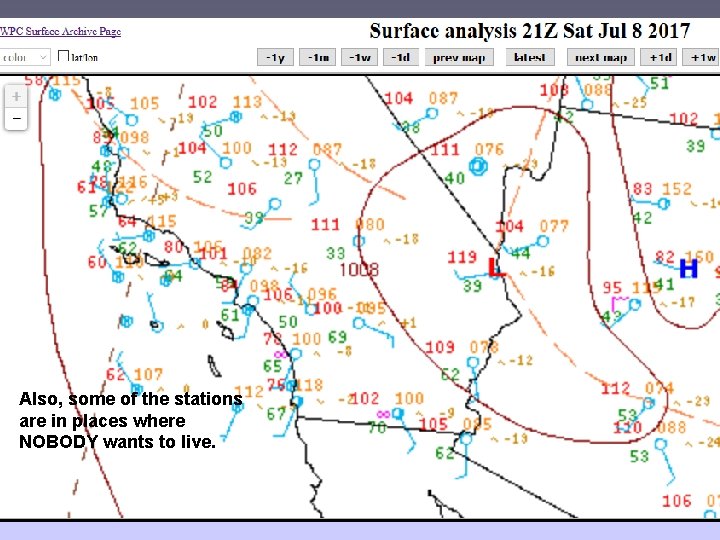
Also, some of the stations are in places where NOBODY wants to live.
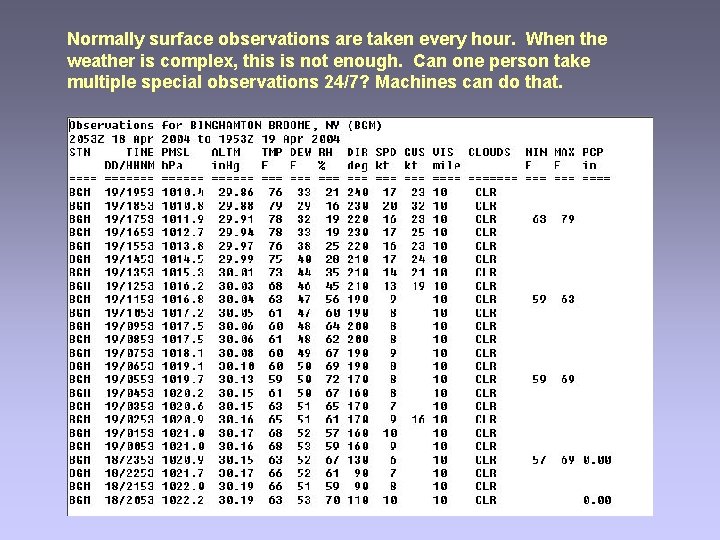
Normally surface observations are taken every hour. When the weather is complex, this is not enough. Can one person take multiple special observations 24/7? Machines can do that.

Automation also means fewer paychecks for the Federal Government. Also, no health insurance payments. No sick days. No unions. No strikes. Machines work every day of the year. No holidays. No vacations. Does this mean fewer meteorologists are employed by the NWS? Not necessarily. It means your NWS job will be forecasting, not doing grunt work.
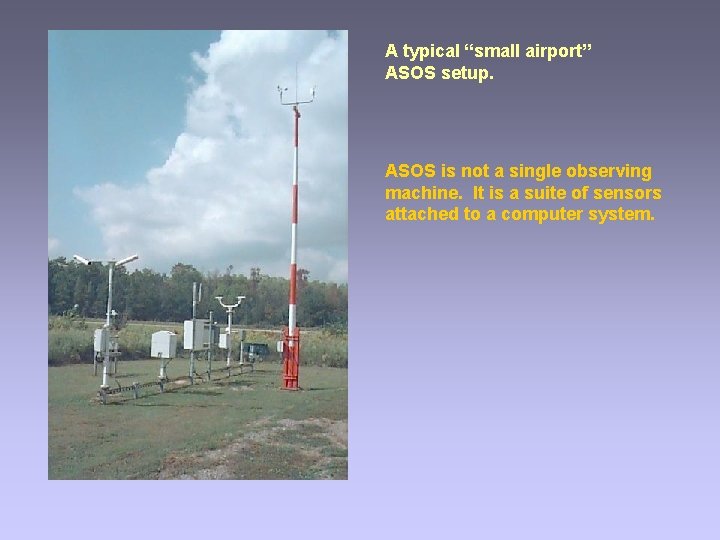
A typical “small airport” ASOS setup. ASOS is not a single observing machine. It is a suite of sensors attached to a computer system.

The sensors
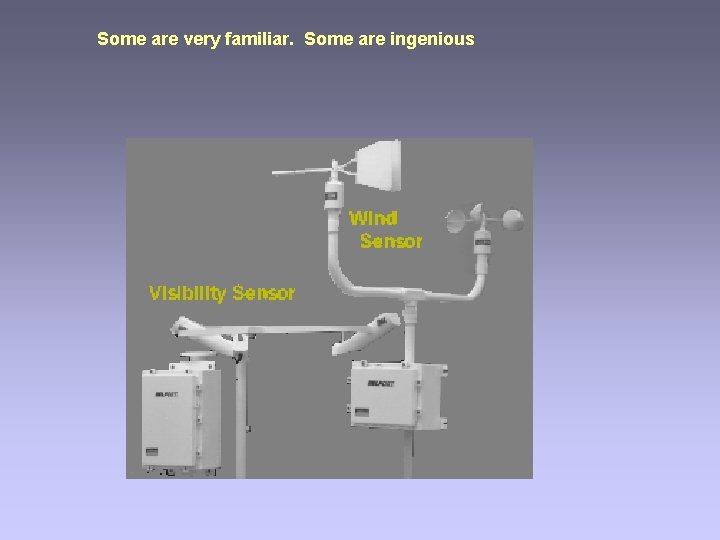
Some are very familiar. Some are ingenious
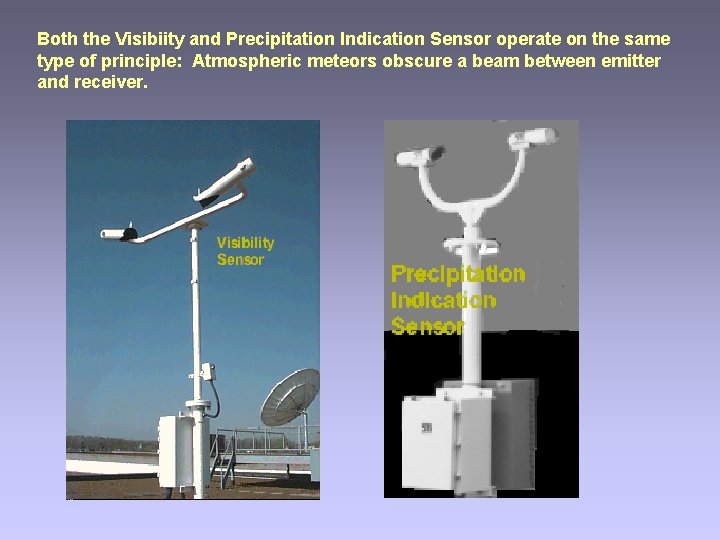
Both the Visibiity and Precipitation Indication Sensor operate on the same type of principle: Atmospheric meteors obscure a beam between emitter and receiver.
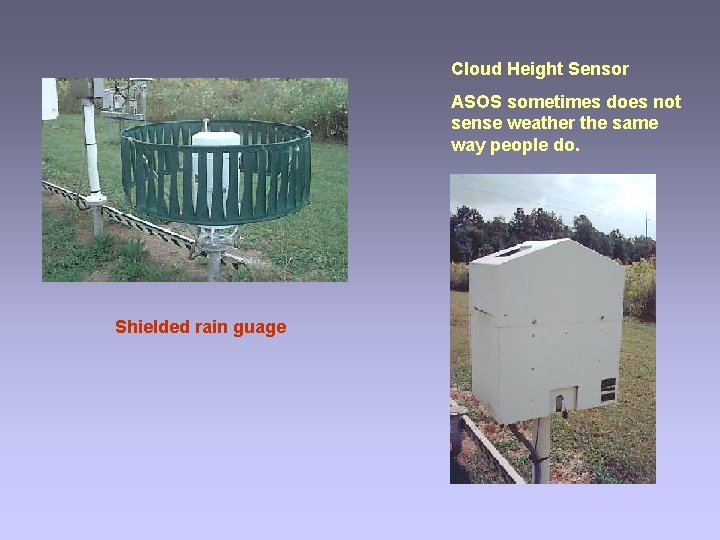
Cloud Height Sensor ASOS sometimes does not sense weather the same way people do. Shielded rain guage
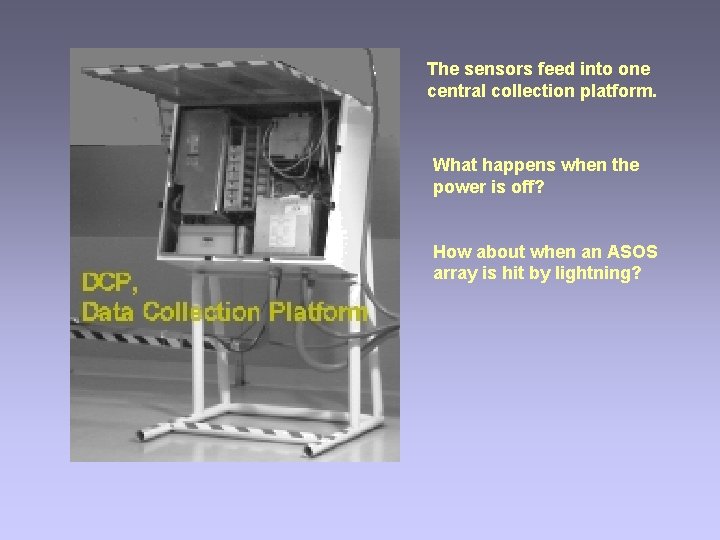
The sensors feed into one central collection platform. What happens when the power is off? How about when an ASOS array is hit by lightning?
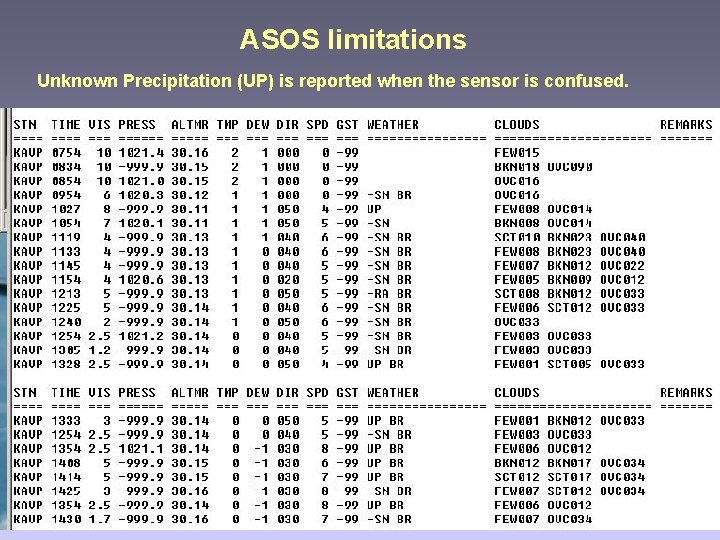
ASOS limitations Unknown Precipitation (UP) is reported when the sensor is confused.
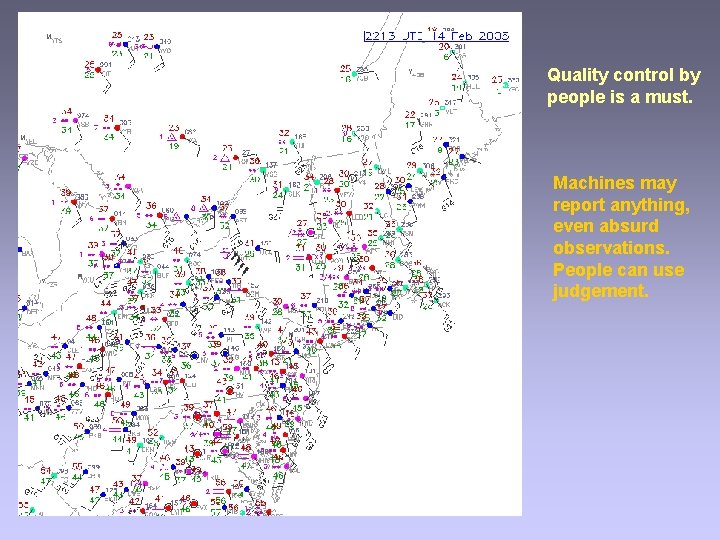
Quality control by people is a must. Machines may report anything, even absurd observations. People can use judgement.
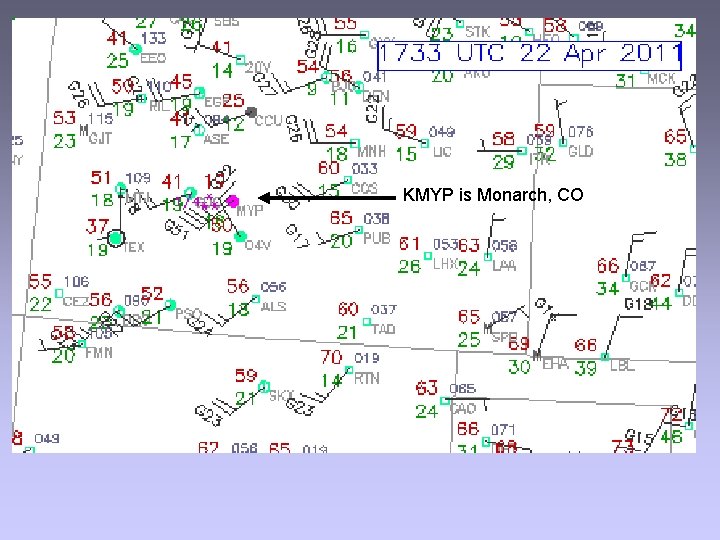
KMYP is Monarch, CO
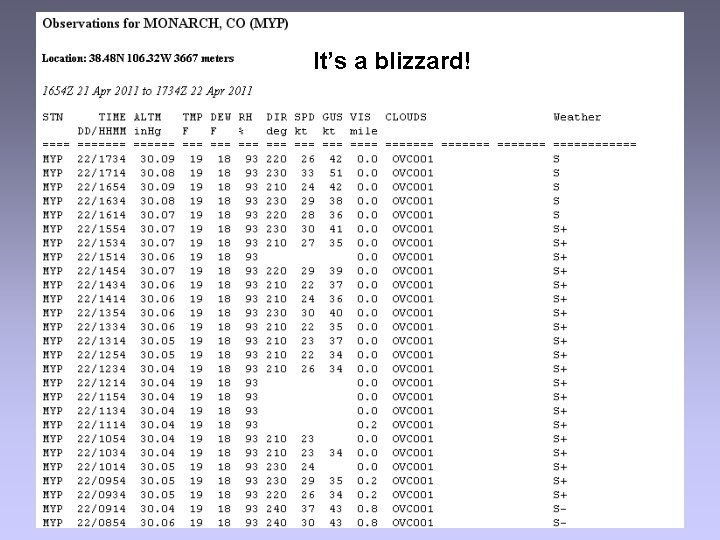
It’s a blizzard!
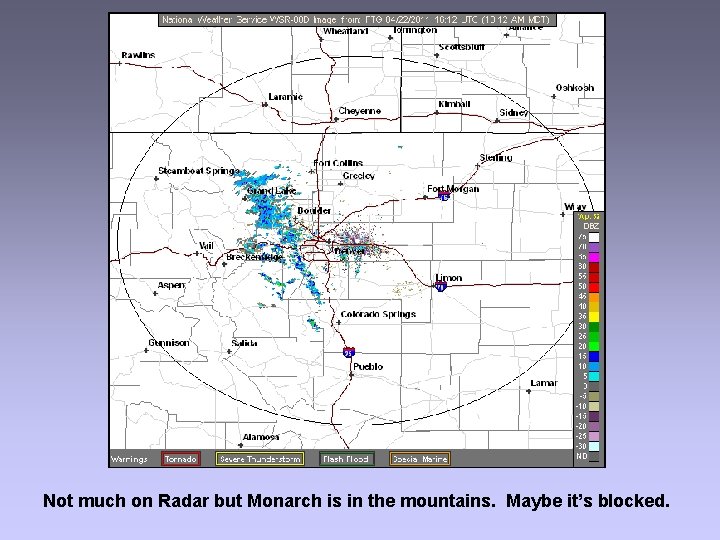
Not much on Radar but Monarch is in the mountains. Maybe it’s blocked.
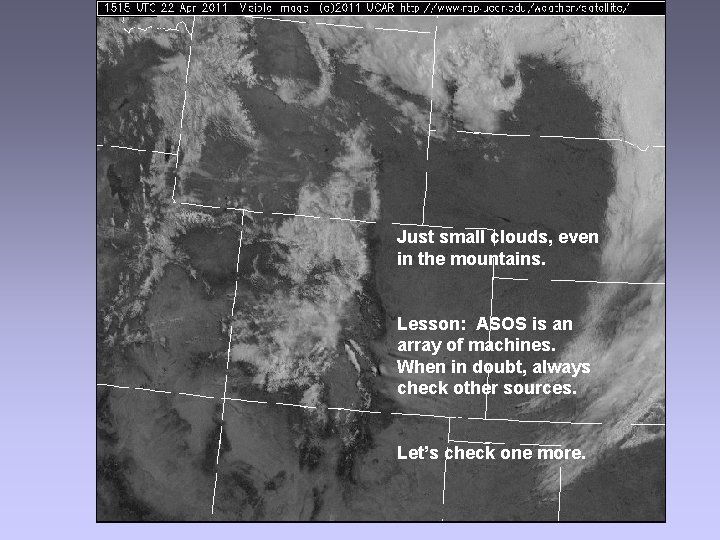
Just small clouds, even in the mountains. Lesson: ASOS is an array of machines. When in doubt, always check other sources. Let’s check one more.
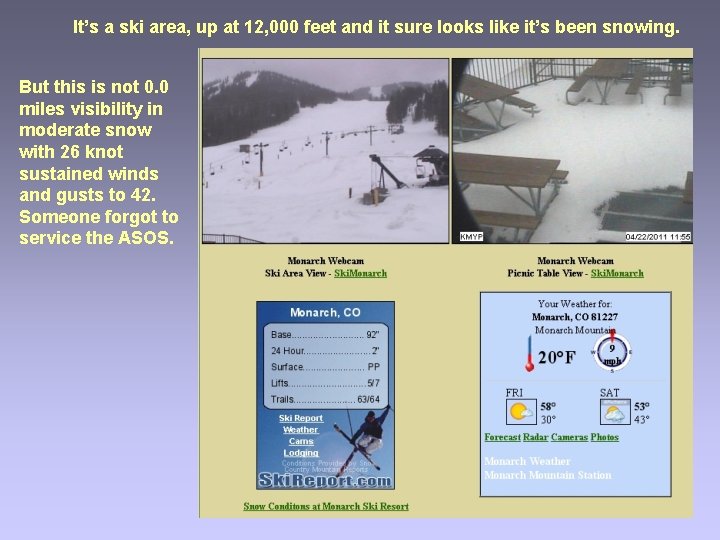
It’s a ski area, up at 12, 000 feet and it sure looks like it’s been snowing. But this is not 0. 0 miles visibility in moderate snow with 26 knot sustained winds and gusts to 42. Someone forgot to service the ASOS.
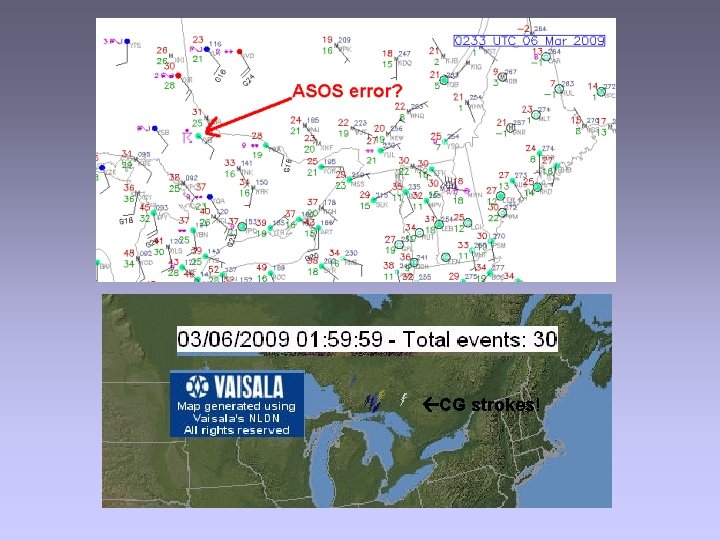
A thunderstorm at 31 F? Neighboring obs are freezing rain. Maybe somebody sent in the wrong code. What other data source could we check to CG strokes! verify a thunderstorm? (click)
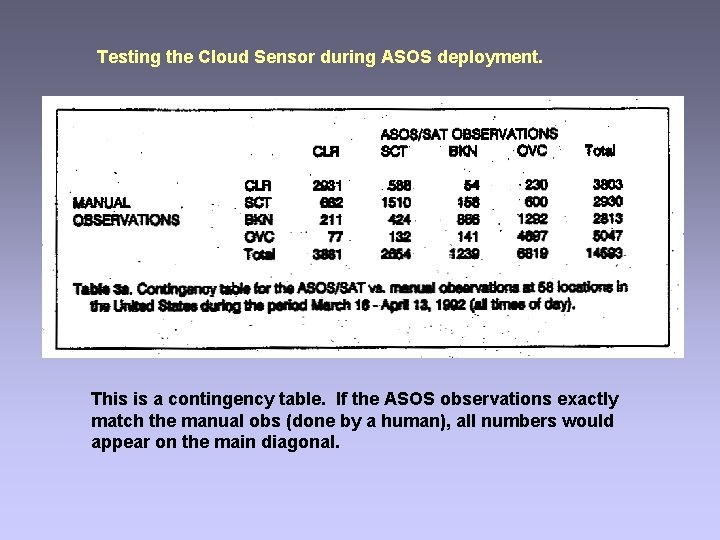
Testing the Cloud Sensor during ASOS deployment. This is a contingency table. If the ASOS observations exactly match the manual obs (done by a human), all numbers would appear on the main diagonal.
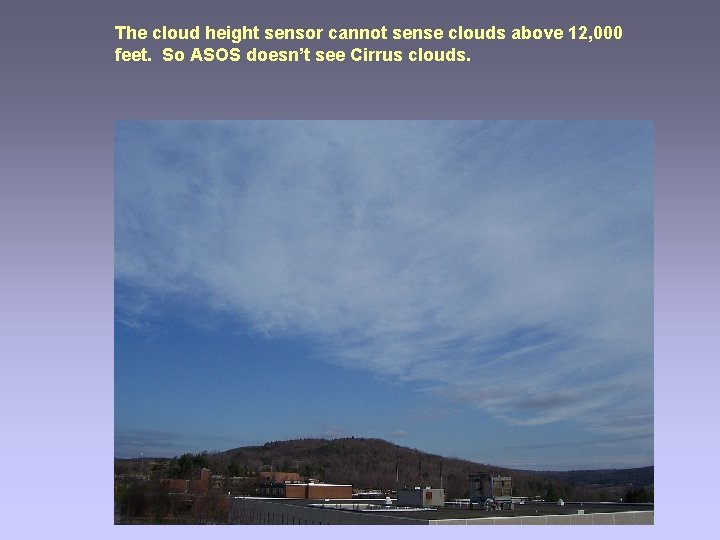
The cloud height sensor cannot sense clouds above 12, 000 feet. So ASOS doesn’t see Cirrus clouds.
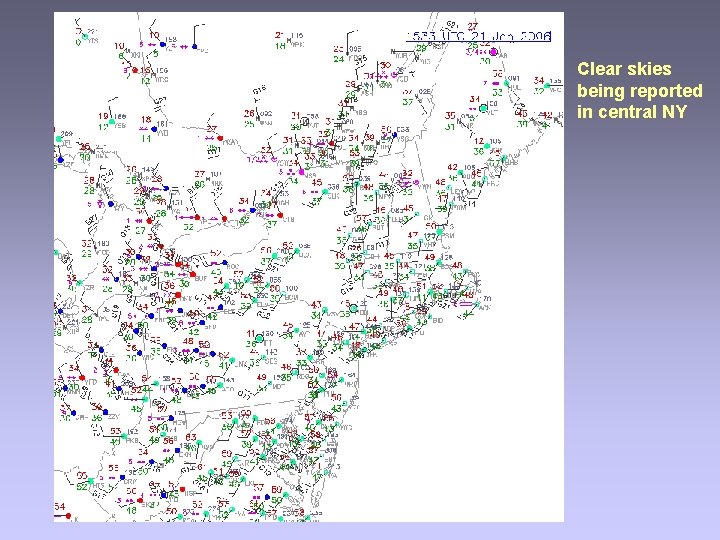
Clear skies being reported in central NY
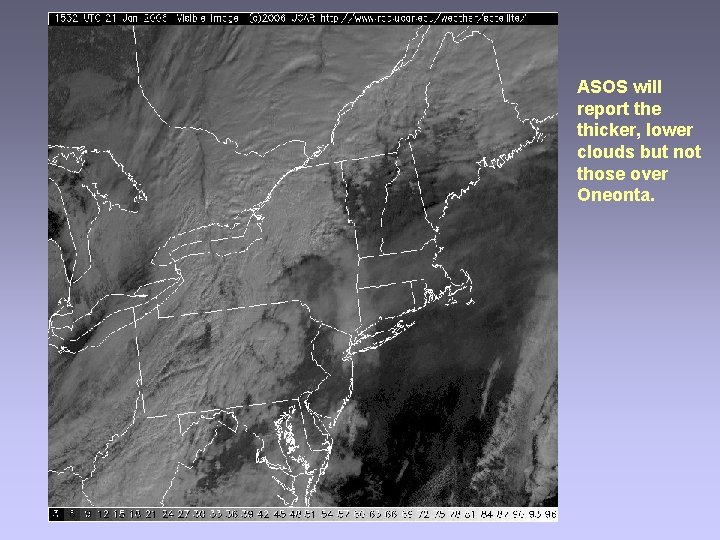
ASOS will report the thicker, lower clouds but not those over Oneonta.
Other problem observations Thunderstorms - the sensor is based on lightning detection. Tornadoes – will probably never be detectable by machines. Hail – hailpads could be a solution here. Mixed Precipitation – usually reported as UP Blowing snow, blowing dust Water equivalent of snow on the ground
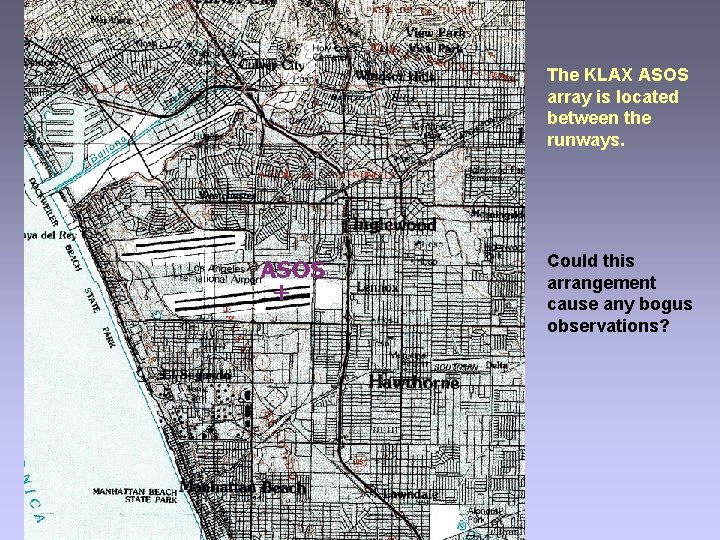
The KLAX ASOS array is located between the runways. Could this arrangement cause any bogus observations?
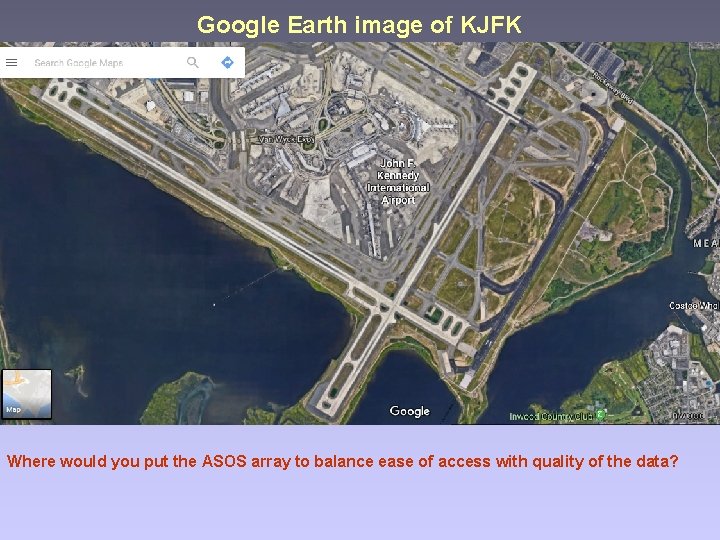
Google Earth image of KJFK Where would you put the ASOS array to balance ease of access with quality of the data?
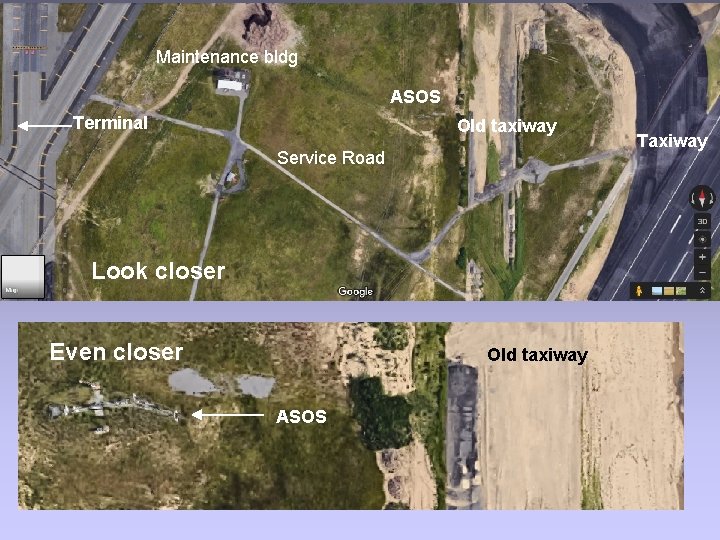
Maintenance bldg ASOS Terminal Old taxiway Service Road Look closer Even closer Old taxiway ASOS Taxiway
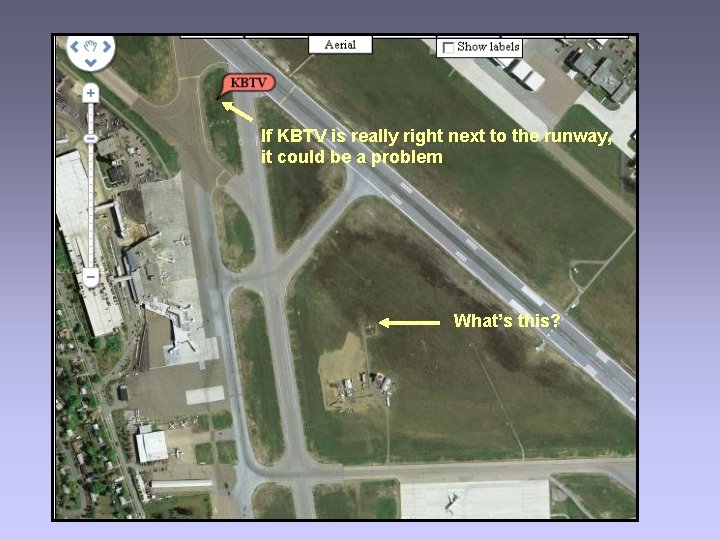
If KBTV is really right next to the runway, it could be a problem What’s this?
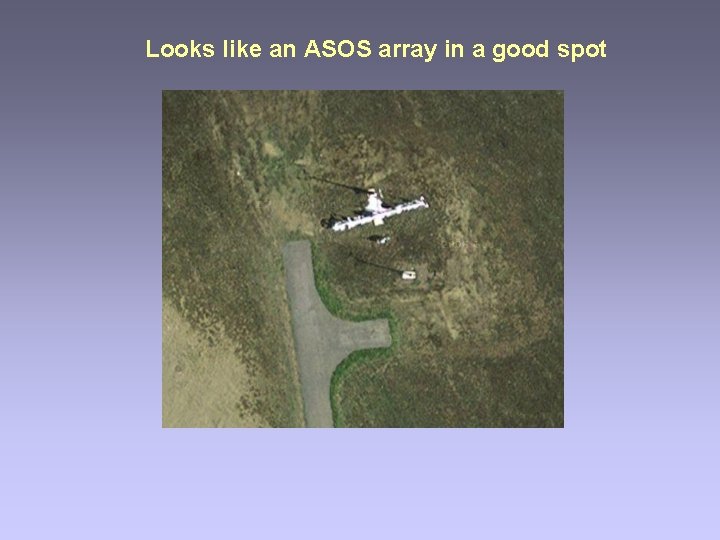
Looks like an ASOS array in a good spot
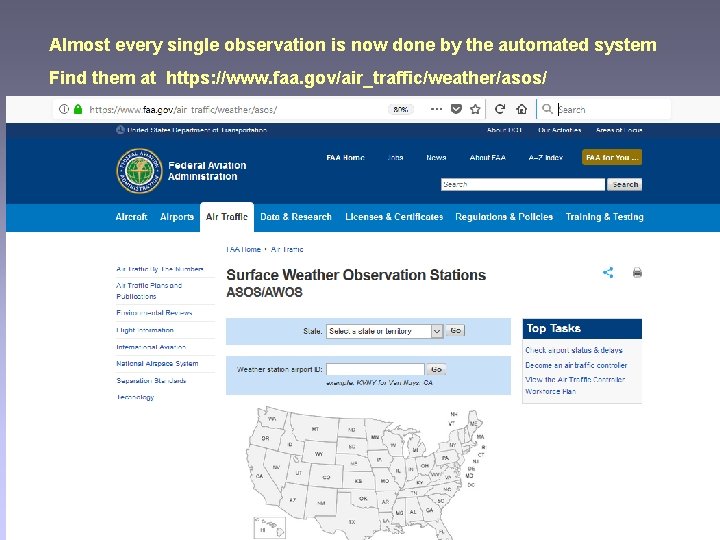
Almost every single observation is now done by the automated system Find them at https: //www. faa. gov/air_traffic/weather/asos/
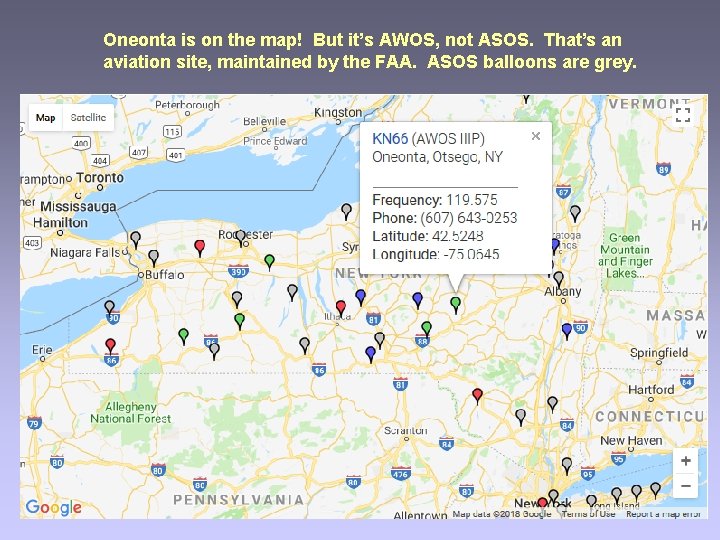
Oneonta is on the map! But it’s AWOS, not ASOS. That’s an aviation site, maintained by the FAA. ASOS balloons are grey.
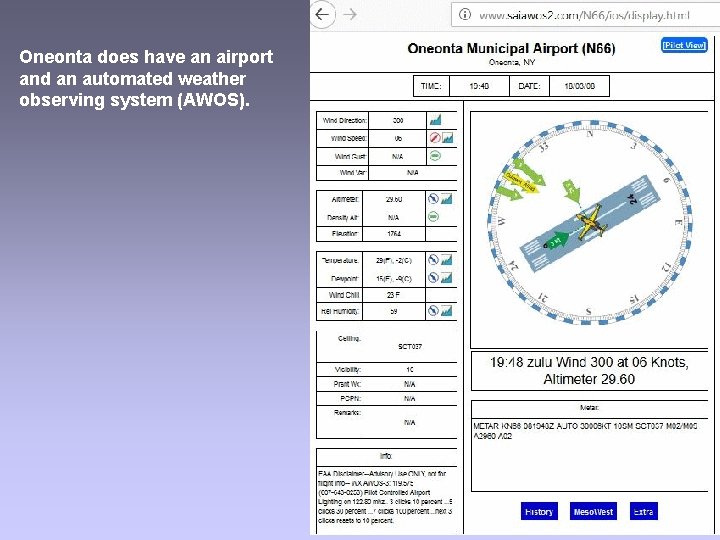
Oneonta does have an airport and an automated weather observing system (AWOS).
Summary ASOS is not perfect. It requires a person to double-check the observations. Also, the machines need to be located in accessible locations for maintenance. Will meteorologists ever be obsolete? NEVER! Meteorologists will be needed to adapt to new situations. Machines can’t do that. Meteorologists invent new sensors and ways to do observations.
- Slides: 33