
ASME A 17 Committee Structure ASME Committee Structure
- Slides: 21
ASME A 17 Committee Structure
ASME Committee Structure Topics • Committee Hierarchy • Membership • Balance of Interest
Committee Hierarchy
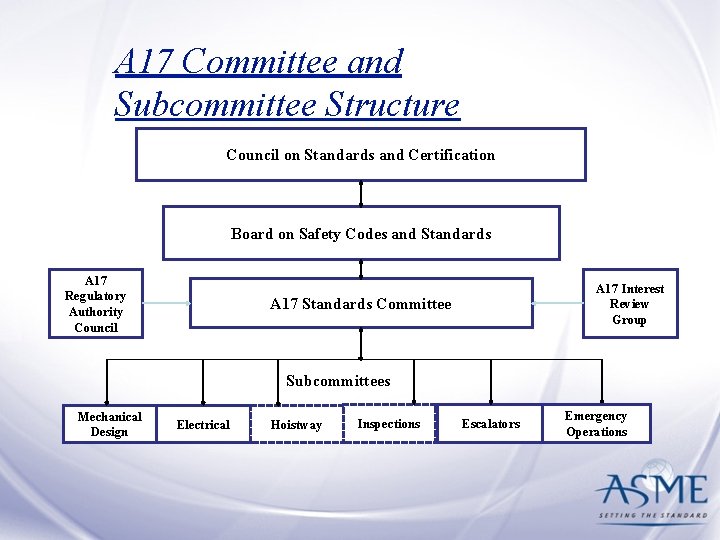
Committee Hierarchy Overview • ASME Committees have a hierarchal structure • Each committee has a supervisory group that oversees it all the way to the Council on Standards and Certification (CSC)
A 17 Committee and Subcommittee Structure Council on Standards and Certification Board on Safety Codes and Standards A 17 Regulatory Authority Council A 17 Interest Review Group A 17 Standards Committee Subcommittees Mechanical Design Electrical Hoistway Inspections Escalators Emergency Operations
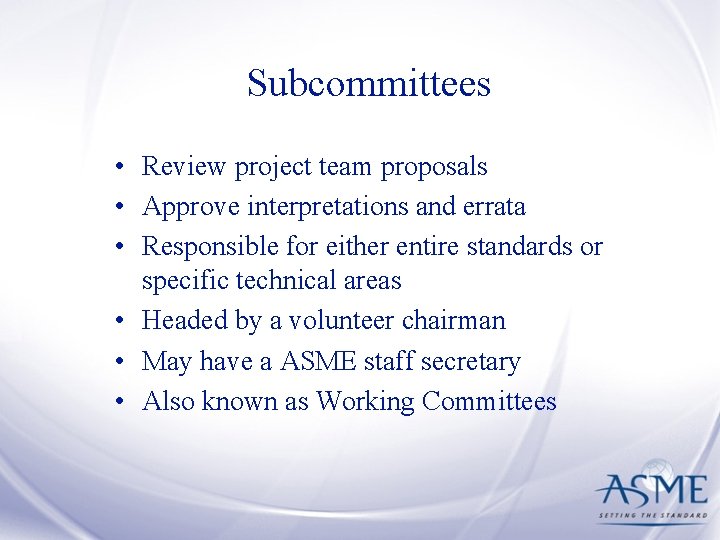
Subcommittees • Review project team proposals • Approve interpretations and errata • Responsible for either entire standards or specific technical areas • Headed by a volunteer chairman • May have a ASME staff secretary • Also known as Working Committees
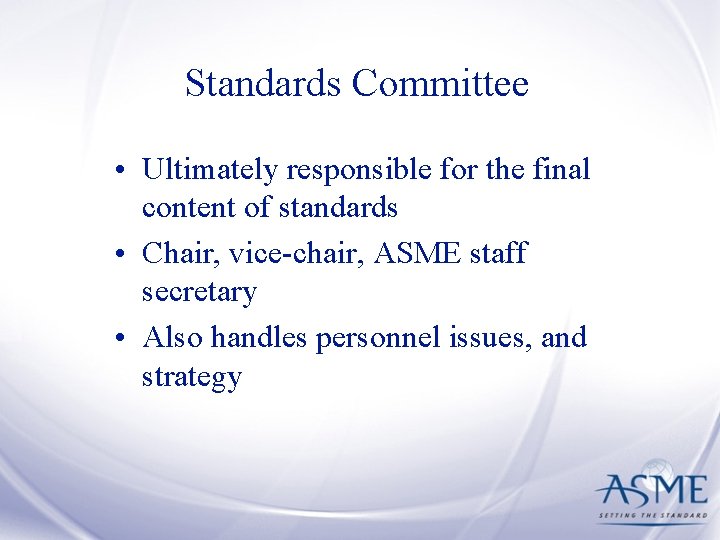
Standards Committee • Ultimately responsible for the final content of standards • Chair, vice-chair, ASME staff secretary • Also handles personnel issues, and strategy
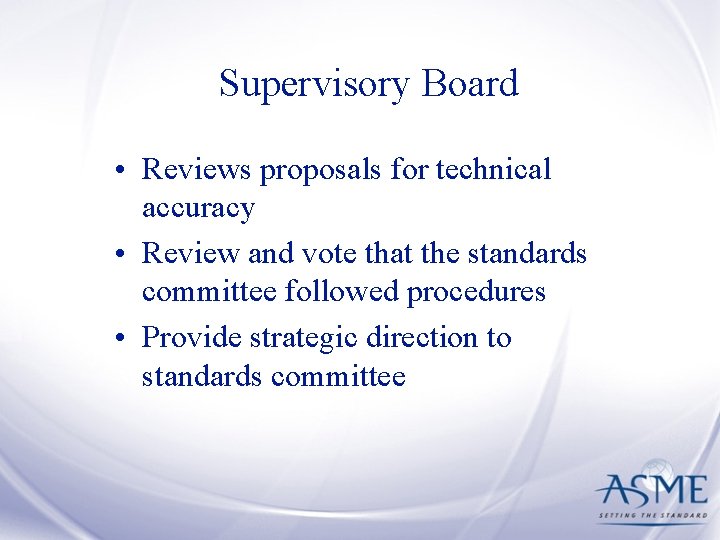
Supervisory Board • Reviews proposals for technical accuracy • Review and vote that the standards committee followed procedures • Provide strategic direction to standards committee
Council on Standards and Certification • Supervisory Boards report to the Council on Standards and Certification (CSC) • Sets the strategic objectives for codes and standards activities
Membership
Membership • Many ways to participate on ASME Committees • All volunteers have full access to C&S Connect • Are listed in the standard and get complimentary PDF copies of the standard they develop • Exception: IRG members do not get complimentary copies
Types of Membership • • • Member Alternate Contributing Member Honorary Member Delegate
Requirements for Membership • Working Committee applicant to attend must attend at least one meeting prior to approval. Under special circumstance this requirement may be waived by Working Committee Chair. • For A 17 Standards Committee must be a “member” of Working Committee for at least one year to be eligible to apply. 13
Member • • Most common form of membership Full voting privileges Must attend meetings Cannot have more than 2 members from 1 company/organization on A 17 Standards Committee
Alternate • Substitutes for an existing committee member at meetings • Votes on ballots – Counts if the member does not vote – If the member votes, the alternate’s vote becomes a comment
Delegate • A technically qualified representative of a group located outside the U. S. and Canada • Must be fluent in English • Votes on certain ballots
Contributing Member • Provides comments on ballots • Meeting attendance not mandatory – Does not count toward quorum • This membership category only applies to Subcommittees
Honorary Member • Minimum 10 years of service on the committee • 90% approval required for appointment • Provides comments on ballots • Meeting attendance not mandatory – Does not count towards quorum • No term limit
Balance of Interest
Balance of Interest • No single category can control the direction of the standards development process • Applies to A 17 Standards Committee • A 17 develops safety standards therefore • Balance is no more than 33%
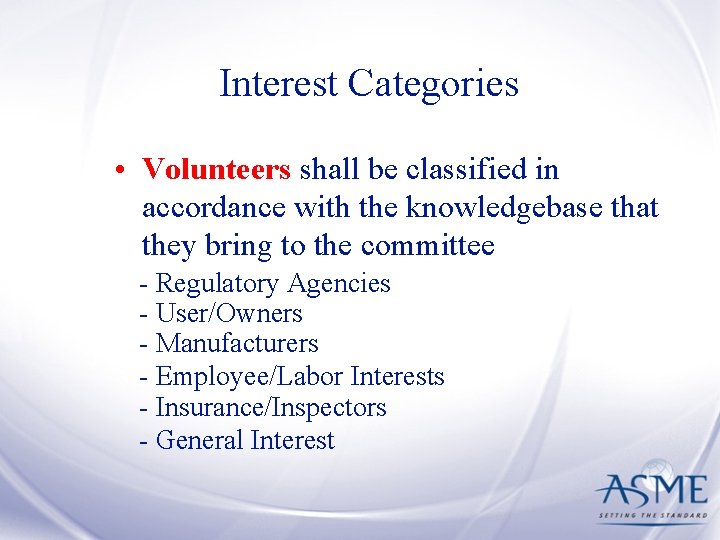
Interest Categories • Volunteers shall be classified in accordance with the knowledgebase that they bring to the committee - Regulatory Agencies - User/Owners - Manufacturers - Employee/Labor Interests - Insurance/Inspectors - General Interest