
ASMA 17022016 La SEP et les effets secondaires
- Slides: 54
ASMA – 17/02/2016 La SEP et les effets secondaires des nouveaux traitements justifient-ils une incapacité de travail ? 1ère partie Dominique DIVE CLINICAL NEUROLOGY CHU – LIEGE
DISCLOSURES • • • No personal disclosures or financial interests Academic grant from Merck-Serono for MS-nurse activity Speaker fees – hospital funding • • • Bayer-Schering Merck-Serono Novartis Sanofi-Genzyme Teva Pharmaceuticals • • • Merck-Serono Bayer-Schering Novartis Teva-Pharmaceuticals Sanofi-Genzyme • • Bayer-Schering Merck-Serono Biogen-Idec UCB-Pharma Novartis Teva Pharmaceuticals Sanofi-Genzyme Consultant for Advisory Boards – hospital funding Congress participation sponsoring
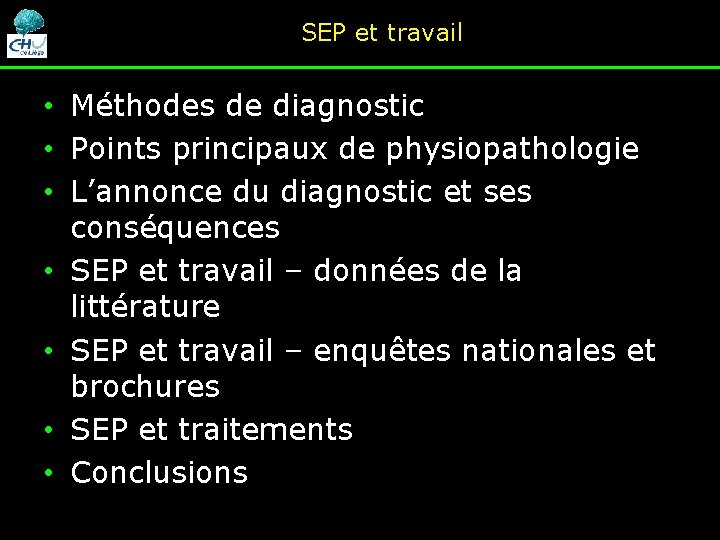
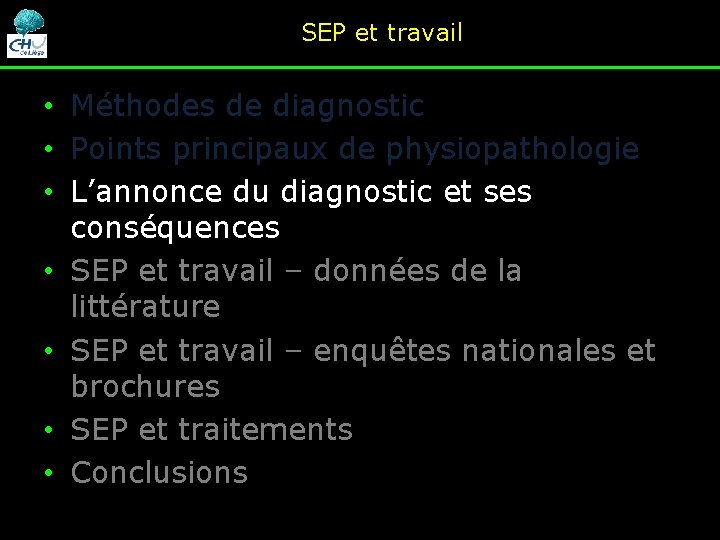
SEP et travail • Méthodes de diagnostic • Points principaux de physiopathologie • L’annonce du diagnostic et ses conséquences • SEP et travail – données de la littérature • SEP et travail – enquêtes nationales et brochures • SEP et traitements • Conclusions
SEP et travail • Méthodes de diagnostic • Points principaux de physiopathologie • L’annonce du diagnostic et ses conséquences • SEP et travail – données de la littérature • SEP et travail – enquêtes nationales et brochures • SEP et traitements • Conclusions
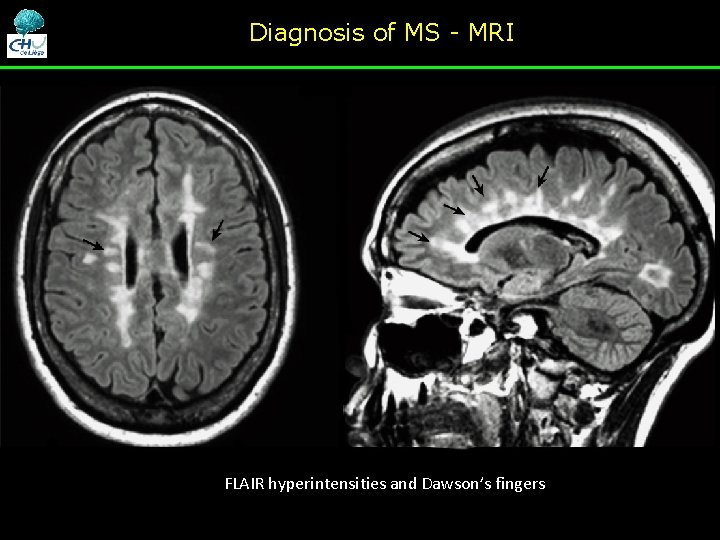
Diagnosis of MS - MRI FLAIR hyperintensities and Dawson’s fingers
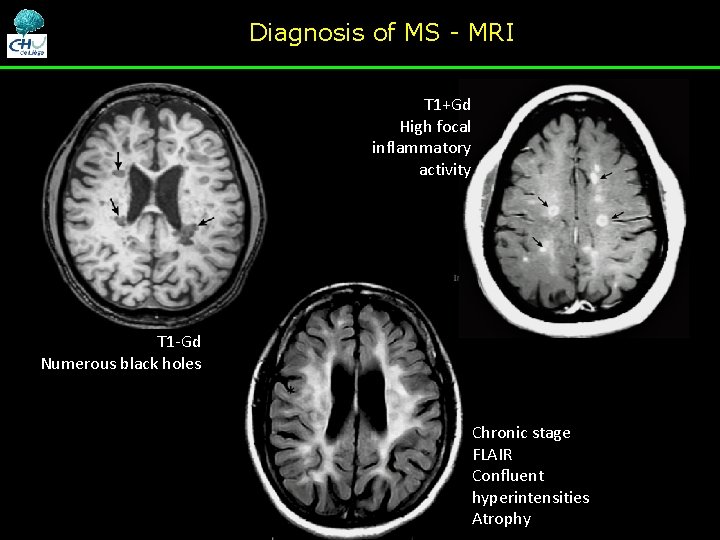
Diagnosis of MS - MRI T 1+Gd High focal inflammatory activity T 1 -Gd Numerous black holes Chronic stage FLAIR Confluent hyperintensities Atrophy
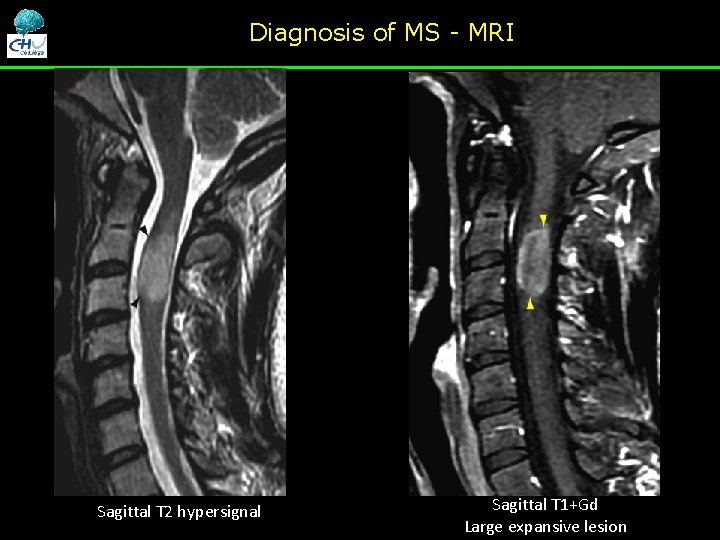
Diagnosis of MS - MRI Sagittal T 2 hypersignal Sagittal T 1+Gd Large expansive lesion
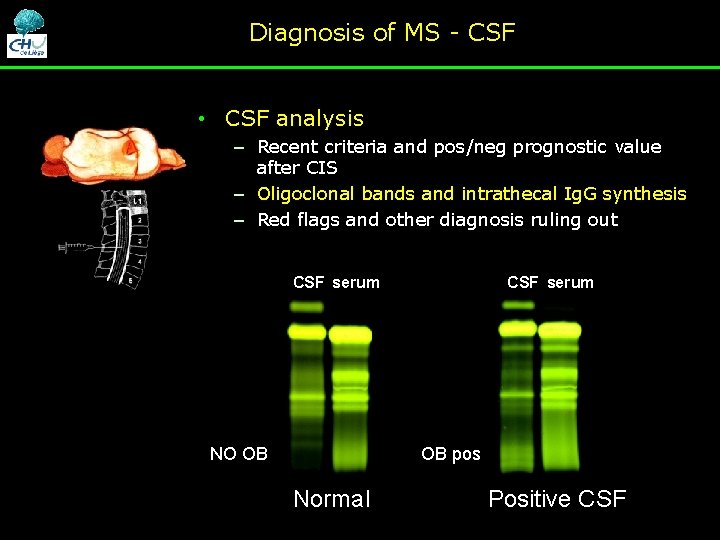
Diagnosis of MS - CSF • CSF analysis – Recent criteria and pos/neg prognostic value after CIS – Oligoclonal bands and intrathecal Ig. G synthesis – Red flags and other diagnosis ruling out CSF serum NO OB CSF serum OB pos Normal Positive CSF
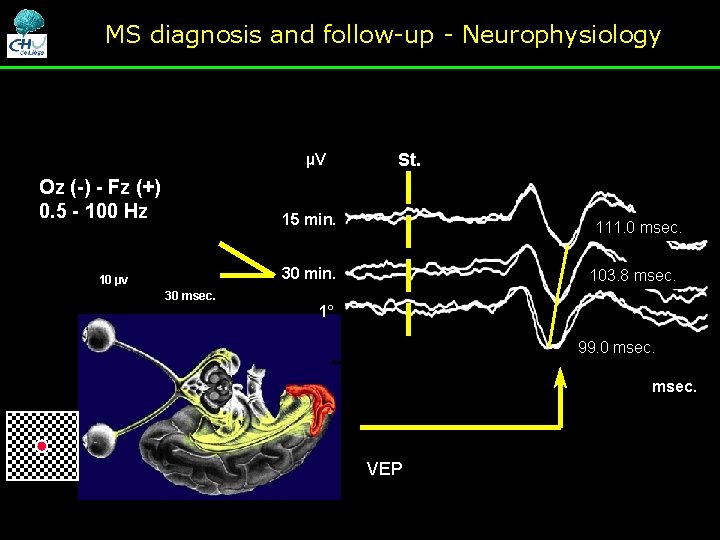
MS diagnosis and follow-up - Neurophysiology µV Oz (-) - Fz (+) 0. 5 - 100 Hz St. 15 min. 111. 0 msec. 30 min. 10 µv 30 msec. 103. 8 msec. 1° 99. 0 msec. VEP
SEP et travail • Méthodes de diagnostic • Points principaux de physiopathologie • L’annonce du diagnostic et ses conséquences • SEP et travail – données de la littérature • SEP et travail – enquêtes nationales et brochures • SEP et traitements • Conclusions
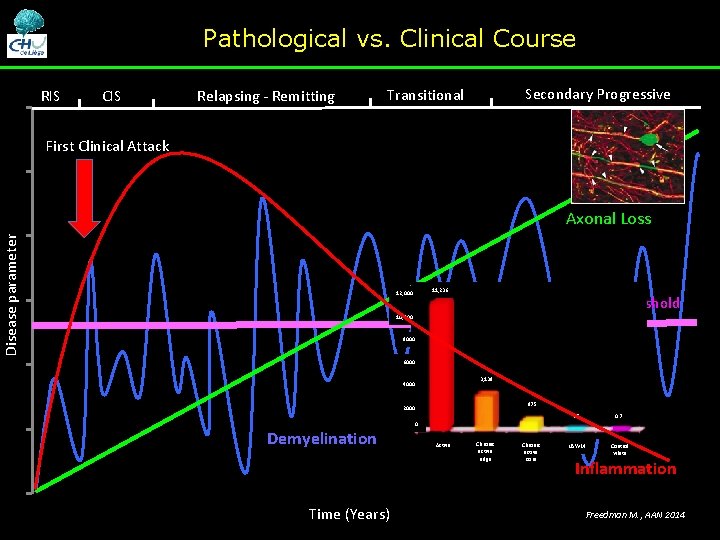
Pathological vs. Clinical Course RIS CIS Relapsing - Remitting Secondary Progressive Transitional First Clinical Attack Disease parameter Axonal Loss 11, 236 12, 000 Clinical Threshold 10, 000 8000 6000 3, 138 4000 875 2000 Demyelination Time (Years) 17 0. 7 NAWM Control white 0 Active Chronic active edge Chronic active core Inflammation Freedman M. , AAN 2014
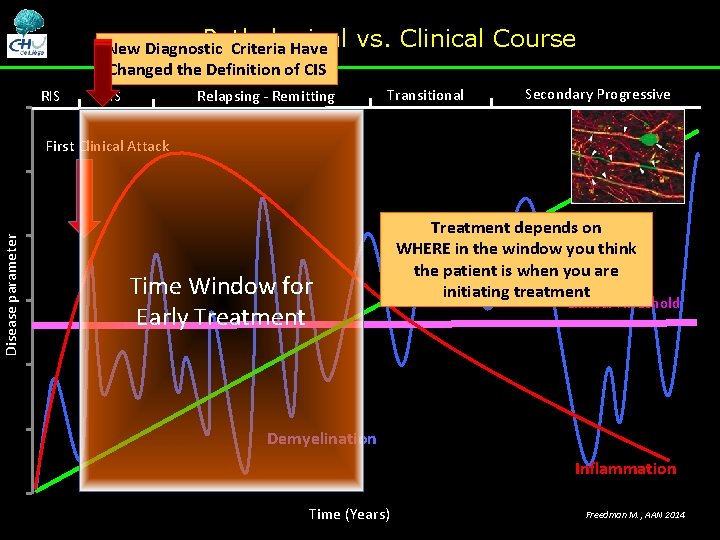
Pathological New Diagnostic Criteria Have Changed the Definition of CIS RIS vs. Clinical Course Relapsing - Remitting CIS Transitional Secondary Progressive Disease parameter First Clinical Attack Time Window for Early Treatment Axonal Treatment depends on Loss WHERE in the window you think the patient is when you are initiating treatment Clinical Threshold Demyelination Inflammation Time (Years) Freedman M. , AAN 2014
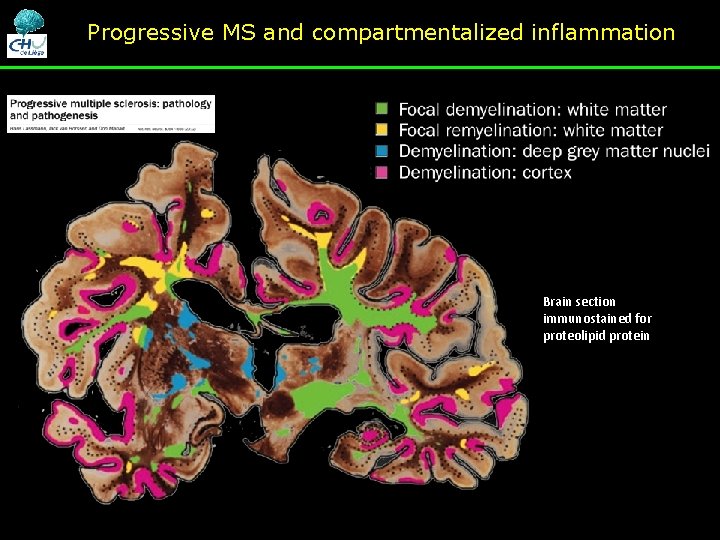
Progressive MS and compartmentalized inflammation Brain section immunostained for proteolipid protein
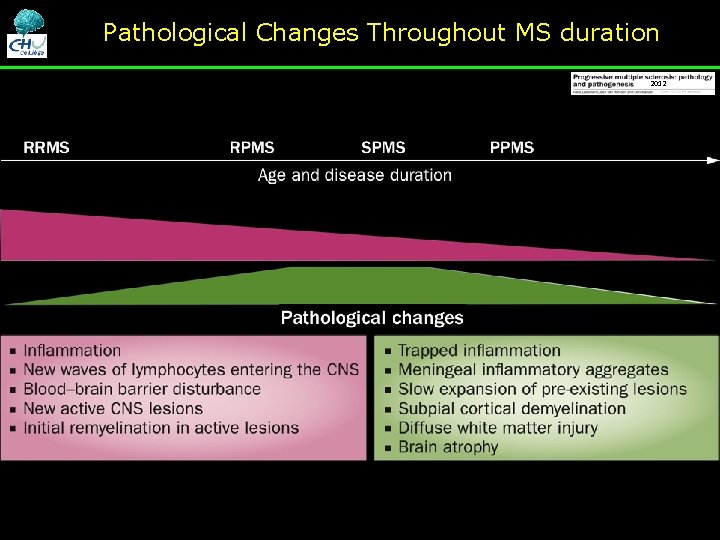
Pathological Changes Throughout MS duration 2012
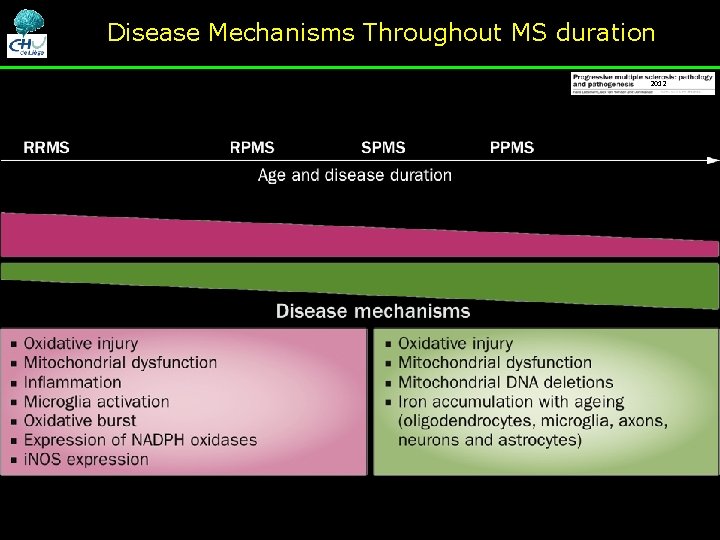
Disease Mechanisms Throughout MS duration 2012
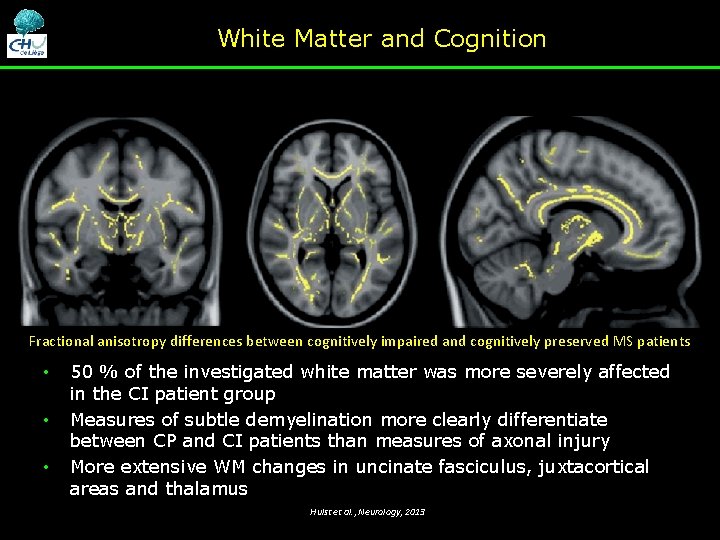
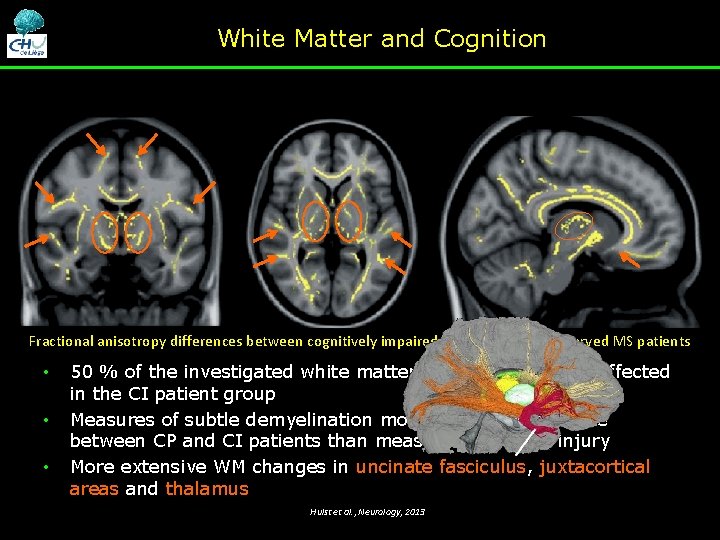
White Matter and Cognition Fractional anisotropy differences between cognitively impaired and cognitively preserved MS patients • • • 50 % of the investigated white matter was more severely affected in the CI patient group Measures of subtle demyelination more clearly differentiate between CP and CI patients than measures of axonal injury More extensive WM changes in uncinate fasciculus, juxtacortical areas and thalamus Hulst et al. , Neurology, 2013
White Matter and Cognition Fractional anisotropy differences between cognitively impaired and cognitively preserved MS patients • • • 50 % of the investigated white matter was more severely affected in the CI patient group Measures of subtle demyelination more clearly differentiate between CP and CI patients than measures of axonal injury More extensive WM changes in uncinate fasciculus, juxtacortical areas and thalamus Hulst et al. , Neurology, 2013
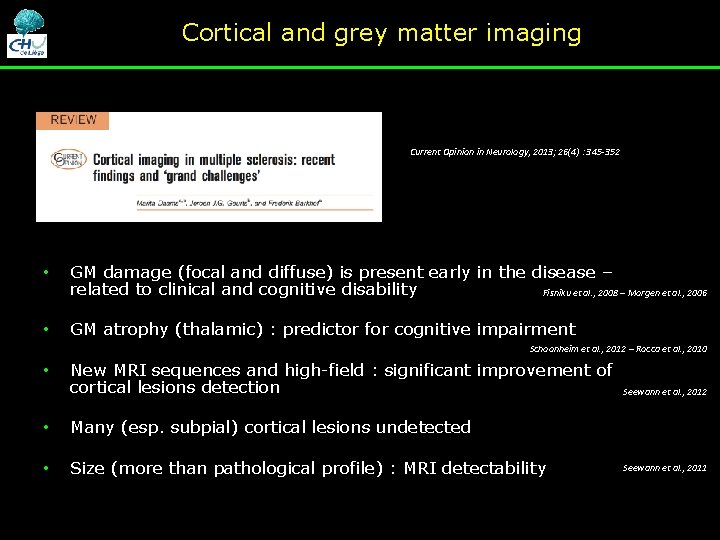
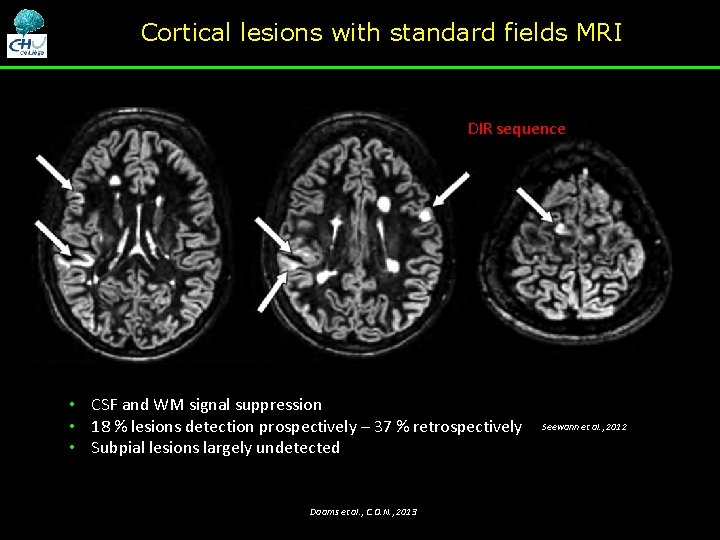
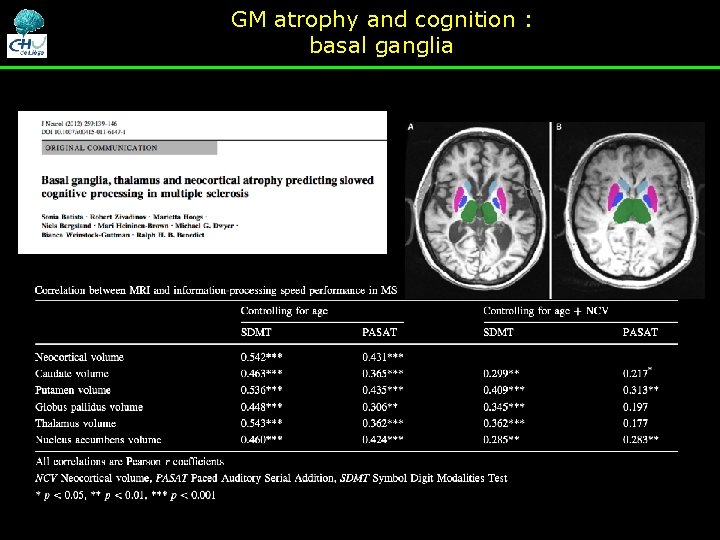
Cortical and grey matter imaging Current Opinion in Neurology, 2013; 26(4) : 345 -352 • GM damage (focal and diffuse) is present early in the disease – related to clinical and cognitive disability Fisniku et al. , 2008 – Morgen et al. , 2006 • GM atrophy (thalamic) : predictor for cognitive impairment Schoonheim et al. , 2012 – Rocca et al. , 2010 • New MRI sequences and high-field : significant improvement of cortical lesions detection • Many (esp. subpial) cortical lesions undetected • Size (more than pathological profile) : MRI detectability Seewann et al. , 2012 Seewann et al. , 2011
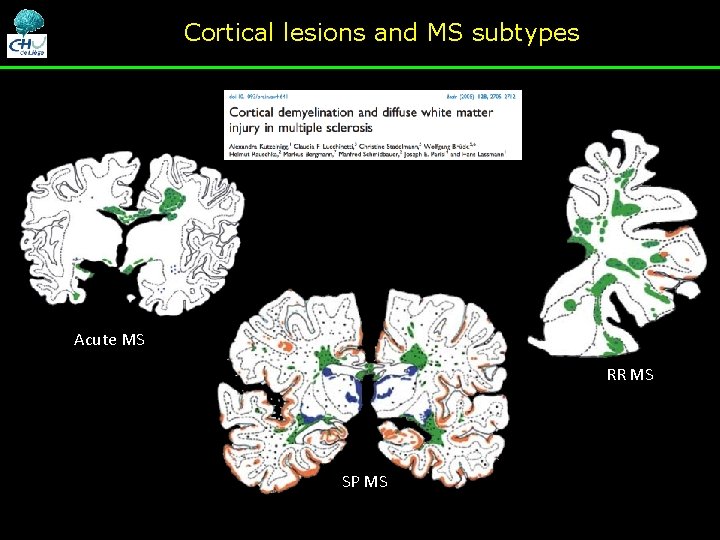
Cortical lesions and MS subtypes Acute MS RR MS SP MS
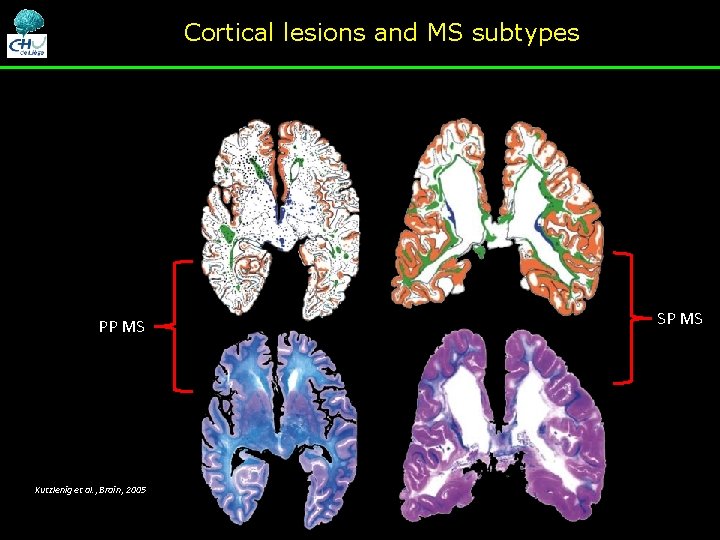
Cortical lesions and MS subtypes PP MS Kutzlenig et al. , Brain, 2005 SP MS
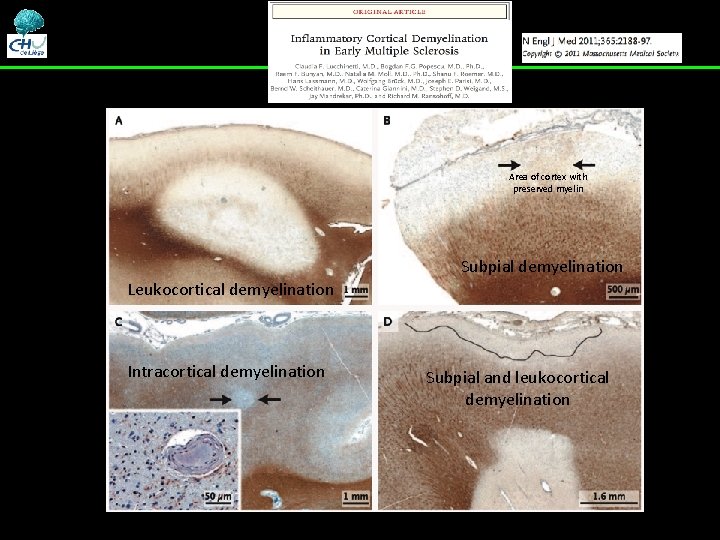
Area of cortex with preserved myelin Subpial demyelination Leukocortical demyelination Intracortical demyelination Subpial and leukocortical demyelination
Cortical lesions with standard fields MRI DIR sequence • CSF and WM signal suppression • 18 % lesions detection prospectively – 37 % retrospectively • Subpial lesions largely undetected Daams et al. , C. O. N. , 2013 Seewann et al. , 2012
GM atrophy and cognition : basal ganglia
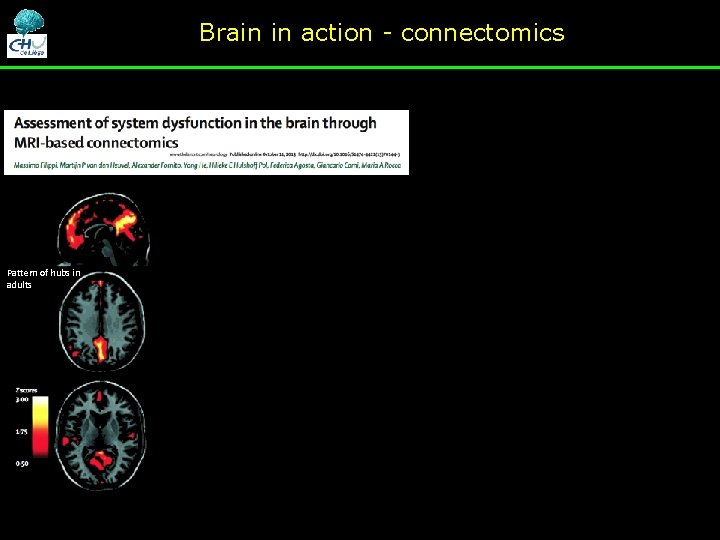
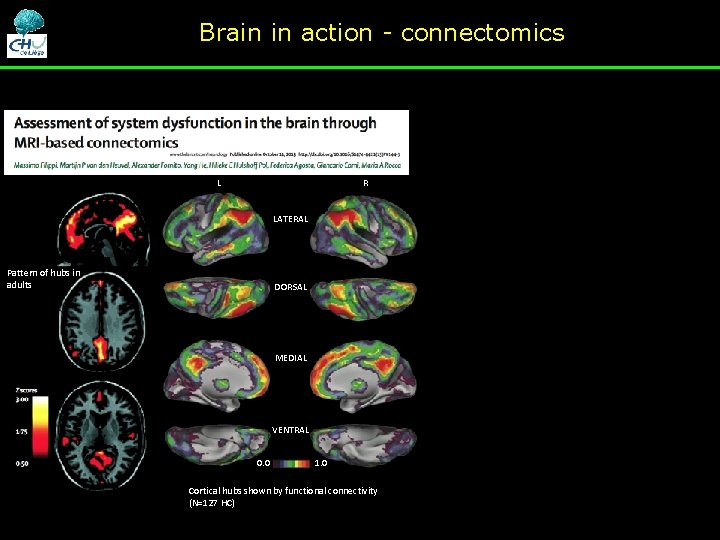
Brain in action - connectomics Pattern of hubs in adults
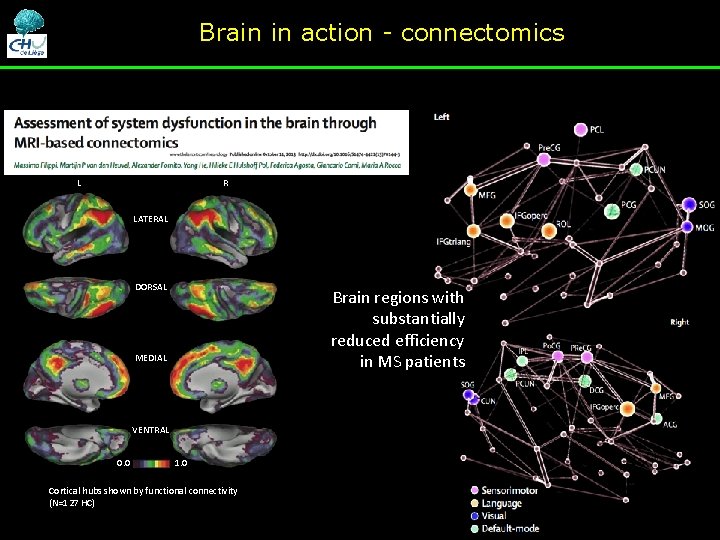
Brain in action - connectomics L R LATERAL Pattern of hubs in adults DORSAL MEDIAL VENTRAL 0. 0 1. 0 Cortical hubs shown by functional connectivity (N=127 HC)
Brain in action - connectomics L R LATERAL DORSAL Brain regions with substantially reduced efficiency in MS patients MEDIAL VENTRAL 0. 0 1. 0 Cortical hubs shown by functional connectivity (N=127 HC)
SEP et travail • Méthodes de diagnostic • Points principaux de physiopathologie • L’annonce du diagnostic et ses conséquences • SEP et travail – données de la littérature • SEP et travail – enquêtes nationales et brochures • SEP et traitements • Conclusions
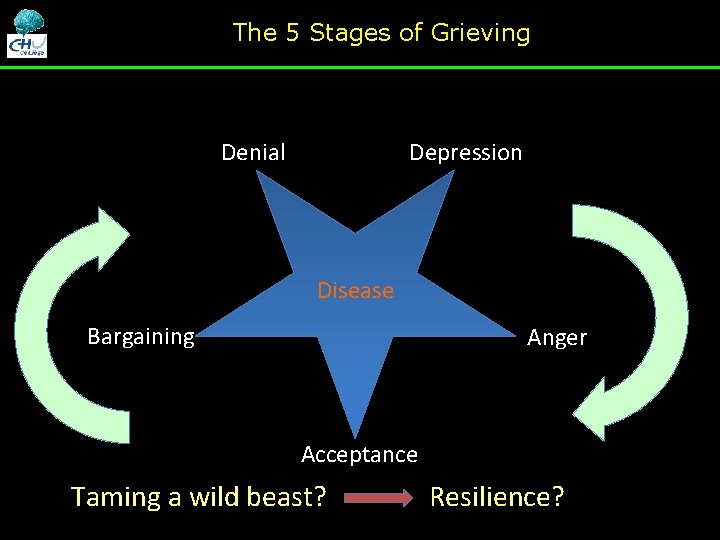
The 5 Stages of Grieving Depression Denial Disease Bargaining Anger Acceptance Taming a wild beast? Resilience?
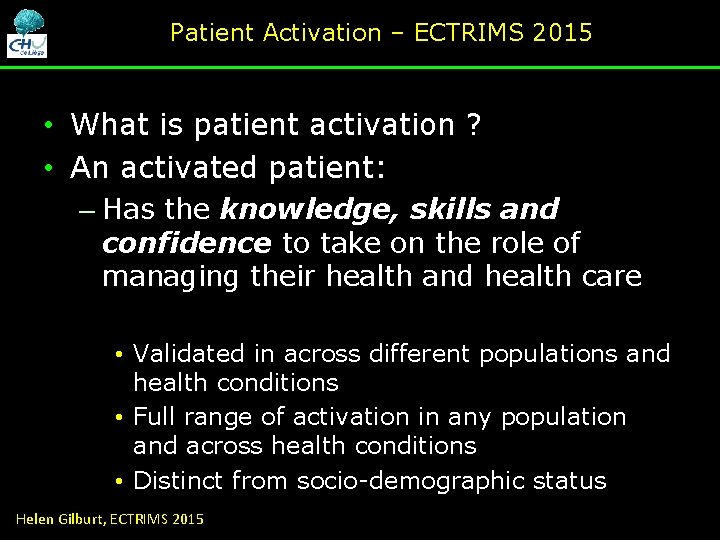
Patient Activation – ECTRIMS 2015 • What is patient activation ? • An activated patient: – Has the knowledge, skills and confidence to take on the role of managing their health and health care • Validated in across different populations and health conditions • Full range of activation in any population and across health conditions • Distinct from socio-demographic status Helen Gilburt, ECTRIMS 2015
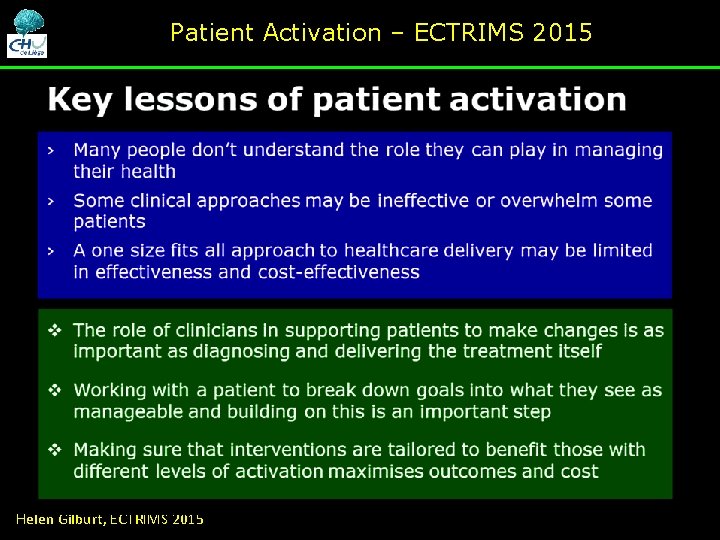
Patient Activation – ECTRIMS 2015 Helen Gilburt, ECTRIMS 2015
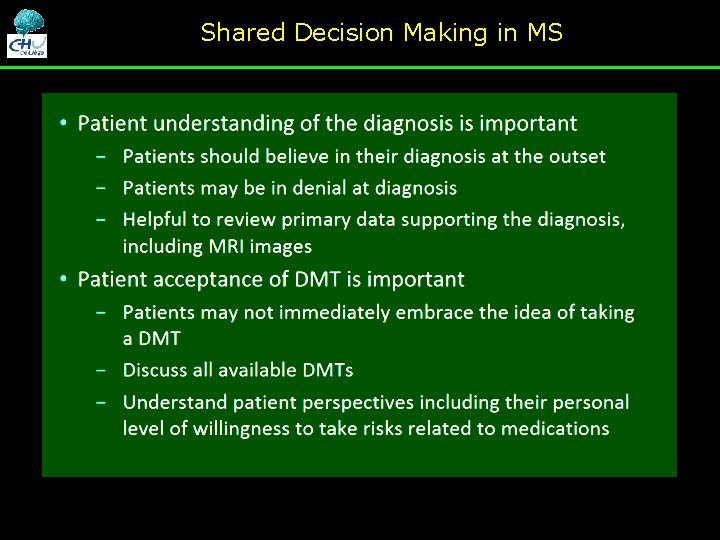
Shared Decision Making in MS
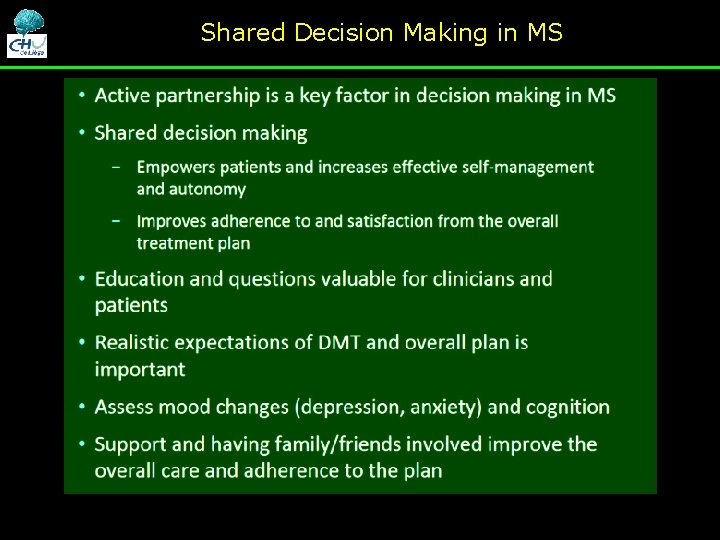
Shared Decision Making in MS
SEP et travail • Méthodes de diagnostic • Points principaux de physiopathologie • L’annonce du diagnostic et ses conséquences • SEP et travail – données de la littérature • SEP et travail – enquêtes nationales et brochures • SEP et traitements • Conclusions
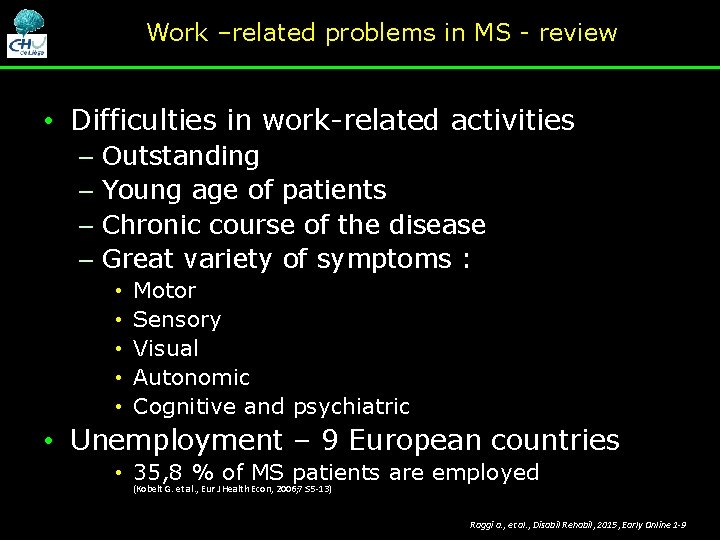
Work –related problems in MS - review • Difficulties in work-related activities – Outstanding – Young age of patients – Chronic course of the disease – Great variety of symptoms : • • • Motor Sensory Visual Autonomic Cognitive and psychiatric • Unemployment – 9 European countries • 35, 8 % of MS patients are employed (Kobelt G. et al. , Eur J Health Econ, 2006; 7: S 5 -13) Raggi a. , et al. , Disabil Rehabil, 2015, Early Online 1 -9
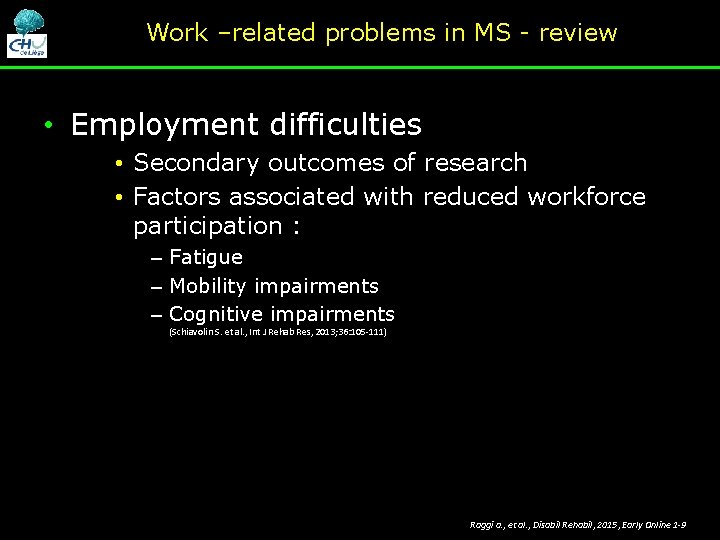
Work –related problems in MS - review • Employment difficulties • Secondary outcomes of research • Factors associated with reduced workforce participation : – Fatigue – Mobility impairments – Cognitive impairments (Schiavolin S. et al. , Int J Rehab Res, 2013; 36: 105 -111) Raggi a. , et al. , Disabil Rehabil, 2015, Early Online 1 -9
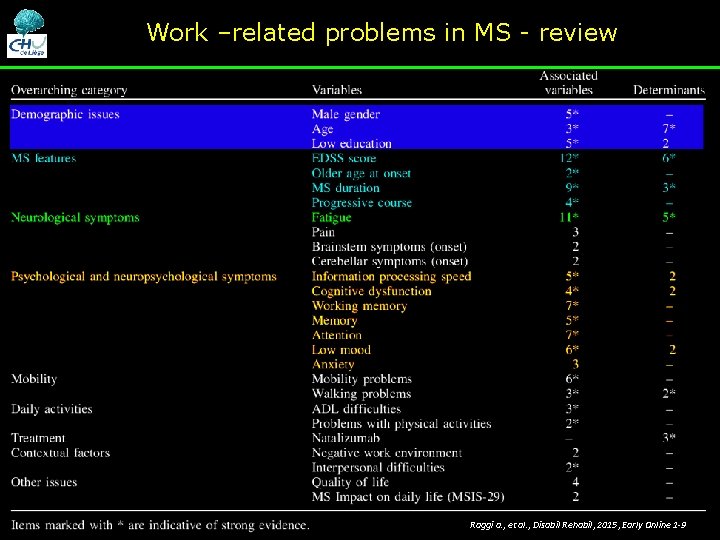
Work –related problems in MS - review Raggi a. , et al. , Disabil Rehabil, 2015, Early Online 1 -9
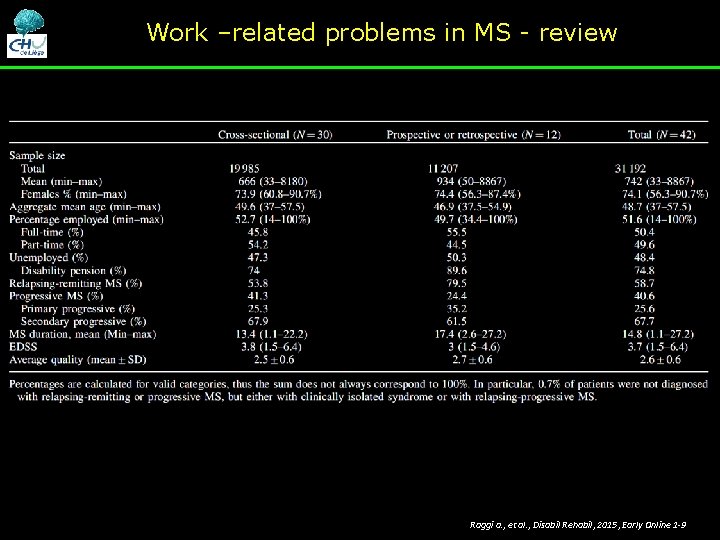
Work –related problems in MS - review Raggi a. , et al. , Disabil Rehabil, 2015, Early Online 1 -9
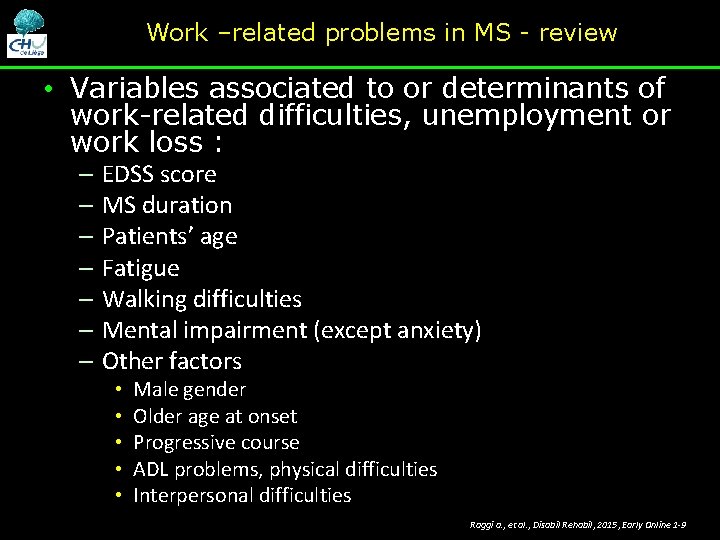
Work –related problems in MS - review • Variables associated to or determinants of work-related difficulties, unemployment or work loss : – EDSS score – MS duration – Patients’ age – Fatigue – Walking difficulties – Mental impairment (except anxiety) – Other factors • • • Male gender Older age at onset Progressive course ADL problems, physical difficulties Interpersonal difficulties Raggi a. , et al. , Disabil Rehabil, 2015, Early Online 1 -9
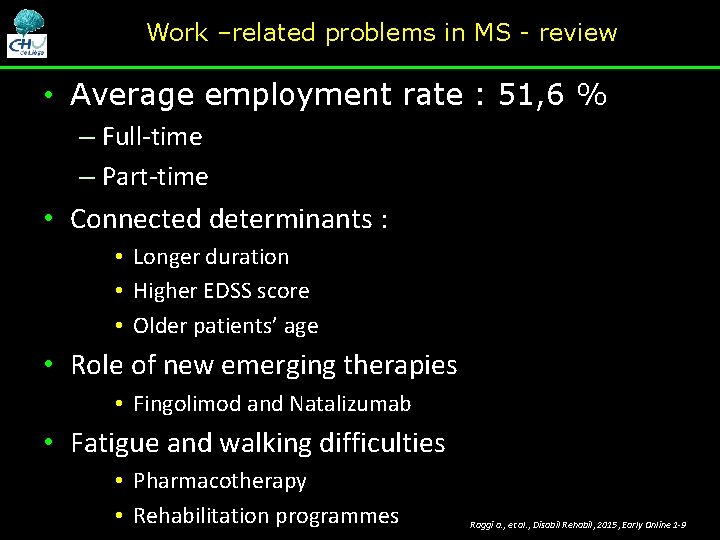
Work –related problems in MS - review • Average employment rate : 51, 6 % – Full-time – Part-time • Connected determinants : • Longer duration • Higher EDSS score • Older patients’ age • Role of new emerging therapies • Fingolimod and Natalizumab • Fatigue and walking difficulties • Pharmacotherapy • Rehabilitation programmes Raggi a. , et al. , Disabil Rehabil, 2015, Early Online 1 -9
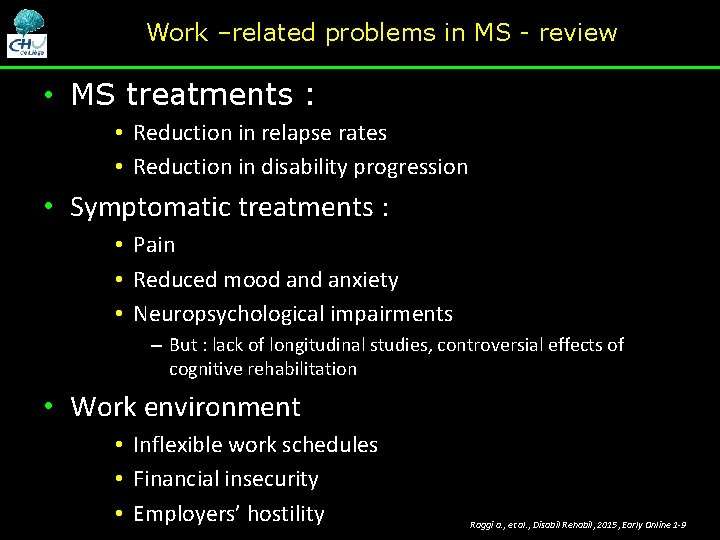
Work –related problems in MS - review • MS treatments : • Reduction in relapse rates • Reduction in disability progression • Symptomatic treatments : • Pain • Reduced mood anxiety • Neuropsychological impairments – But : lack of longitudinal studies, controversial effects of cognitive rehabilitation • Work environment • Inflexible work schedules • Financial insecurity • Employers’ hostility Raggi a. , et al. , Disabil Rehabil, 2015, Early Online 1 -9
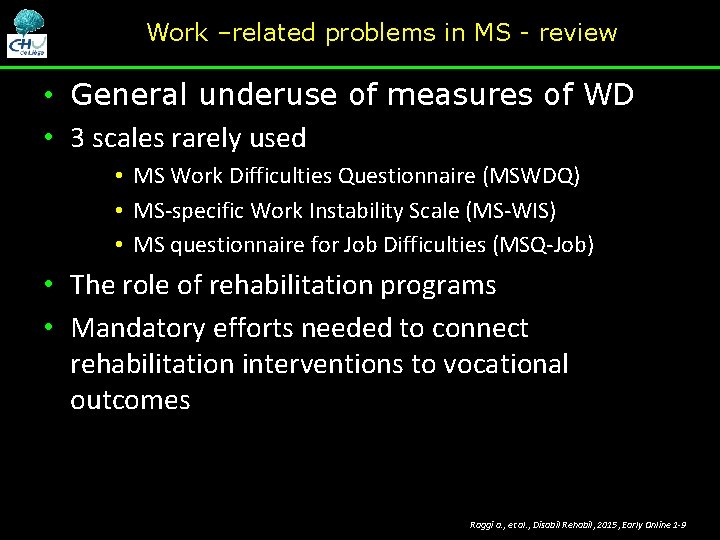
Work –related problems in MS - review • General underuse of measures of WD • 3 scales rarely used • MS Work Difficulties Questionnaire (MSWDQ) • MS-specific Work Instability Scale (MS-WIS) • MS questionnaire for Job Difficulties (MSQ-Job) • The role of rehabilitation programs • Mandatory efforts needed to connect rehabilitation interventions to vocational outcomes Raggi a. , et al. , Disabil Rehabil, 2015, Early Online 1 -9
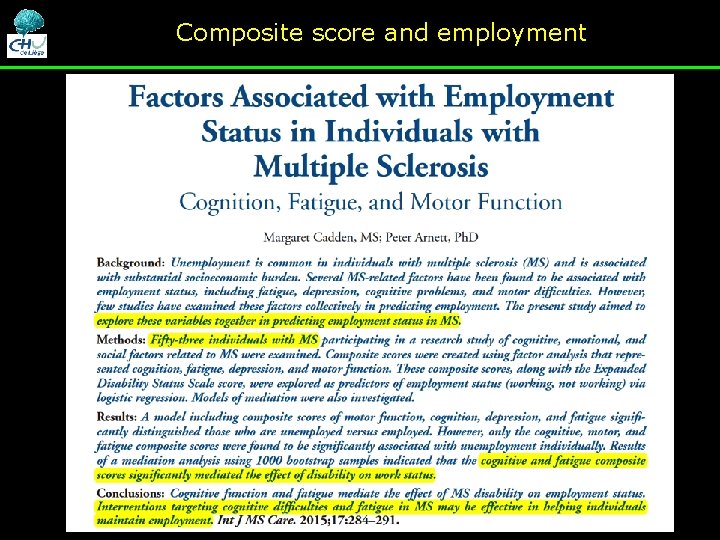
Composite score and employment
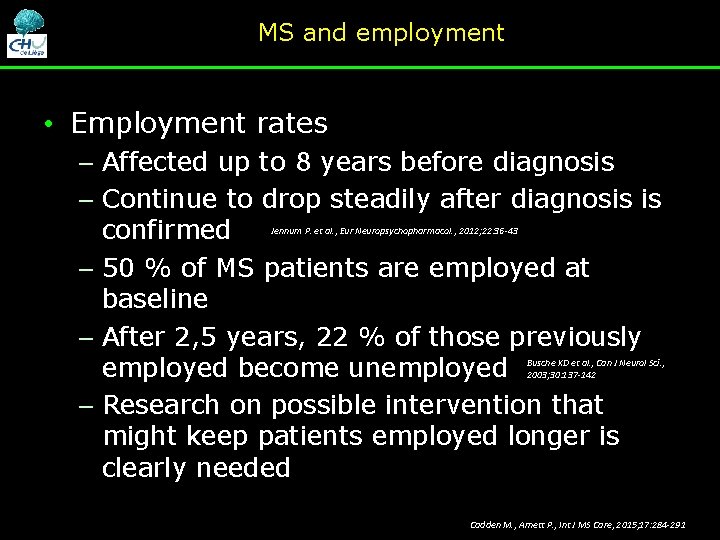
MS and employment • Employment rates – Affected up to 8 years before diagnosis – Continue to drop steadily after diagnosis is confirmed – 50 % of MS patients are employed at baseline – After 2, 5 years, 22 % of those previously employed become unemployed – Research on possible intervention that might keep patients employed longer is clearly needed Jennum P. et al. , Eur Neuropsychopharmacol. , 2012; 22: 36 -43 Busche KD et al. , Can J Neurol Sci. , 2003; 30: 137 -142 Cadden M. , Arnett P. , Int J MS Care, 2015; 17: 284 -291
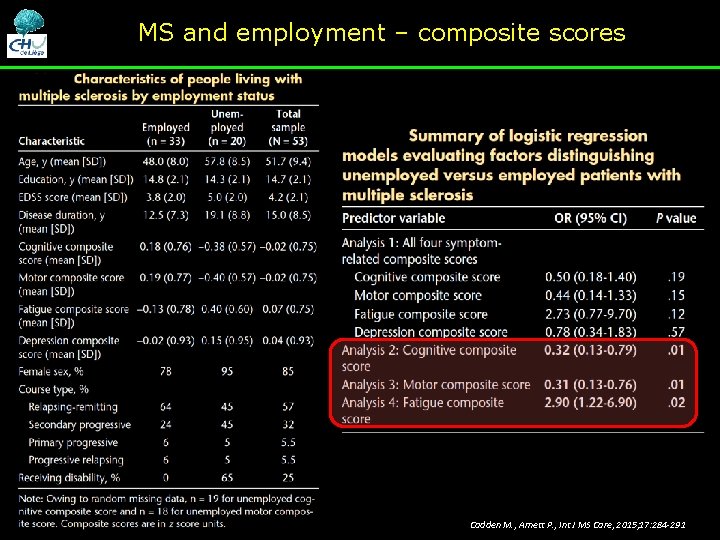
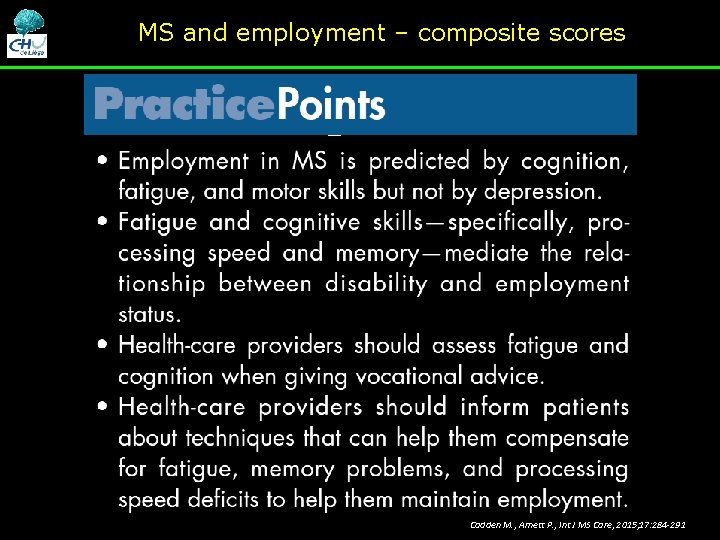
MS and employment – composite scores Cadden M. , Arnett P. , Int J MS Care, 2015; 17: 284 -291
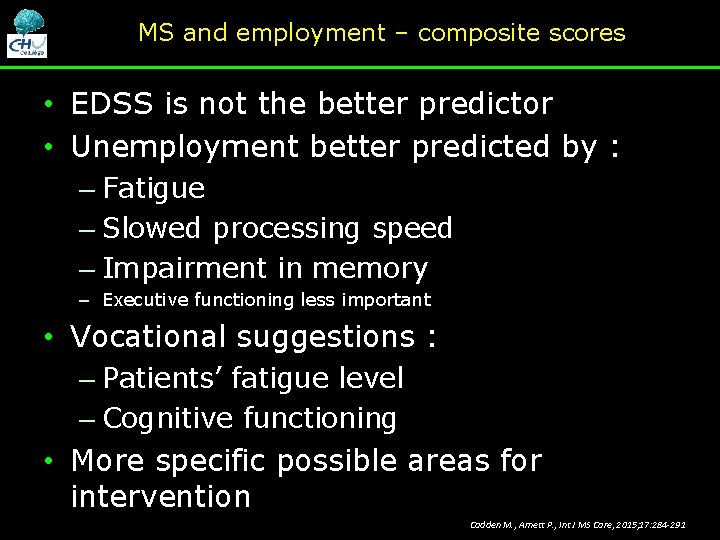
MS and employment – composite scores • EDSS is not the better predictor • Unemployment better predicted by : – Fatigue – Slowed processing speed – Impairment in memory – Executive functioning less important • Vocational suggestions : – Patients’ fatigue level – Cognitive functioning • More specific possible areas for intervention Cadden M. , Arnett P. , Int J MS Care, 2015; 17: 284 -291
MS and employment – composite scores Cadden M. , Arnett P. , Int J MS Care, 2015; 17: 284 -291
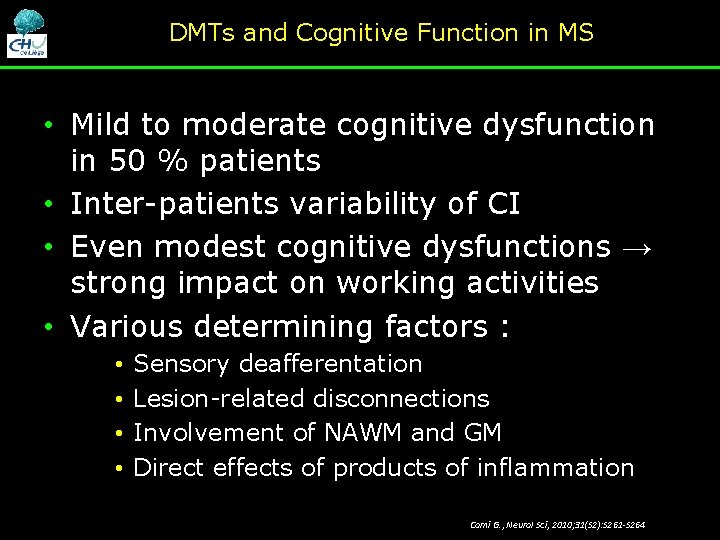
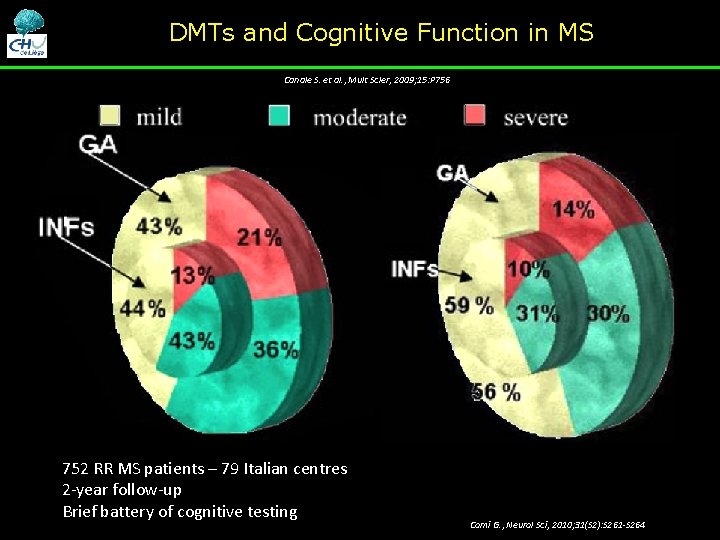
DMTs and Cognitive Function in MS • Mild to moderate cognitive dysfunction in 50 % patients • Inter-patients variability of CI • Even modest cognitive dysfunctions → strong impact on working activities • Various determining factors : • • Sensory deafferentation Lesion-related disconnections Involvement of NAWM and GM Direct effects of products of inflammation Comi G. , Neurol Sci, 2010; 31(S 2): S 261 -S 264
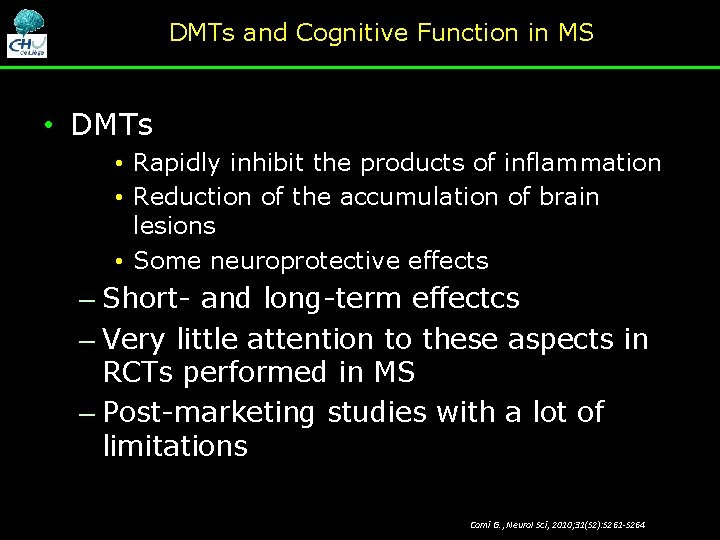
DMTs and Cognitive Function in MS • DMTs • Rapidly inhibit the products of inflammation • Reduction of the accumulation of brain lesions • Some neuroprotective effects – Short- and long-term effectcs – Very little attention to these aspects in RCTs performed in MS – Post-marketing studies with a lot of limitations Comi G. , Neurol Sci, 2010; 31(S 2): S 261 -S 264
DMTs and Cognitive Function in MS Canale S. et al. , Mult Scler, 2009; 15: P 756 752 RR MS patients – 79 Italian centres 2 -year follow-up Brief battery of cognitive testing Comi G. , Neurol Sci, 2010; 31(S 2): S 261 -S 264
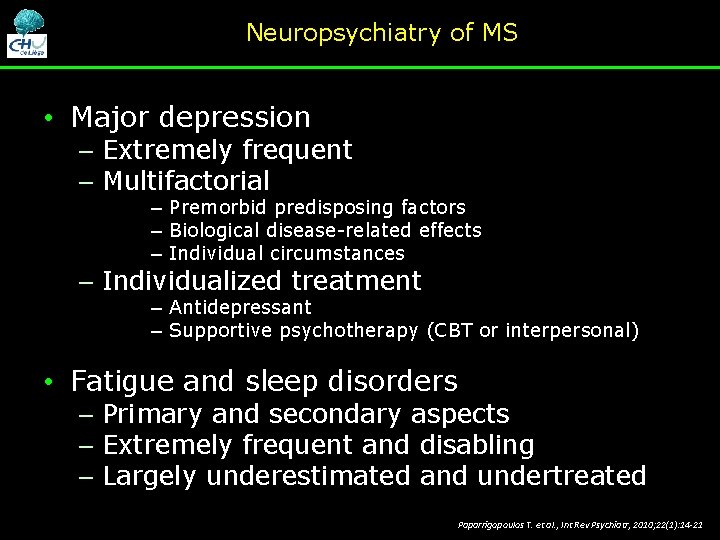
Neuropsychiatry of MS • Major depression – Extremely frequent – Multifactorial – Premorbid predisposing factors – Biological disease-related effects – Individual circumstances – Individualized treatment – Antidepressant – Supportive psychotherapy (CBT or interpersonal) • Fatigue and sleep disorders – Primary and secondary aspects – Extremely frequent and disabling – Largely underestimated and undertreated Paparrigopoulos T. et al. , Int Rev Psychiatr, 2010; 22(1): 14 -21
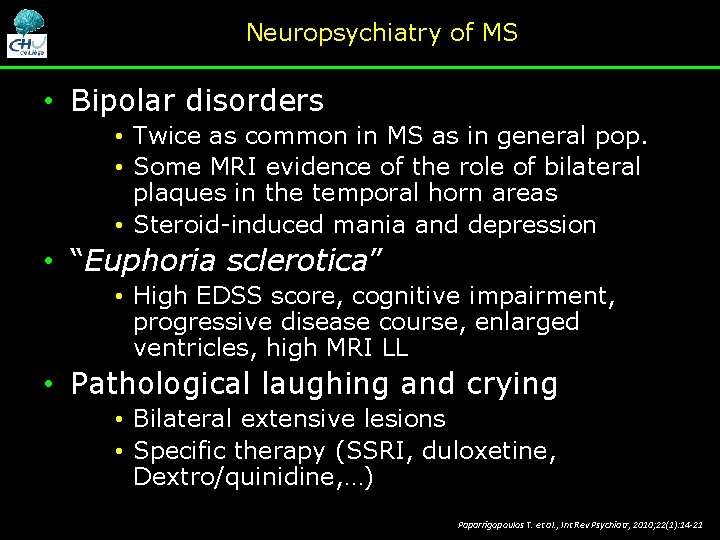
Neuropsychiatry of MS • Bipolar disorders • Twice as common in MS as in general pop. • Some MRI evidence of the role of bilateral plaques in the temporal horn areas • Steroid-induced mania and depression • “Euphoria sclerotica” • High EDSS score, cognitive impairment, progressive disease course, enlarged ventricles, high MRI LL • Pathological laughing and crying • Bilateral extensive lesions • Specific therapy (SSRI, duloxetine, Dextro/quinidine, …) Paparrigopoulos T. et al. , Int Rev Psychiatr, 2010; 22(1): 14 -21
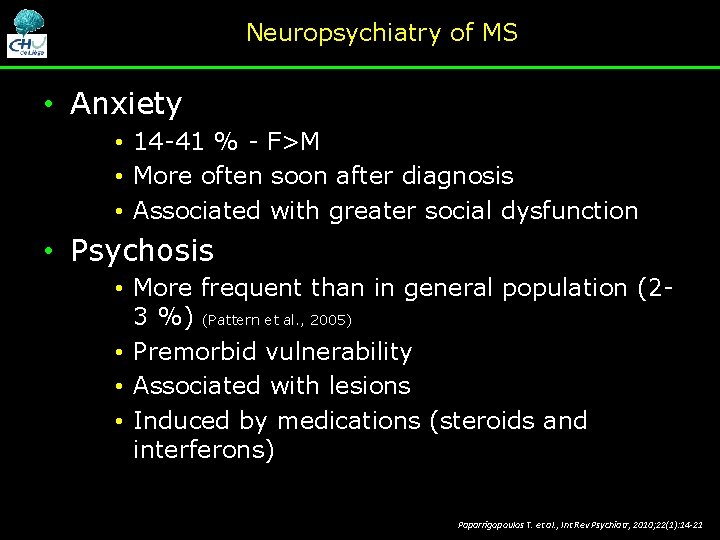
Neuropsychiatry of MS • Anxiety • 14 -41 % - F>M • More often soon after diagnosis • Associated with greater social dysfunction • Psychosis • More frequent than in general population (23 %) (Pattern et al. , 2005) • Premorbid vulnerability • Associated with lesions • Induced by medications (steroids and interferons) Paparrigopoulos T. et al. , Int Rev Psychiatr, 2010; 22(1): 14 -21
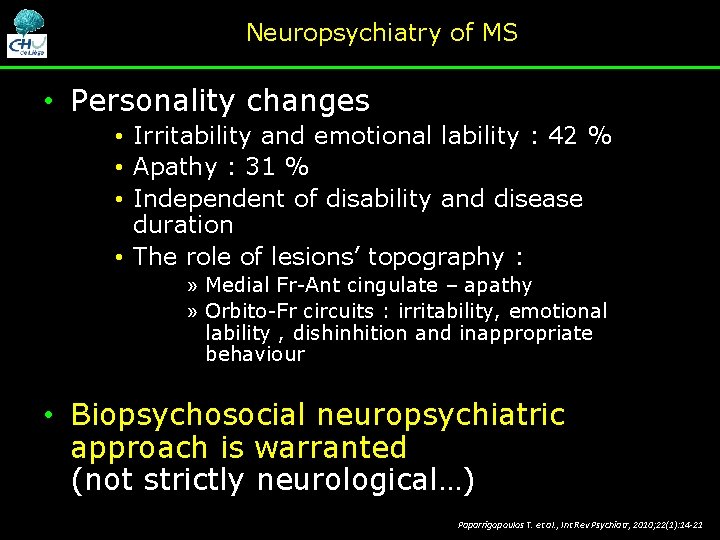
Neuropsychiatry of MS • Personality changes • Irritability and emotional lability : 42 % • Apathy : 31 % • Independent of disability and disease duration • The role of lesions’ topography : » Medial Fr-Ant cingulate – apathy » Orbito-Fr circuits : irritability, emotional lability , dishinhition and inappropriate behaviour • Biopsychosocial neuropsychiatric approach is warranted (not strictly neurological…) Paparrigopoulos T. et al. , Int Rev Psychiatr, 2010; 22(1): 14 -21
SEP et travail • Méthodes de diagnostic • Points principaux de physiopathologie • L’annonce du diagnostic et ses conséquences • SEP et travail – données de la littérature • SEP et travail – enquêtes nationales et brochures • SEP et traitements • Conclusions