
Asleep or Awake DBS Which Should You Do
Asleep or Awake DBS: Which Should You Do? Jonathan Miller, MD Professor of Neurological Surgery Case Western Reserve University Hospitals Case Medical Center
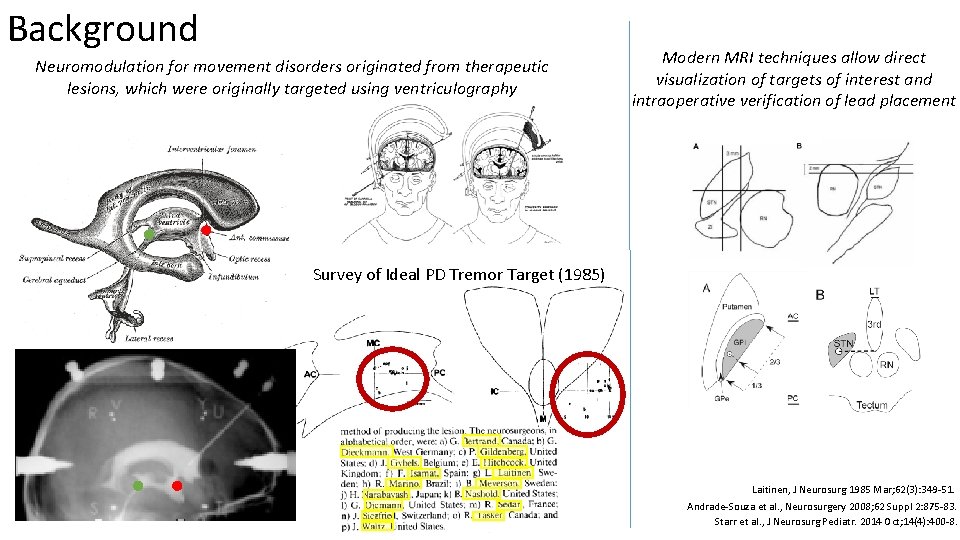
Background Neuromodulation for movement disorders originated from therapeutic lesions, which were originally targeted using ventriculography Modern MRI techniques allow direct visualization of targets of interest and intraoperative verification of lead placement Survey of Ideal PD Tremor Target (1985) Laitinen, J Neurosurg 1985 Mar; 62(3): 349 -51. Andrade-Souza et al. , Neurosurgery 2008; 62 Suppl 2: 875 -83. Starr et al. , J Neurosurg Pediatr. 2014 Oct; 14(4): 400 -8.
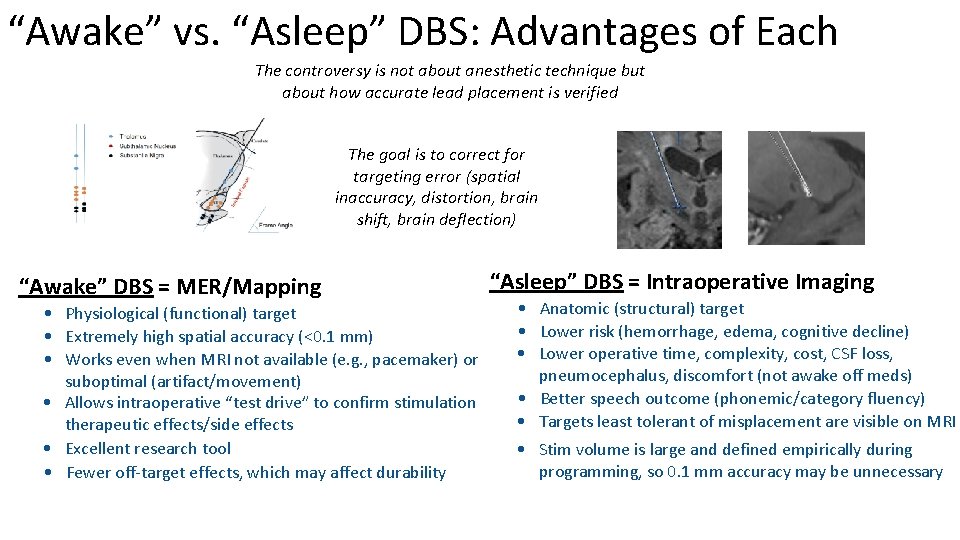
“Awake” vs. “Asleep” DBS: Advantages of Each The controversy is not about anesthetic technique but about how accurate lead placement is verified The goal is to correct for targeting error (spatial inaccuracy, distortion, brain shift, brain deflection) “Awake” DBS = MER/Mapping • Physiological (functional) target • Extremely high spatial accuracy (<0. 1 mm) • Works even when MRI not available (e. g. , pacemaker) or suboptimal (artifact/movement) • Allows intraoperative “test drive” to confirm stimulation therapeutic effects/side effects • Excellent research tool • Fewer off-target effects, which may affect durability “Asleep” DBS = Intraoperative Imaging • Anatomic (structural) target • Lower risk (hemorrhage, edema, cognitive decline) • Lower operative time, complexity, cost, CSF loss, pneumocephalus, discomfort (not awake off meds) • Better speech outcome (phonemic/category fluency) • Targets least tolerant of misplacement are visible on MRI • Stim volume is large and defined empirically during programming, so 0. 1 mm accuracy may be unnecessary
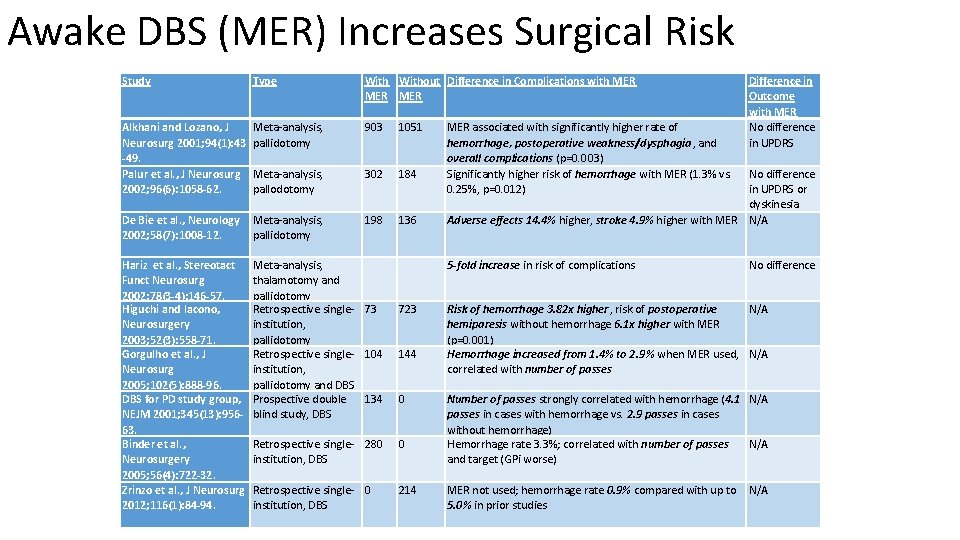
Awake DBS (MER) Increases Surgical Risk Study Type Without Difference in Complications with MER MER Alkhani and Lozano, J Neurosurg 2001; 94(1): 43 -49. Palur et al. , J Neurosurg 2002; 96(6): 1058 -62. Meta-analysis, pallidotomy 903 1051 Meta-analysis, pallodotomy 302 184 De Bie et al. , Neurology 2002; 58(7): 1008 -12. Meta-analysis, pallidotomy 198 136 No difference in UPDRS or dyskinesia Adverse effects 14. 4% higher, stroke 4. 9% higher with MER N/A Hariz et al. , Stereotact Funct Neurosurg 2002; 78(3 -4): 146 -57. Higuchi and Iacono, Neurosurgery 2003; 52(3): 558 -71. Gorgulho et al. , J Neurosurg 2005; 102(5): 888 -96. DBS for PD study group, NEJM 2001; 345(13): 95663. Binder et al. , Neurosurgery 2005; 56(4): 722 -32. Zrinzo et al. , J Neurosurg 2012; 116(1): 84 -94. Meta-analysis, thalamotomy and pallidotomy Retrospective singleinstitution, pallidotomy and DBS Prospective double blind study, DBS 5 -fold increase in risk of complications 73 723 104 144 Risk of hemorrhage 3. 82 x higher, risk of postoperative N/A hemiparesis without hemorrhage 6. 1 x higher with MER (p=0. 001) Hemorrhage increased from 1. 4% to 2. 9% when MER used, N/A correlated with number of passes 134 0 Retrospective single- 280 institution, DBS 0 Retrospective single- 0 institution, DBS 214 MER associated with significantly higher rate of hemorrhage, postoperative weakness/dysphagia, and overall complications (p=0. 003) Significantly higher risk of hemorrhage with MER (1. 3% vs. 0. 25%, p=0. 012) Difference in Outcome with MER No difference in UPDRS No difference Number of passes strongly correlated with hemorrhage (4. 1 N/A passes in cases with hemorrhage vs. 2. 9 passes in cases without hemorrhage) Hemorrhage rate 3. 3%; correlated with number of passes N/A and target (GPi worse) MER not used; hemorrhage rate 0. 9% compared with up to N/A 5. 0% in prior studies
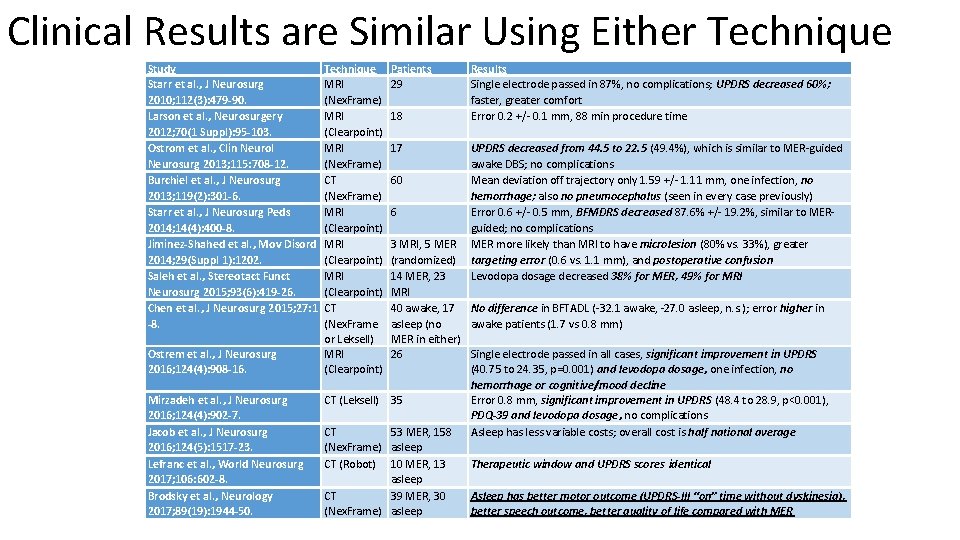
Clinical Results are Similar Using Either Technique Study Starr et al. , J Neurosurg 2010; 112(3): 479 -90. Larson et al. , Neurosurgery 2012; 70(1 Suppl): 95 -103. Ostrom et al. , Clin Neurol Neurosurg 2013; 115: 708 -12. Burchiel et al. , J Neurosurg 2013; 119(2): 301 -6. Starr et al. , J Neurosurg Peds 2014; 14(4): 400 -8. Jiminez-Shahed et al. , Mov Disord 2014; 29(Suppl 1): 1202. Saleh et al. , Stereotact Funct Neurosurg 2015; 93(6): 419 -26. Chen et al. , J Neurosurg 2015; 27: 1 -8. Ostrem et al. , J Neurosurg 2016; 124(4): 908 -16. Mirzadeh et al. , J Neurosurg 2016; 124(4): 902 -7. Jacob et al. , J Neurosurg 2016; 124(5): 1517 -23. Lefranc et al. , World Neurosurg 2017; 106: 602 -8. Brodsky et al. , Neurology 2017; 89(19): 1944 -50. Technique MRI (Nex. Frame) MRI (Clearpoint) MRI (Nex. Frame) CT (Nex. Frame) MRI (Clearpoint) CT (Nex. Frame or Leksell) MRI (Clearpoint) Patients 29 18 17 Results Single electrode passed in 87%, no complications; UPDRS decreased 60%; faster, greater comfort Error 0. 2 +/- 0. 1 mm, 88 min procedure time UPDRS decreased from 44. 5 to 22. 5 (49. 4%), which is similar to MER-guided awake DBS; no complications 60 Mean deviation off trajectory only 1. 59 +/- 1. 11 mm, one infection, no hemorrhage; also no pneumocephalus (seen in every case previously) 6 Error 0. 6 +/- 0. 5 mm, BFMDRS decreased 87. 6% +/- 19. 2%, similar to MERguided; no complications 3 MRI, 5 MER more likely than MRI to have microlesion (80% vs. 33%), greater (randomized) targeting error (0. 6 vs. 1. 1 mm), and postoperative confusion 14 MER, 23 Levodopa dosage decreased 38% for MER, 49% for MRI 40 awake, 17 No difference in BFTADL (-32. 1 awake, -27. 0 asleep, n. s. ); error higher in asleep (no awake patients (1. 7 vs 0. 8 mm) MER in either) 26 Single electrode passed in all cases, significant improvement in UPDRS (40. 75 to 24. 35, p=0. 001) and levodopa dosage, one infection, no hemorrhage or cognitive/mood decline CT (Leksell) 35 Error 0. 8 mm, significant improvement in UPDRS (48. 4 to 28. 9, p<0. 001), PDQ-39 and levodopa dosage, no complications CT 53 MER, 158 Asleep has less variable costs; overall cost is half national average (Nex. Frame) asleep CT (Robot) 10 MER, 13 Therapeutic window and UPDRS scores identical asleep CT 39 MER, 30 Asleep has better motor outcome (UPDRS-III “on” time without dyskinesia), (Nex. Frame) asleep better speech outcome, better quality of life compared with MER
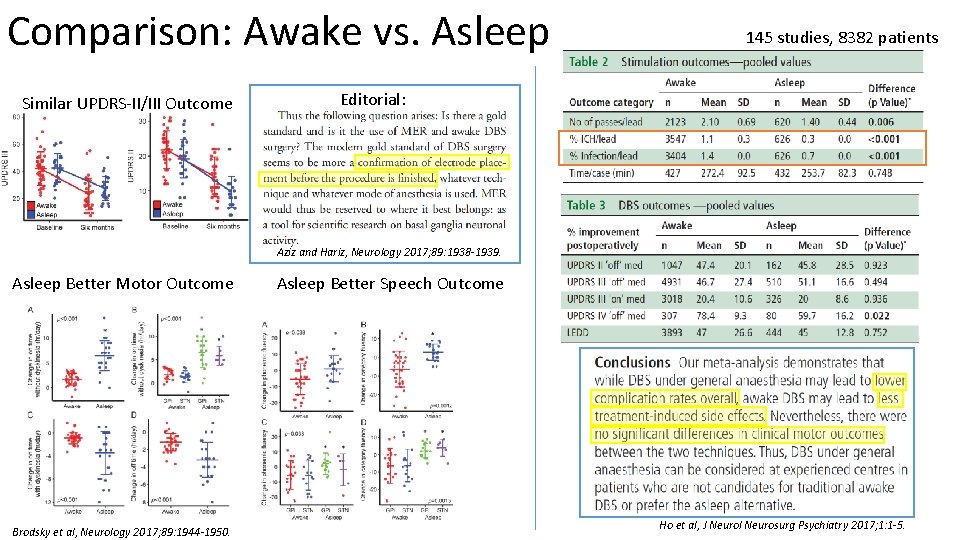
Comparison: Awake vs. Asleep Similar UPDRS-II/III Outcome 145 studies, 8382 patients Editorial: Aziz and Hariz, Neurology 2017; 89: 1938 -1939. Asleep Better Motor Outcome Brodsky et al, Neurology 2017; 89: 1944 -1950. Asleep Better Speech Outcome Ho et al, J Neurol Neurosurg Psychiatry 2017; 1: 1 -5.
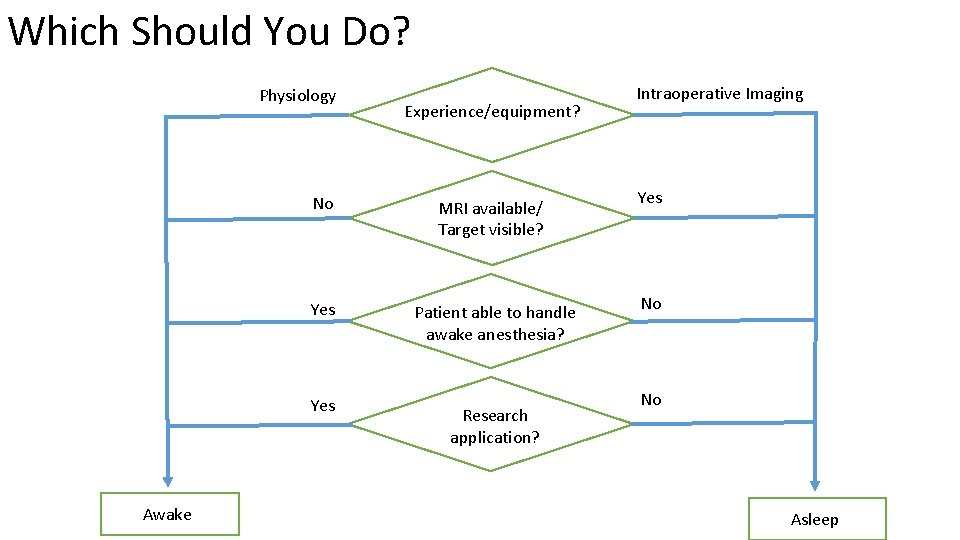
Which Should You Do? Physiology No Yes Awake Experience/equipment? MRI available/ Target visible? Patient able to handle awake anesthesia? Research application? Intraoperative Imaging Yes No No Asleep
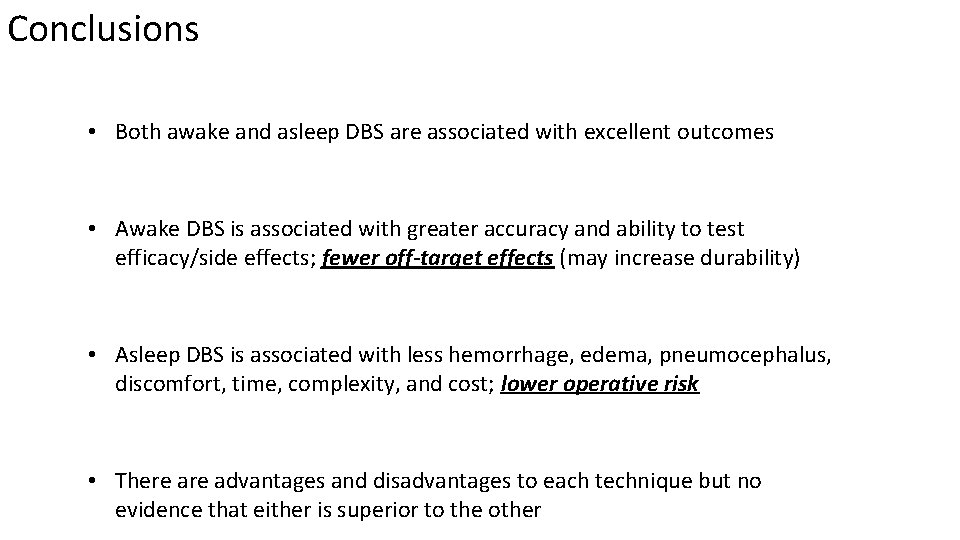
Conclusions • Both awake and asleep DBS are associated with excellent outcomes • Awake DBS is associated with greater accuracy and ability to test efficacy/side effects; fewer off-target effects (may increase durability) • Asleep DBS is associated with less hemorrhage, edema, pneumocephalus, discomfort, time, complexity, and cost; lower operative risk • There advantages and disadvantages to each technique but no evidence that either is superior to the other
- Slides: 8