
Ask A Question Save A Life QPR for


- Slides: 34
Ask A Question, Save A Life
QPR for Law Enforcement and Emergency Service Professional • QPR Instructor Name
Goals • Describe QPR and why everyone needs to know how to do it • Provide an overview of suicide in America and in law enforcement • Learn QPR • Practice QPR • Demonstrate knowledge and skill
Welcome to QPR training If you are going to have a heart attack in a public place, and not in front of a hospital emergency department, in what city or county do want to be in? Why we’re here today
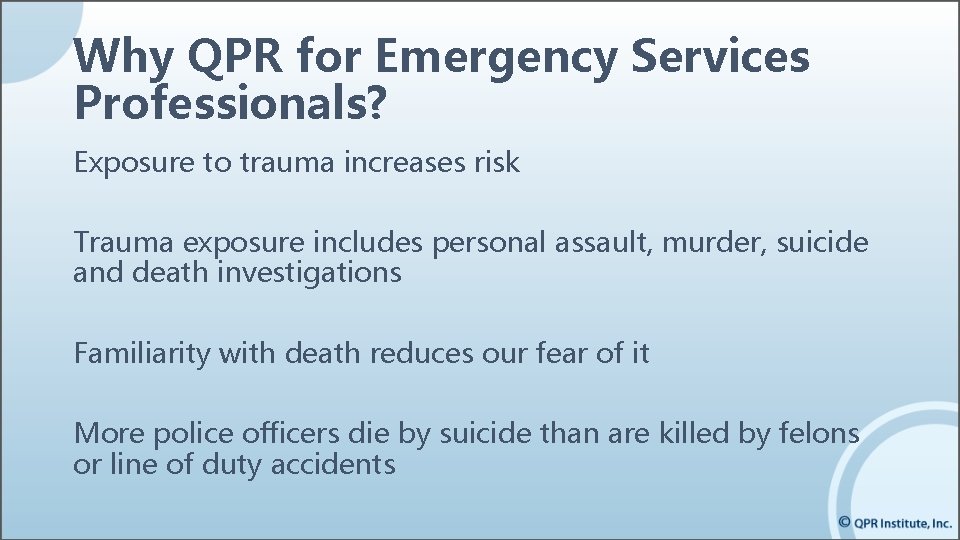
Why QPR for Emergency Services Professionals? Exposure to trauma increases risk Trauma exposure includes personal assault, murder, suicide and death investigations Familiarity with death reduces our fear of it More police officers die by suicide than are killed by felons or line of duty accidents
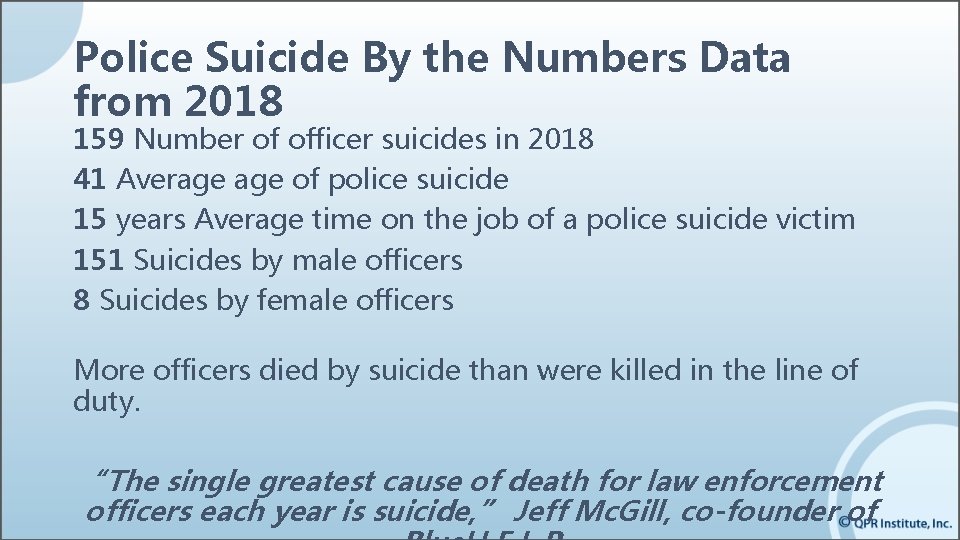
Police Suicide By the Numbers Data from 2018 159 Number of officer suicides in 2018 41 Average of police suicide 15 years Average time on the job of a police suicide victim 151 Suicides by male officers 8 Suicides by female officers More officers died by suicide than were killed in the line of duty. “The single greatest cause of death for law enforcement officers each year is suicide, ” Jeff Mc. Gill, co-founder of
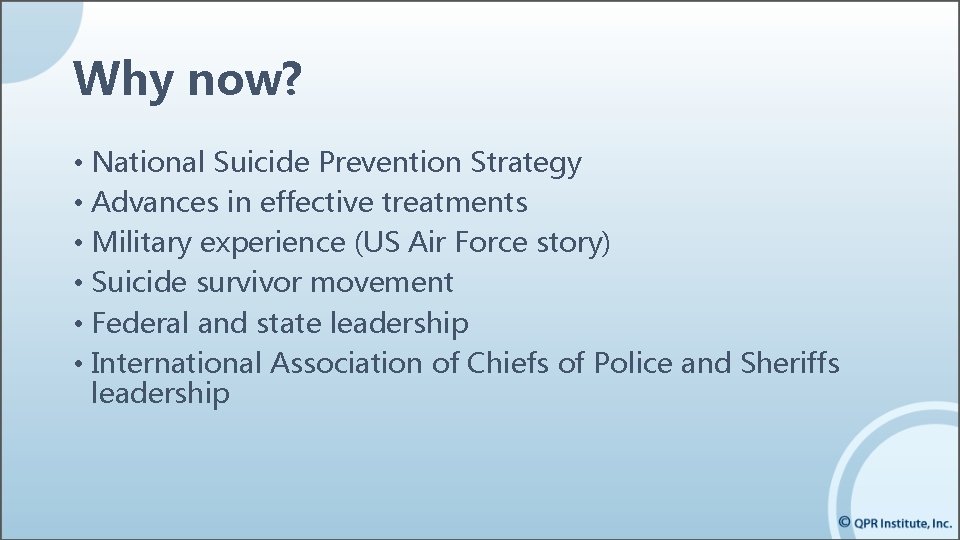
Why now? • National Suicide Prevention Strategy • Advances in effective treatments • Military experience (US Air Force story) • Suicide survivor movement • Federal and state leadership • International Association of Chiefs of Police and Sheriffs leadership
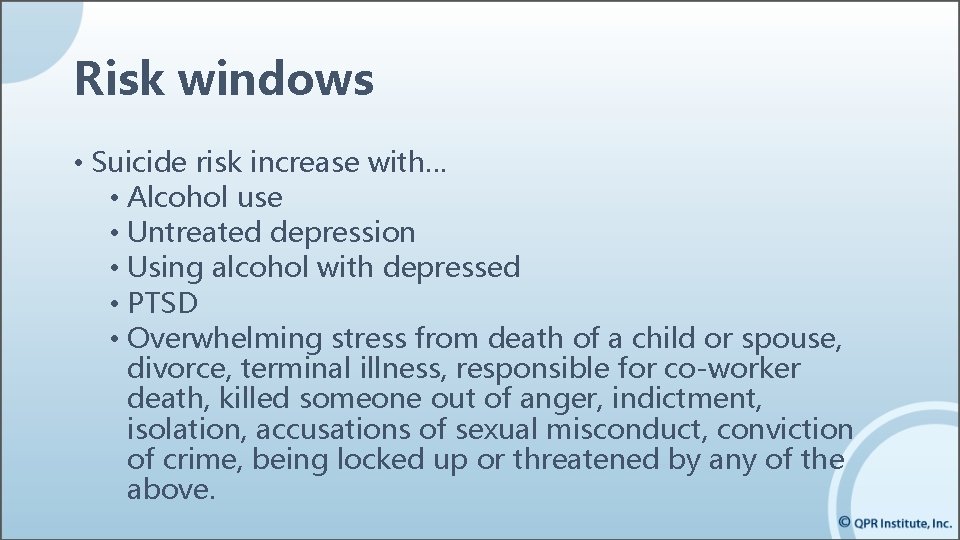
Risk windows • Suicide risk increase with… • Alcohol use • Untreated depression • Using alcohol with depressed • PTSD • Overwhelming stress from death of a child or spouse, divorce, terminal illness, responsible for co-worker death, killed someone out of anger, indictment, isolation, accusations of sexual misconduct, conviction of crime, being locked up or threatened by any of the above.
Times are changing • Suicide is now preventable • Everyone is responsible to take action to prevent a death, including by suicide • Suicidal thinking and planning often precede not only violence to self but others. Thus, preventing suicide prevents other forms of violence.
QPR Question, Persuade, Refer
QP R • QPR is not intended to be a form of counseling or treatment. • QPR is intended to offer hope through positive action.
Suicide Myths and Facts § Myth No one can stop a suicide, it is inevitable. § Fact If people in a crisis get the help they need, they will § Myth § and Fact § Myth § Fact help probably never be suicidal again. Confronting a person about suicide will only make them angry increase the risk of suicide. Asking someone directly about suicidal intent lowers anxiety, opens up communication and lowers the risk of an impulsive act. Only experts can prevent suicide. Suicide prevention is everybody’s business, and anyone can prevent the tragedy of suicide
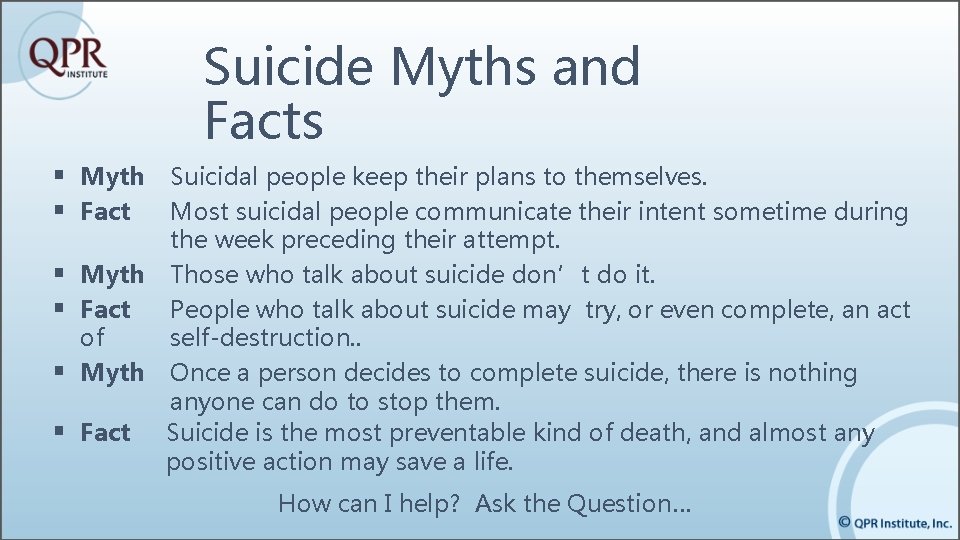
Suicide Myths and Facts § Myth Suicidal people keep their plans to themselves. § Fact Most suicidal people communicate their intent sometime during § § the week preceding their attempt. Myth Those who talk about suicide don’t do it. Fact People who talk about suicide may try, or even complete, an act of self-destruction. . Myth Once a person decides to complete suicide, there is nothing anyone can do to stop them. Fact Suicide is the most preventable kind of death, and almost any positive action may save a life. How can I help? Ask the Question…
Suicide Clues And Warning Signs The more clues and signs observed, the greater the risk. Take all signs seriously.
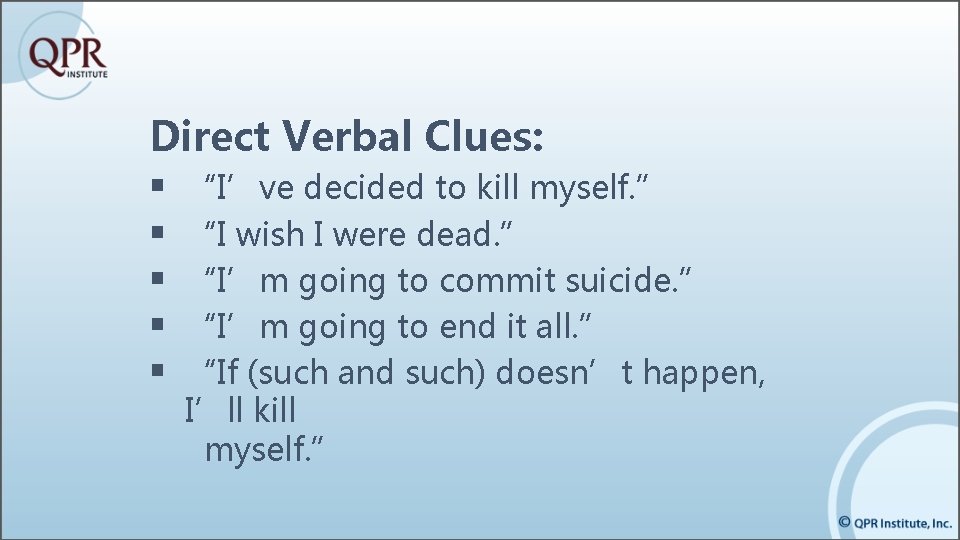
Direct Verbal Clues: § “I’ve decided to kill myself. ” § “I wish I were dead. ” § “I’m going to commit suicide. ” § “I’m going to end it all. ” § “If (such and such) doesn’t happen, I’ll kill myself. ”
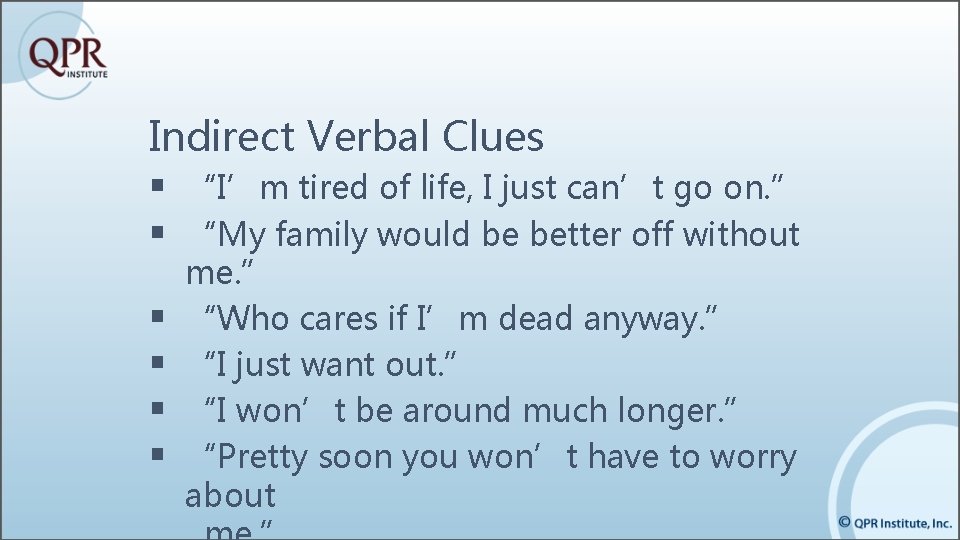
Indirect Verbal Clues § “I’m tired of life, I just can’t go on. ” § “My family would be better off without § § me. ” “Who cares if I’m dead anyway. ” “I just want out. ” “I won’t be around much longer. ” “Pretty soon you won’t have to worry about
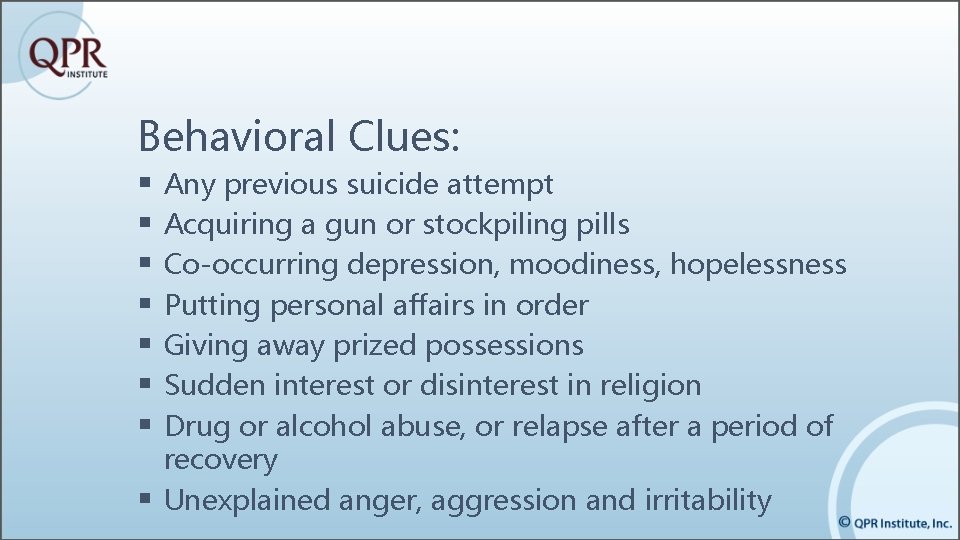
Behavioral Clues: § § § § Any previous suicide attempt Acquiring a gun or stockpiling pills Co-occurring depression, moodiness, hopelessness Putting personal affairs in order Giving away prized possessions Sudden interest or disinterest in religion Drug or alcohol abuse, or relapse after a period of recovery Unexplained anger, aggression and irritability
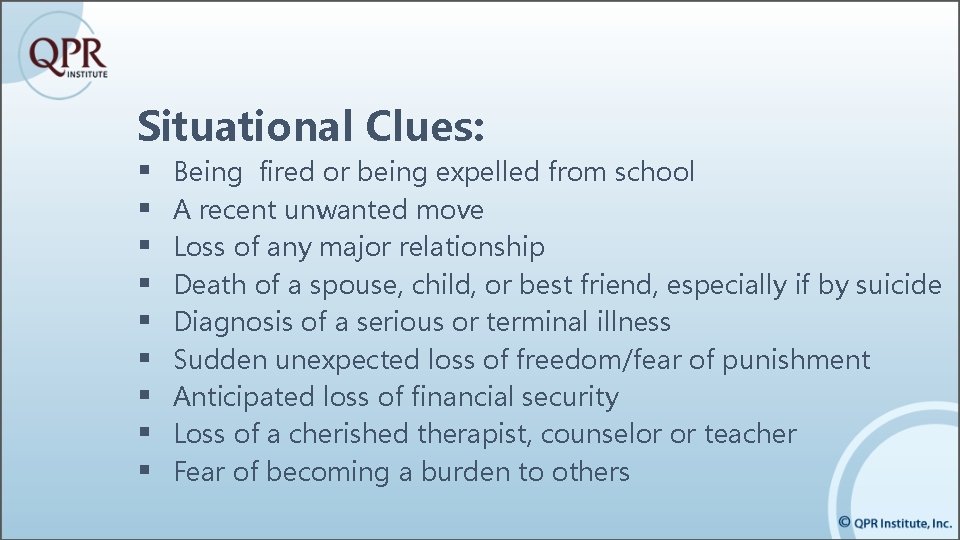
Situational Clues: § § § § § Being fired or being expelled from school A recent unwanted move Loss of any major relationship Death of a spouse, child, or best friend, especially if by suicide Diagnosis of a serious or terminal illness Sudden unexpected loss of freedom/fear of punishment Anticipated loss of financial security Loss of a cherished therapist, counselor or teacher Fear of becoming a burden to others
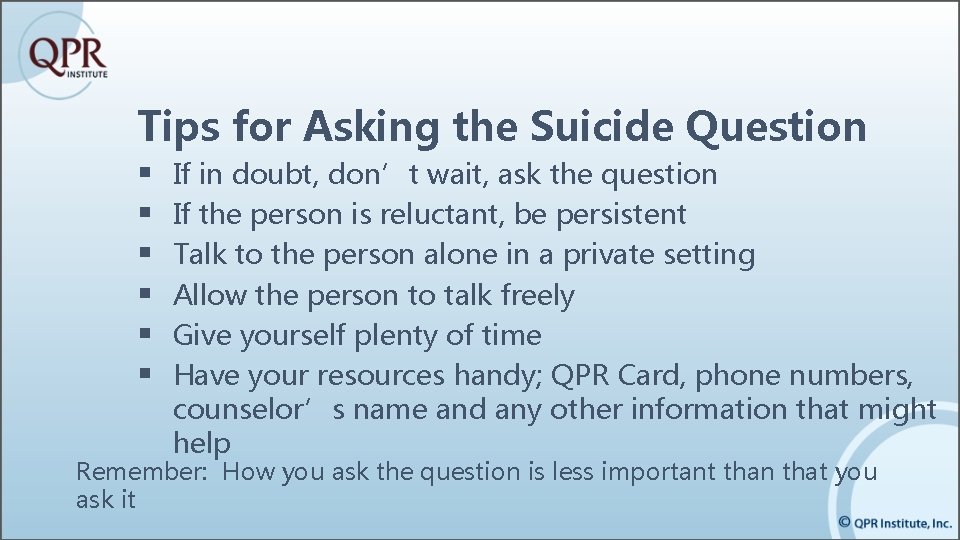
Tips for Asking the Suicide Question § § § If in doubt, don’t wait, ask the question If the person is reluctant, be persistent Talk to the person alone in a private setting Allow the person to talk freely Give yourself plenty of time Have your resources handy; QPR Card, phone numbers, counselor’s name and any other information that might help Remember: How you ask the question is less important than that you ask it
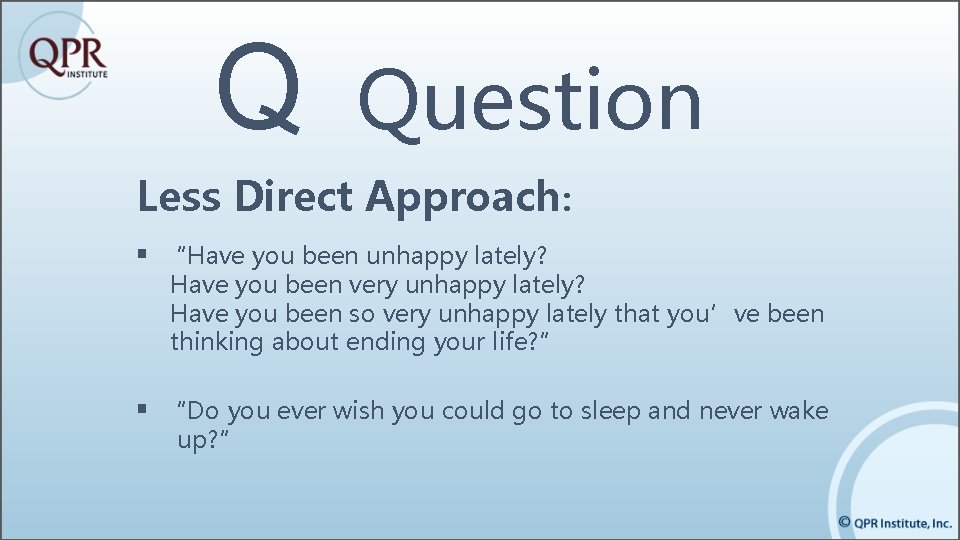
Q Question Less Direct Approach: § “Have you been unhappy lately? Have you been very unhappy lately? Have you been so very unhappy lately that you’ve been thinking about ending your life? ” § “Do you ever wish you could go to sleep and never wake up? ”
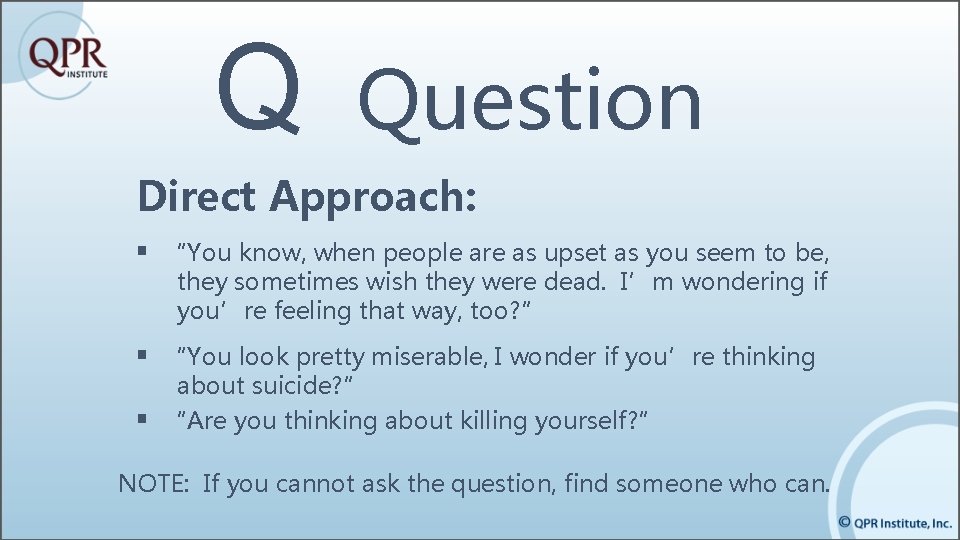
Q Question Direct Approach: § “You know, when people are as upset as you seem to be, they sometimes wish they were dead. I’m wondering if you’re feeling that way, too? ” § “You look pretty miserable, I wonder if you’re thinking § about suicide? ” “Are you thinking about killing yourself? ” NOTE: If you cannot ask the question, find someone who can.
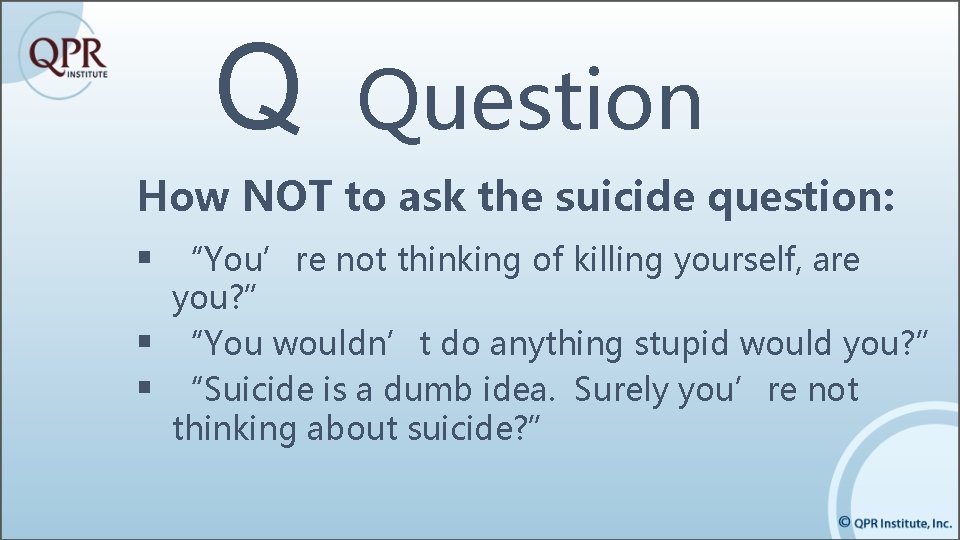
Q Question How NOT to ask the suicide question: § “You’re not thinking of killing yourself, are § § you? ” “You wouldn’t do anything stupid would you? ” “Suicide is a dumb idea. Surely you’re not thinking about suicide? ”
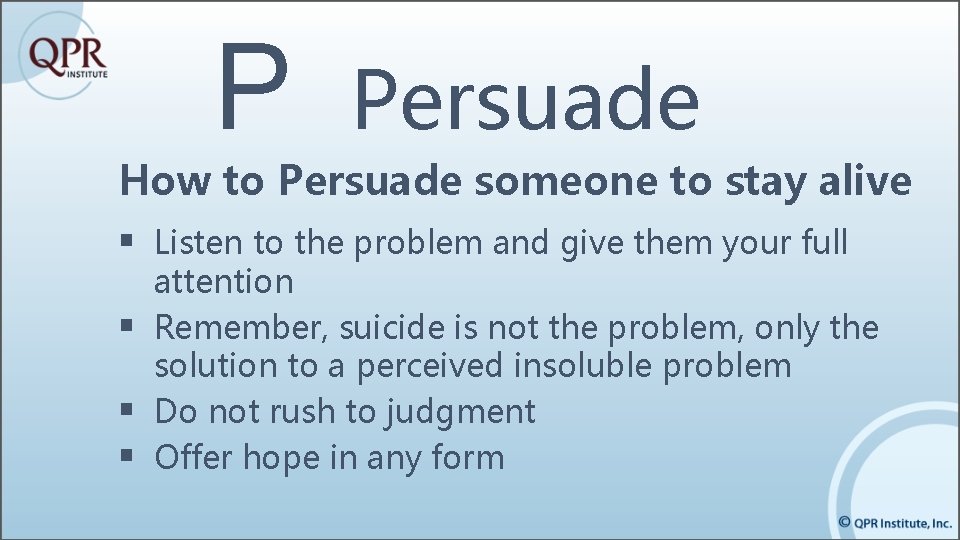
P Persuade How to Persuade someone to stay alive § Listen to the problem and give them your full § § § attention Remember, suicide is not the problem, only the solution to a perceived insoluble problem Do not rush to judgment Offer hope in any form
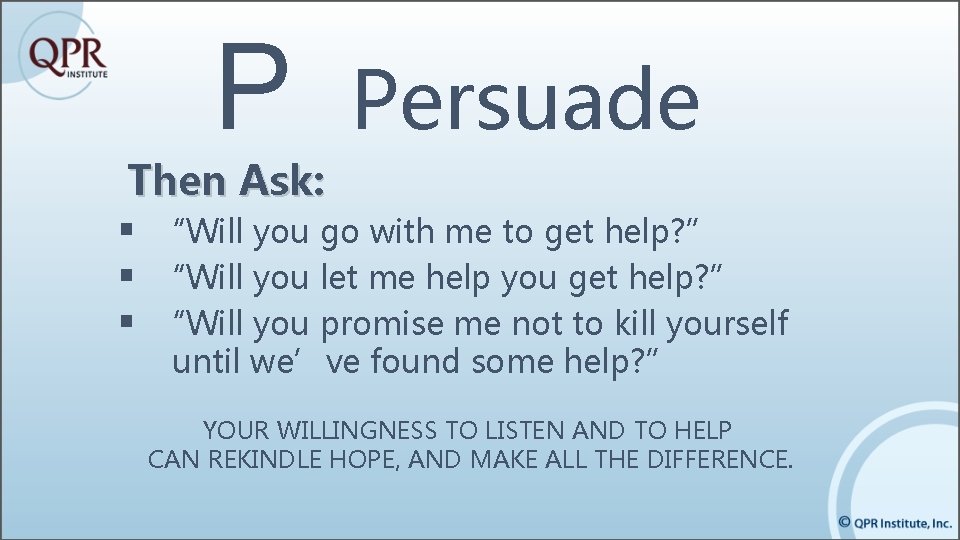
P Persuade Then Ask: § “Will you go with me to get help? ” § “Will you let me help you get help? ” § “Will you promise me not to kill yourself until we’ve found some help? ” YOUR WILLINGNESS TO LISTEN AND TO HELP CAN REKINDLE HOPE, AND MAKE ALL THE DIFFERENCE.
R Refer § Suicidal people often believe they cannot be helped, so you may § § § have to do more. The best referral involves taking the person directly to someone who can help. The next best referral is getting a commitment from them to accept help, then making the arrangements to get that help. The third best referral is to give referral information and try to get a good faith commitment not to complete or attempt suicide. Any willingness to accept help at some time, even if in the future, is a good outcome.
Remember Since almost all efforts to persuade someone to live instead of attempt suicide will be met with agreement and relief, don’t hesitate to get involved or take the lead.
For Effective QPR § Say: “I want you to live, ” or “I’m on your side. . . we’ll get through this. ” § Get Others Involved. Ask the person who else might help. Family? Friends? Brothers? Sisters? Pastors? Priest? Rabbi? Bishop? Physician?
For Effective QPR § Join a Team. Offer to work with clergy, therapists, psychiatrists or whomever is going to provide the counseling or treatment. § Follow up with a visit, a phone call or a card, and in whatever way feels comfortable to you, let the person know you care about what happens to them. Caring may save a life.
REMEMBER WHEN YOU APPLY QPR, YOU PLANT THE SEEDS OF HOPE HELPS PREVENT SUICIDE.
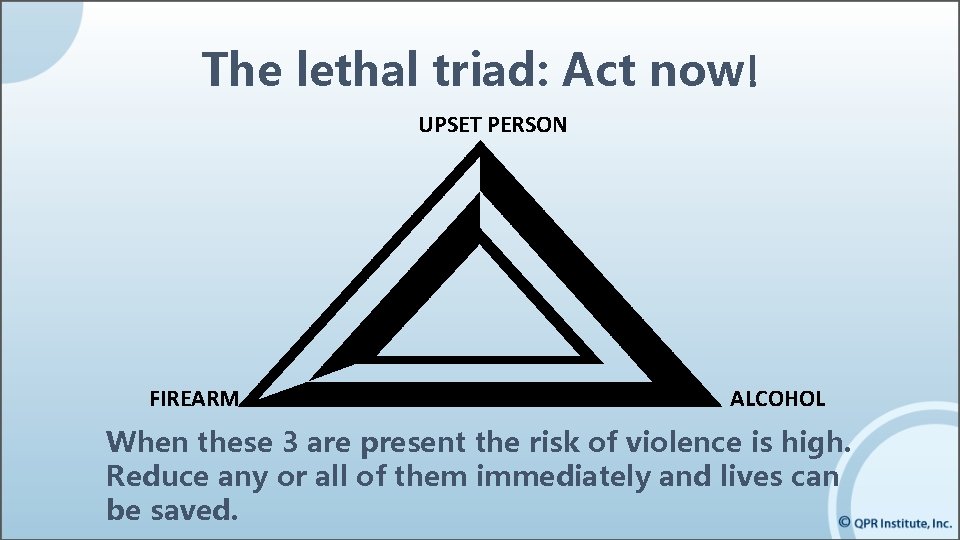
The lethal triad: Act now! UPSET PERSON FIREARM ALCOHOL When these 3 are present the risk of violence is high. Reduce any or all of them immediately and lives can be saved.
Discussion
Let’s practice this skill… 1. Choose a partner 2. Identify who will portray person in crisis and who will portray Gatekeeper 3. Person in Crisis: You will be talking with someone you already know from your work 4. Gatekeepers: Listen to the problem, find out what’s going on and then ask the question.
QPR “Ask A Question… Save A Life!” YOU can make the difference!
Thank you! Free book and newsletter Contact information: • Instructor’s phone: XXX-XXXX • Institute phone: 1 -888 -726 -7926 • Email: qinstitute@qwestoffice. net • Website: www. qprinstitute. com