
Asian Cooking Hacks With Steven Savage So Whats


- Slides: 30
Asian Cooking Hacks With Steven Savage
So What’s This About? • Many of us are fans of Asian food – from our upbringing to our location to our geekery. • But Asian cooking can also teach us useful “Hacks” – ways to improve food, eat better, and use ingredients – that aren’t as common in America. • This is about dishes and ingredients you can not just enjoy but learn from. The major focus is Japanese Cooking, though there’s a lot of commonality in Asian cuisine. • Sorry, no samples.
Who am I? • I’m a Scrum Master, Project/Program Manager, Writer, and lifetime Geek who loves to cook. • You can find out more about me at www. Steven. Savage. co • I speak at cons all over the SF Bay Are!
So What’s A Hack? A Quick Guide
There Are Four Kinds Of Hacks • • Form – A way to deliver food that has advantages. Ingredients – Ingredients you can use to make a dish. Substitutes – Ingredients to specifically replace others. Additions – Things you can add to ingredients with specific advantages.
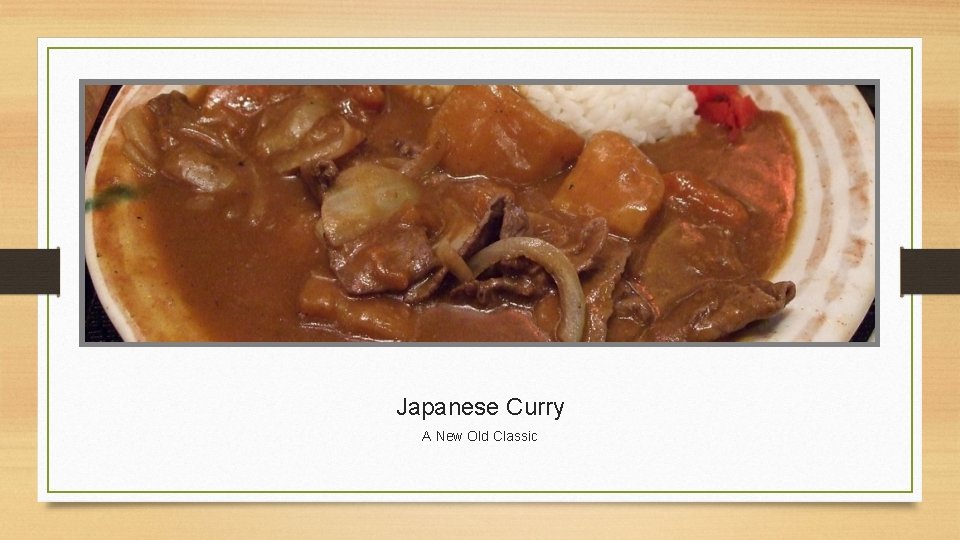
Japanese Curry A New Old Classic
Japanese Curry • This Classic dish is already a hack – Indian curry adapted to the British Navy, adapted by the Japanese Navy as a fast, delicious way to make food and serve nutritious meals. • Japanese Curry is a thick curry sauce that can be used with rice and is often used to serve meat, vegetables, and various foods together. • It also has no set recipe – so learning to make some exposes you to a number of great ideas!
Japanese Curry Hacks • Form – Japanese Curry as a meal is a great hack – a grain, some veggies and/or meat, and a bunch of sauce. It’s a way to make a meal out of anything. • Ingredients – Studying Japanese curry and making it lets you hack the recipes in many ways. • Substitutes – Making Japanese curry has no set form, so you’ll learn substitutions. • Hack Element – Throw Japanese curry on anything to get a meal.
My Hacks • First I make Japanese Curry in large batches so I can make a meal quickly. • Secondly, I often make the curry using pureed beans and squash to make it nutritious as well as thick. This version is also faster as “traditional” methods involve a roux. • Third, I throw it on whatever I want to make a complete meal.
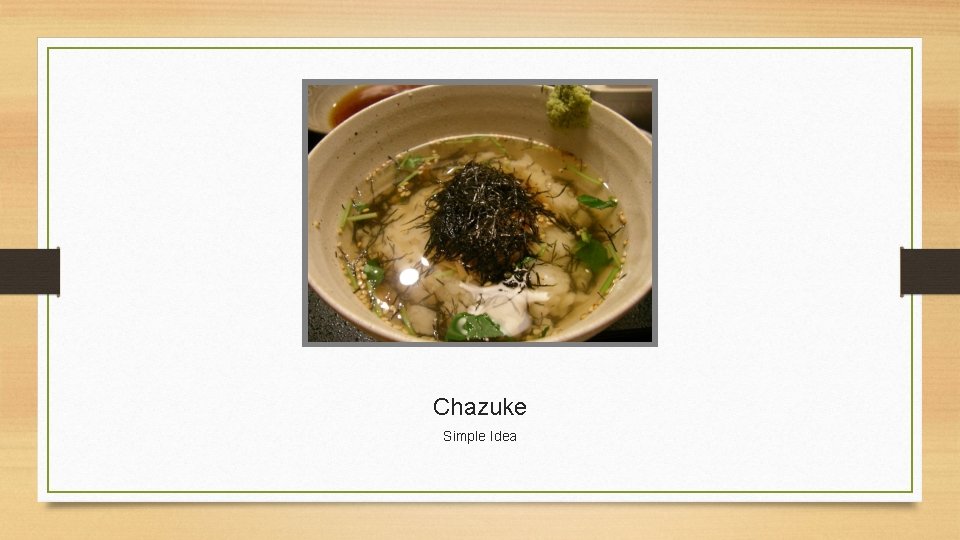
Chazuke Simple Idea
Chazuke (Japan) • Chazuke is a Japanese quick dish for comfort, for illness, for speed, or to signal to guests “you’ve stayed a long time. ” • It’s green tea dumped on rice, often with seaweed, flavorings, dried meat, pickles, etc. • It’s something you can make with whatever’s lying around.
Chazuke Hacks • • Form – Chazuke can lead you to finding formulas for quick meals. Ingredients – Chazuke is a reminder that you can use tea as broth. Substitutes – Again, you can use tea as broth. Additions – People have found many ways to improve Chazuke, so reading up on it gives you ideas.
My Hacks • I make chazuke with a simple formula – 1 cup grain, 1 cup vegan protein (beans), 1 cup steamed or other green vegetables – with 1 to 1 ½ cup tea. • Sometimes I just do protein and greens. • I also have experimented with many other teas for broth – which opens up whole new avenues. • With the right ingredients, you can make this in your hotel room.
Additional Hacks for Chazuke • Green Tea – Fine, made better with some soy sauce and/or pickled ginger and maybe seaweed. • Barley Tea – Add soy sauce and it’s incredibly delicious. • Lemon Tea – Add soy sauce and some garlic and it actually tastes like chicken. • Breakfast – Imagine eating oatmeal or rice made with tea for that caffeine boost!
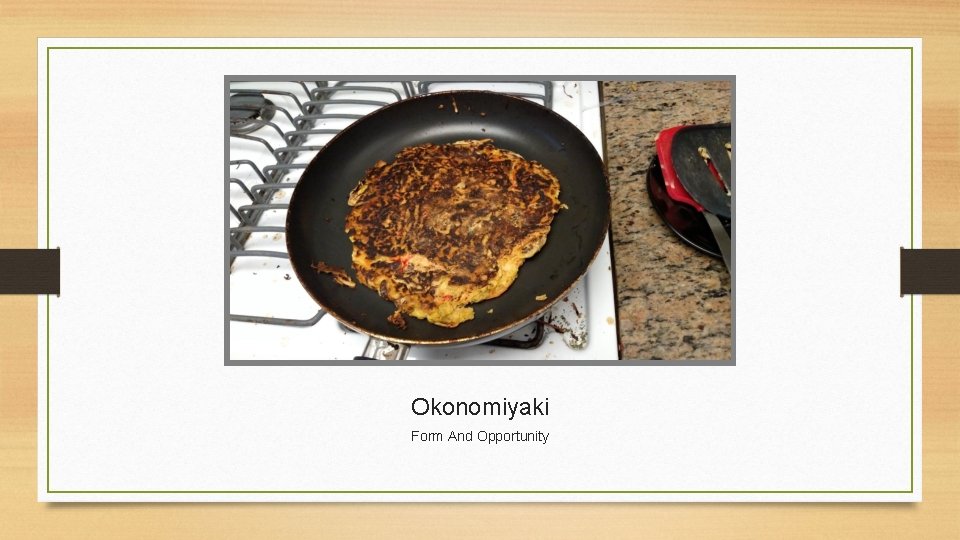
Okonomiyaki Form And Opportunity
Okonomiyaki – A Hack Again • Okonomiyaki is sort of a crepe or a pancake from Japan. A flour pancake with cabbage inside it, often meat or other ingredients as well. • Typically served with bulgogi sauce and mayo. • It is a hack itself – a way to make a quick meal out of simple ingredients – which of course turned delicious.
Okonomiyaki Hacks • Form – Okonomiyaki itself is a great form for food – it’s really a cabbage salad baked into a pancake. • Substitution – Okonomiyaki invites experiment and substitution.
My Hacks • I use chickpea flour instead of regular flour for Okonomiyaki – this adds vegan protein. 3 -4 cups of cabbage tossed with ¾ cup of the flour and 1 Tbsp of baking powder, then a bit of water does it. • To avoid frying, I actually bake Okonomiyaki. Put it on baking paper at 420 degrees for 20 -30 minutes on each side (though it may be more cakelike). • If you bake you can make a ton of these ahead. • I also make small ones that freeze and reheat easier.
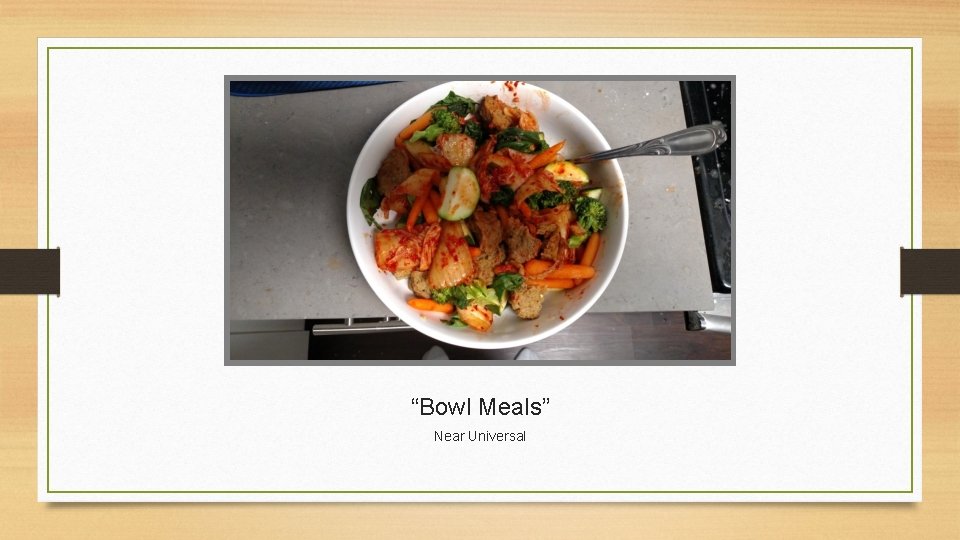
“Bowl Meals” Near Universal
“Bowl Meals” are common in Asian Cooking • Bibimap, rice bowls, gyodon, etc. • These are actually easy to make, so studying others can teach you all sorts of great hacks. • This is a classic “form hack” – a reminder of how you can assemble a meal quickly. • Some of these can be made with nothing more than a microwave or a coffee maker.
My Hacks • I have a formula much like Chazuke – either 1 cup each of rice, a protein, and vegetables, or 1 ½ cup of greens and 1 ½ cup of protein. • Simple sauces – or Japanese Curry - can enhance these. I often use a basic brown sauce. • Simple spicy additions like seaweed, soy sauce, kimchi, or pickled ginger can make this a meal. • I even dice spinach fine and mix it into rice.
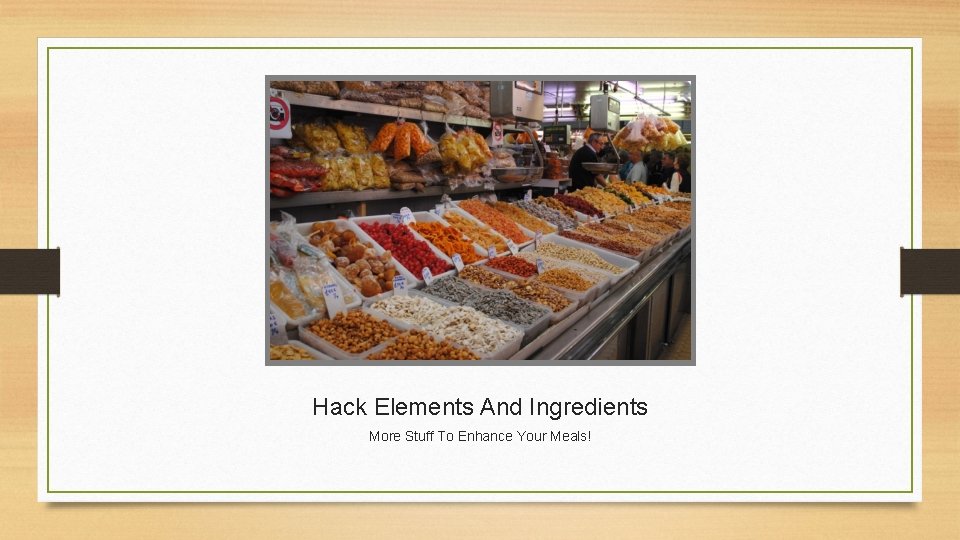
Hack Elements And Ingredients More Stuff To Enhance Your Meals!
Asian Cooking Has Many Useful Ingredients • One reason to practice traditional and common cooking is to learn about these ingredients. • Many of them come up in pop culture – which you’re probably aware of. • It is well worth exploring and diving into details.
Pickled Food • From Kimchi in Korea to Japanese Tsukemono, Asian cuisine introduces us to many pickling possibilities and are a great hack element and ingredient. • Add pickled ingredients to a meal bowl – just a little kimchi may be all the spice you need. • Use pickles in Chazuke to add flavor. • Bake them into Okonomiyaki for a burst of flavor. • Stir them into other vegetables for an instant salad!
Doenjang and Gochujang • These staple Korean ingredients have amazing flavors. Doenjang is fermented soybean paste, Gochujang is fermented pepper paste. • Mixed with some sesame oil, they form a classic spread or sauce. • Added to broth or tea they can add flavor to any meal. • Watered down a bit they can be tossed into ingredients or added to salad. • They have a rich, powerful taste that is worth exploring.
Soy Sauce • Soy Sauce is a common condiment – but shouldn’t be underestimated. • Soy Sauce is a fast way to add savory (umani) flavor to a meal, carries easily, and also adds some saltiness. • A little soy sauce added to anything can enhance the flavor.
Chickpea Flour • Chickpea Flour is a decent flour and egg substitute – protein-rich, acts as a binder, cooks with a nutty flavor (but raw it tastes awful). • Try it as a flour substitute. • You can even microwave it with water to make a kind of custard.
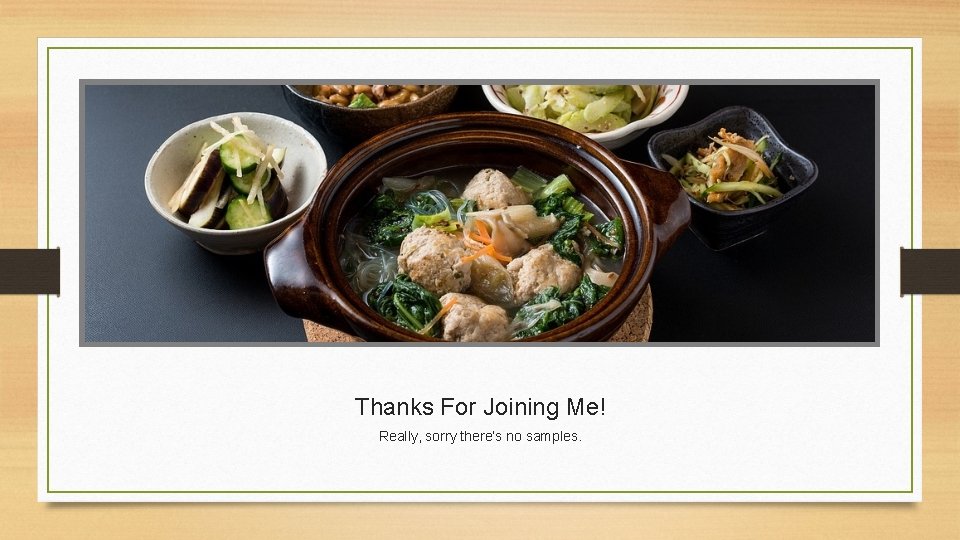
Thanks For Joining Me! Really, sorry there’s no samples.
What’s Next? • You have a convenient handout with a load of recipies and suggestions – use them! • I recommend practicing a specific Asian cooking for a few meals – Japanese, Korean, etc. • Learn ingredients and forms – then ask how you can repurpose them! • Keep expanding your repertoire. • WRITE YOUR RECIPES DOWN AND SHARE THEM!
To Contact Me! • • My contact information is on the handout. I have a newsletter. You can find me at www. Steven. Savage. com I speak at cons all over so you’ll probably run into me.