
Ashkenazi Settlement in Rhineland its Movement Eastwards Yiddish
- Slides: 19
Ashkenazi Settlement in Rhineland its Movement Eastwards Yiddish as the vernacular language of Ashkenazi Jews
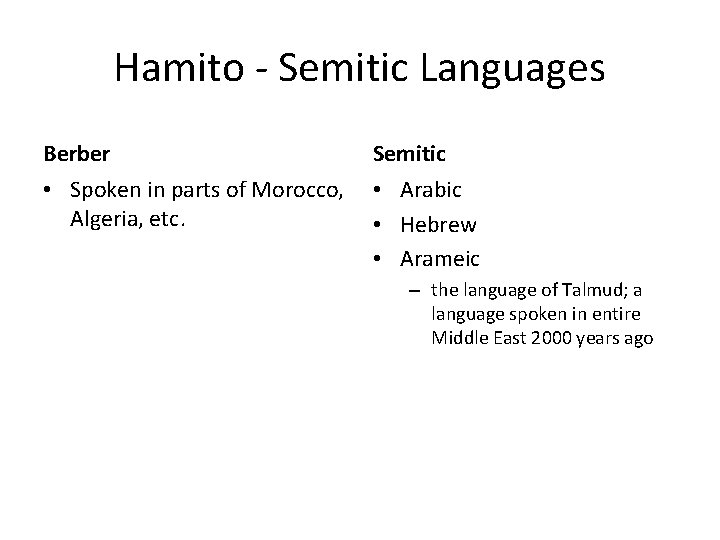
Hamito - Semitic Languages Berber Semitic • Spoken in parts of Morocco, Algeria, etc. • Arabic • Hebrew • Arameic – the language of Talmud; a language spoken in entire Middle East 2000 years ago
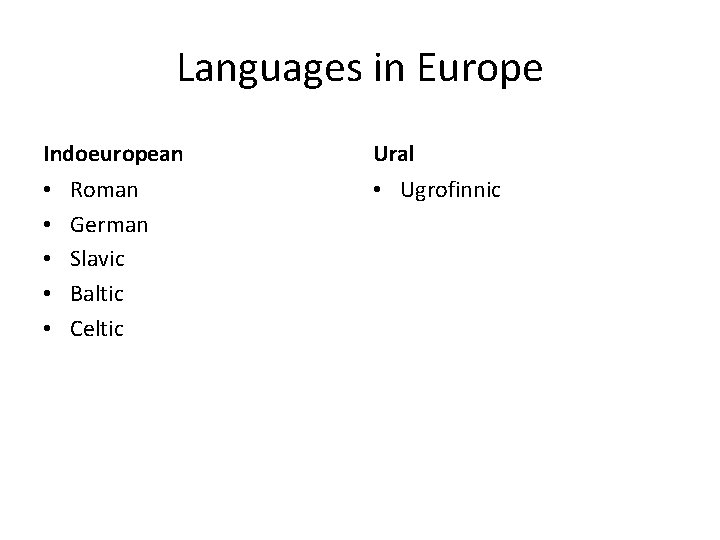
Languages in Europe Indoeuropean • • • Roman German Slavic Baltic Celtic Ural • Ugrofinnic
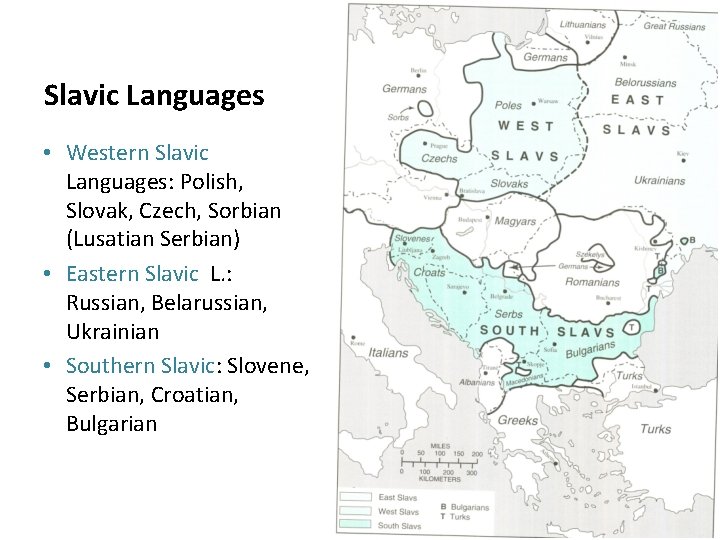
Slavic Languages • Western Slavic Languages: Polish, Slovak, Czech, Sorbian (Lusatian Serbian) • Eastern Slavic L. : Russian, Belarussian, Ukrainian • Southern Slavic: Slovene, Serbian, Croatian, Bulgarian
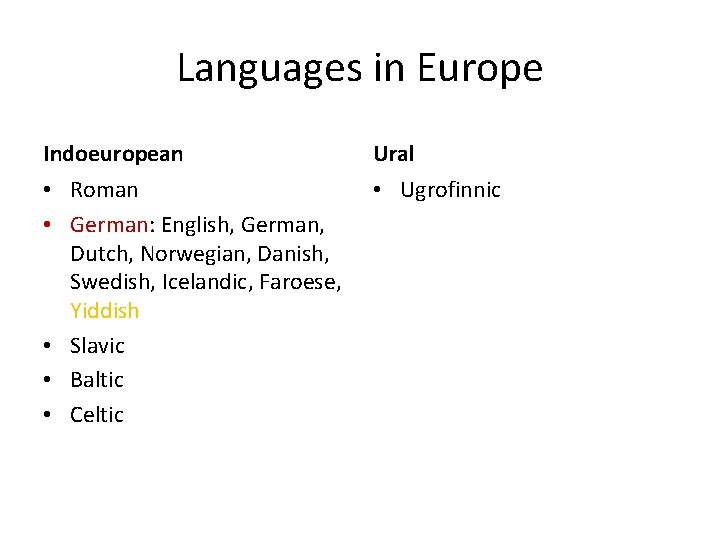
Languages in Europe Indoeuropean Ural • Roman • German: English, German, Dutch, Norwegian, Danish, Swedish, Icelandic, Faroese, Yiddish • Slavic • Baltic • Celtic • Ugrofinnic
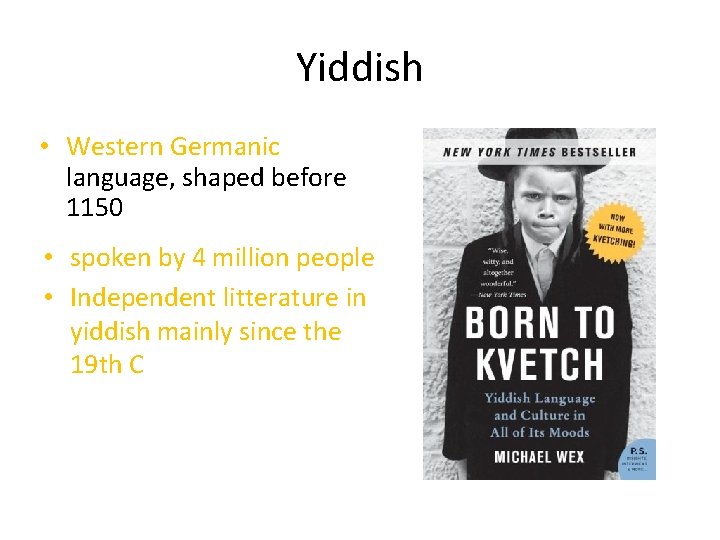
Yiddish • Western Germanic language, shaped before 1150 • spoken by 4 million people • Independent litterature in yiddish mainly since the 19 th C
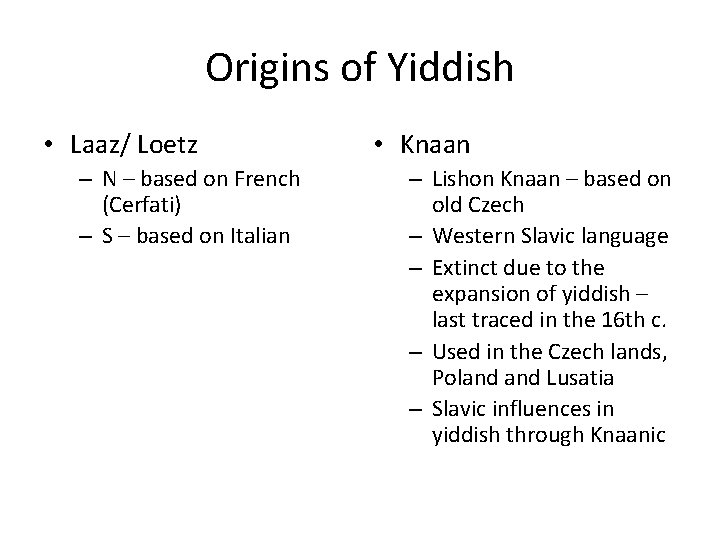
Origins of Yiddish • Laaz/ Loetz – N – based on French (Cerfati) – S – based on Italian • Knaan – Lishon Knaan – based on old Czech – Western Slavic language – Extinct due to the expansion of yiddish – last traced in the 16 th c. – Used in the Czech lands, Poland Lusatia – Slavic influences in yiddish through Knaanic
Yiddish • Do you speak yiddish? • What yiddish words do you use? • What yiddish words do you know?
Yiddish • Do you speak yiddish? • What yiddish words do you know? – Cholent (Tsholnt) – Northern Loez (Laaz) - from the Latin calentem (kept warm) • Spelled CLNT in the 13 th c. by a Jew from Knaan
Yiddish • Do you speak yiddish? • What yiddish words do you know? – Cholent (Tsholnt) – Northern Loez (Laaz) - from the Latin calentem (kept warm) – Jarmulka – from the Arameic yira malkhah – fear of the king
Yiddish • Do you speak yiddish? • What yiddish words do you know? – Cholent – from the Latin calentem (kept warm) – developed from the Mediterranean cassoulet – Jarmulka – from the Arameic yira malkhah – fear of the king – Pamelech – slowly – from Knaanic (Slavic) pomalu • Diminutive suffixes – from Slavic langugages : – Shtetl – Städt („town“ in German) – Shtetl - Shtetle
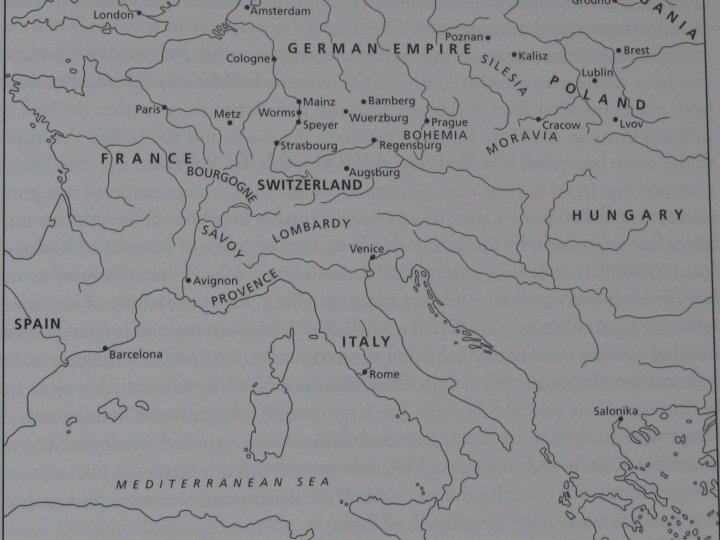
Geography • Zarfat/ Carfat – N France • Loter/ Ashkenaz - Germany • Knaan – Slavic Lands • Rus - Eastern Slavic Lands – Hypothetical Khazar Empire – 8 th- 12 th c. – between Black and Caspian Sea
Ashkenazi Jews • Rhineland – 9 th and 10 th C. • Oldest communities – – Trier Aachen Cologne שום • Speyer • Worms • Mainz
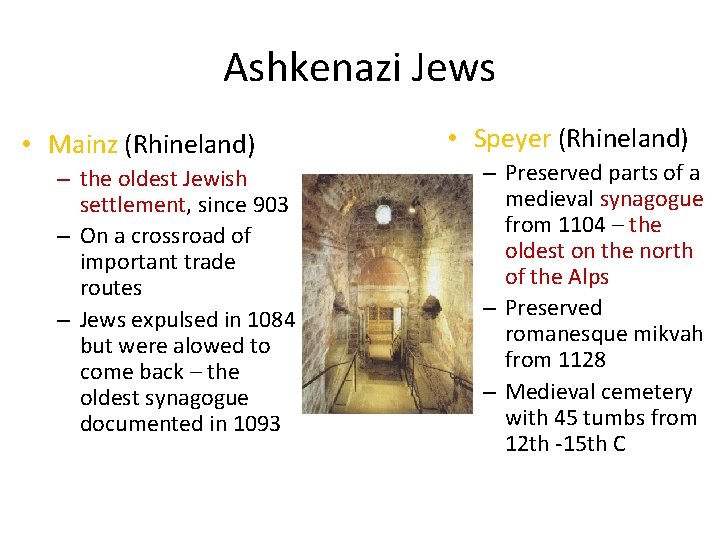
Ashkenazi Jews • Mainz (Rhineland) – the oldest Jewish settlement, since 903 – On a crossroad of important trade routes – Jews expulsed in 1084 but were alowed to come back – the oldest synagogue documented in 1093 • Speyer (Rhineland) – Preserved parts of a medieval synagogue from 1104 – the oldest on the north of the Alps – Preserved romanesque mikvah from 1128 – Medieval cemetery with 45 tumbs from 12 th -15 th C
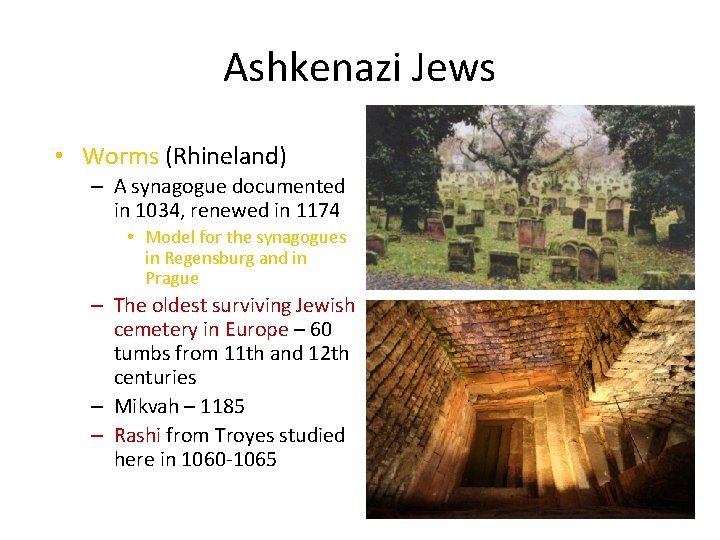
Ashkenazi Jews • Worms (Rhineland) – A synagogue documented in 1034, renewed in 1174 • Model for the synagogues in Regensburg and in Prague – The oldest surviving Jewish cemetery in Europe – 60 tumbs from 11 th and 12 th centuries – Mikvah – 1185 – Rashi from Troyes studied here in 1060 -1065
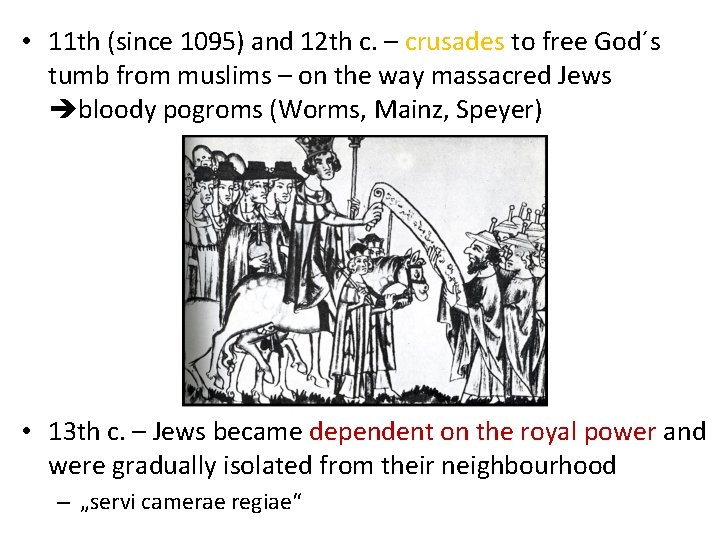
• 11 th (since 1095) and 12 th c. – crusades to free God´s tumb from muslims – on the way massacred Jews bloody pogroms (Worms, Mainz, Speyer) • 13 th c. – Jews became dependent on the royal power and were gradually isolated from their neighbourhood – „servi camerae regiae“
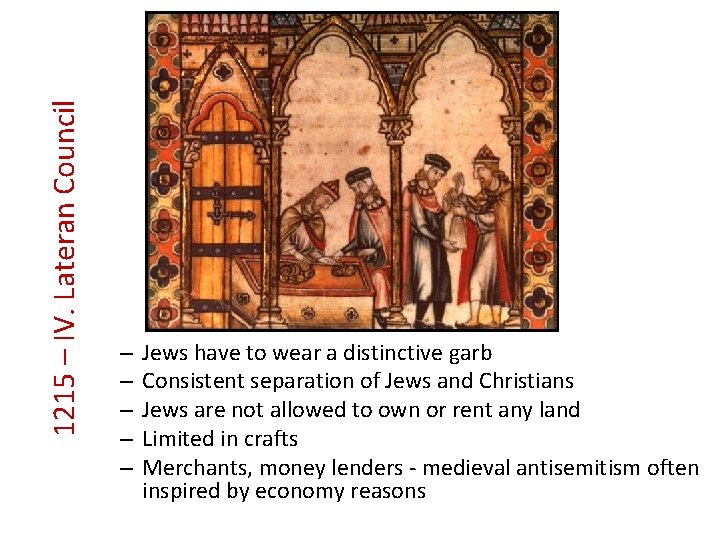
1215 – IV. Lateran Council – – – Jews have to wear a distinctive garb Consistent separation of Jews and Christians Jews are not allowed to own or rent any land Limited in crafts Merchants, money lenders - medieval antisemitism often inspired by economy reasons
Ashkenazi Jews • Since the 13 th c. Jews expulsed from England (1290), since the 14 th c. From France (1306) and from Germany (1348 – bulbonic plague – practically only the community in Worms renewed) moved Eastward • Ashkenazi culture is less varied than the Sefardi one – on constant escape they focused rather on Torah = Law than on poetry or philosophy