
Asexual Reproduction Reproduction The process by which organisms
Asexual Reproduction
Reproduction The process by which organisms generate new individuals of the same kind is called reproduction.
Asexual Reproduction The process by which offspring (babies) are made from a single organism. They inherit information only from that “parent”, which means that they are identical to the parent they were made from.
Asexual Reproduction Advantages • Only one individual needed • Fast • Minimal energy required Disadvantages • All offspring are identical – Hinders diversity – More prone to disease/extinction • Population control issues
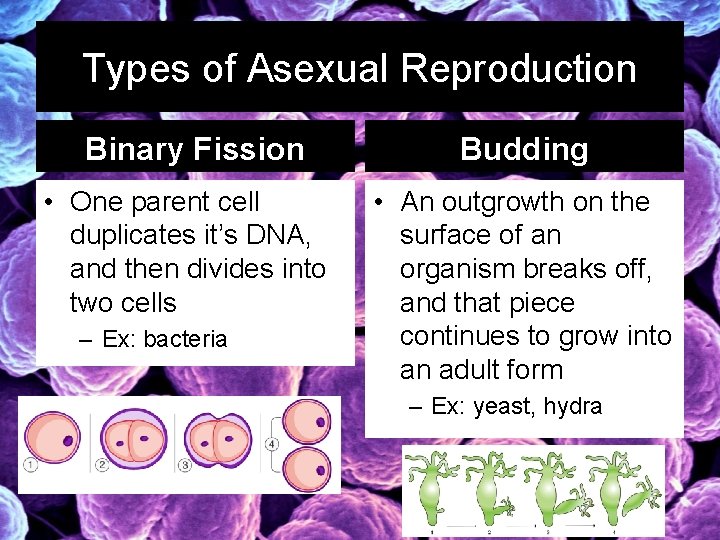
Types of Asexual Reproduction Binary Fission • One parent cell duplicates it’s DNA, and then divides into two cells – Ex: bacteria Budding • An outgrowth on the surface of an organism breaks off, and that piece continues to grow into an adult form – Ex: yeast, hydra
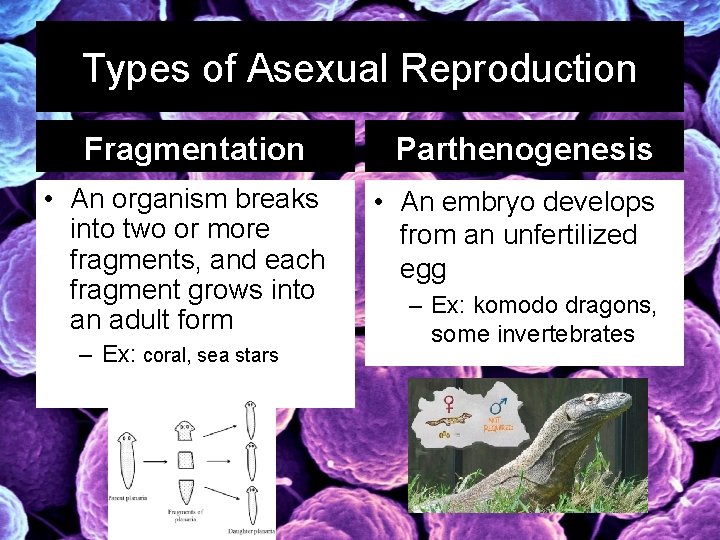
Types of Asexual Reproduction Fragmentation • An organism breaks into two or more fragments, and each fragment grows into an adult form – Ex: coral, sea stars Parthenogenesis • An embryo develops from an unfertilized egg – Ex: komodo dragons, some invertebrates
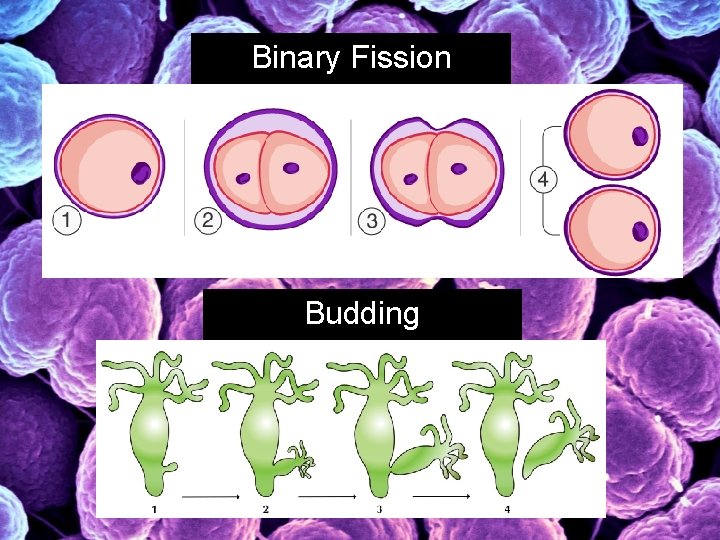
Binary Fission Budding
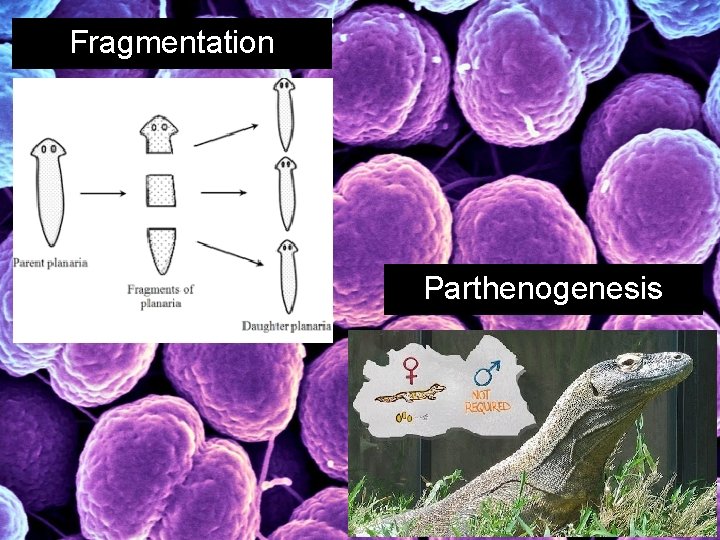
Fragmentation Parthenogenesis
All living things are made of cells.
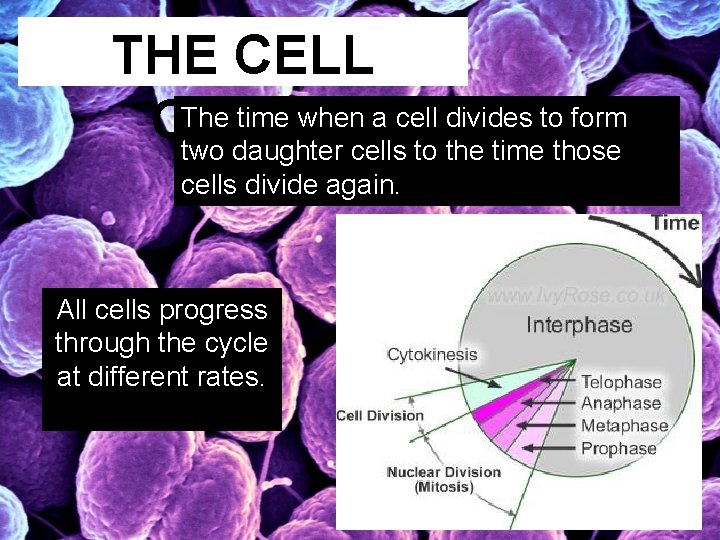
THE CELL The time when a cell divides to form CYCLE two daughter cells to the time those cells divide again. All cells progress through the cycle at different rates.
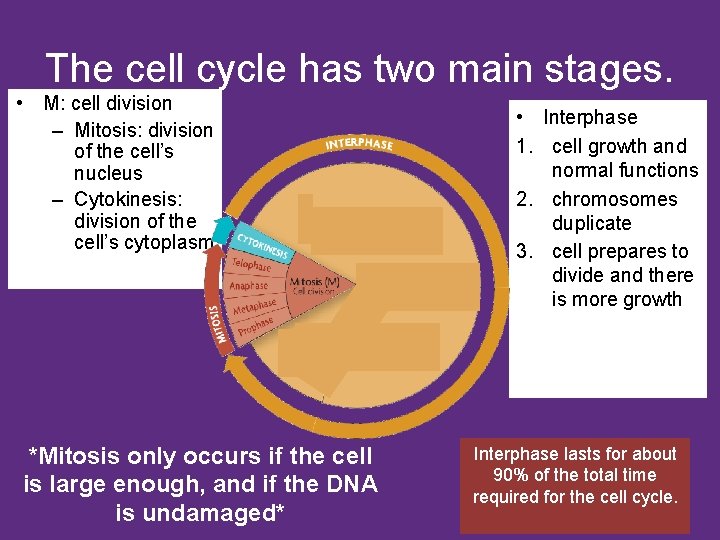
The cell cycle has two main stages. • M: cell division – Mitosis: division of the cell’s nucleus – Cytokinesis: division of the cell’s cytoplasm *Mitosis only occurs if the cell is large enough, and if the DNA is undamaged* • Interphase 1. cell growth and normal functions 2. chromosomes duplicate 3. cell prepares to divide and there is more growth Interphase lasts for about 90% of the total time required for the cell cycle.
MITOSI
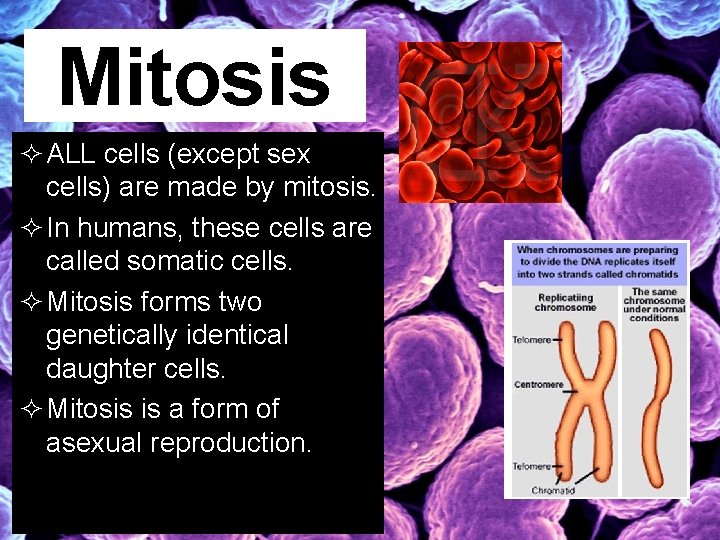
Mitosis ² ALL cells (except sex cells) are made by mitosis. ² In humans, these cells are called somatic cells. ² Mitosis forms two genetically identical daughter cells. ² Mitosis is a form of asexual reproduction.
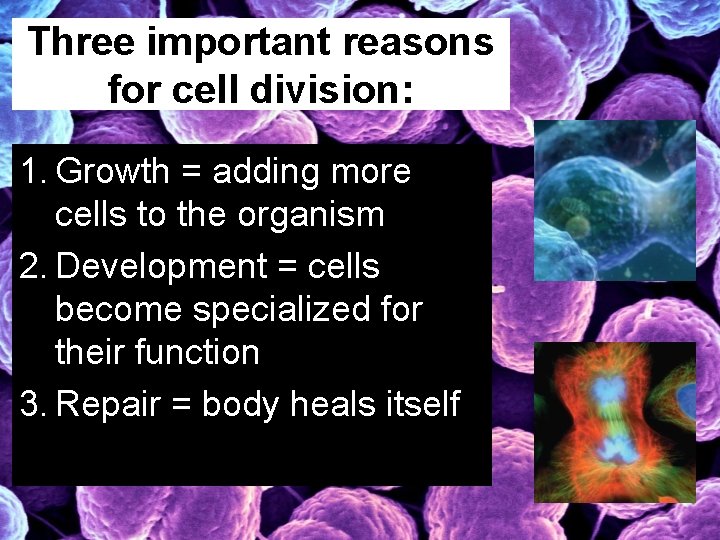
Three important reasons for cell division: 1. Growth = adding more cells to the organism 2. Development = cells become specialized for their function 3. Repair = body heals itself
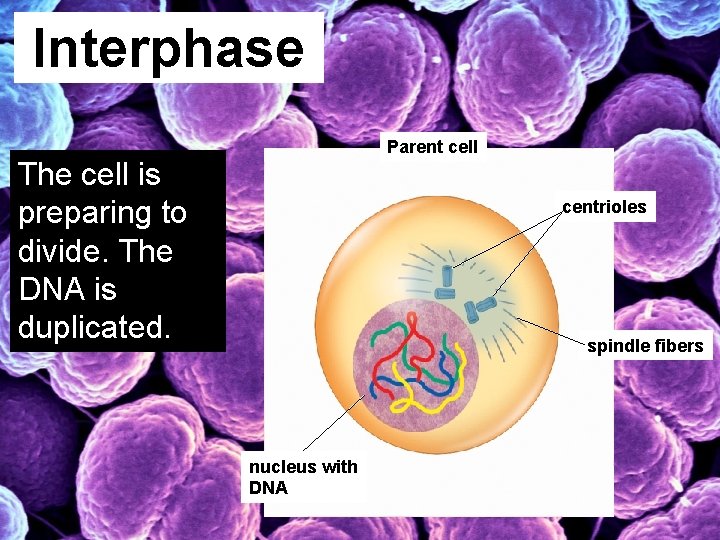
Interphase Parent cell The cell is preparing to divide. The DNA is duplicated. centrioles spindle fibers nucleus with DNA
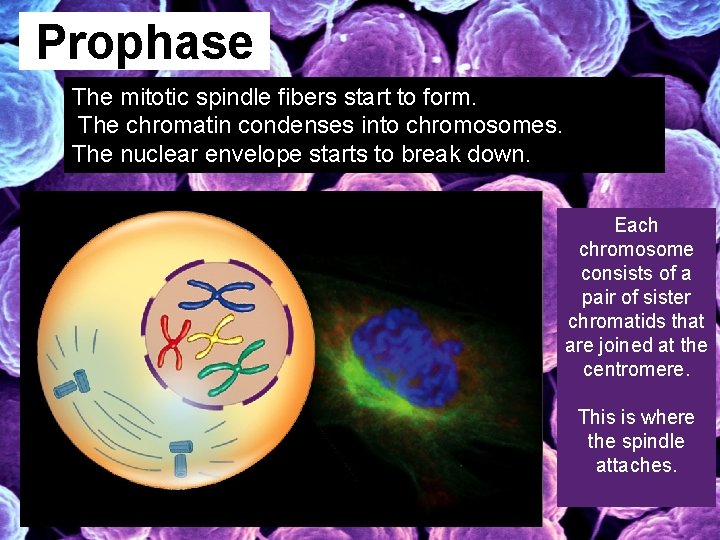
Prophase The mitotic spindle fibers start to form. The chromatin condenses into chromosomes. The nuclear envelope starts to break down. Each chromosome consists of a pair of sister chromatids that are joined at the centromere. This is where the spindle attaches.
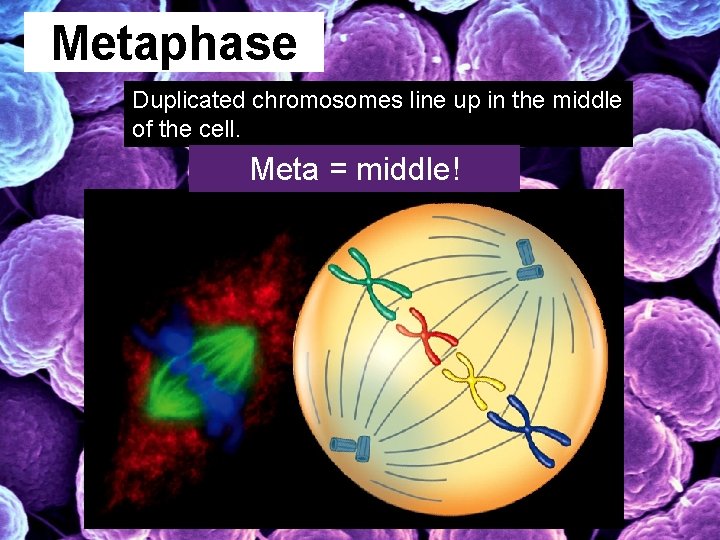
Metaphase Duplicated chromosomes line up in the middle of the cell. Meta = middle!
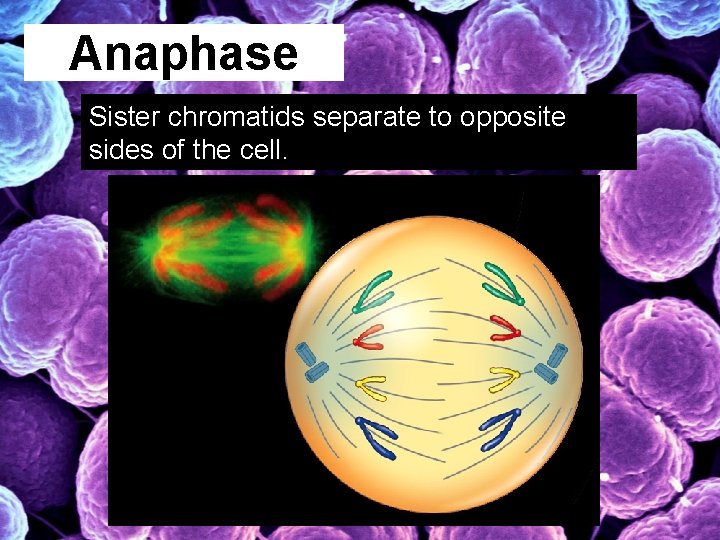
Anaphase Sister chromatids separate to opposite sides of the cell.
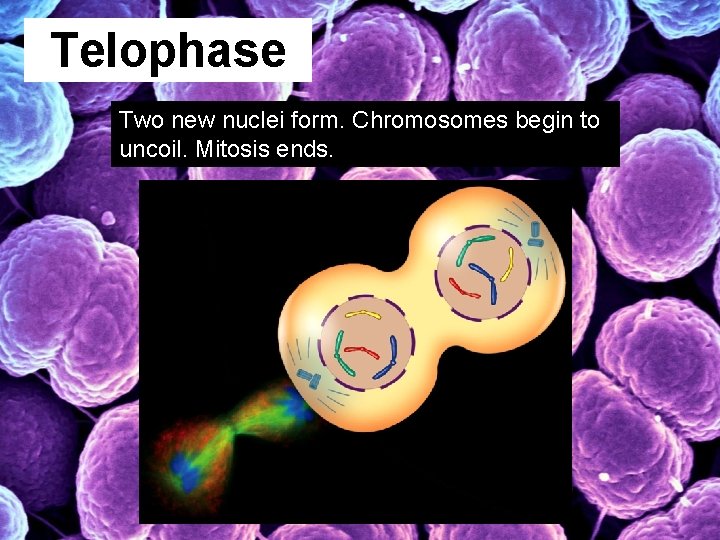
Telophase Two new nuclei form. Chromosomes begin to uncoil. Mitosis ends.
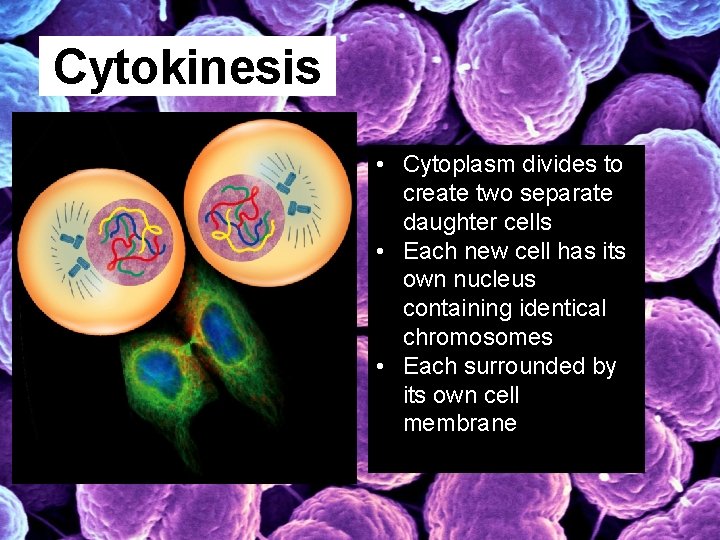
Cytokinesis • Cytoplasm divides to create two separate daughter cells • Each new cell has its own nucleus containing identical chromosomes • Each surrounded by its own cell membrane
CANCER Free Write: Free Draw: • What is cancer to • What does cancer you? look like to you? • How does it relate to what we’ve been talking about in class?
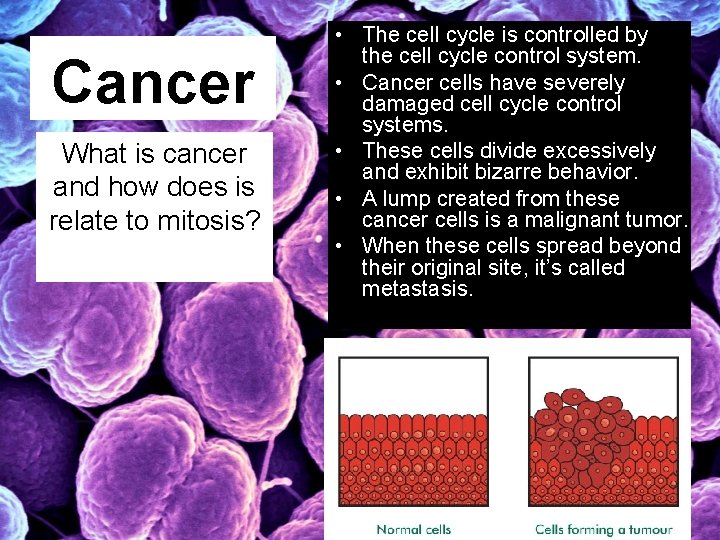
Cancer What is cancer and how does is relate to mitosis? • The cell cycle is controlled by the cell cycle control system. • Cancer cells have severely damaged cell cycle control systems. • These cells divide excessively and exhibit bizarre behavior. • A lump created from these cancer cells is a malignant tumor. • When these cells spread beyond their original site, it’s called metastasis.
- Slides: 22