
Asexual Reproduction Reproduction def 1 the production of
- Slides: 24
Asexual Reproduction
Reproduction (def) 1. the production of individuals of their own kind 2. Necessary for the survival of the species, not the organism a. Species - a group of organisms that can reproduce and produce fertile offspring 2 Types of reproduction 1. asexual 2. sexual
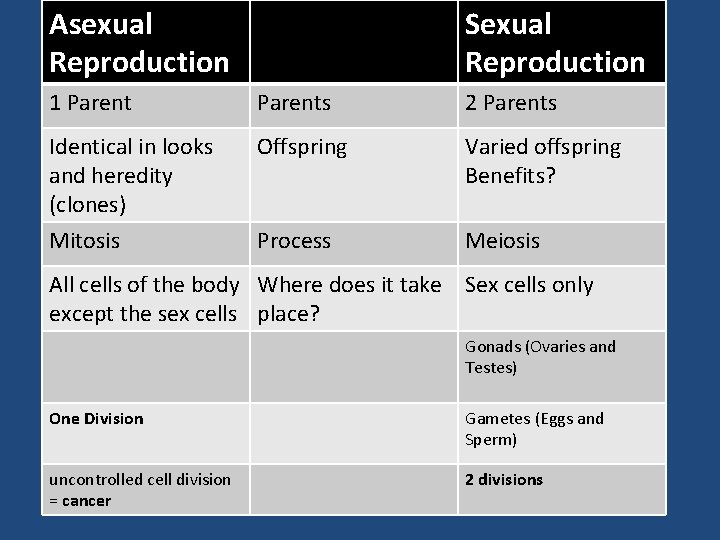
Asexual Reproduction Sexual Reproduction 1 Parents 2 Parents Identical in looks and heredity (clones) Mitosis Offspring Varied offspring Benefits? Process Meiosis All cells of the body Where does it take Sex cells only except the sex cells place? Gonads (Ovaries and Testes) One Division Gametes (Eggs and Sperm) uncontrolled cell division = cancer 2 divisions
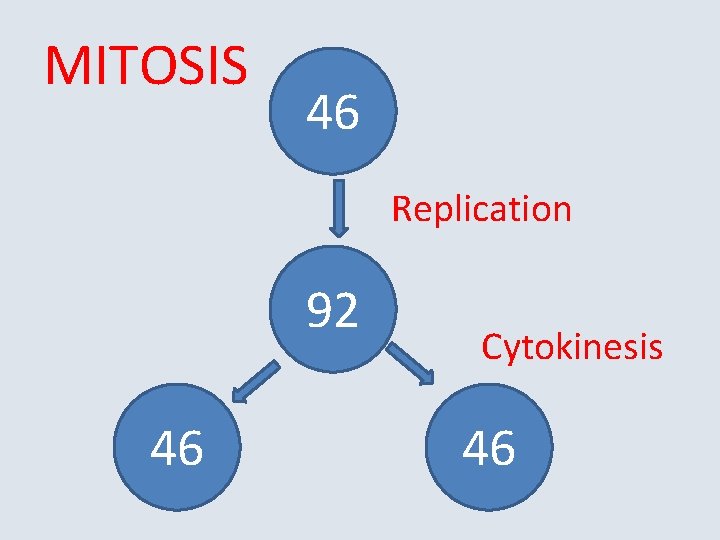
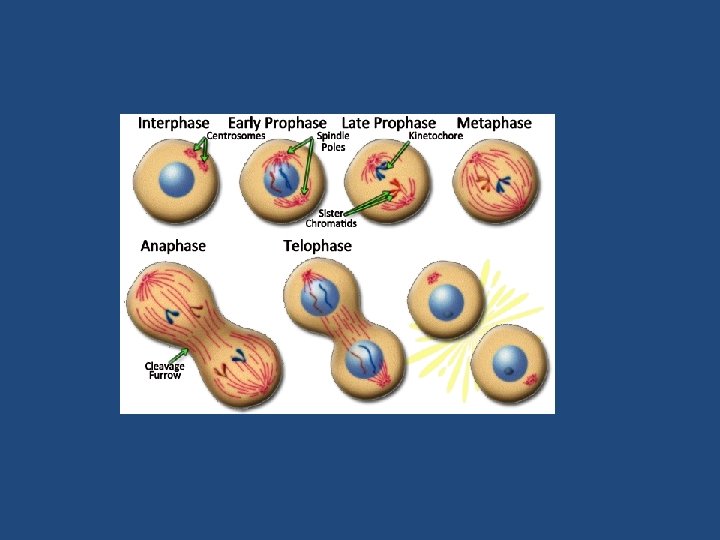
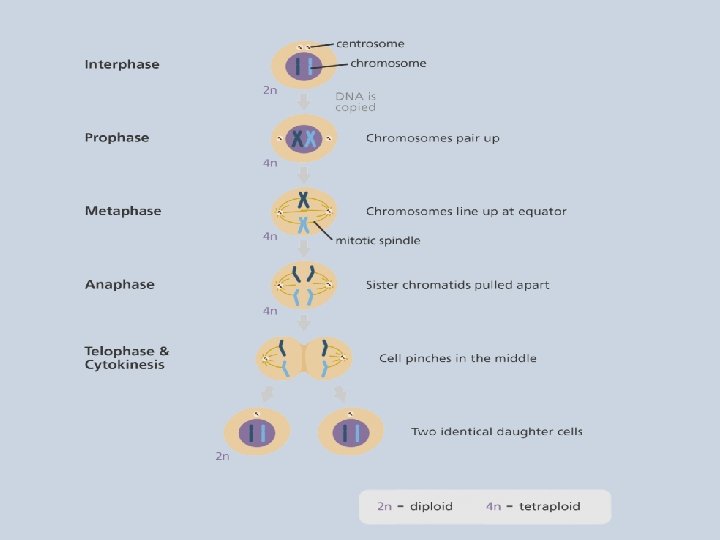
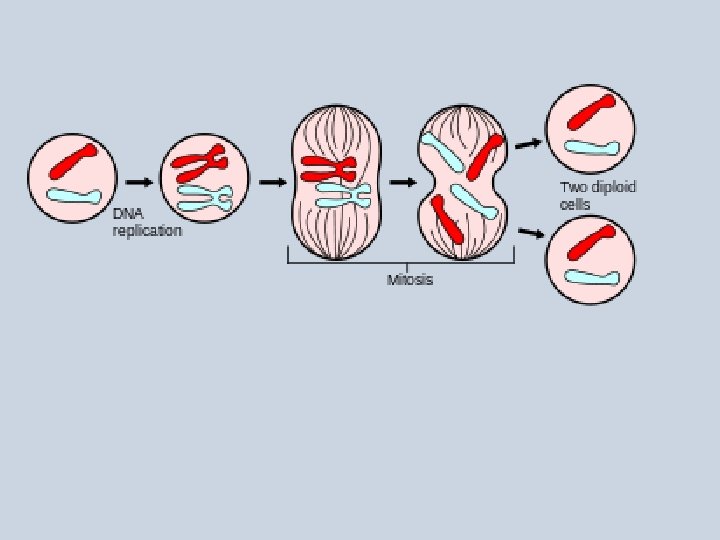
• Mitosis – The orderly series of changes that results in the duplication of the complete set of chromosomes and the formation of two new nuclei that are identical to each other and to the nucleus of the original parent cell – All cells arise from other cells by cell division • Nucleus duplicates and cytoplasm divides into two DAUGHTER CELLS • **ALL CELLS ARE GENETICALLY IDENTICAL – **CLONES
MITOSIS 46 Replication 92 46 Cytokinesis 46
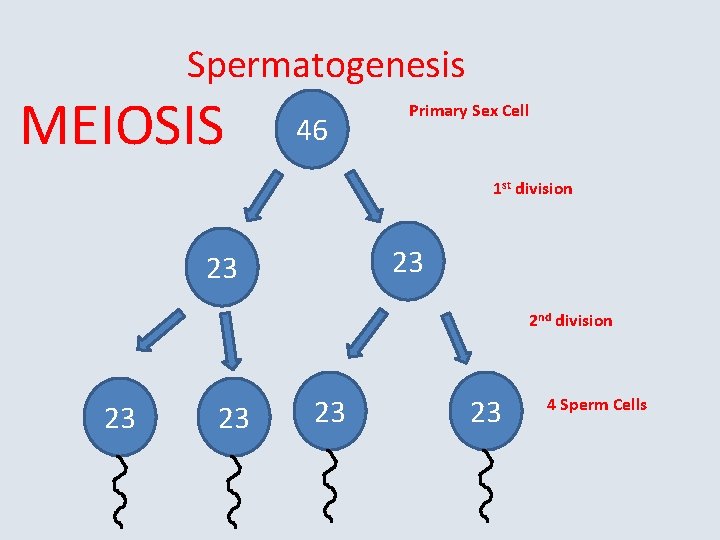
Spermatogenesis MEIOSIS 46 Primary Sex Cell 1 st division 23 23 2 nd division 23 23 4 Sperm Cells
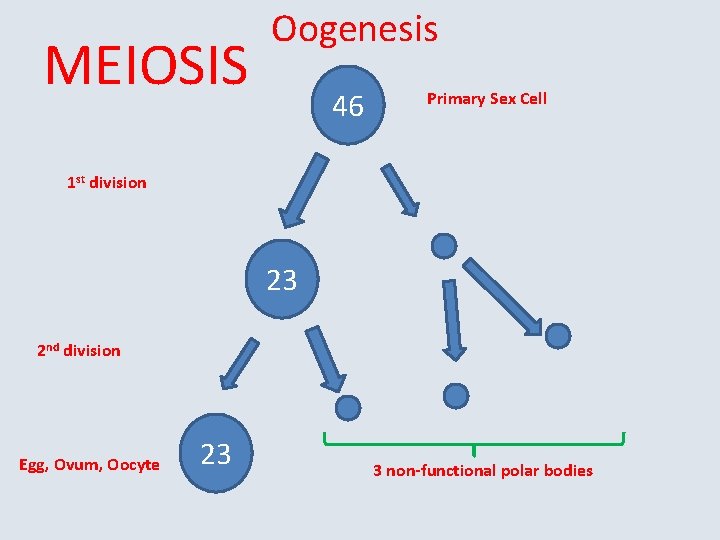
MEIOSIS Oogenesis 46 Primary Sex Cell 1 st division 23 2 nd division Egg, Ovum, Oocyte 23 3 non-functional polar bodies
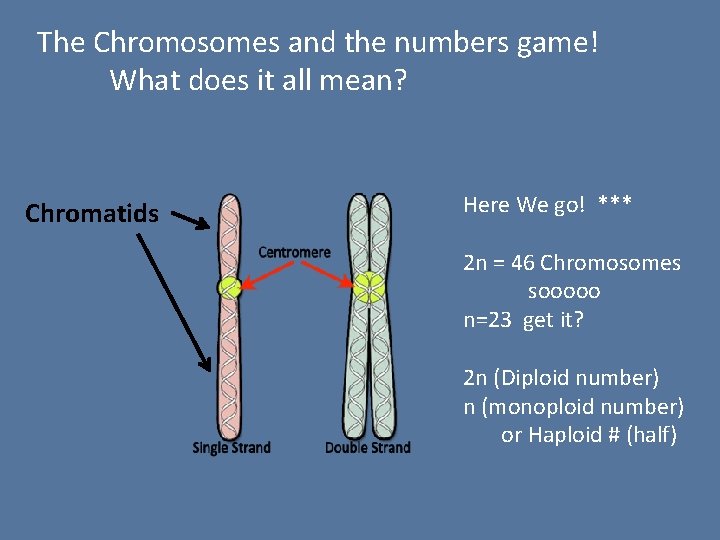
The Chromosomes and the numbers game! What does it all mean? Chromatids Here We go! *** 2 n = 46 Chromosomes sooooo n=23 get it? 2 n (Diploid number) n (monoploid number) or Haploid # (half)
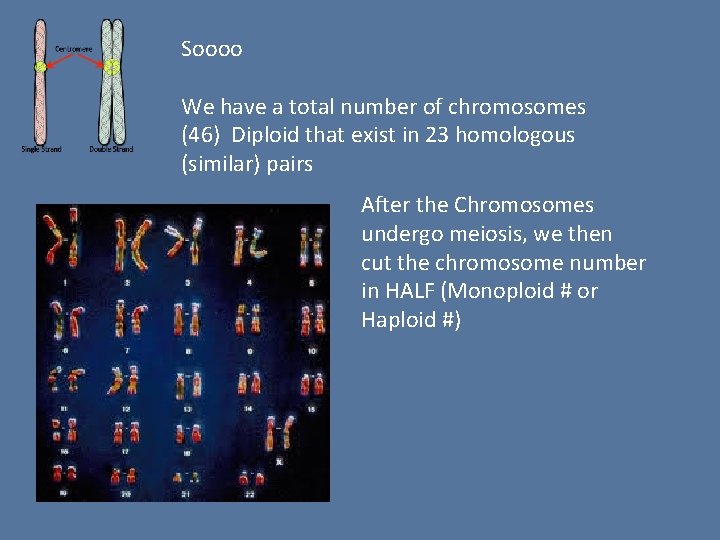
Soooo We have a total number of chromosomes (46) Diploid that exist in 23 homologous (similar) pairs After the Chromosomes undergo meiosis, we then cut the chromosome number in HALF (Monoploid # or Haploid #)
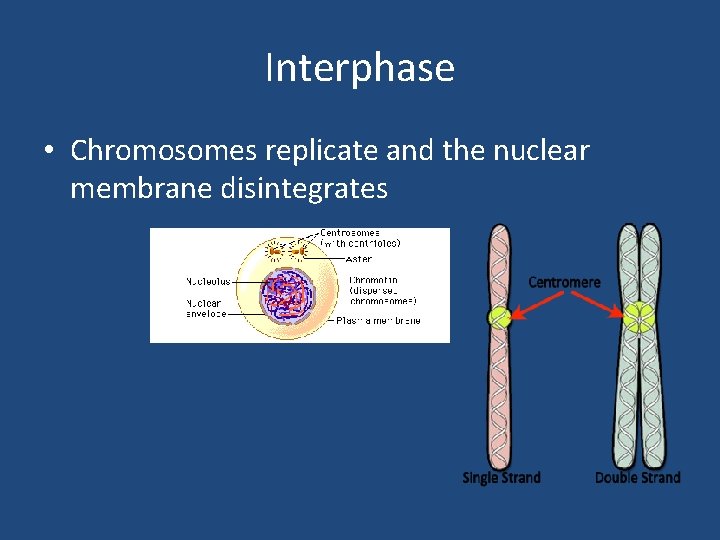
Interphase • Chromosomes replicate and the nuclear membrane disintegrates
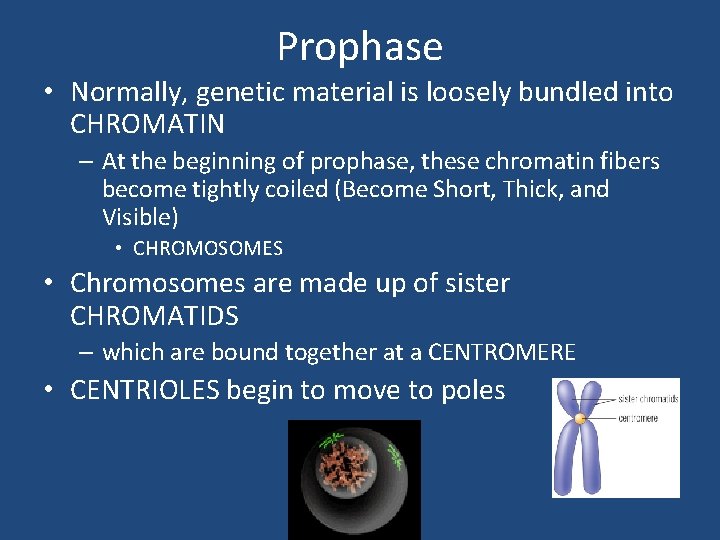
Prophase • Normally, genetic material is loosely bundled into CHROMATIN – At the beginning of prophase, these chromatin fibers become tightly coiled (Become Short, Thick, and Visible) • CHROMOSOMES • Chromosomes are made up of sister CHROMATIDS – which are bound together at a CENTROMERE • CENTRIOLES begin to move to poles
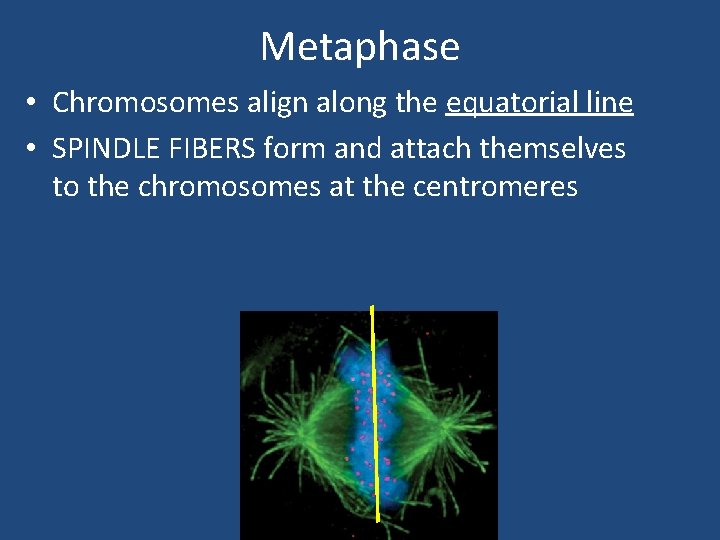
Metaphase • Chromosomes align along the equatorial line • SPINDLE FIBERS form and attach themselves to the chromosomes at the centromeres
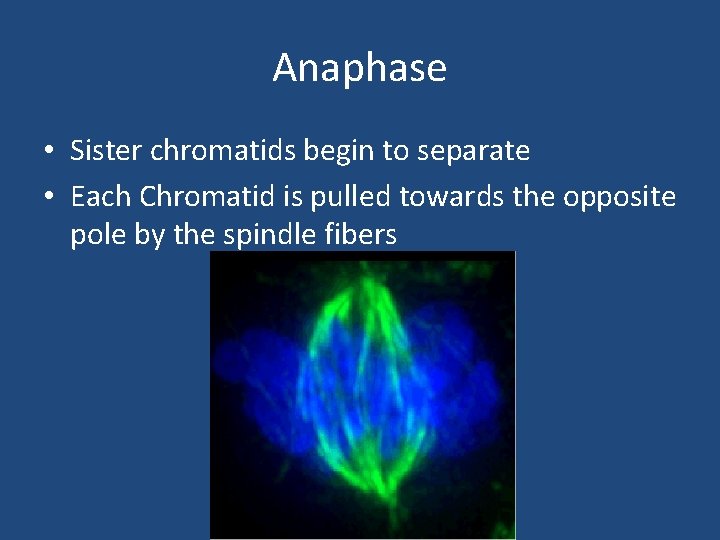
Anaphase • Sister chromatids begin to separate • Each Chromatid is pulled towards the opposite pole by the spindle fibers
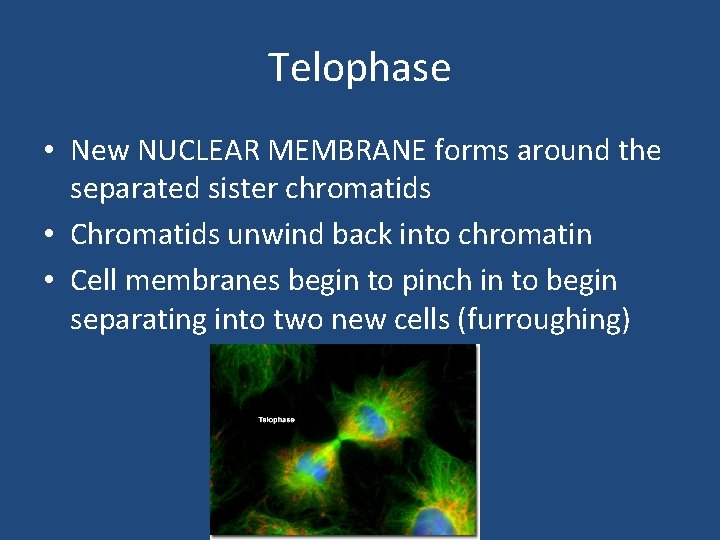
Telophase • New NUCLEAR MEMBRANE forms around the separated sister chromatids • Chromatids unwind back into chromatin • Cell membranes begin to pinch in to begin separating into two new cells (furroughing)
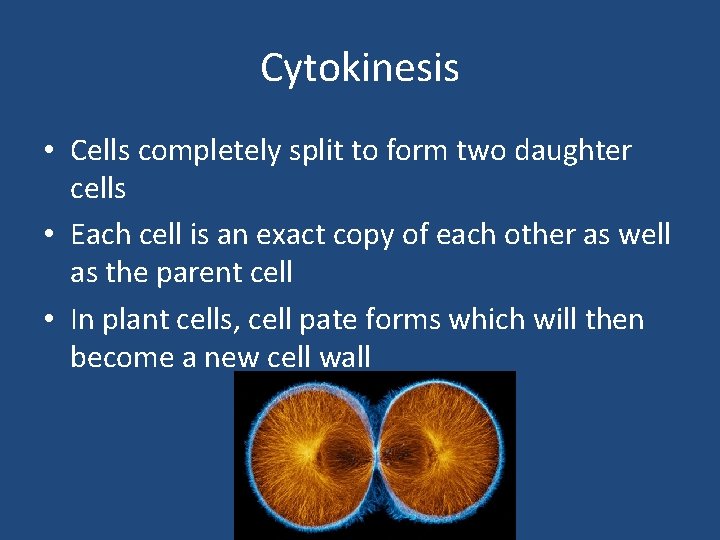
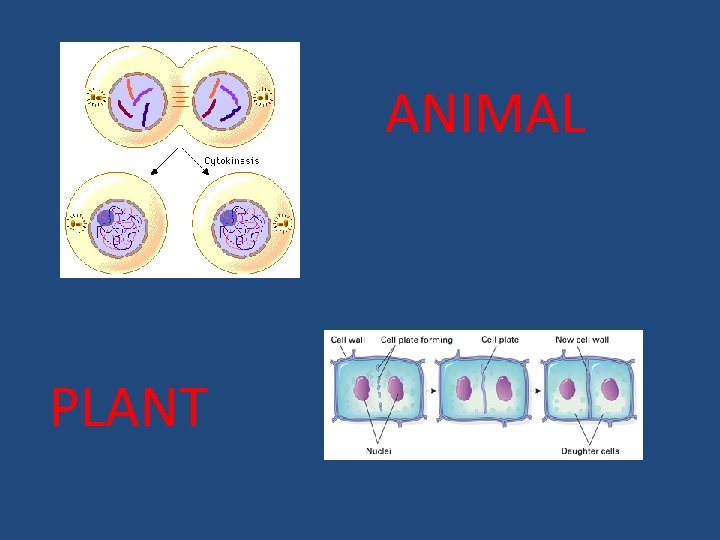
Cytokinesis • Cells completely split to form two daughter cells • Each cell is an exact copy of each other as well as the parent cell • In plant cells, cell pate forms which will then become a new cell wall
ANIMAL PLANT
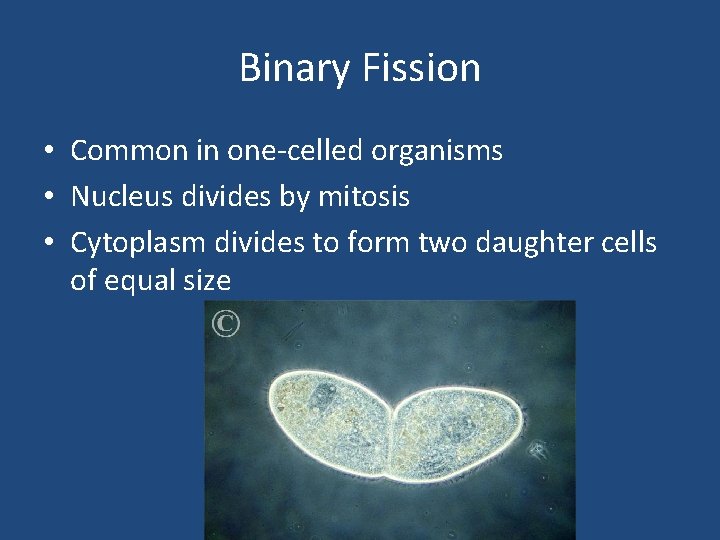
Binary Fission • Common in one-celled organisms • Nucleus divides by mitosis • Cytoplasm divides to form two daughter cells of equal size
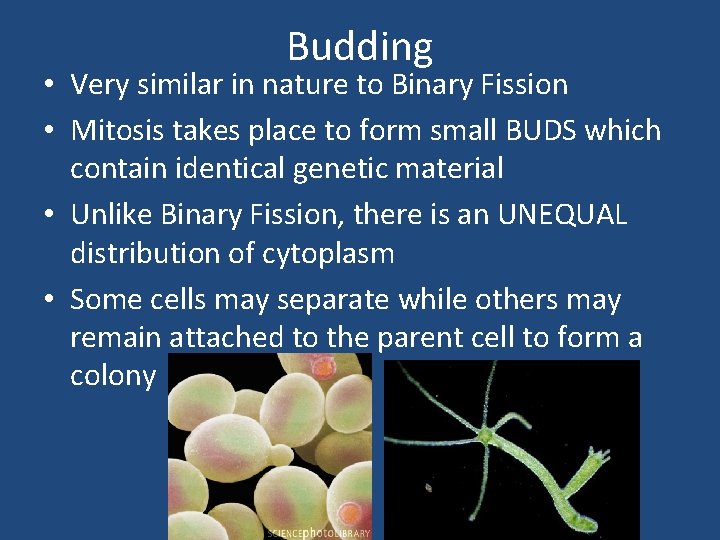
Budding • Very similar in nature to Binary Fission • Mitosis takes place to form small BUDS which contain identical genetic material • Unlike Binary Fission, there is an UNEQUAL distribution of cytoplasm • Some cells may separate while others may remain attached to the parent cell to form a colony
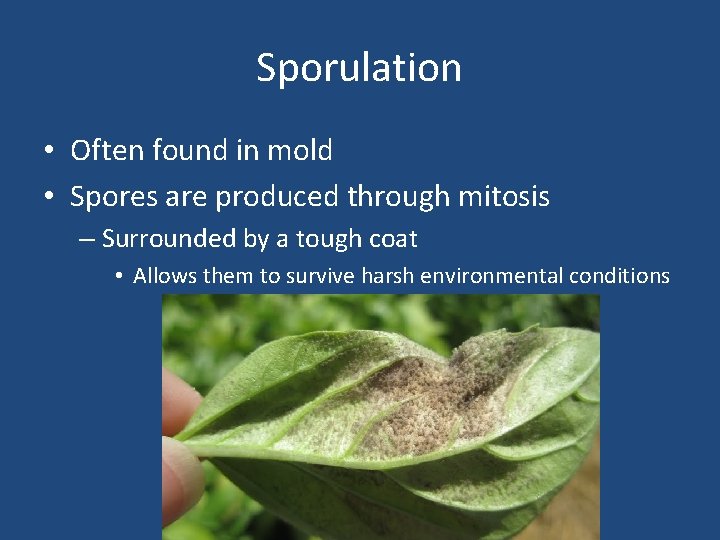
Sporulation • Often found in mold • Spores are produced through mitosis – Surrounded by a tough coat • Allows them to survive harsh environmental conditions
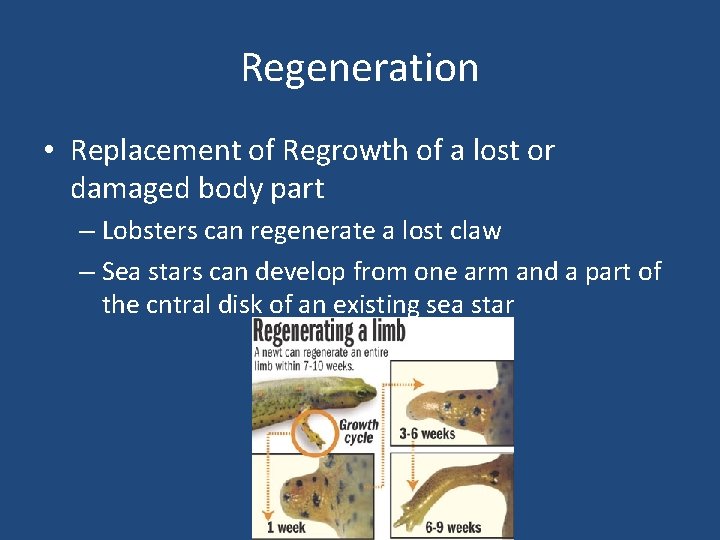
Regeneration • Replacement of Regrowth of a lost or damaged body part – Lobsters can regenerate a lost claw – Sea stars can develop from one arm and a part of the cntral disk of an existing sea star
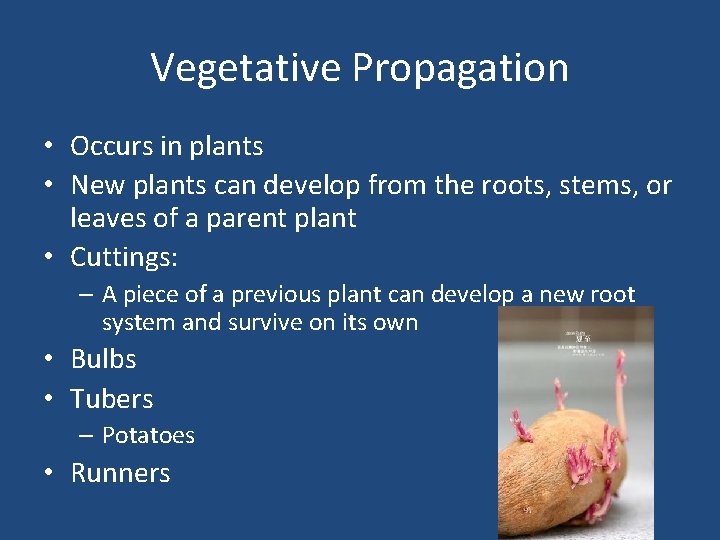
Vegetative Propagation • Occurs in plants • New plants can develop from the roots, stems, or leaves of a parent plant • Cuttings: – A piece of a previous plant can develop a new root system and survive on its own • Bulbs • Tubers – Potatoes • Runners