
Asexual Reproduction Mitosis Asexual Reproduction Definition one parent
- Slides: 24
Asexual Reproduction & Mitosis
Asexual Reproduction • Definition: one parent produces genetically identical offspring • Advantages: – Can produce offspring w/o a mate – Many offspring in short time • Disadvantages: – No variation in offspring – No adaptation to new/changing environments
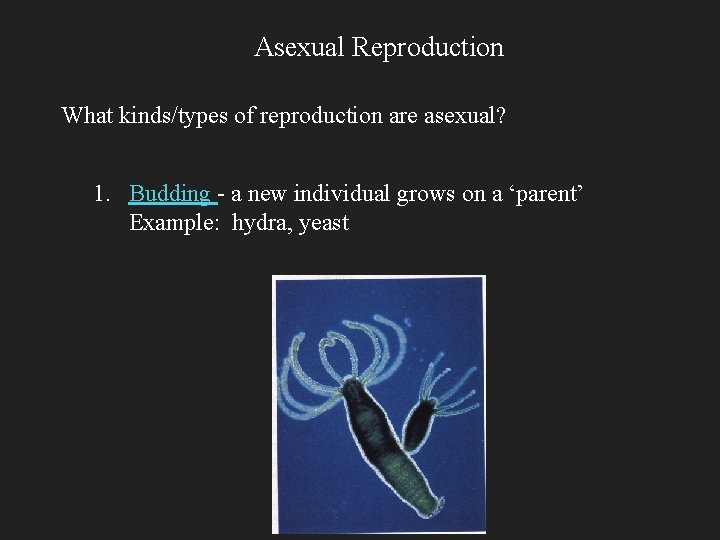
Asexual Reproduction What kinds/types of reproduction are asexual? 1. Budding - a new individual grows on a ‘parent’ Example: hydra, yeast
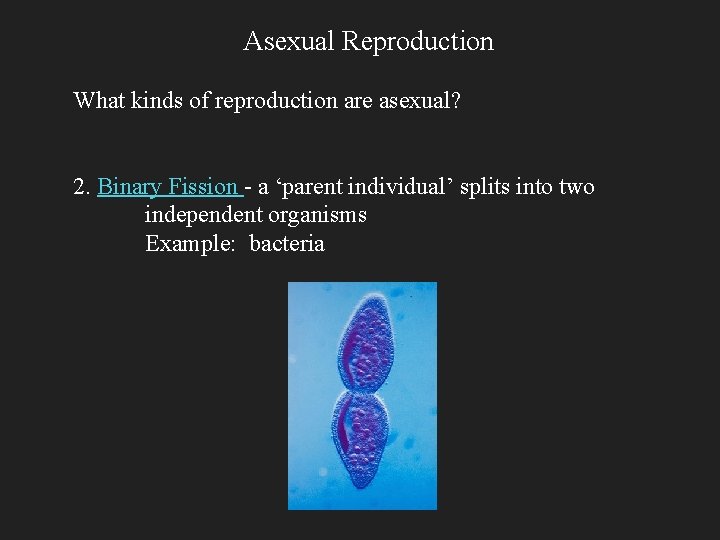
Asexual Reproduction What kinds of reproduction are asexual? 2. Binary Fission - a ‘parent individual’ splits into two independent organisms Example: bacteria
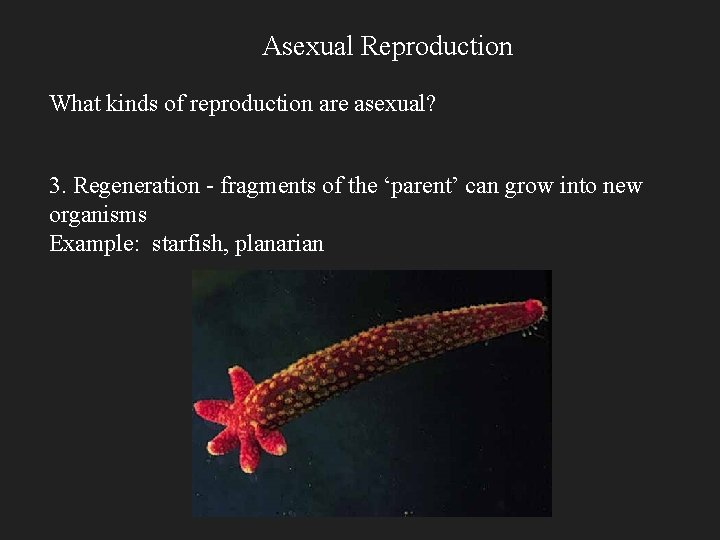
Asexual Reproduction What kinds of reproduction are asexual? 3. Regeneration - fragments of the ‘parent’ can grow into new organisms Example: starfish, planarian
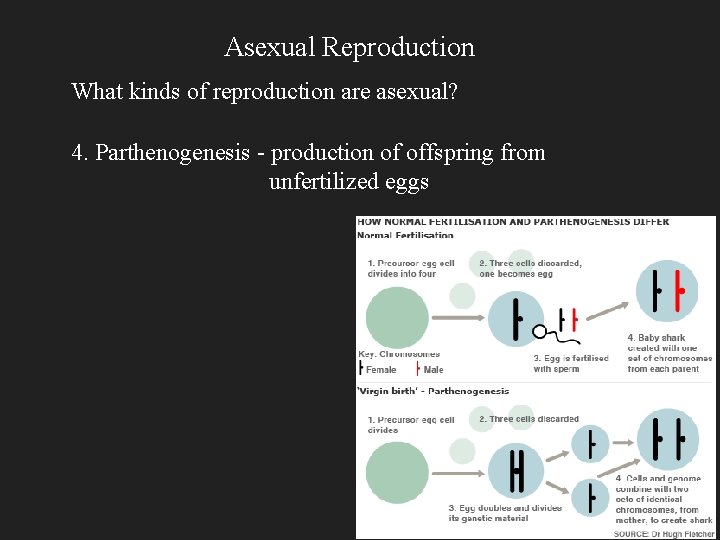
Asexual Reproduction What kinds of reproduction are asexual? 4. Parthenogenesis - production of offspring from unfertilized eggs
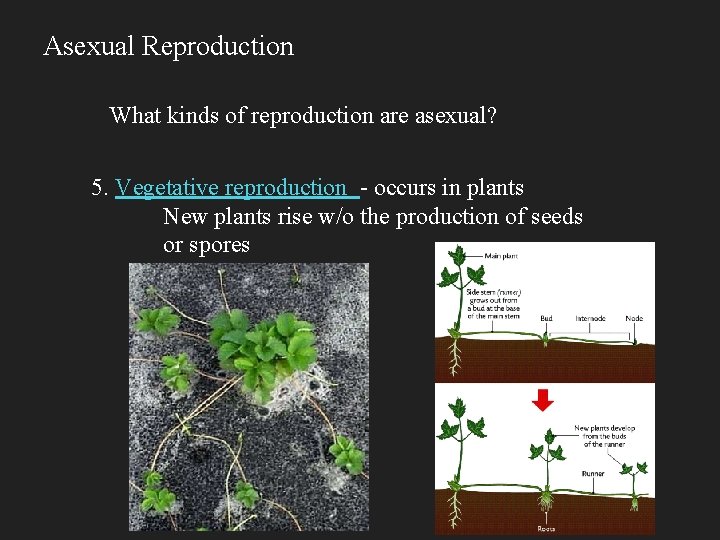
Asexual Reproduction What kinds of reproduction are asexual? 5. Vegetative reproduction - occurs in plants New plants rise w/o the production of seeds or spores
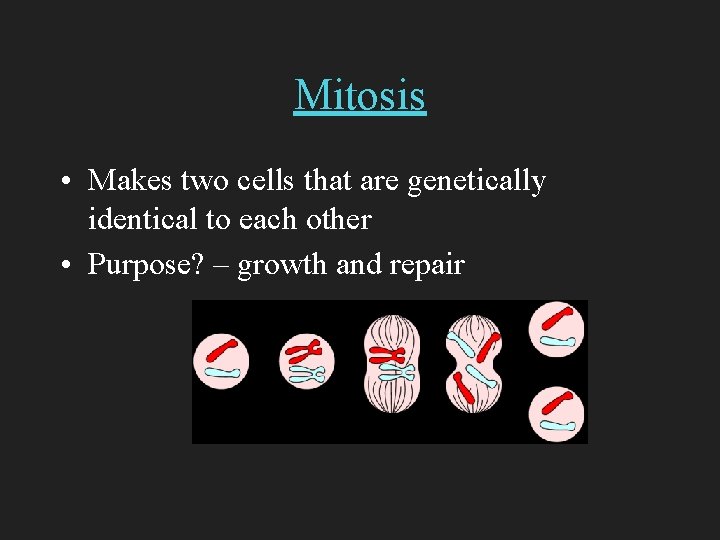
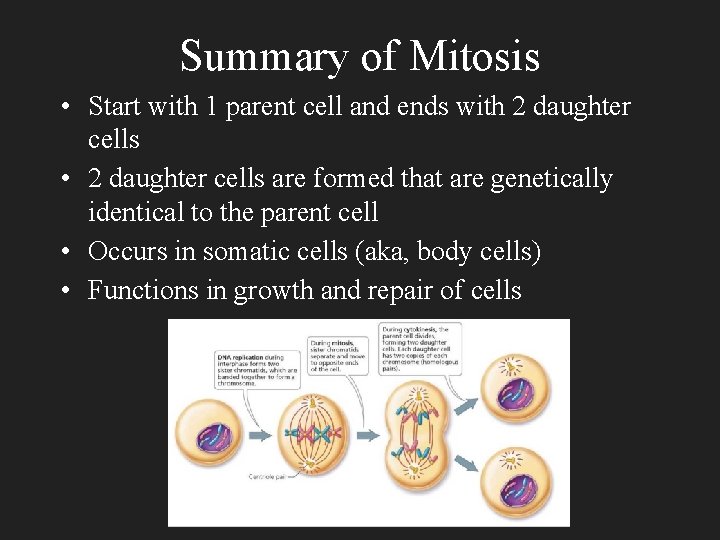
Mitosis • Makes two cells that are genetically identical to each other • Purpose? – growth and repair
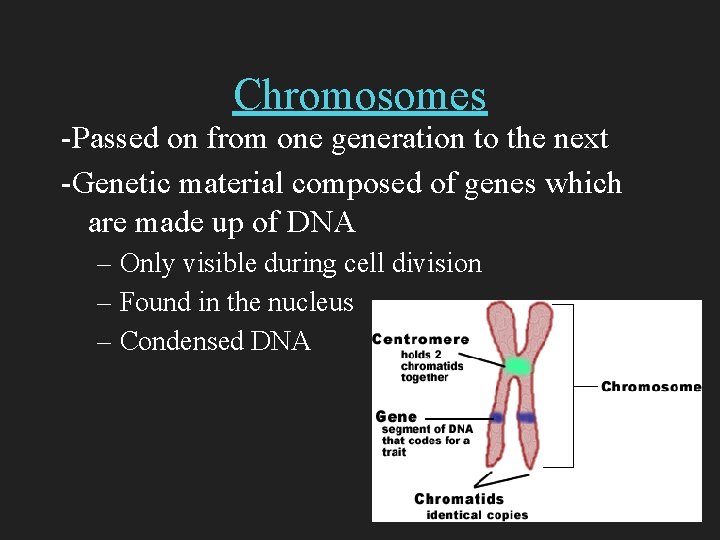
Chromosomes -Passed on from one generation to the next -Genetic material composed of genes which are made up of DNA – Only visible during cell division – Found in the nucleus – Condensed DNA
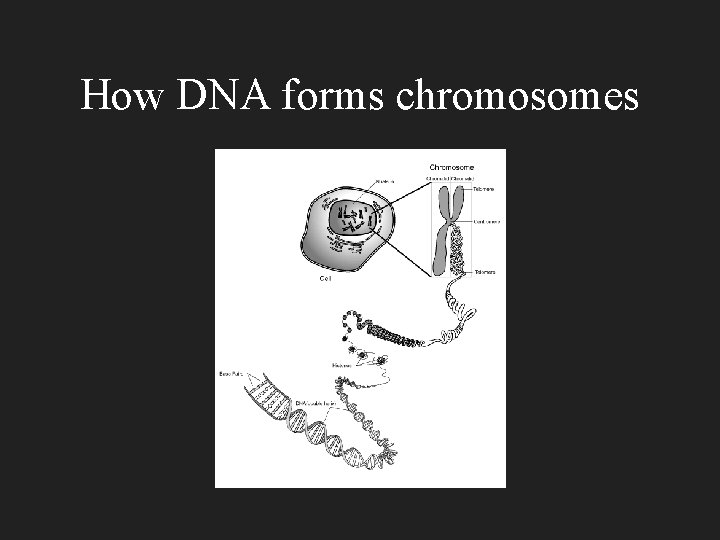
How DNA forms chromosomes
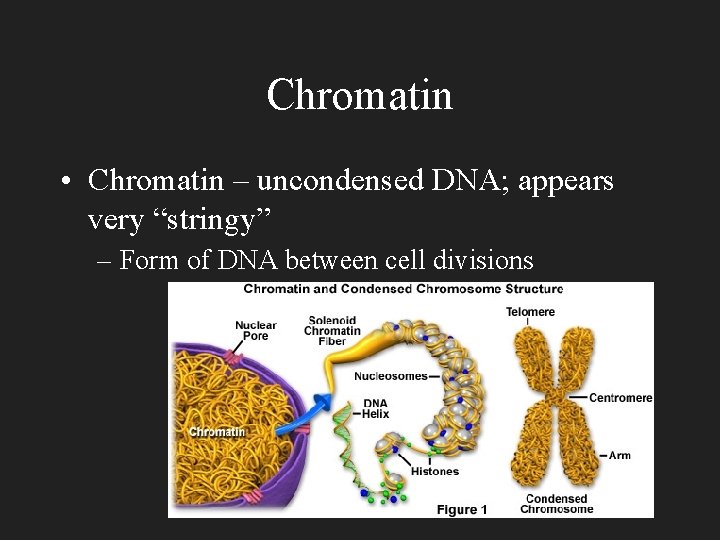
Chromatin • Chromatin – uncondensed DNA; appears very “stringy” – Form of DNA between cell divisions
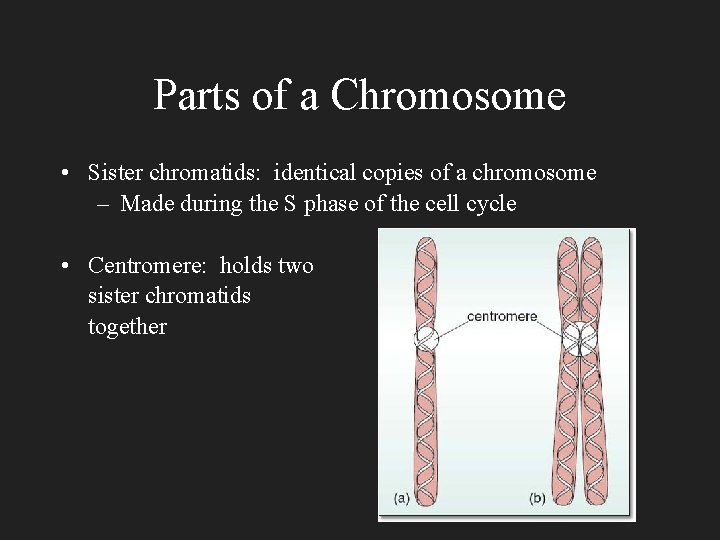
Parts of a Chromosome • Sister chromatids: identical copies of a chromosome – Made during the S phase of the cell cycle • Centromere: holds two sister chromatids together
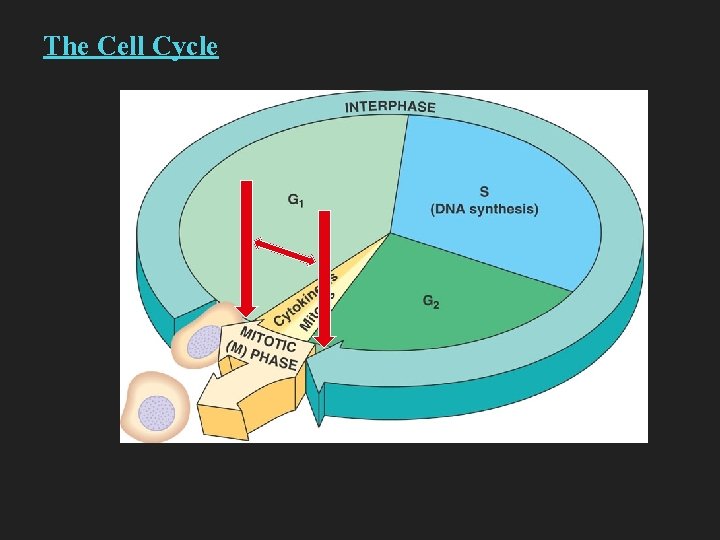
The Cell Cycle
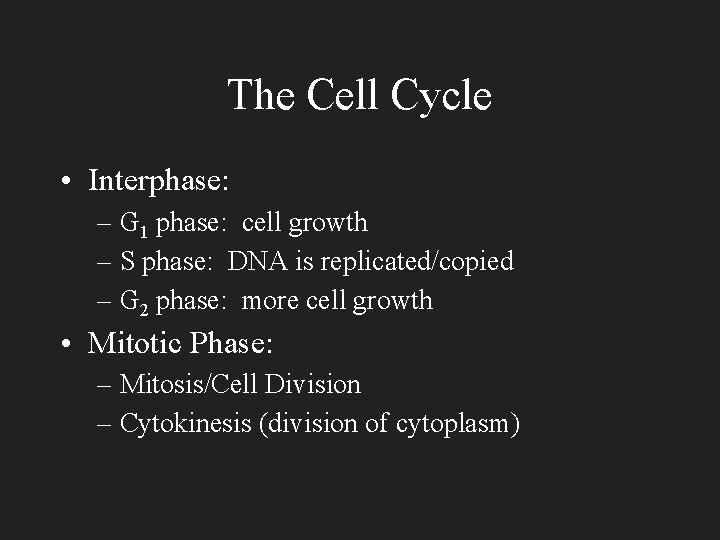
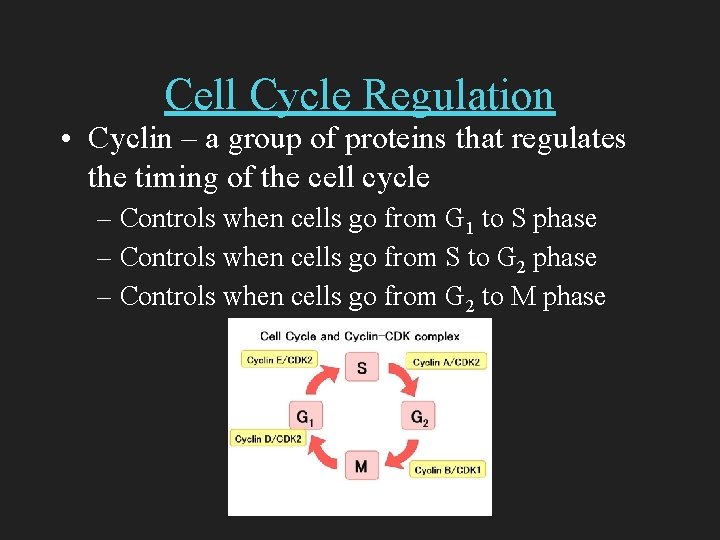
The Cell Cycle • Interphase: – G 1 phase: cell growth – S phase: DNA is replicated/copied – G 2 phase: more cell growth • Mitotic Phase: – Mitosis/Cell Division – Cytokinesis (division of cytoplasm)
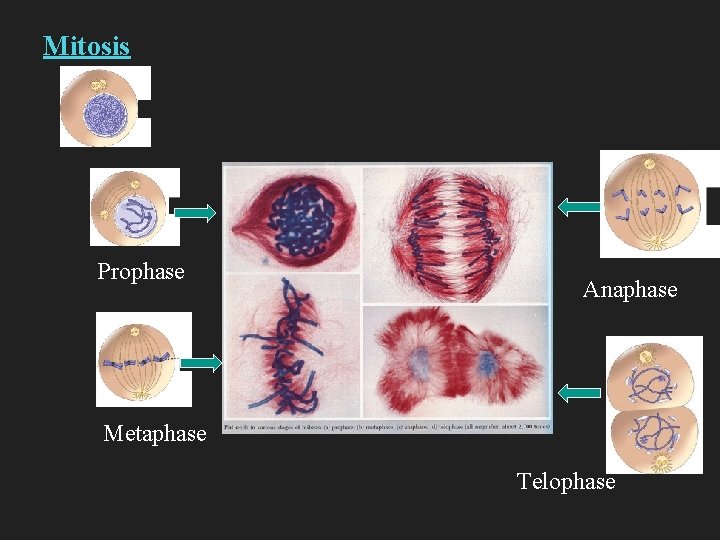
Mitosis Prophase Anaphase Metaphase Telophase
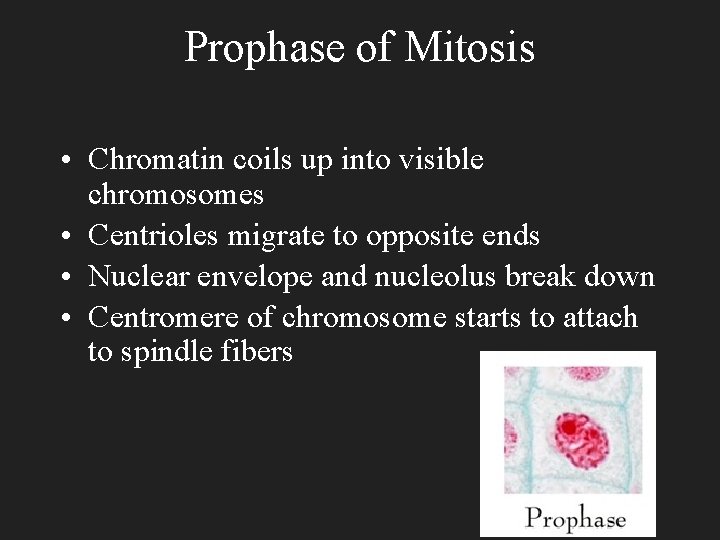
Prophase of Mitosis • Chromatin coils up into visible chromosomes • Centrioles migrate to opposite ends • Nuclear envelope and nucleolus break down • Centromere of chromosome starts to attach to spindle fibers
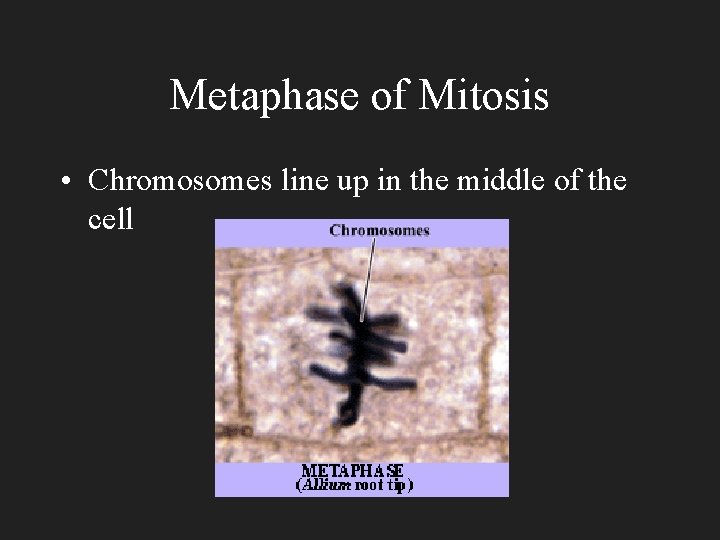
Metaphase of Mitosis • Chromosomes line up in the middle of the cell
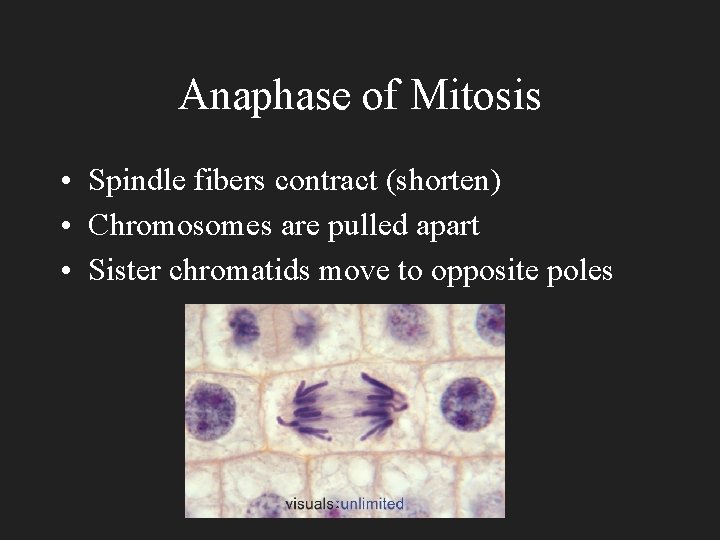
Anaphase of Mitosis • Spindle fibers contract (shorten) • Chromosomes are pulled apart • Sister chromatids move to opposite poles
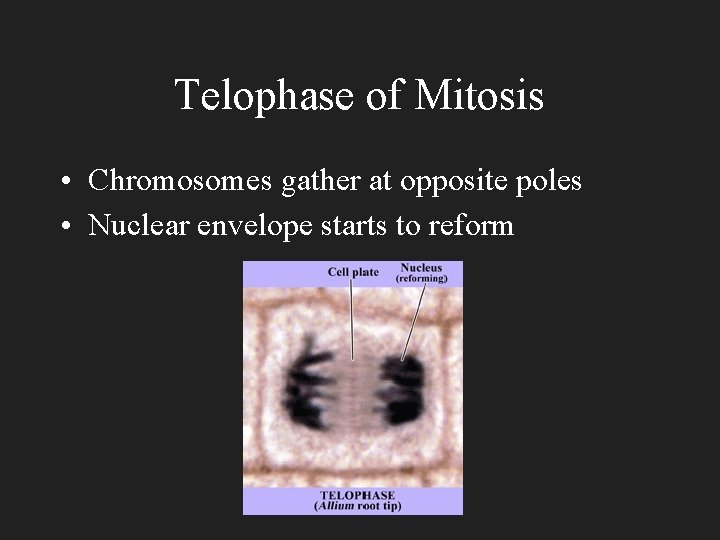
Telophase of Mitosis • Chromosomes gather at opposite poles • Nuclear envelope starts to reform
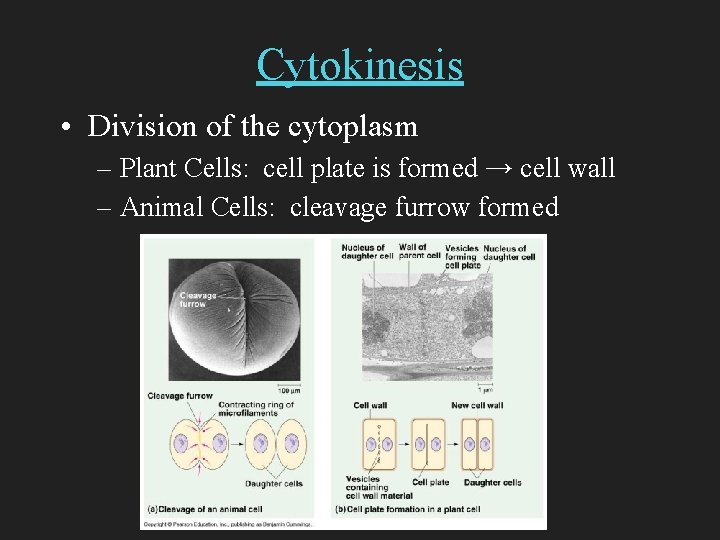
Cytokinesis • Division of the cytoplasm – Plant Cells: cell plate is formed → cell wall – Animal Cells: cleavage furrow formed
Summary of Mitosis • Start with 1 parent cell and ends with 2 daughter cells • 2 daughter cells are formed that are genetically identical to the parent cell • Occurs in somatic cells (aka, body cells) • Functions in growth and repair of cells
Virtual Animation of Mitosis • Check out this site: Virtual Mitosis Animation
Cell Cycle Regulation • Cyclin – a group of proteins that regulates the timing of the cell cycle – Controls when cells go from G 1 to S phase – Controls when cells go from S to G 2 phase – Controls when cells go from G 2 to M phase
Uncontrolled Cell Growth • Cancer – abnormally rapid cell division • Cells of the tumor may break lose and spread or metastasize through the body • May be caused by radiation, pollution, bad luck, viral exposure • Many cancer cells have a mutation/defect in gene p 53 (gene that normally tells the cell to wait until all chromosomes have been replicated before proceeding to mitosis)