
Asexual Reproduction Many singlecelled organisms reproduce by splitting
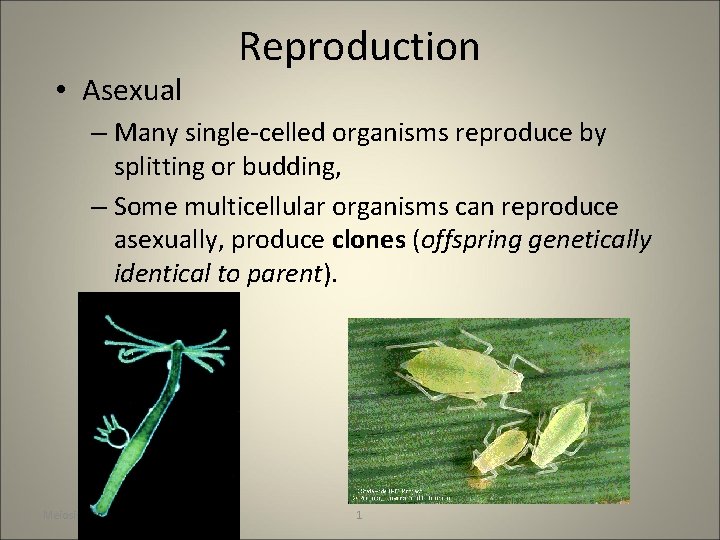
• Asexual Reproduction – Many single-celled organisms reproduce by splitting or budding, – Some multicellular organisms can reproduce asexually, produce clones (offspring genetically identical to parent). Meiosis KM 1
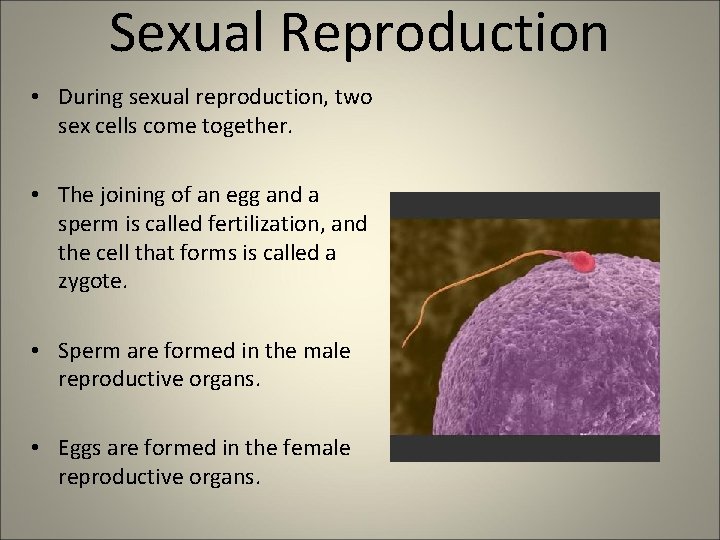
Sexual Reproduction • During sexual reproduction, two sex cells come together. • The joining of an egg and a sperm is called fertilization, and the cell that forms is called a zygote. • Sperm are formed in the male reproductive organs. • Eggs are formed in the female reproductive organs.
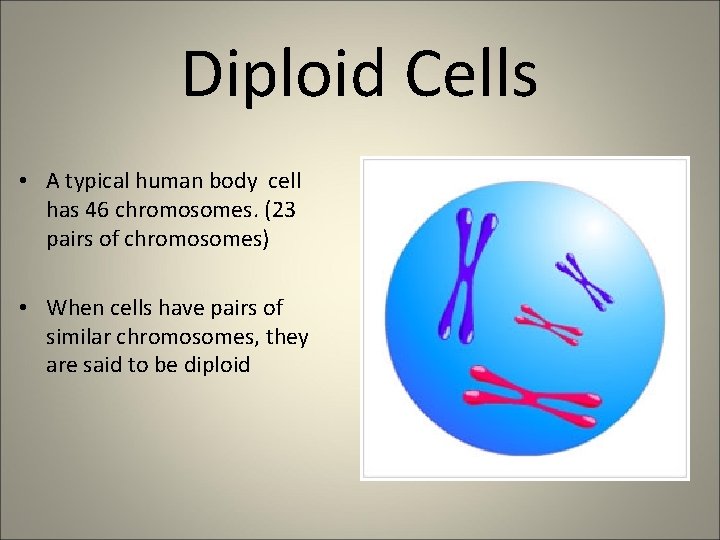
Diploid Cells • A typical human body cell has 46 chromosomes. (23 pairs of chromosomes) • When cells have pairs of similar chromosomes, they are said to be diploid
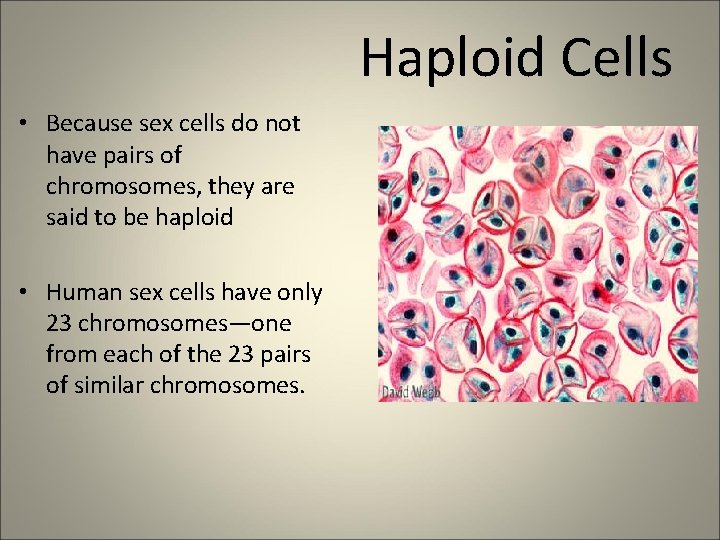
Haploid Cells • Because sex cells do not have pairs of chromosomes, they are said to be haploid • Human sex cells have only 23 chromosomes—one from each of the 23 pairs of similar chromosomes.

Meiosis and Sex Cells • A process called meiosis (mi OH sus) produces haploid sex cells.
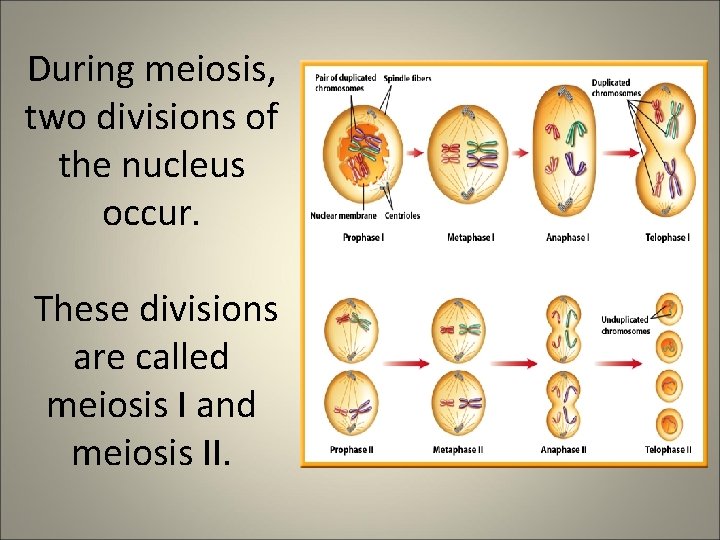
During meiosis, two divisions of the nucleus occur. These divisions are called meiosis I and meiosis II.

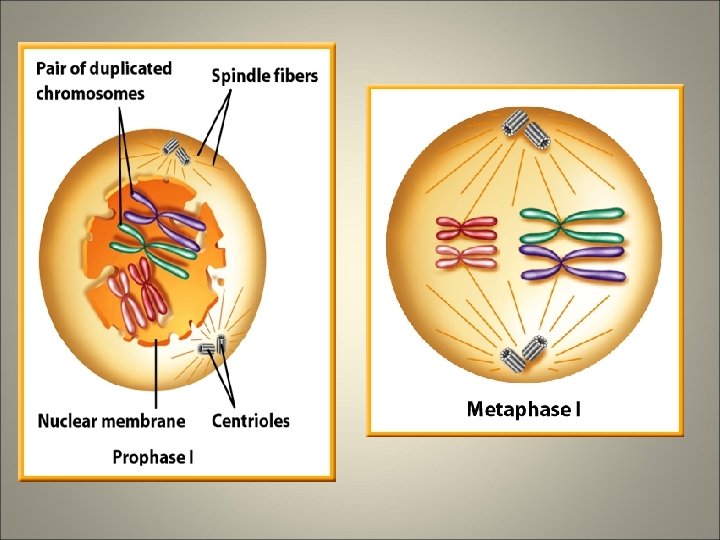
Meiosis I • Before meiosis begins, each chromosome is duplicated, just as in mitosis.
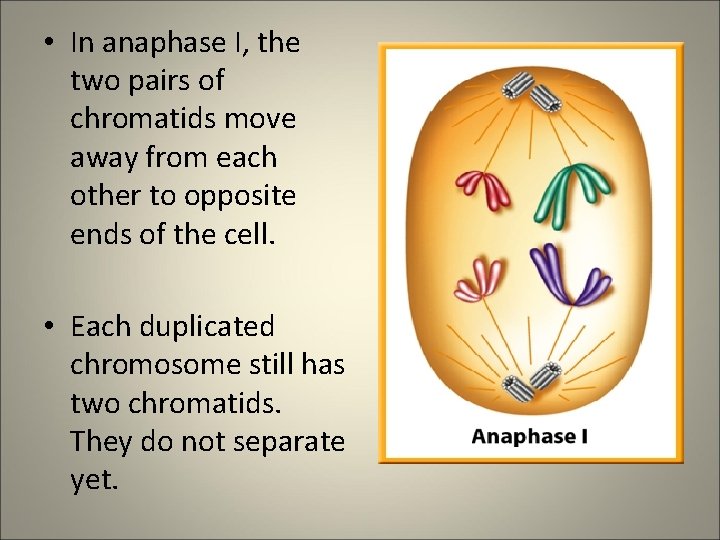
• In anaphase I, the two pairs of chromatids move away from each other to opposite ends of the cell. • Each duplicated chromosome still has two chromatids. They do not separate yet.
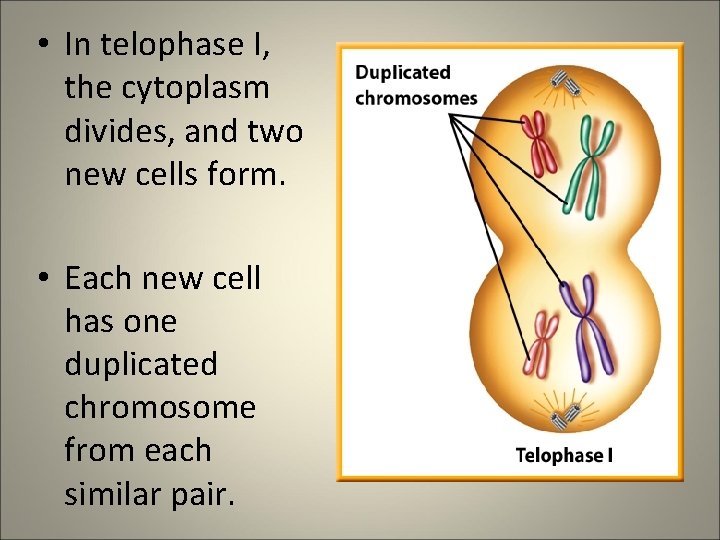
• In telophase I, the cytoplasm divides, and two new cells form. • Each new cell has one duplicated chromosome from each similar pair.
Meiosis II • The two cells formed during meiosis I now begin meiosis II. • The chromatids of each duplicated chromosome will be separated during this division.
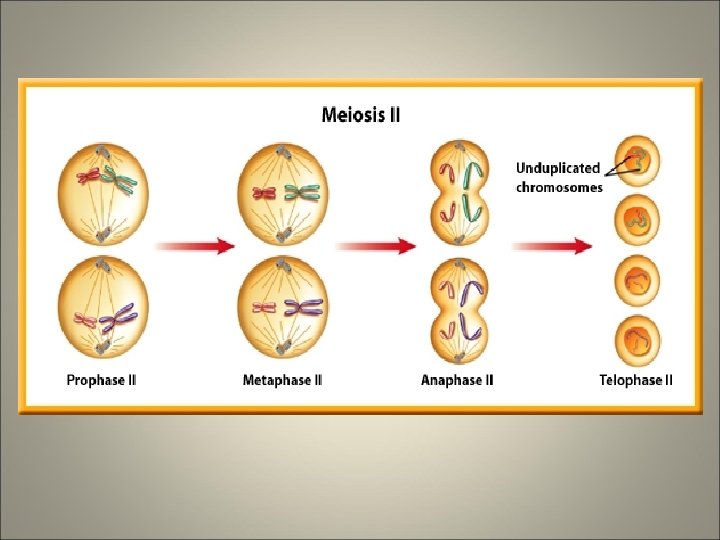
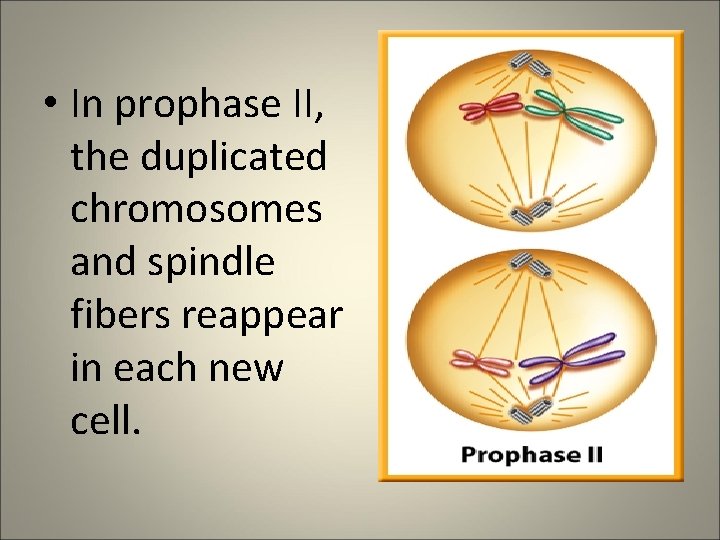
• In prophase II, the duplicated chromosomes and spindle fibers reappear in each new cell.
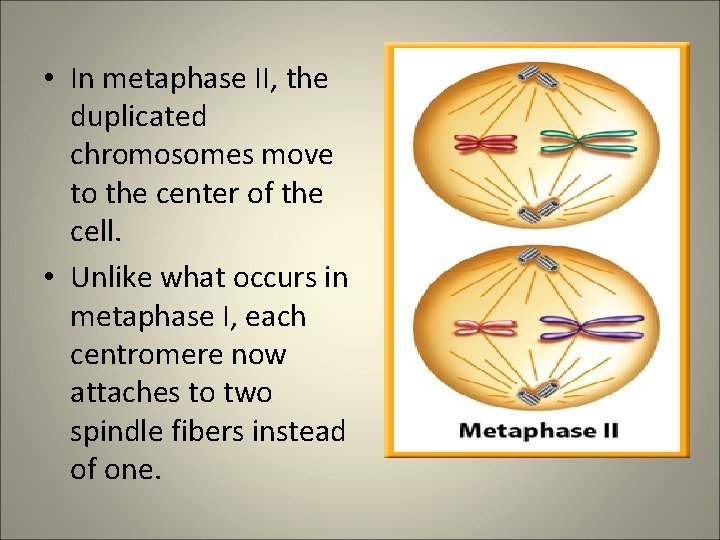
• In metaphase II, the duplicated chromosomes move to the center of the cell. • Unlike what occurs in metaphase I, each centromere now attaches to two spindle fibers instead of one.
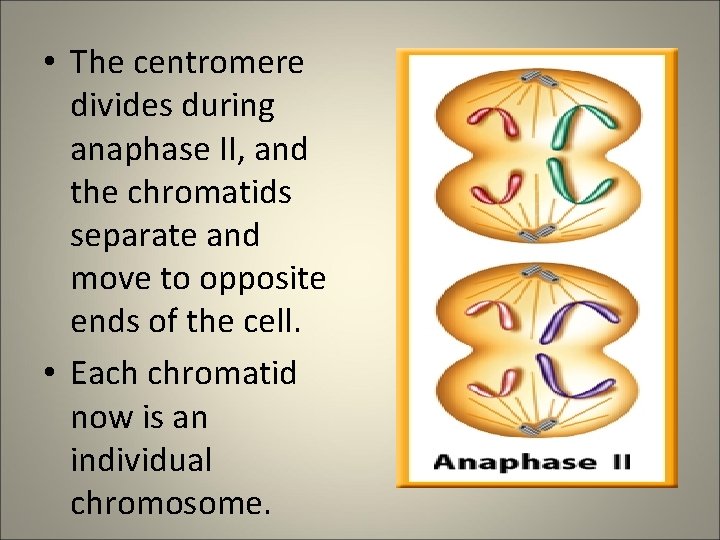
• The centromere divides during anaphase II, and the chromatids separate and move to opposite ends of the cell. • Each chromatid now is an individual chromosome.
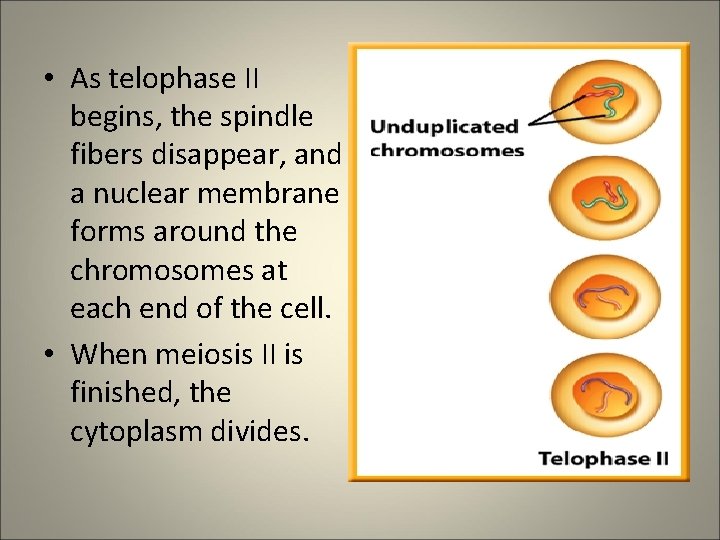
• As telophase II begins, the spindle fibers disappear, and a nuclear membrane forms around the chromosomes at each end of the cell. • When meiosis II is finished, the cytoplasm divides.
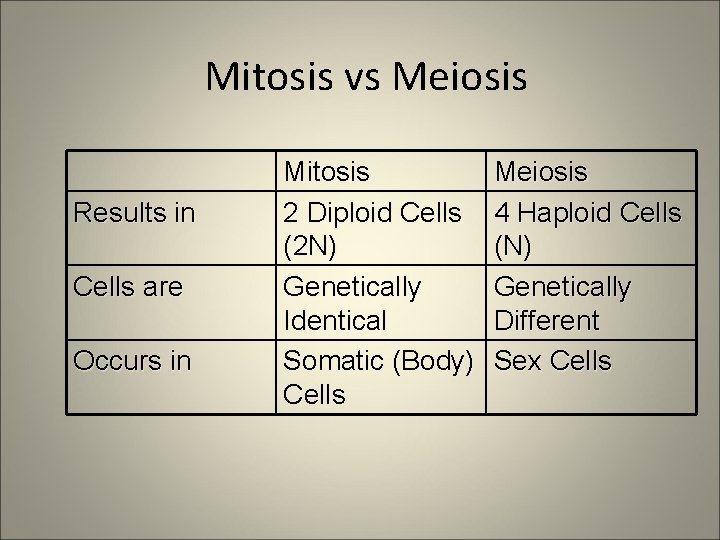
Mitosis vs Meiosis Results in Cells are Occurs in Mitosis 2 Diploid Cells (2 N) Genetically Identical Somatic (Body) Cells Meiosis 4 Haploid Cells (N) Genetically Different Sex Cells
Homework – Due Date will be given in class! • Look up 3 syndromes or diseases you can get from mistakes in Meiosis. List them and give a general description for each.
- Slides: 18