
Asexual Reproduction in Protists Monerans AND Comparing Sexual
- Slides: 39
Asexual Reproduction in Protists & Monerans AND Comparing Sexual & Asexual Reproduction
GOAL To compare sexual and asexual reproduction in animals, protists and monerans
Define (glossary p. 731) fertilization
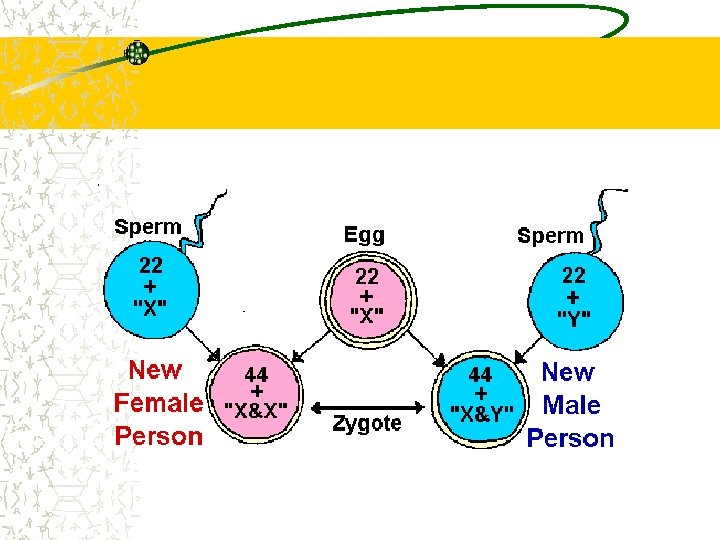
Facts: previous knowledge 1. Male sex cell is called the _____ 2. Female sex cell is called the _____ 3. All body cells have ____ chromosomes; sex cells have _____ each so when they join togethere will be a full set of 46
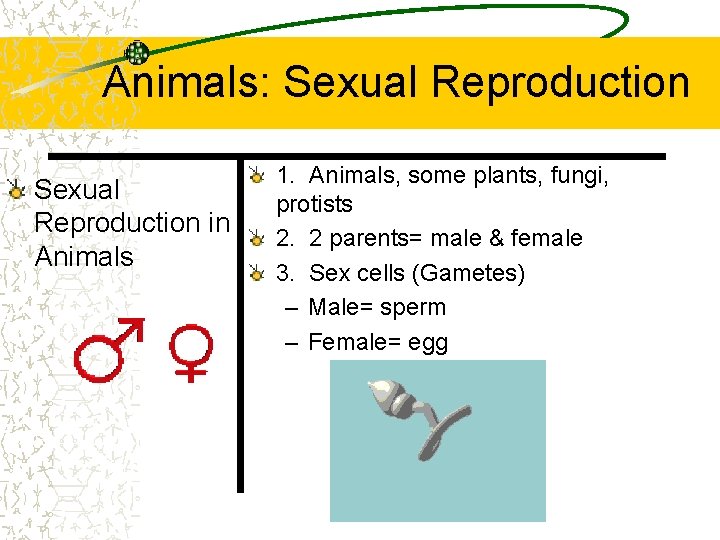
Animals: Sexual Reproduction in Animals 1. Animals, some plants, fungi, protists 2. 2 parents= male & female 3. Sex cells (Gametes) – Male= sperm – Female= egg
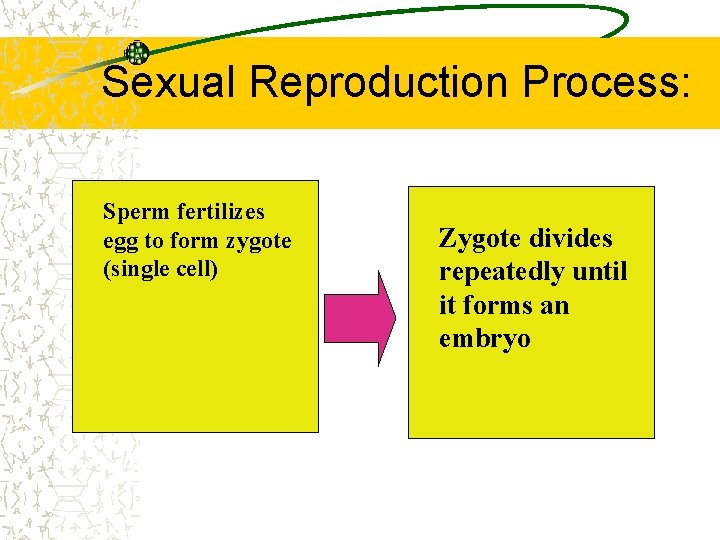
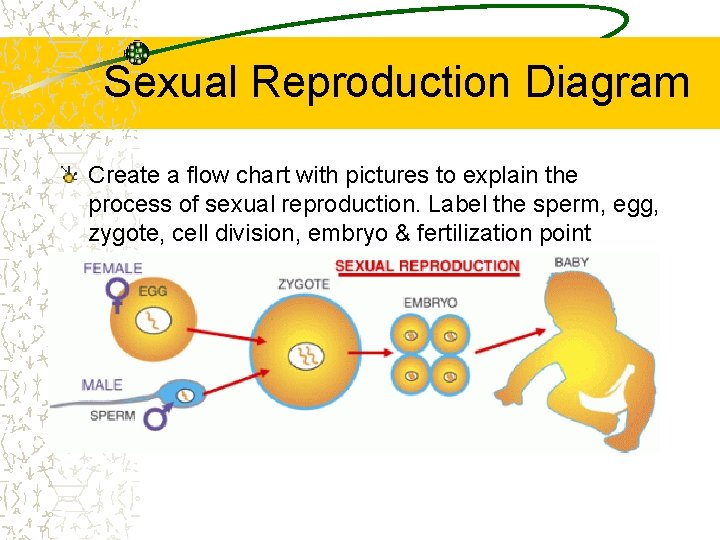
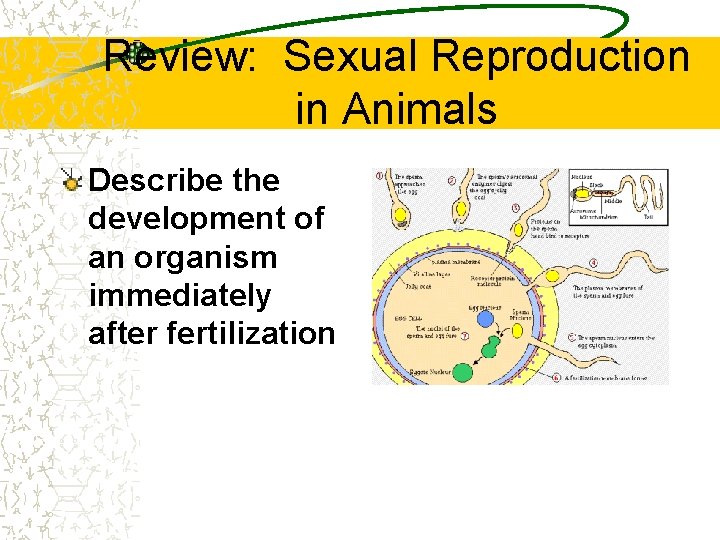
Sexual Reproduction Process: Sperm fertilizes egg to form zygote (single cell) Zygote divides repeatedly until it forms an embryo
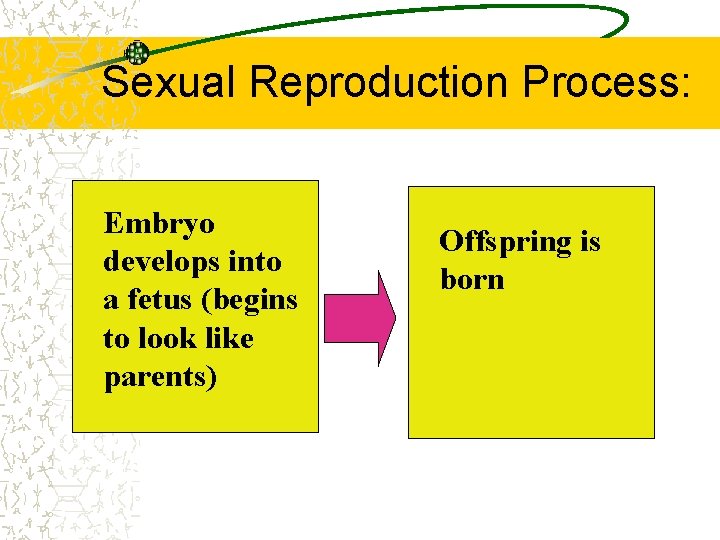
Sexual Reproduction Process: Embryo develops into a fetus (begins to look like parents) Offspring is born
Sexual Reproduction Diagram Create a flow chart with pictures to explain the process of sexual reproduction. Label the sperm, egg, zygote, cell division, embryo & fertilization point
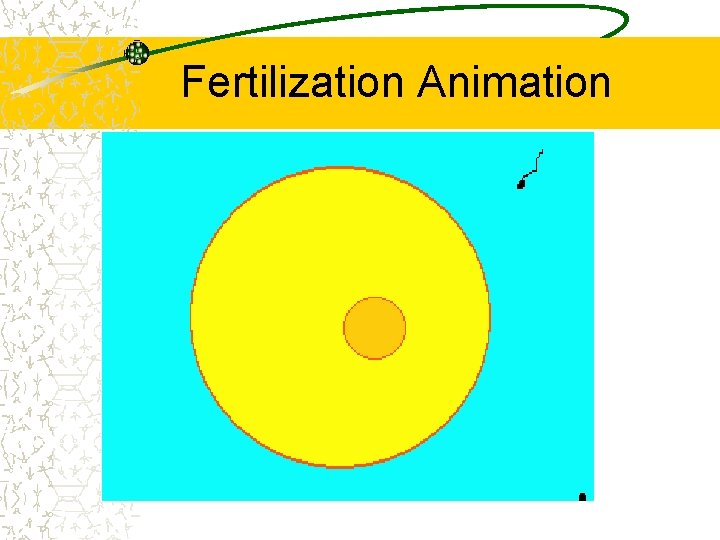
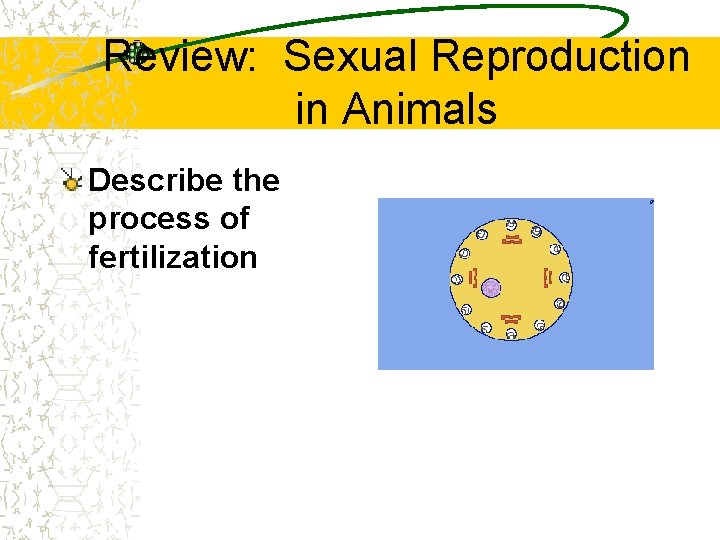
Fertilization Animation
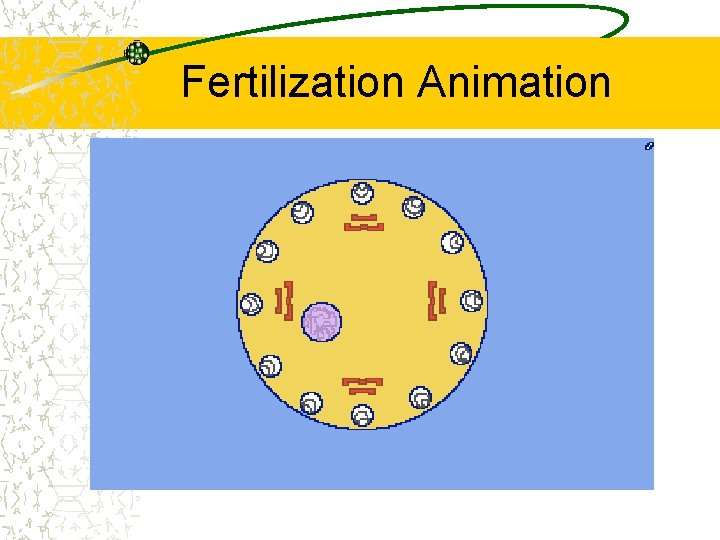
Fertilization Animation
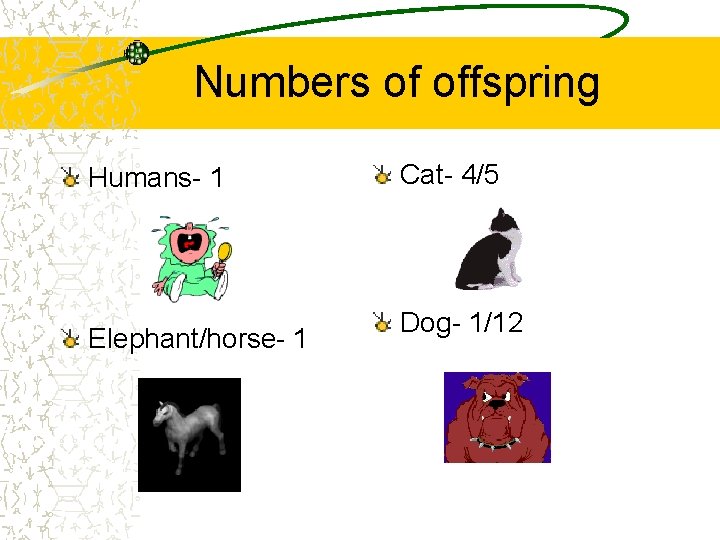
Numbers of offspring Humans- 1 Elephant/horse- 1 Cat- 4/5 Dog- 1/12
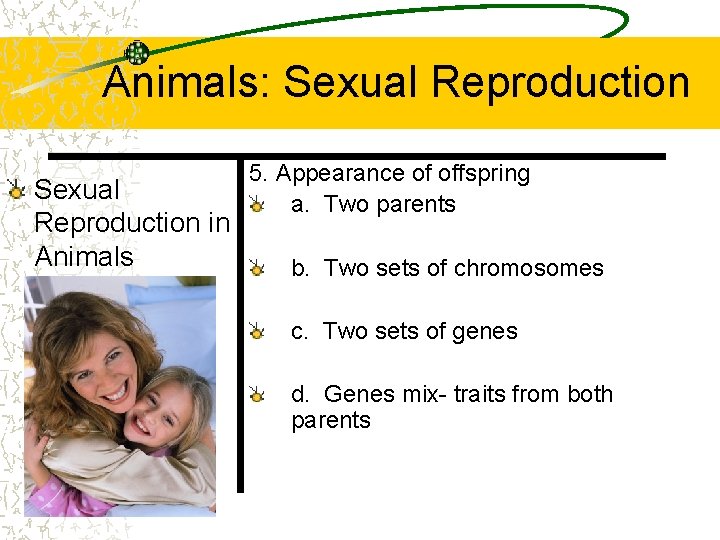
Animals: Sexual Reproduction in Animals 5. Appearance of offspring a. Two parents b. Two sets of chromosomes c. Two sets of genes d. Genes mix- traits from both parents
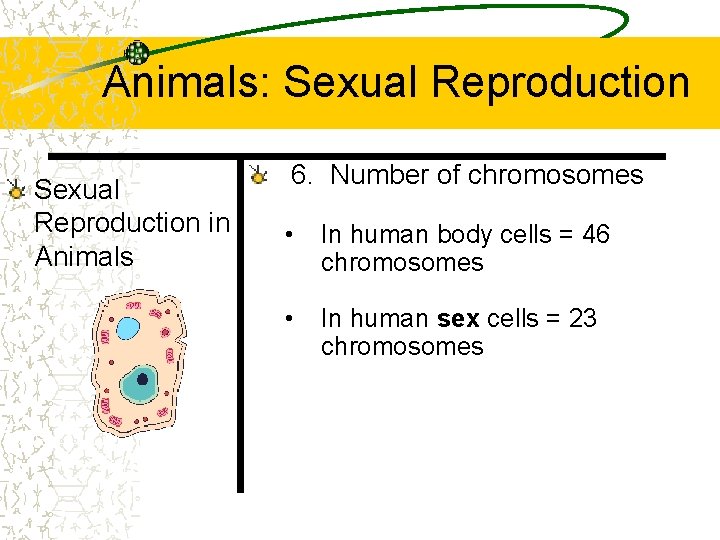
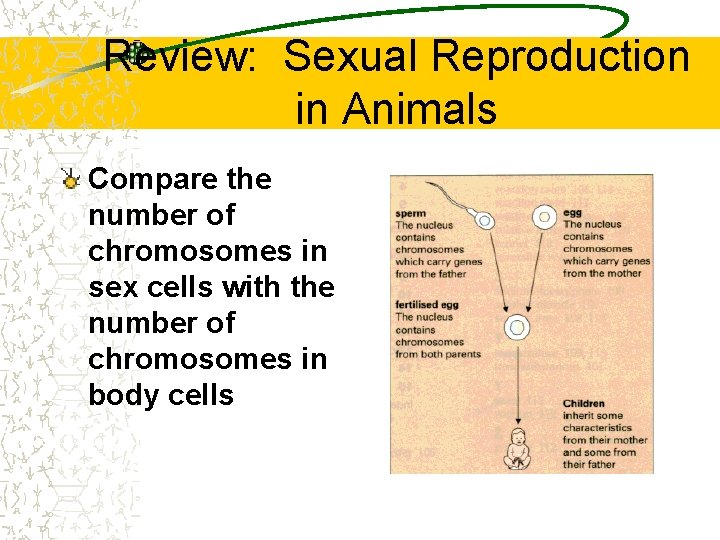
Animals: Sexual Reproduction in Animals 6. Number of chromosomes • In human body cells = 46 chromosomes • In human sex cells = 23 chromosomes
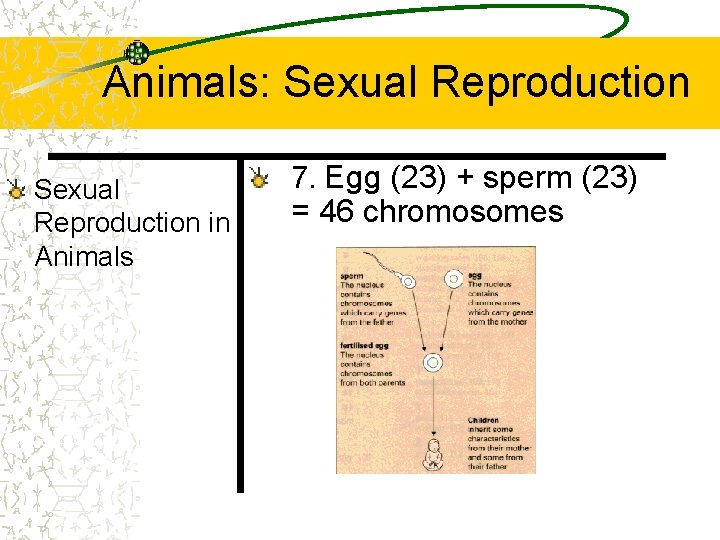
Animals: Sexual Reproduction in Animals 7. Egg (23) + sperm (23) = 46 chromosomes
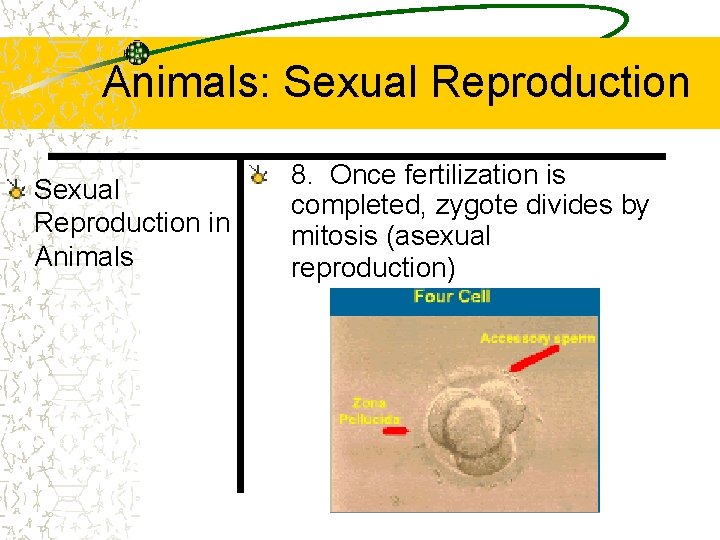
Animals: Sexual Reproduction in Animals 8. Once fertilization is completed, zygote divides by mitosis (asexual reproduction)
Review: Sexual Reproduction in Animals Describe the process of fertilization
Review: Sexual Reproduction in Animals Describe the development of an organism immediately after fertilization
Review: Sexual Reproduction in Animals Compare the number of chromosomes in sex cells with the number of chromosomes in body cells
Asexual Reproduction Methods Asexual Reproduction Algae, amoeba bacteria growing animals, plants and fungi
Asexual reproduction Cloning http: //www. brainpop. com/science/cellularl ifeandgenetics/cloni ng/ Binary fission http: //www. classzon e. com/books/hs/ca/s c/bio_07/animated_ biology/bio_ch 05_01 49_ab_fission. html
Asexual reproduction Budding http: //www. youtube. com/watch? v=489 C Sop 00 s. Y Regeneration http: //www. youtube. com/watch? v=f 7 c. Xe Wxxf. D 4&feature=rel ated
Asexual reproduction http: //www. brainpop. com/science/cellularl ifeandgenetics/asex ualreproduction/
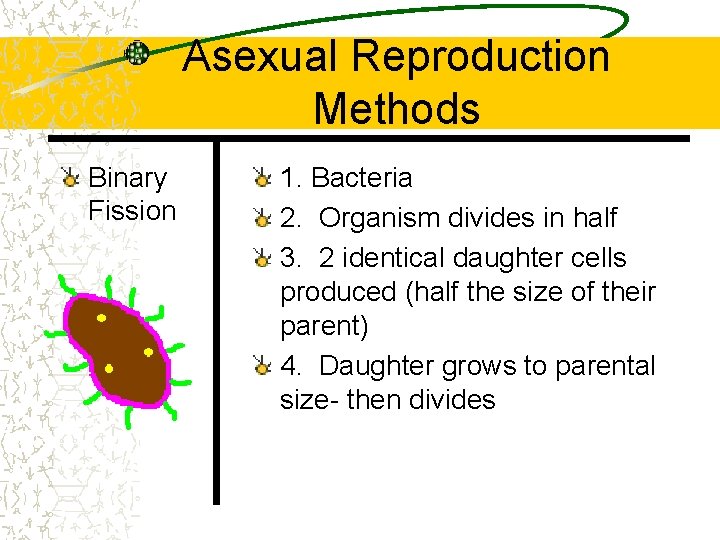
Asexual Reproduction Methods Binary Fission 1. Bacteria 2. Organism divides in half 3. 2 identical daughter cells produced (half the size of their parent) 4. Daughter grows to parental size- then divides
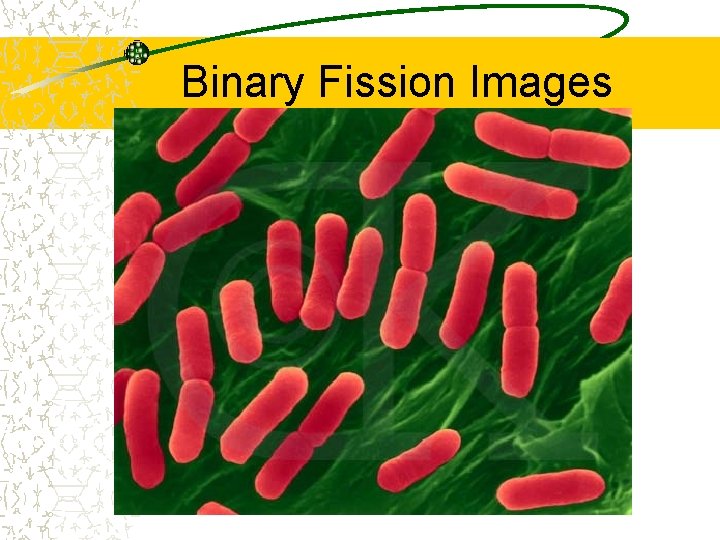
Binary Fission Images
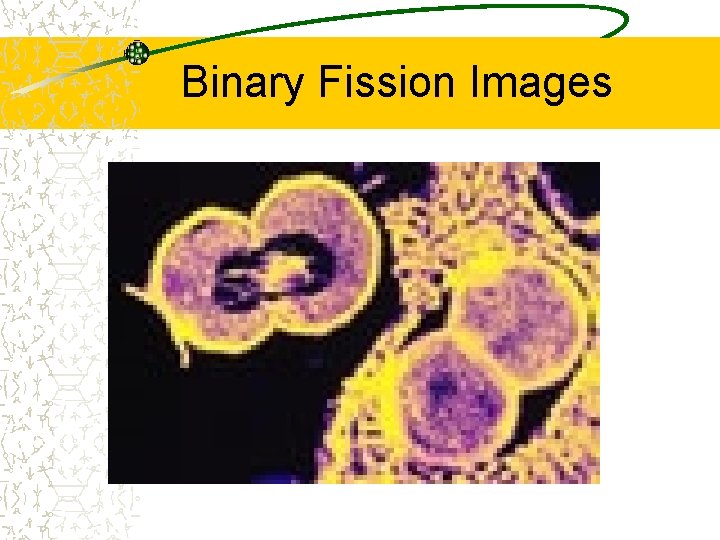
Binary Fission Images
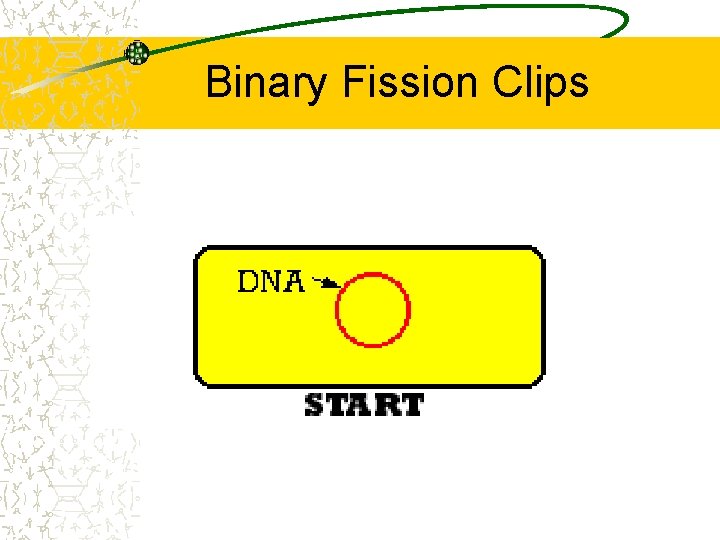
Binary Fission Clips
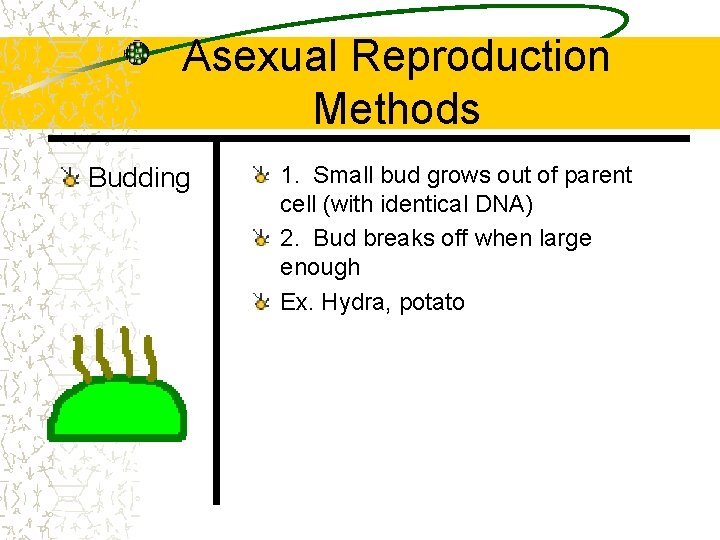
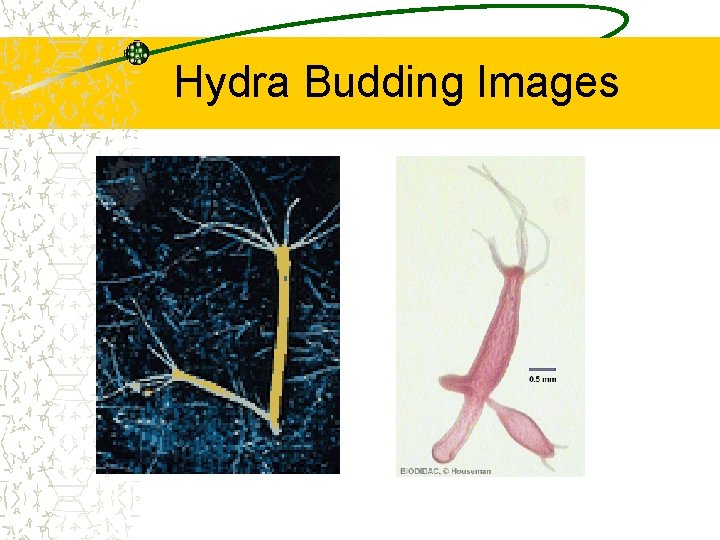
Asexual Reproduction Methods Budding 1. Small bud grows out of parent cell (with identical DNA) 2. Bud breaks off when large enough Ex. Hydra, potato
Hydra Budding Images
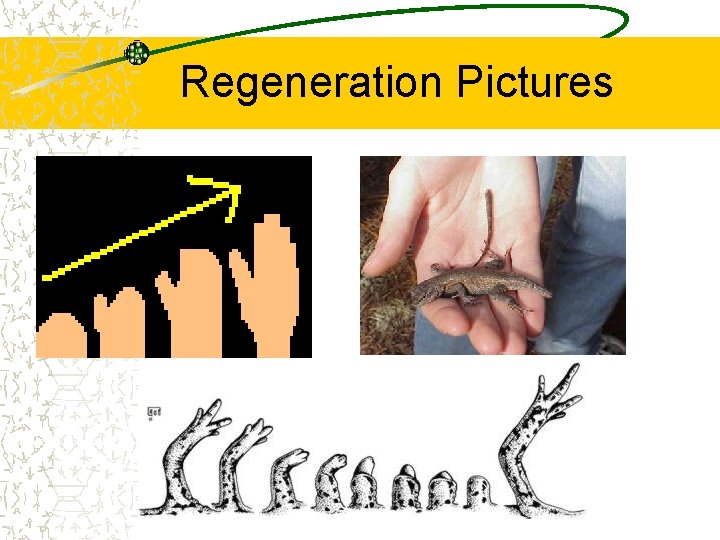
Asexual Reproduction Methods Regeneration 1. Living things repair themselves by growing lost body parts from remaining cells 2. Ex: lobsters, starfish, lizards
Regeneration Pictures
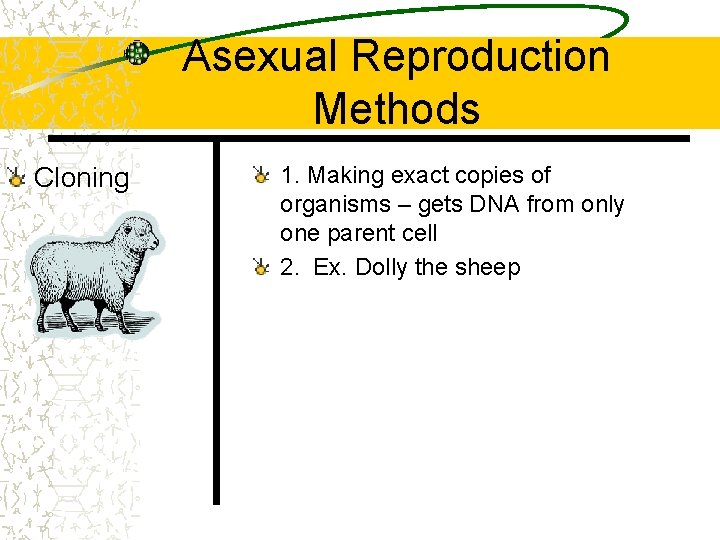
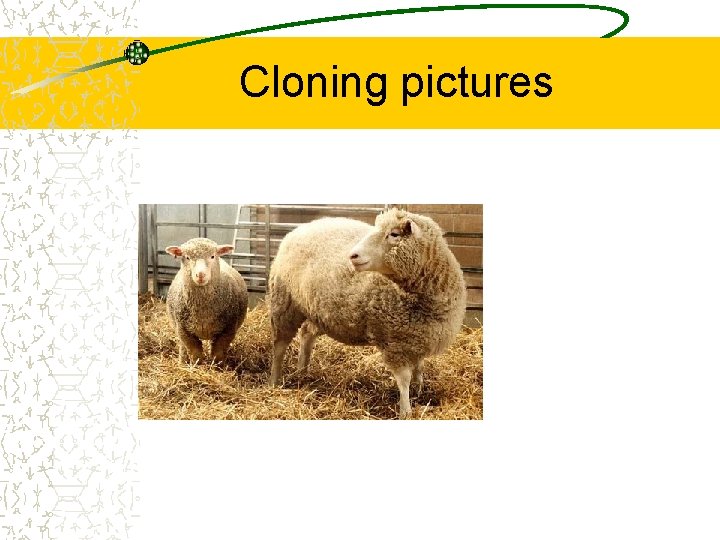
Asexual Reproduction Methods Cloning 1. Making exact copies of organisms – gets DNA from only one parent cell 2. Ex. Dolly the sheep
Cloning pictures
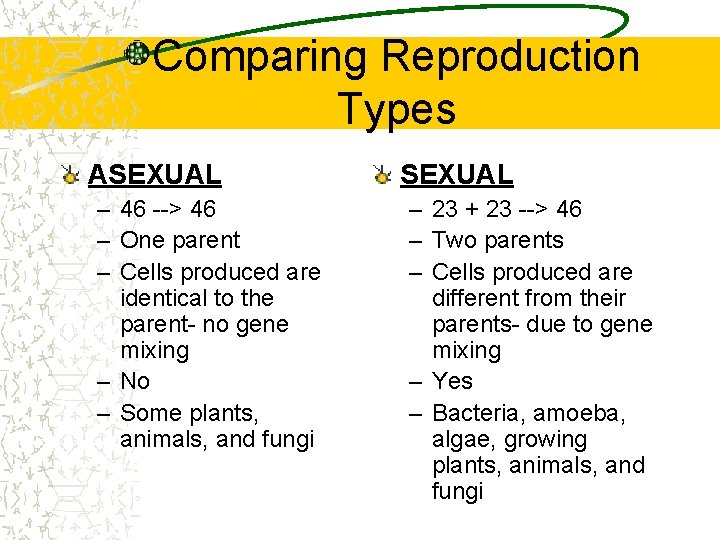
Comparing Asexual & Sexual Reproduction Create a T-chart to compare the following: – How many parents? – Are sex cells needed? – What numbers of chromosomes are involved? (at the beginning and at the end) – Are offspring different from or identical to parents and why? – What types of organisms?
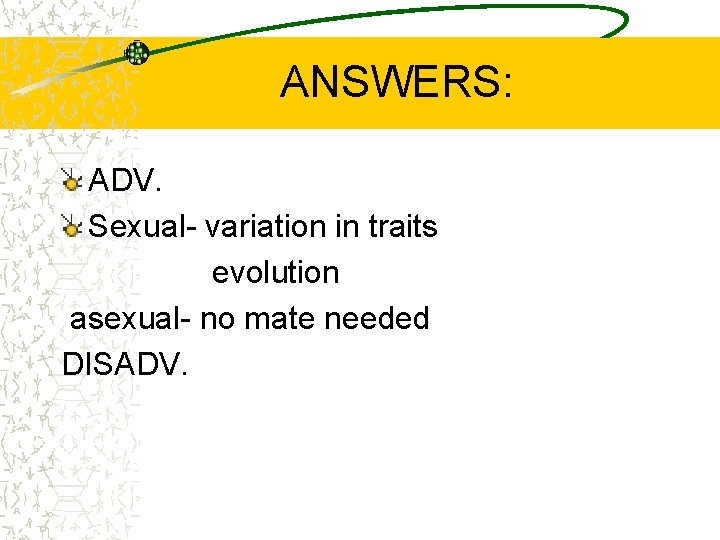
What are the advantages of each: Asexual. Sexual-
ANSWERS: ADV. Sexual- variation in traits evolution asexual- no mate needed DISADV.
Comparing Reproduction Types ASEXUAL – 46 --> 46 – One parent – Cells produced are identical to the parent- no gene mixing – No – Some plants, animals, and fungi SEXUAL – 23 + 23 --> 46 – Two parents – Cells produced are different from their parents- due to gene mixing – Yes – Bacteria, amoeba, algae, growing plants, animals, and fungi
Websites Animal Reproduction Animations Animal Life Cycles