
ASEXUAL REPRODUCTION Horticulture I ASEXUAL PLANT PROPAGATION reproduction
- Slides: 22
ASEXUAL REPRODUCTION Horticulture I
ASEXUAL PLANT PROPAGATION reproduction of new plants from the stem, leaf, or root of the parent plant. What is sexual plant propagation? Is a plant that self-pollinates reproducing asexually?
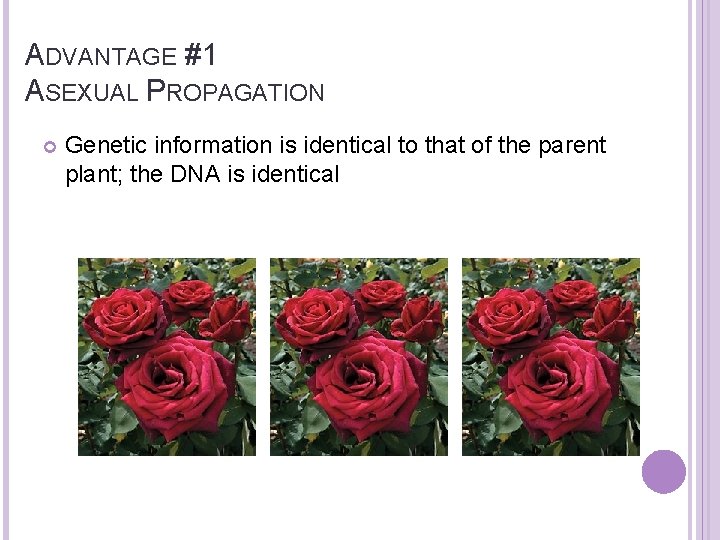
ADVANTAGE #1 ASEXUAL PROPAGATION Genetic information is identical to that of the parent plant; the DNA is identical
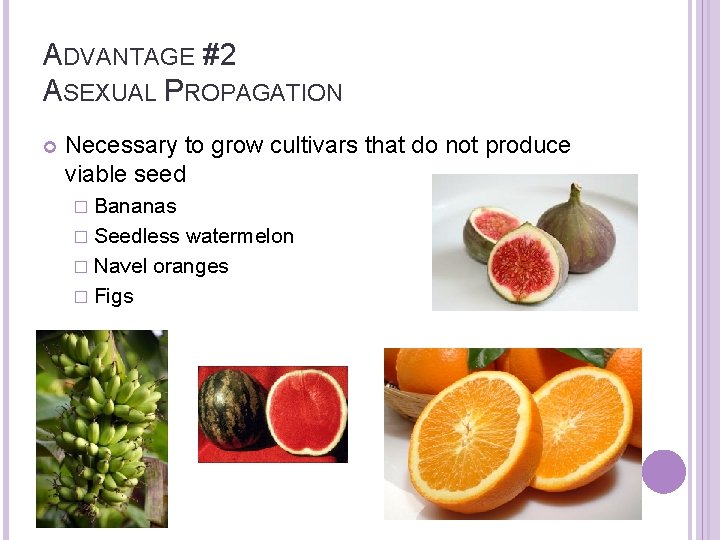
ADVANTAGE #2 ASEXUAL PROPAGATION Necessary to grow cultivars that do not produce viable seed � Bananas � Seedless watermelon � Navel oranges � Figs
ADVANTAGE #3 ASEXUAL PROPAGATION Retains unique characteristics of a plant
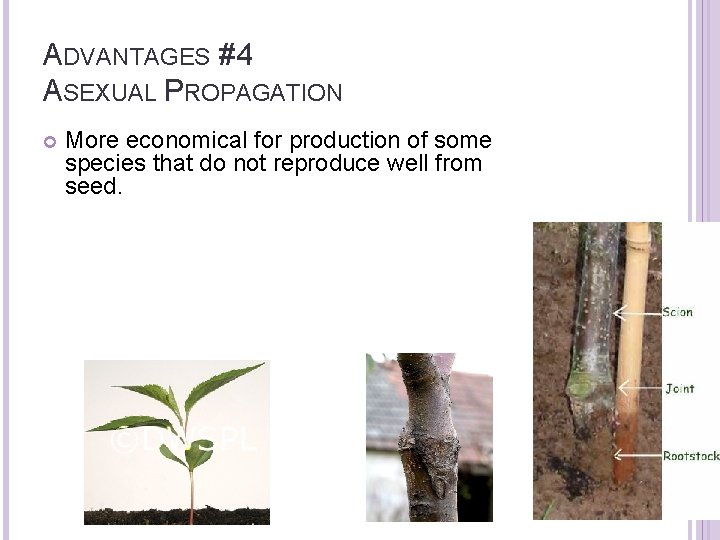
ADVANTAGES #4 ASEXUAL PROPAGATION More economical for production of some species that do not reproduce well from seed.
ADVANTAGE #5 ASEXUAL REPRODUCTION Faster than slow-growth seedlings. � Apple trees grown from seed may be 30 foot tall; modern apple trees are grafted onto a dwarfing rootstock and this restricts their height � 5% chance it will produce apples; smaller chance they will be edible
ADVANTAGE #6 ASEXUAL PROPAGATION Plants bud/bloom faster due to the fact that the juvenile (vegetative growth) stage is skipped
ADVANTAGE #7 ASEXUAL PROPAGATION Maintains juvenile phase of a plant for cuttings in species where the juvenile plants root more readily than older plants
ADVANTAGE #8 ASEXUAL PROPAGATION Produce Disease free plants from parent plants
METHODS OF ASEXUAL PLANT PROPAGATION Cuttings � Stem � Leaf Bud � Root Grafting Budding Layering Separation Division Tissue Culture
STEM CUTTINGS Softwood cuttings Herbaceous cuttings Semi-hardwood cuttings Hardwood cuttings
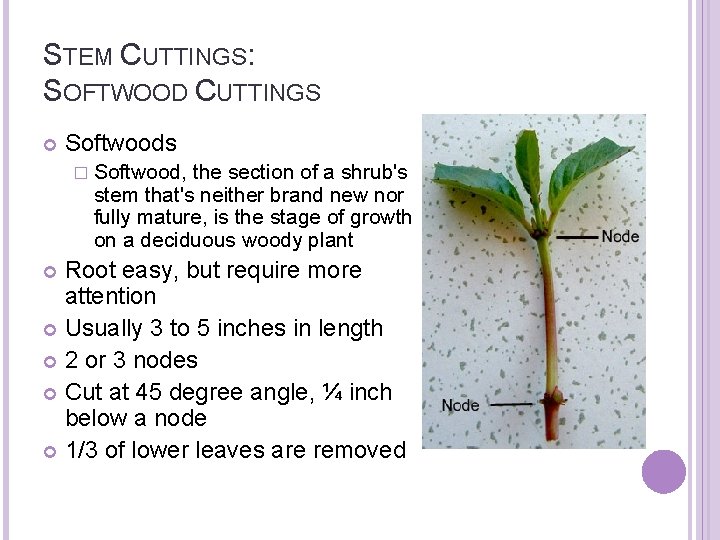
STEM CUTTINGS: SOFTWOOD CUTTINGS Softwoods � Softwood, the section of a shrub's stem that's neither brand new nor fully mature, is the stage of growth on a deciduous woody plant Root easy, but require more attention Usually 3 to 5 inches in length 2 or 3 nodes Cut at 45 degree angle, ¼ inch below a node 1/3 of lower leaves are removed
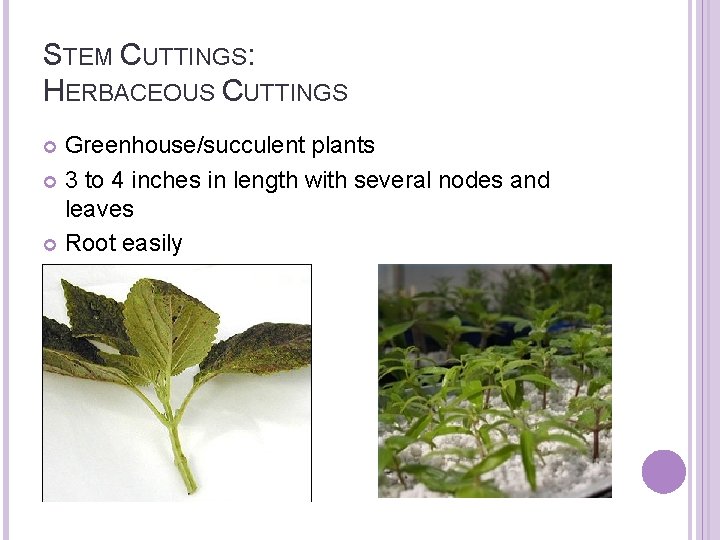
STEM CUTTINGS: HERBACEOUS CUTTINGS Greenhouse/succulent plants 3 to 4 inches in length with several nodes and leaves Root easily
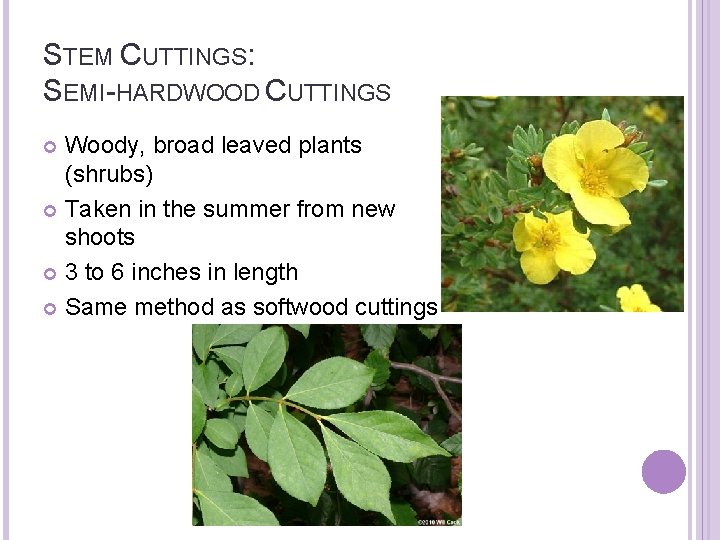
STEM CUTTINGS: SEMI-HARDWOOD CUTTINGS Woody, broad leaved plants (shrubs) Taken in the summer from new shoots 3 to 6 inches in length Same method as softwood cuttings
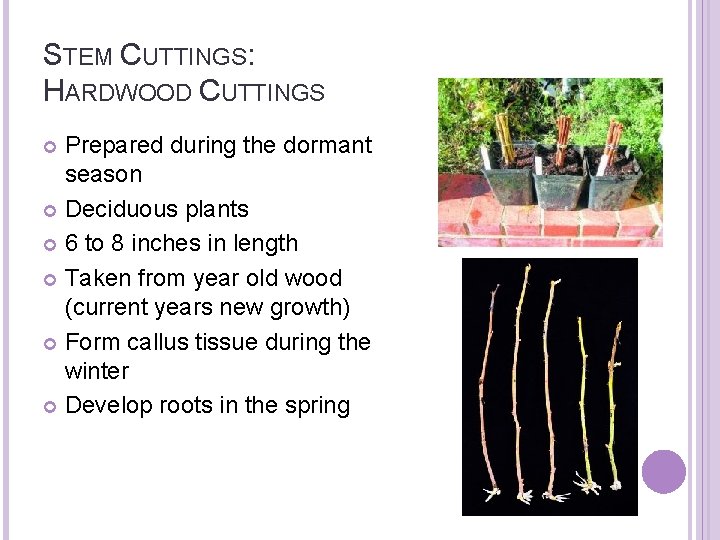
STEM CUTTINGS: HARDWOOD CUTTINGS Prepared during the dormant season Deciduous plants 6 to 8 inches in length Taken from year old wood (current years new growth) Form callus tissue during the winter Develop roots in the spring
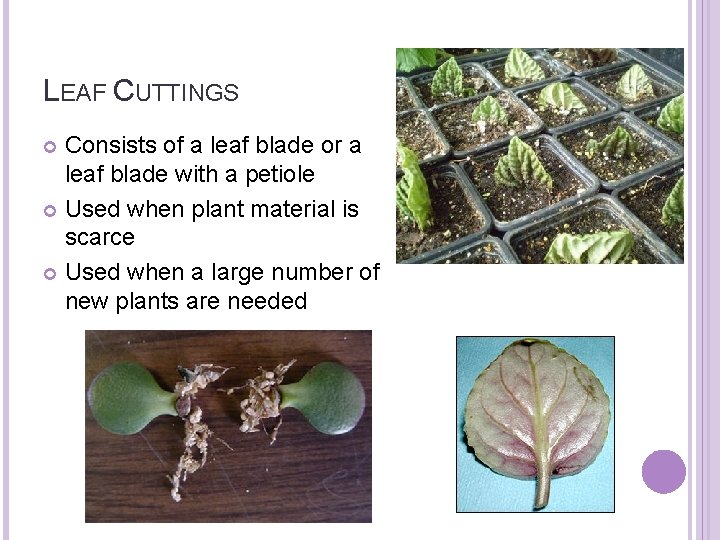
LEAF CUTTINGS Consists of a leaf blade or a leaf blade with a petiole Used when plant material is scarce Used when a large number of new plants are needed
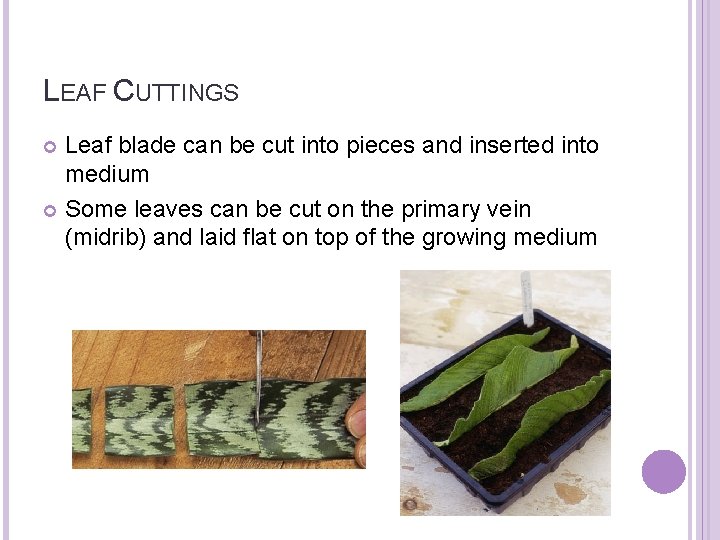
LEAF CUTTINGS Leaf blade can be cut into pieces and inserted into medium Some leaves can be cut on the primary vein (midrib) and laid flat on top of the growing medium
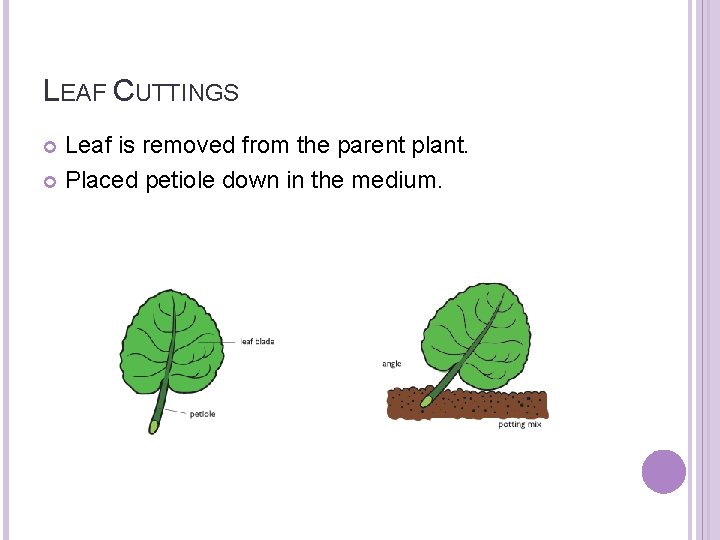
LEAF CUTTINGS Leaf is removed from the parent plant. Placed petiole down in the medium.
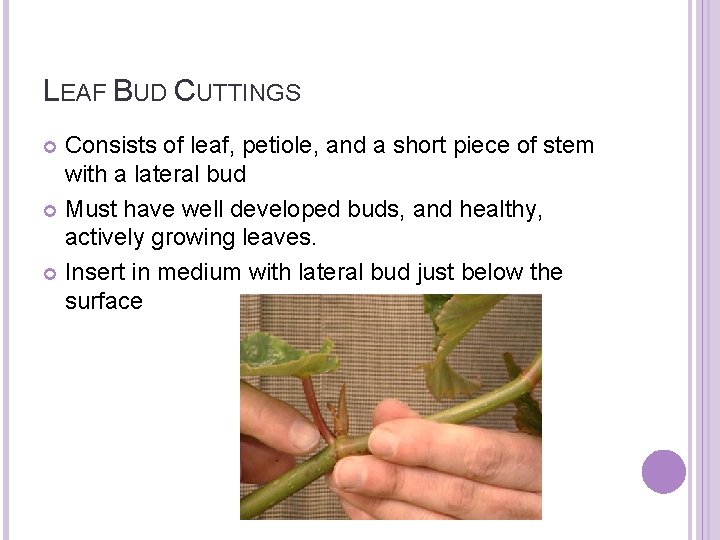
LEAF BUD CUTTINGS Consists of leaf, petiole, and a short piece of stem with a lateral bud Must have well developed buds, and healthy, actively growing leaves. Insert in medium with lateral bud just below the surface
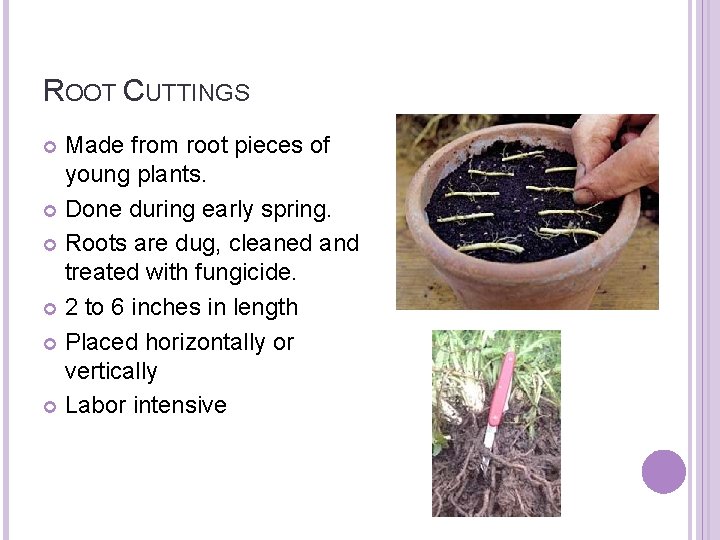
ROOT CUTTINGS Made from root pieces of young plants. Done during early spring. Roots are dug, cleaned and treated with fungicide. 2 to 6 inches in length Placed horizontally or vertically Labor intensive
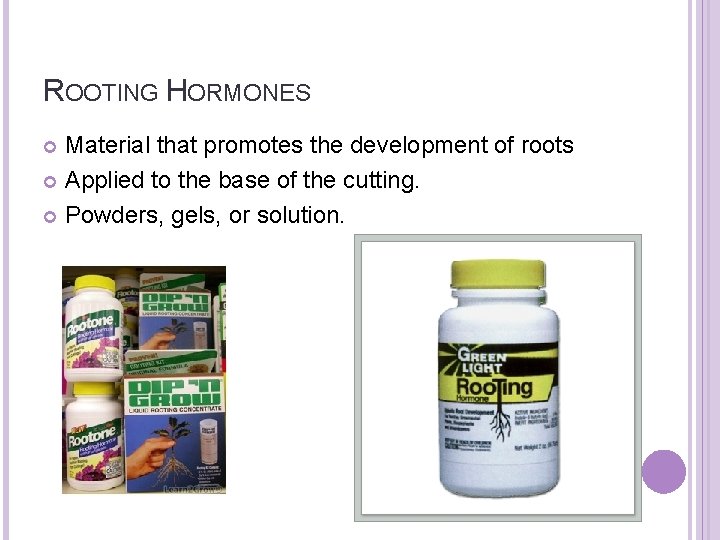
ROOTING HORMONES Material that promotes the development of roots Applied to the base of the cutting. Powders, gels, or solution.