
Asexual Reproduction Definition Only 1 parent is required


- Slides: 15
Asexual Reproduction
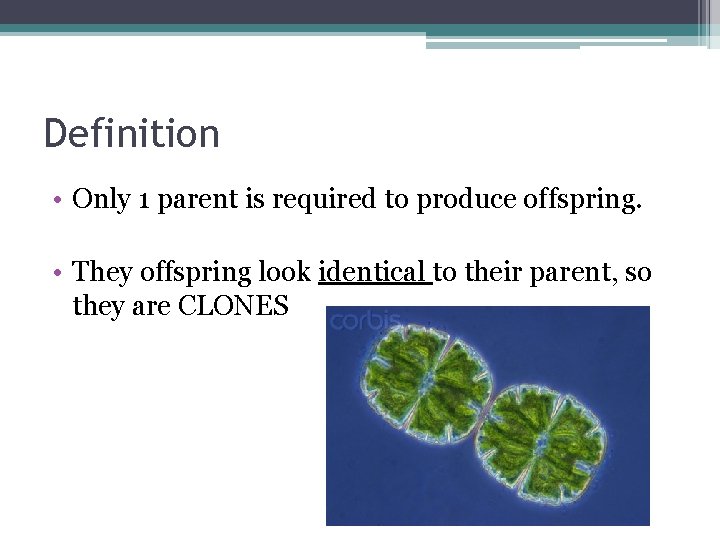
Definition • Only 1 parent is required to produce offspring. • They offspring look identical to their parent, so they are CLONES
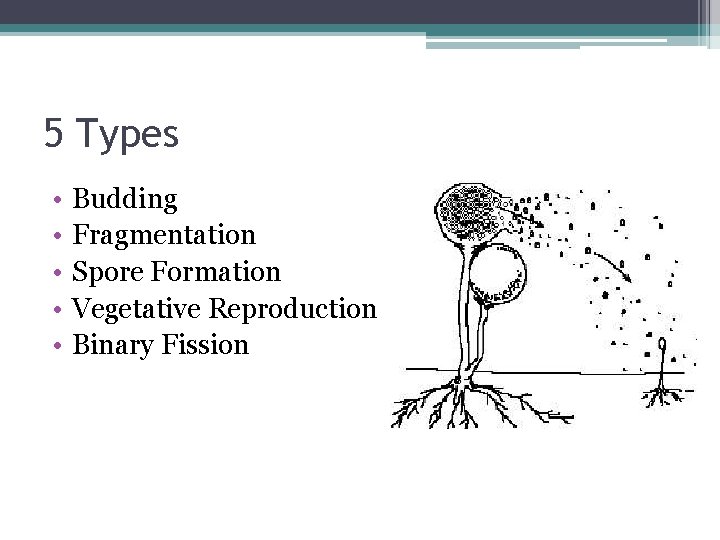
5 Types • • • Budding Fragmentation Spore Formation Vegetative Reproduction Binary Fission
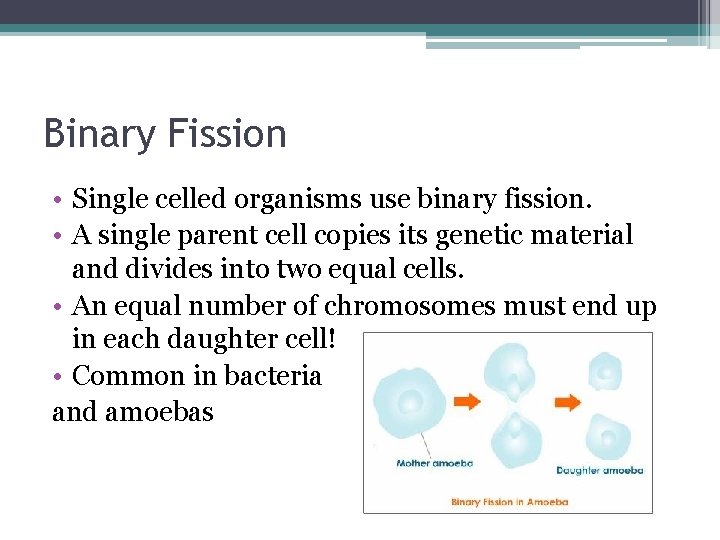
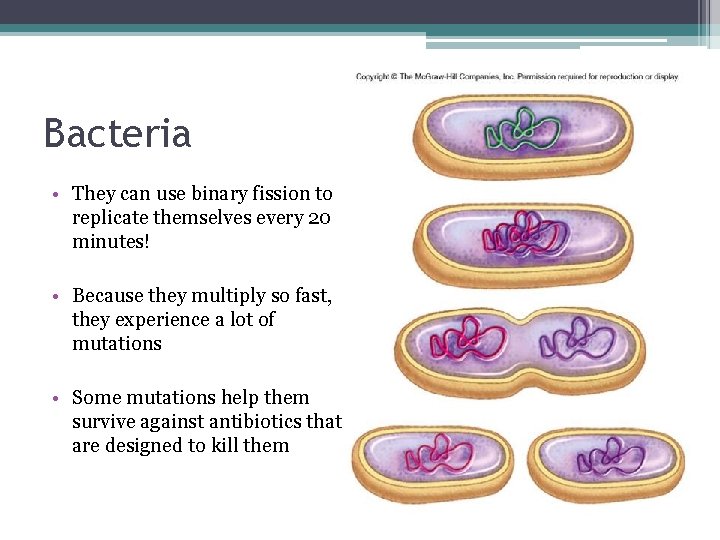
Binary Fission • Single celled organisms use binary fission. • A single parent cell copies its genetic material and divides into two equal cells. • An equal number of chromosomes must end up in each daughter cell! • Common in bacteria and amoebas
Bacteria • They can use binary fission to replicate themselves every 20 minutes! • Because they multiply so fast, they experience a lot of mutations • Some mutations help them survive against antibiotics that are designed to kill them
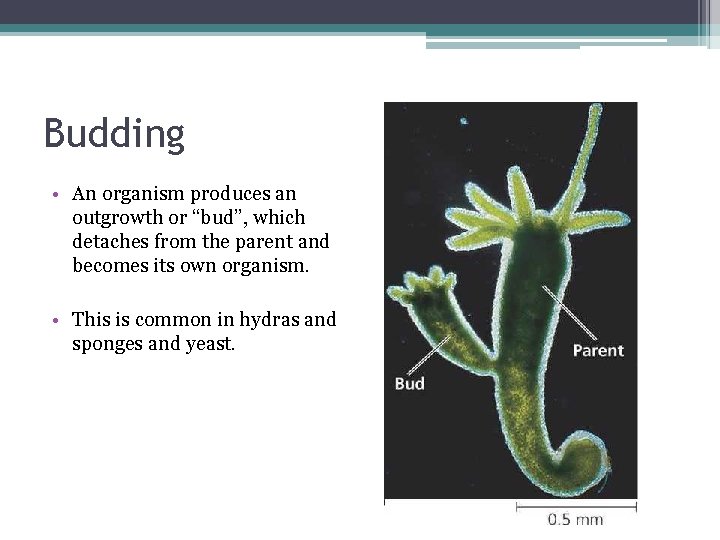
Budding • An organism produces an outgrowth or “bud”, which detaches from the parent and becomes its own organism. • This is common in hydras and sponges and yeast.
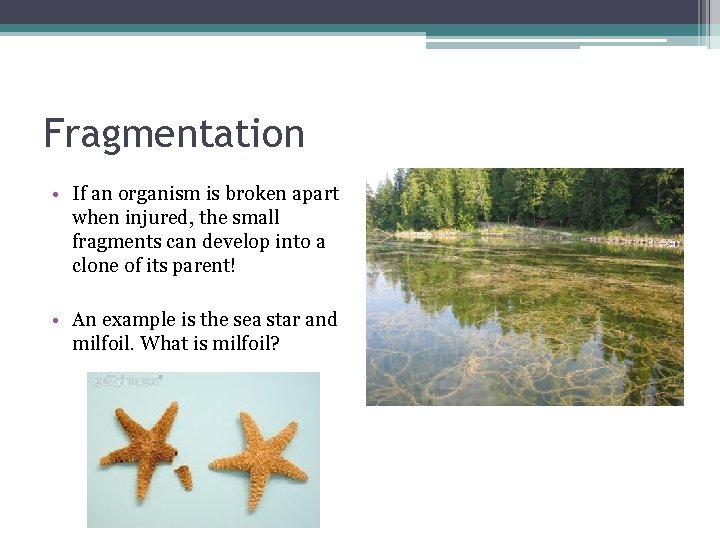
Fragmentation • If an organism is broken apart when injured, the small fragments can develop into a clone of its parent! • An example is the sea star and milfoil. What is milfoil?
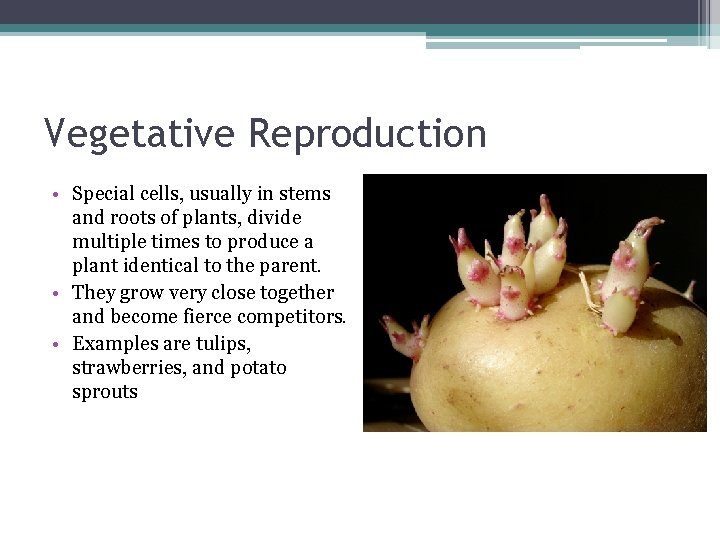
Vegetative Reproduction • Special cells, usually in stems and roots of plants, divide multiple times to produce a plant identical to the parent. • They grow very close together and become fierce competitors. • Examples are tulips, strawberries, and potato sprouts
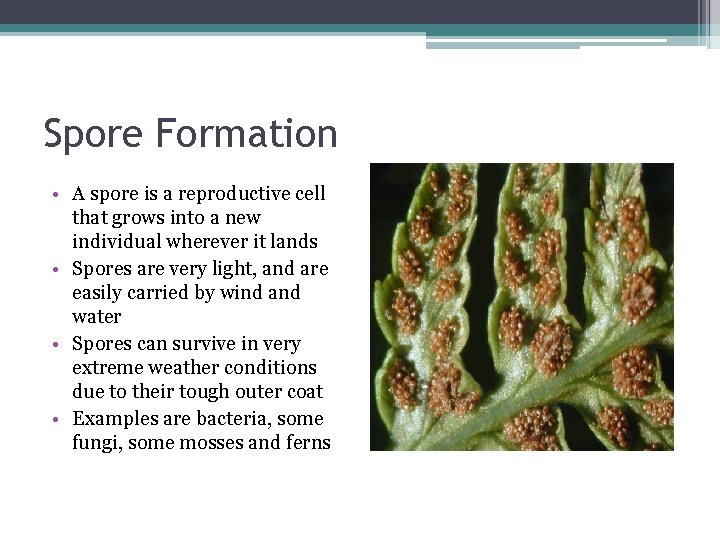
Spore Formation • A spore is a reproductive cell that grows into a new individual wherever it lands • Spores are very light, and are easily carried by wind and water • Spores can survive in very extreme weather conditions due to their tough outer coat • Examples are bacteria, some fungi, some mosses and ferns
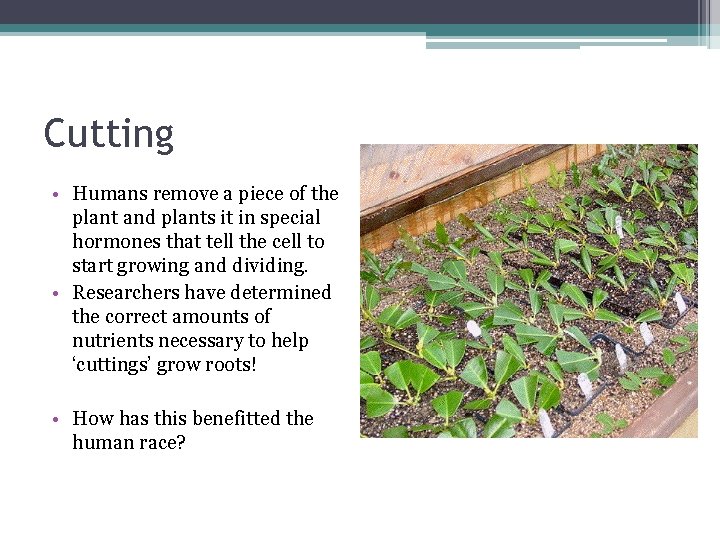
Cutting • Humans remove a piece of the plant and plants it in special hormones that tell the cell to start growing and dividing. • Researchers have determined the correct amounts of nutrients necessary to help ‘cuttings’ grow roots! • How has this benefitted the human race?
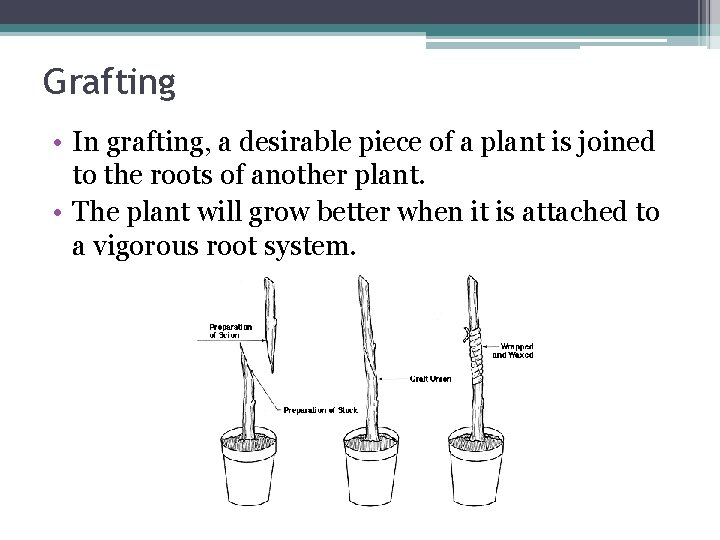
Grafting • In grafting, a desirable piece of a plant is joined to the roots of another plant. • The plant will grow better when it is attached to a vigorous root system.
What are some advantages to being able to reproduce asexually?
Advantages • Large numbers of offspring are made from only one parent • Large colonies can form that out-compete other organisms for food and water • Large amounts of organisms mean that the species will survive, even if the environmental conditions or predators change • Energy is not required to mate
What are some disadvantages to reproducing asexually?
Disadvantages • Offspring are genetic clones! What if you are a crappy parent with bad genes? • There is no variety in the offpsring • Some methods produce offspring that live so closely to them that they end up competing with each other! • Extreme conditions have been known to wipe out entire colonies