
Asexual Reproduction by MITOSIS n Only one parent

Asexual Reproduction by MITOSIS n Only one parent n The offspring is genetically identical to the parent organism n Asexual reproduction is usually rapid and results in the production of large numbers of offspring n
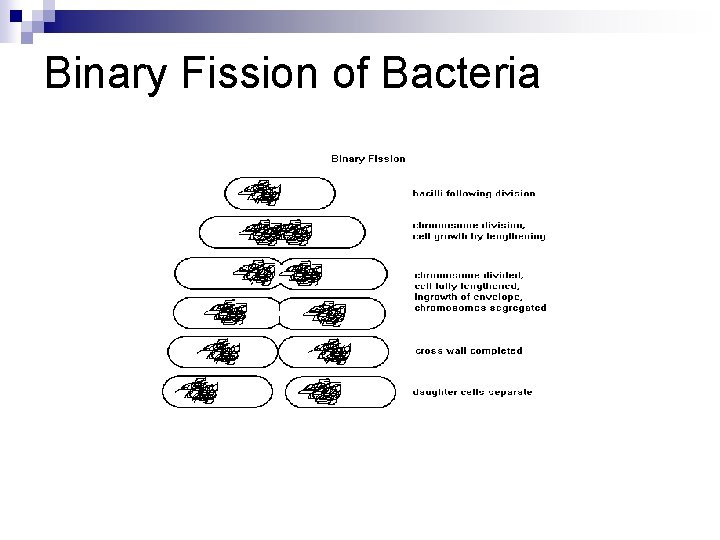
Binary Fission of Bacteria
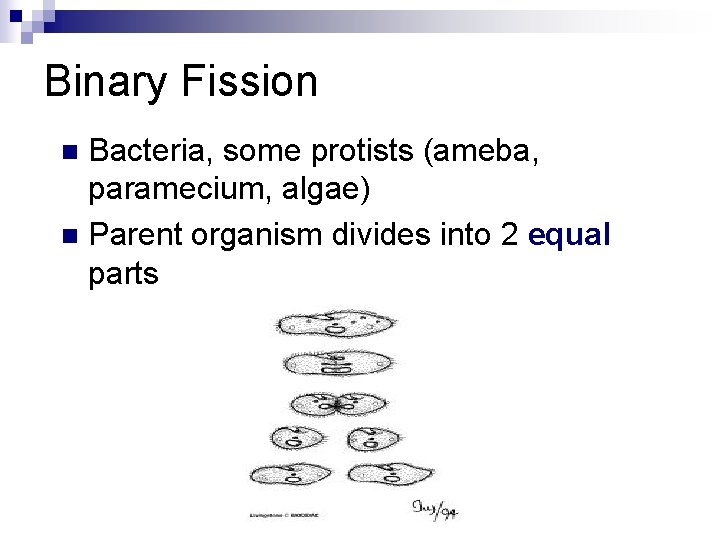
Binary Fission Bacteria, some protists (ameba, paramecium, algae) n Parent organism divides into 2 equal parts n
Budding n n parent organism divides into two UNEQUAL parts The offspring develop as small outgrowths, or buds, on the outer surface of the parent organism The buds may break off and live independently Some buds may remain attached to the parent and form a colony

Budding in Yeast Cells
Budding in Hydra n n Budding in hydra is different from budding in yeast because the hydra is a multicellular organism Undifferentiated cells on the side of the parent divide by mitosis to produce a small mound of cells ¨ Undifferentiated cells have the capacity to turn into any cell type n In a few days a complete hydra is formed
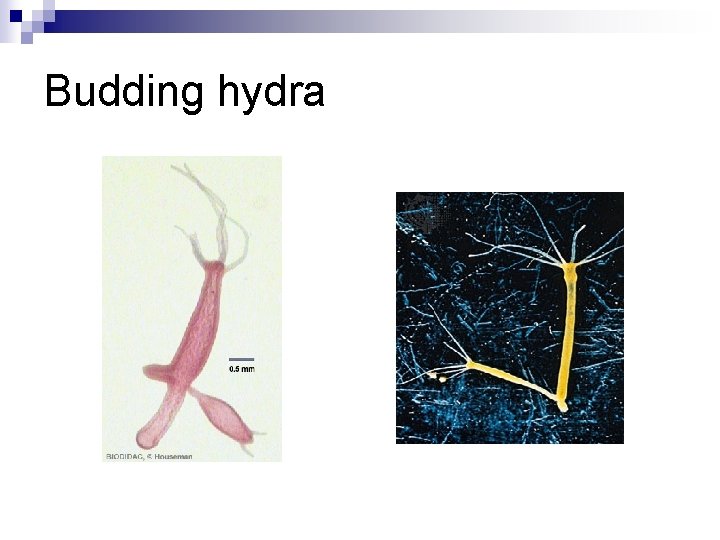
Budding hydra
Spore formation (sporulation) Spores are single, specialized cells produced by mitosis n When spores are released from the parent organism, the spores germinate and grow to form new individuals n Spores are often surrounded by a hard outer wall that protects them from the environment n
n If the spore lands in an environment that has warmth, food and moisture, it germinates and grows to form a new mass of mold
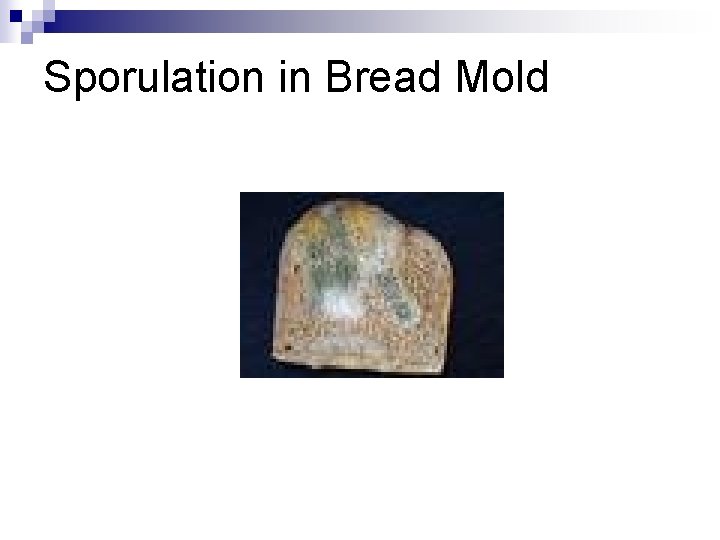
Sporulation in Bread Mold
Regeneration The ability of an organism to regrow lost body parts n Simple organisms with undifferentiated tissue that can grow into any type of tissue can regenerate lost body parts n Regeneration decreases as an animal becomes more complex n
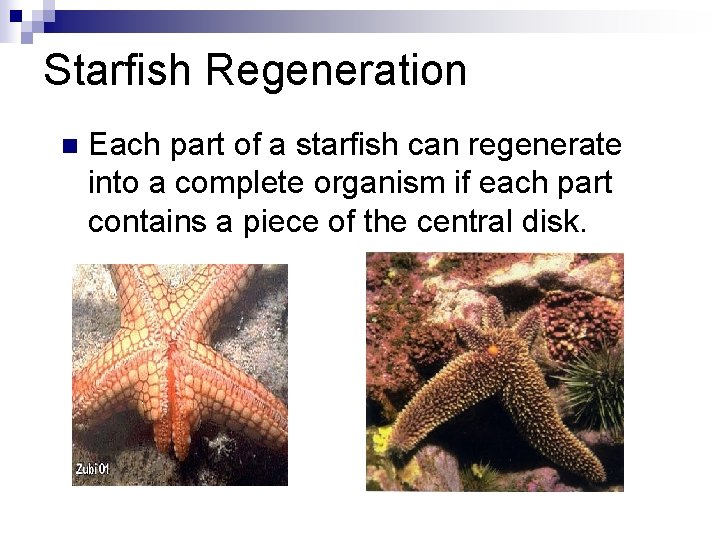
Starfish Regeneration n Each part of a starfish can regenerate into a complete organism if each part contains a piece of the central disk.
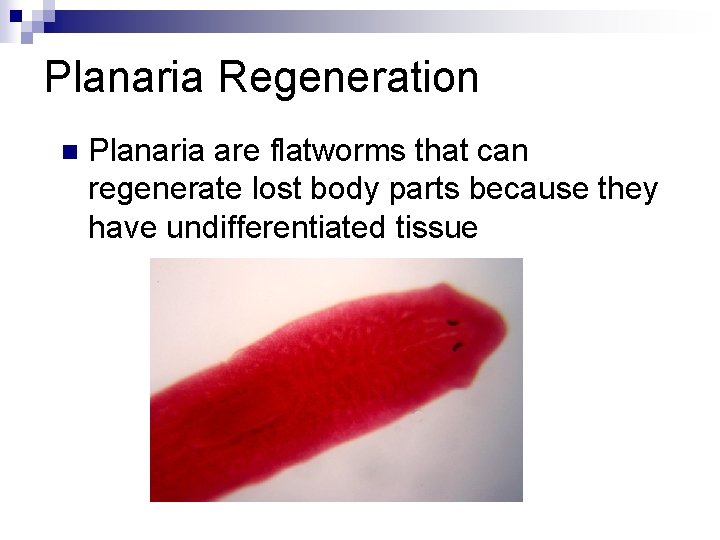
Planaria Regeneration n Planaria are flatworms that can regenerate lost body parts because they have undifferentiated tissue
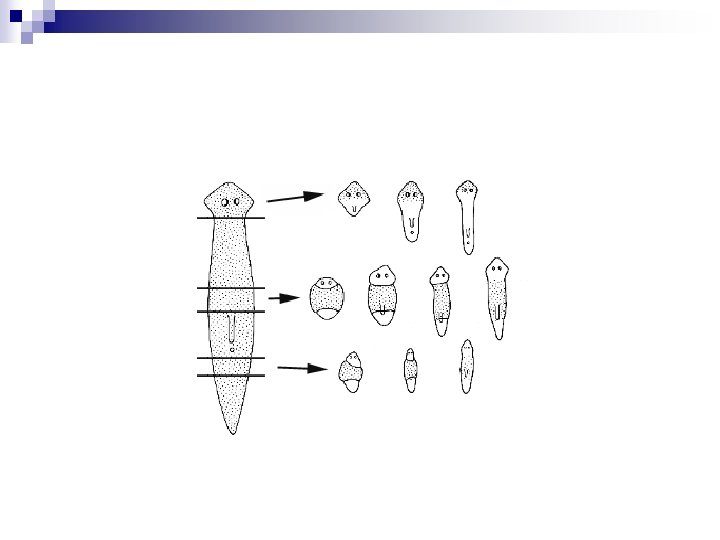
A planarian can be cut into several pieces, and each will grow into a complete worm n If the head is sliced down the center, the result is a two headed planaria! n n http: //www. mtholyoke. edu/courses/rfink/ Videopages/video 3. htm
Vegetative Propagation A type of regeneration that occurs in plants n Complete new plants develop from a part of the parent plant (root, stem, leaf) n
Natural Means of Vegetative Propagation n No human intervention
1. Bulbs Enlarged underground stem surrounded by leaves and contains stored food n New bulbs form by the base of the leaf n
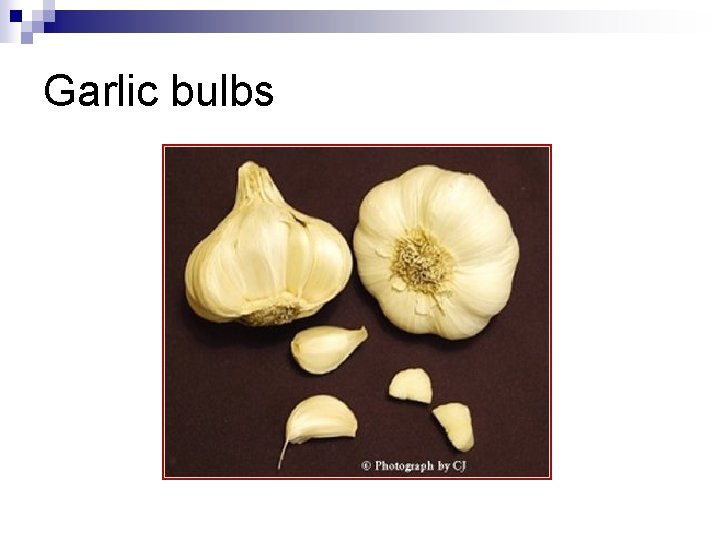
Garlic bulbs
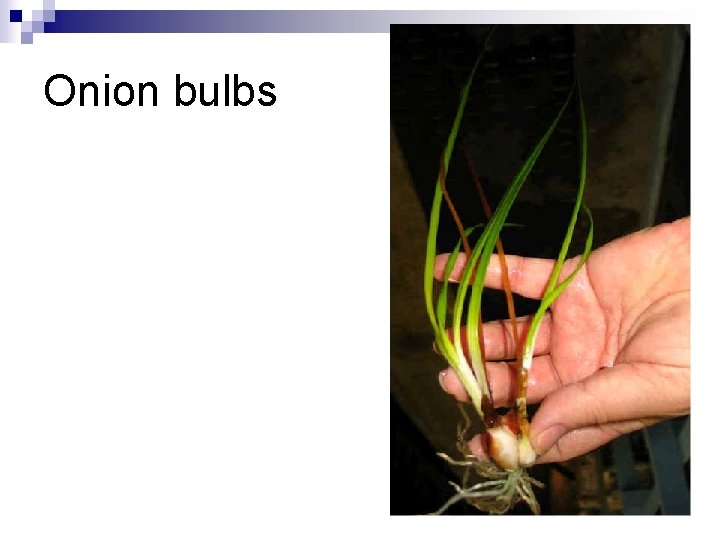
Onion bulbs
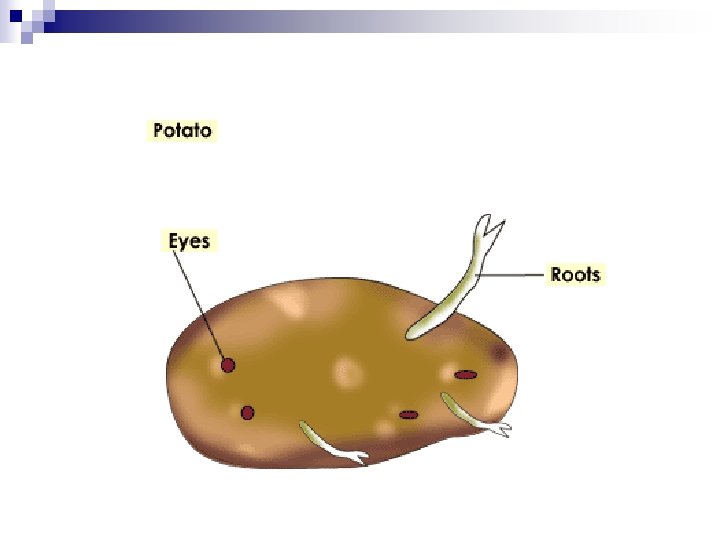
2. Tuber Enlarged underground stem with stored food n Buds (“eyes”) can develop into new plants n
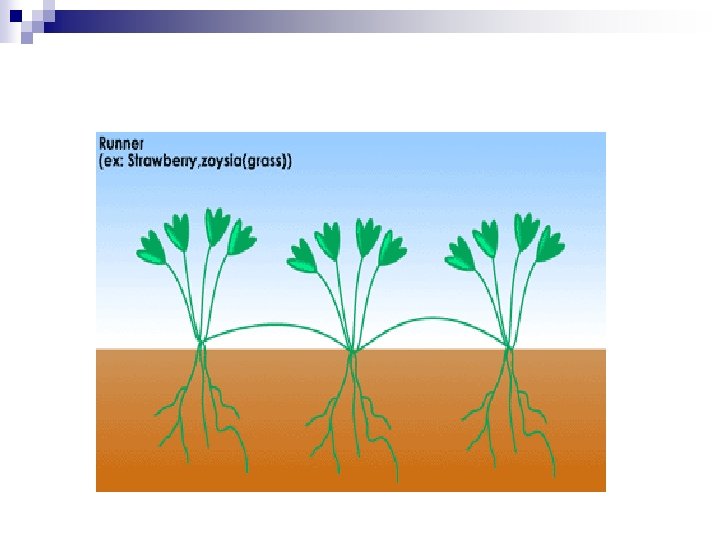
3. Runners Stems that grow along the ground n New roots form where the stem meets the ground and develop into a new plant n
4. Rhizomes n Stem that grows sideways underground or underwater
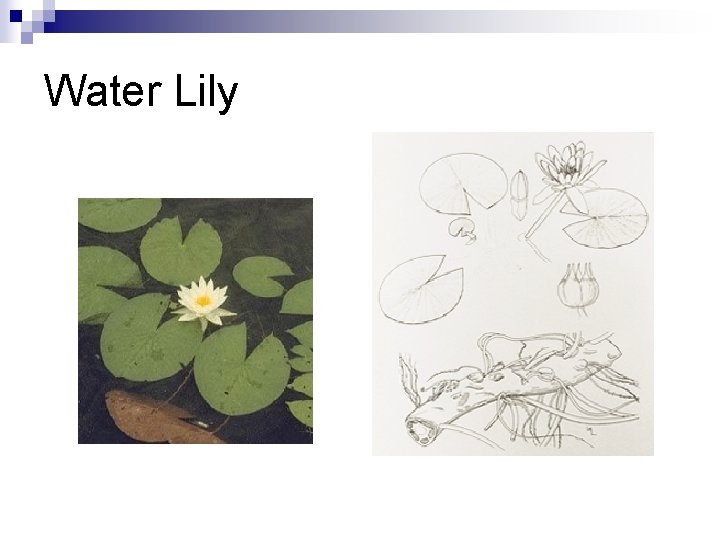
Water Lily
Artificial Vegetative Propagation
1. Cuttings n Any part of the plant (stem, leaf, root) is used to produce a new individual
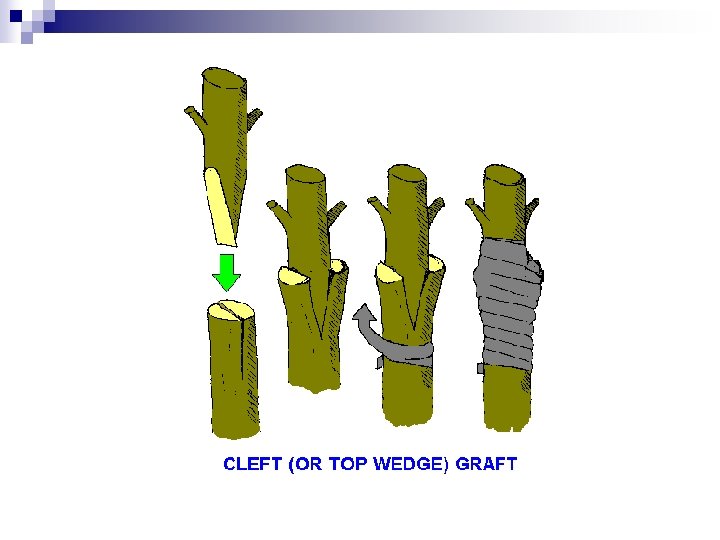
2. Grafting n A stem is removed from one plant and joined permanently to another plant Stock: provides the root system n Scion: added piece n
Advantages Plants that grow from seeds do not always show the same characteristics n Faster n Higher yields of fruits n
- Slides: 31