
Asexual Reproduction Asexual reproduction involves only one parent


- Slides: 10
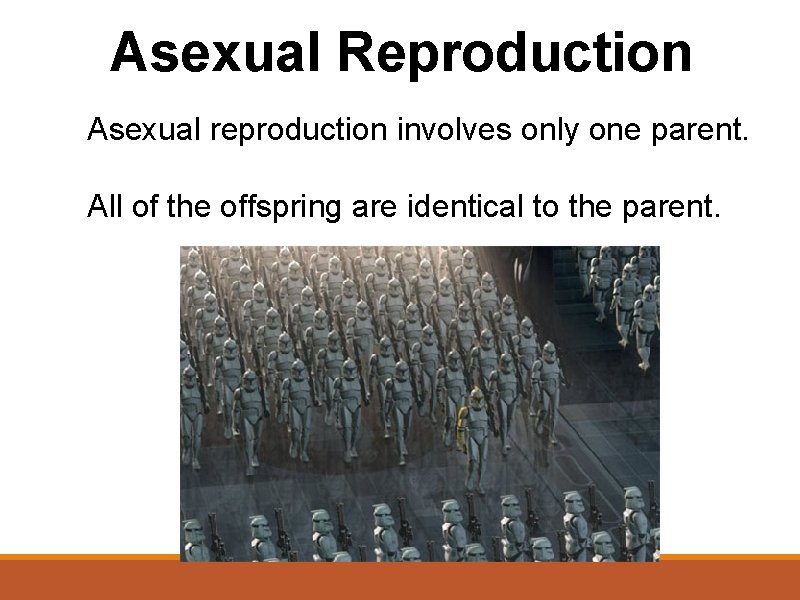
Asexual Reproduction Asexual reproduction involves only one parent. All of the offspring are identical to the parent.
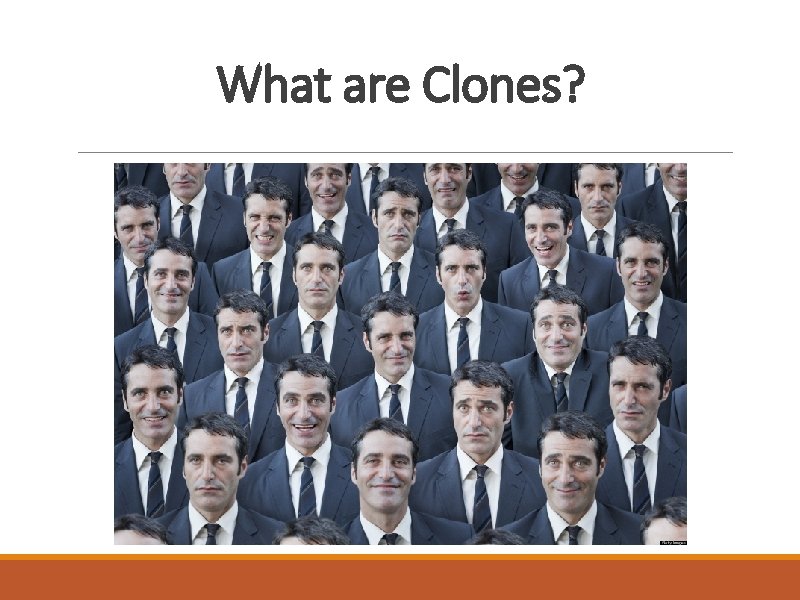
What are Clones?
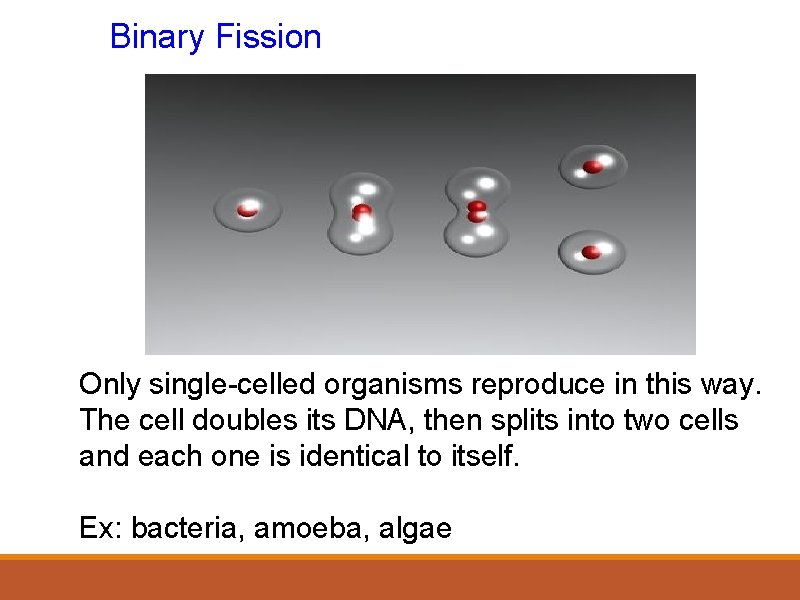
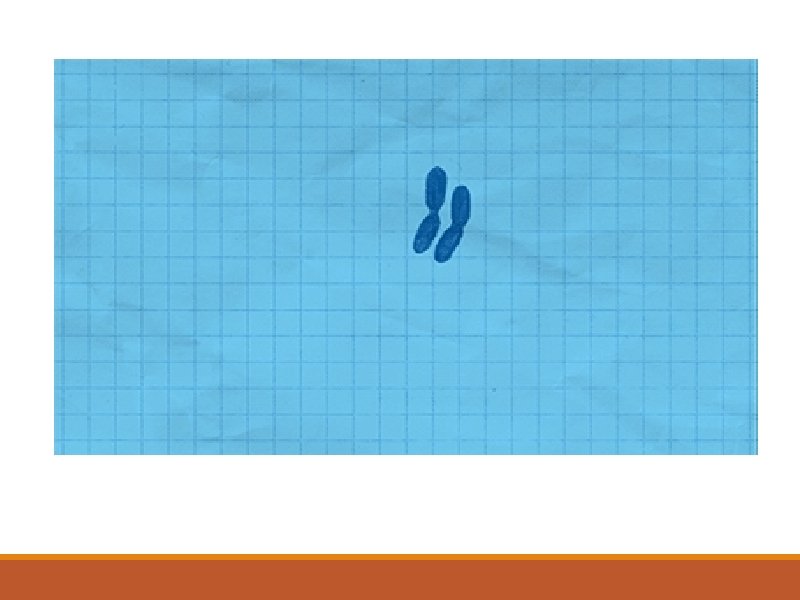
Binary Fission Only single-celled organisms reproduce in this way. The cell doubles its DNA, then splits into two cells and each one is identical to itself. Ex: bacteria, amoeba, algae
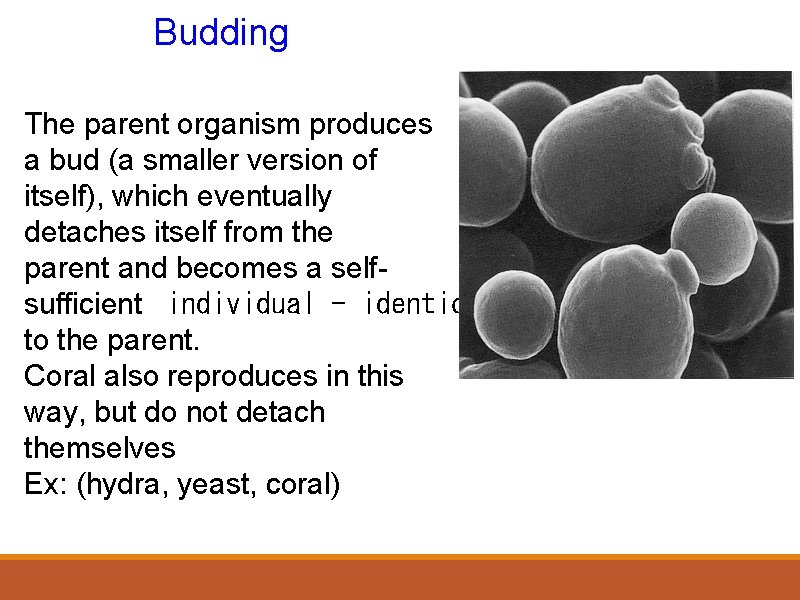
Budding The parent organism produces a bud (a smaller version of itself), which eventually detaches itself from the parent and becomes a selfsufficient individual - identical to the parent. Coral also reproduces in this way, but do not detach themselves Ex: (hydra, yeast, coral)
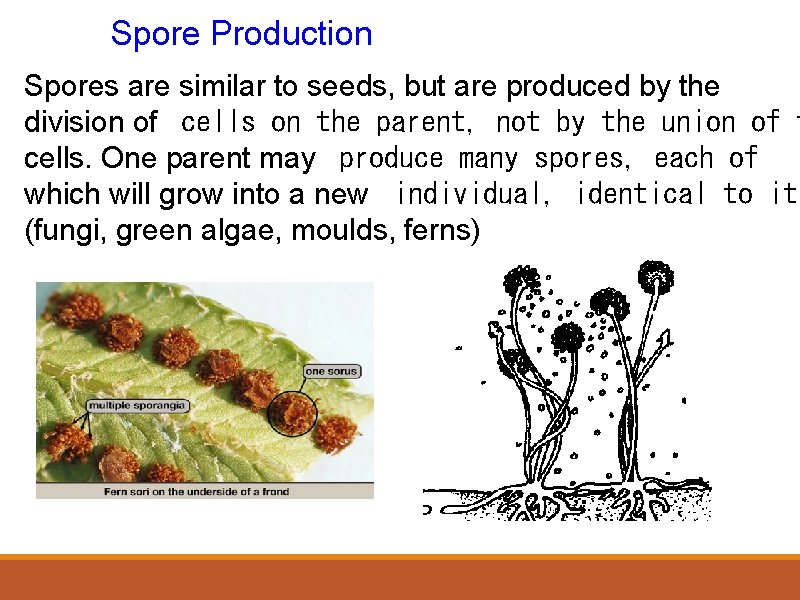
Spore Production Spores are similar to seeds, but are produced by the division of cells on the parent, not by the union of t cells. One parent may produce many spores, each of which will grow into a new individual, identical to its (fungi, green algae, moulds, ferns)
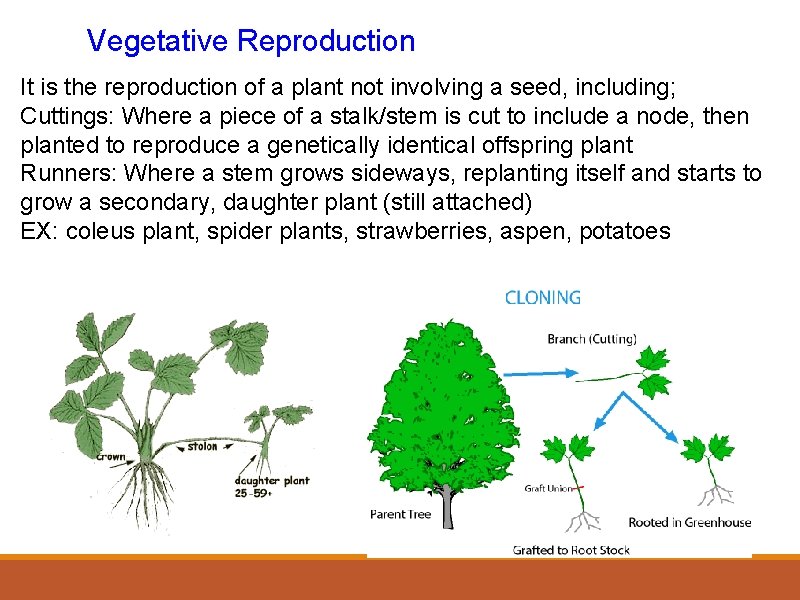
Vegetative Reproduction It is the reproduction of a plant not involving a seed, including; Cuttings: Where a piece of a stalk/stem is cut to include a node, then planted to reproduce a genetically identical offspring plant Runners: Where a stem grows sideways, replanting itself and starts to grow a secondary, daughter plant (still attached) EX: coleus plant, spider plants, strawberries, aspen, potatoes
ADVANTAGES • Populations can grow very fast • There is no need for specialized reproductive cells • You only need one parent • Reproductive process is quick DISADVANTAGES • Populations that have no genetic variations can be wiped out if there is an environmental change