
Ascomycota By Kyle Benson Fungi Most are heterotrophic
Ascomycota By: Kyle Benson
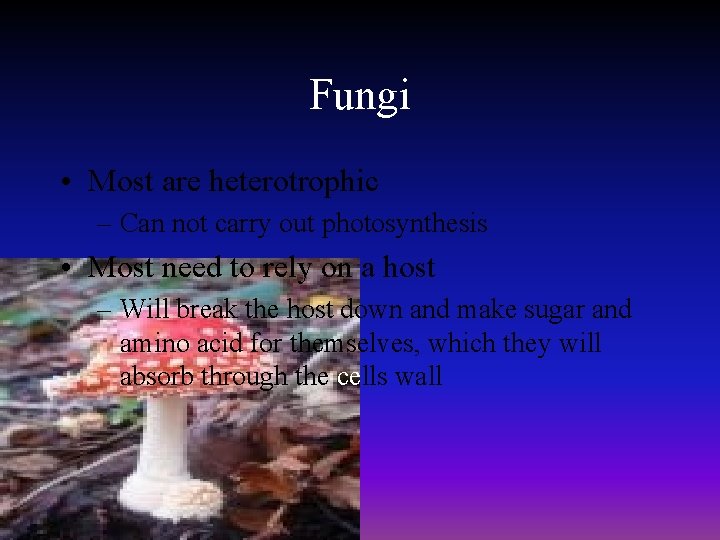
Fungi • Most are heterotrophic – Can not carry out photosynthesis • Most need to rely on a host – Will break the host down and make sugar and amino acid for themselves, which they will absorb through the cells wall
Ascomycota • Ascomycota is a phylum in the fungi kingdom – Sister group to basidomycota • They make up the largest group of the fungi's – Over 33, 000 species and are arranged in about 3300 genera • With new species being found regularly
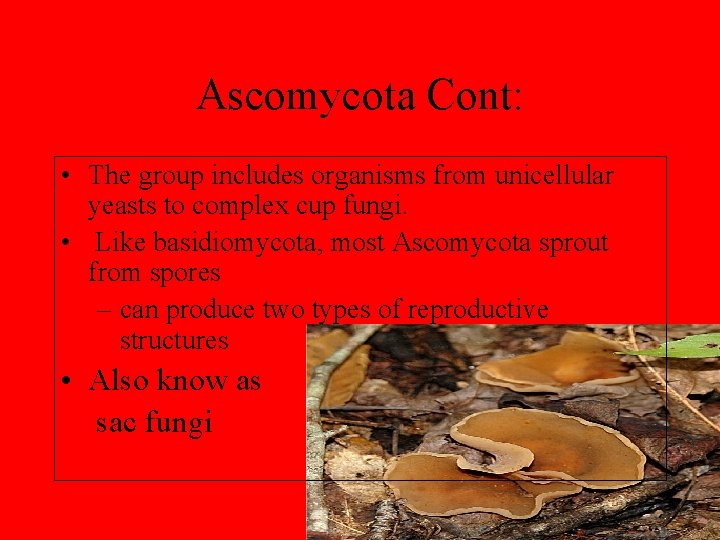
Ascomycota Cont: • The group includes organisms from unicellular yeasts to complex cup fungi. • Like basidiomycota, most Ascomycota sprout from spores – can produce two types of reproductive structures • Also know as sac fungi
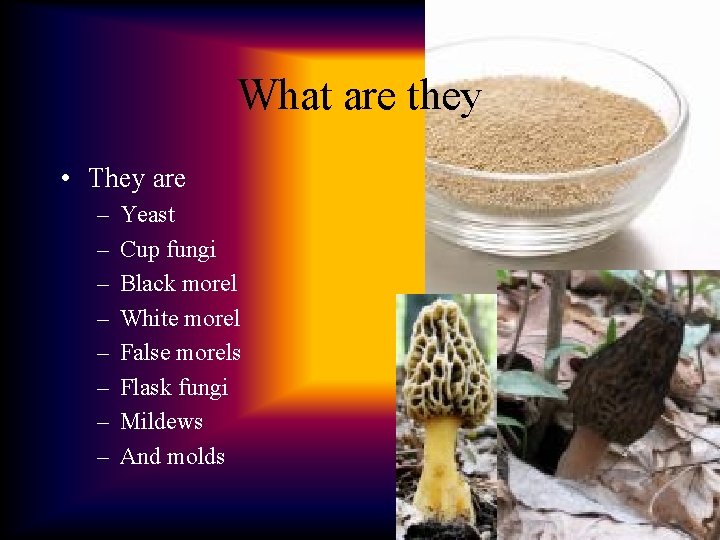
What are they • They are – – – – Yeast Cup fungi Black morel White morel False morels Flask fungi Mildews And molds
Characteristics • The class is a vary large and diverse group that is hard to characterize • The biggest thing that makes it an Ascomycota, is that all members produce a acospores, inside of a sac- like cell, called an ascus
Reproduction • Ascomycota can reproduce in two ways – Asexually • Is done in two ways, budding or fission – Or sexually • Asexually is more common
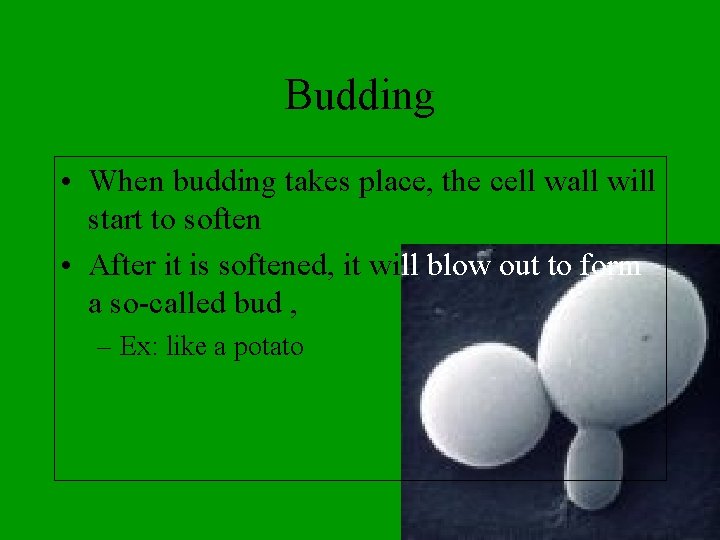
Budding • When budding takes place, the cell wall will start to soften • After it is softened, it will blow out to form a so-called bud , – Ex: like a potato
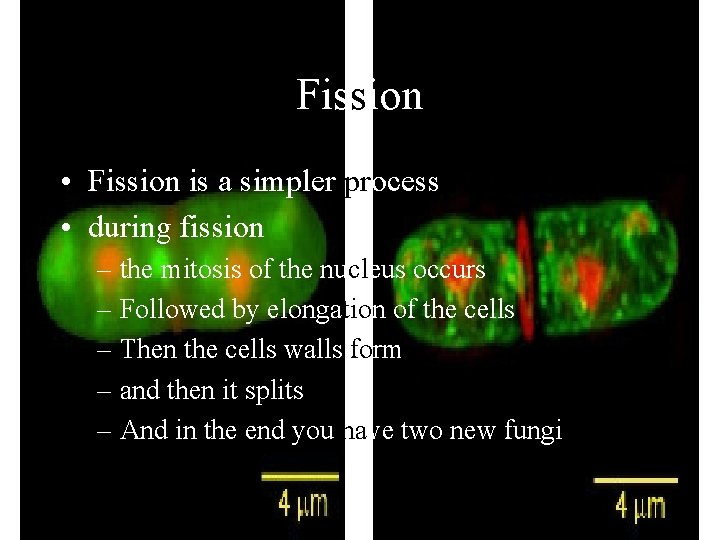
Fission • Fission is a simpler process • during fission – the mitosis of the nucleus occurs – Followed by elongation of the cells – Then the cells walls form – and then it splits – And in the end you have two new fungi
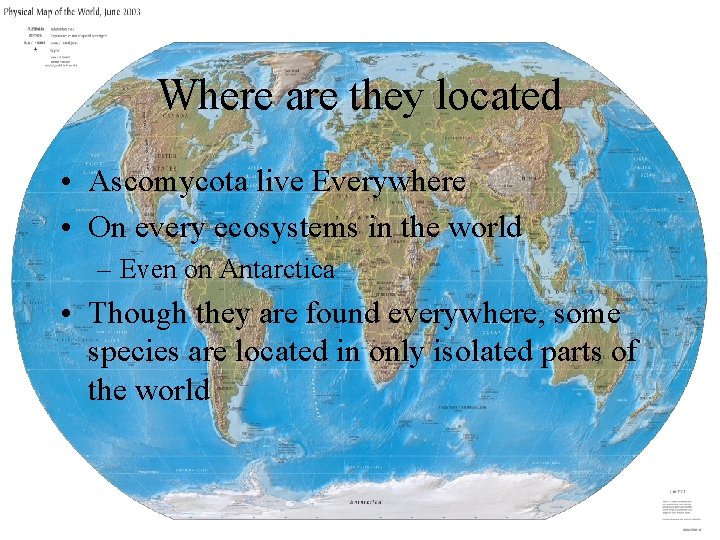
Where are they located • Ascomycota live Everywhere • On every ecosystems in the world – Even on Antarctica • Though they are found everywhere, some species are located in only isolated parts of the world
- Slides: 10