
AscendingAcute Cholangitis Travis Watai 222015 Biliary Tract Biliary

Ascending/Acute Cholangitis Travis Watai 2/2/2015
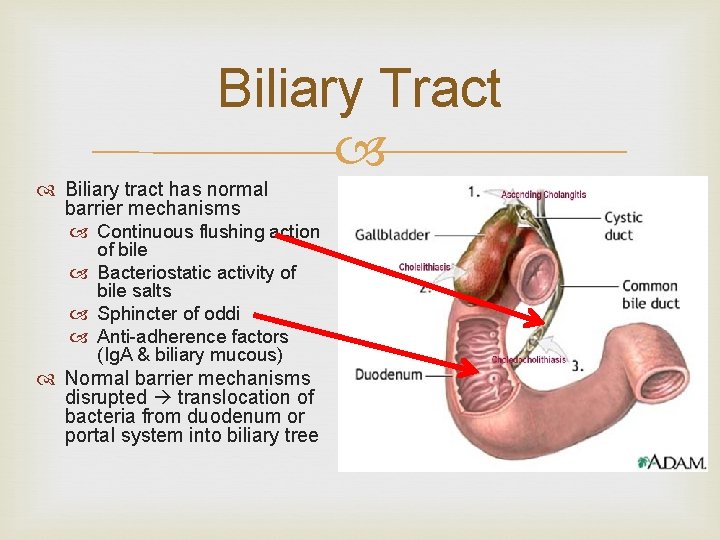
Biliary Tract Biliary tract has normal barrier mechanisms Continuous flushing action of bile Bacteriostatic activity of bile salts Sphincter of oddi Anti-adherence factors (Ig. A & biliary mucous) Normal barrier mechanisms disrupted translocation of bacteria from duodenum or portal system into biliary tree
Pathophysiology Most important predisposing factor is biliary obstruction & stasis (biliary calculi, malignancy, & biliary stent placement) Biliary obstruction raises intrabiliary pressure increased permeability of bile ductules translocation of bacteria & toxins from portal circulation into biliary tract Increased pressure also favors migration of bacteria from bile into systemic circulation increasing risk of septicemia
Bacteriology Most common bacteria isolated are of colonic origin E. coli (25 -50%) Klebsiella (15 -20%) Enterobacter (5 -10%) Enterococcus (10 -20%) Anaerobes such as Bacteroides & Clostridia usually present as part of mixed infection
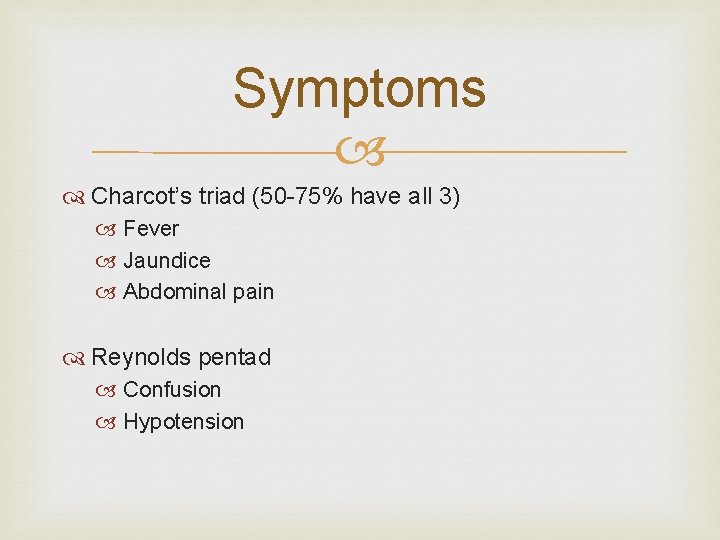
Symptoms Charcot’s triad (50 -75% have all 3) Fever Jaundice Abdominal pain Reynolds pentad Confusion Hypotension
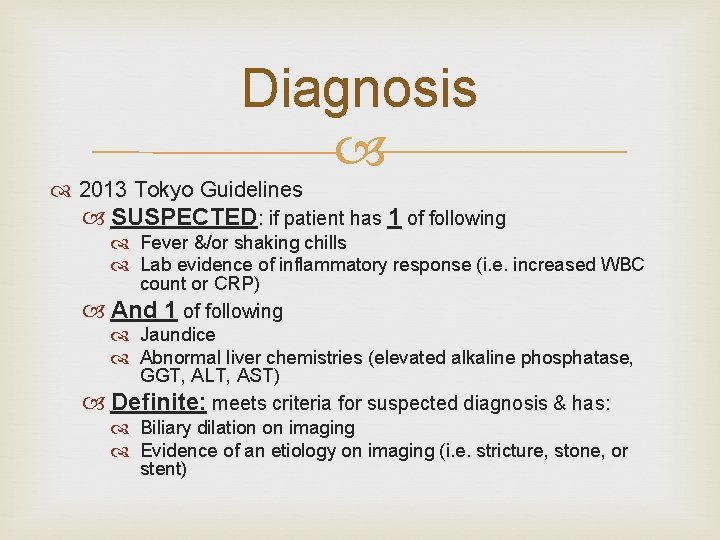
Diagnosis 2013 Tokyo Guidelines SUSPECTED: if patient has 1 of following Fever &/or shaking chills Lab evidence of inflammatory response (i. e. increased WBC count or CRP) And 1 of following Jaundice Abnormal liver chemistries (elevated alkaline phosphatase, GGT, ALT, AST) Definite: meets criteria for suspected diagnosis & has: Biliary dilation on imaging Evidence of an etiology on imaging (i. e. stricture, stone, or stent)
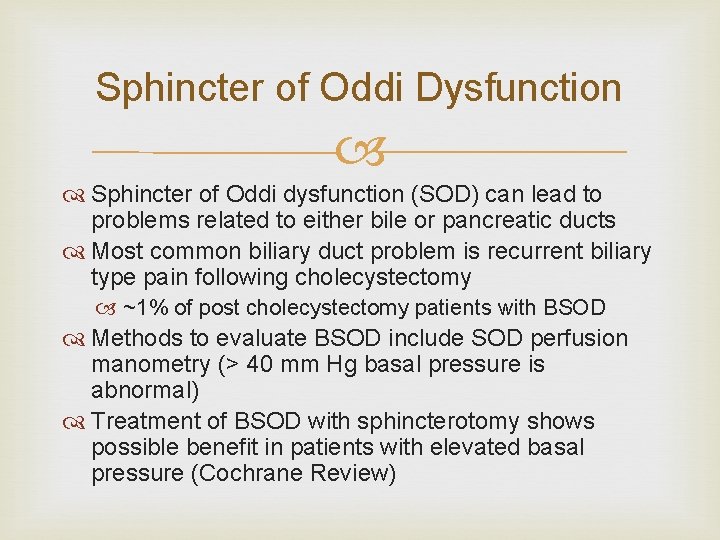
Sphincter of Oddi Dysfunction Sphincter of Oddi dysfunction (SOD) can lead to problems related to either bile or pancreatic ducts Most common biliary duct problem is recurrent biliary type pain following cholecystectomy ~1% of post cholecystectomy patients with BSOD Methods to evaluate BSOD include SOD perfusion manometry (> 40 mm Hg basal pressure is abnormal) Treatment of BSOD with sphincterotomy shows possible benefit in patients with elevated basal pressure (Cochrane Review)
- Slides: 8