
Ascaridia galli Poultry Ascarid worm Dr AJIT KUMAR

- Slides: 10
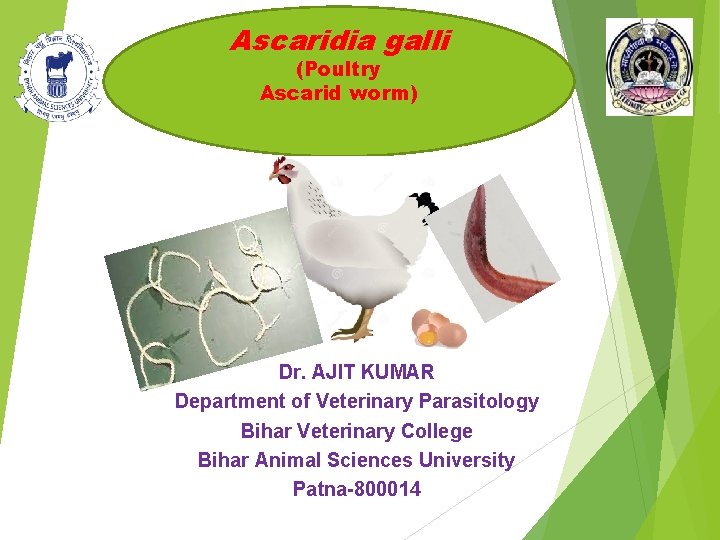
Ascaridia galli (Poultry Ascarid worm) Dr. AJIT KUMAR Department of Veterinary Parasitology Bihar Veterinary College Bihar Animal Sciences University Patna-800014
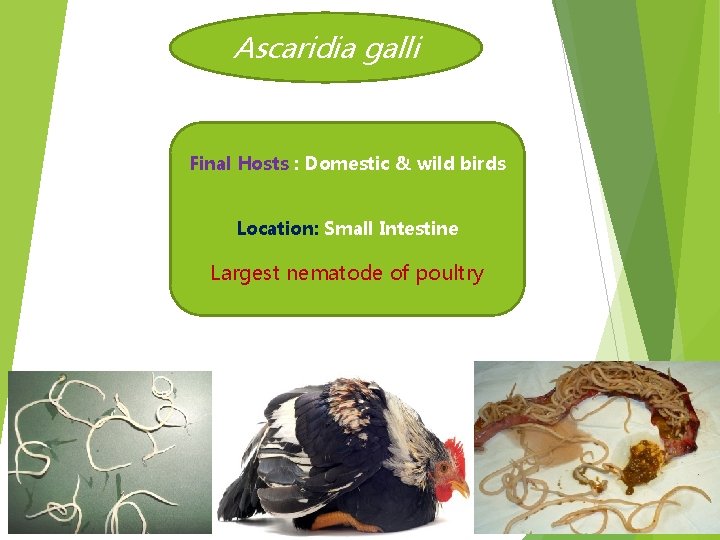
Ascaridia galli Final Hosts : Domestic & wild birds Location: Small Intestine Largest nematode of poultry
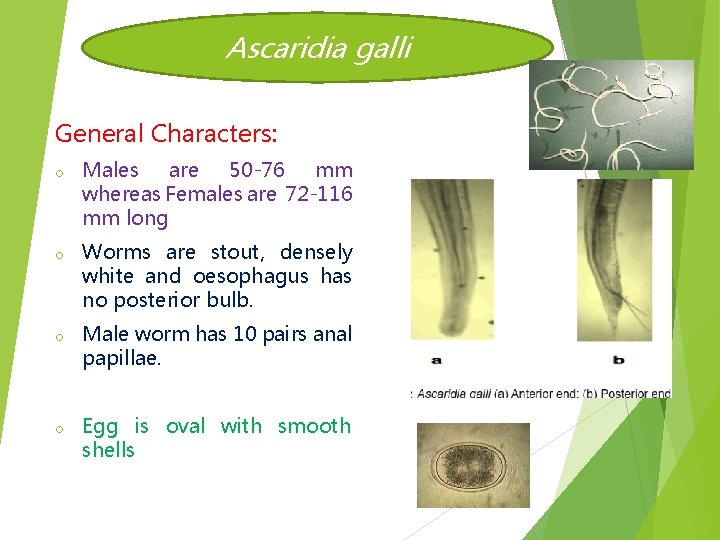
Ascaridia galli General Characters: o Males are 50 -76 mm whereas Females are 72 -116 mm long o Worms are stout, densely white and oesophagus has no posterior bulb. o Male worm has 10 pairs anal papillae. o Egg is oval with smooth shells
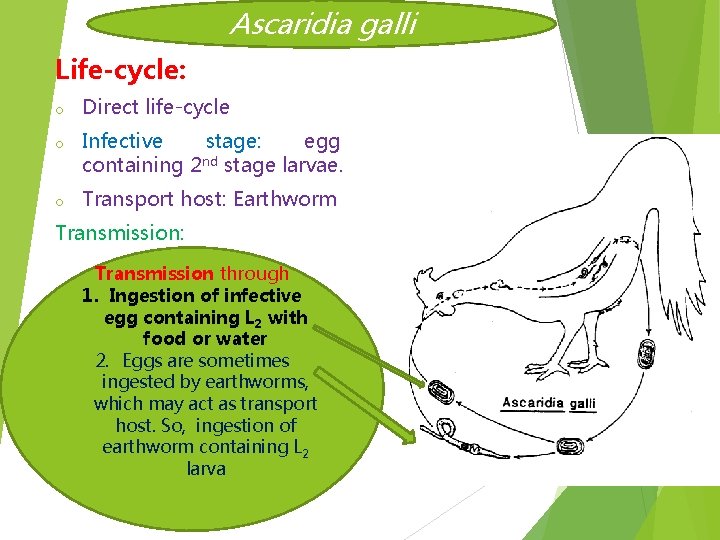
Ascaridia galli Life-cycle: o Direct life-cycle o Infective stage: egg containing 2 nd stage larvae. o Transport host: Earthworm Transmission: Transmission through 1. Ingestion of infective egg containing L 2 with food or water 2. Eggs are sometimes ingested by earthworms, which may act as transport host. So, ingestion of earthworm containing L 2 larva
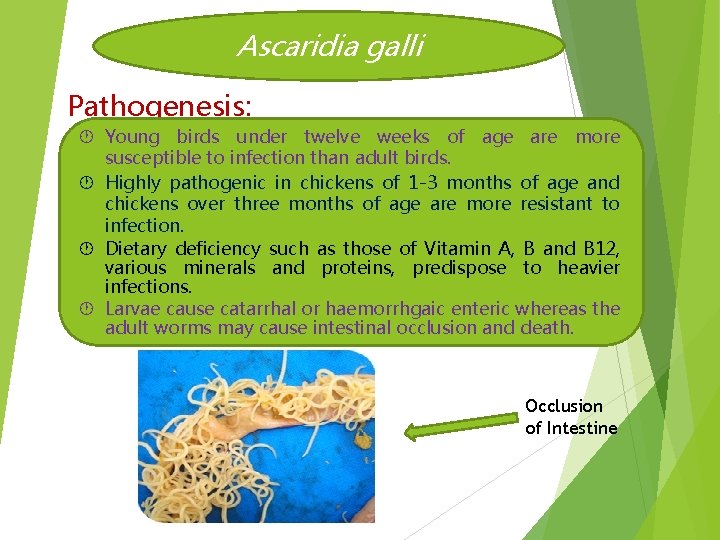
Ascaridia galli Pathogenesis: Young birds under twelve weeks of age are more susceptible to infection than adult birds. Highly pathogenic in chickens of 1 -3 months of age and chickens over three months of age are more resistant to infection. Dietary deficiency such as those of Vitamin A, B and B 12, various minerals and proteins, predispose to heavier infections. Larvae cause catarrhal or haemorrhgaic enteric whereas the adult worms may cause intestinal occlusion and death. Occlusion of Intestine
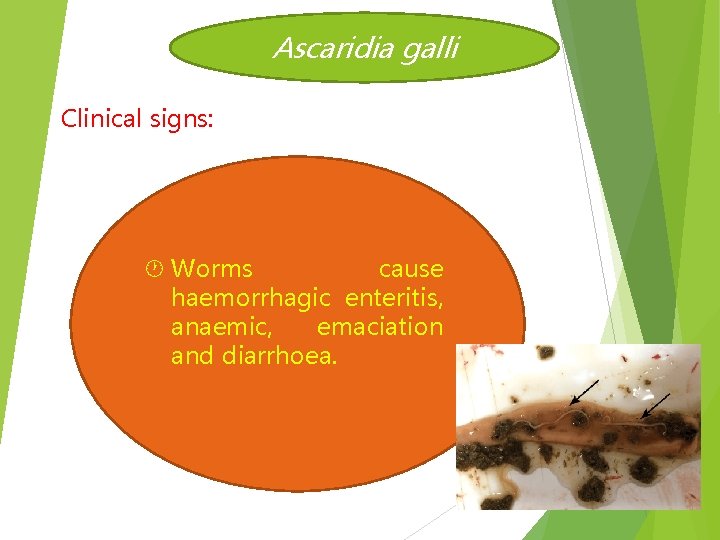
Ascaridia galli Clinical signs: Worms cause haemorrhagic enteritis, anaemic, emaciation and diarrhoea.
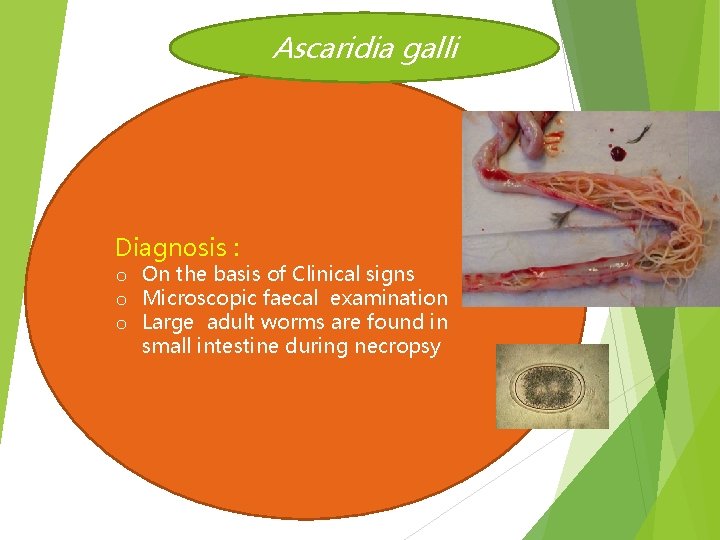
Ascaridia galli Diagnosis : o On the basis of Clinical signs o Microscopic faecal examination o Large adult worms are found in small intestine during necropsy
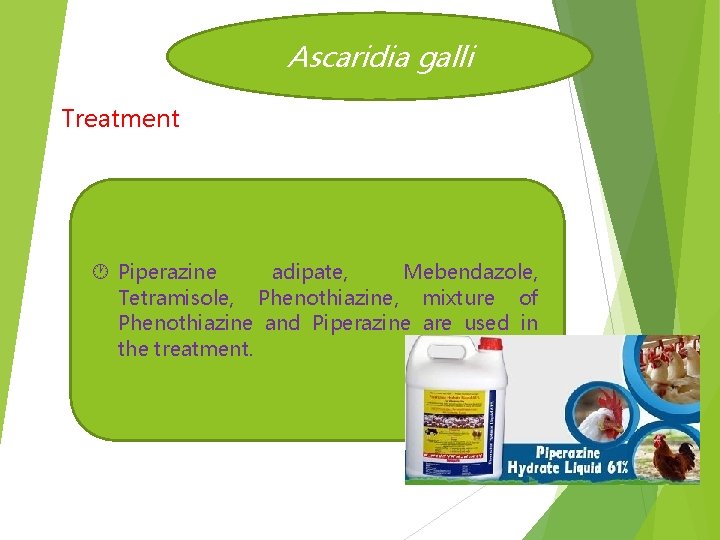
Ascaridia galli Treatment Piperazine adipate, Mebendazole, Tetramisole, Phenothiazine, mixture of Phenothiazine and Piperazine are used in the treatment.
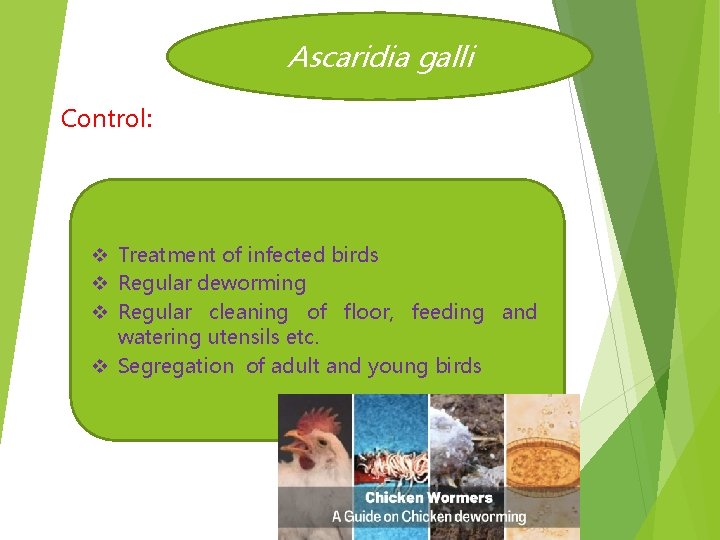
Ascaridia galli Control: v Treatment of infected birds v Regular deworming v Regular cleaning of floor, feeding and watering utensils etc. v Segregation of adult and young birds
THANK YOU