
ASCARIASIS Roundworm Infection Definition Infection caused by parasite
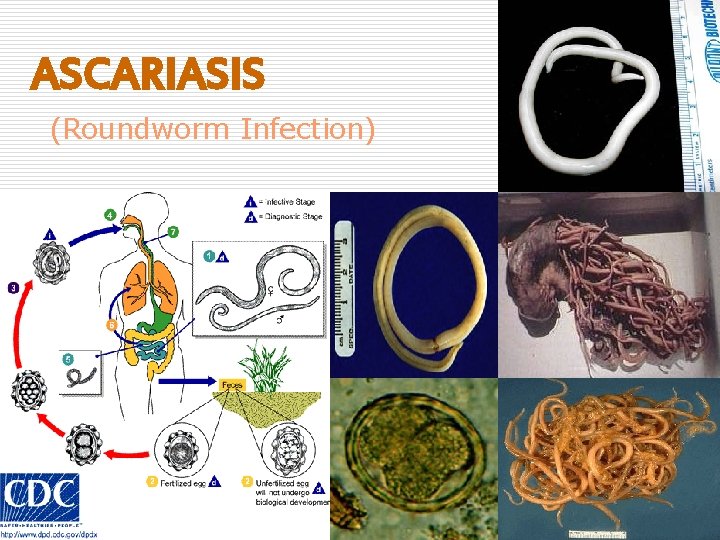
ASCARIASIS (Roundworm Infection)
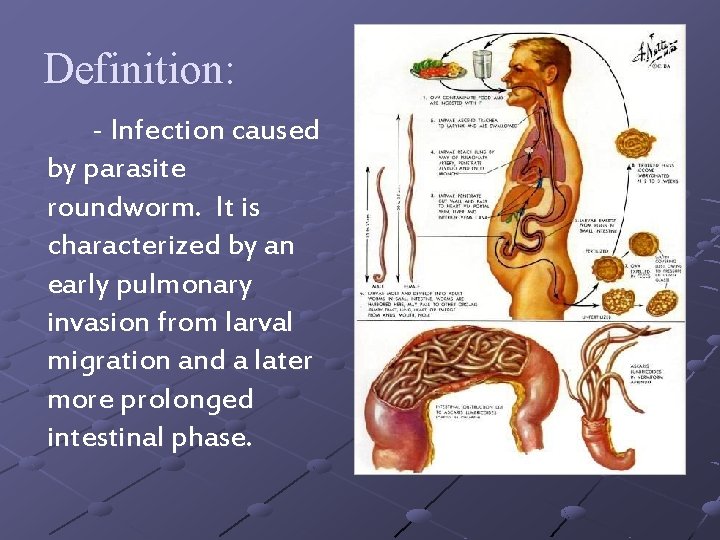
Definition: - Infection caused by parasite roundworm. It is characterized by an early pulmonary invasion from larval migration and a later more prolonged intestinal phase.
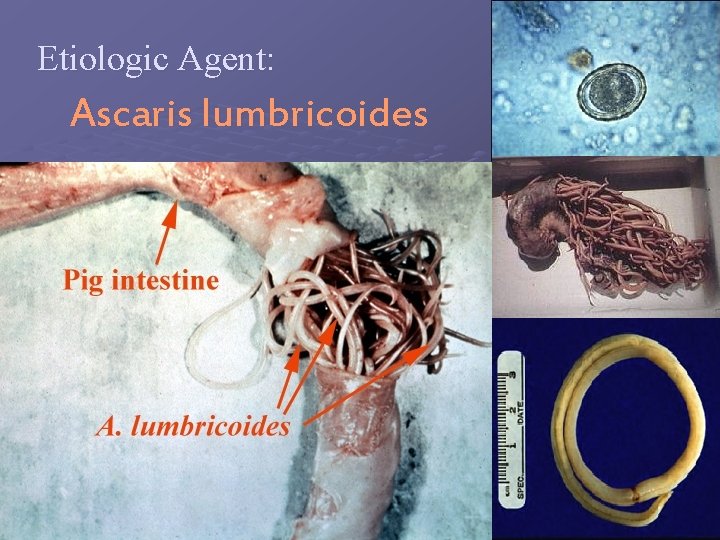
Etiologic Agent: Ascaris lumbricoides

Mode of Transmission: Transmitted through contaminated fingers put into the mouth. Ingestion of food and drinks contaminated with embryonated eggs

Life Cycle: Embryonated ova Larval stage Adult
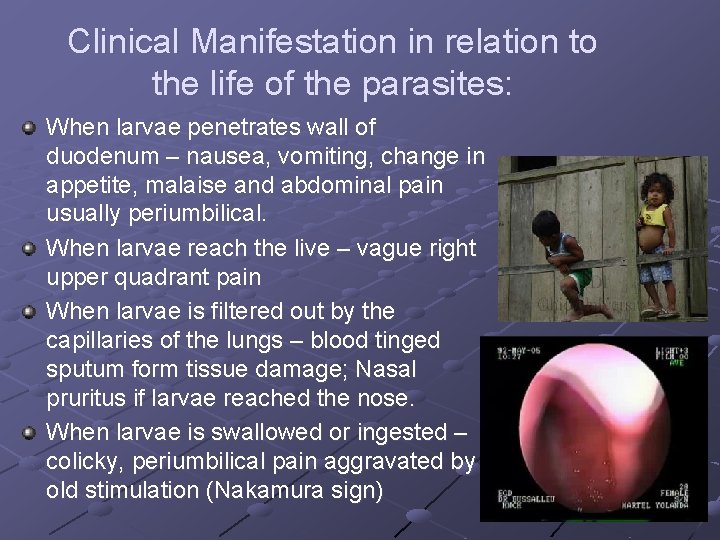
Clinical Manifestation in relation to the life of the parasites: When larvae penetrates wall of duodenum – nausea, vomiting, change in appetite, malaise and abdominal pain usually periumbilical. When larvae reach the live – vague right upper quadrant pain When larvae is filtered out by the capillaries of the lungs – blood tinged sputum form tissue damage; Nasal pruritus if larvae reached the nose. When larvae is swallowed or ingested – colicky, periumbilical pain aggravated by old stimulation (Nakamura sign)

Clinical Manifestation in relation to the life of the parasites: When adult ascaris stays in the small intestine – intestinal obstruction caused by bolus of entangled worms which may be palpable. Adult ascaris become erratic and they go to the stomach and esophagus – sever abdominal pain associated with vomiting. Adult ascaris at the common bile duct and gall bladder – jaundice.
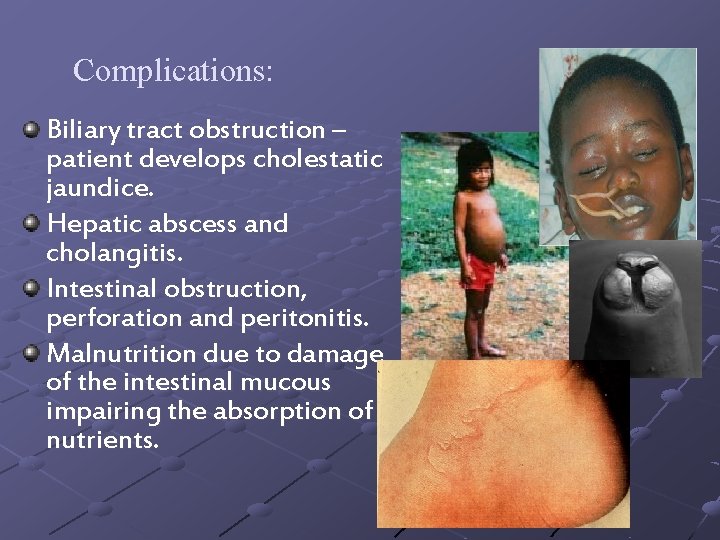
Complications: Biliary tract obstruction – patient develops cholestatic jaundice. Hepatic abscess and cholangitis. Intestinal obstruction, perforation and peritonitis. Malnutrition due to damage of the intestinal mucous impairing the absorption of nutrients.

Diagnosis: History of passing out adult worms or patient occasionally vomits a worm. Stool examination – for detection of eggs in the feces. Kato Technics – demonstration of the typical fertilized or unfertilized eggs in the stool. Roentgenogram (abdominal x-ray) a. Dense shadows of adult ascaris which look like strands of spaghetti “dot” sign b. Signs of intestinal obstruction if bolus is big enough to cause a mechanical ileus. Blood examination – significant eosinophilia.

Treatment: Albendazole or Mebendazole – 15 cc as single dose orally Piperazine Citrate – 75 mg/kg daily for 2 doses Pyrantel Palmoate – 11 mg/kg as a single dose orally.

Nursing Interventions: Isolation is not needed. Prevention measures in each home and in the community should be enforced. All members of the family must be taught of health matters. Must be trained to wash their hands before handling food, must be taught to wash thoroughly all fruits and vegetables eaten raw and must be taught about effective sewage disposal. Availability of toilet facilities must be ensured. Importance of personal hygiene should be explained.
- Slides: 11