
Asbestos Gordon Institute of TAFE Introduction History of
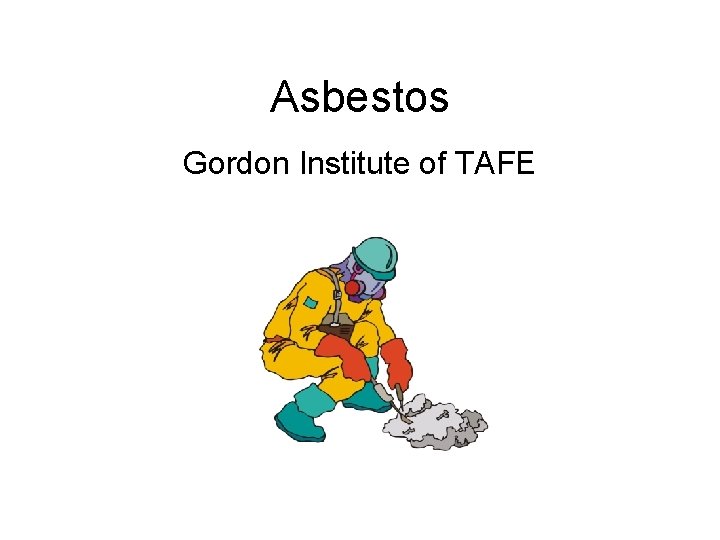
Asbestos Gordon Institute of TAFE
Introduction • • • History of asbestos use Types of asbestos Common applications Health effects Handling and storage
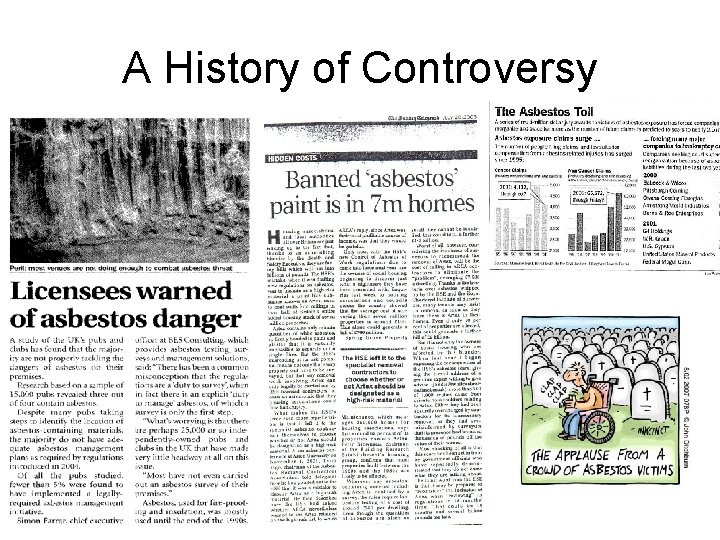
A History of Controversy
Why did they use it? • • • Does not react with acids Heat resistant Cheap and abundant Easily transported Great insulator No known health problems

Types of Asbestos Chrysotile (white) Crocidolite (blue) Amosite (brown)

Processing Non-friable rocks of asbestos are pulverised and woven to suit application
Common Applications • • • Building products Insulation Fire retardant coatings Furniture Break pads Circuit boards
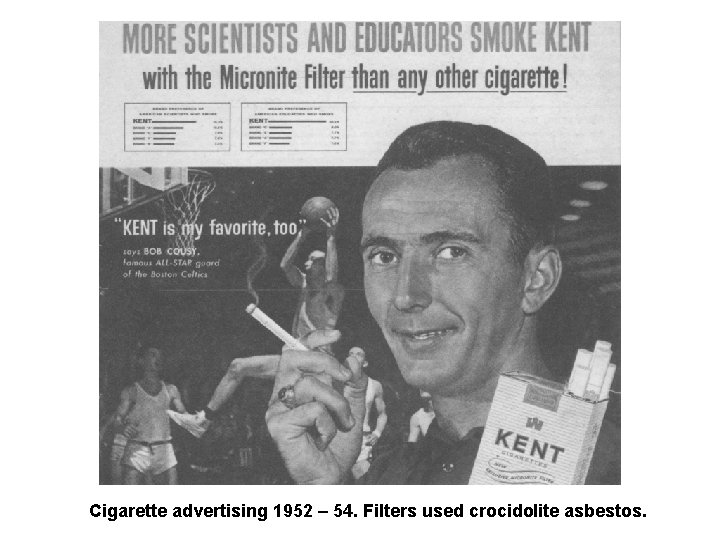
Cigarette advertising 1952 – 54. Filters used crocidolite asbestos.
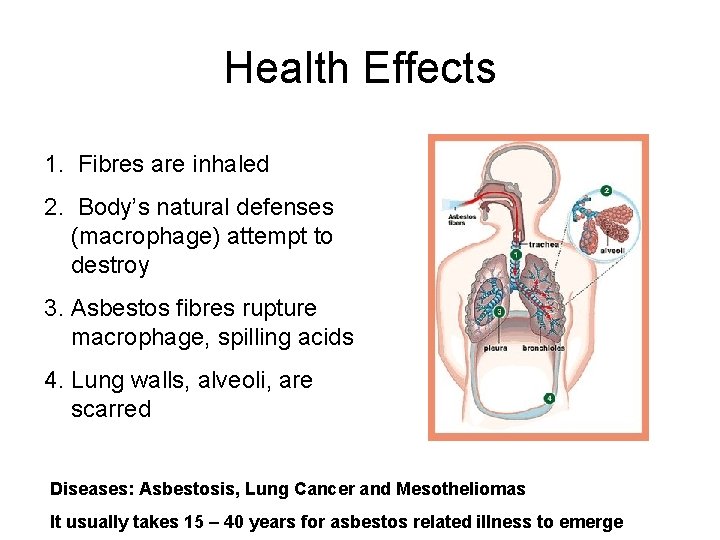
Health Effects 1. Fibres are inhaled 2. Body’s natural defenses (macrophage) attempt to destroy 3. Asbestos fibres rupture macrophage, spilling acids 4. Lung walls, alveoli, are scarred Diseases: Asbestosis, Lung Cancer and Mesotheliomas It usually takes 15 – 40 years for asbestos related illness to emerge
Employer Obligations IDENTIFY & RECORD • the location of the asbestos, • the type of asbestos-containing material • the nature of the material (friable or nonfriable) • the likelihood of the material posing a health risk • any work activities that may affect or cause deterioration to the material
Employer Obligations CONTROL THE RISK Employers and people who manage or control a workplace where asbestos is present must eliminate any risk associated with the asbestos by removing it. If it is not reasonably practicable to eliminate the risk, they must reduce the risk as far as reasonably practicable, by: • enclosing the material; and • if a risk still remains, sealing the material Employers have a duty to consult employees and health and safety representatives when identifying hazards and deciding on control measures.
- Slides: 11