
AS I ENTER 9 28 16 THINK ABOUT
AS I ENTER… 9. 28. 16 • THINK ABOUT IT – Why have and do people move across time and space? • Agenda: – Migration Vocab Quiz/grade – Population Paradox, World in Balance (Japan Segment)
AS I ENTER… 9. 29. 16 • THINKA BOUT IT/ DO IT – On the next slide, political cartoon intro • Agenda – Introduce Political cartoon Assignment • DUE: Tuesday, 10. 4. 16 – Examine examples – Work on Cartoon • Objective – Create a political cartoon which explains a major U. S. immigration law or event
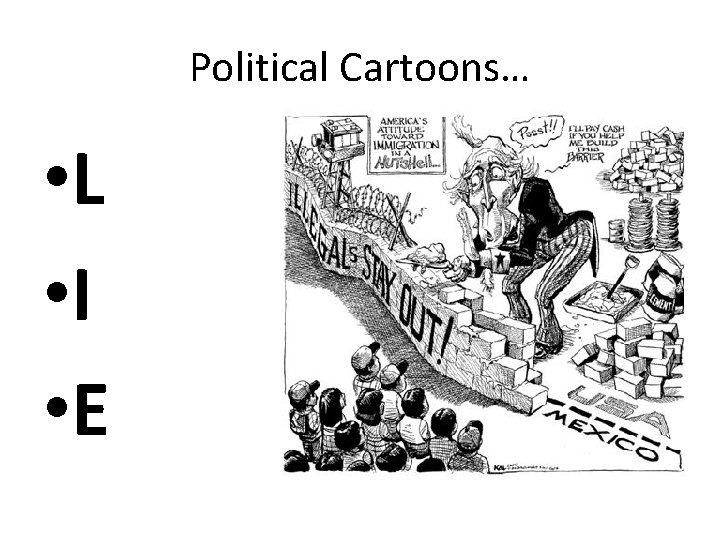
Political Cartoons… • L • I • E
Political Cartoons • What you are going to do… – Review key immigration policy from US history – Choose one to research and create a cartoon on – Sketch out your idea – prior to completing on given paper • Things to consider: – You may only use labels/few words – Color is optional but it may NOT be in pencil • (don’t argue…it ain’t happenin’) – If your neighbor/mom/uncle can’t figure out what it’s about rethink your illustration
Political Cartoons • Grading – Neatness – Clearly identifies your ethnic group through dress or language (cultural) clues – Demonstrates the experience of your ethnic group – Creativity (I’m here to assist with that part, so take advantage so you don’t lose points!)
AS I ENTER… 9. 30. 16 • THINK ABOUT IT – One day you will probably migrate away from Yorkville/Yorkville area… • What will the catalyst for movement be? • Will you return? • Agenda – Last political cartoon work day • DUE: Tuesday, 10. 4. 16 • Objective – Create a political cartoon which explains a major U. S. immigration law or event
As I Enter… 10. 3. 16 • THINK ABOUT IT – Can you describe or give an example of: • • Voluntary migration Forced migration A historical migration pattern Interregional migration • Agenda: – Notes on Migration – If there is time – continue work on political cartoons – DUE TOMORROW!
AS I ENTER… 10. 4. 16 • Think about/Write out: – 2 questions you have about migration • Agenda: – Collect Political Cartoons – Notes on Migration – Finish Migration Key Issues – • SUBSTITUTE TOMORROW- map quiz day • Announcement: – Please look at the calendar for upcoming FRQ and MC Assessment dates!
Migration Map • Forbes Migration Map
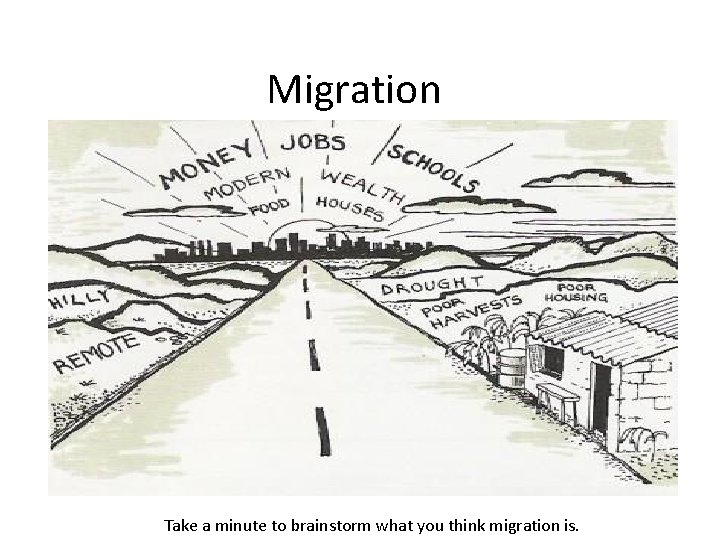
Migration Take a minute to brainstorm what you think migration is.
KI 1 • Why do People Migrate? • Reasons for Migrating • Distance of Migration • Characteristics of Migrants
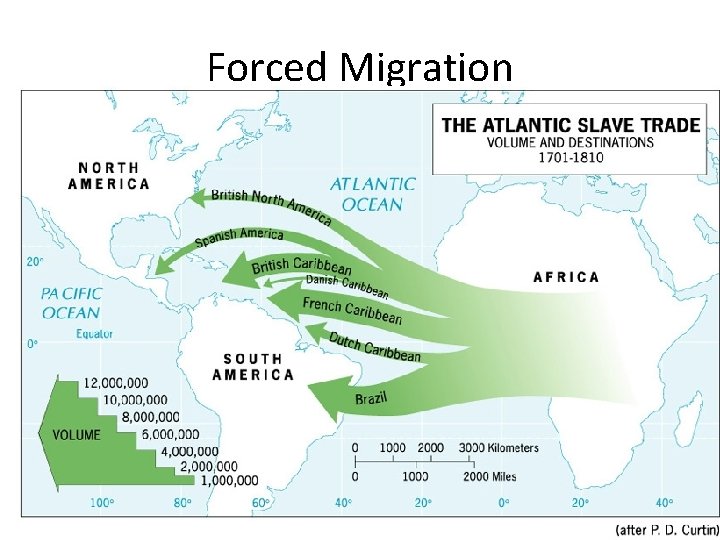
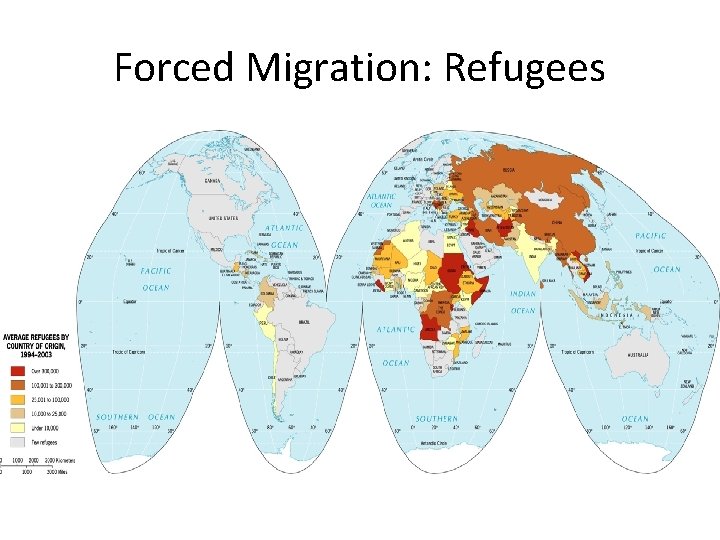
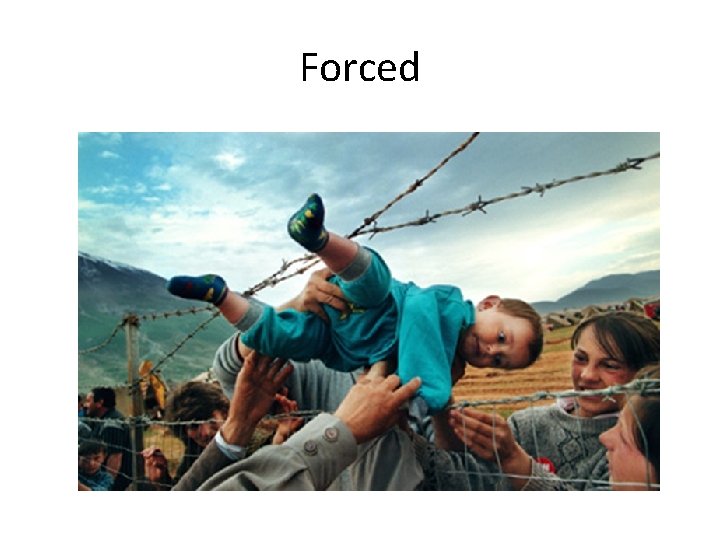
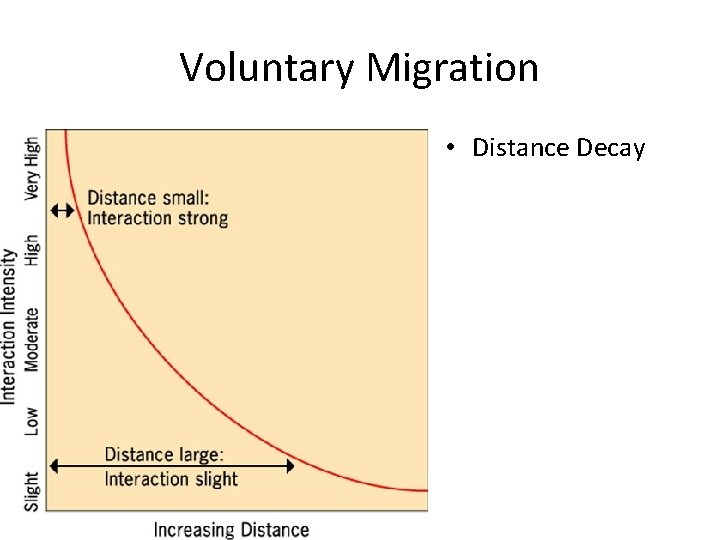
Two Types of Migration • Forced Migration – Human migration flows in which the movers have no choice but to relocate. • Voluntary Migration – Human migration flows in which the movers respond to perceived opportunity, not force.
Forced Migration
Forced Migration: Refugees
Forced
Voluntary Migration • Distance Decay
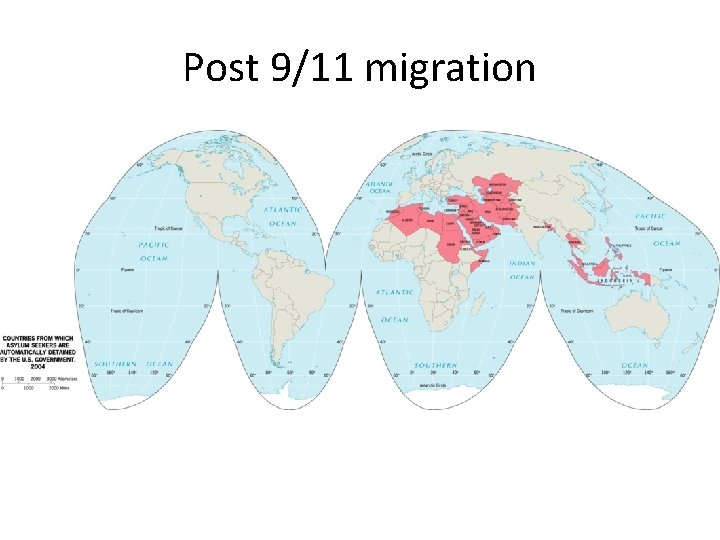
Post 9/11 migration
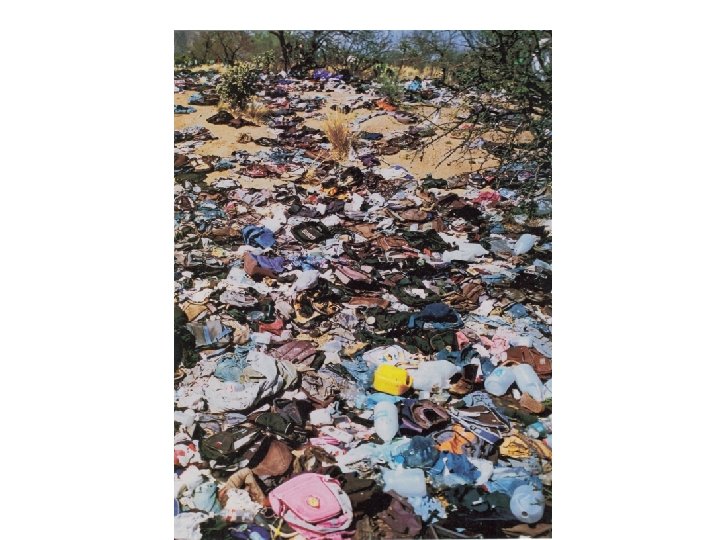
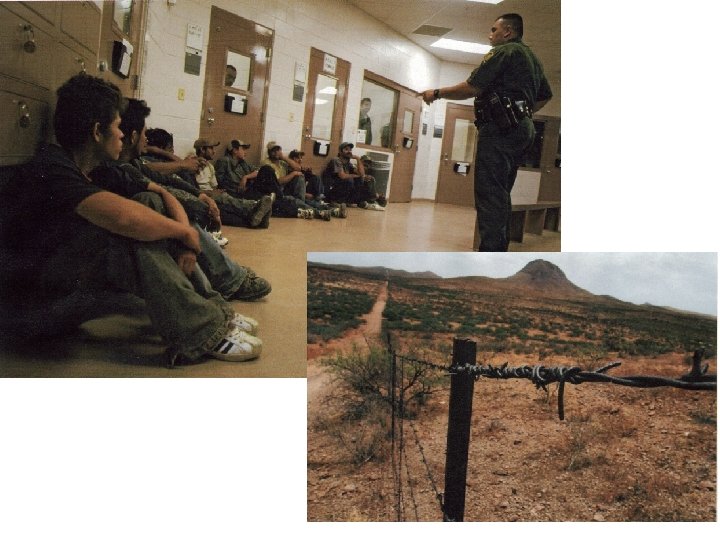
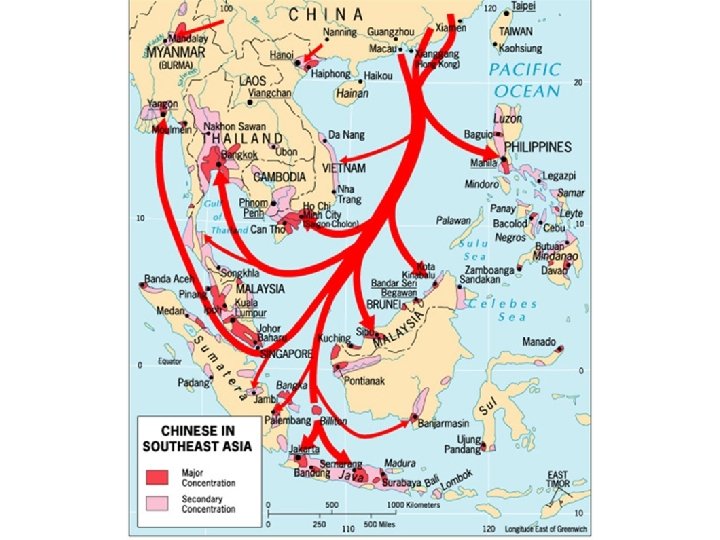
Types of Movement • Cyclic Movement – movement away from home for a short period. – Commuting – Seasonal movement – Nomadism • Periodic Movement – movement away from home for a longer period. – Migrant labor – Transhumance – Military service
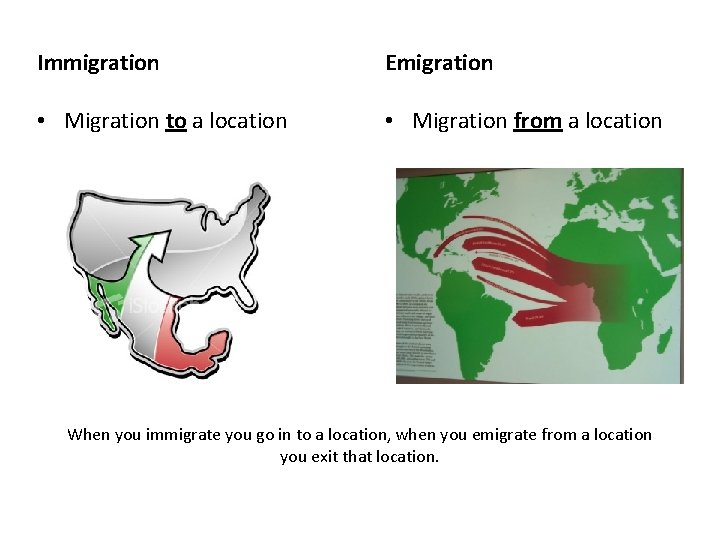
Immigration Emigration • Migration to a location • Migration from a location When you immigrate you go in to a location, when you emigrate from a location you exit that location.
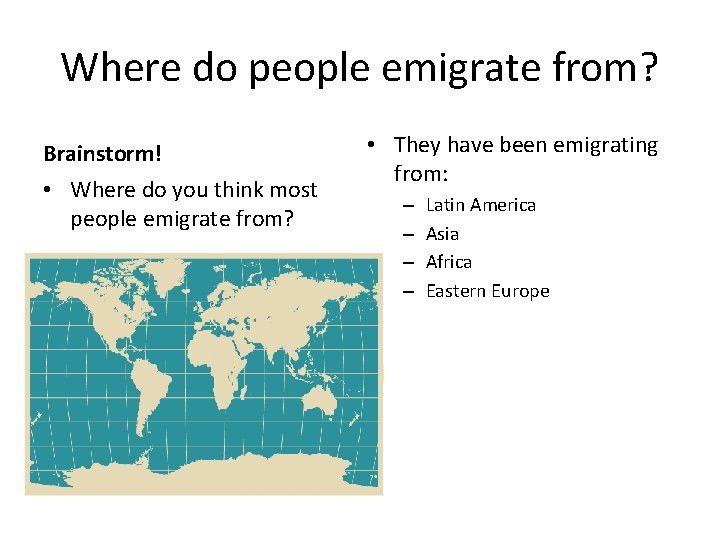
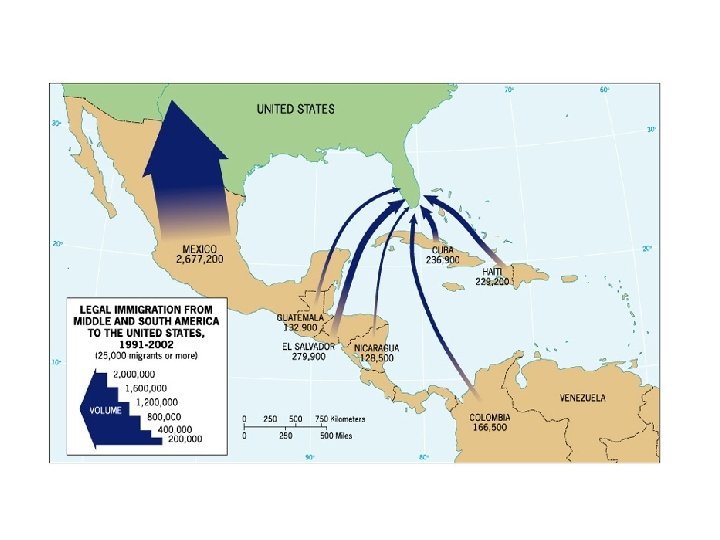
Where do people emigrate from? Brainstorm! • Where do you think most people emigrate from? • They have been emigrating from: – – Latin America Asia Africa Eastern Europe
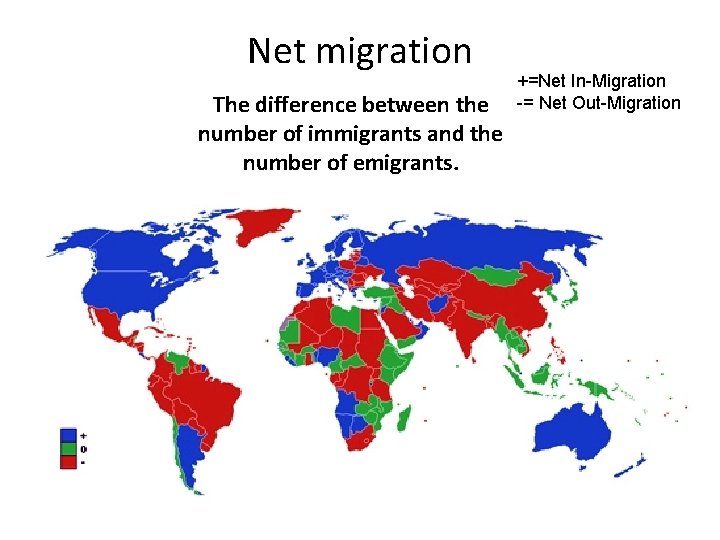
Net migration The difference between the number of immigrants and the number of emigrants. +=Net In-Migration -= Net Out-Migration
Migration to the US from Mexico… Push Factors Pull Factors
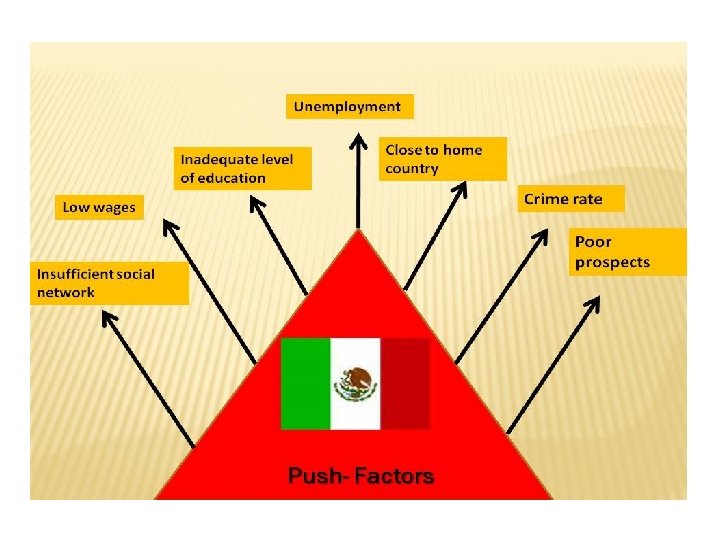
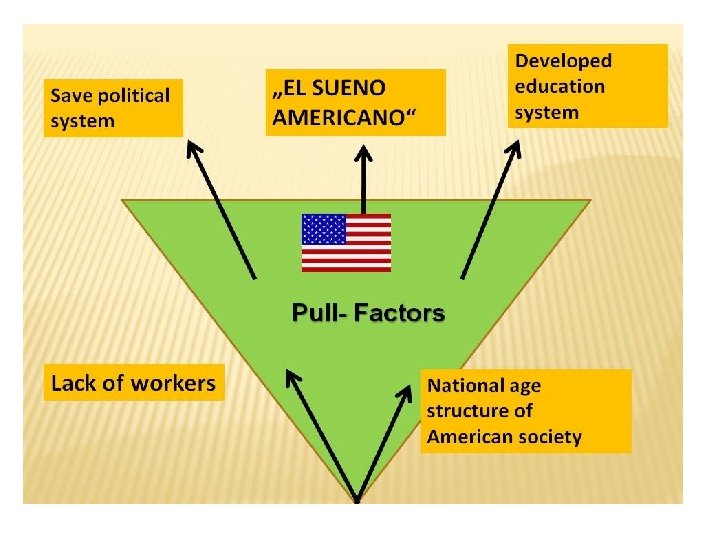
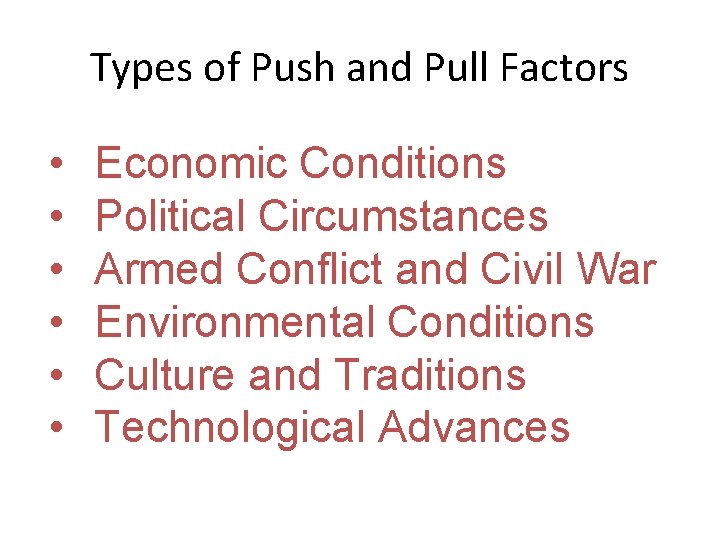
Types of Push and Pull Factors • • • Economic Conditions Political Circumstances Armed Conflict and Civil War Environmental Conditions Culture and Traditions Technological Advances
3 Main types of Push and Pull Factors #1. Economic • Most people migrate from one country to another for economic reasons • job opportunities
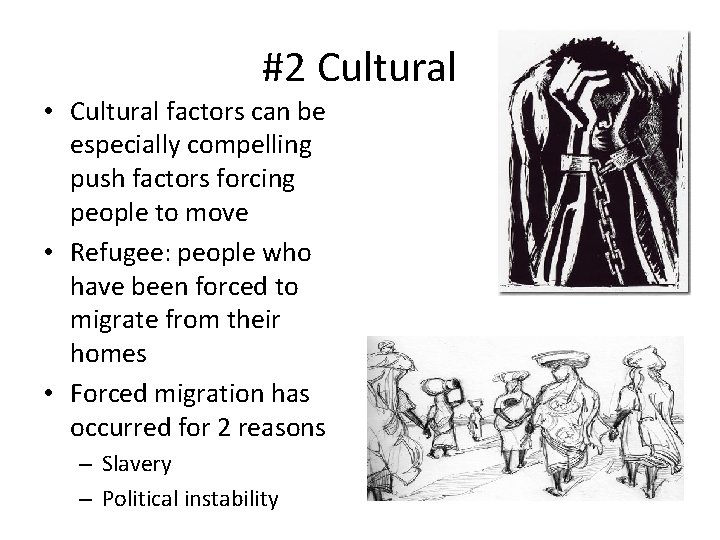
#2 Cultural • Cultural factors can be especially compelling push factors forcing people to move • Refugee: people who have been forced to migrate from their homes • Forced migration has occurred for 2 reasons – Slavery – Political instability
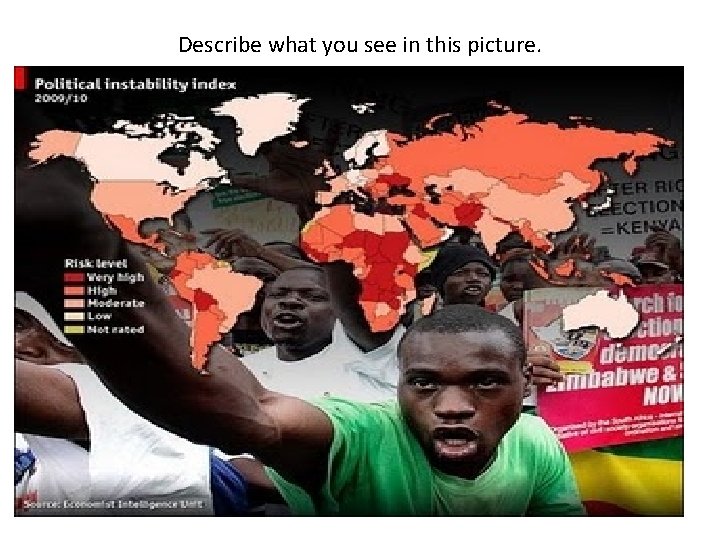
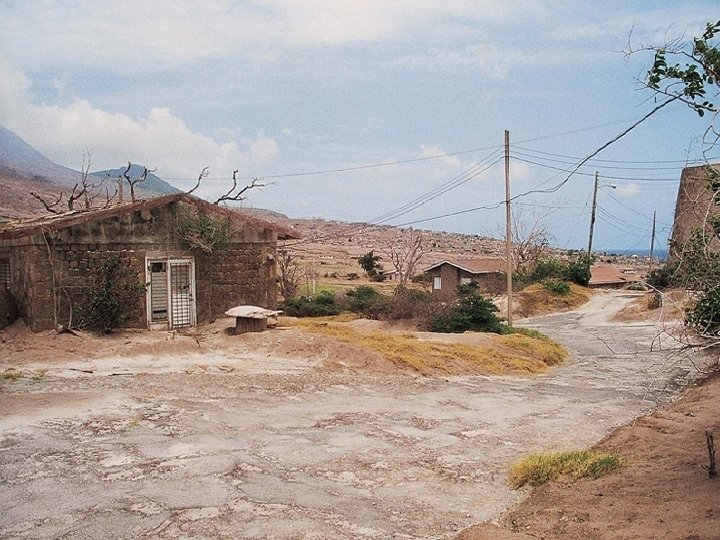
Describe what you see in this picture.
#3 Environmental • People are pulled • People are also pushed toward physically from their homes by attractive regions bad physical conditions • Attractive environments • Unattractive include: environments include:
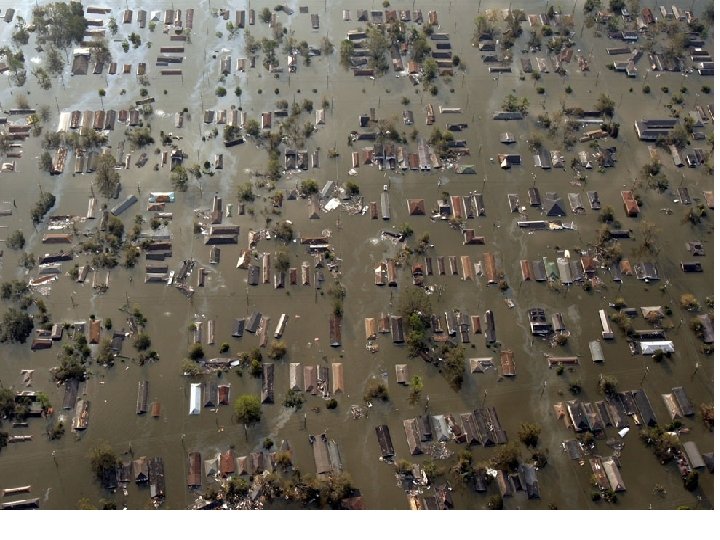
Katrina • Katrina Devastation – 3 minutes • No Ward: Forced Migration of Katrina Survivors – 11 minutes
Reasons to Migrate EG Ravenstein’ s laws • The reasons why migrants move • The characteristics of migrants • The distance migrants typically move • VERY IMPORTANT TO UNDERSTAND HIS LAWS!
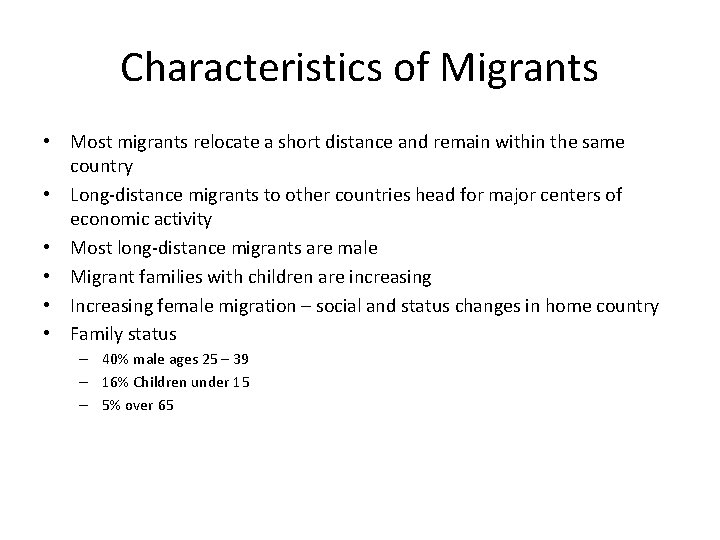
Characteristics of Migrants • Most migrants relocate a short distance and remain within the same country • Long-distance migrants to other countries head for major centers of economic activity • Most long-distance migrants are male • Migrant families with children are increasing • Increasing female migration – social and status changes in home country • Family status – 40% male ages 25 – 39 – 16% Children under 15 – 5% over 65
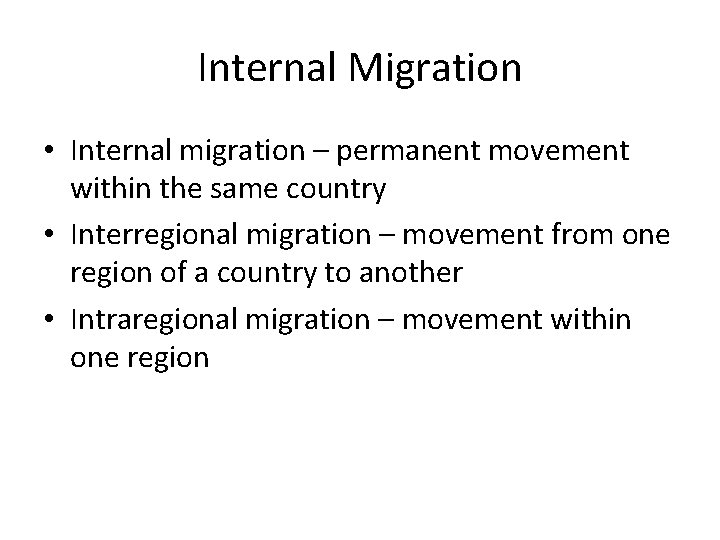
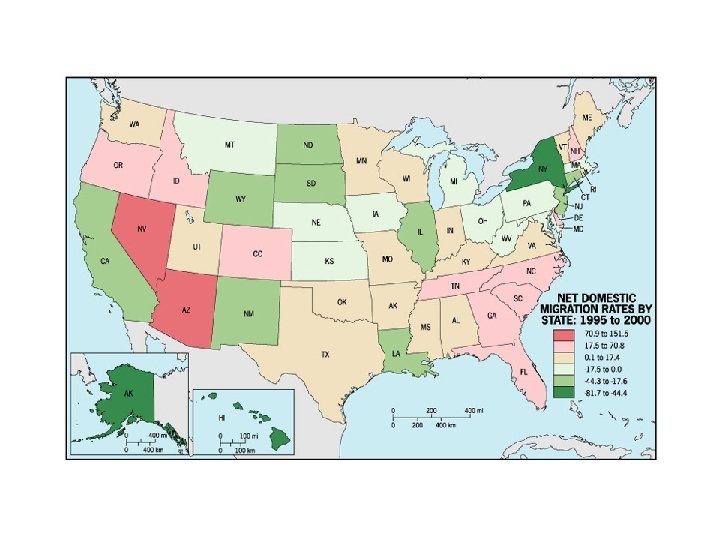
Internal Migration • Internal migration – permanent movement within the same country • Interregional migration – movement from one region of a country to another • Intraregional migration – movement within one region
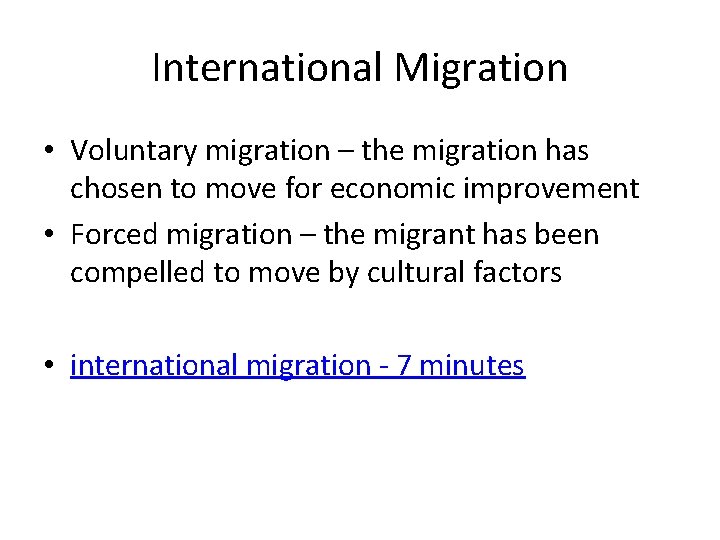
International Migration • Voluntary migration – the migration has chosen to move for economic improvement • Forced migration – the migrant has been compelled to move by cultural factors • international migration - 7 minutes
As I Enter 10. 15. 2014 • Think about/Write out: – What are some intervening obstacles that hinder migration? • Agenda: – 1. Turn in KIs! – 2. Notes on Migration – 3. Tracking migration activity – DUE TOMORROW! – 4. Time for study guide work! • Homework: Tracking Migration!
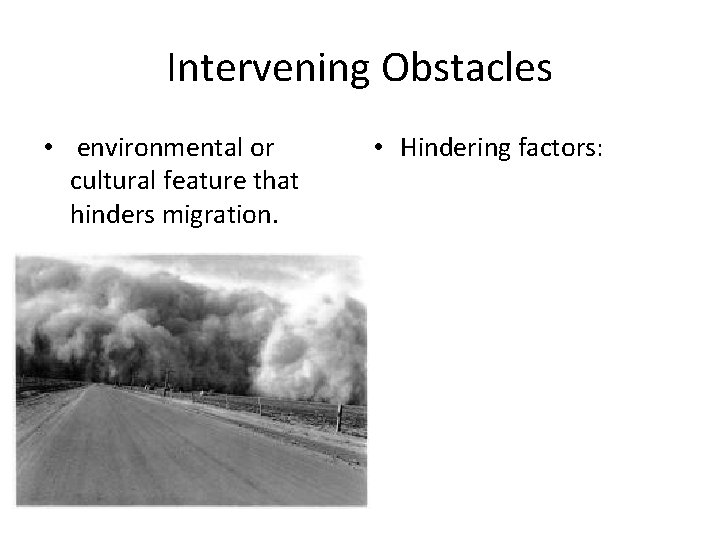
Intervening Obstacles • environmental or cultural feature that hinders migration. • Hindering factors:
Migration Transition (Tied to DTM) • Stage 1 – (High CBR, CDR, low NIR) High daily or seasonal mobility in search of food rather than permanent migration to a new location • Stage 2 – International migration, Interregional migration, move from rural to urban • Stage 3 & 4 – International migration of migrants leaving stage 2 countries in search of economic opportunities. Intraregional migration from cities to suburbs.
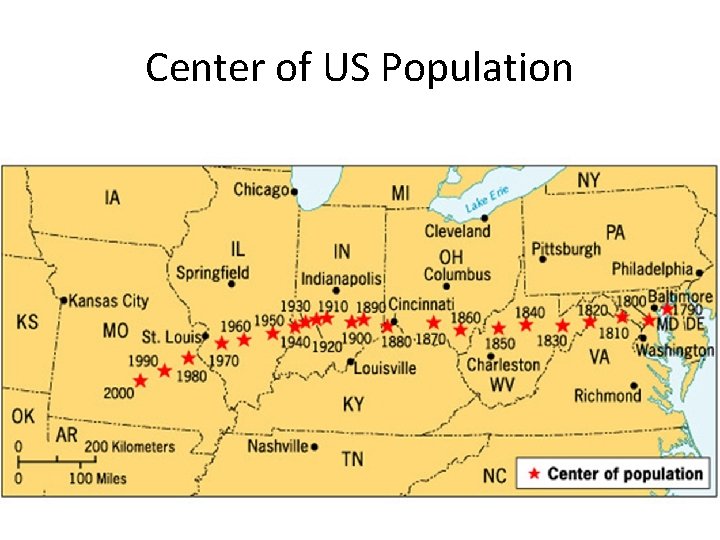
Center of US Population
KI 2 • Where are Migrants Distributed? • Global Migration Patterns • US Immigration Patterns • Impact of Immigration on the US
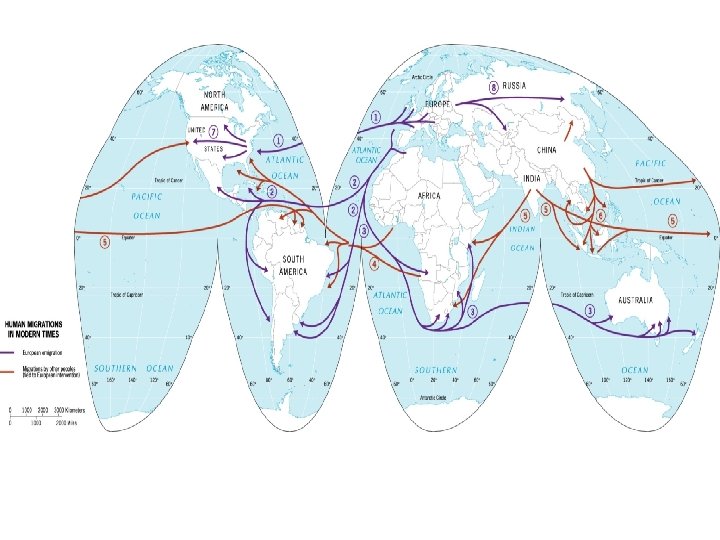
Global Population Patterns • Most international migration is from LDCs to MDCs • United States leading destination • Most migrants relocate short distances within the same country • Wilbur Zelinsky – Migration Transition – Social changes comparable to demographic transition – High daily or seasonal mobility related to stages of development
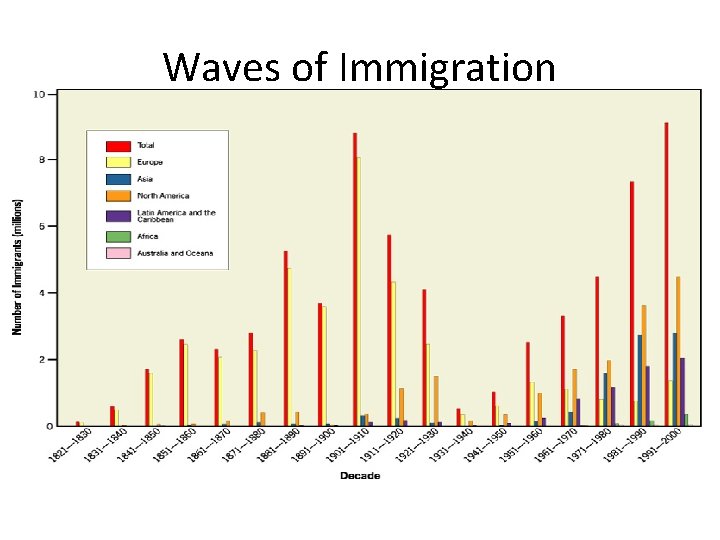
Waves of Immigration
Colonial Immigration from England Africa • WHO, WHAT, WHERE, WHEN, WHY!
19 th Century Immigration from Europe • WHO, WHAT, WHERE, WHEN, WHY!
Recent Immigration from LDCs • WHO, WHAT, WHERE, WHEN, WHY!
Impact of Immigration on the US? • Europe’s DT • Diffusion of European Cukture • Unauthorized Immigration to the US – Undocumented Immigrants • Destination of Immigrants within the US – Chain Migration
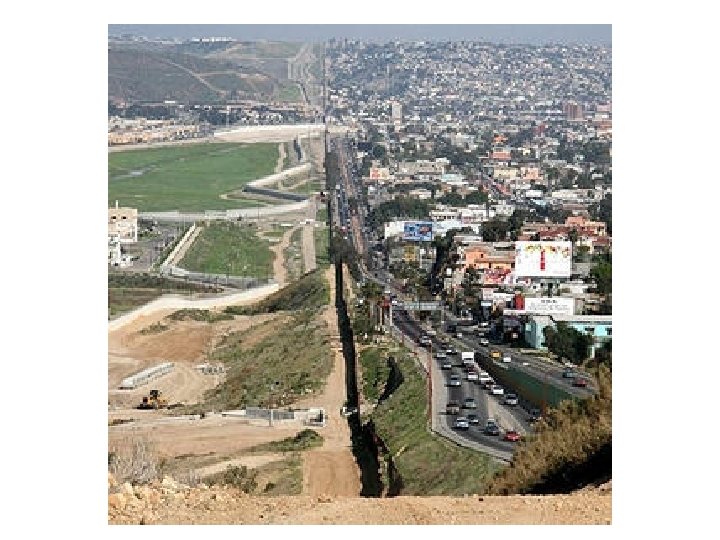
• Fence Climbing – 1 minute • Border Volleyball – 1. 5 minutes
KI 3 • Why do Migrants Face Obstacles? • Immigration Policies of Host Countries • Cultural Challenges Faced While Living in Other Countries
Immigration Policies of Host Countries • US Quota Laws – Quota – – Brain Drain – – Guest Workers –
Economic Migrants v. Refugees • Economic Migrants • Refugees
US Attitudes vs. • Immigrants • Guest Workers
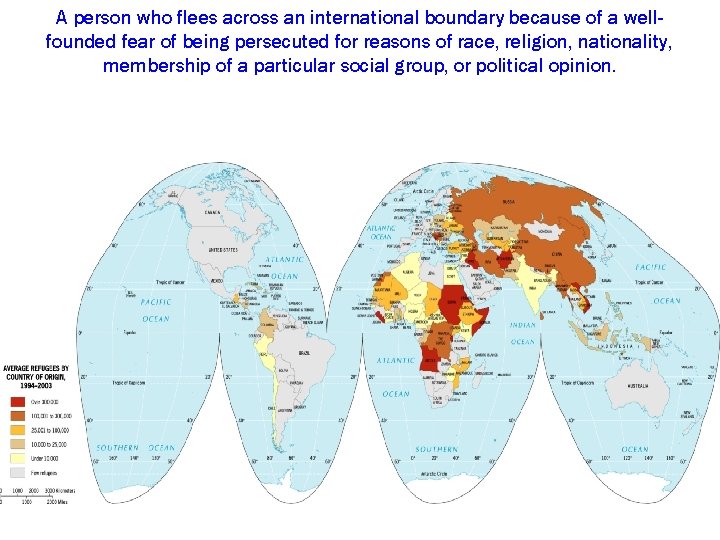
A person who flees across an international boundary because of a wellfounded fear of being persecuted for reasons of race, religion, nationality, membership of a particular social group, or political opinion.
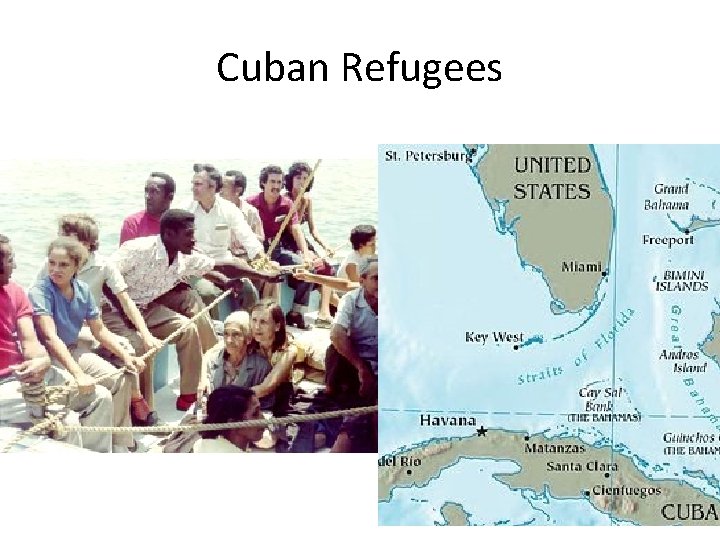
Cuban Refugees
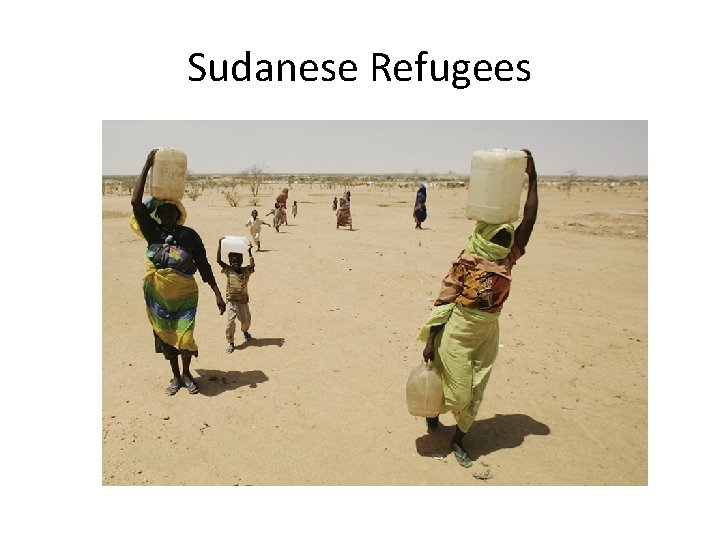
Sudanese Refugees
• Imagine you are from an extremely poor country, and you earn less than $1 a day. Choose a country to be from, and look for it on a map. Assume you are a voluntary migrant. You look at your access to transportation and the opportunities you have to go elsewhere. Be realistic, and describe how you determine where you will go, how you get there, and what you do once you get there.
- Slides: 63