
AS EXCHANGE IN ANIMAL Gas Exchange in Animals
- Slides: 18
AS EXCHANGE IN ANIMAL
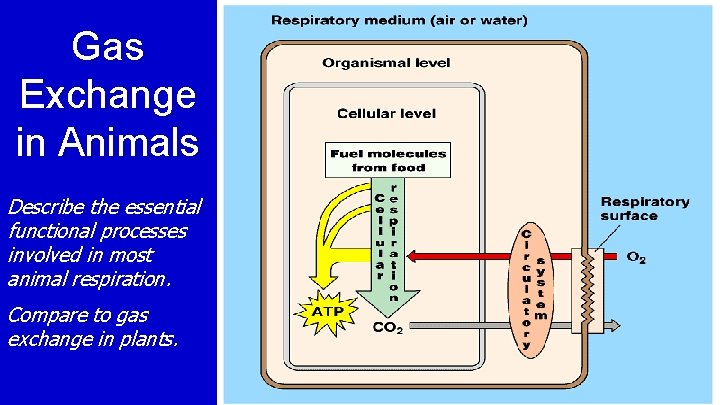
Gas Exchange in Animals Describe the essential functional processes involved in most animal respiration. Compare to gas exchange in plants.
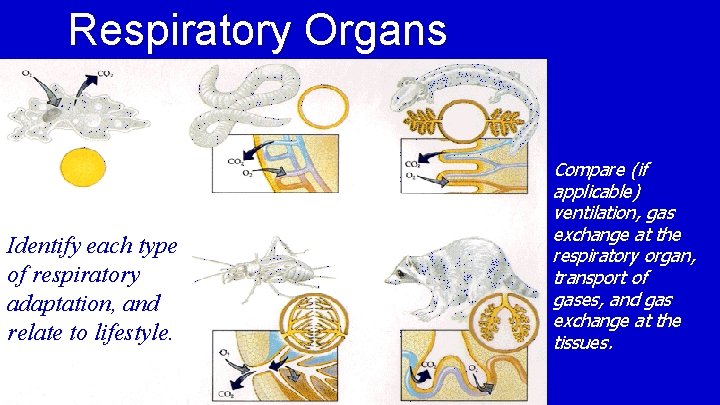
Respiratory Organs Identify each type of respiratory adaptation, and relate to lifestyle. Compare (if applicable) ventilation, gas exchange at the respiratory organ, transport of gases, and gas exchange at the tissues.
Challenges of Gas Exchange related to Environment Air vs. Water: • 20 X more oxygen in air than in water (at the same temp. ) • Diffusion of gas molecules is more rapid in air • Air is less viscous than water – ventilation (air) requires 1/10 the energy of water breathing
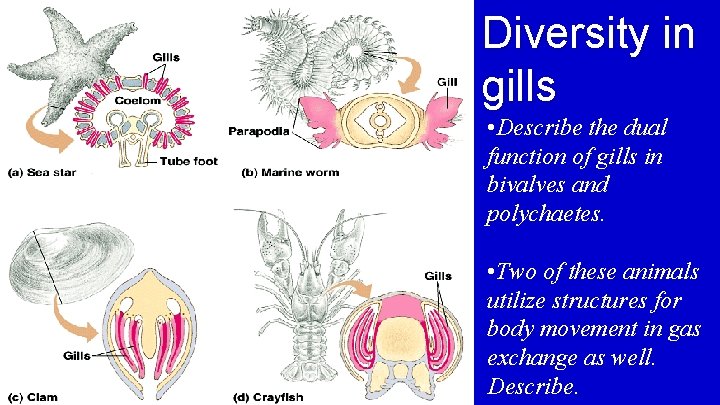
Diversity in gills • Describe the dual function of gills in bivalves and polychaetes. • Two of these animals utilize structures for body movement in gas exchange as well. Describe.
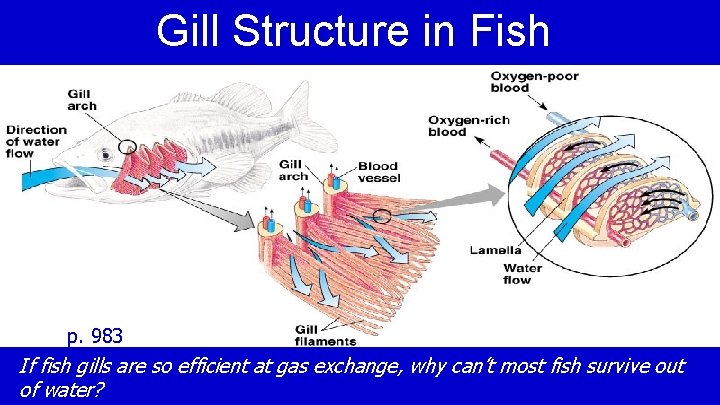
Gill Structure in Fish p. 983 If fish gills are so efficient at gas exchange, why can’t most fish survive out of water?
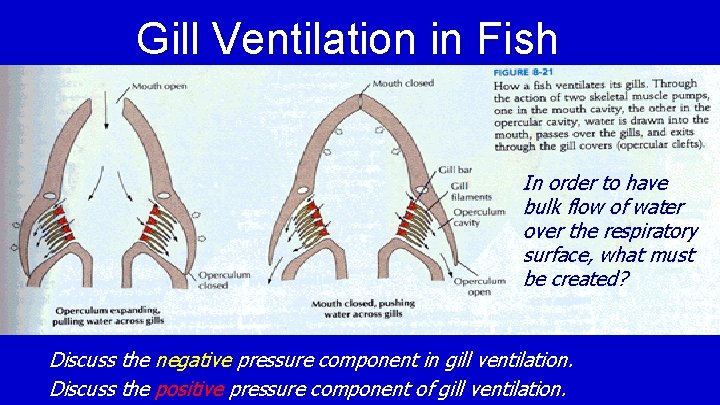
Gill Ventilation in Fish In order to have bulk flow of water over the respiratory surface, what must be created? Discuss the negative pressure component in gill ventilation. Discuss the positive pressure component of gill ventilation.
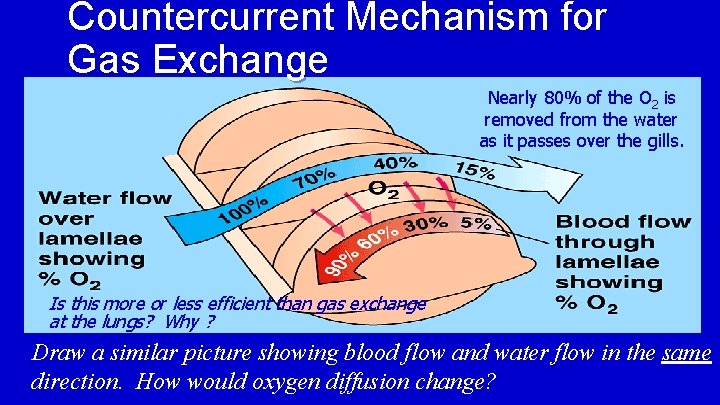
Countercurrent Mechanism for Gas Exchange Nearly 80% of the O 2 is removed from the water as it passes over the gills. Is this more or less efficient than gas exchange at the lungs? Why ? Draw a similar picture showing blood flow and water flow in the same direction. How would oxygen diffusion change?
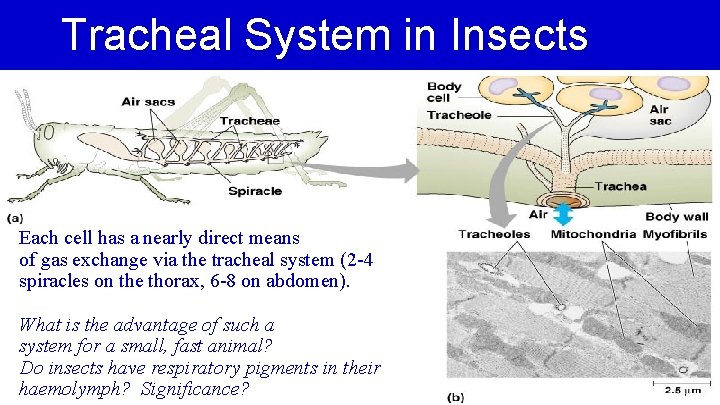
Tracheal System in Insects Each cell has a nearly direct means of gas exchange via the tracheal system (2 -4 spiracles on the thorax, 6 -8 on abdomen). What is the advantage of such a system for a small, fast animal? Do insects have respiratory pigments in their haemolymph? Significance?
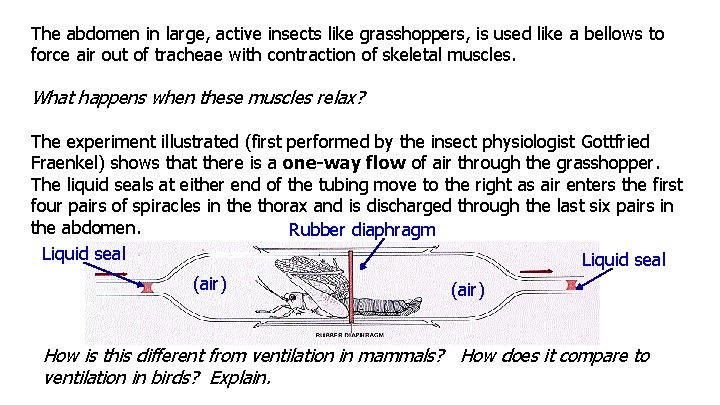
The abdomen in large, active insects like grasshoppers, is used like a bellows to force air out of tracheae with contraction of skeletal muscles. What happens when these muscles relax? The experiment illustrated (first performed by the insect physiologist Gottfried Fraenkel) shows that there is a one-way flow of air through the grasshopper. The liquid seals at either end of the tubing move to the right as air enters the first four pairs of spiracles in the thorax and is discharged through the last six pairs in the abdomen. Rubber diaphragm Liquid seal (air) How is this different from ventilation in mammals? How does it compare to ventilation in birds? Explain.
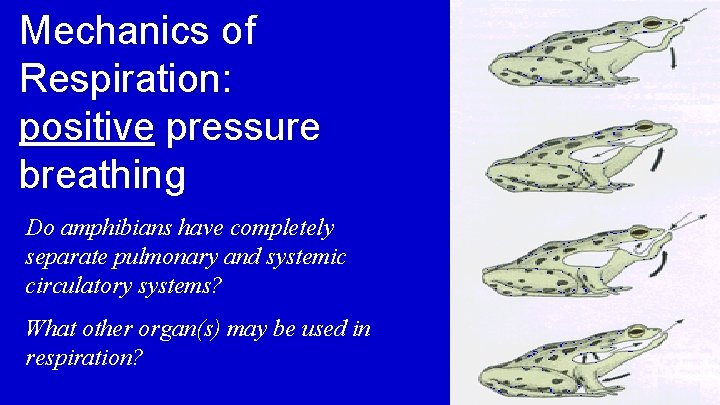
Mechanics of Respiration: positive pressure breathing Do amphibians have completely separate pulmonary and systemic circulatory systems? What other organ(s) may be used in respiration?
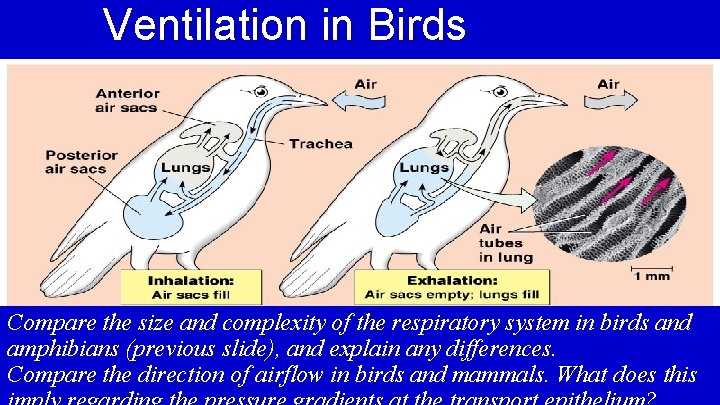
Ventilation in Birds Compare the size and complexity of the respiratory system in birds and amphibians (previous slide), and explain any differences. Compare the direction of airflow in birds and mammals. What does this
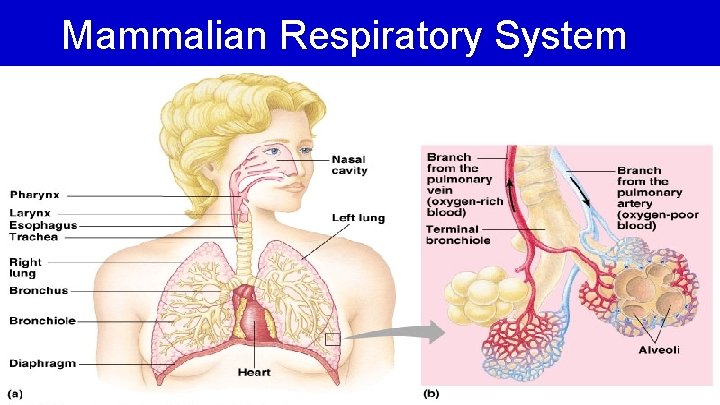
Mammalian Respiratory System
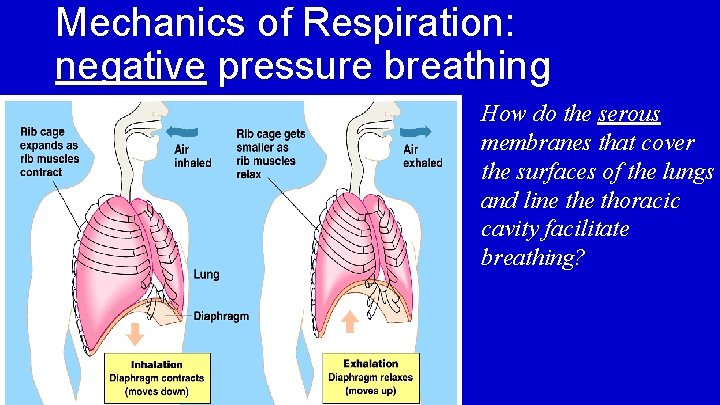
Mechanics of Respiration: negative pressure breathing How do the serous membranes that cover the surfaces of the lungs and line thoracic cavity facilitate breathing?
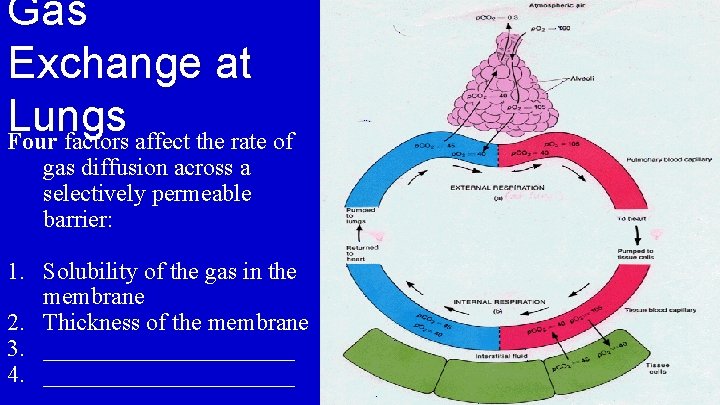
Gas Exchange at Lungs Four factors affect the rate of gas diffusion across a selectively permeable barrier: 1. Solubility of the gas in the membrane 2. Thickness of the membrane 3. ___________ 4. ___________
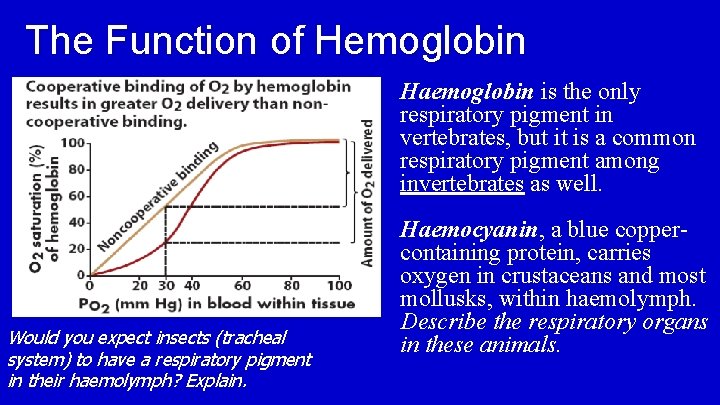
The Function of Hemoglobin Haemoglobin is the only respiratory pigment in vertebrates, but it is a common respiratory pigment among invertebrates as well. Would you expect insects (tracheal system) to have a respiratory pigment in their haemolymph? Explain. Haemocyanin, a blue coppercontaining protein, carries oxygen in crustaceans and most mollusks, within haemolymph. Describe the respiratory organs in these animals.
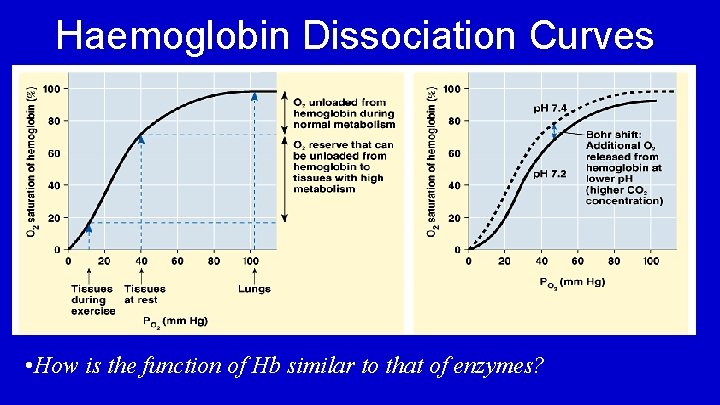
Haemoglobin Dissociation Curves • How is the function of Hb similar to that of enzymes?
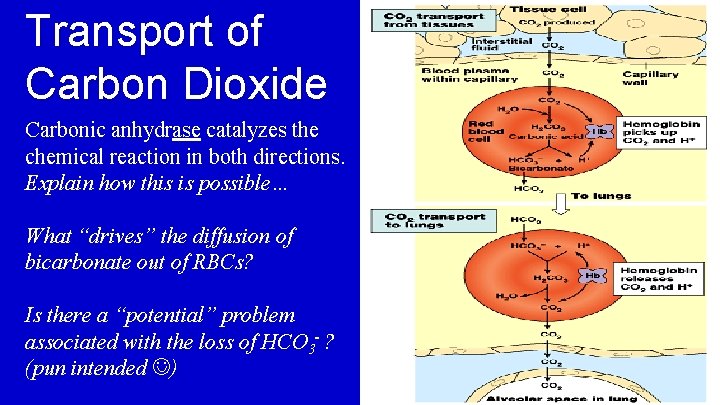
Transport of Carbon Dioxide Carbonic anhydrase catalyzes the chemical reaction in both directions. Explain how this is possible… What “drives” the diffusion of bicarbonate out of RBCs? Is there a “potential” problem associated with the loss of HCO 3 - ? (pun intended )