
As an engineer you must be able to
As an engineer, you must be able to classify structures according to their FORM and FUNCTIONS. Composed of structural members, joined together by structural connections is called STRUCTURAL SYSTEM. The four basic types of structures are : 1. Trusses 2. Cables & Arches 3. Frames 4. Surface structures All structural systems are composed of a number of basic structural elements (i. e. Beams, columns, etc. ) CE 381 Structural Analysis I (Supplementary lecture notes) Prepared by: Asst. Prof. Dr. Rifat Reşatoğlu 1
1. Planning – How will the building be supported? 2. Establishing the loads 3. Designing preliminary structural configuration and layout 4. Analyzing structural members 5. Selecting preliminary structural members 6. Evaluating the preliminary design 7. Redesigning (if needed) – Repeat the above steps as necessary to achieve a safe and efficient design 8. Designing and detailing the structural components 2
q STRUCTURAL FORM q. IDEALIZED MODEL q. LOAD TYPES q. MATERIAL SELECTION q. PRELIMINARY DESIGN q. FINAL DESIGN q. CONSTRUCTION PHASE 3
Within the structural systems, individual structural elements must work together to carry and transfer the applied loads to the ground. Examples of structural elements include: o Roof o Beams o Elevated Slabs o Girders o Load Bearing Walls o Columns o Connections o Footing 4
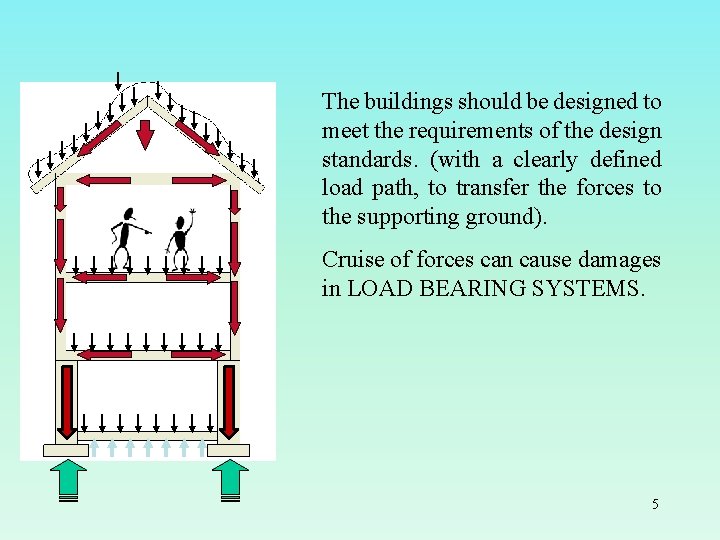
The buildings should be designed to meet the requirements of the design standards. (with a clearly defined load path, to transfer the forces to the supporting ground). Cruise of forces can cause damages in LOAD BEARING SYSTEMS. 5
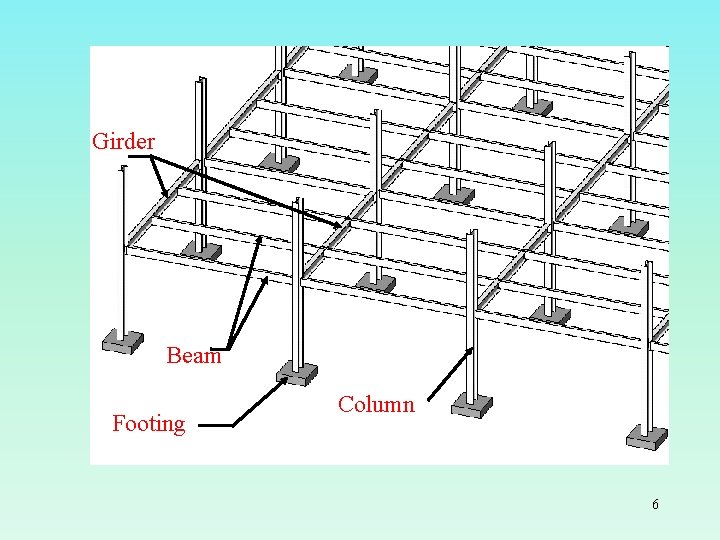
Girder Beam Footing Column 6
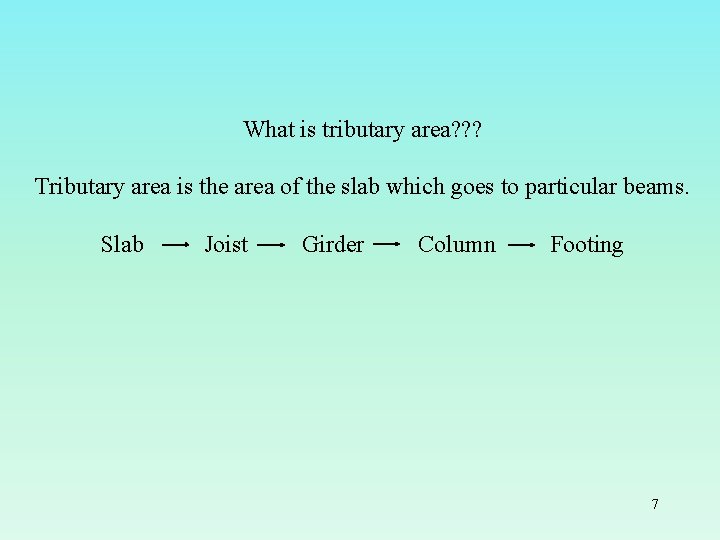
What is tributary area? ? ? Tributary area is the area of the slab which goes to particular beams. Slab Joist Girder Column Footing 7
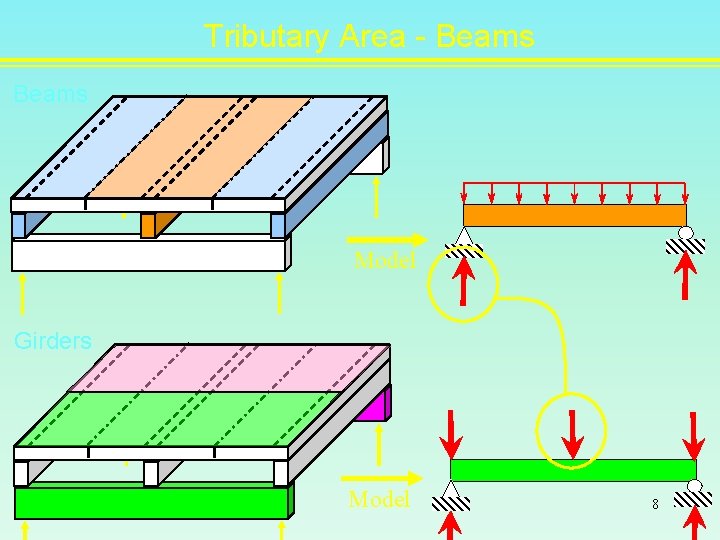
Tributary Area - Beams Model Girders Model 8
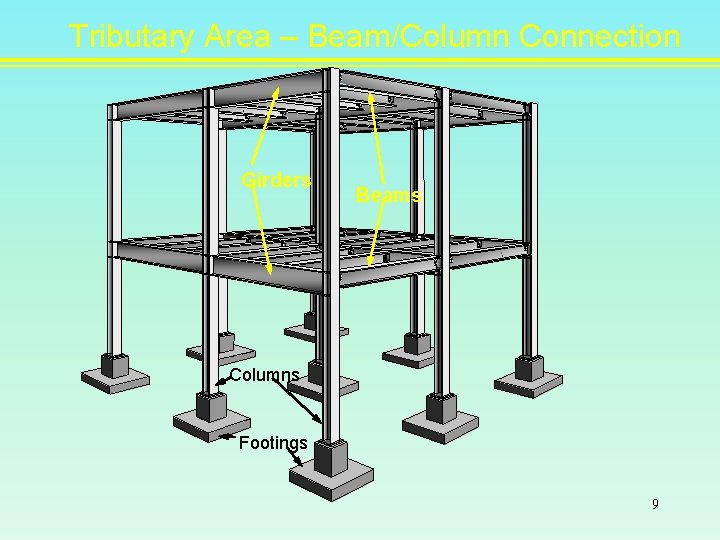
Tributary Area – Beam/Column Connection Girders Beams Columns Footings 9
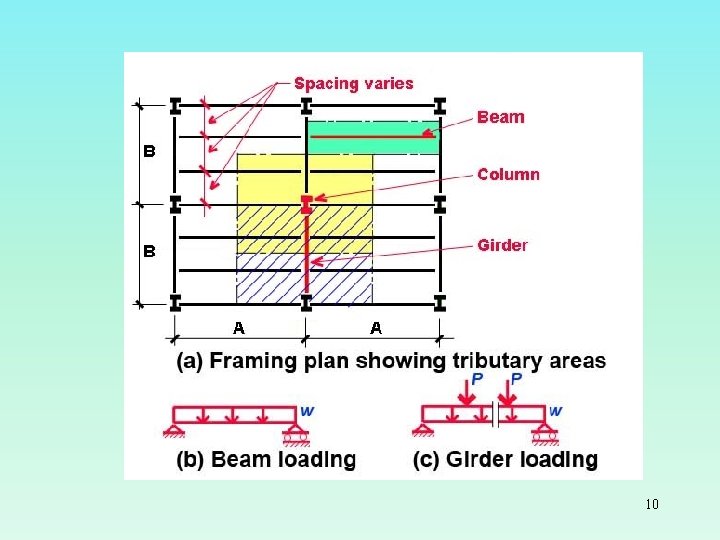
10
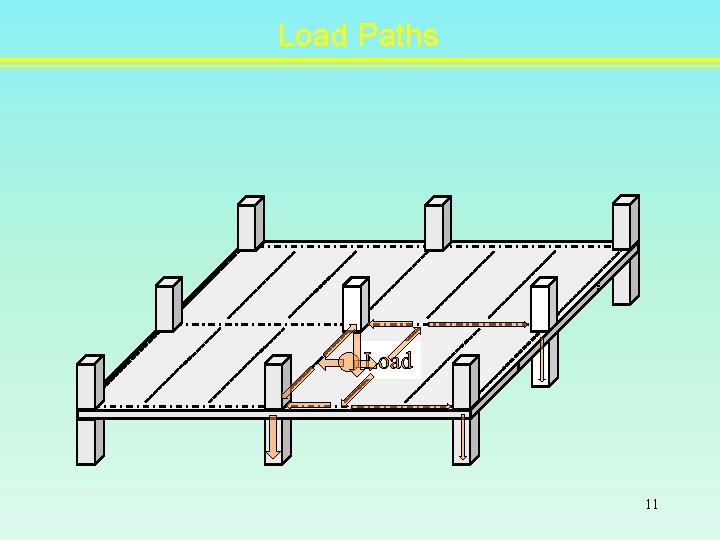
Load Paths Load 11
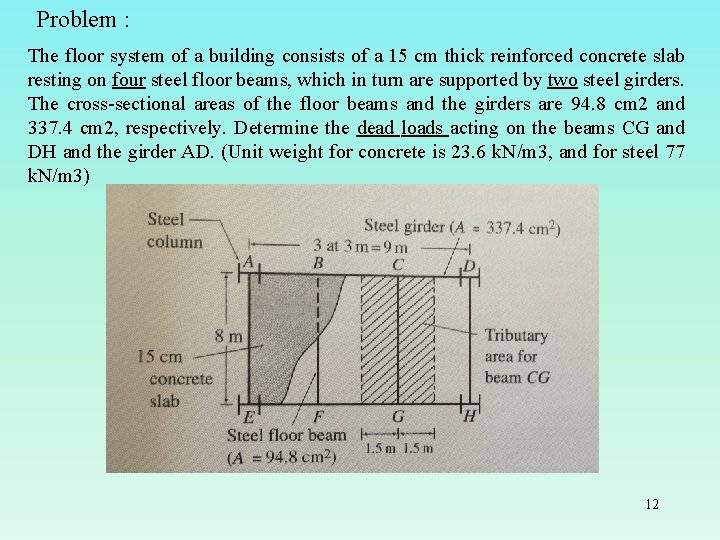
Problem : The floor system of a building consists of a 15 cm thick reinforced concrete slab resting on four steel floor beams, which in turn are supported by two steel girders. The cross-sectional areas of the floor beams and the girders are 94. 8 cm 2 and 337. 4 cm 2, respectively. Determine the dead loads acting on the beams CG and DH and the girder AD. (Unit weight for concrete is 23. 6 k. N/m 3, and for steel 77 k. N/m 3) 12
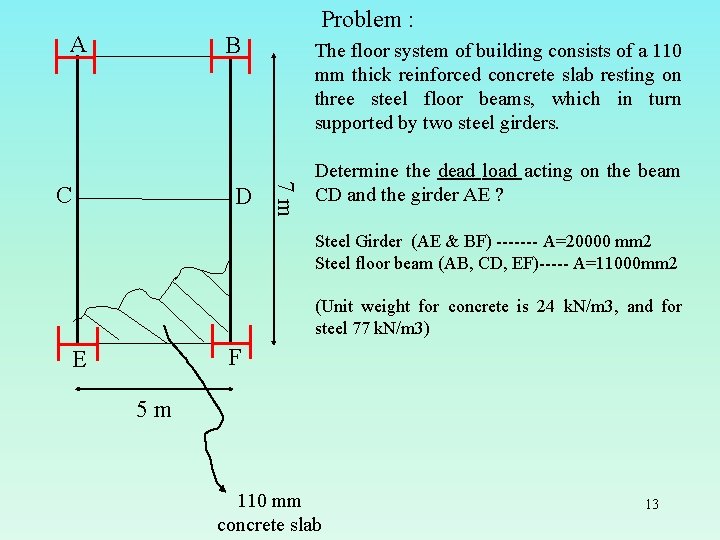
A Problem : B D 7 m C The floor system of building consists of a 110 mm thick reinforced concrete slab resting on three steel floor beams, which in turn supported by two steel girders. Determine the dead load acting on the beam CD and the girder AE ? Steel Girder (AE & BF) ------- A=20000 mm 2 Steel floor beam (AB, CD, EF)----- A=11000 mm 2 (Unit weight for concrete is 24 k. N/m 3, and for steel 77 k. N/m 3) F E 5 m 110 mm concrete slab 13
- Slides: 13