
ARTIFICIAL STATES OF CONSCIOUSNESS Psychoactive Drugs Hypnosis Meditation








- Slides: 44
ARTIFICIAL STATES OF CONSCIOUSNESS • Psychoactive Drugs, Hypnosis, & Meditation
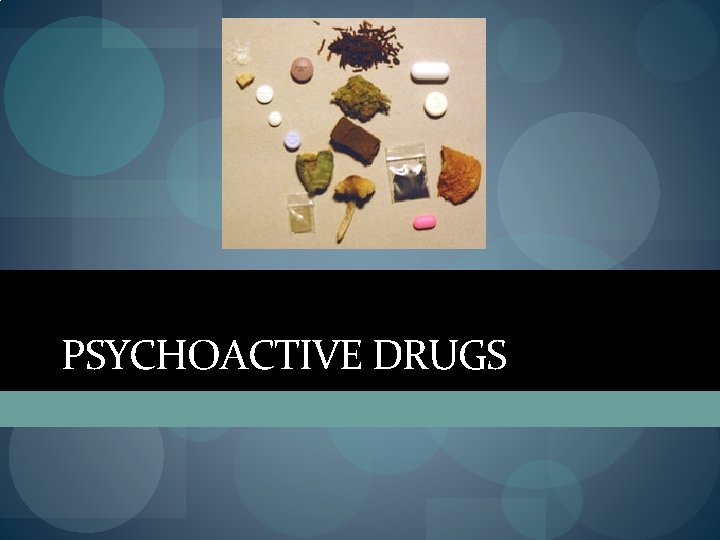
PSYCHOACTIVE DRUGS
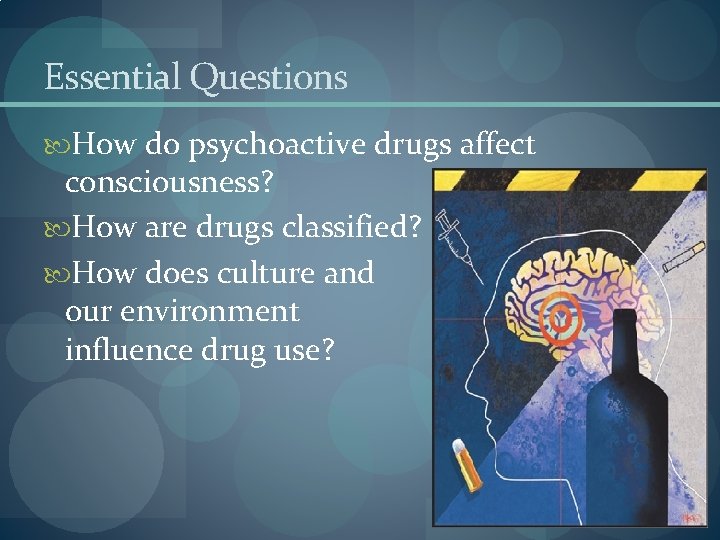
Essential Questions How do psychoactive drugs affect consciousness? How are drugs classified? How does culture and our environment influence drug use?
Psychoactive Drugs Change mood and perceptions Abuse: recurrent substance use that results in disruption of academic, social or occupational functioning or in legal or psychological problems
Psychoactive Drugs Addiction: physical/psychological compulsive need for and use of a habitforming substance Examples: drugs, sex, gambling, eating, alcohol, tobacco, pornography, exercising, internet?
Psychoactive Drugs Common Properties: Physical dependence Tolerance Withdrawal symptoms Drug rebound effect
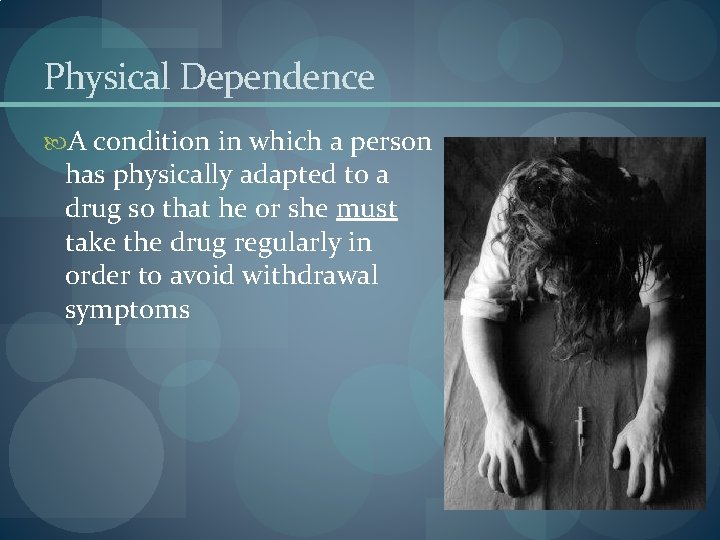
Physical Dependence A condition in which a person has physically adapted to a drug so that he or she must take the drug regularly in order to avoid withdrawal symptoms
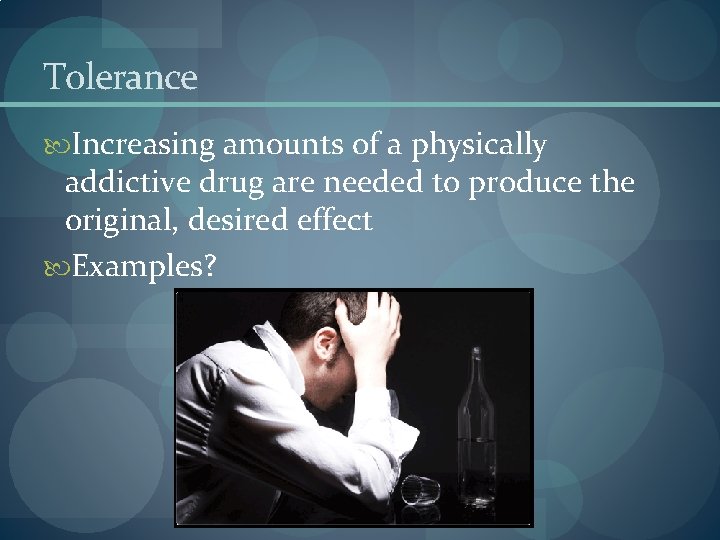
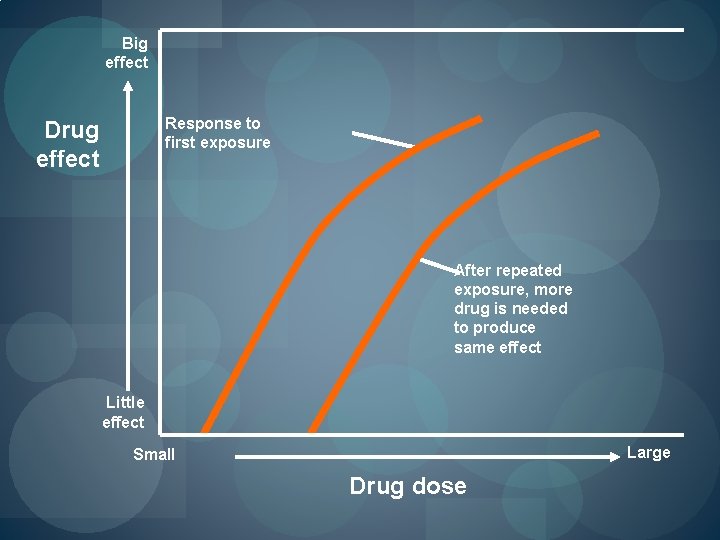
Tolerance Increasing amounts of a physically addictive drug are needed to produce the original, desired effect Examples?
Big effect Response to first exposure Drug effect After repeated exposure, more drug is needed to produce same effect Little effect Large Small Drug dose
Withdrawal Symptoms Unpleasant physical reactions, combined with intense drug cravings Occur when abstaining from a drug when physically dependent Examples?
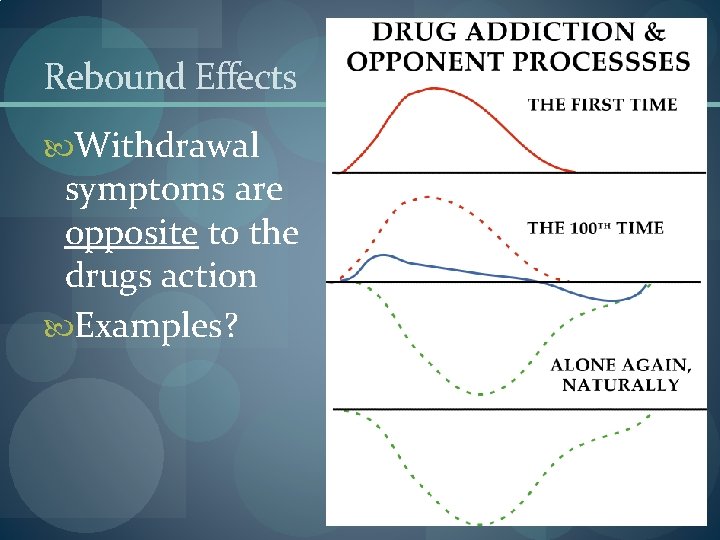
Rebound Effects Withdrawal symptoms are opposite to the drugs action Examples?
How do we categorize drugs? �Depressants - inhibit brain activity, slow body function �Opiates – chemically similar to morphine, pain relief and euphoria, mimic the brain’s endorphins �Stimulants - increase brain activity, speed up body function, produce feelings of optimism and boundless energy �Psychedelics - distort sensory perceptions
What to look for in an academic article: Abstract: brief summary of what the article is about What is the most important point? Introduction: sets up the problem or situation What is significant about the research? Reading tips: Underline! Stop after each paragraph and check for understanding
Wrap - Up How does a person’s environment influence their drug use? How can drug use reflect a culture’s values/beliefs?
WELCOME TO HEAVEN’S GATE REHABILITATION FACILITY Where a new beginning awaits you!
Do I Have a Drug Problem? Dependence = exhibiting 3 of the following 7 symptoms over a 12 -month period of time: Developing tolerance Experiencing withdrawal symptoms when attempting to stop Using a substance for a longer period, or in greater quantities, than originally intended Making repeated attempts to stop or cutback on drug usage
Do I have a drug problem? Devoting a great deal of time attempting to obtain or use a substance Giving up or reducing social, occupational, or recreational activities as a result of drug use Continuing to use a substance even after negative physical or psychological effects have occurred, or will continue to occur with usage
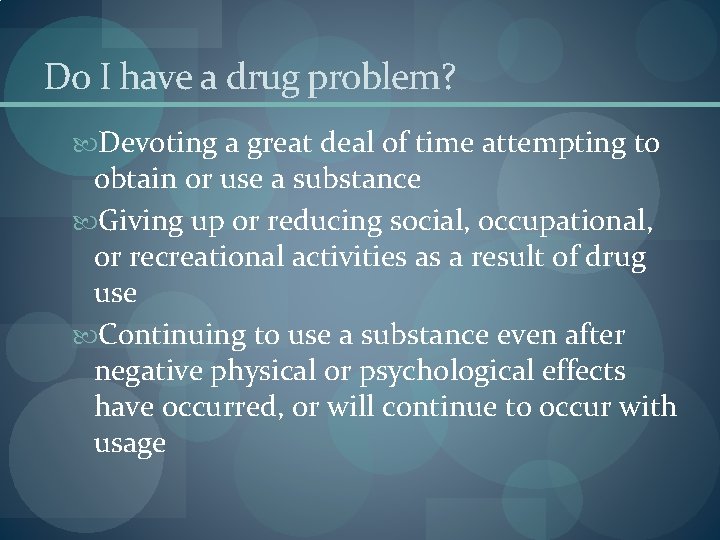
Before drug use After drug use
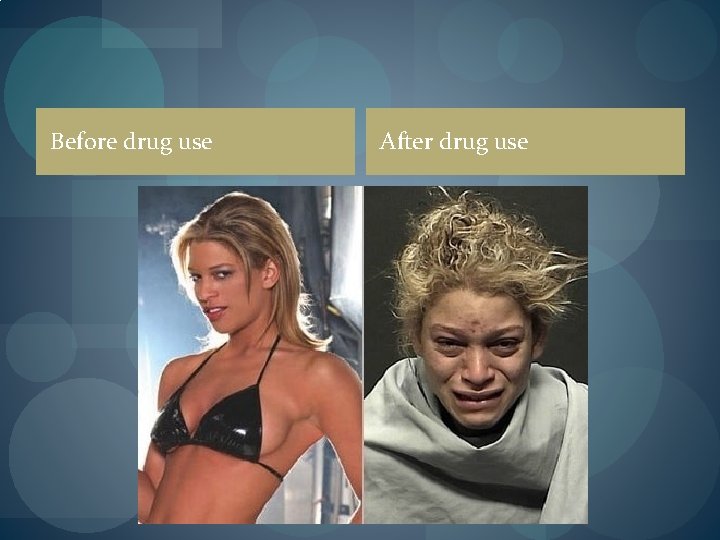
Before drug use After drug use
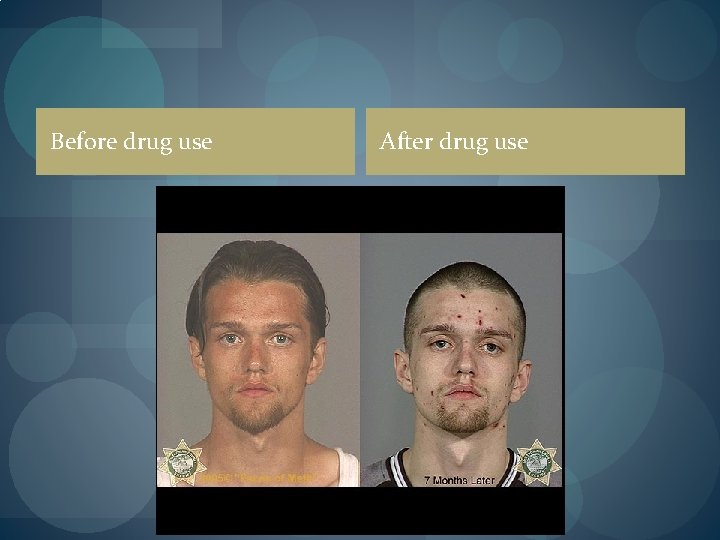
Before drug use After drug use
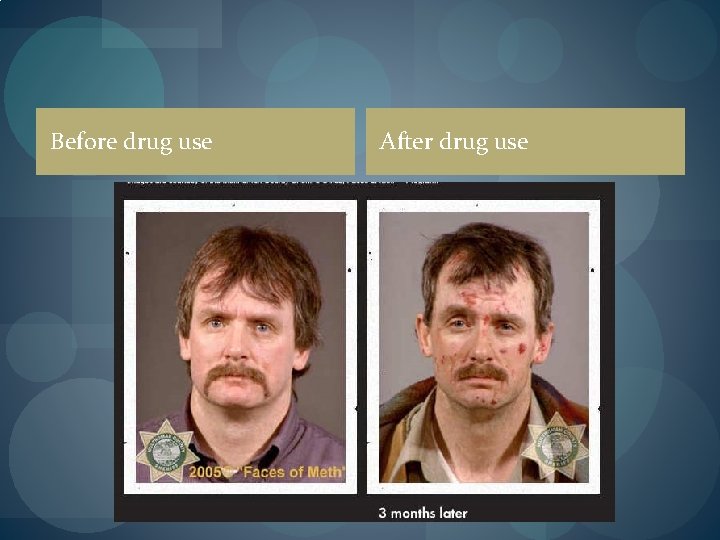
Before drug use After drug use
Meditation
Essential Questions What is meditation? What is hypnosis? What are the techniques used in hypnosis?
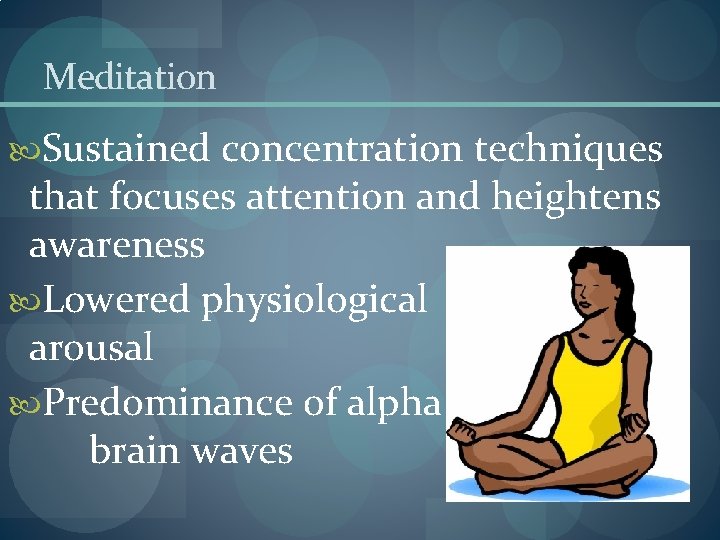
Meditation Sustained concentration techniques that focuses attention and heightens awareness Lowered physiological arousal Predominance of alpha brain waves
Meditation All forms of meditation have the goal of controlling or retraining attention Two forms: • Concentration techniques: • Mantra (focus) • Opening-Up/Mindfulness techniques: • Quiet awareness of the here and now
Check for understanding 1. What are the goals for each of these techniques? Compare and contrast. 2. How do these techniques affect our consciousness?
Hypnosis ---Posthypnotic amnesia ---Posthypnotic suggestions Hypermnesia
HYPNOSIS
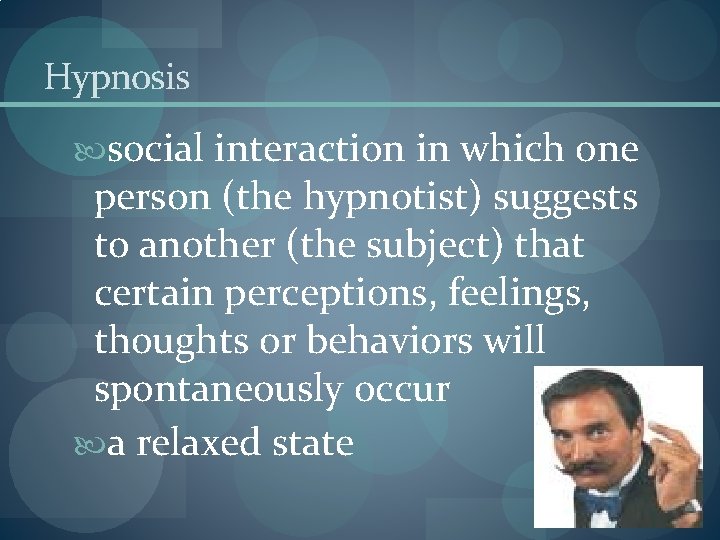
Hypnosis social interaction in which one person (the hypnotist) suggests to another (the subject) that certain perceptions, feelings, thoughts or behaviors will spontaneously occur a relaxed state
Hypnosis �State of awareness �Highly focused attention �Increased responsiveness to suggestion �Vivid imagery �Willingness to accept distortions of logic �Alteration of sensation and perception
Techniques Eye fixation Rapid Progressive relaxation and imagery Loss of balance
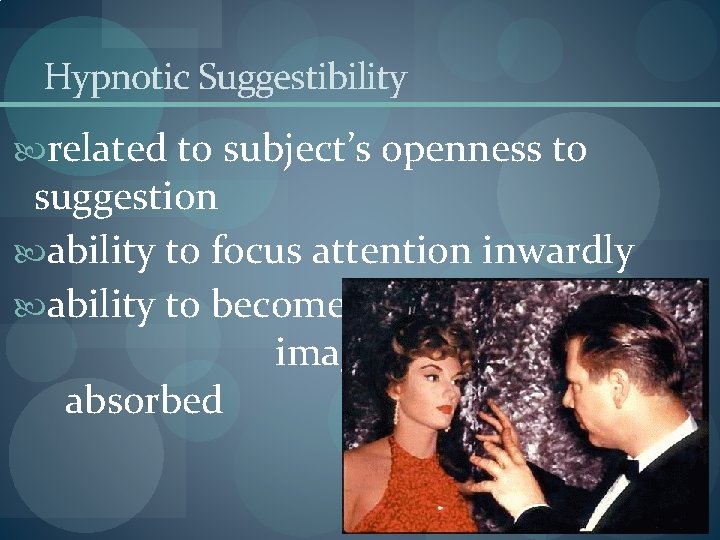
Hypnotic Suggestibility related to subject’s openness to suggestion ability to focus attention inwardly ability to become imaginatively absorbed
Do you think you can be hypnotized?
Do you think you can be hypnotized? Imagine you are holding in your hand a lemon. A bright yellow lemon with shiny, puckered skin. Now imagine bring the lemon up to your mouth and bite right down into it, sucking in all the juices….
Hyp. NOsis? Can you be hypnotized against your will? Can hypnosis force people to act against their will? Awareness Morals, religion , self-preservation But keep in mind: an authoritative person in a legitimate context can induce people, hypnotized or not, to perform some unlikely acts
Posthypnotic Amnesia supposed inability to recall what one experienced during hypnosis induced by the hypnotist’s suggestion
Posthypnotic Suggestion suggestion to be carried out after the subject is no longer hypnotized used by some clinicians to control undesired symptoms and behaviors
What could hypnosis be used for?
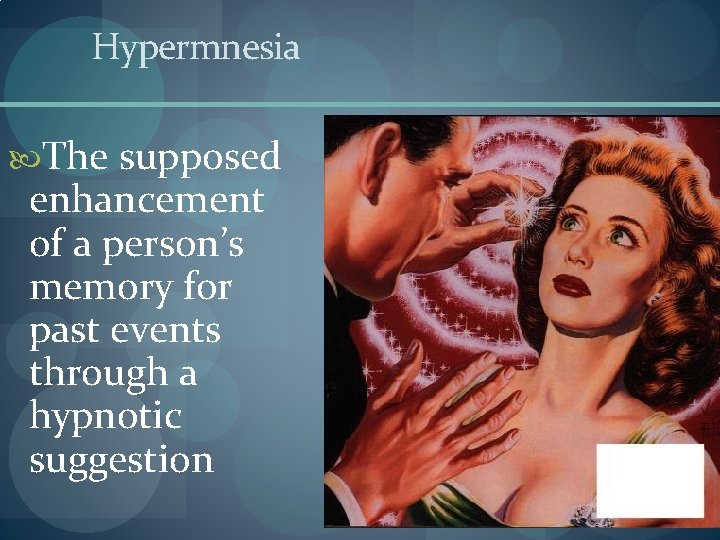
Hypermnesia The supposed enhancement of a person’s memory for past events through a hypnotic suggestion
Possible effects of hypnosis? Recall forgotten events? Age regression therapy (the ability to re-live childhood memories)…effective? Alleviate pain? Dissociation = split in consciousness, which allows some thoughts and behaviors to occur simultaneously with others
Possible effects of hypnosis? �Reduce pain �Reduce stress �Improve concentration and motivation �Modify behavior in eating disorders �Suppress the gag reflex (dentist) �Eliminate recurring nightmares �…. much more!
Check for understanding… 3. How can altering your state of conscious be positive? 4. How can it be negative? 5. How could meditation or hypnosis be useful in your life? Be specific.