
Artificial Neural Networks Deep Learning Overview Samuel Cheng
- Slides: 49
Artificial Neural Networks Deep Learning Overview Samuel Cheng With many slides borrowed from Stanford CS 231 n Hinton’s coursera course
Instructor • Samuel Cheng (samuel. cheng@ou. edu) • Office hours: • TBA(? ), catch me after class for the moment • I’ll be teaching from both Norman and Tulsa • Research interests: • Computer vision • Machine learning • Signal processing
What is this course about? • Look into some history, techniques, applications of neural networks • Will explore quite a bit on so-called ``deep learning”. A hyped-word of artificial neural networks • This is offered the second time (course renamed from deep learning to artificial neural networks and applications) • Things advance extremely fast. We will explore the topics together • Many students applied what was learned to their research directly last year • Hope this will help your research!
Quick Logistics • • “Homework” ~ 30% Programming assignment ~ 30% Final Project ~ 40% Textbook: Ian Goodfellow, Yoshua Bengio and Aaron Courville, Deep Learning, MIT Press • I won’t follow it closely but it is a good reference in general • Course website: http: //www. samuelcheng. info/deeplearning_2018/ind ex. html • Piazza: https: //piazza. com/ou/spring 2018/ece 5973
Backgrounds • ECE • CS • ME • Others?
Your Research Directions • Image Processing/Computer Vision/Imaging: • Medical Imaging: • Natural language processing (NLP): • Others: ?
Exposure to deep learning courses • Hinton’s coursera course • Stanford CS 231 n • Oxford’s course • U Toronto’s course • Larochelle’s course • Others?
Exposure to deep learning packages? • Caffe: • Torch: • Tensorflow: • Theano: • Keras: • Lasagne: • Matconvnet: • Mxnet: • Others:
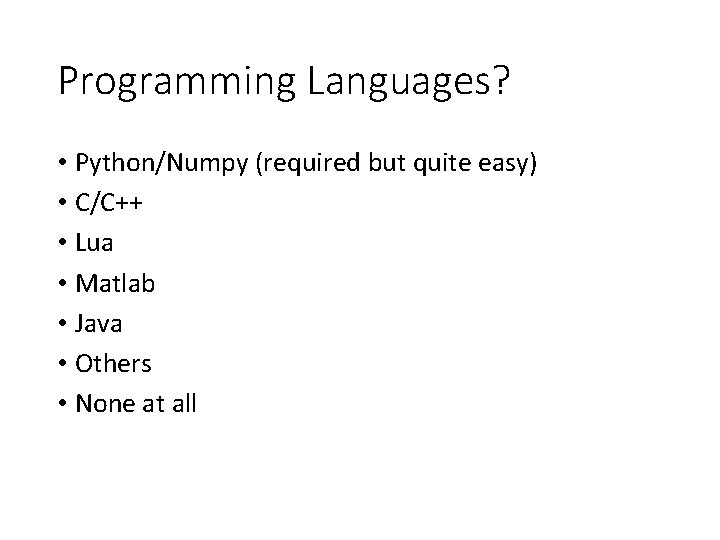
Programming Languages? • Python/Numpy (required but quite easy) • C/C++ • Lua • Matlab • Java • Others • None at all
Platforms? • Linux • Windows • Mac • GPUs?
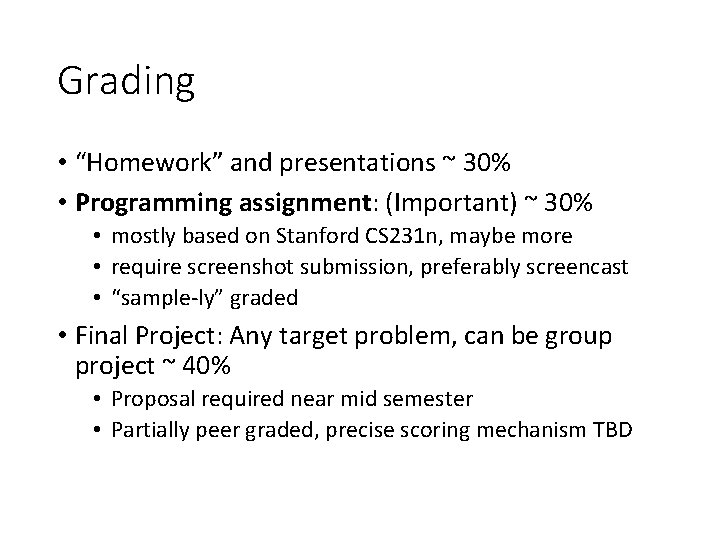
Grading • “Homework” and presentations ~ 30% • Programming assignment: (Important) ~ 30% • mostly based on Stanford CS 231 n, maybe more • require screenshot submission, preferably screencast • “sample-ly” graded • Final Project: Any target problem, can be group project ~ 40% • Proposal required near mid semester • Partially peer graded, precise scoring mechanism TBD
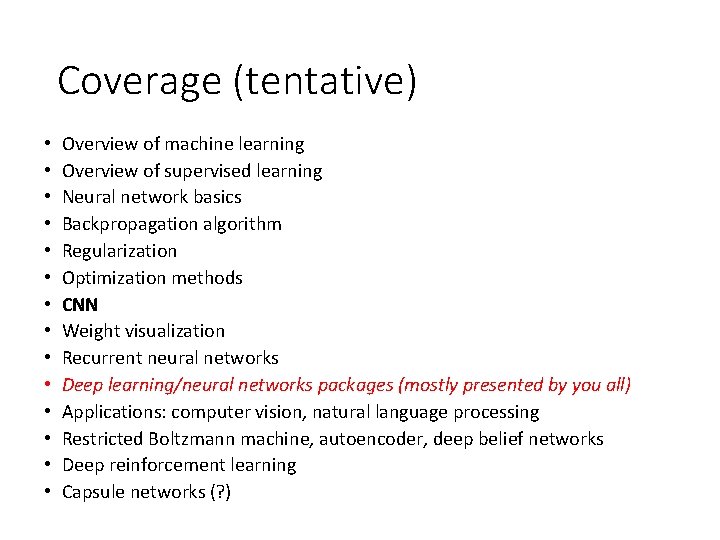
Coverage (tentative) • • • • Overview of machine learning Overview of supervised learning Neural network basics Backpropagation algorithm Regularization Optimization methods CNN Weight visualization Recurrent neural networks Deep learning/neural networks packages (mostly presented by you all) Applications: computer vision, natural language processing Restricted Boltzmann machine, autoencoder, deep belief networks Deep reinforcement learning Capsule networks (? )
Prerequisite • Python proficiency • We will borrow homework from Stanford CS 231 n, they are all based on Python and Numpy • If you have programmed before and are familiar with one of those high-level languages, you should be fine • Check out this for a quick tutorial: http: //cs 231 n. github. io/python-numpy-tutorial/ • College calculus and linear algebra • Won’t explore proof much but better math foundation definitely eases understanding of many topics
Deep learning in 1 slide • Wide sense • (machine) learning goes deep (with layers of representation) • Narrow sense • (Artificial) neural networks with more than one hidden layers • Why so popular? • Probably the most powerful machine learning technique at this moment • Won machine learning competition across wide categories with large margins
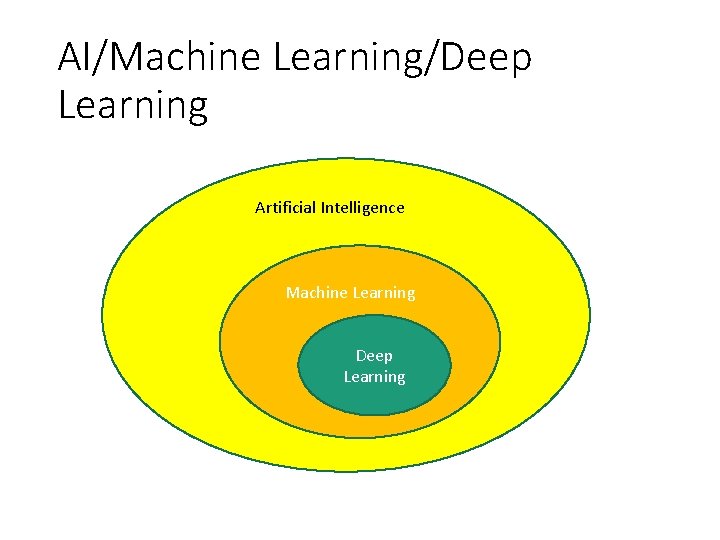
AI/Machine Learning/Deep Learning Artificial Intelligence Machine Learning Deep Learning
AI • Strong-AI: fully human-like • • Consciousness? Turing test Coffee test … not what we try to study here • Weak-AI • Trying to tackle some (very) specific tasks
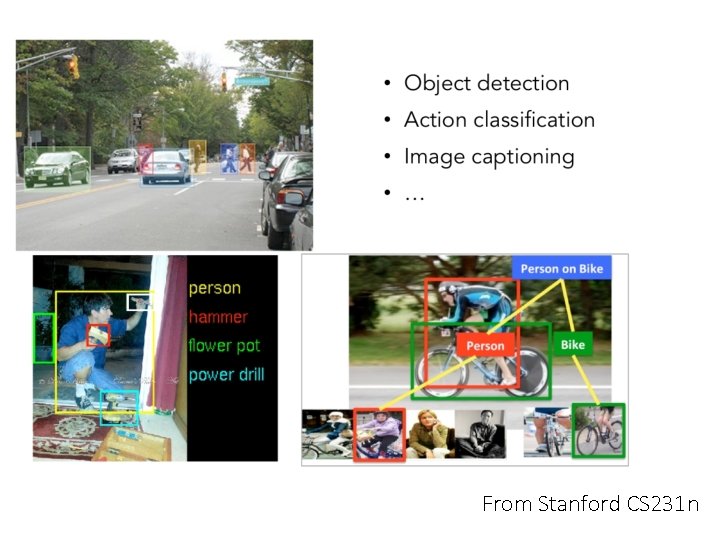
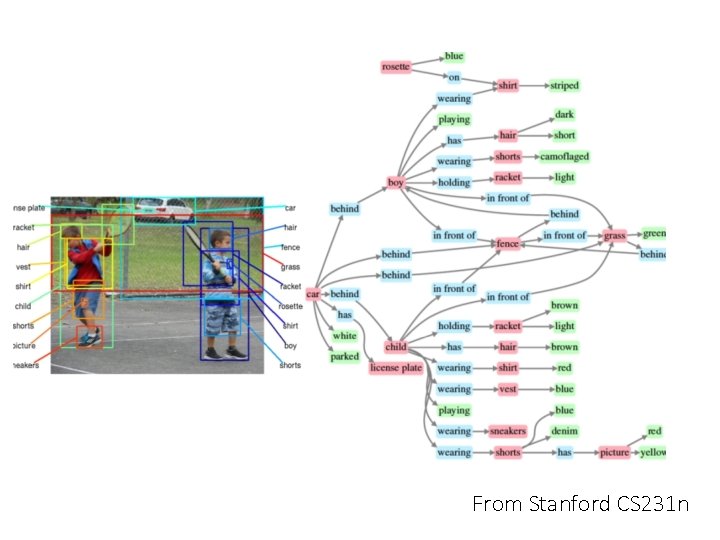
AI Tasks • Playing chess : • Playing strategy games (e. g. , Starcraft) : • Playing GO : • Solve Sudoku : • Find a cat in a picture : • Describe a picture : • Solve a calculus problem : • Understand a story:
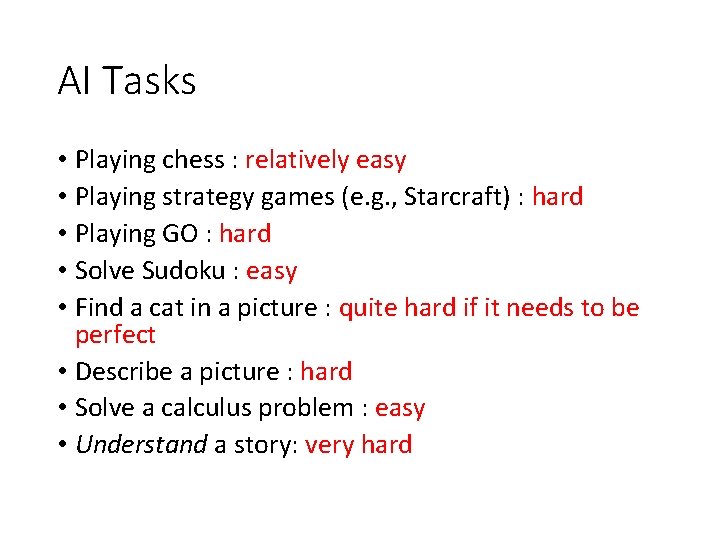
AI Tasks • Playing chess : relatively easy • Playing strategy games (e. g. , Starcraft) : hard • Playing GO : hard • Solve Sudoku : easy • Find a cat in a picture : quite hard if it needs to be perfect • Describe a picture : hard • Solve a calculus problem : easy • Understand a story: very hard
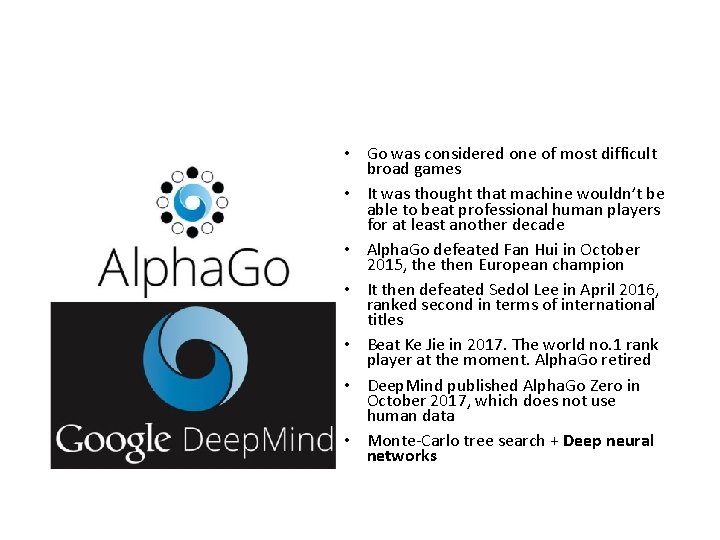
• Go was considered one of most difficult broad games • It was thought that machine wouldn’t be able to beat professional human players for at least another decade • Alpha. Go defeated Fan Hui in October 2015, then European champion • It then defeated Sedol Lee in April 2016, ranked second in terms of international titles • Beat Ke Jie in 2017. The world no. 1 rank player at the moment. Alpha. Go retired • Deep. Mind published Alpha. Go Zero in October 2017, which does not use human data • Monte-Carlo tree search + Deep neural networks
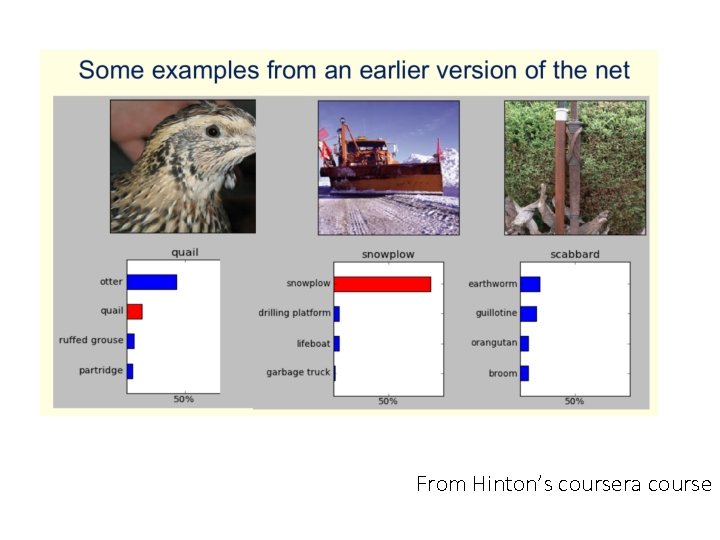
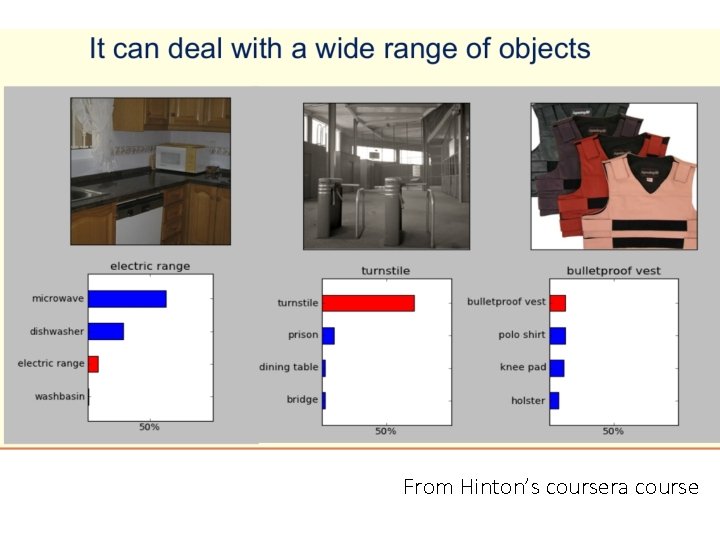
From Hinton’s coursera course
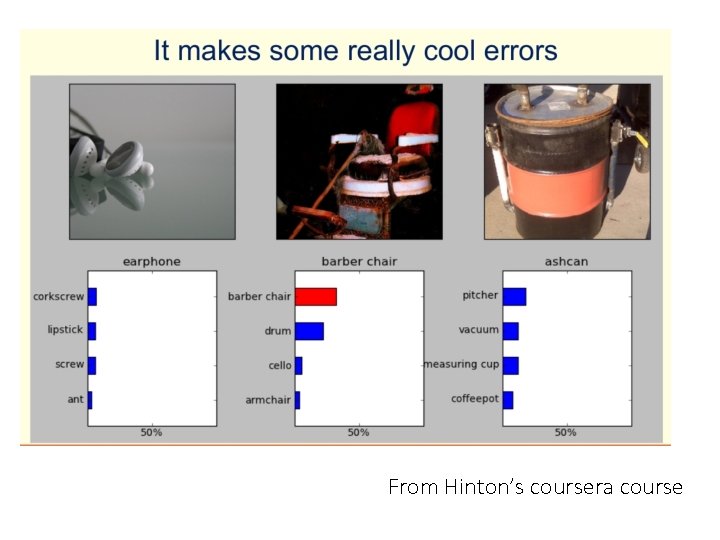
From Hinton’s coursera course
From Hinton’s coursera course
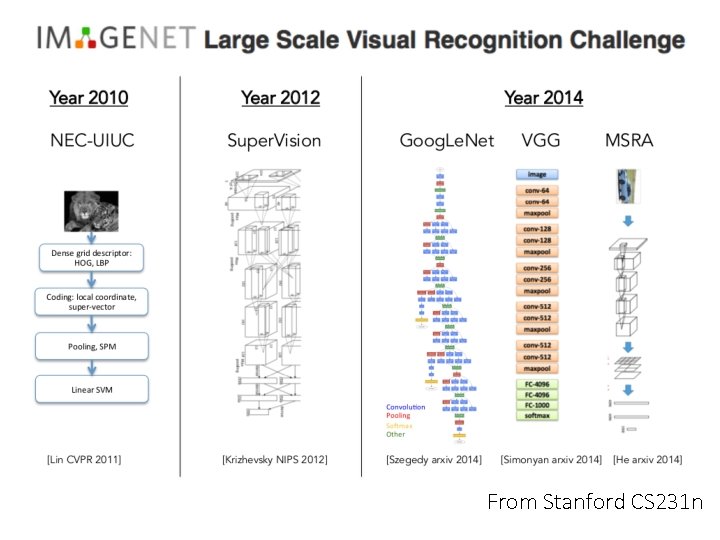
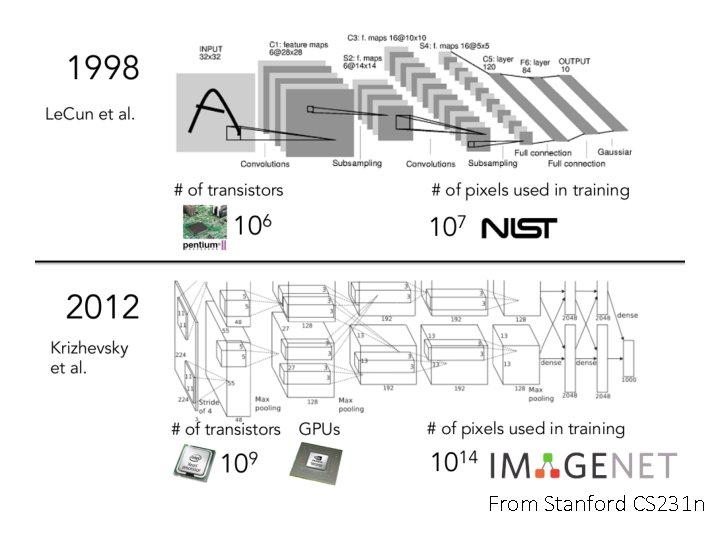
From Stanford CS 231 n
From Stanford CS 231 n
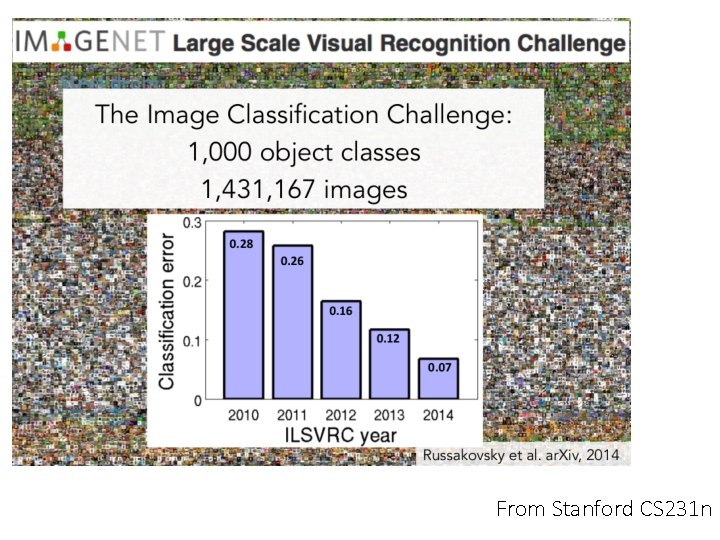
From Stanford CS 231 n
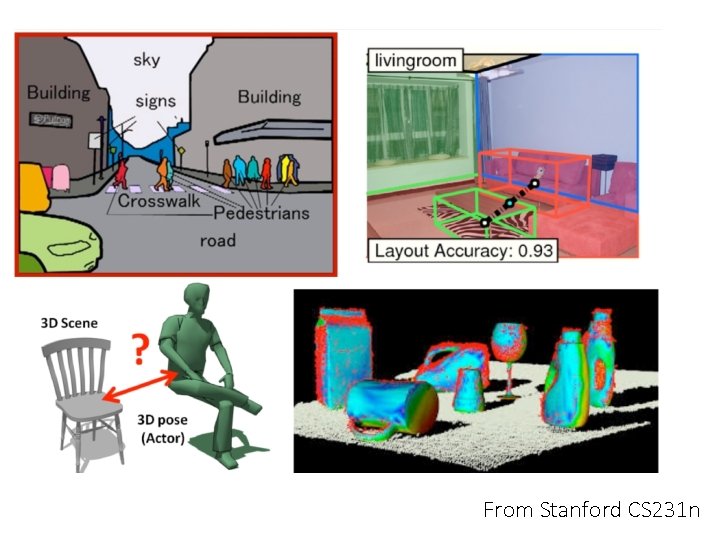
From Stanford CS 231 n
From Stanford CS 231 n
From Stanford CS 231 n
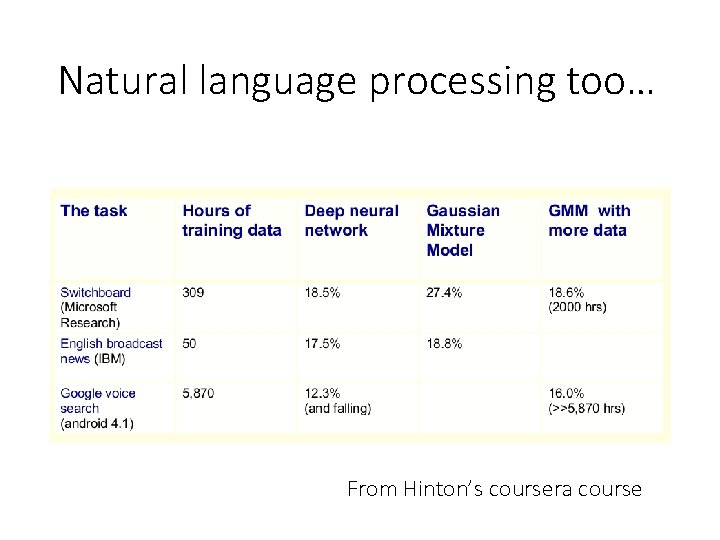
Natural language processing too… From Hinton’s coursera course
Machine learning overview • As the name suggests, have machine learned (from data) • Machine learning is only a part of AI • Other such as planning and search • But machine learning is one key component (tool)
Why and when do we need machine learning? • Program a machine to recognize a cat • We don’t know how we manage to do it • So there is no clue how to program such machine • Even if we know how to do it, the program is probably extremely complicated • Compute the probability of a credit card fraud • No one simple rule. Need to combine many weak rules • It is a moving target
Three types of machine learning • Supervised learning • Learn to predict output when given an input • Example pairs (desired output for an input) are given • Unsupervised learning • Learn to discover good internal representation of the input • No example output is given • Reinforcement learning • Learn to select an action to maximize payoff • No example output (desired action) is given for any input • Some hints if you are doing good or bad are given though
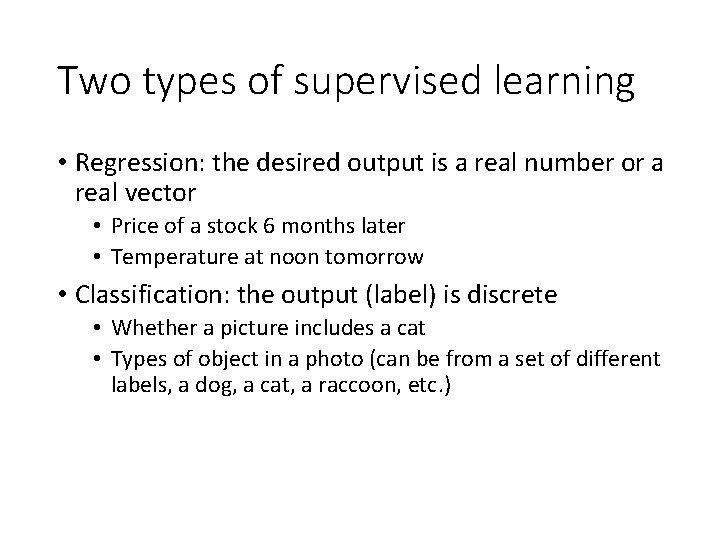
Two types of supervised learning • Regression: the desired output is a real number or a real vector • Price of a stock 6 months later • Temperature at noon tomorrow • Classification: the output (label) is discrete • Whether a picture includes a cat • Types of object in a photo (can be from a set of different labels, a dog, a cat, a raccoon, etc. )
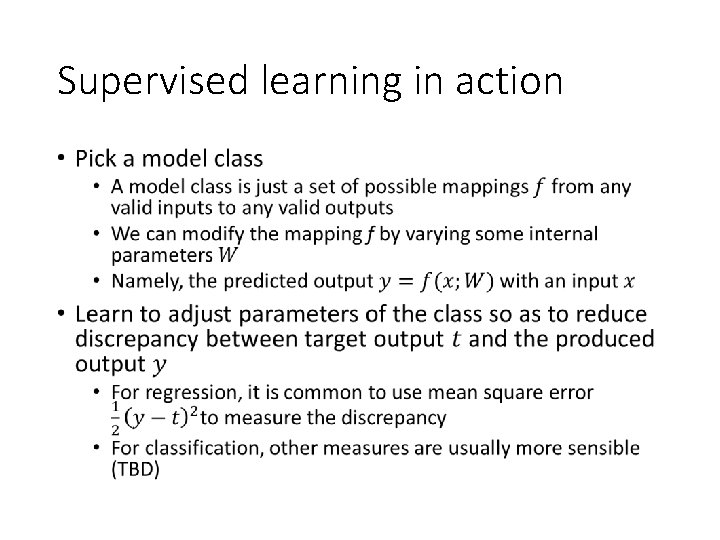
Supervised learning in action •
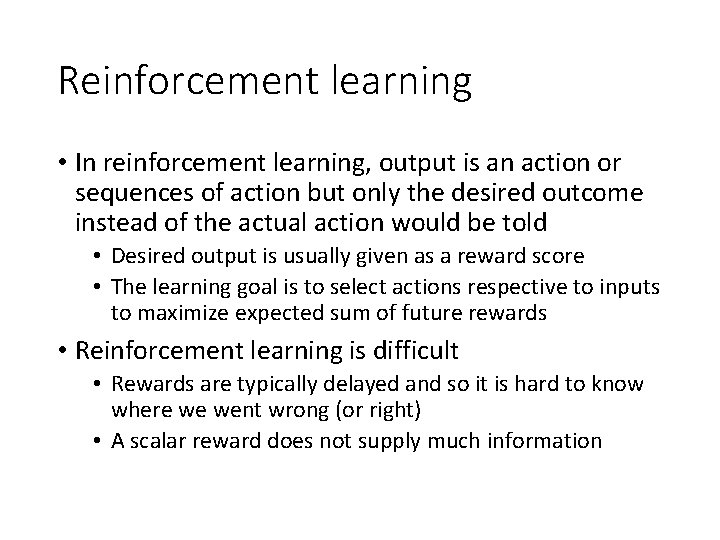
Reinforcement learning • In reinforcement learning, output is an action or sequences of action but only the desired outcome instead of the actual action would be told • Desired output is usually given as a reward score • The learning goal is to select actions respective to inputs to maximize expected sum of future rewards • Reinforcement learning is difficult • Rewards are typically delayed and so it is hard to know where we went wrong (or right) • A scalar reward does not supply much information
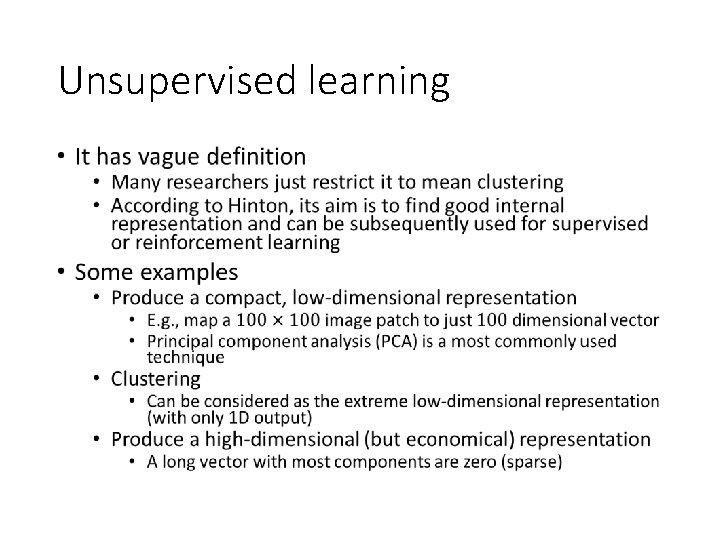
Unsupervised learning •
(Artificial) neural networks • A computing model inspired by the biological brain • Flexible and very powerful • Can be adjusted for different learning tasks (supervised, unsupervised, etc. )
Reasons to study neural networks • We usually cannot directly study brain • We can with f. MRI and EEG but not everyone can afford it • There are limitations (yet) • To understand what we are likely good (bad) at • Supposed to be good at things that we are good at: e. g. , vision • And bad at things that we are bad at: e. g. , arithmetic • A powerful paradigm to solve real-world problem (this course)
Our brain • Average weight 1. 4 kg, about 2% of total body weight • Responsible ~20% of our energy consumption! • ~12. 6 Watts • It sounds a like but is extremely efficient. A typical GPU server requires ~1000 Watts • Composed of neurons interconnected to each other
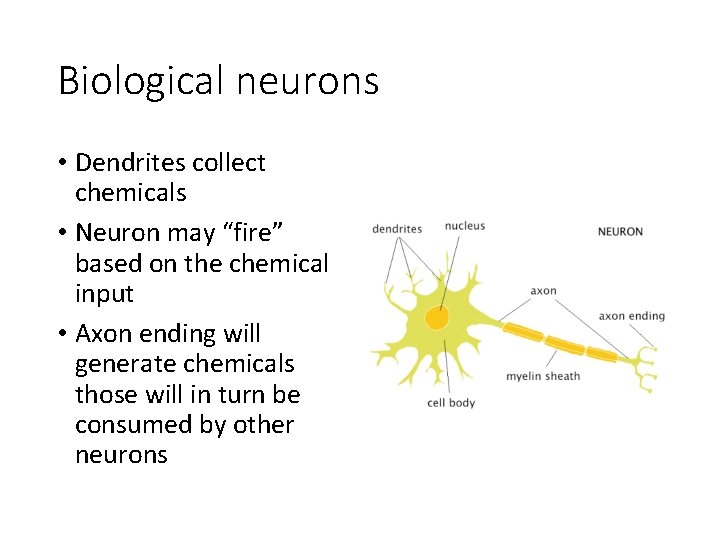
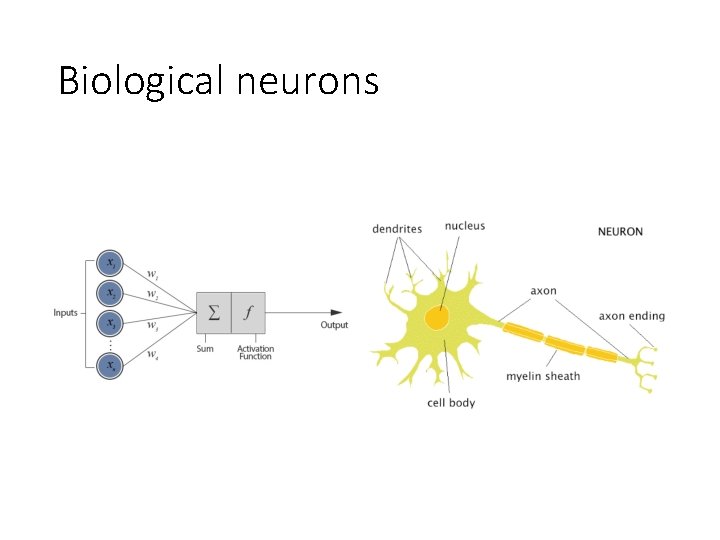
Biological neurons • Dendrites collect chemicals • Neuron may “fire” based on the chemical input • Axon ending will generate chemicals those will in turn be consumed by other neurons
Biological neurons
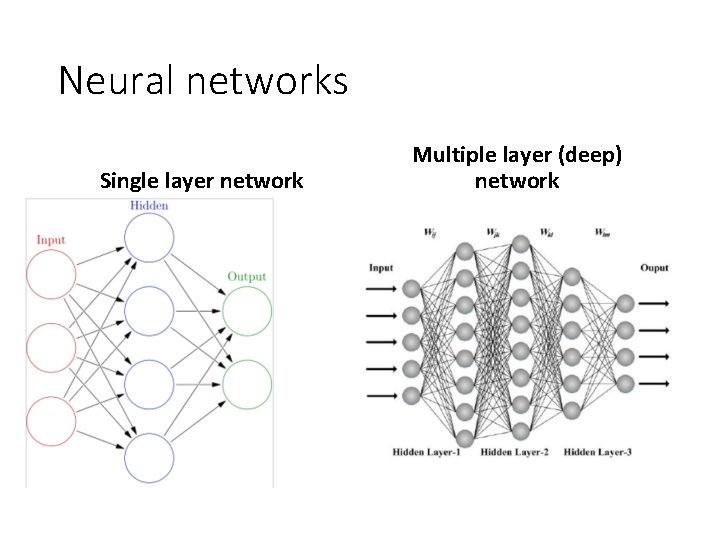
Neural networks Single layer network Multiple layer (deep) network
A very brief history of ANN • Warren Mc. Culloch and Walter Pitts introduced Threshold Logic Unit as a computational model of neuron in 1943 • Donald Hebb created a hypothesis of learning (Hebbian theory) based on neural plasticity (increase synaptic efficacy by repeated and persistent stimulation) in late 1940’s • Frank Rosenblatt created perceptron in 1958 but no concrete learning method appeared to be described • Bernard Widrow and Marcian Hoff of Stanford developed “ADALINE” and “MADALINE” (Mulitple ADAptive Li. INear Elements) in 1959. First neural network to tackle real world problem. It is still used in air traffic control systems (really? )
A very brief history of ANN (con’t) • Perceptron got high expectation in early year but neural science does not catch up. And the traditional von Neumann and Turing architecture took over the computing scene. Ironically, von Neumann himself suggested to imitate neuron function with telegraph relays or vacuum tubes • Neural network research was hit hard by the introduction of the book Perceptrons by Marvin Minsky and Seymour Papert. It proved the limitation of perceptrons but combined with the initial hype, people lost trust of the potential of neural networks and we entered the “first dark age” of neural networks
A very brief history of ANN (con’t) • The interest to neural network slowly revived with the invention of the backpropagation algorithm by Paul Webos in 1974. The algorithm was reinvented by many other such as Parker (1985) and Le. Cun (1985) • Hopfield popularizes a form of bi-directional networks (Hopfield networks) in the 1980’s and neural network research was blooming in that decade • But as the support vector machine (SVM) by Vladmir Vapnik was popularized in late 1980’s and early 1990’s. Neural network slowly lost favors. SVM took hold instead of neural networks because it has more elegant math and worked better at that time • Less parameters to tune • Computers were too slow then and labeled datasets were too small
A very brief history of ANN (con’t) • Neural networks got a come-back for the last decade as recurrent neural networks and deep feedforward neural networks won numerous competitions in both pattern recognition and machine learning domains • Fast GPUs were a key for the come-back. Relatively cheap and powerful computing resources are now widely available. And the wide spread of large public labeled datasets helped a whole lot too
Conclusions • Machine learning allows us to automatically generate programs to solve various tasks by learning from data • Three main machine learning types: • Supervised learning • Unsupervised learning • Reinforcement learning • Deep learning is just neural networks with many layers (hence deep)
Next time… • More on supervised learning • Loss functions • Regularizations • Examples • Optimization methods (? )
Questions?