
Artificial Lift Methods 1 GAS LIFT SUCKER ROD


- Slides: 85
Artificial Lift Methods 1 GAS LIFT SUCKER ROD PUMP ELECTRIC SUBMERSIBLE PUMP OTHERS
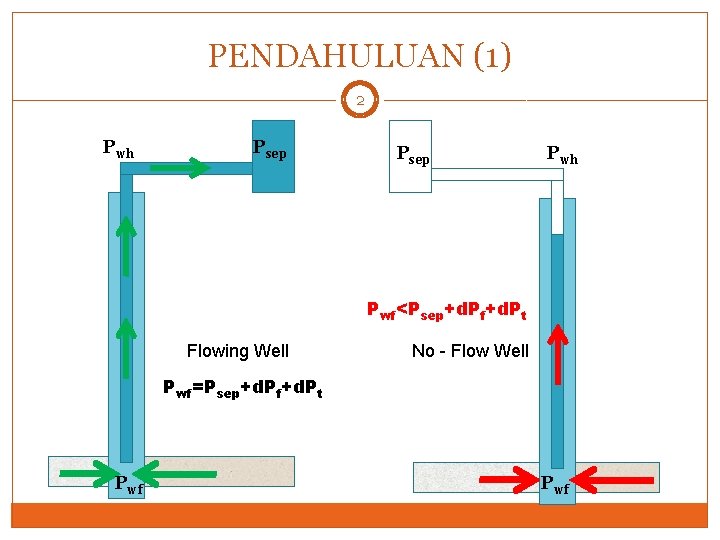
PENDAHULUAN (1) 2 Pwh Psep Pwh Pwf<Psep+d. Pf+d. Pt Flowing Well No - Flow Well Pwf=Psep+d. Pf+d. Pt Pwf
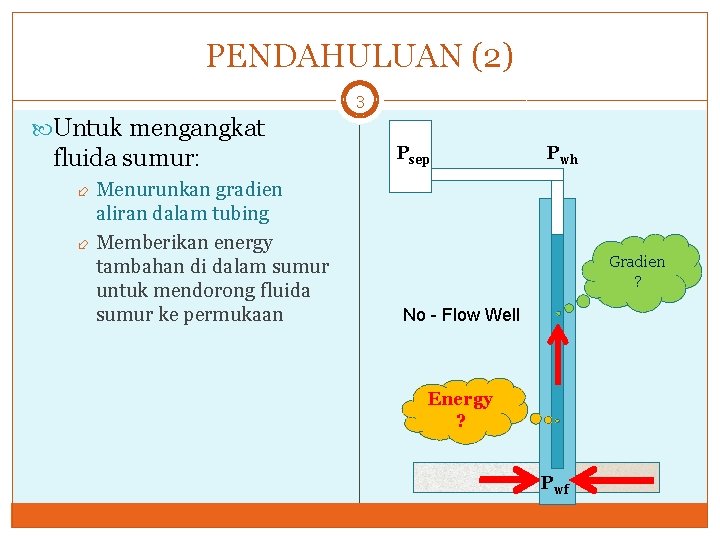
PENDAHULUAN (2) 3 Untuk mengangkat fluida sumur: Menurunkan gradien aliran dalam tubing Memberikan energy tambahan di dalam sumur untuk mendorong fluida sumur ke permukaan Psep Pwh Gradien ? No - Flow Well Energy ? Pwf
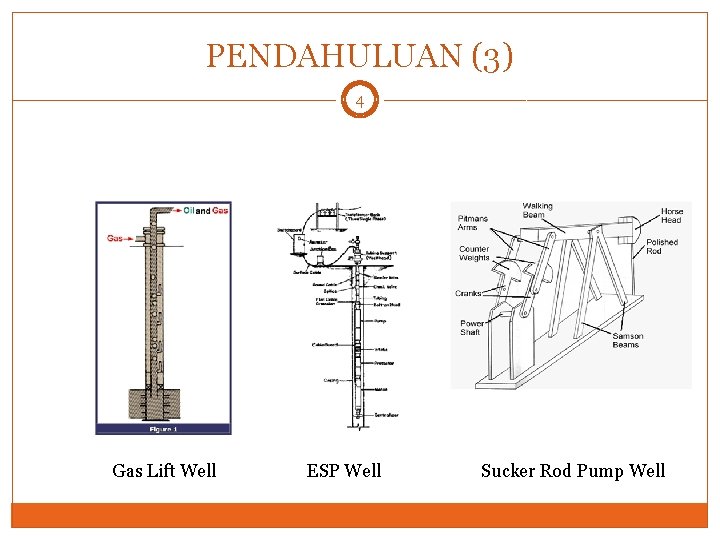
PENDAHULUAN (3) 4 Gas Lift Well ESP Well Sucker Rod Pump Well
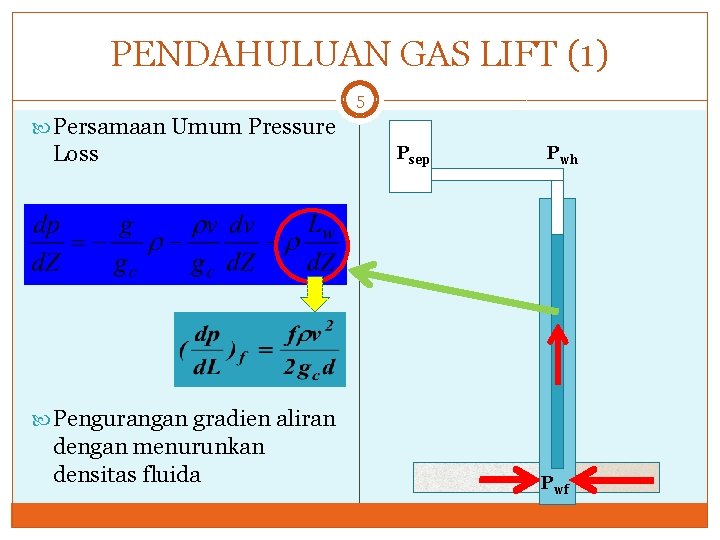
PENDAHULUAN GAS LIFT (1) 5 Persamaan Umum Pressure Loss Psep Pwh Pengurangan gradien aliran dengan menurunkan densitas fluida Pwf
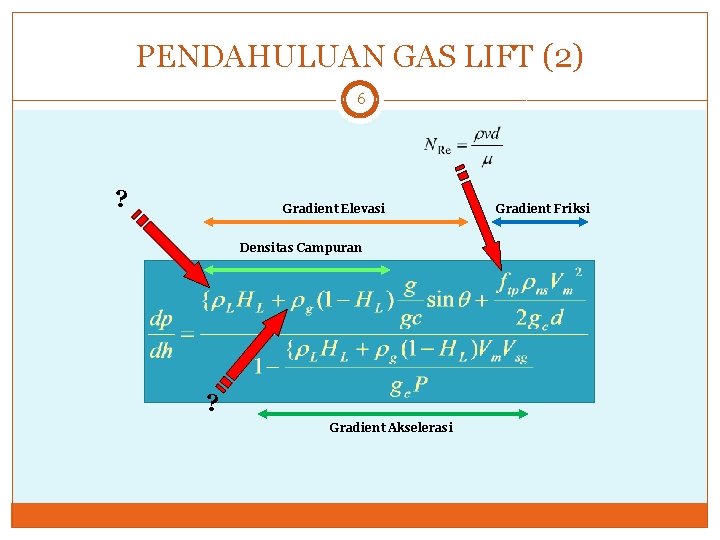
PENDAHULUAN GAS LIFT (2) 6 ? Gradient Elevasi Densitas Campuran ? Gradient Akselerasi Gradient Friksi
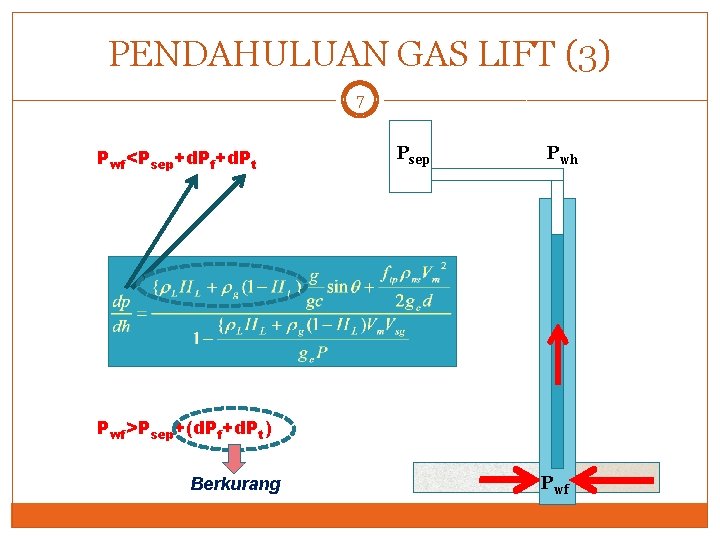
PENDAHULUAN GAS LIFT (3) 7 Pwf<Psep+d. Pf+d. Pt Psep Pwh Pwf>Psep+(d. Pf+d. Pt) Berkurang Pwf
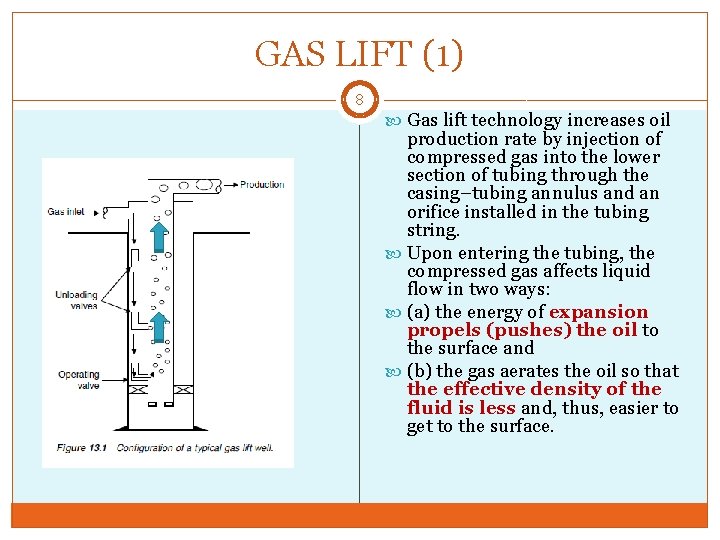
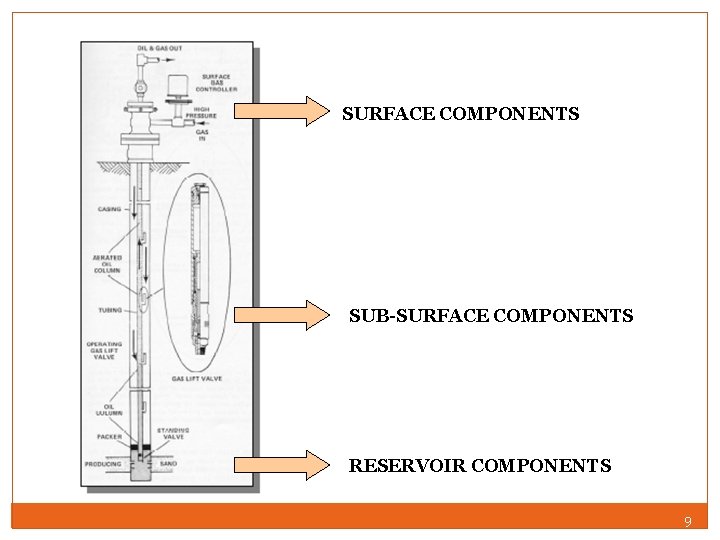
GAS LIFT (1) 8 Gas lift technology increases oil production rate by injection of compressed gas into the lower section of tubing through the casing–tubing annulus and an orifice installed in the tubing string. Upon entering the tubing, the compressed gas affects liquid flow in two ways: (a) the energy of expansion propels (pushes) the oil to the surface and (b) the gas aerates the oil so that the effective density of the fluid is less and, thus, easier to get to the surface.
SURFACE COMPONENTS SUB-SURFACE COMPONENTS RESERVOIR COMPONENTS 9
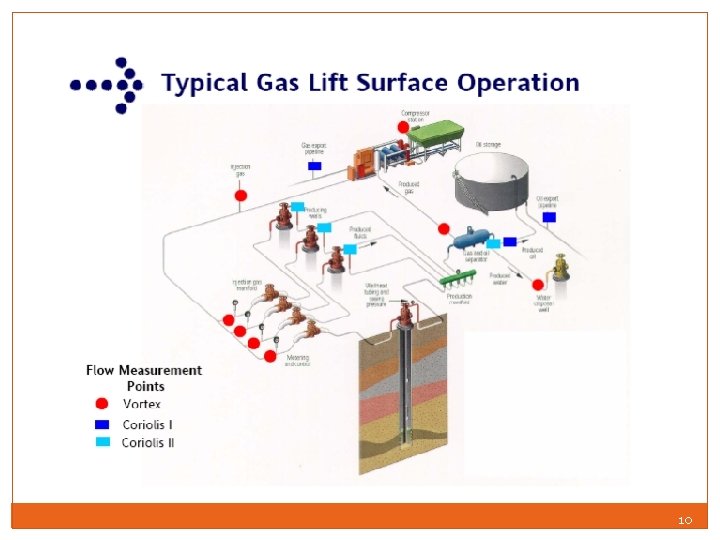
10
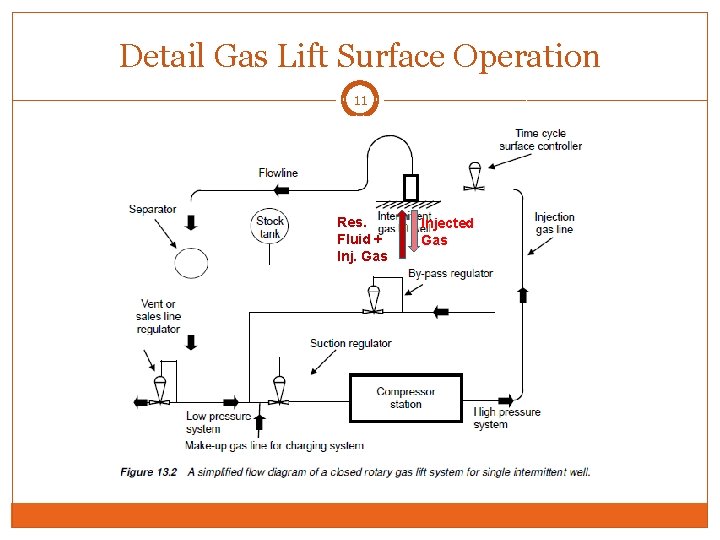
Detail Gas Lift Surface Operation 11 Res. Fluid + Inj. Gas Injected Gas
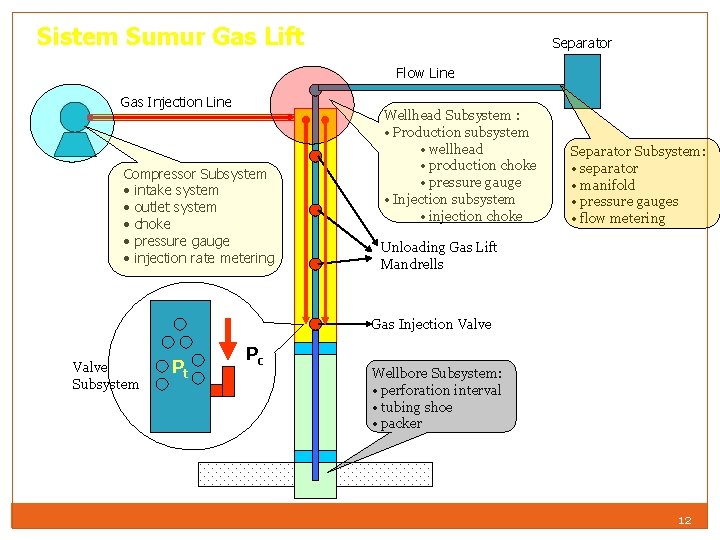
Sistem Sumur Gas Lift Separator Flow Line Gas Injection Line Compressor Subsystem • intake system • outlet system • choke • pressure gauge • injection rate metering Wellhead Subsystem : • Production subsystem • wellhead • production choke • pressure gauge • Injection subsystem • injection choke Separator Subsystem: • separator • manifold • pressure gauges • flow metering Unloading Gas Lift Mandrells Gas Injection Valve Subsystem Pt Pc Wellbore Subsystem: • perforation interval • tubing shoe • packer 12
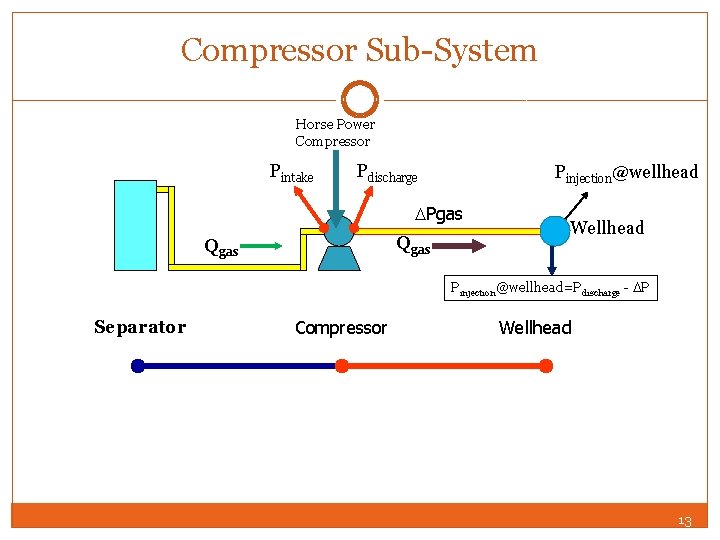
Compressor Sub-System Horse Power Compressor Pintake Pdischarge Pinjection@wellhead DPgas Qgas Wellhead Pinjection @wellhead=Pdischarge - DP Separator Compressor Wellhead 13
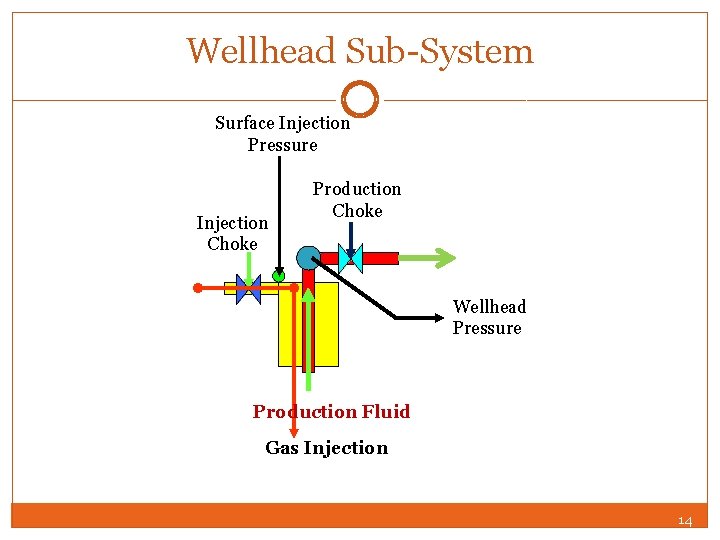
Wellhead Sub-System Surface Injection Pressure Injection Choke Production Choke Wellhead Pressure Production Fluid Gas Injection 14
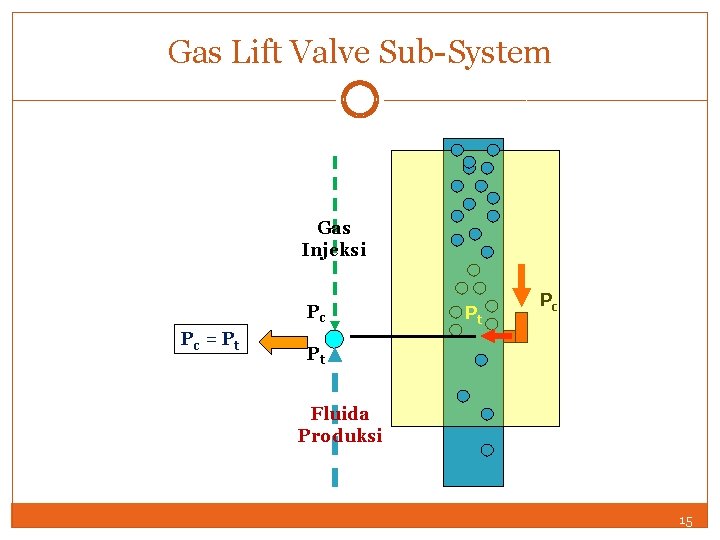
Gas Lift Valve Sub-System Gas Injeksi Pc Pc = P t Pt Pc Pt Fluida Produksi 15
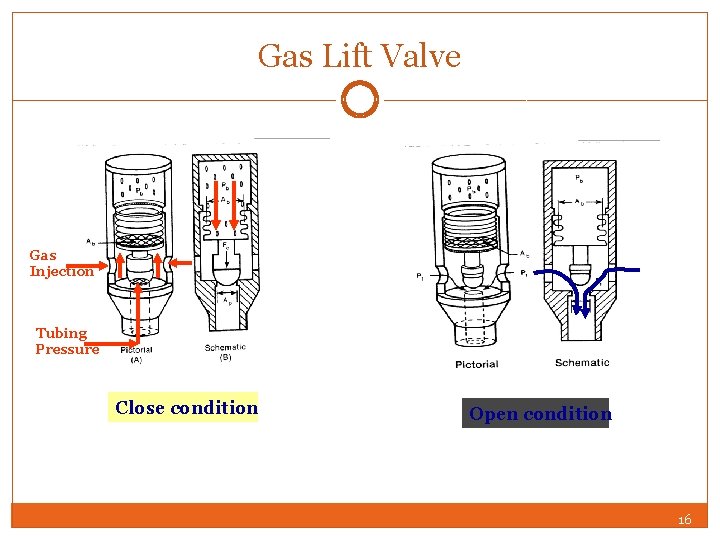
Gas Lift Valve Gas Injection Tubing Pressure Close condition Open condition 16
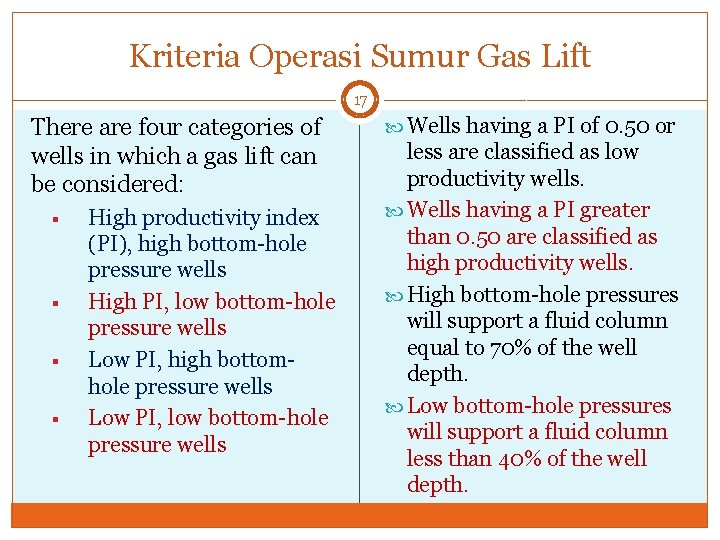
Kriteria Operasi Sumur Gas Lift 17 There are four categories of wells in which a gas lift can be considered: § § High productivity index (PI), high bottom-hole pressure wells High PI, low bottom-hole pressure wells Low PI, high bottomhole pressure wells Low PI, low bottom-hole pressure wells Wells having a PI of 0. 50 or less are classified as low productivity wells. Wells having a PI greater than 0. 50 are classified as high productivity wells. High bottom-hole pressures will support a fluid column equal to 70% of the well depth. Low bottom-hole pressures will support a fluid column less than 40% of the well depth.
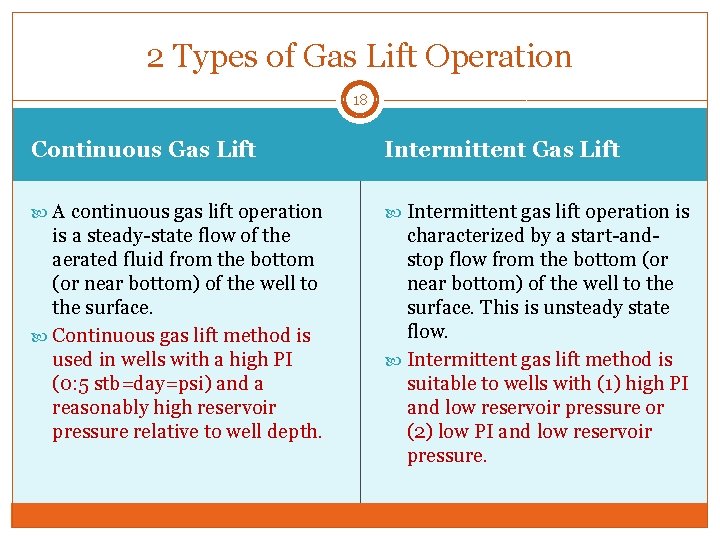
2 Types of Gas Lift Operation 18 Continuous Gas Lift Intermittent Gas Lift A continuous gas lift operation Intermittent gas lift operation is is a steady-state flow of the aerated fluid from the bottom (or near bottom) of the well to the surface. Continuous gas lift method is used in wells with a high PI (0: 5 stb=day=psi) and a reasonably high reservoir pressure relative to well depth. characterized by a start-andstop flow from the bottom (or near bottom) of the well to the surface. This is unsteady state flow. Intermittent gas lift method is suitable to wells with (1) high PI and low reservoir pressure or (2) low PI and low reservoir pressure.
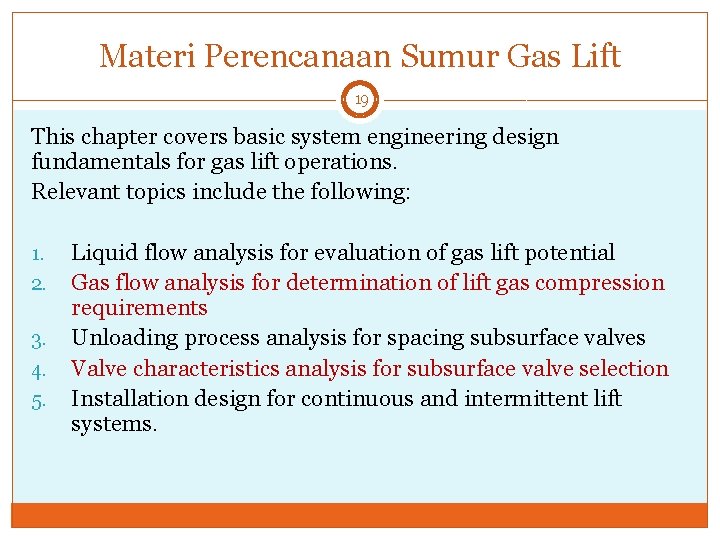
Materi Perencanaan Sumur Gas Lift 19 This chapter covers basic system engineering design fundamentals for gas lift operations. Relevant topics include the following: 1. 2. 3. 4. 5. Liquid flow analysis for evaluation of gas lift potential Gas flow analysis for determination of lift gas compression requirements Unloading process analysis for spacing subsurface valves Valve characteristics analysis for subsurface valve selection Installation design for continuous and intermittent lift systems.
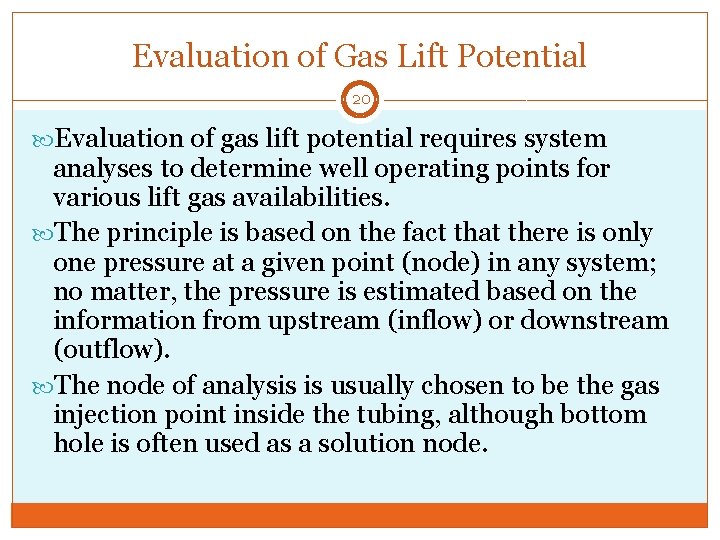
Evaluation of Gas Lift Potential 20 Evaluation of gas lift potential requires system analyses to determine well operating points for various lift gas availabilities. The principle is based on the fact that there is only one pressure at a given point (node) in any system; no matter, the pressure is estimated based on the information from upstream (inflow) or downstream (outflow). The node of analysis is usually chosen to be the gas injection point inside the tubing, although bottom hole is often used as a solution node.
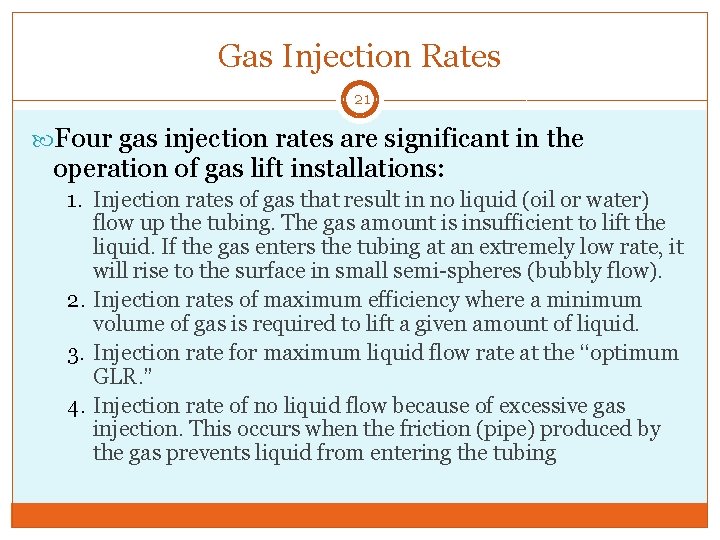
Gas Injection Rates 21 Four gas injection rates are significant in the operation of gas lift installations: 1. Injection rates of gas that result in no liquid (oil or water) flow up the tubing. The gas amount is insufficient to lift the liquid. If the gas enters the tubing at an extremely low rate, it will rise to the surface in small semi-spheres (bubbly flow). 2. Injection rates of maximum efficiency where a minimum volume of gas is required to lift a given amount of liquid. 3. Injection rate for maximum liquid flow rate at the ‘‘optimum GLR. ’’ 4. Injection rate of no liquid flow because of excessive gas injection. This occurs when the friction (pipe) produced by the gas prevents liquid from entering the tubing
CONTINUOUS GAS LIFT 22 THE GAS IS INJECTED CONTINUOUSLY TO ANNULUS
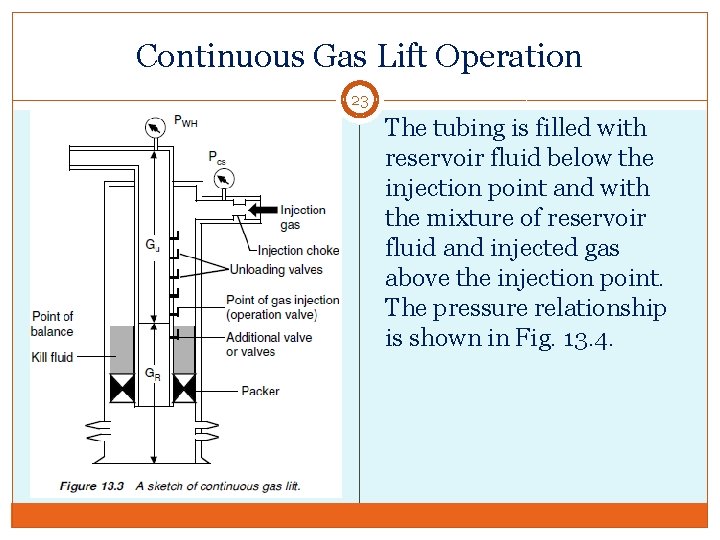
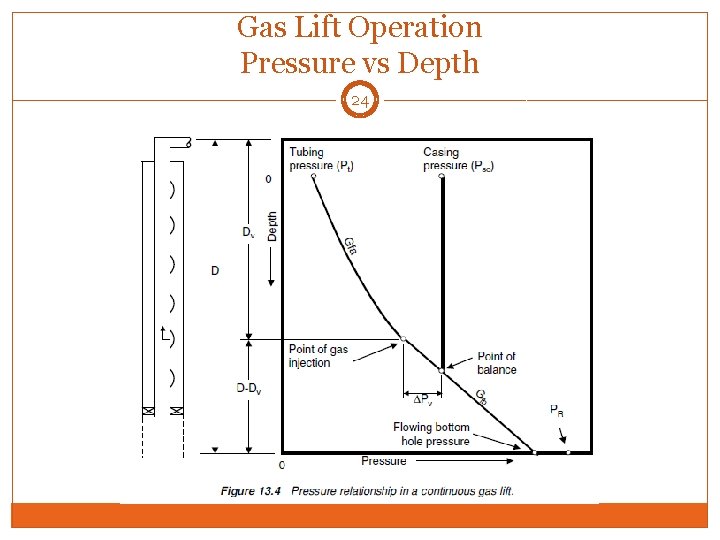
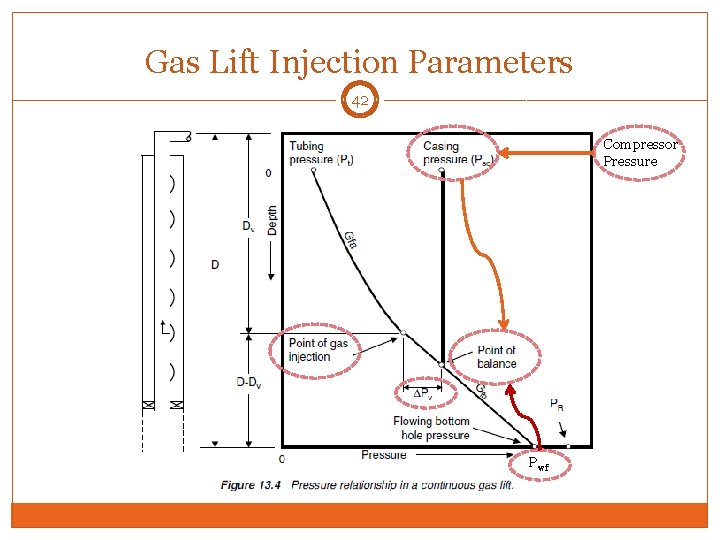
Continuous Gas Lift Operation 23 The tubing is filled with reservoir fluid below the injection point and with the mixture of reservoir fluid and injected gas above the injection point. The pressure relationship is shown in Fig. 13. 4.
Gas Lift Operation Pressure vs Depth 24
Parameter Design 25 Jumlah gas injeksi yang tersedia Jumlah gas injeksi yang dibutuhkan Tekanan Gas Injeksi yang dibutuhkan di setiap sumur Tekanan Kompresor yang dibutuhkan
Gas Injeksi yang diperlukan 26 GAS LIFT PERFORMANCE CURVE
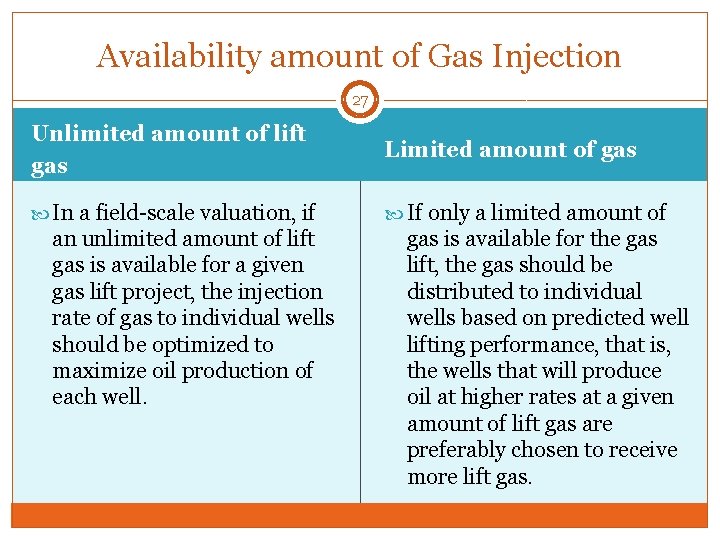
Availability amount of Gas Injection 27 Unlimited amount of lift gas Limited amount of gas In a field-scale valuation, if If only a limited amount of an unlimited amount of lift gas is available for a given gas lift project, the injection rate of gas to individual wells should be optimized to maximize oil production of each well. gas is available for the gas lift, the gas should be distributed to individual wells based on predicted well lifting performance, that is, the wells that will produce oil at higher rates at a given amount of lift gas are preferably chosen to receive more lift gas.
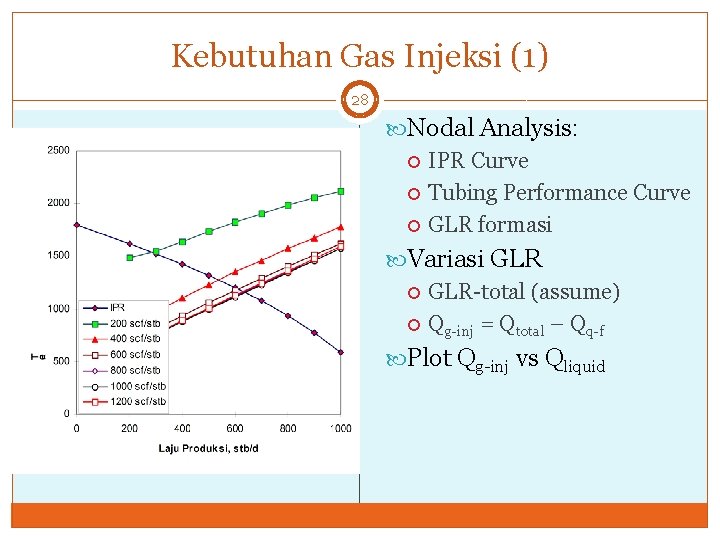
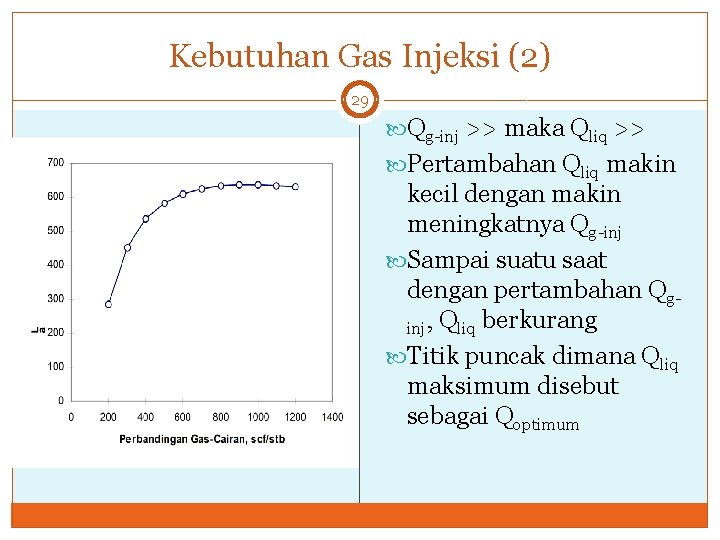
Kebutuhan Gas Injeksi (1) 28 Nodal Analysis: IPR Curve Tubing Performance Curve GLR formasi Variasi GLR-total (assume) Qg-inj = Qtotal – Qq-f Plot Qg-inj vs Qliquid
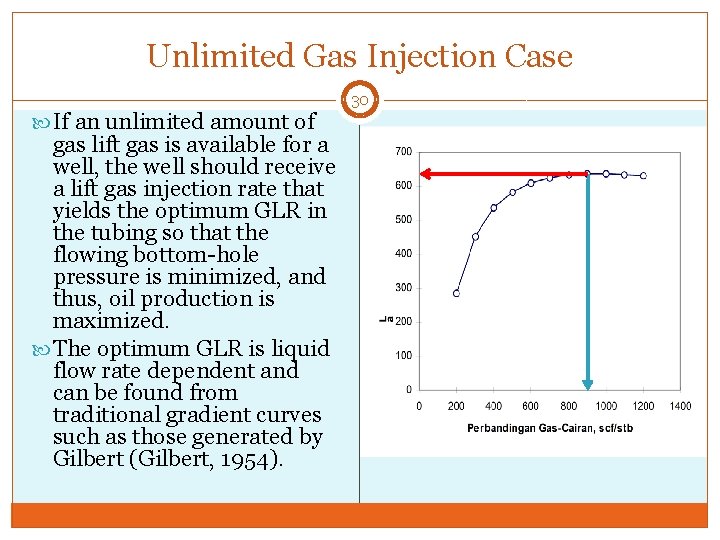
Kebutuhan Gas Injeksi (2) 29 Qg-inj >> maka Qliq >> Pertambahan Qliq makin kecil dengan makin meningkatnya Qg-inj Sampai suatu saat dengan pertambahan Qginj, Qliq berkurang Titik puncak dimana Qliq maksimum disebut sebagai Qoptimum
Unlimited Gas Injection Case If an unlimited amount of gas lift gas is available for a well, the well should receive a lift gas injection rate that yields the optimum GLR in the tubing so that the flowing bottom-hole pressure is minimized, and thus, oil production is maximized. The optimum GLR is liquid flow rate dependent and can be found from traditional gradient curves such as those generated by Gilbert (Gilbert, 1954). 30
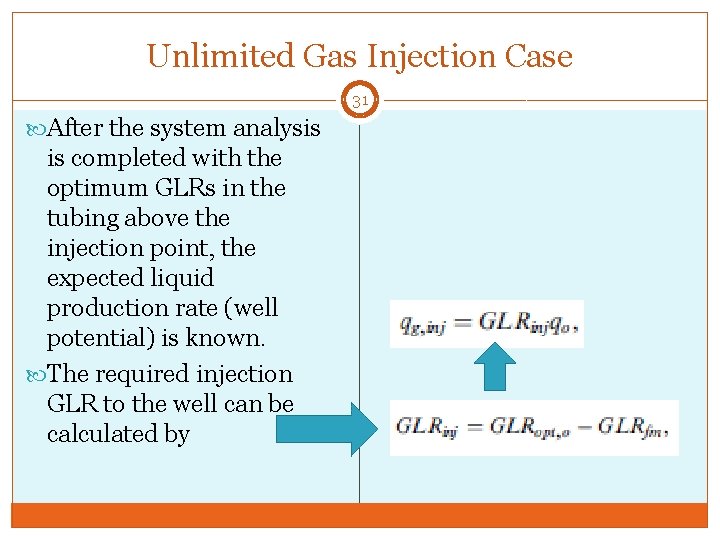
Unlimited Gas Injection Case 31 After the system analysis is completed with the optimum GLRs in the tubing above the injection point, the expected liquid production rate (well potential) is known. The required injection GLR to the well can be calculated by
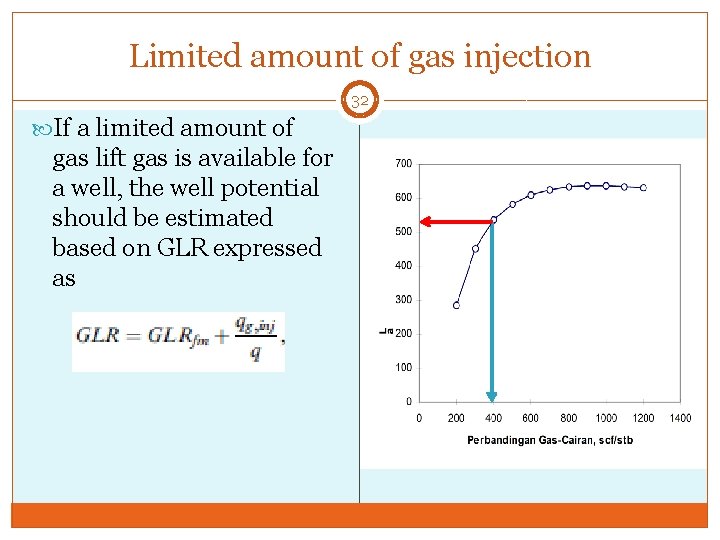
Limited amount of gas injection 32 If a limited amount of gas lift gas is available for a well, the well potential should be estimated based on GLR expressed as
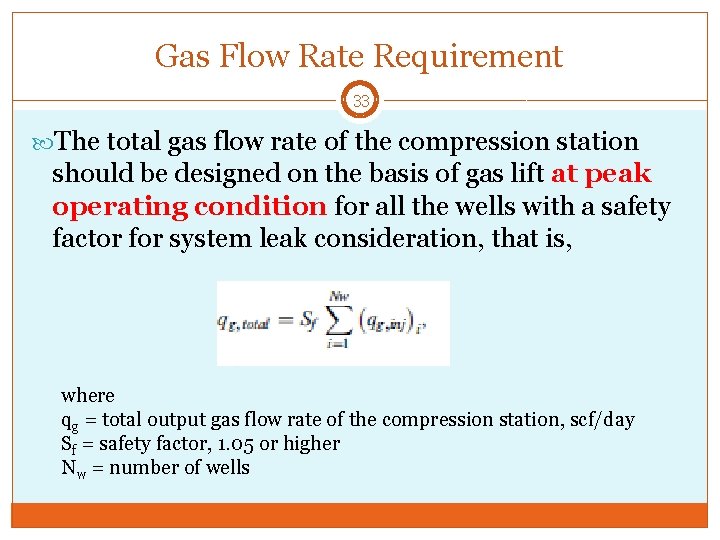
Gas Flow Rate Requirement 33 The total gas flow rate of the compression station should be designed on the basis of gas lift at peak operating condition for all the wells with a safety factor for system leak consideration, that is, where qg = total output gas flow rate of the compression station, scf/day Sf = safety factor, 1. 05 or higher Nw = number of wells
Point of Injection 34
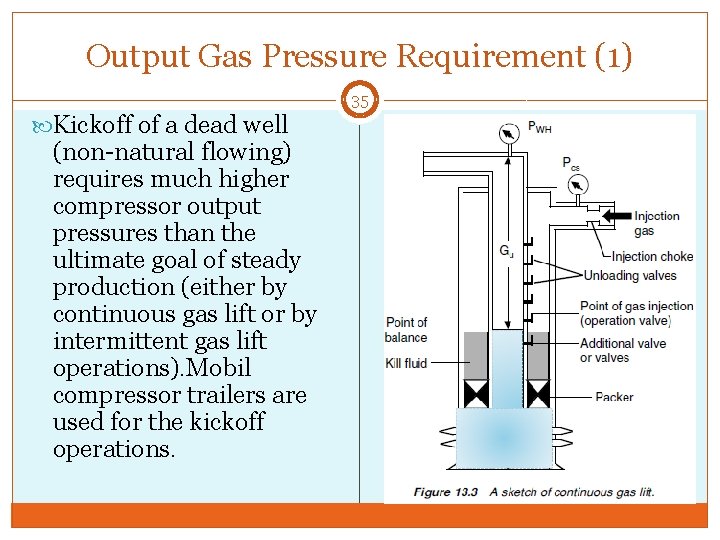
Output Gas Pressure Requirement (1) 35 Kickoff of a dead well (non-natural flowing) requires much higher compressor output pressures than the ultimate goal of steady production (either by continuous gas lift or by intermittent gas lift operations). Mobil compressor trailers are used for the kickoff operations.
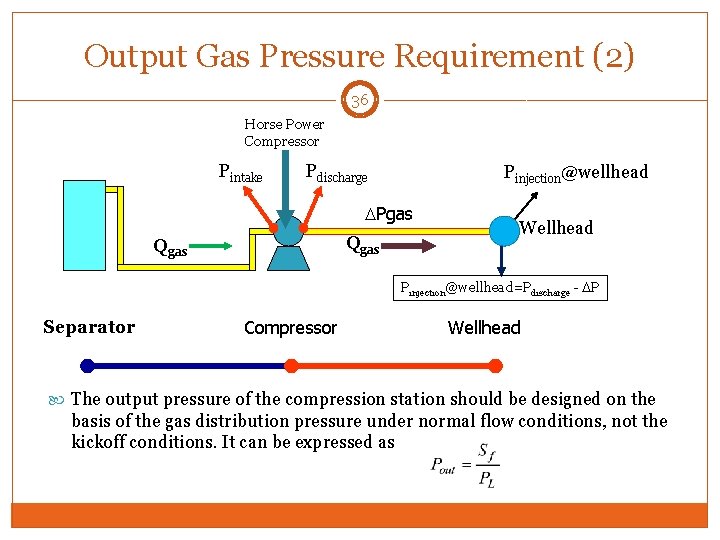
Output Gas Pressure Requirement (2) 36 Horse Power Compressor Pintake Pdischarge Pinjection@wellhead DPgas Qgas Wellhead Pinjection @wellhead=Pdischarge - DP Separator Compressor Wellhead The output pressure of the compression station should be designed on the basis of the gas distribution pressure under normal flow conditions, not the kickoff conditions. It can be expressed as
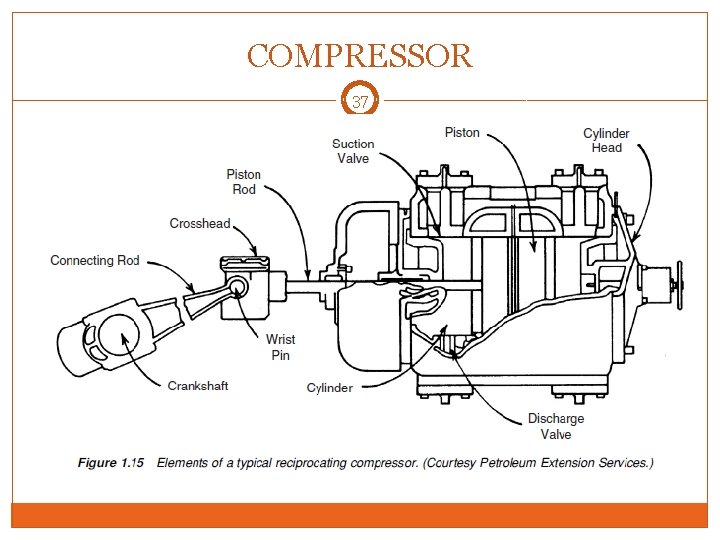
COMPRESSOR 37
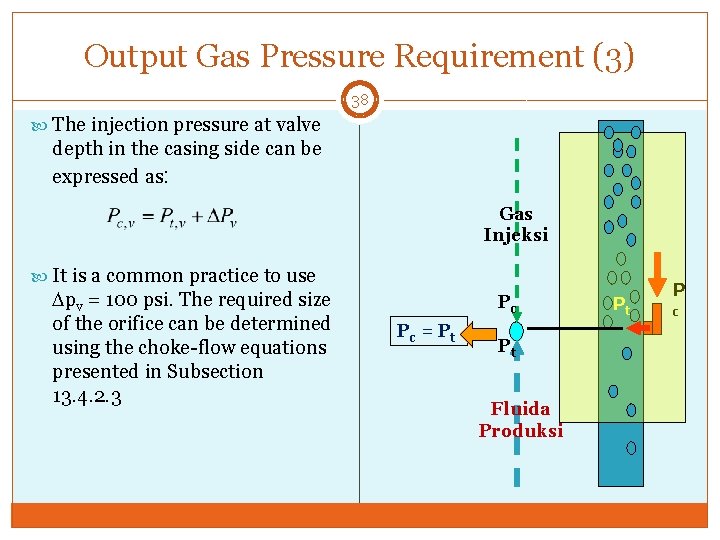
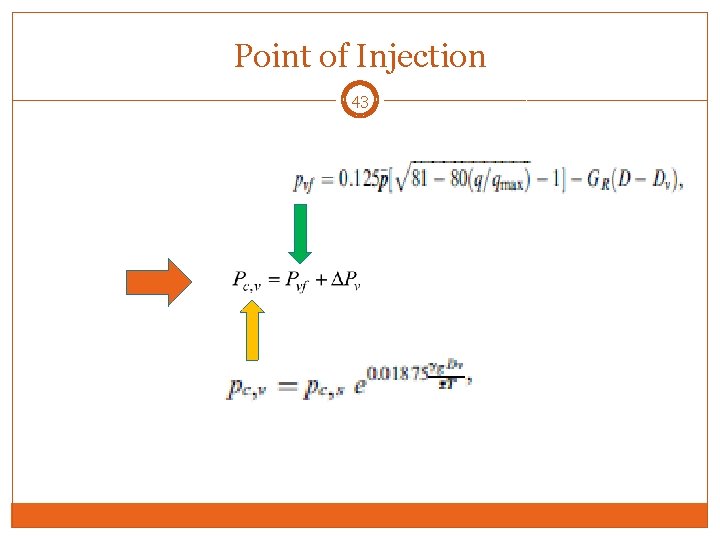
Output Gas Pressure Requirement (3) 38 The injection pressure at valve depth in the casing side can be expressed as: Gas Injeksi It is a common practice to use Dpv = 100 psi. The required size of the orifice can be determined using the choke-flow equations presented in Subsection 13. 4. 2. 3 Pc Pc = P t Pt Fluida Produksi Pt P c
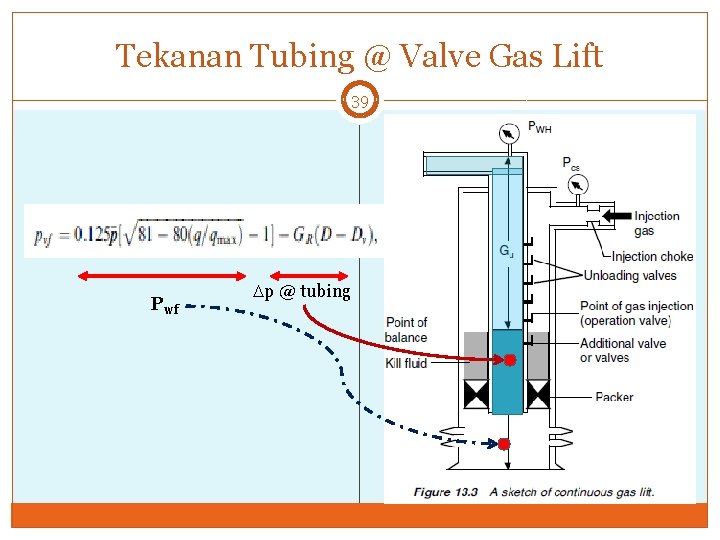
Tekanan Tubing @ Valve Gas Lift 39 Pwf Dp @ tubing
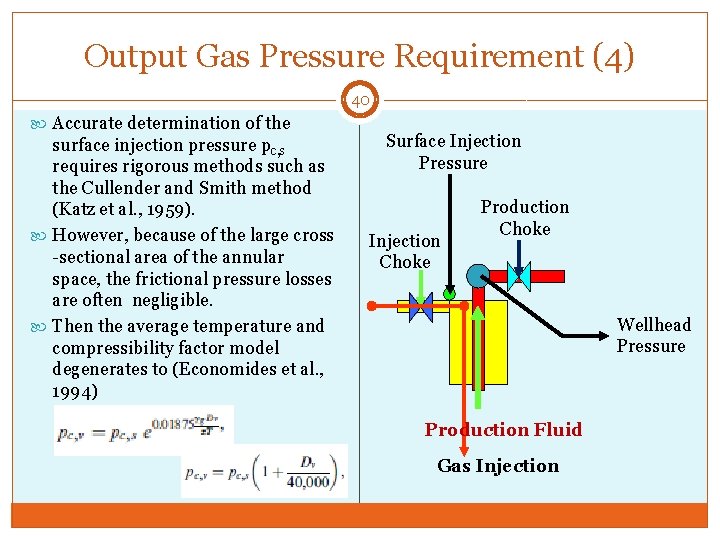
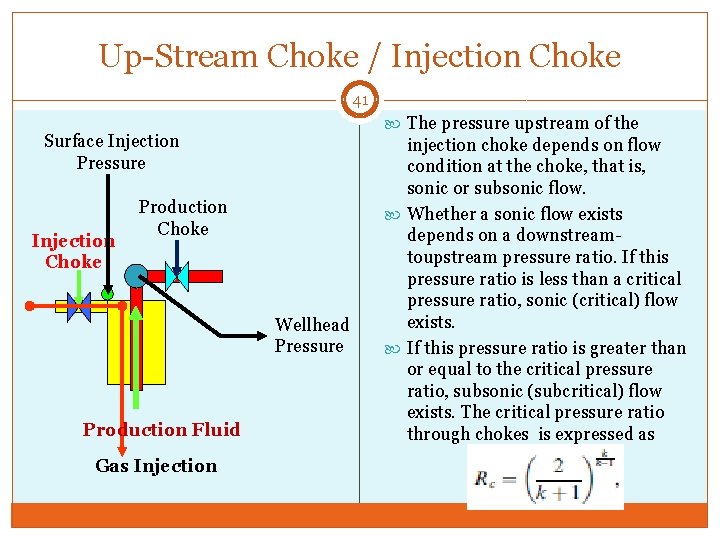
Output Gas Pressure Requirement (4) 40 Accurate determination of the surface injection pressure pc, s requires rigorous methods such as the Cullender and Smith method (Katz et al. , 1959). However, because of the large cross -sectional area of the annular space, the frictional pressure losses are often negligible. Then the average temperature and compressibility factor model degenerates to (Economides et al. , 1994) Surface Injection Pressure Injection Choke Production Choke Wellhead Pressure Production Fluid Gas Injection
Up-Stream Choke / Injection Choke 41 The pressure upstream of the Surface Injection Pressure Injection Choke Production Choke Wellhead Pressure Production Fluid Gas Injection injection choke depends on flow condition at the choke, that is, sonic or subsonic flow. Whether a sonic flow exists depends on a downstreamtoupstream pressure ratio. If this pressure ratio is less than a critical pressure ratio, sonic (critical) flow exists. If this pressure ratio is greater than or equal to the critical pressure ratio, subsonic (subcritical) flow exists. The critical pressure ratio through chokes is expressed as
Gas Lift Injection Parameters 42 Compressor Pressure Pwf
Point of Injection 43
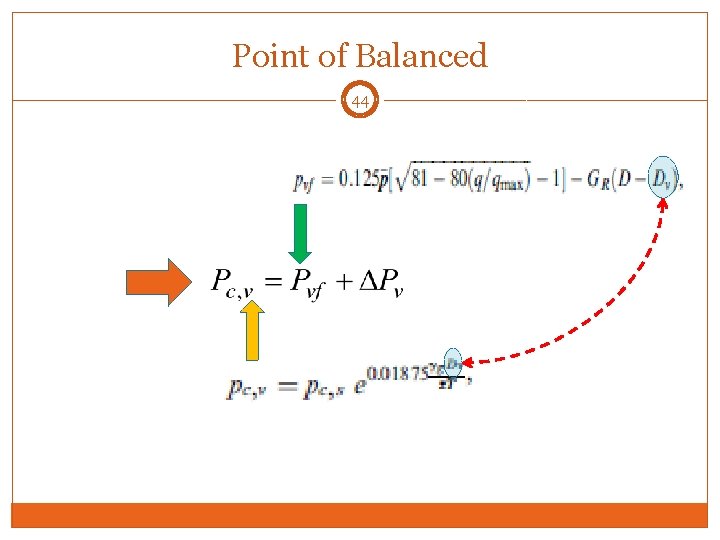
Point of Balanced 44
Unloading Valves Design 45 UNLOADING PROCESS GAS LIFT WELLS
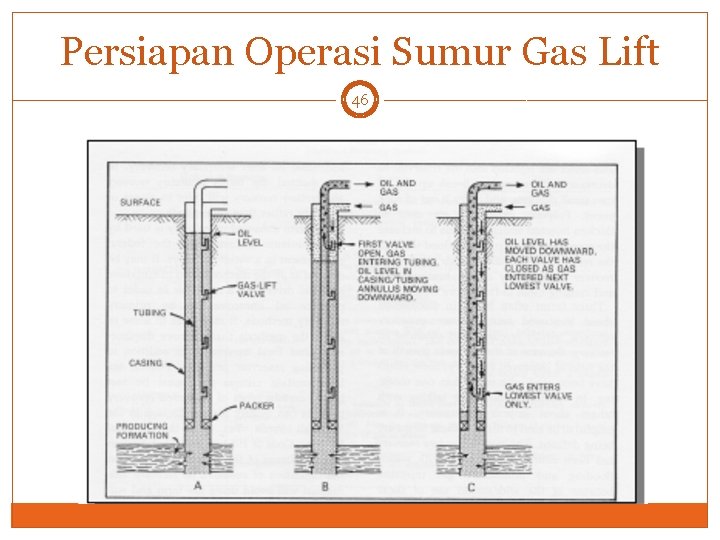
Persiapan Operasi Sumur Gas Lift 46
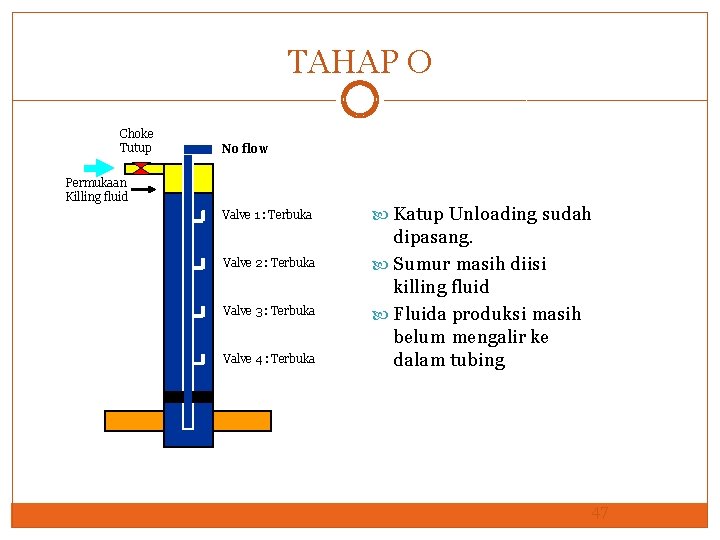
TAHAP O Choke Tutup No flow Permukaan Killing fluid Valve 1 : Terbuka Valve 2 : Terbuka Valve 3 : Terbuka Valve 4 : Terbuka Katup Unloading sudah dipasang. Sumur masih diisi killing fluid Fluida produksi masih belum mengalir ke dalam tubing 47
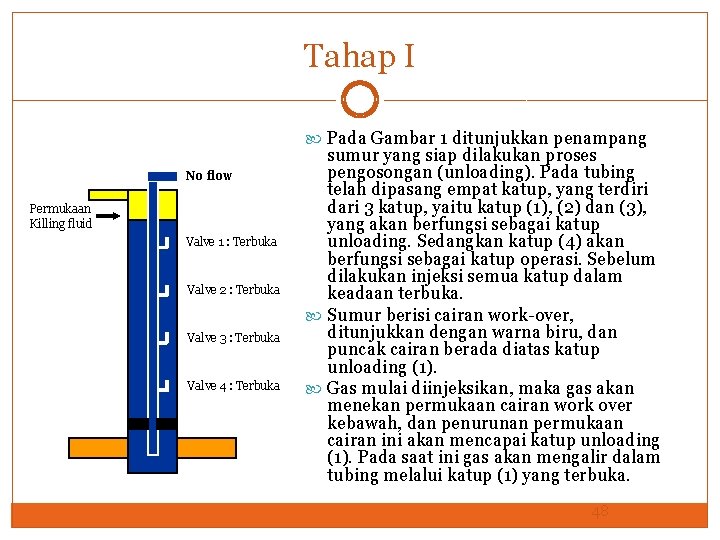
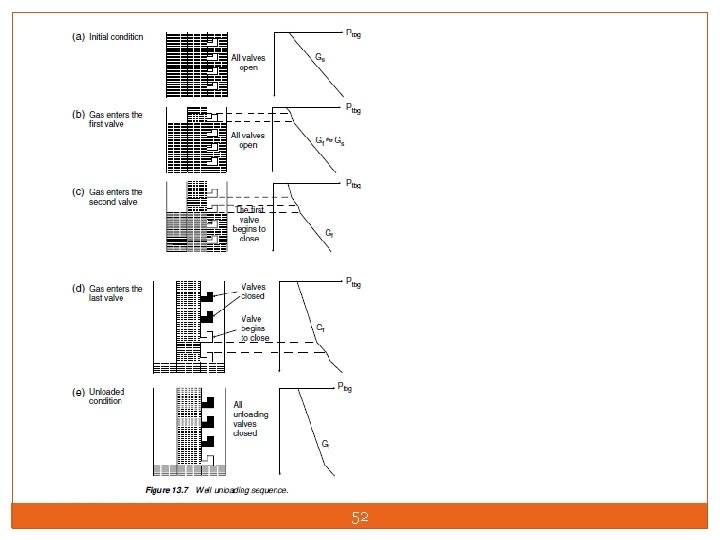
Tahap I Pada Gambar 1 ditunjukkan penampang No flow Permukaan Killing fluid Valve 1 : Terbuka Valve 2 : Terbuka Valve 3 : Terbuka Valve 4 : Terbuka sumur yang siap dilakukan proses pengosongan (unloading). Pada tubing telah dipasang empat katup, yang terdiri dari 3 katup, yaitu katup (1), (2) dan (3), yang akan berfungsi sebagai katup unloading. Sedangkan katup (4) akan berfungsi sebagai katup operasi. Sebelum dilakukan injeksi semua katup dalam keadaan terbuka. Sumur berisi cairan work-over, ditunjukkan dengan warna biru, dan puncak cairan berada diatas katup unloading (1). Gas mulai diinjeksikan, maka gas akan menekan permukaan cairan work over kebawah, dan penurunan permukaan cairan ini akan mencapai katup unloading (1). Pada saat ini gas akan mengalir dalam tubing melalui katup (1) yang terbuka. 48
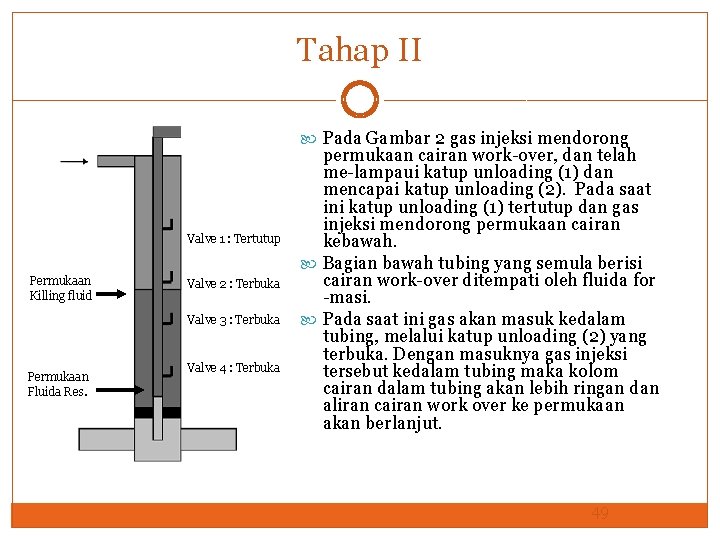
Tahap II Pada Gambar 2 gas injeksi mendorong Valve 1 : Tertutup Permukaan Killing fluid Valve 2 : Terbuka Valve 3 : Terbuka Permukaan Fluida Res. Valve 4 : Terbuka permukaan cairan work-over, dan telah me-lampaui katup unloading (1) dan mencapai katup unloading (2). Pada saat ini katup unloading (1) tertutup dan gas injeksi mendorong permukaan cairan kebawah. Bagian bawah tubing yang semula berisi cairan work-over ditempati oleh fluida for -masi. Pada saat ini gas akan masuk kedalam tubing, melalui katup unloading (2) yang terbuka. Dengan masuknya gas injeksi tersebut kedalam tubing maka kolom cairan dalam tubing akan lebih ringan dan aliran cairan work over ke permukaan akan berlanjut. 49
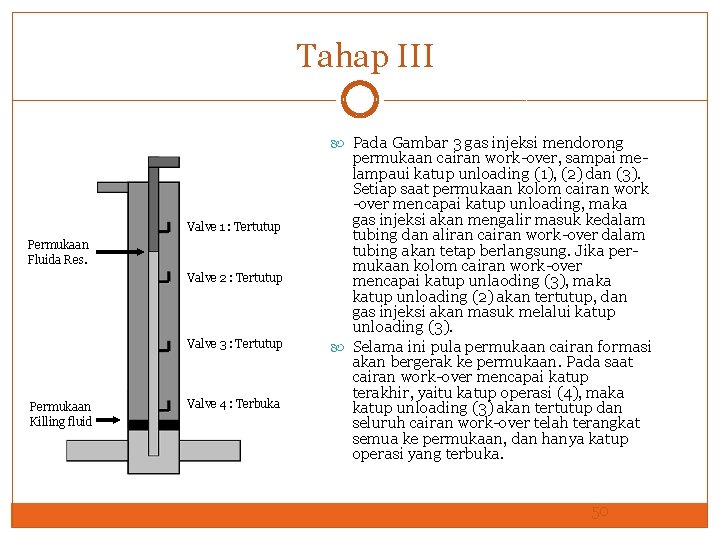
Tahap III Pada Gambar 3 gas injeksi mendorong Valve 1 : Tertutup Permukaan Fluida Res. Valve 2 : Tertutup Valve 3 : Tertutup Permukaan Killing fluid Valve 4 : Terbuka permukaan cairan work-over, sampai melampaui katup unloading (1), (2) dan (3). Setiap saat permukaan kolom cairan work -over mencapai katup unloading, maka gas injeksi akan mengalir masuk kedalam tubing dan aliran cairan work-over dalam tubing akan tetap berlangsung. Jika permukaan kolom cairan work-over mencapai katup unlaoding (3), maka katup unloading (2) akan tertutup, dan gas injeksi akan masuk melalui katup unloading (3). Selama ini pula permukaan cairan formasi akan bergerak ke permukaan. Pada saat cairan work-over mencapai katup terakhir, yaitu katup operasi (4), maka katup unloading (3) akan tertutup dan seluruh cairan work-over telah terangkat semua ke permukaan, dan hanya katup operasi yang terbuka. 50
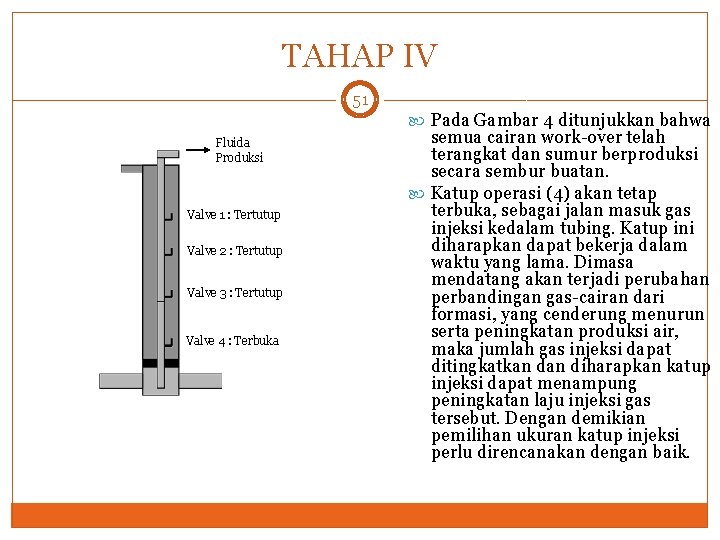
TAHAP IV 51 Pada Gambar 4 ditunjukkan bahwa Fluida Produksi Valve 1 : Tertutup Valve 2 : Tertutup Valve 3 : Tertutup Valve 4 : Terbuka semua cairan work-over telah terangkat dan sumur berproduksi secara sembur buatan. Katup operasi (4) akan tetap terbuka, sebagai jalan masuk gas injeksi kedalam tubing. Katup ini diharapkan dapat bekerja dalam waktu yang lama. Dimasa mendatang akan terjadi perubahan perbandingan gas-cairan dari formasi, yang cenderung menurun serta peningkatan produksi air, maka jumlah gas injeksi dapat ditingkatkan diharapkan katup injeksi dapat menampung peningkatan laju injeksi gas tersebut. Dengan demikian pemilihan ukuran katup injeksi perlu direncanakan dengan baik.
52
Unloading Valves Design 53 GAS LIFT VALVE MECHANICS
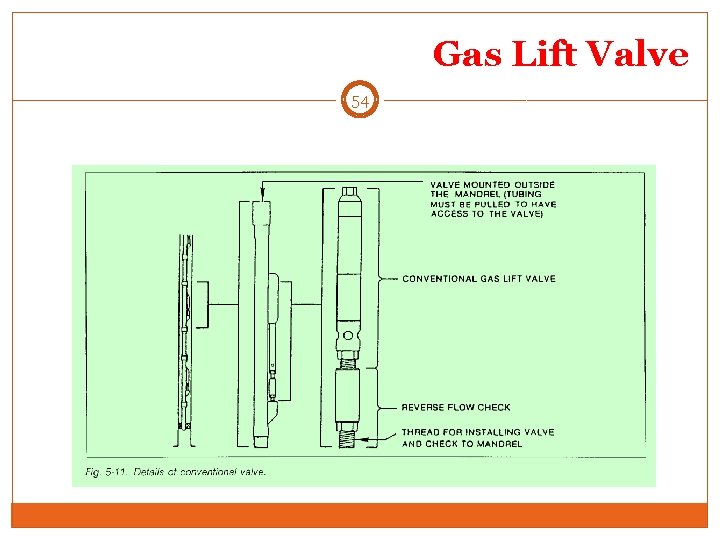
Gas Lift Valve 54
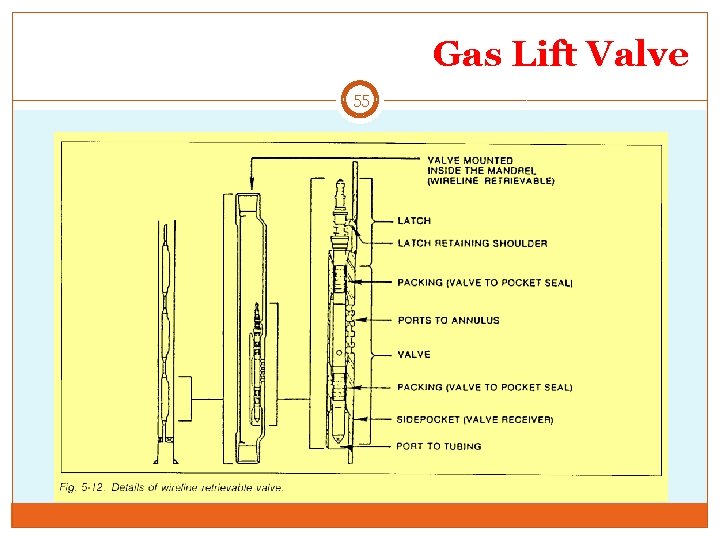
Gas Lift Valve 55
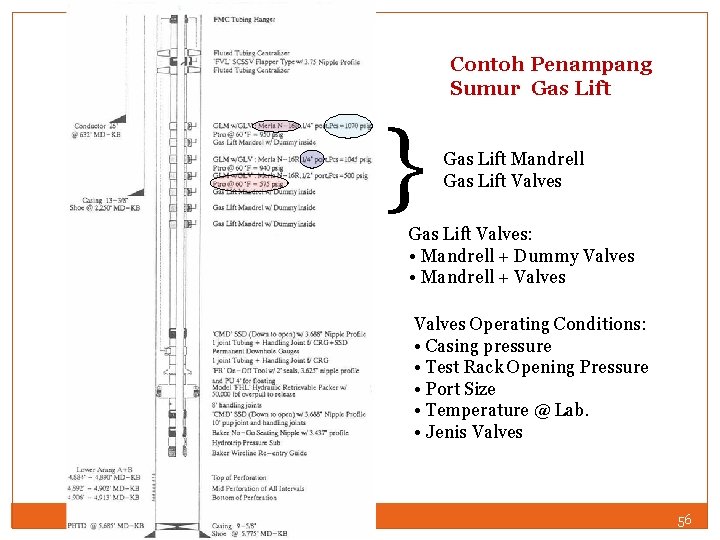
Contoh Penampang Sumur Gas Lift } Gas Lift Mandrell Gas Lift Valves: • Mandrell + Dummy Valves • Mandrell + Valves Operating Conditions: • Casing pressure • Test Rack Opening Pressure • Port Size • Temperature @ Lab. • Jenis Valves 56
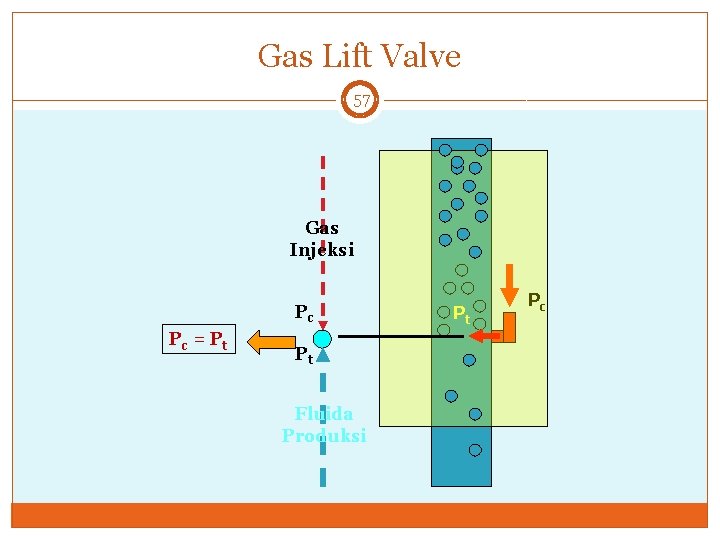
Gas Lift Valve 57 Gas Injeksi Pc Pc = P t Pt Fluida Produksi Pt Pc
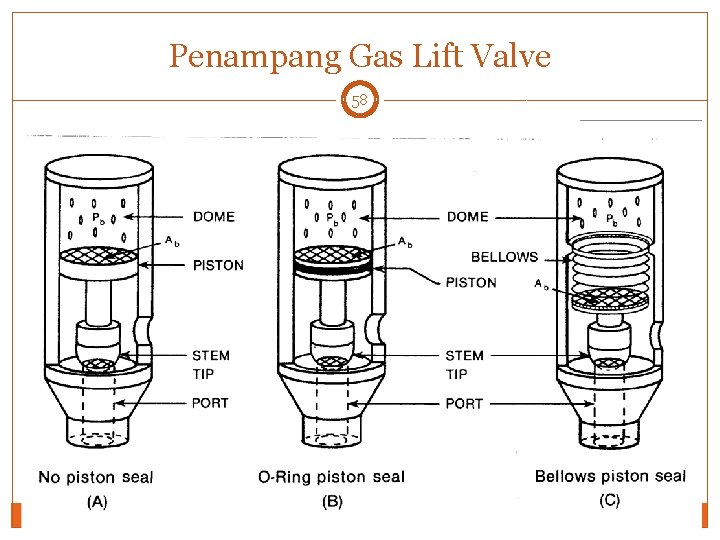
Penampang Gas Lift Valve 58
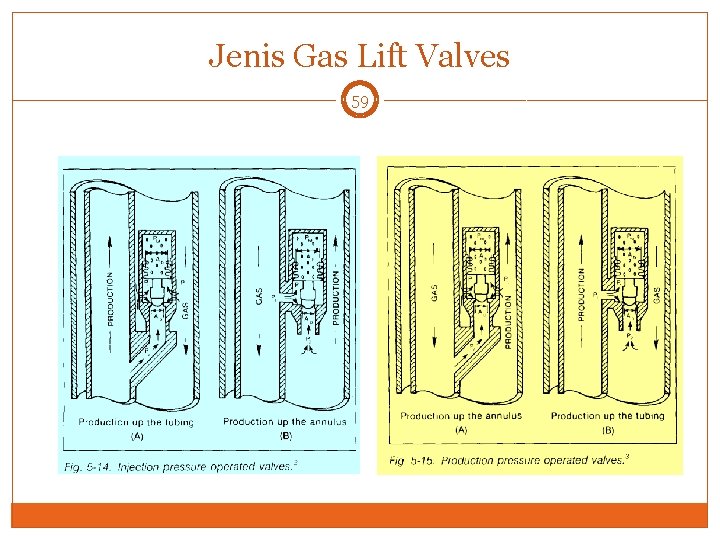
Jenis Gas Lift Valves 59
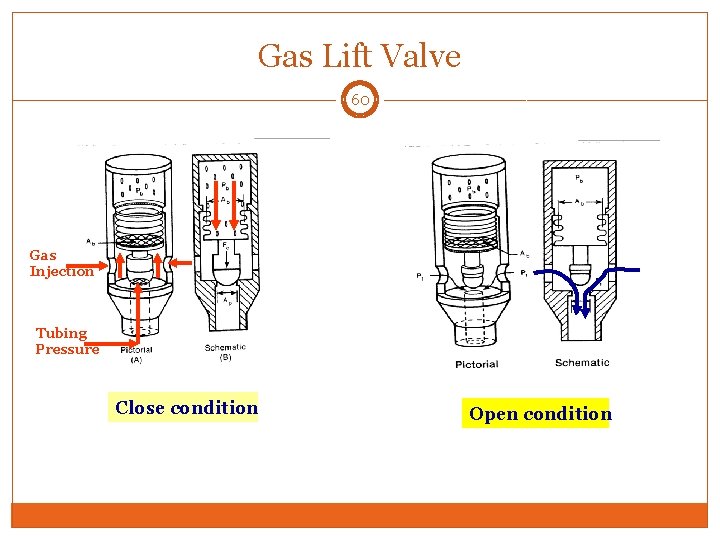
Gas Lift Valve 60 Gas Injection Tubing Pressure Close condition Open condition
Valve Mechanics 61 MEKANIKA VALVE CLOSING & OPENING PRESSURE
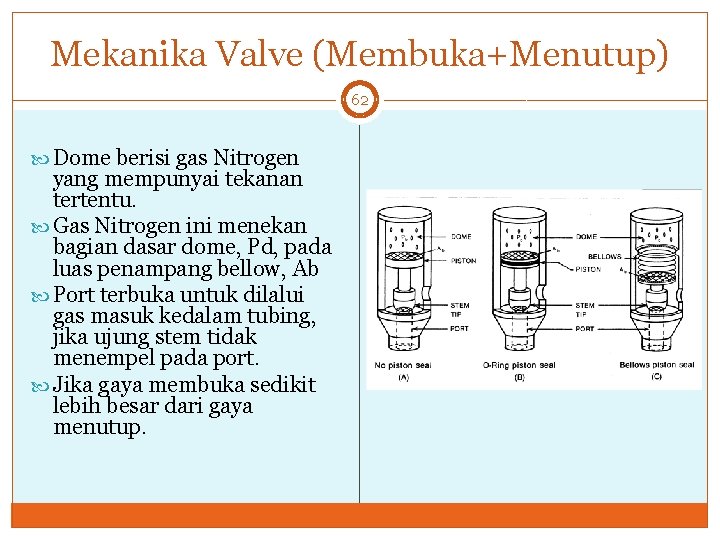
Mekanika Valve (Membuka+Menutup) 62 Dome berisi gas Nitrogen yang mempunyai tekanan tertentu. Gas Nitrogen ini menekan bagian dasar dome, Pd, pada luas penampang bellow, Ab Port terbuka untuk dilalui gas masuk kedalam tubing, jika ujung stem tidak menempel pada port. Jika gaya membuka sedikit lebih besar dari gaya menutup.
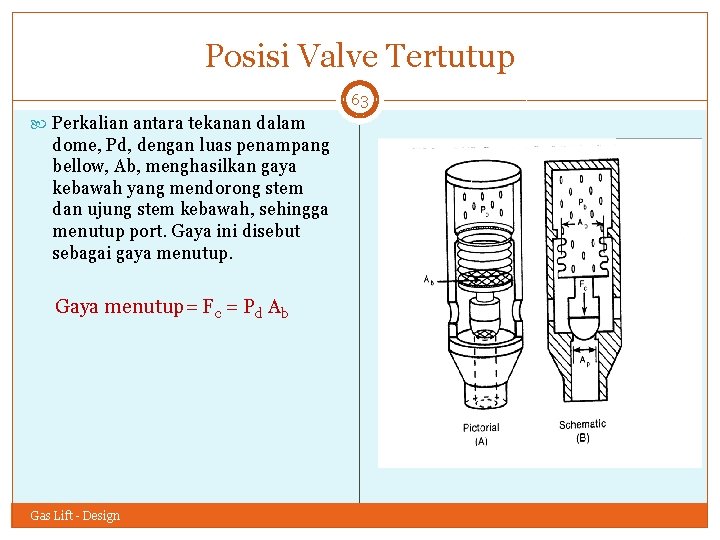
Posisi Valve Tertutup 63 Perkalian antara tekanan dalam dome, Pd, dengan luas penampang bellow, Ab, menghasilkan gaya kebawah yang mendorong stem dan ujung stem kebawah, sehingga menutup port. Gaya ini disebut sebagai gaya menutup. Gaya menutup= Fc = Pd Ab Gas Lift - Design
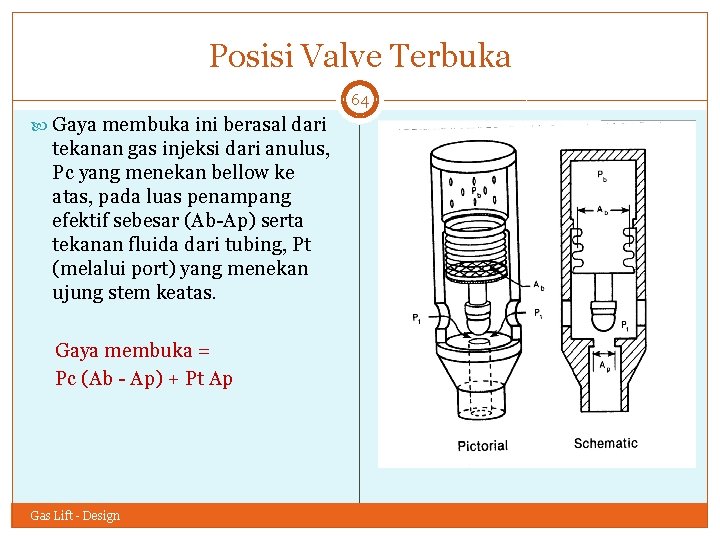
Posisi Valve Terbuka 64 Gaya membuka ini berasal dari tekanan gas injeksi dari anulus, Pc yang menekan bellow ke atas, pada luas penampang efektif sebesar (Ab-Ap) serta tekanan fluida dari tubing, Pt (melalui port) yang menekan ujung stem keatas. Gaya membuka = Pc (Ab - Ap) + Pt Ap Gas Lift - Design
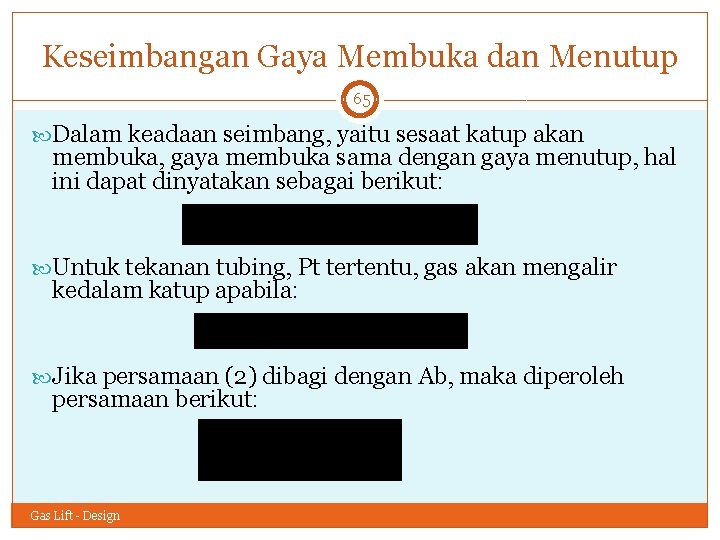
Keseimbangan Gaya Membuka dan Menutup 65 Dalam keadaan seimbang, yaitu sesaat katup akan membuka, gaya membuka sama dengan gaya menutup, hal ini dapat dinyatakan sebagai berikut: Untuk tekanan tubing, Pt tertentu, gas akan mengalir kedalam katup apabila: Jika persamaan (2) dibagi dengan Ab, maka diperoleh persamaan berikut: Gas Lift - Design
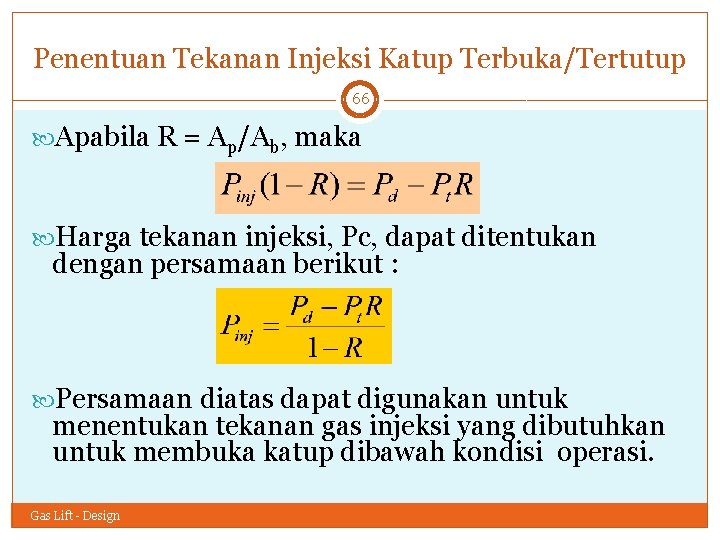
Penentuan Tekanan Injeksi Katup Terbuka/Tertutup 66 Apabila R = Ap/Ab, maka Harga tekanan injeksi, Pc, dapat ditentukan dengan persamaan berikut : Persamaan diatas dapat digunakan untuk menentukan tekanan gas injeksi yang dibutuhkan untuk membuka katup dibawah kondisi operasi. Gas Lift - Design
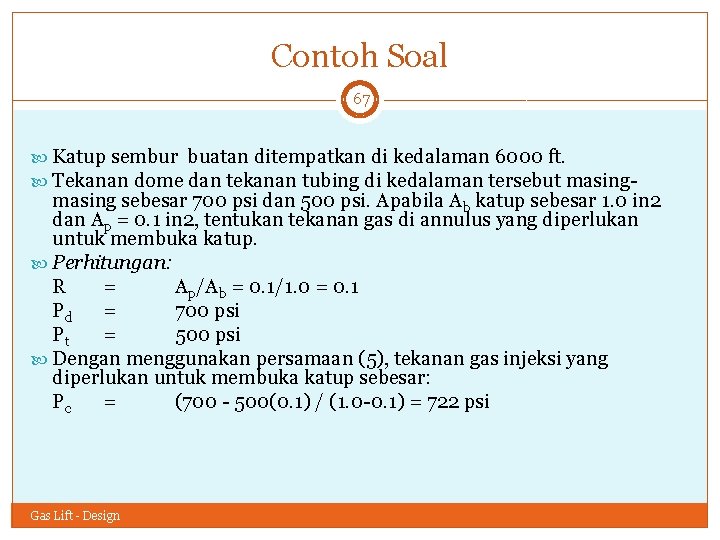
Contoh Soal 67 Katup sembur buatan ditempatkan di kedalaman 6000 ft. Tekanan dome dan tekanan tubing di kedalaman tersebut masing- masing sebesar 700 psi dan 500 psi. Apabila Ab katup sebesar 1. 0 in 2 dan Ap = 0. 1 in 2, tentukan tekanan gas di annulus yang diperlukan untuk membuka katup. Perhitungan: R = Ap/Ab = 0. 1/1. 0 = 0. 1 Pd = 700 psi Pt = 500 psi Dengan menggunakan persamaan (5), tekanan gas injeksi yang diperlukan untuk membuka katup sebesar: Pc = (700 - 500(0. 1) / (1. 0 -0. 1) = 722 psi Gas Lift - Design
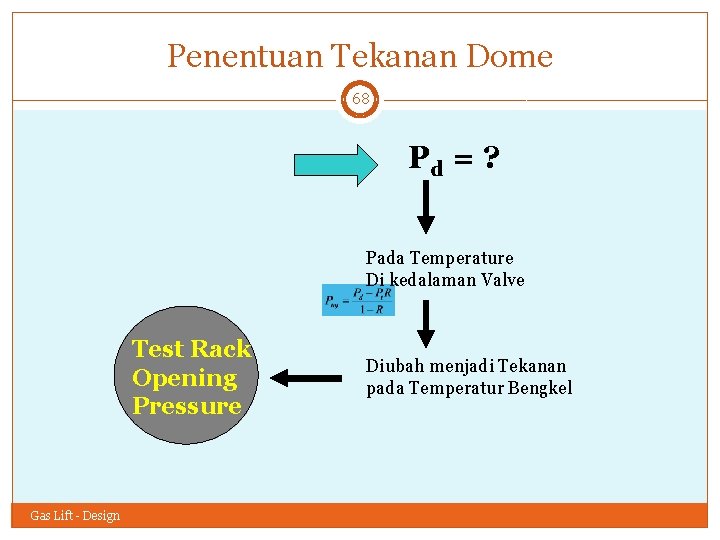
Penentuan Tekanan Dome 68 Pd = ? Pada Temperature Di kedalaman Valve Test Rack Opening Pressure Gas Lift - Design Diubah menjadi Tekanan pada Temperatur Bengkel
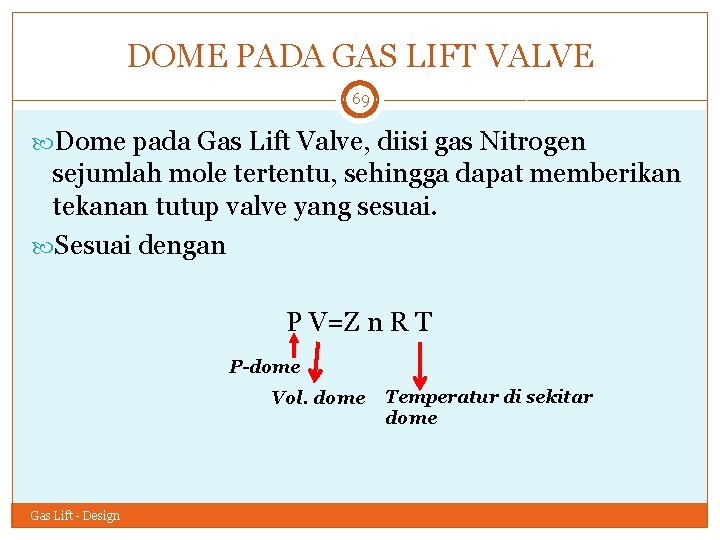
DOME PADA GAS LIFT VALVE 69 Dome pada Gas Lift Valve, diisi gas Nitrogen sejumlah mole tertentu, sehingga dapat memberikan tekanan tutup valve yang sesuai. Sesuai dengan P V=Z n R T P-dome Vol. dome Gas Lift - Design Temperatur di sekitar dome
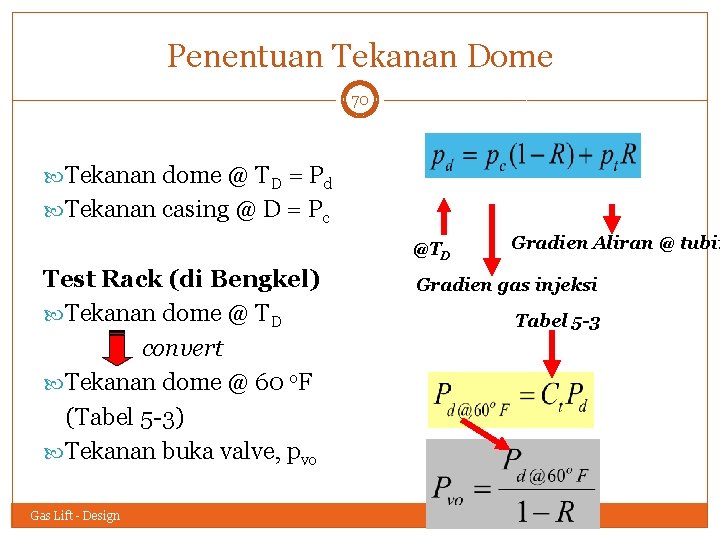
Penentuan Tekanan Dome 70 Tekanan dome @ TD = Pd Tekanan casing @ D = Pc @TD Test Rack (di Bengkel) Tekanan dome @ TD convert Tekanan dome @ 60 o. F (Tabel 5 -3) Tekanan buka valve, pvo Gas Lift - Design Gradien Aliran @ tubin Gradien gas injeksi Tabel 5 -3
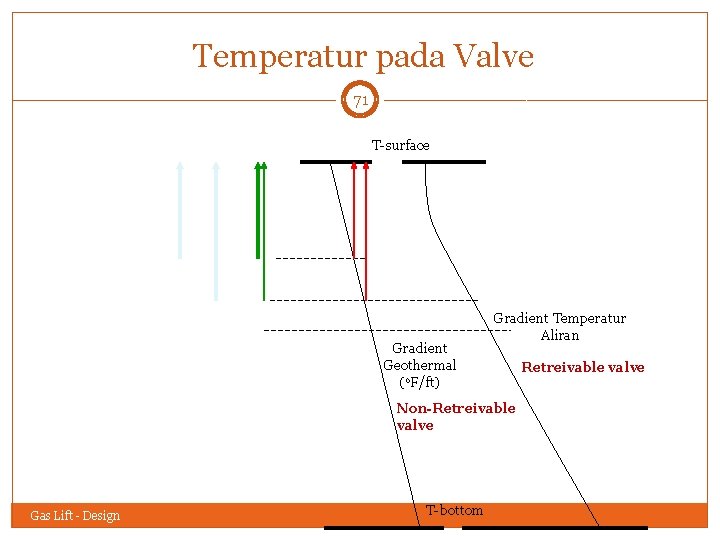
Temperatur pada Valve 71 T-surface Gradient Geothermal (o. F/ft) Gradient Temperatur Aliran Non-Retreivable valve Gas Lift - Design T-bottom Retreivable valve
Penentuan Opening/Closing Pressure di Bengkel 72
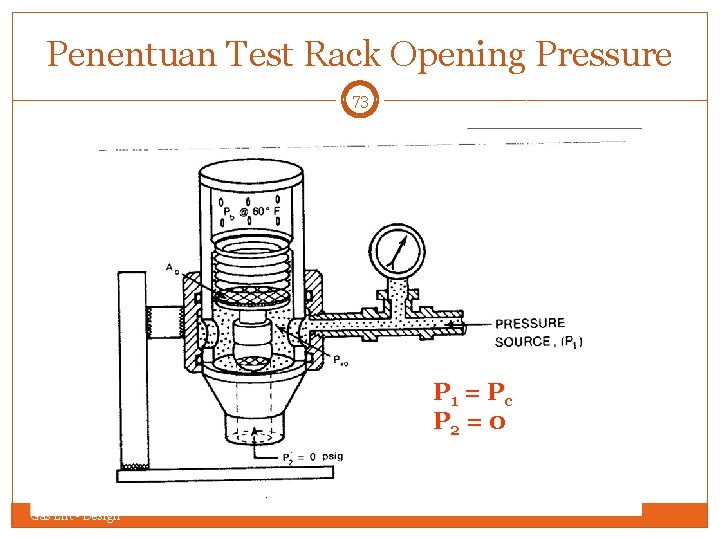
Penentuan Test Rack Opening Pressure 73 P 1 = P c P 2 = 0 Gas Lift - Design
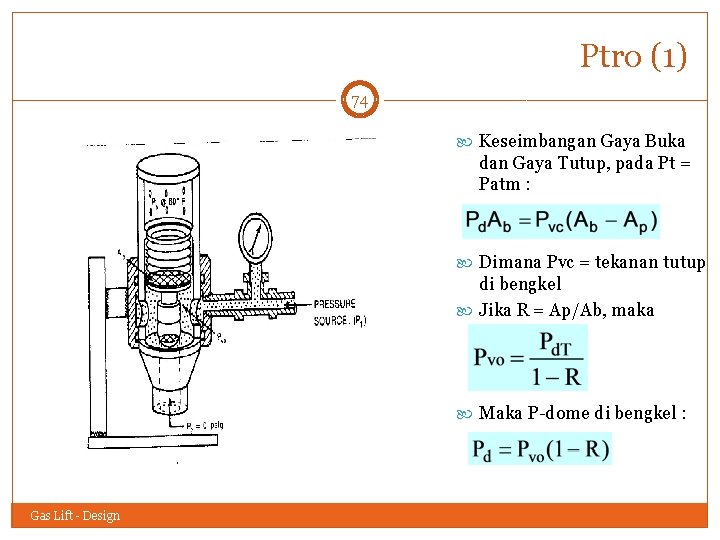
Ptro (1) 74 Keseimbangan Gaya Buka dan Gaya Tutup, pada Pt = Patm : Dimana Pvc = tekanan tutup di bengkel Jika R = Ap/Ab, maka Maka P-dome di bengkel : Gas Lift - Design
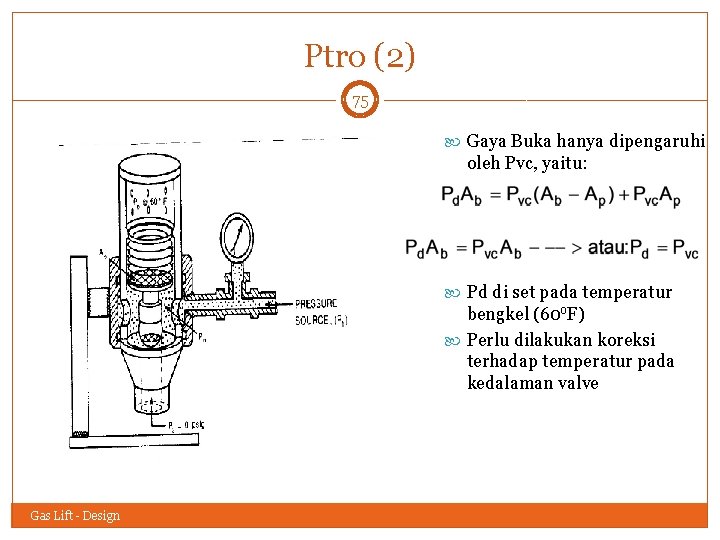
Ptro (2) 75 Gaya Buka hanya dipengaruhi oleh Pvc, yaitu: Pd di set pada temperatur bengkel (60 o. F) Perlu dilakukan koreksi terhadap temperatur pada kedalaman valve Gas Lift - Design
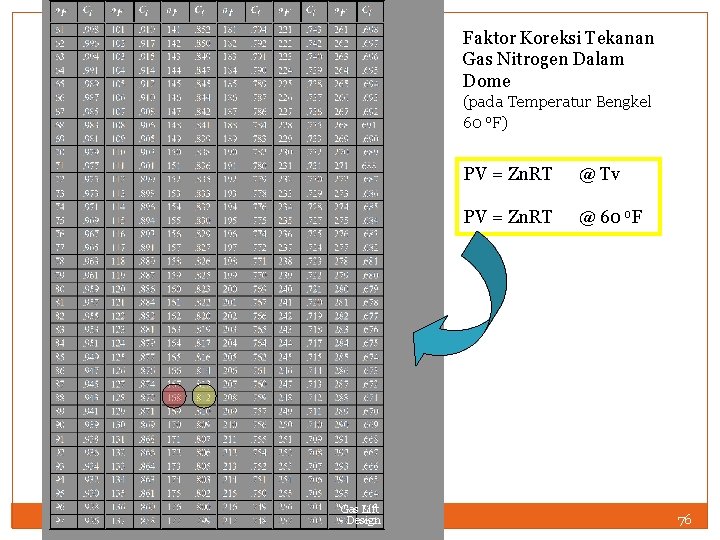
Faktor Koreksi Tekanan Gas Nitrogen Dalam Dome (pada Temperatur Bengkel 60 o. F) Gas Lift - Design PV = Zn. RT @ Tv PV = Zn. RT @ 60 o. F 76
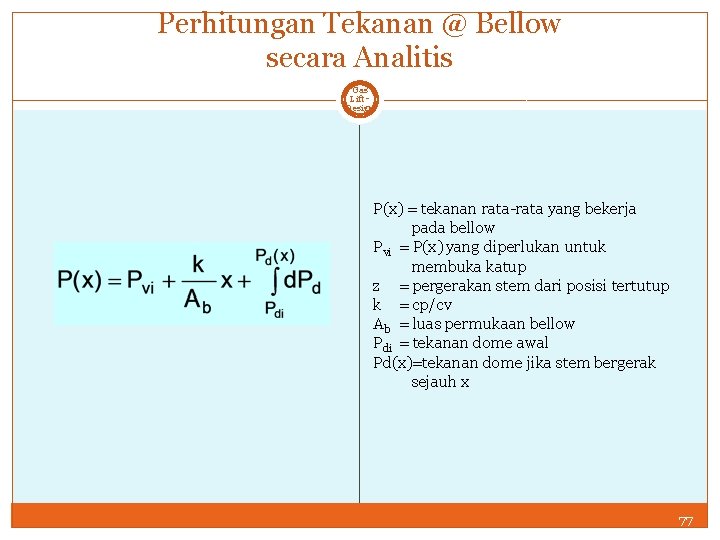
Perhitungan Tekanan @ Bellow secara Analitis Gas Lift Design P(x) = tekanan rata-rata yang bekerja pada bellow Pvi = P(x) yang diperlukan untuk membuka katup z = pergerakan stem dari posisi tertutup k = cp/cv Ab = luas permukaan bellow Pdi = tekanan dome awal Pd(x)=tekanan dome jika stem bergerak sejauh x 77
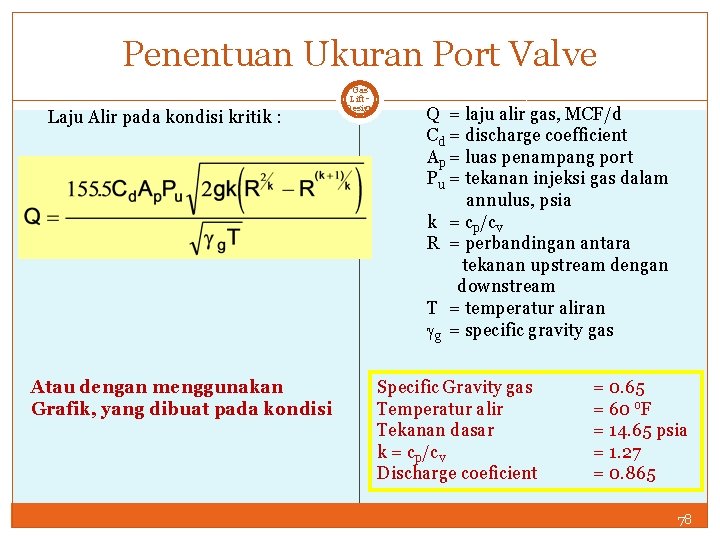
Penentuan Ukuran Port Valve Laju Alir pada kondisi kritik : Atau dengan menggunakan Grafik, yang dibuat pada kondisi Gas Lift Design Q = laju alir gas, MCF/d Cd = discharge coefficient Ap = luas penampang port Pu = tekanan injeksi gas dalam annulus, psia k = cp/cv R = perbandingan antara tekanan upstream dengan downstream T = temperatur aliran gg = specific gravity gas Specific Gravity gas Temperatur alir Tekanan dasar k = cp/cv Discharge coeficient = 0. 65 = 60 o. F = 14. 65 psia = 1. 27 = 0. 865 78
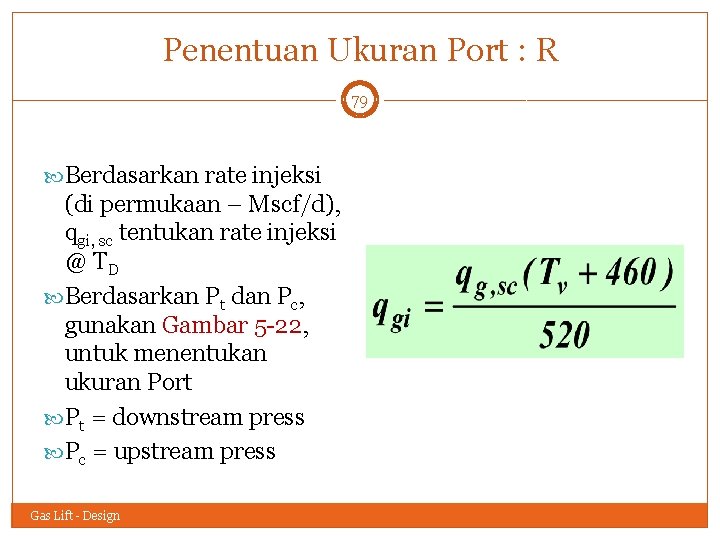
Penentuan Ukuran Port : R 79 Berdasarkan rate injeksi (di permukaan – Mscf/d), qgi, sc tentukan rate injeksi @ TD Berdasarkan Pt dan Pc, gunakan Gambar 5 -22, untuk menentukan ukuran Port Pt = downstream press Pc = upstream press Gas Lift - Design
Unloading Valve Design 80 PENEMPATAN VALVE UNLOADING VALVE SPACING
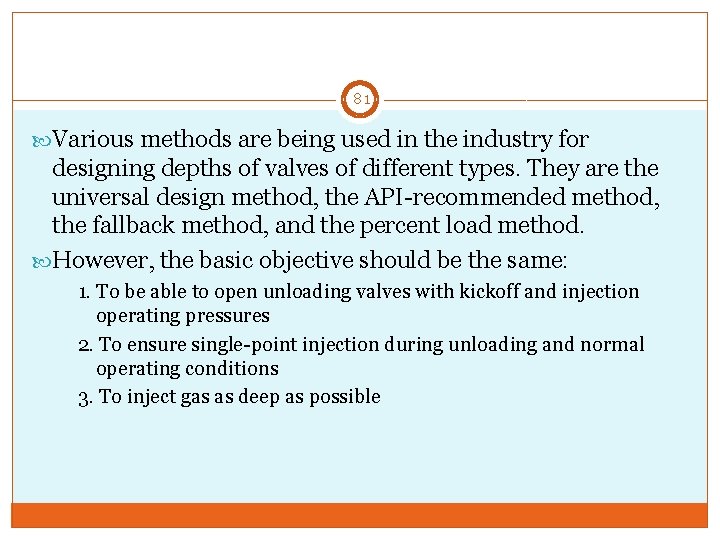
81 Various methods are being used in the industry for designing depths of valves of different types. They are the universal design method, the API-recommended method, the fallback method, and the percent load method. However, the basic objective should be the same: 1. To be able to open unloading valves with kickoff and injection operating pressures 2. To ensure single-point injection during unloading and normal operating conditions 3. To inject gas as deep as possible
82 No matter which method is used, the following principles apply: The design tubing pressure at valve depth is between gas injection pressure (loaded condition) and the minimum tubing pressure (fully unloaded condition). Depth of the first valve is designed on the basis of kickoff pressure from a special compressor for well kickoff operations. Depths of other valves are designed on the basis of injection operating pressure. Kickoff casing pressure margin, injection operating casing pressure margin, and tubing transfer pressure margin are used to consider the following effects: Pressure drop across the valve Tubing pressure effect of the upper valve Nonlinearity of the tubing flow gradient curve.
Test II : Kamis, 26 Februari 2009 83
84
85