
Artificial Intelligence Lecture 1 Course Overview and Motivation

![AI Machine Learning [learning decisions; sometimes independent] Robots [physically embodied] Rational Agents [decisions] Human-AI](https://slidetodoc.com/presentation_image_h2/0caff0a7da032b39b4c2d725875381e8/image-15.jpg "AI Machine Learning [learning decisions; sometimes independent] Robots [physically embodied] Rational Agents [decisions] Human-AI")
- Slides: 28
Artificial Intelligence Lecture 1: Course Overview and Motivation By: Nur Uddin, Ph. D 1
Lecturer • Name: Nur Uddin, Ph. D. • Email: nur. uddin 55571@gmail. com • Education: • Ph. D in Eng. Cybernetics, NTNU, Norway (April 2016) • M. Eng in Mechanical Eng. , GSNU, South Korea (Feb 2009) • B. Eng in Aeronautics Eng. , ITB, Indonesia (Mar 2002)
Survivability - Lecture 2 3
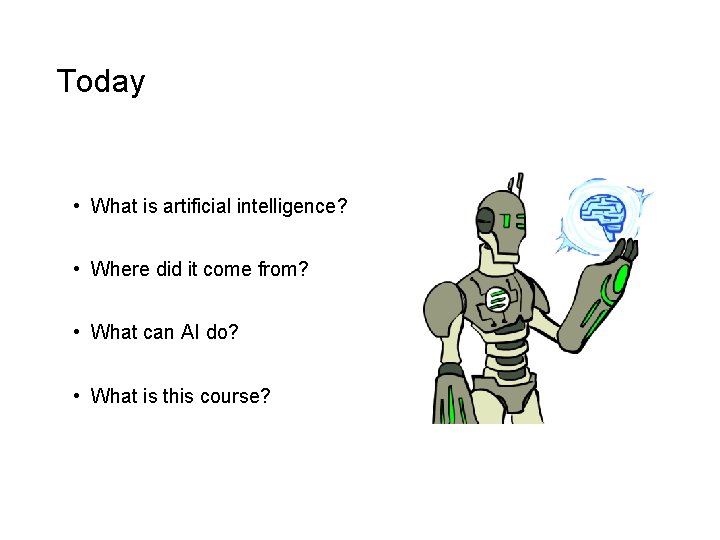
Today • What is artificial intelligence? • Where did it come from? • What can AI do? • What is this course?
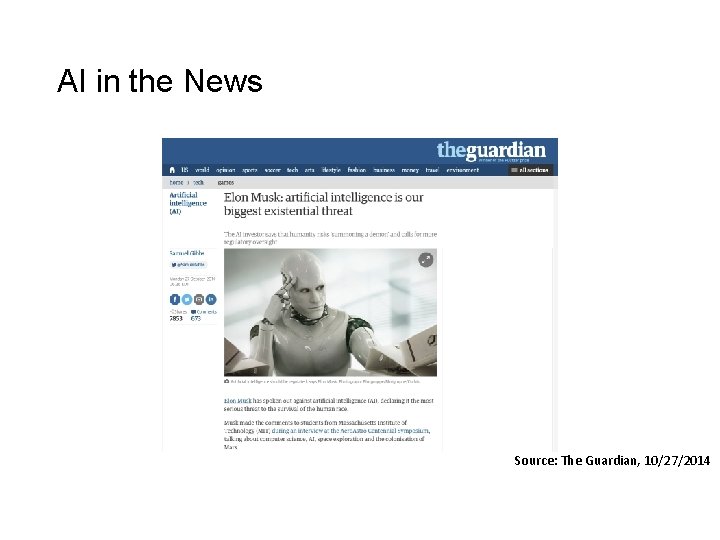
AI in the News Source: The Guardian, 10/27/2014
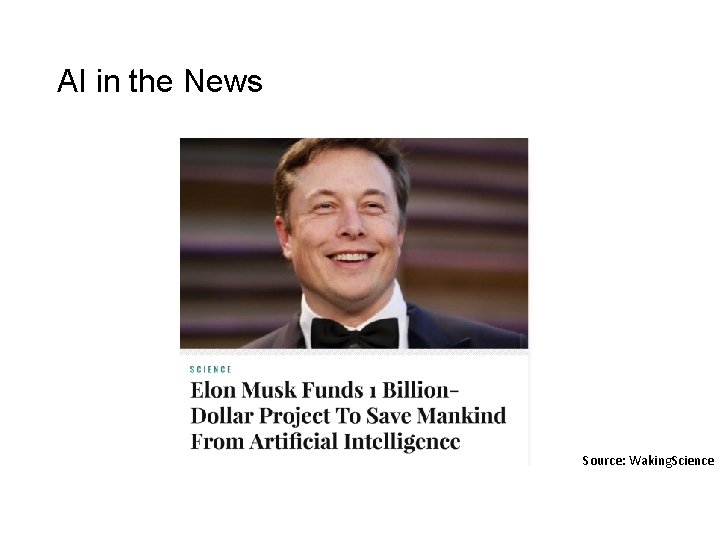
AI in the News Source: Waking. Science
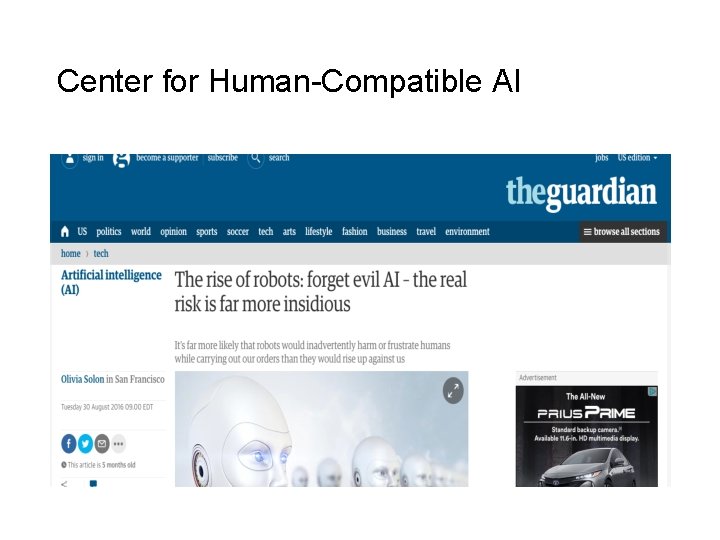
Center for Human-Compatible AI
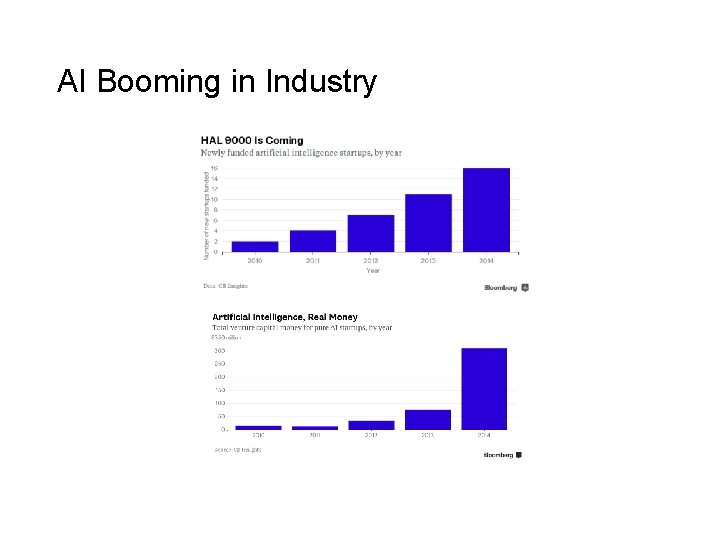
AI Booming in Industry
What is AI? The science of making machines that: Think like people Think rationally Act like people Act rationally
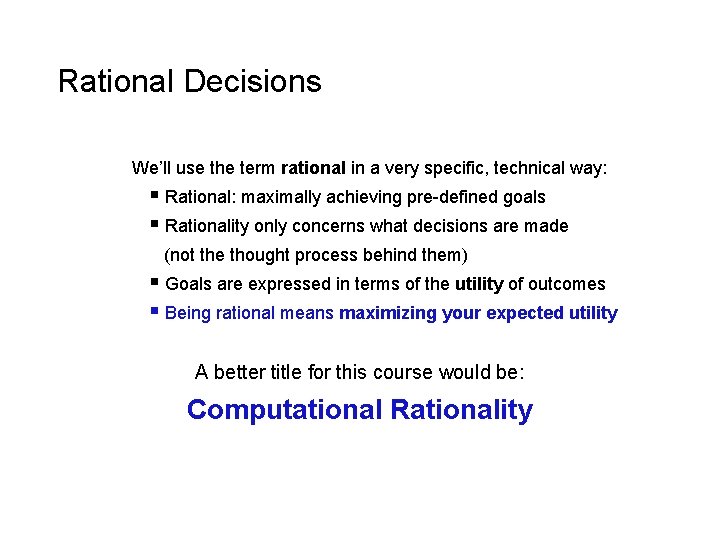
Rational Decisions We’ll use the term rational in a very specific, technical way: § Rational: maximally achieving pre-defined goals § Rationality only concerns what decisions are made (not the thought process behind them) § Goals are expressed in terms of the utility of outcomes § Being rational means maximizing your expected utility A better title for this course would be: Computational Rationality
Maximize Your Expected Utility
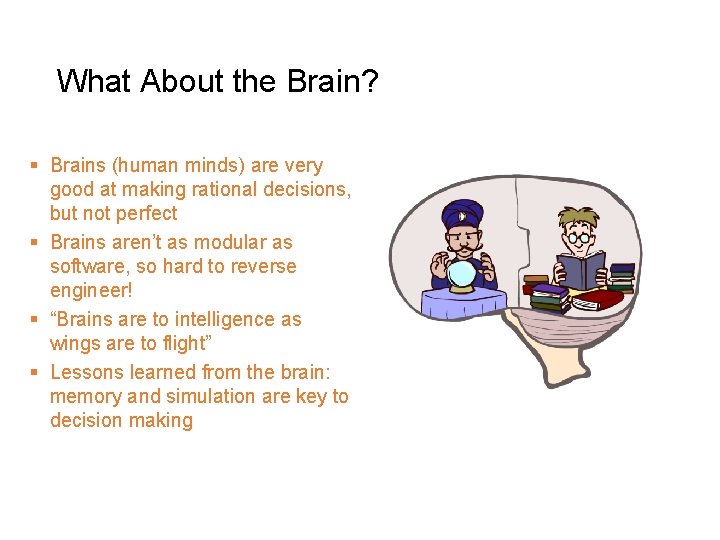
What About the Brain? § Brains (human minds) are very good at making rational decisions, but not perfect § Brains aren’t as modular as software, so hard to reverse engineer! § “Brains are to intelligence as wings are to flight” § Lessons learned from the brain: memory and simulation are key to decision making
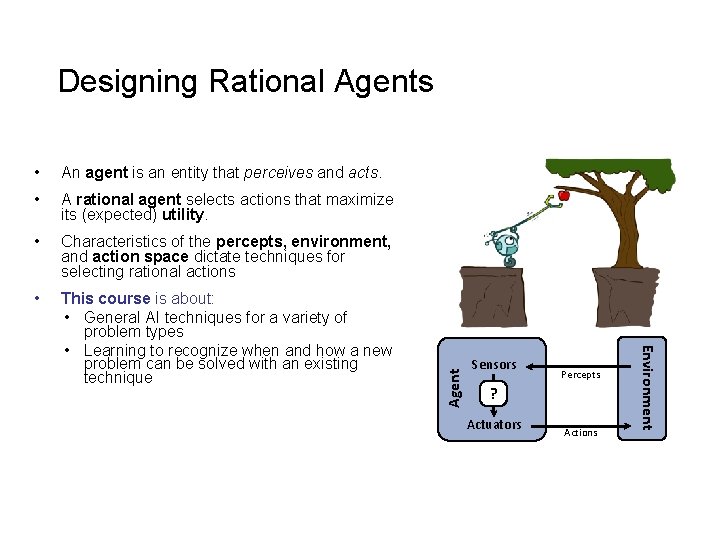
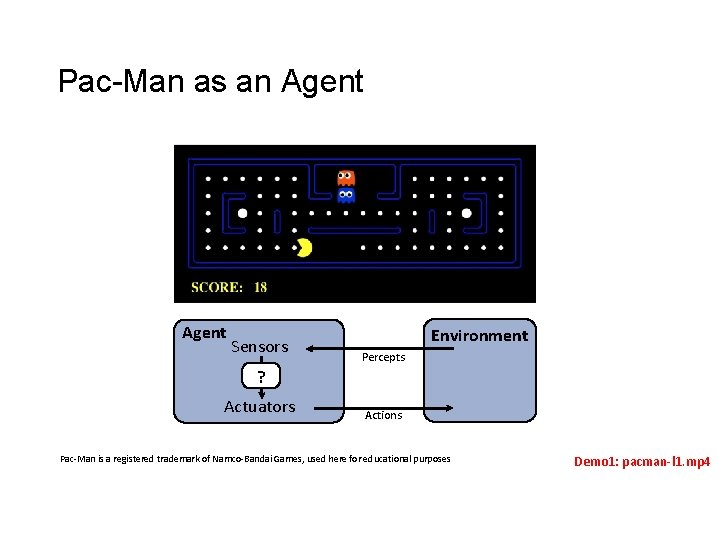
An agent is an entity that perceives and acts. • A rational agent selects actions that maximize its (expected) utility. • Characteristics of the percepts, environment, and action space dictate techniques for selecting rational actions • This course is about: • General AI techniques for a variety of problem types • Learning to recognize when and how a new problem can be solved with an existing technique Sensors Percepts ? Actuators Actions Environment • Agent Designing Rational Agents
Pac-Man as an Agent Sensors Environment Percepts ? Actuators Actions Pac-Man is a registered trademark of Namco-Bandai Games, used here for educational purposes Demo 1: pacman-l 1. mp 4
AI Machine Learning [learning decisions; sometimes independent] Robots [physically embodied] Rational Agents [decisions] Human-AI Interaction NLP Computer Vision
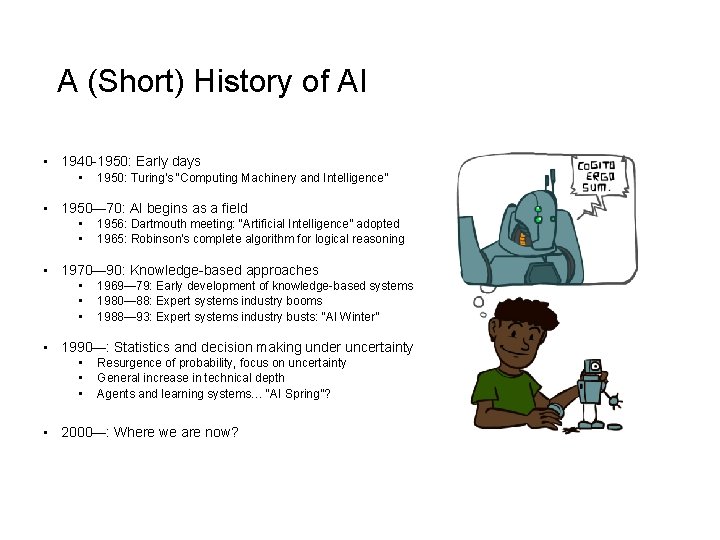
A (Short) History of AI • 1940 -1950: Early days • 1950: Turing's “Computing Machinery and Intelligence” • 1950— 70: AI begins as a field • • 1956: Dartmouth meeting: “Artificial Intelligence” adopted 1965: Robinson's complete algorithm for logical reasoning • 1970— 90: Knowledge-based approaches • • • 1969— 79: Early development of knowledge-based systems 1980— 88: Expert systems industry booms 1988— 93: Expert systems industry busts: “AI Winter” • 1990—: Statistics and decision making under uncertainty • • • Resurgence of probability, focus on uncertainty General increase in technical depth Agents and learning systems… “AI Spring”? • 2000—: Where we are now?
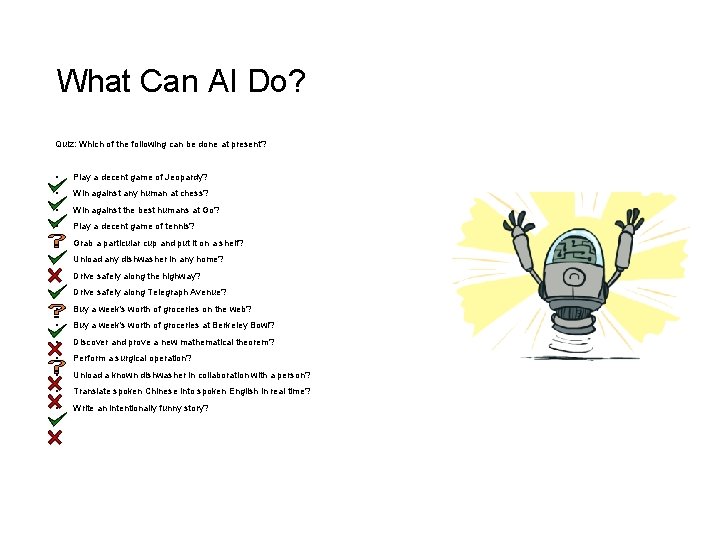
What Can AI Do? Quiz: Which of the following can be done at present? • Play a decent game of Jeopardy? • Win against any human at chess? • Win against the best humans at Go? • Play a decent game of tennis? • Grab a particular cup and put it on a shelf? • Unload any dishwasher in any home? • Drive safely along the highway? • Drive safely along Telegraph Avenue? • Buy a week's worth of groceries on the web? • Buy a week's worth of groceries at Berkeley Bowl? • Discover and prove a new mathematical theorem? • Perform a surgical operation? • Unload a known dishwasher in collaboration with a person? • Translate spoken Chinese into spoken English in real time? • Write an intentionally funny story?
Natural Language • Speech technologies (e. g. Siri) • Automatic speech recognition (ASR) • Text-to-speech synthesis (TTS) • Dialog systems • Language processing technologies • • Question answering Machine translation Web search Text classification, spam filtering, etc…
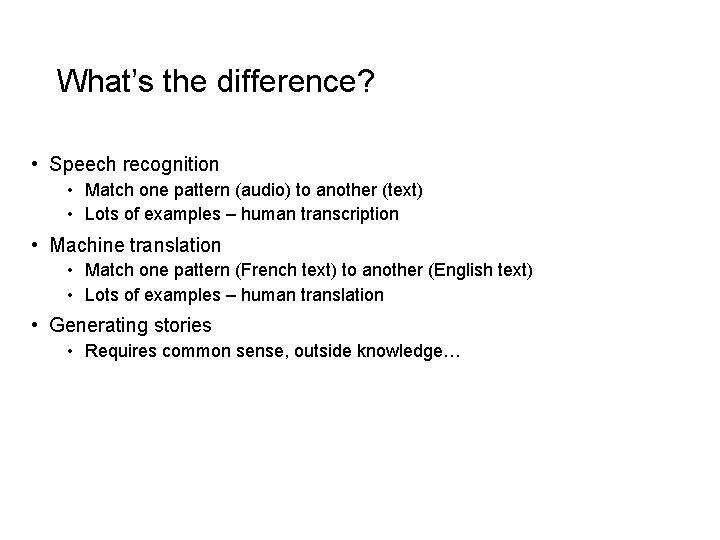
What’s the difference? • Speech recognition • Match one pattern (audio) to another (text) • Lots of examples – human transcription • Machine translation • Match one pattern (French text) to another (English text) • Lots of examples – human translation • Generating stories • Requires common sense, outside knowledge…
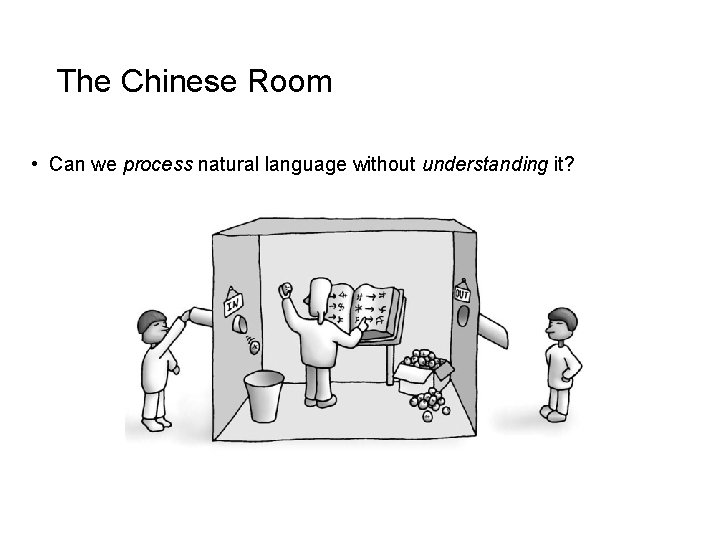
The Chinese Room • Can we process natural language without understanding it?
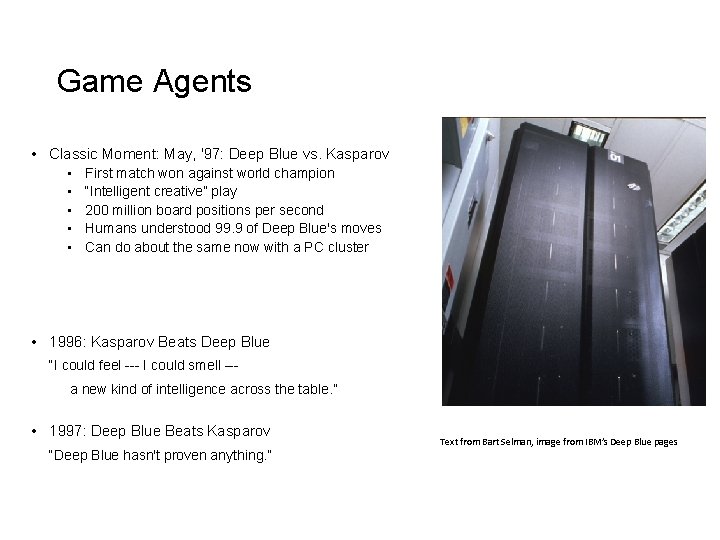
Game Agents • Classic Moment: May, '97: Deep Blue vs. Kasparov • • • First match won against world champion “Intelligent creative” play 200 million board positions per second Humans understood 99. 9 of Deep Blue's moves Can do about the same now with a PC cluster • 1996: Kasparov Beats Deep Blue “I could feel --- I could smell --a new kind of intelligence across the table. ” • 1997: Deep Blue Beats Kasparov “Deep Blue hasn't proven anything. ” Text from Bart Selman, image from IBM’s Deep Blue pages
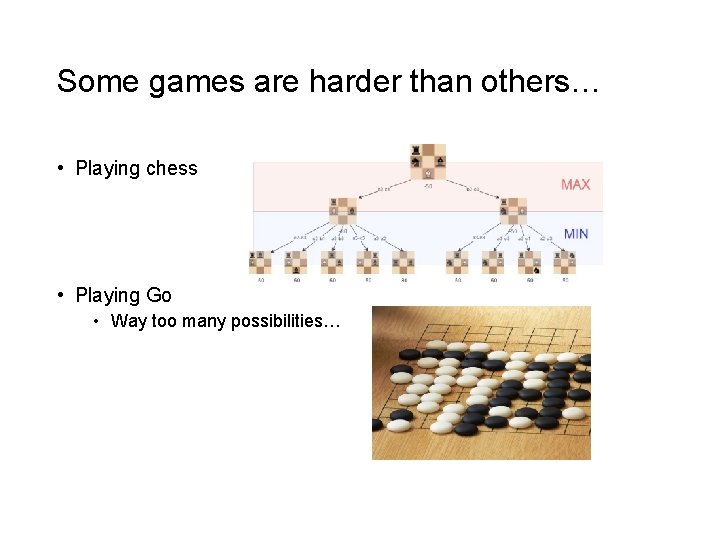
Some games are harder than others… • Playing chess • Playing Go • Way too many possibilities…
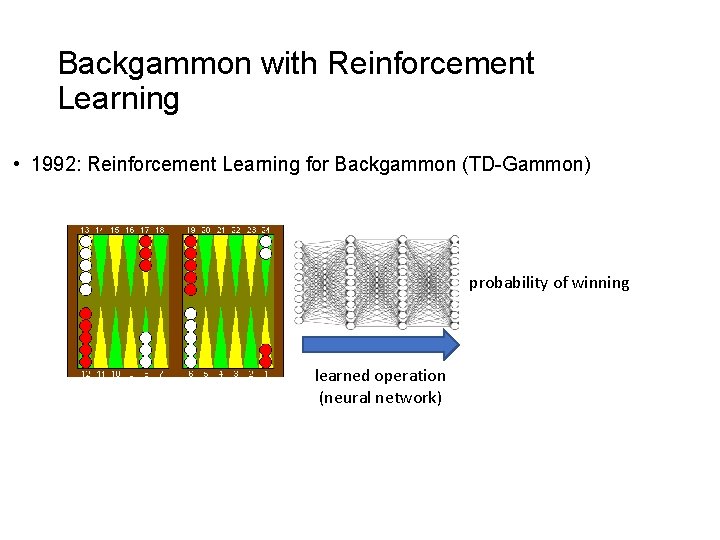
Backgammon with Reinforcement Learning • 1992: Reinforcement Learning for Backgammon (TD-Gammon) probability of winning learned operation (neural network)
What Makes Games Hard vs. Easy? • Games are a closed world • Rules are known • No prior knowledge or “common sense” is needed • Utility maximization (winning) is always the right thing • Games are competitive • Directly pits machine intelligence against human intelligence • Is this a level playing field?
Why is the real world harder? • The real world is open • • • Rules are unknown “Common sense” is important Uncertainty is pervasive Not always clear which utility to maximize Other agents (pesky humans) can ruin all your plans
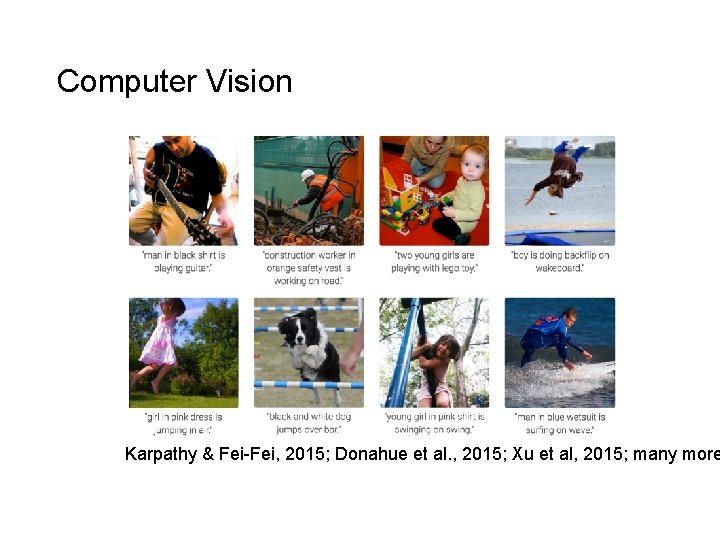
Computer Vision Karpathy & Fei-Fei, 2015; Donahue et al. , 2015; Xu et al, 2015; many more
What makes an AI problem easy or hard? • Rational behavior • Easy in closed worlds • Extremely hard in open worlds • Perception • Easy to match patterns • Extremely hard to understand meaning
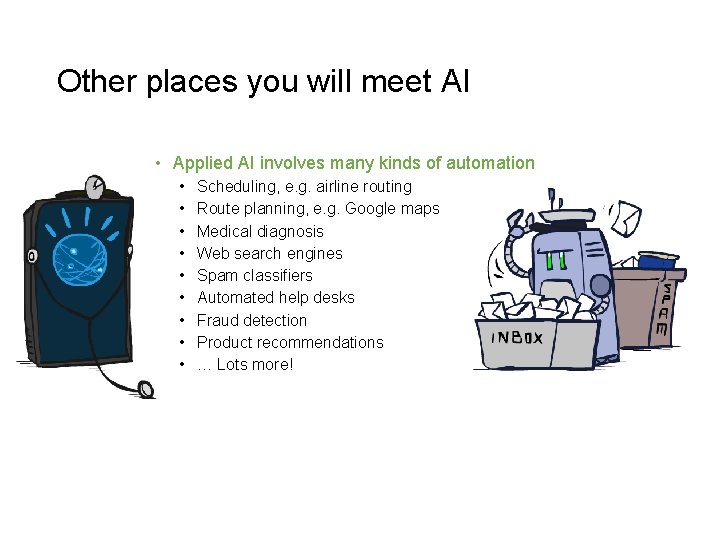
Other places you will meet AI • Applied AI involves many kinds of automation • • • Scheduling, e. g. airline routing Route planning, e. g. Google maps Medical diagnosis Web search engines Spam classifiers Automated help desks Fraud detection Product recommendations … Lots more!