
Artificial Intelligence Knowledge Representation Introduction Introduction Cont DataInformationKnowledgeWisdom
- Slides: 18
Artificial Intelligence Knowledge Representation
Introduction
Introduction Cont.
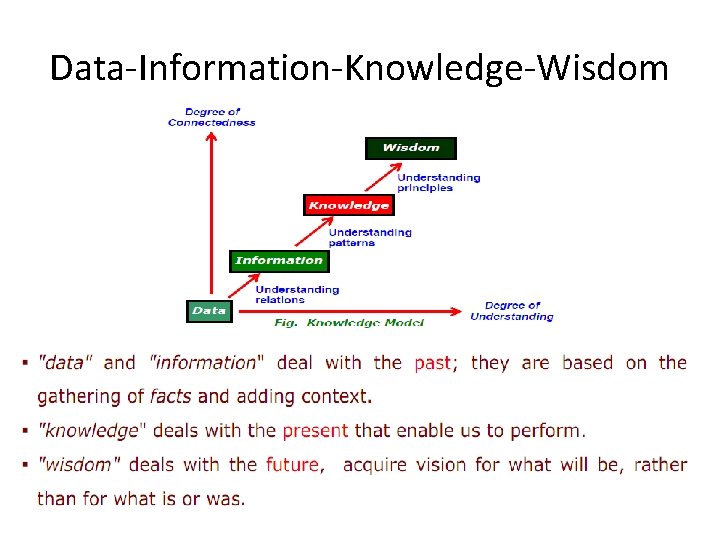
Data-Information-Knowledge-Wisdom
Data-Information-Knowledge-Wisdom
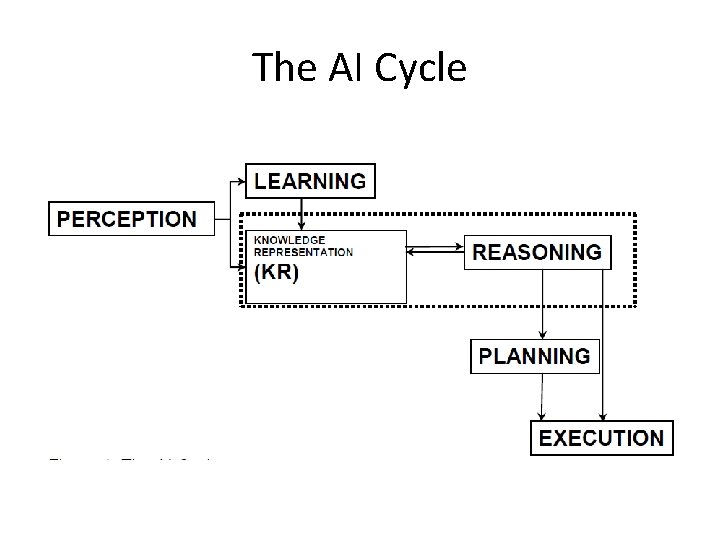
The AI Cycle
Knowledge and its types • Durkin refers to it as the “Understanding of a subject area”. There are different types of knowledge • Procedural knowledge • Declarative • Meta knowledge • Heuristic knowledge • Structural knowledge
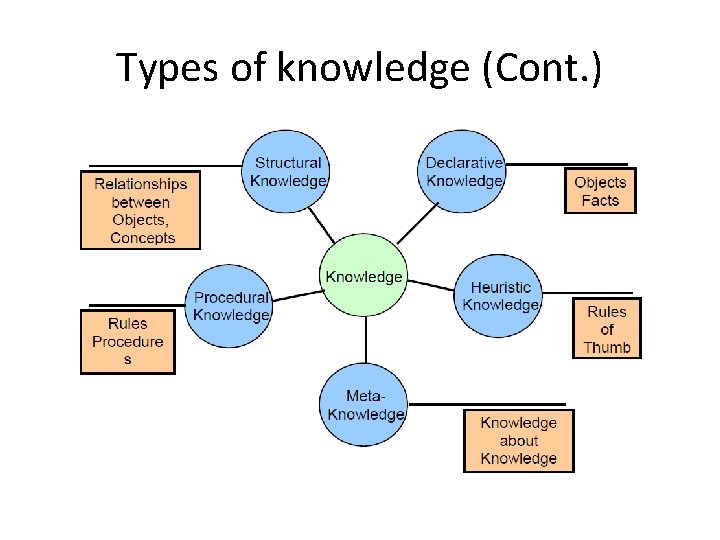
Types of knowledge (Cont. )
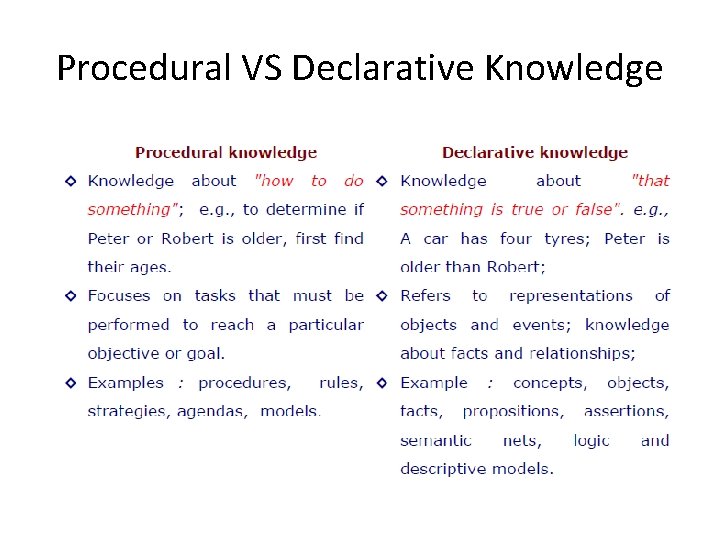
Procedural VS Declarative Knowledge
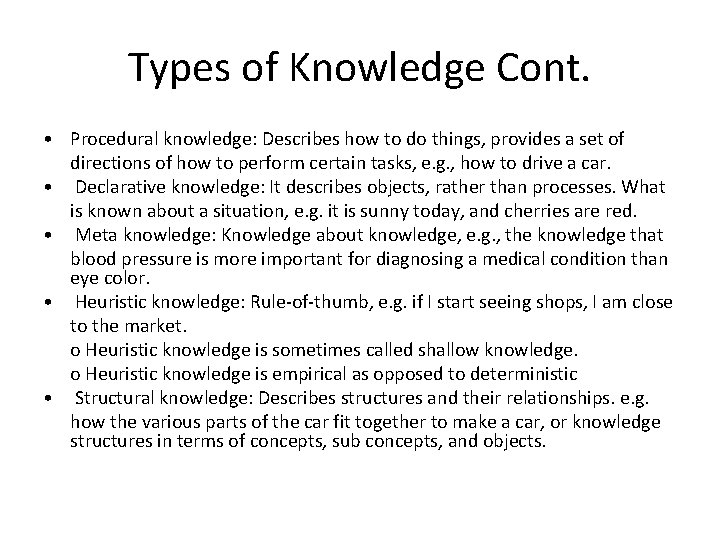
Types of Knowledge Cont. • Procedural knowledge: Describes how to do things, provides a set of directions of how to perform certain tasks, e. g. , how to drive a car. • Declarative knowledge: It describes objects, rather than processes. What is known about a situation, e. g. it is sunny today, and cherries are red. • Meta knowledge: Knowledge about knowledge, e. g. , the knowledge that blood pressure is more important for diagnosing a medical condition than eye color. • Heuristic knowledge: Rule-of-thumb, e. g. if I start seeing shops, I am close to the market. o Heuristic knowledge is sometimes called shallow knowledge. o Heuristic knowledge is empirical as opposed to deterministic • Structural knowledge: Describes structures and their relationships. e. g. how the various parts of the car fit together to make a car, or knowledge structures in terms of concepts, sub concepts, and objects.
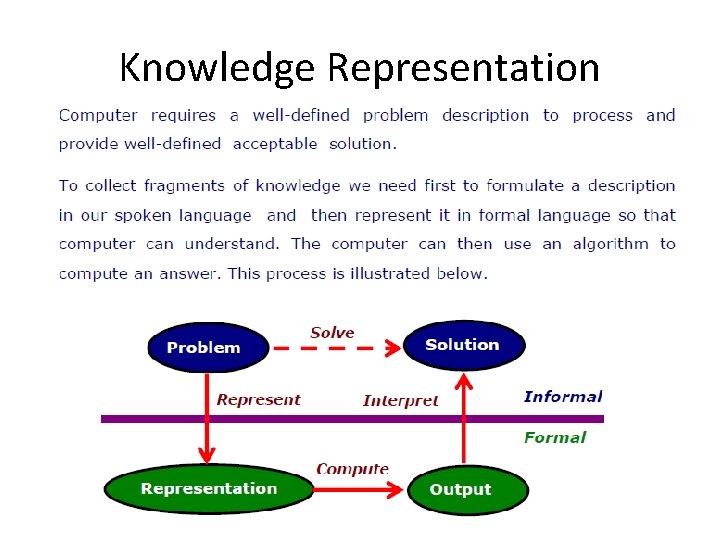
Knowledge Representation
Knowledge Representation • Pictures and symbols. This is how the earliest humans represented knowledge when sophisticated linguistic systems had not yet evolved • Graphs and Networks • Numbers • Descriptive
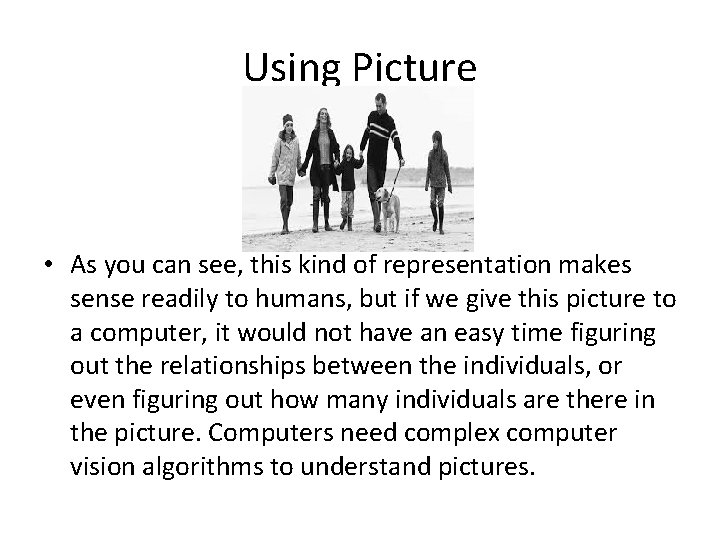
Using Picture • As you can see, this kind of representation makes sense readily to humans, but if we give this picture to a computer, it would not have an easy time figuring out the relationships between the individuals, or even figuring out how many individuals are there in the picture. Computers need complex computer vision algorithms to understand pictures.
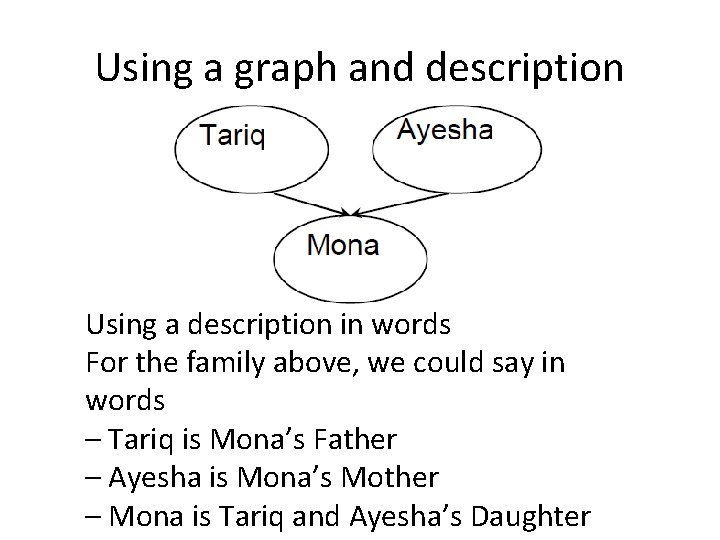
Using a graph and description Using a description in words For the family above, we could say in words – Tariq is Mona’s Father – Ayesha is Mona’s Mother – Mona is Tariq and Ayesha’s Daughter
Formal KR techniques • • • Facts Rules Semantic Nets Frames Logic
Facts • • • Single-valued multiple –valued Uncertain facts Fuzzy facts Object-Attribute-Value triplets
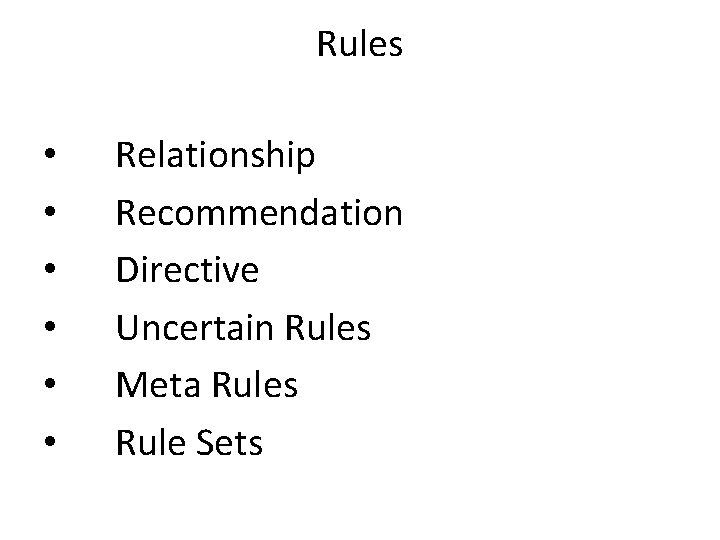
Rules • • • Relationship Recommendation Directive Uncertain Rules Meta Rules Rule Sets
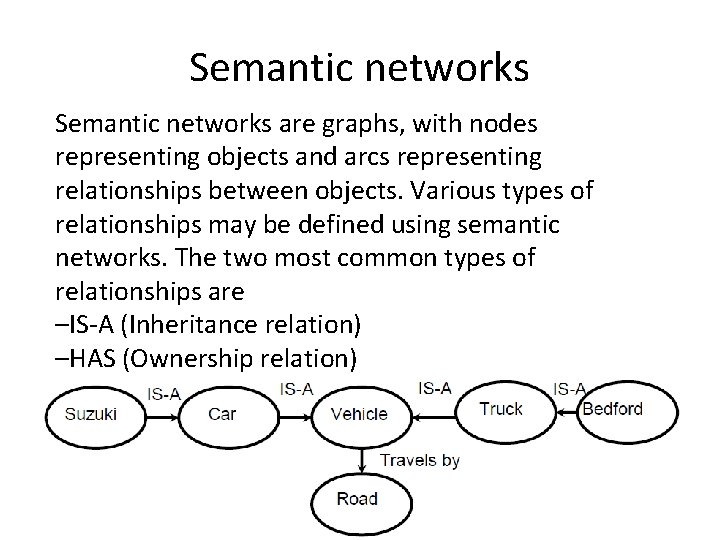
Semantic networks are graphs, with nodes representing objects and arcs representing relationships between objects. Various types of relationships may be defined using semantic networks. The two most common types of relationships are –IS-A (Inheritance relation) –HAS (Ownership relation)