
Artificial Intelligence Internal Auditors Readiness Presenter Herculs Bizure
Artificial Intelligence Internal Auditors Readiness Presenter Herculs Bizure
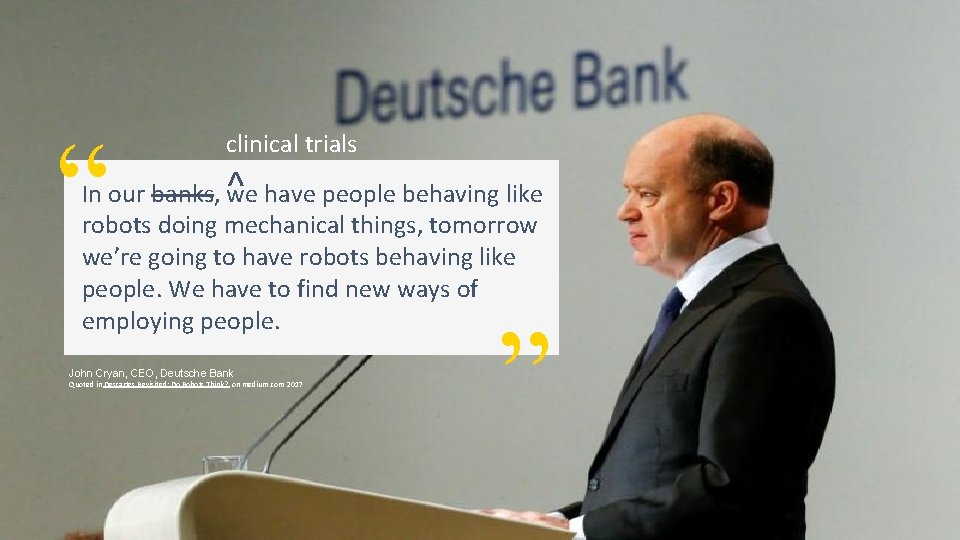
“ clinical trials In our banks, ^ we have people behaving like robots doing mechanical things, tomorrow we’re going to have robots behaving like people. We have to find new ways of employing people. Quoted in Descartes Revisited: Do Robots Think? on medium. com 2017 “ John Cryan, CEO, Deutsche Bank
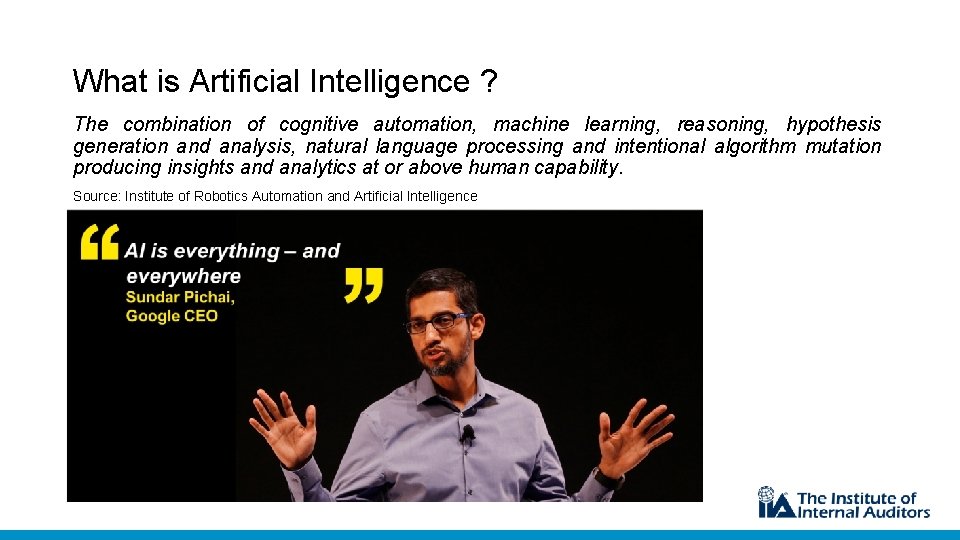
What is Artificial Intelligence ? The combination of cognitive automation, machine learning, reasoning, hypothesis generation and analysis, natural language processing and intentional algorithm mutation producing insights and analytics at or above human capability. Source: Institute of Robotics Automation and Artificial Intelligence
Polling question? www. menti. com 9314 0855 GO TO -> Where are you on your AI journey? A B We’re mid-implementation We’ve got a fully implemented AI solution C D We’re building the case for investment in an AI solution We’re exploring AI solutions that may be relevant for our industry E We’re interested in exploring AI, but aren’t sure where to start
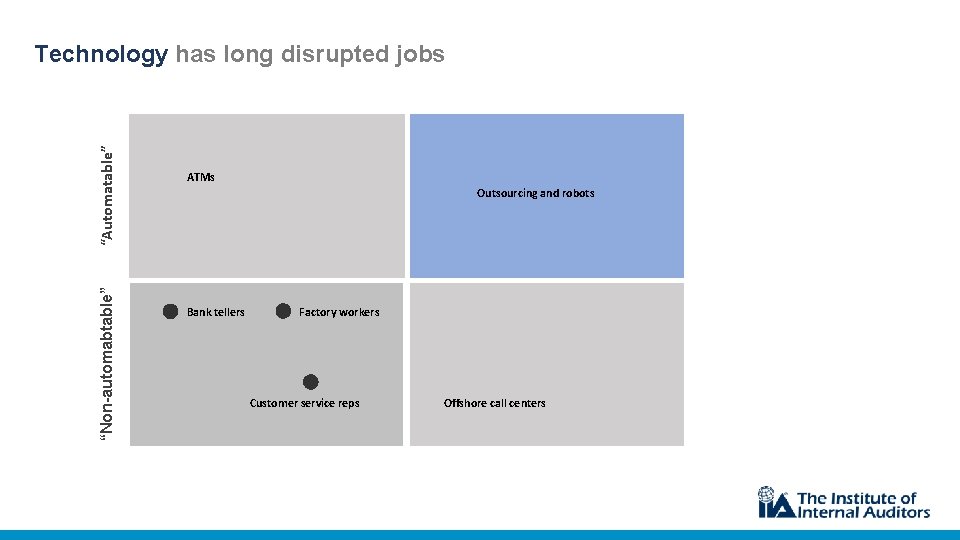
“Non-automabtable” “Automatable” Technology has long disrupted jobs ATMs Outsourcing and robots Bank tellers Factory workers Customer service reps Offshore call centers
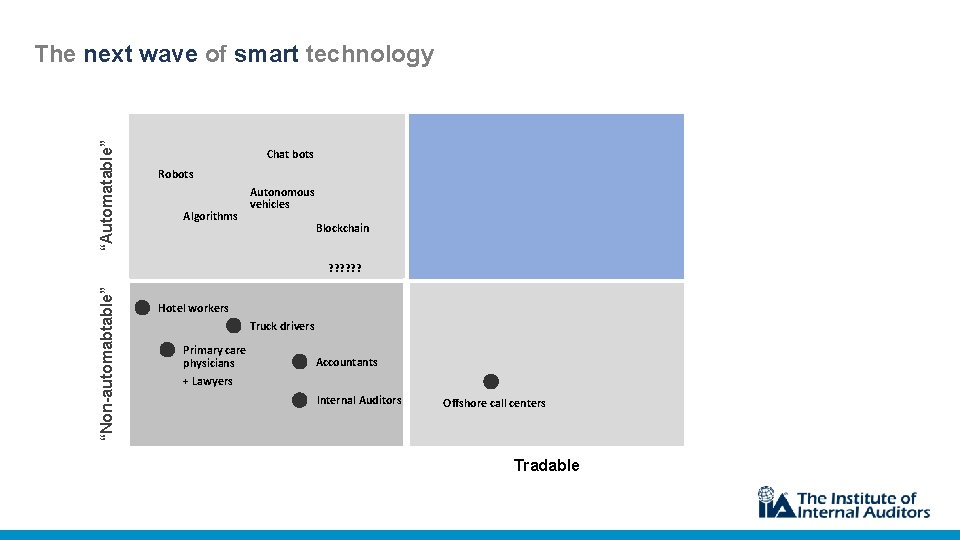
“Automatable” The next wave of smart technology Chat bots Robots Algorithms Autonomous vehicles Blockchain “Non-automabtable” ? ? ? Hotel workers Truck drivers Primary care physicians Accountants + Lawyers Internal Auditors Offshore call centers Tradable
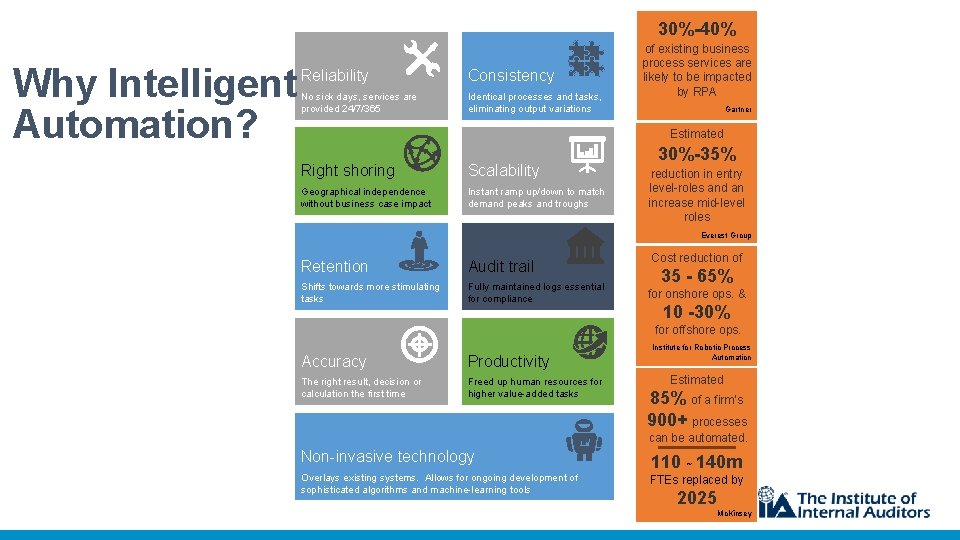
30%-40% Why Intelligent Automation? Reliability Consistency No sick days, services are provided 24/7/365 Identical processes and tasks, eliminating output variations of existing business process services are likely to be impacted by RPA Gartner Estimated Right shoring Scalability Geographical independence without business case impact Instant ramp up/down to match demand peaks and troughs 30%-35% reduction in entry level-roles and an increase mid-level roles Everest Group Retention Audit trail Shifts towards more stimulating tasks Fully maintained logs essential for compliance Cost reduction of 35 - 65% for onshore ops. & 10 -30% for offshore ops. Accuracy Productivity The right result, decision or calculation the first time Freed up human resources for higher value-added tasks Institute for Robotic Process Automation Estimated 85% of a firm’s 900+ processes can be automated. Non-invasive technology Overlays existing systems. Allows for ongoing development of sophisticated algorithms and machine-learning tools 110 ~ 140 m FTEs replaced by 2025 Mc. Kinsey

Intelligent Automation occurs along a spectrum of technologies, tools and methods Robotics process automation (RPA): A software solution that runs unattended, working like a virtual employee with legacy applications performing repetitive tasks reliably at the UI level Other: Artificial Intelligence (AI): Software-driven intelligence that mimics human cognition, behavior, and thought processing to replicate more complex tasks that include professional judgment and historical knowledge Comparing data sets Complementary technologies, tools and architectures that can be combined with other layers on the spectrum to automate a business process or human experience Machine learning Composing and sending emails Sensors Deep learning Computer vision Automation of clicks, data entry Completion of auditable activity logs Digital Natural language Processing Neural Networks Entering data into a system Rules-based processing and decision making Conversational Agents (chat bots) Unmanned Aerial Systems (Drones) Natural Language Generation Reading, copying, aggregating data Internet of Things Predictive algorithms Macros
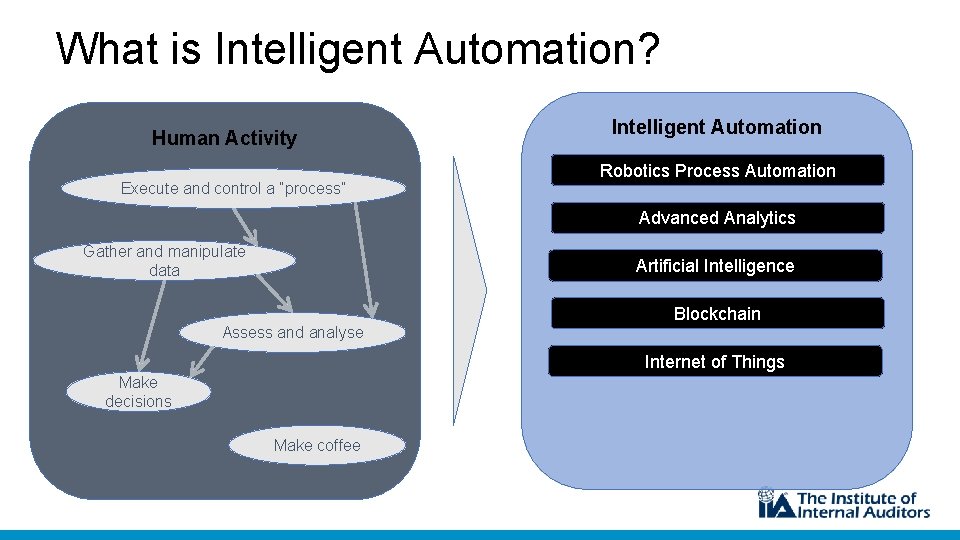
What is Intelligent Automation? Human Activity Execute and control a “process” Intelligent Automation Robotics Process Automation Advanced Analytics Gather and manipulate data Artificial Intelligence Blockchain Assess and analyse Internet of Things Make decisions Make coffee
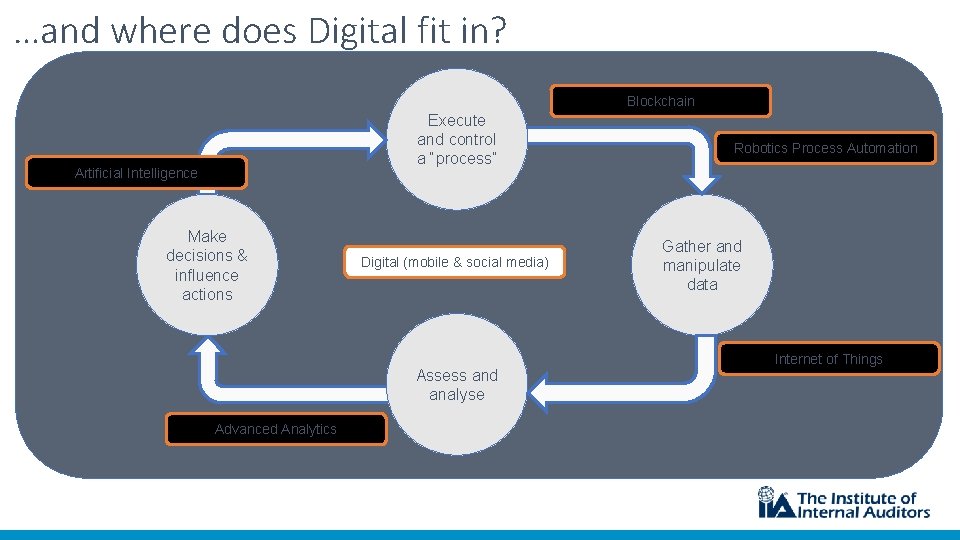
…and where does Digital fit in? Blockchain Execute and control a “process” Artificial Intelligence Make decisions & influence actions Digital (mobile & social media) Assess and analyse Advanced Analytics Robotics Process Automation Gather and manipulate data Internet of Things
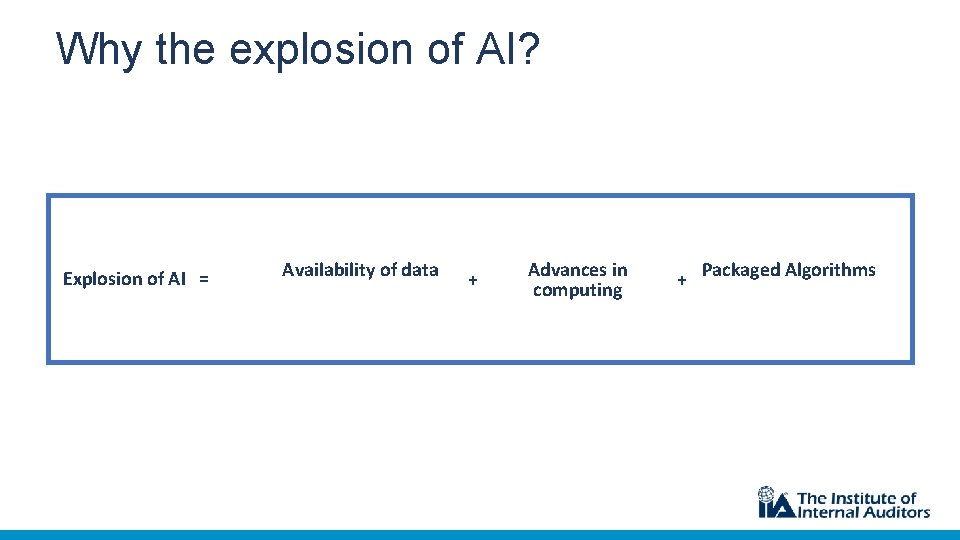
Why the explosion of AI? Explosion of AI = Availability of data + Advances in computing + Packaged Algorithms
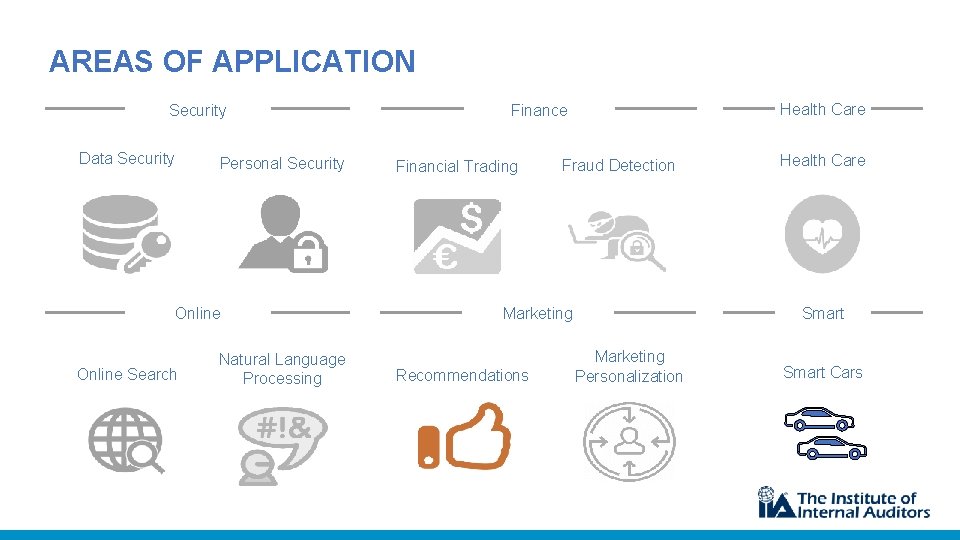
AREAS OF APPLICATION Security Data Security Personal Security Online Search Natural Language Processing Health Care Financial Trading Fraud Detection Smart Marketing Recommendations Health Care Marketing Personalization Smart Cars
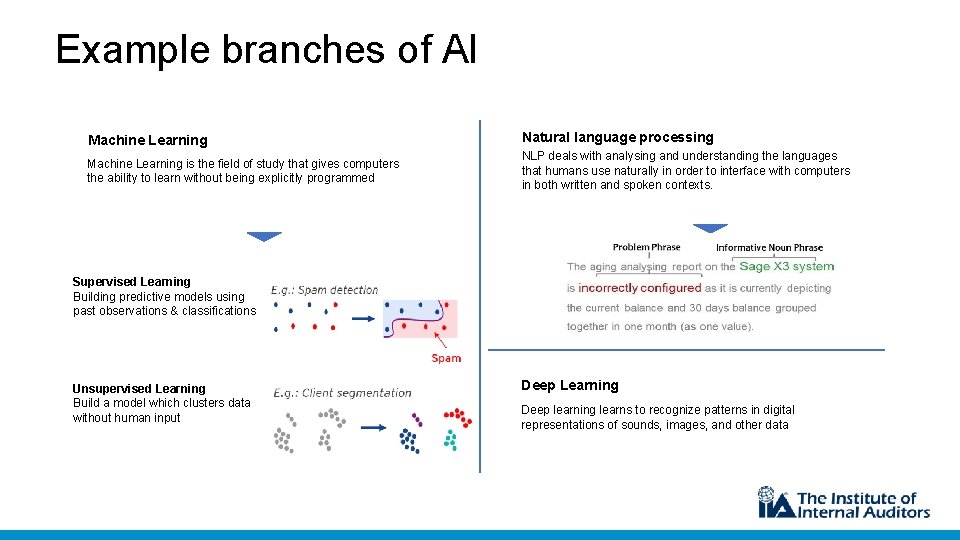
Example branches of AI Machine Learning Natural language processing Machine Learning is the field of study that gives computers the ability to learn without being explicitly programmed NLP deals with analysing and understanding the languages that humans use naturally in order to interface with computers in both written and spoken contexts. Supervised Learning Building predictive models using past observations & classifications Unsupervised Learning Build a model which clusters data without human input Deep Learning Deep learning learns to recognize patterns in digital representations of sounds, images, and other data
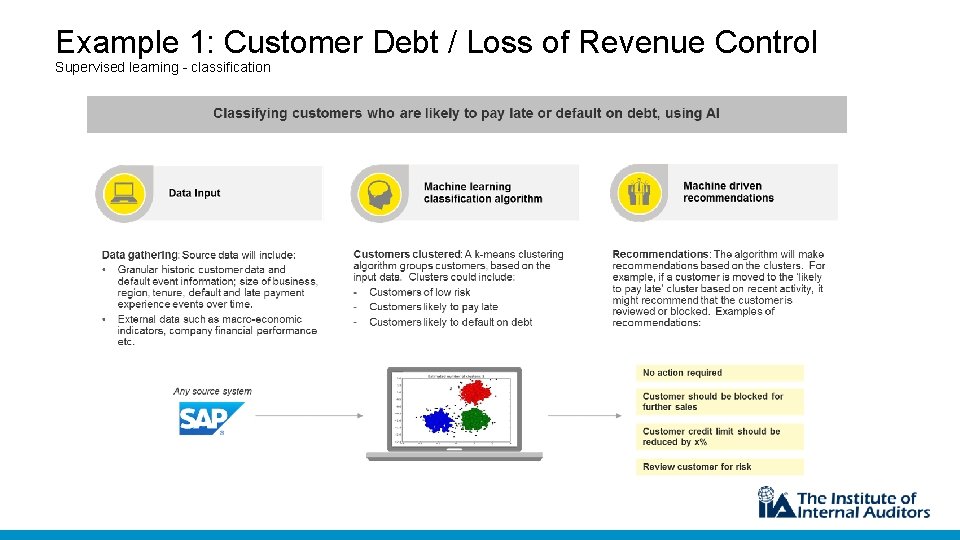
Example 1: Customer Debt / Loss of Revenue Control Supervised learning - classification
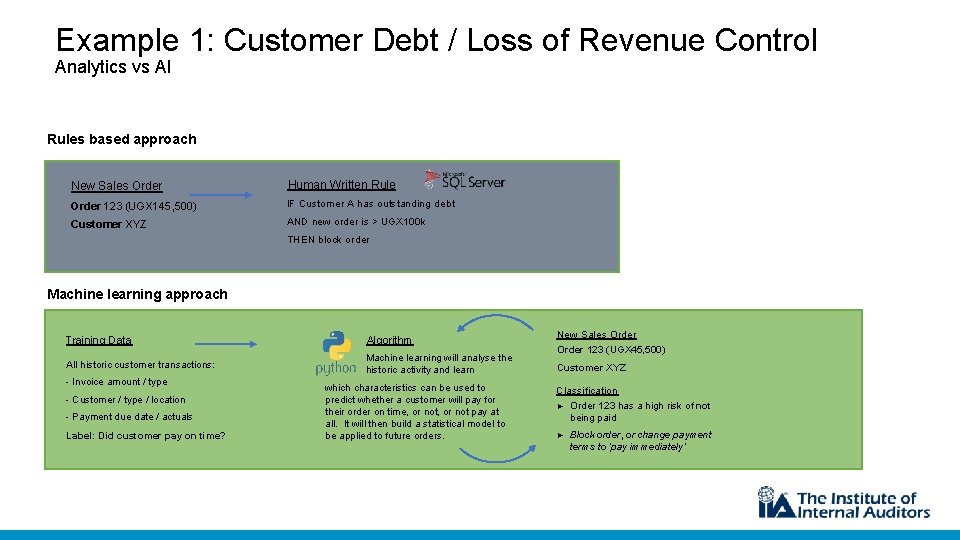
Example 1: Customer Debt / Loss of Revenue Control Analytics vs AI Rules based approach New Sales Order Human Written Rule Order 123 (UGX 145, 500) IF Customer A has outstanding debt Customer XYZ AND new order is > UGX 100 k THEN block order Machine learning approach Training Data Algorithm All historic customer transactions: Machine learning will analyse the historic activity and learn - Invoice amount / type - Customer / type / location - Payment due date / actuals Label: Did customer pay on time? which characteristics can be used to predict whether a customer will pay for their order on time, or not pay at all. It will then build a statistical model to be applied to future orders. New Sales Order 123 (UGX 45, 500) Customer XYZ Classification ► Order 123 has a high risk of not being paid ► Block order, or change payment terms to ‘pay immediately’
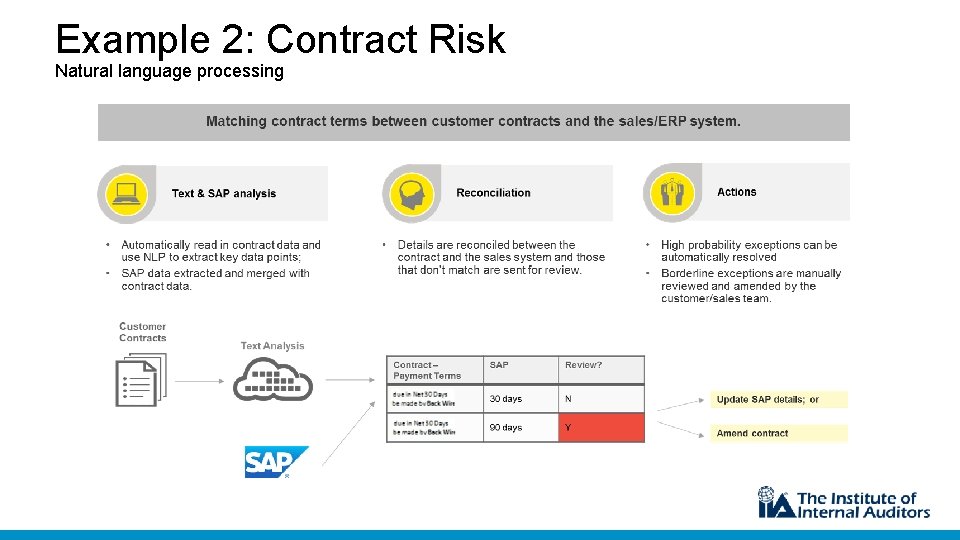
Example 2: Contract Risk Natural language processing
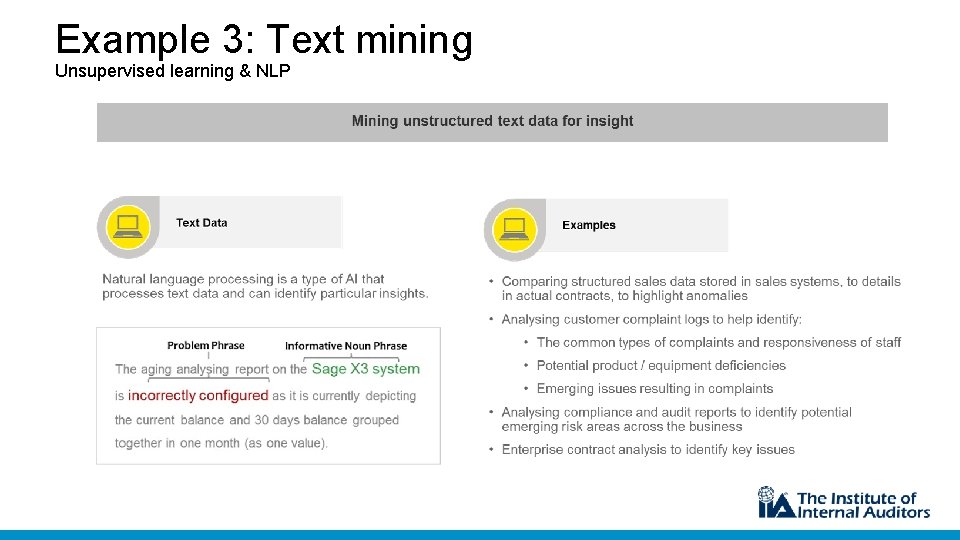
Example 3: Text mining Unsupervised learning & NLP
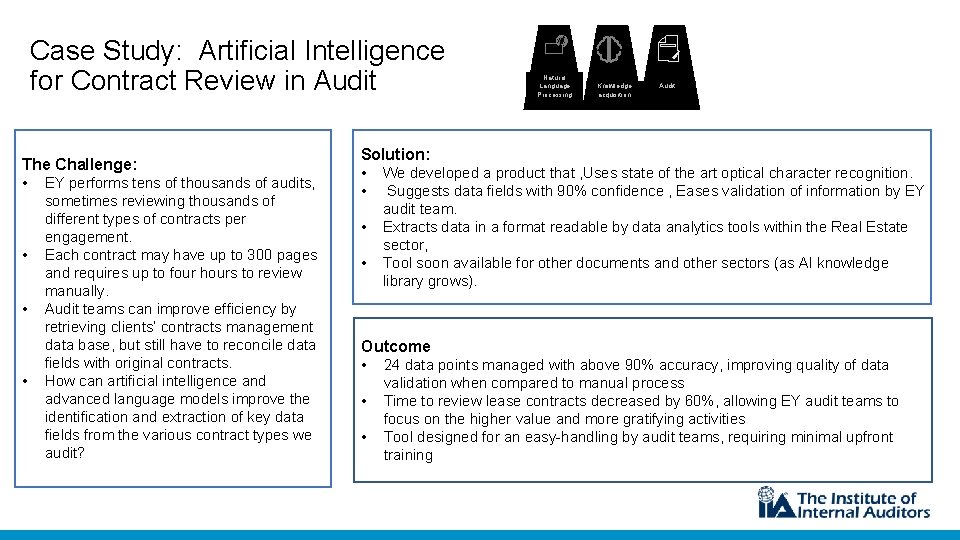
Case Study: Artificial Intelligence for Contract Review in Audit The Challenge: • EY performs tens of thousands of audits, • • • sometimes reviewing thousands of different types of contracts per engagement. Each contract may have up to 300 pages and requires up to four hours to review manually. Audit teams can improve efficiency by retrieving clients’ contracts management data base, but still have to reconcile data fields with original contracts. How can artificial intelligence and advanced language models improve the identification and extraction of key data fields from the various contract types we audit? Natural Language Processing Knowledge acquisition Audit Solution: • We developed a product that , Uses state of the art optical character recognition. • Suggests data fields with 90% confidence , Eases validation of information by EY • • audit team. Extracts data in a format readable by data analytics tools within the Real Estate sector, Tool soon available for other documents and other sectors (as AI knowledge library grows). Outcome • 24 data points managed with above 90% accuracy, improving quality of data • • validation when compared to manual process Time to review lease contracts decreased by 60%, allowing EY audit teams to focus on the higher value and more gratifying activities Tool designed for an easy-handling by audit teams, requiring minimal upfront training
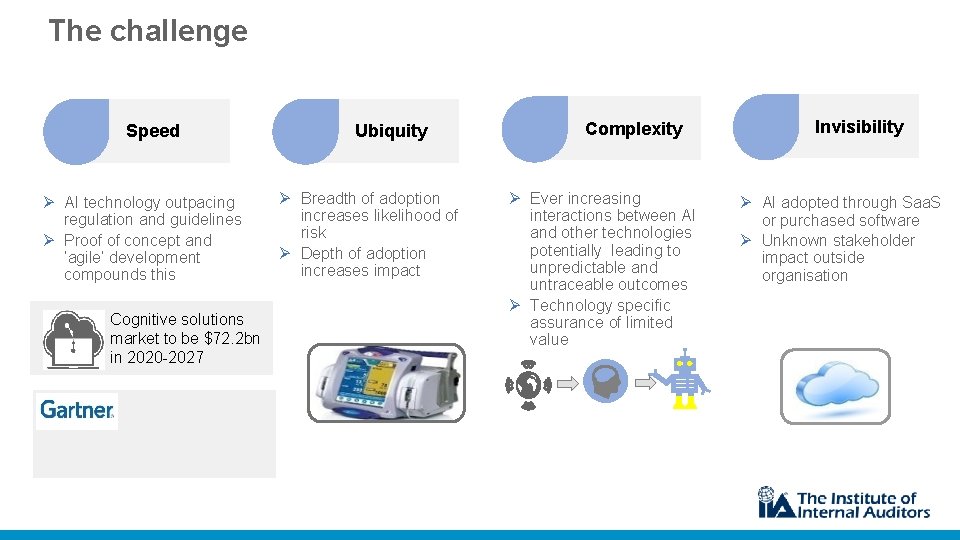
The challenge Speed Ø AI technology outpacing regulation and guidelines Ø Proof of concept and ‘agile’ development compounds this Cognitive solutions market to be $72. 2 bn in 2020 -2027 Ubiquity Ø Breadth of adoption increases likelihood of risk Ø Depth of adoption increases impact Complexity Ø Ever increasing interactions between AI and other technologies potentially leading to unpredictable and untraceable outcomes Ø Technology specific assurance of limited value Invisibility Ø AI adopted through Saa. S or purchased software Ø Unknown stakeholder impact outside organisation
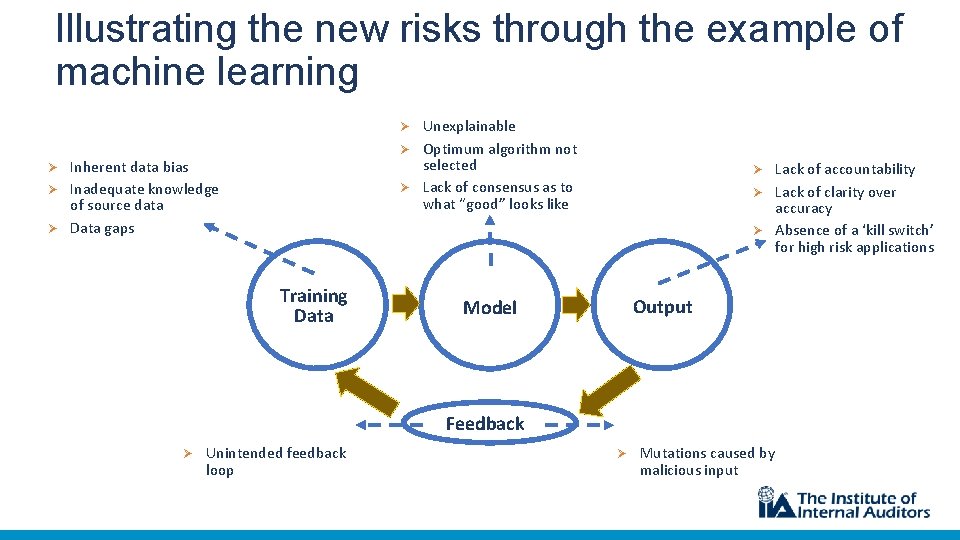
Illustrating the new risks through the example of machine learning Ø Ø Ø Inherent data bias Inadequate knowledge of source data Data gaps Ø Unexplainable Optimum algorithm not selected Lack of consensus as to what “good” looks like Ø Ø Ø Training Data Output Model Feedback Ø Unintended feedback loop Ø Mutations caused by malicious input Lack of accountability Lack of clarity over accuracy Absence of a ‘kill switch’ for high risk applications
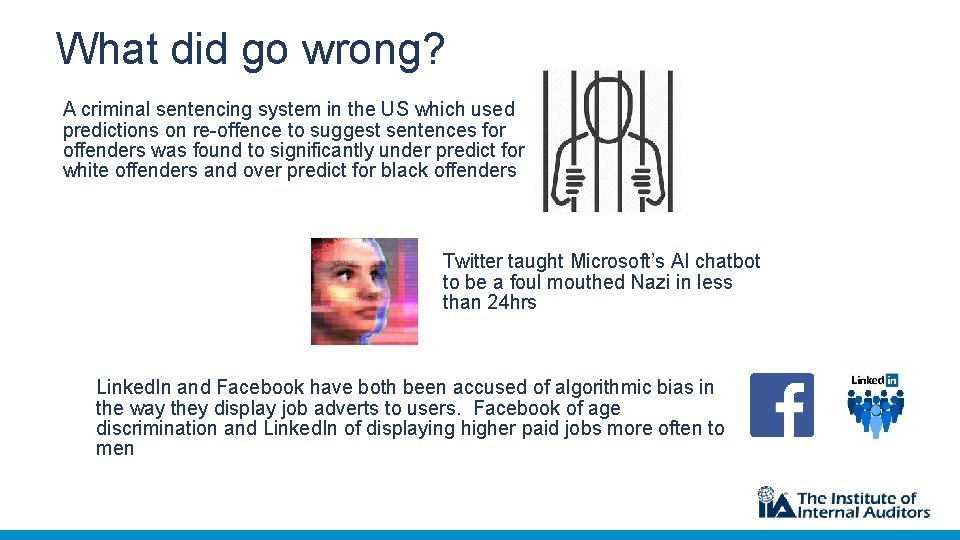
What did go wrong? A criminal sentencing system in the US which used predictions on re-offence to suggest sentences for offenders was found to significantly under predict for white offenders and over predict for black offenders Twitter taught Microsoft’s AI chatbot to be a foul mouthed Nazi in less than 24 hrs Linked. In and Facebook have both been accused of algorithmic bias in the way they display job adverts to users. Facebook of age discrimination and Linked. In of displaying higher paid jobs more often to men
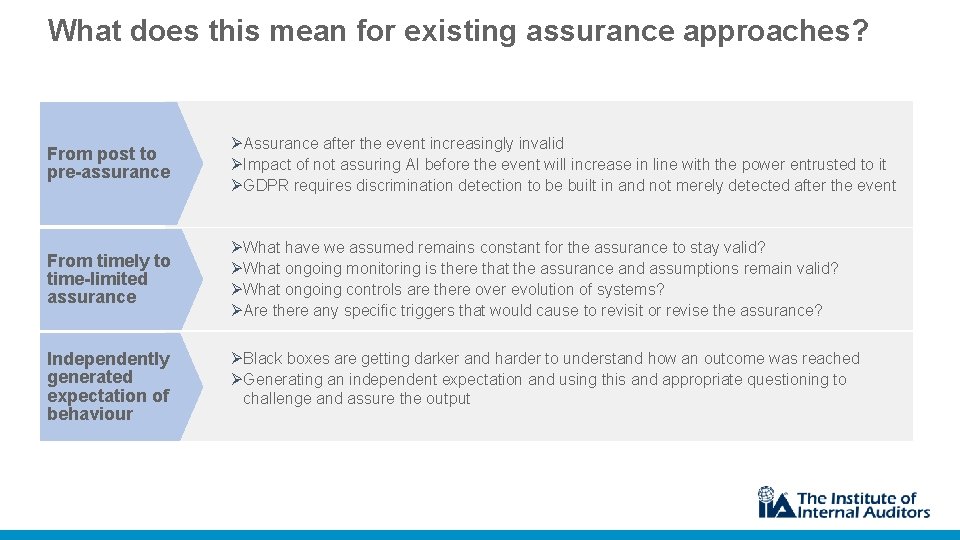
What does this mean for existing assurance approaches? From post to pre-assurance ØAssurance after the event increasingly invalid ØImpact of not assuring AI before the event will increase in line with the power entrusted to it ØGDPR requires discrimination detection to be built in and not merely detected after the event From timely to time-limited assurance ØWhat have we assumed remains constant for the assurance to stay valid? ØWhat ongoing monitoring is there that the assurance and assumptions remain valid? ØWhat ongoing controls are there over evolution of systems? ØAre there any specific triggers that would cause to revisit or revise the assurance? Independently generated expectation of behaviour ØBlack boxes are getting darker and harder to understand how an outcome was reached ØGenerating an independent expectation and using this and appropriate questioning to challenge and assure the output
The role of ethics Fundamentally we need to move beyond asking whether systems are doing things right to asking whether they are doing the right things. Ø With the proliferation of artificial intelligence the stakes are much higher with a lapse in ethical behaviour whether intentional or unintentional having a much greater impact. Ø Increased impact of artificial intelligence in areas such as health, privacy and government Ø Necessity to have principles that can guide us when rules and regulations lag behind technology. Ø Ethical assurance over artificial intelligence from conception to use, can help organisations demonstrate integrity, gain trust and reduce their exposure to risk.
Why AI raises questions about Ethics and Trust • Misleading anthropomorphic terminology (“Artificial Intelligence”, “Automated Decision. Making”, “Machine Learning”) v Responsibility remains with humans • System complexity obscures human choices in the development and operation v How to regulate “black-box” systems? • AI based on statistical correlations is automating decisions without understanding v Can such decision be legitimate? (e. g. criminal justice) • Much publicly visible AI is associated with companies that commodify personal data v Data Privacy debates have eroded trust in these actors
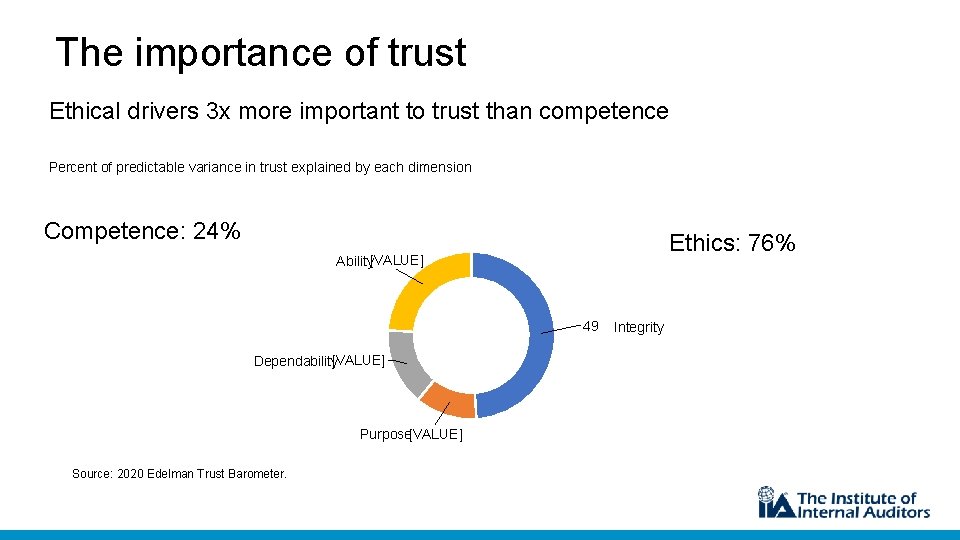
The importance of trust Ethical drivers 3 x more important to trust than competence Percent of predictable variance in trust explained by each dimension Competence: 24% Ethics: 76% Ability[VALUE] 49 Dependability[VALUE] Purpose[VALUE] Source: 2020 Edelman Trust Barometer. Integrity
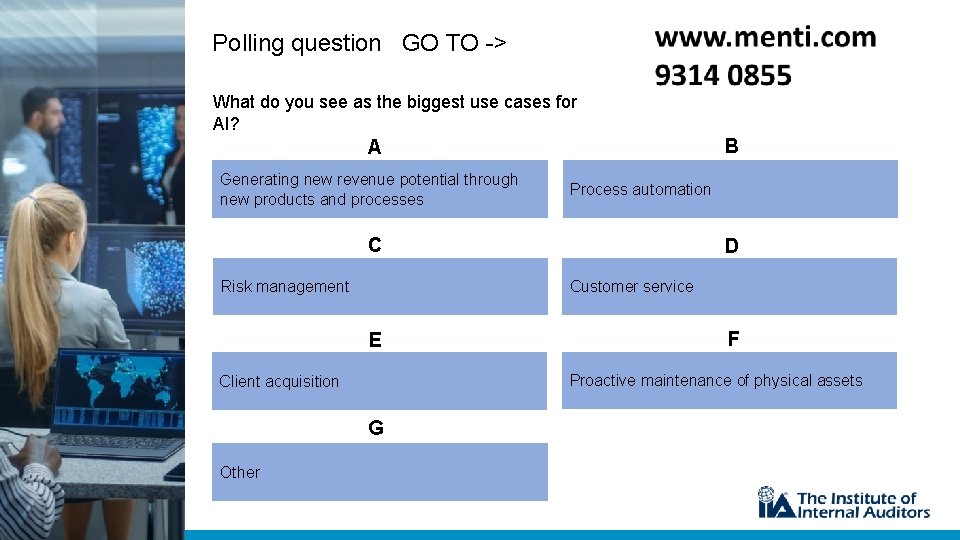
Polling question GO TO -> What do you see as the biggest use cases for AI? B A Generating new revenue potential through new products and processes Process automation C Risk management Customer service E F Proactive maintenance of physical assets Client acquisition G Other D
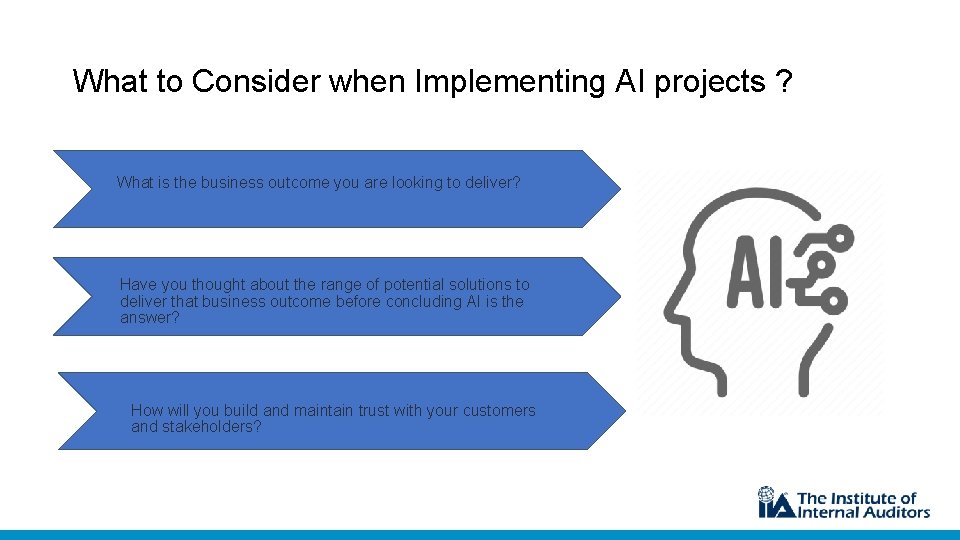
What to Consider when Implementing AI projects ? What is the business outcome you are looking to deliver? Have you thought about the range of potential solutions to deliver that business outcome before concluding AI is the answer? How will you build and maintain trust with your customers and stakeholders?
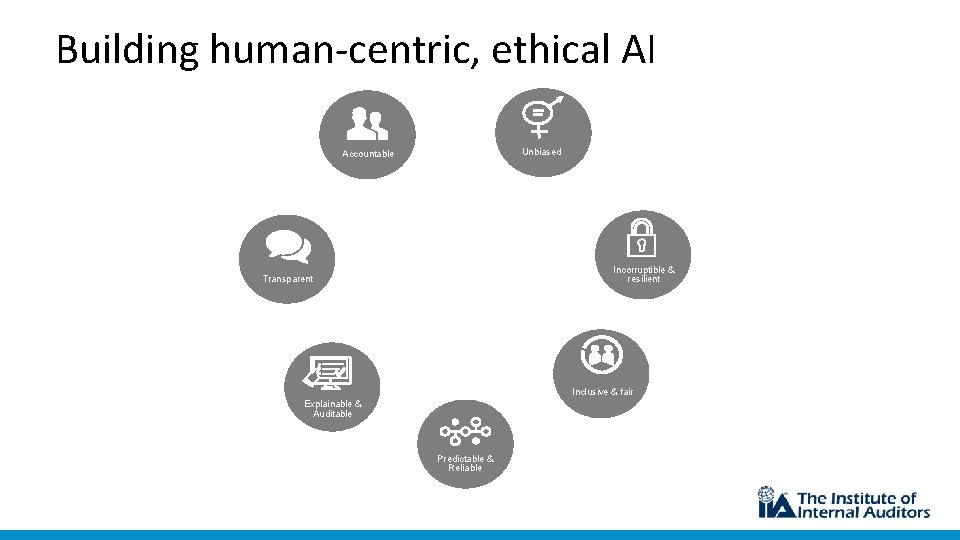
Building human-centric, ethical AI Unbiased Accountable Incorruptible & resilient Transparent Inclusive & fair Explainable & Auditable Predictable & Reliable
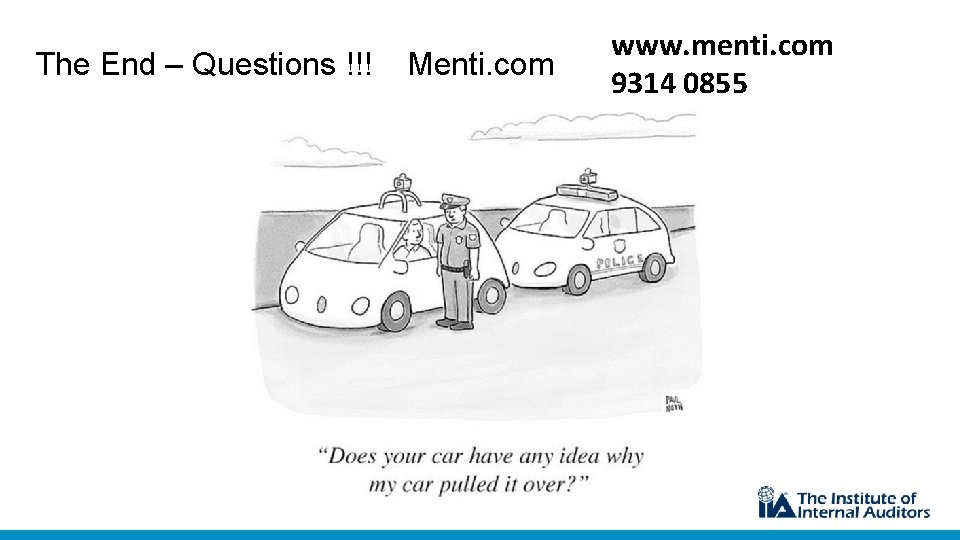
The End – Questions !!! Menti. com www. menti. com 9314 0855
- Slides: 29