
Artificial Intelligence and the Business of Law Lawyering
Artificial Intelligence and the Business of Law: Lawyering in the 21 st Century NAPABA Convention November 8, 2018 Tony Chan | M&A Partner at Morgan Lewis Tonya Custis | Research Director of Thomson Reuters Aaron Gin, Ph. D. | Intellectual Property Attorney at Mc. Donnell Boehnen Hulbert & Berghoff LLP Lian Huang | Patent Attorney at Bookoff Mc. Andrews PLLC Bonnie Lee Wolf | Litigation Counsel at Nationwide Insurance 1
Introduction “Deloitte claims 39% of legal jobs can be automated; Mc. Kinsey Global Institute estimates that 23% of a lawyer's job could be automated. ” Technology – Lauri Donahue, Harvard Journal of Law & Donahue, Lauri. A Primer on Using Artificial Intelligence in the Legal Profession. Joltdigest, January 3, 2018. https: //jolt. law. harvard. edu/digest/a-primer-onusing-artificial-intelligence-in-the-legal-profession 2
Introduction “Spending on AI is expected to grow rapidly--from $8 billion in 2016 to $47 billion in 2020 --as AI is seen as reducing costs and increasing efficiency. Top MBA programs already have courses on how managers can use AI applications. As they come to rely on AI, C-level executives may expect that their inside and outside lawyers are also up-to-speed. ” Technology – Lauri Donahue, Harvard Journal of Law & Donahue, Lauri. A Primer on Using Artificial Intelligence in the Legal Profession. Joltdigest, January 3, 2018. https: //jolt. law. harvard. edu/digest/a-primer-onusing-artificial-intelligence-in-the-legal-profession 3
Introduction “According to the 2016 Report on the State of the Legal Market (PDF), published by Georgetown University’s Center for the Study of the Legal Profession and Thomson Reuters’ Peer Monitor, demand for legal services was ‘essentially flat for 2015 … [and] continues a pattern seen over the last six years. ’. . . With increasing competition in the legal market, law firms are under pressure to invest in innovation. ” – Julie Sobowale, ABA Journal Sobowale, Julie. How artificial intelligence is transforming the legal profession. ABA Journal, April 2016. http: //www. abajournal. com/magazine/article/how_artificial_intelligence_is_transforming_the_legal_profession 4
Overview • What is Artificial Intelligence (AI)? • How do you see AI changing the legal field? • Practice • Legislation/Regulatory Framework • Economics • What are some challenges for AI development or for lawyers? • What’s coming? • What will AI usage mean for solo/small firms or APA attorneys? 5
What is AI? • What is Artificial Intelligence (AI)? • What do people mean when they refer to “AI”? • What are some key terms and what do they mean? • How is AI built? • How do you see AI changing the legal field? • Practice • Legislation/Regulatory Framework • Economics • What are some challenges for AI development or for lawyers? • What’s coming? • What will AI usage mean for solo/small firms or APA attorneys? 6
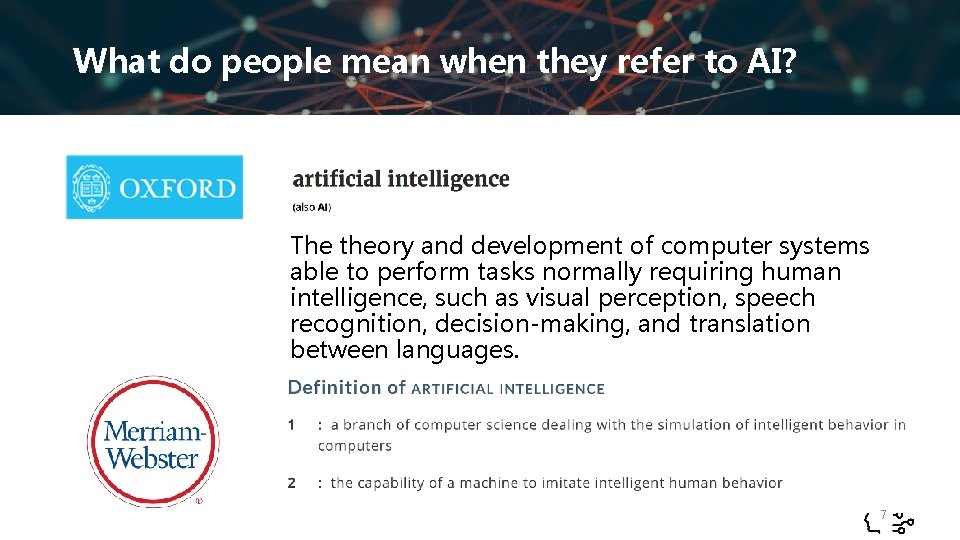
What do people mean when they refer to AI? The theory and development of computer systems able to perform tasks normally requiring human intelligence, such as visual perception, speech recognition, decision-making, and translation between languages. 7
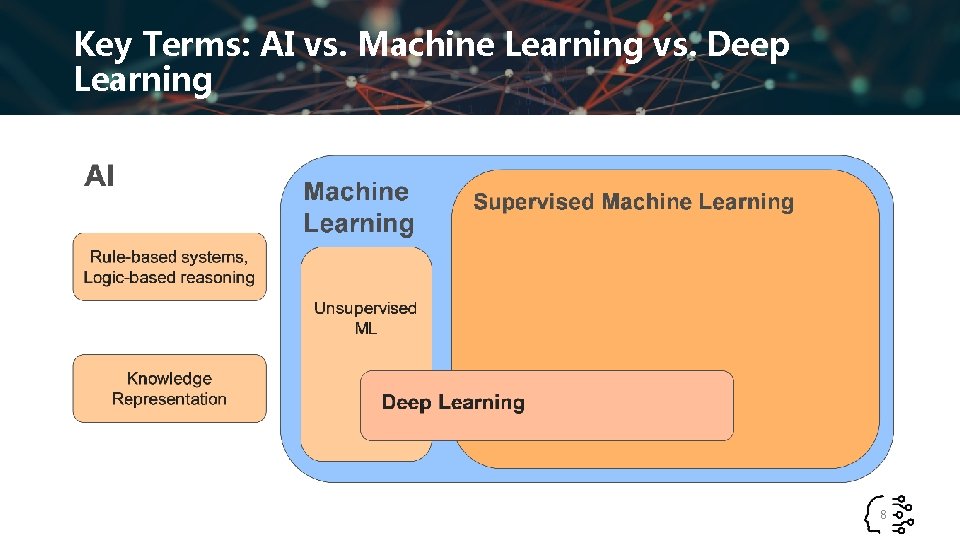
Key Terms: AI vs. Machine Learning vs. Deep Learning 8
Key Terms: (Some) AI Component Functionalities • • • Classification Natural Language Processing Natural Language Understanding Information Retrieval / Search Natural Language Generation Speech Recognition (Speech to Text) Text to Speech Machine Translation Dialogue Systems Recommender Systems Computer Vision (OCR, Object Recognition, Object Tracking) 9
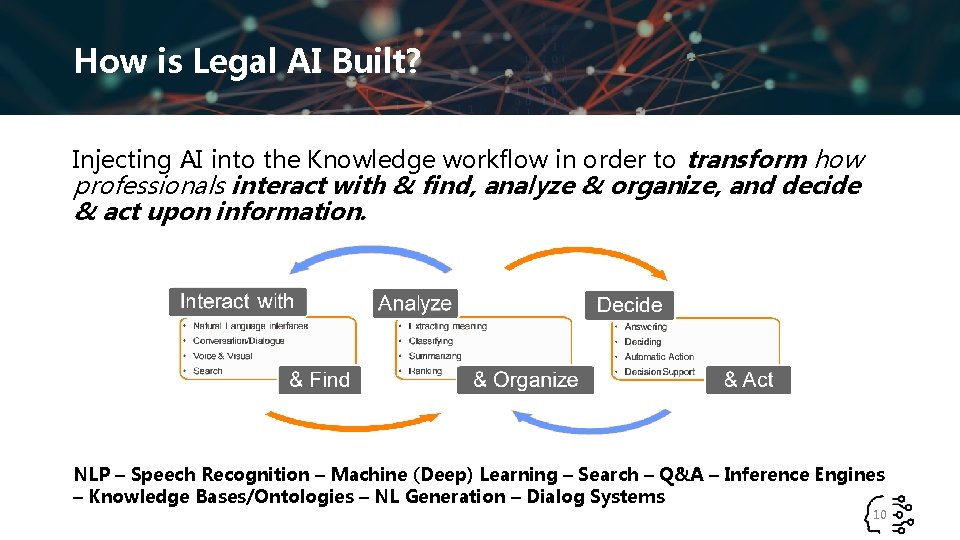
How is Legal AI Built? Injecting AI into the Knowledge workflow in order to transform how professionals interact with & find, analyze & organize, and decide & act upon information. NLP – Speech Recognition – Machine (Deep) Learning – Search – Q&A – Inference Engines – Knowledge Bases/Ontologies – NL Generation – Dialog Systems 10
Changes brought by AI: Practice • What is AI? • How do you see AI changing the legal field? • Practice • What will AI mean for my day-to-day practice? • Will I be replaced? • Legislation/Regulatory Framework • Economics • What are some challenges for AI development or for lawyers? • What’s coming? • What will AI usage mean for solo/small firms or APA attorneys? 11
Changes brought by AI: Legislation/Regulatory Framework • What is AI? • How do you see AI changing the legal field? • Practice • Legislation/Regulatory Framework • How will AI affect law-making? • How are legislative bodies responding to AI? • Economics • What are some challenges for AI development or for lawyers? • What’s coming? • What will AI usage mean for solo/small firms or APA attorneys? 12
Changes brought by AI: Legislation/Regulatory Framework Comment 8 of the ABA Model Rules of Professional Conduct ("Model Rules") require that lawyers keep up with new technology. Comment 8 states: “To maintain the requisite knowledge and skill, a lawyer should keep abreast of changes in the law and its practice, including the benefits and risks associated with relevant technology. . . ” – American Bar Association As of 2017, 26 states had adopted the Model Rule in some form. Florida further requires technology training as part of its continuing legal education (“CLE”) requirement. – Ivy Gray, Law Technology Today Client-Lawyer Relationship. ABA Center for Professional Responsibility. https: //www. americanbar. org/groups/professional_responsibility/publications/model_rules_of_professional_conduct/rule_1_1_competence/co mment_on_rule_1_1. html Grey, Ivy. Exploring the Ethical Duty of Technology Competence, Part I. Law Technology Today, March 8, 2017. https: //www. lawtechnologytoday. org/2017/03/technology-competence-part-i/ 13
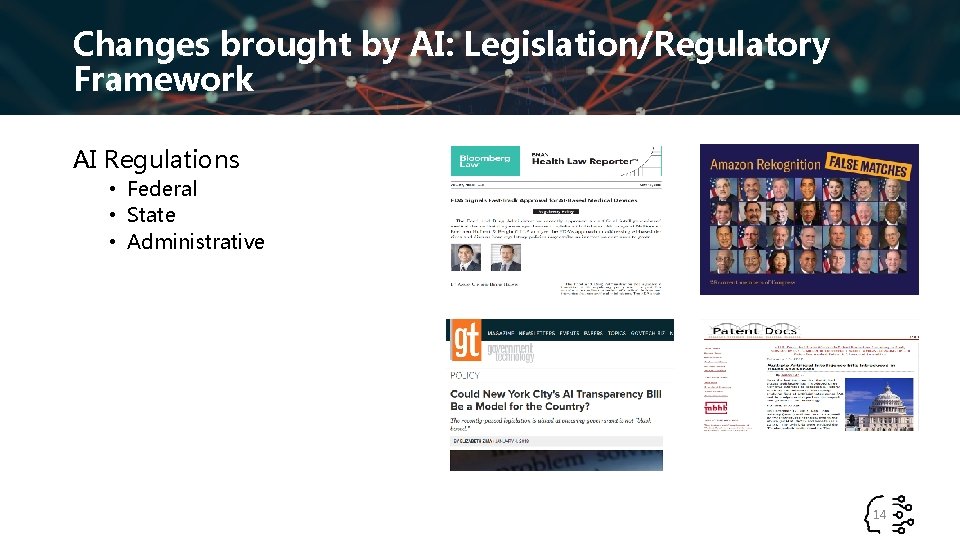
Changes brought by AI: Legislation/Regulatory Framework AI Regulations • Federal • State • Administrative 14
Changes brought by AI: Economics • What is AI? • How do you see AI changing the legal field? • Practice • Legislation/Regulatory Framework • Economics • How will the legal marketplace change? • What are some challenges for AI development or for lawyers? • What’s coming? • What will AI usage mean for solo/small firms or APA attorneys? 15
Challenges • What is AI? • How do you see AI changing the legal field? • Practice • Legislation/Regulatory Framework • Economics • What are some challenges for AI development or for lawyers? • What are some obstacles in AI development? • What skills should attorneys develop to respond to AI development? • What’s coming? • What will AI usage mean for solo/small firms or APA attorneys? 16
Challenges 17
Challenges 18
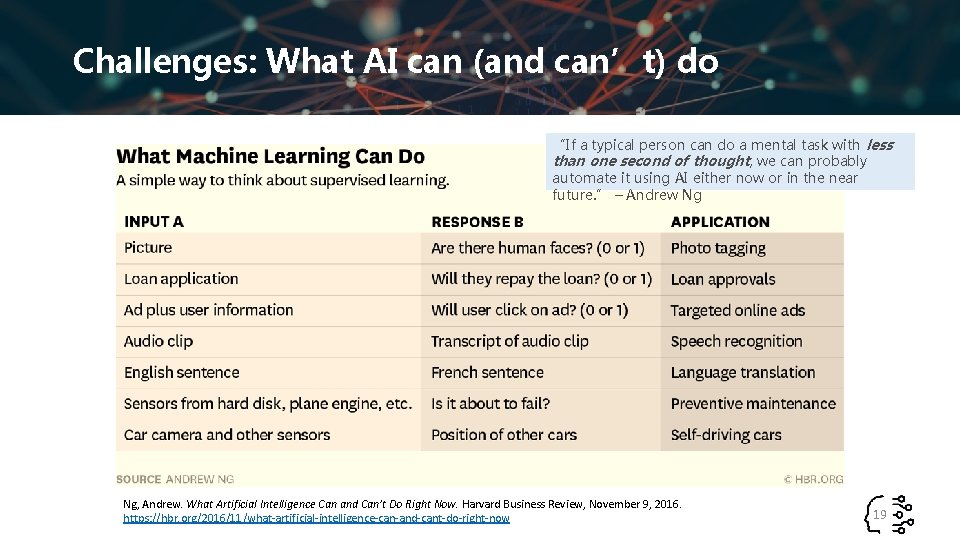
Challenges: What AI can (and can’t) do “If a typical person can do a mental task with less than one second of thought, we can probably automate it using AI either now or in the near future. ” – Andrew Ng Ng, Andrew. What Artificial Intelligence Can and Can’t Do Right Now. Harvard Business Review, November 9, 2016. https: //hbr. org/2016/11/what-artificial-intelligence-can-and-cant-do-right-now 19
Challenges: What are the differentiators in AI? 20
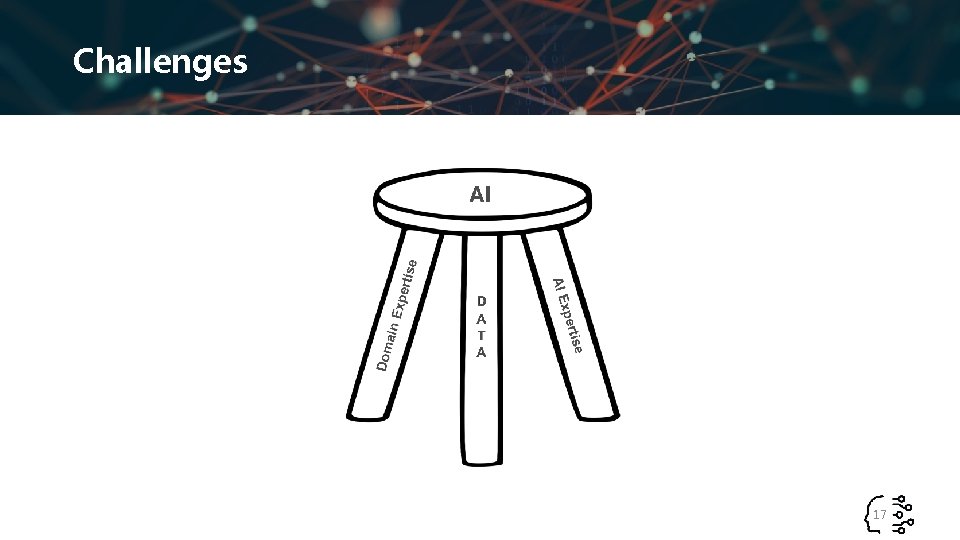
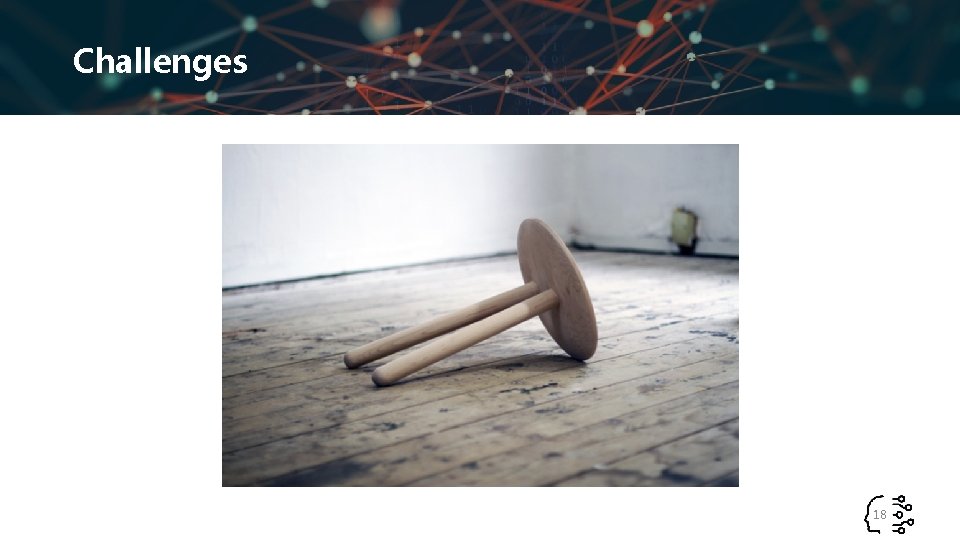
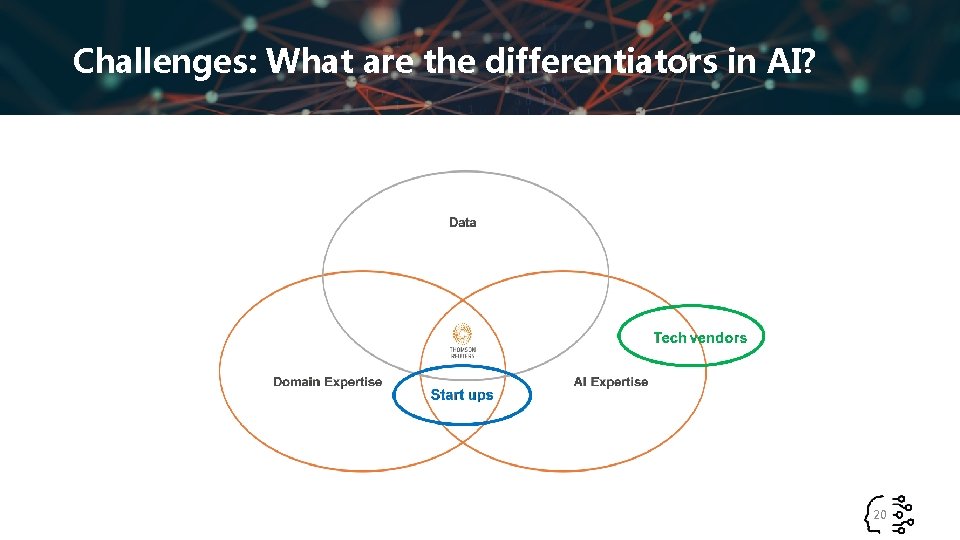
Challenges: What have we learned? • Most AI projects are ‘custom’ work • AI is not a one-size-fits-all problem, nor does it have one out-of-thebox solution, especially in complex domains like Legal. • Having AI tools is not enough—you need data, domain expertise, and AI expertise. • In Legal, each content type & jurisdiction usually requires its own formatting & linguistic customizations and prioritizations: 1. US case law: Federal, TX/FL/IL/CA/NY, other states, weird states; 2. Statutes & Regs: Federal, then prioritized states; 3. Secondary Sources • Although it’s much easier to collect usage data than to get humans to label outcomes, it’s not a replacement for domain expertise. • People have biases and so do machines trained by people. 21
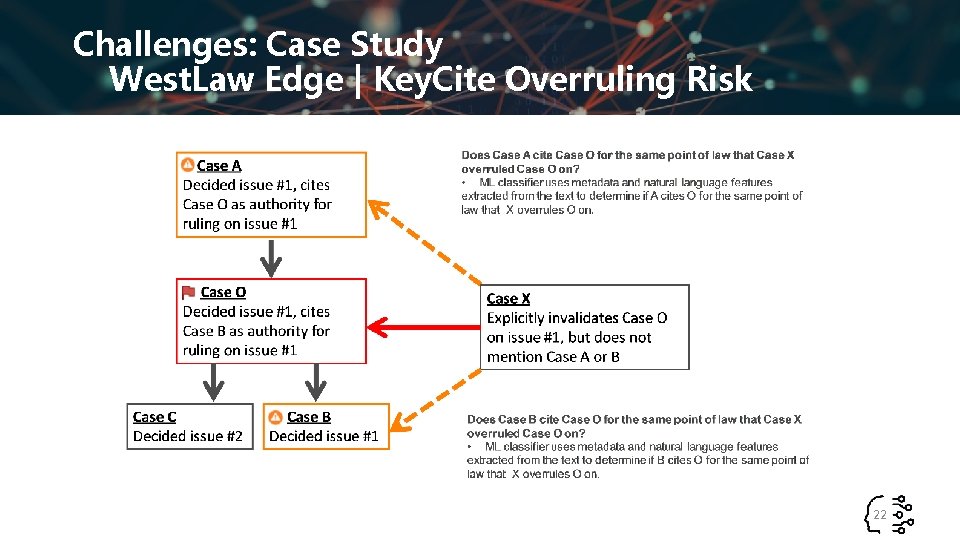
Challenges: Case Study West. Law Edge | Key. Cite Overruling Risk 22
Challenges • What makes a good AI tool? Easy to use Accurate Defined task set Transparent analysis (AI tells you why it arrived at a particular conclusion) Ability to use broad and narrow data sets, perhaps tailored to area of law, circuit, district, judge, adversary, etc. • Relevant data pool • • • 23
What’s coming? • What is AI? • How do you see AI changing the legal field? • Practice • Legislation/Regulatory Framework • Economics • What are some challenges for AI development or for lawyers? • What’s coming? • What do you see for the next 5 years? • What do you predict for the next 10 -15 years? • What will AI usage mean for solo/small firms or APA attorneys? 24
What’s coming? • Current & near-term projects across BUs fall into the following categories: • Question Answering • • • Over structured & unstructured data Factoid & non-factoid Static & interactive / conversational • Natural Language Generation • Generating NL descriptions of data & events • Summarization • Summarizing documents & events • Risk Mining & Event Detection • Assess risk & compliance issues, based on events & scenarios • Matter intake and scenario understanding • Analyzing narratives; identifying facts, issues, arguments • Dialog Systems & Chatbots • Conversational Search • Document understanding • Recommender systems 25
What’s coming? West. Law Edge: Litigation Analytics • An advanced docket parser to derive complex motion chains and orders from dockets. • NLP that recognizes motions and orders • Ensemble machine & deep learning to chain motions & orders together. • Algorithms to determine case & motion outcomes based on docket text. • Machine learned classification algorithms label case outcomes, motion outcomes, and outcomes by party. • A Natural Language Generation engine and related tools to rapidly create descriptions and insights based on tabular data & graphs. • NLG algorithms take tabular data as input; output is a natural language description of the visualized data. • A natural language question answering interface that allows the user to ask questions like: • How often does Judge Smith grant motions for summary judgment? • How long does it take Judge Smith to rule on motions for summary judgment? 26
What’s coming? • Algorithms and how they are trained will need to be more transparent. • Explainable AI • Separating automation from augmentation—when is each appropriate? • Decision making vs decision support • Failure to be transparent, and failure to practice AI responsibly may result in a loss of trust from the general public 27
What will AI mean for solo/small firms or APA attorneys? • What is AI? • How do you see AI changing the legal field? • Practice • Legislation/Regulatory Framework • Economics • What are some challenges for AI development or for lawyers? • What’s coming? • What will AI usage mean for solo/small firms or APA attorneys? 28
What will AI mean for solo/small firms or APA attorneys? • New business opportunities and new competition • Prepare for re-distribution in staffing • Expect clients to be using AI-based tools • Have back-up systems when using new tools • Use performance metrics and transparency in employing tools • Review malpractice insurance premiums as AI use becomes more widespread • Utilize AI as a co-worker/associate/paralegal/assistant • Substantive: legal research, document review, legal predictions, etc. • Procedural: case or client intake, document preparation, scheduling, billing, etc. 29
- Slides: 29